
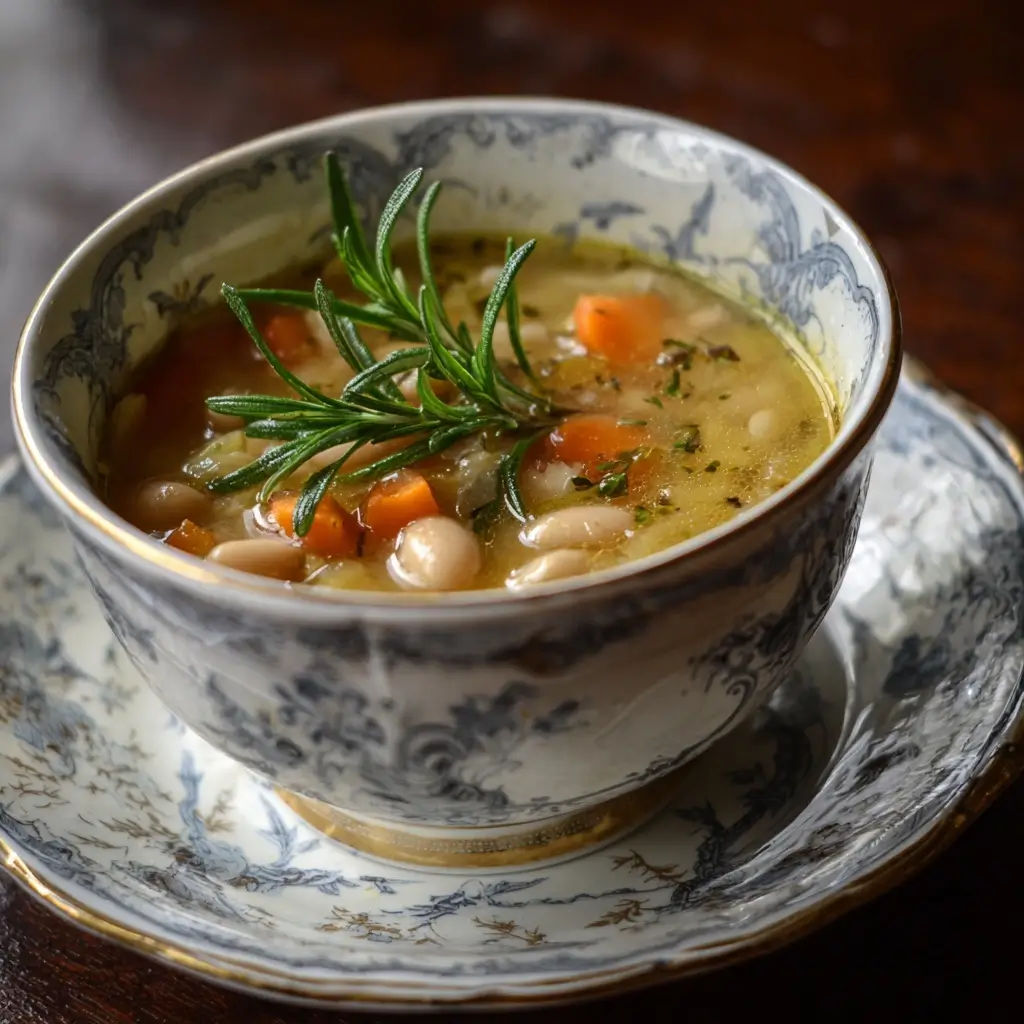
White Bean Rosemary Soup: A Hearty, Comforting Classic
The White Bean Rosemary Soup is a rustic, aromatic dish that has warmed homes and delighted palates for generations. With its roots in Mediterranean culinary traditions—particularly Italian and French farmhouse cooking—this soup embodies simplicity, nourishment, and the elegance of using humble ingredients to create deeply satisfying meals. In regions where olive oil, garlic, and fresh herbs are staples, bean-based soups have long been a winter staple, offering warmth, protein, and fiber. Historical records from ancient Roman times show that beans were a dietary cornerstone, often stewed with herbs and vegetables. Over centuries, rosemary—a fragrant evergreen herb native to the Mediterranean—became a favored addition due to its earthy flavor and digestive benefits. This soup evolved as a peasant meal, transformed by time into a gourmet favorite found on modern restaurant menus and cozy family dinner tables alike.
Ingredients Breakdown
Understanding each ingredient’s role enhances both the cooking process and appreciation for this comforting dish:
- Dried white beans (such as cannellini or Great Northern): These are the heart of the soup, providing creaminess, texture, and a rich source of plant-based protein and fiber. While canned beans can be used in a pinch, dried beans offer superior flavor and texture when slow-cooked.
- Fresh rosemary: A defining element, rosemary contributes a pine-like, slightly citrusy aroma that infuses the broth with depth. Dried rosemary works but lacks the bright, floral notes of fresh sprigs.
- Garlic: Adds pungent warmth and complexity. Sautéing it gently ensures it mingles beautifully with other flavors without becoming bitter.
- Yellow onion and carrots: Form the aromatic base (known as a soffritto in Italian cooking), adding sweetness and body as they caramelize slightly during sautéing.
- Celery: Contributes a subtle bitterness and crisp texture that balances the soup’s richness.
- Olive oil: Used generously for sautéing and finishing; high-quality extra-virgin olive oil adds fruitiness and richness.
- Vegetable or chicken broth: The liquid foundation, enhancing savoriness. Homemade broth intensifies flavor, but store-bought works well too.
- Tomato paste: Deepens color and adds umami, helping to round out the flavor profile.
- Bay leaf: Imparts a subtle woodsy note that complements the rosemary without overpowering.
- Salt and black pepper: Essential for seasoning; added gradually to build balanced taste.
- Parmesan rind (optional): A secret weapon in Italian kitchens, it adds savory depth (umami) as it simmers.
- Lemon juice or zest (optional): Brightens the final dish, cutting through the richness.
- Spinach or kale (optional): For added nutrition and color, stirred in at the end.
Step-by-Step Recipe
- Soak the beans: Place 1 pound (about 2 cups) dried white beans in a large bowl and cover with cold water by at least 3 inches. Soak overnight (8–12 hours). Alternatively, use the quick-soak method: bring beans and water to a boil for 2 minutes, then remove from heat, cover, and let sit for 1 hour. Drain and rinse.
- Sauté aromatics: In a large heavy-bottomed pot or Dutch oven, heat 3 tablespoons of extra-virgin olive oil over medium heat. Add 1 chopped yellow onion, 2 diced carrots, and 2 diced celery stalks. Cook, stirring occasionally, until softened and lightly golden (about 8–10 minutes).
- Add garlic and tomato paste: Stir in 4 minced garlic cloves and 2 tablespoons tomato paste. Cook for 1–2 minutes until fragrant and deepened in color.
- Add beans and liquids: Add the soaked and drained beans to the pot. Pour in 8 cups of vegetable or chicken broth. Add 2–3 sprigs of fresh rosemary (or 1 tablespoon dried), 1 bay leaf, and optionally a Parmesan rind. Stir to combine.
- Simmer: Bring the mixture to a boil, then reduce heat to low. Cover partially and simmer gently for 1.5 to 2 hours, or until beans are very tender. Stir occasionally and skim off any foam that rises to the surface.
- Season and adjust: Remove the bay leaf, rosemary stems, and Parmesan rind. Season with salt and freshly ground black pepper to taste. Be cautious with salt if using store-bought broth.
- Enhance texture (optional): For a creamier consistency, use an immersion blender to purée about half the soup directly in the pot. Alternatively, transfer 2–3 cups of soup to a blender, purée until smooth, then return to the pot.
- Finish and serve: Stir in 1–2 teaspoons of lemon juice or a sprinkle of lemon zest for brightness. If using greens, stir in 2 cups of chopped spinach or kale during the last 5 minutes of cooking until wilted. Drizzle each serving with a generous swirl of high-quality olive oil and garnish with fresh rosemary leaves or grated Parmesan cheese.
Tips for Perfect White Bean Rosemary Soup
- Always soak dried beans: It reduces cooking time and improves digestibility by breaking down complex sugars that cause gas.
- Use fresh rosemary: Its essential oils are more vibrant than dried. Strip the leaves from the stem before chopping, or leave sprigs whole for easy removal.
- Don’t rush the sauté: Cooking the soffritto slowly develops sweetness and depth, forming the flavor foundation.
- Simmer, don’t boil: Keep the heat low after the initial boil to prevent the beans from splitting or turning mushy.
- Taste as you go: Season gradually, especially with salt. Beans absorb seasoning, so under-season early and adjust at the end.
- Acidity is key: A touch of lemon juice or vinegar at the end lifts the entire dish, balancing richness.
- Make it ahead: Like many soups, this tastes even better the next day as flavors meld. Reheat gently on the stove.
- Freeze for later: Cool completely and freeze in airtight containers for up to 3 months. Thaw overnight in the fridge before reheating.
Variations and Customizations
This versatile soup adapts beautifully to personal taste and dietary needs:
- Vegan version: Omit Parmesan rind and cheese garnish. Use nutritional yeast for a cheesy flavor boost.
- Smoky twist: Add a pinch of smoked paprika or a small piece of guanciale or pancetta for a richer, meaty depth.
- Spicy kick: Include a pinch of red pepper flakes when sautéing the aromatics.
- Herb swaps: Substitute thyme or sage for part of the rosemary, or add a combination for a more complex herbal note.
- Creamy version: Stir in a splash of heavy cream, coconut milk, or cashew cream for extra richness.
- Instant Pot method: After sautéing, add all ingredients (except finishers like lemon and greens) and cook on high pressure for 30–35 minutes with natural release.
- Bean variations: Try navy beans, lima beans, or butter beans for different textures and flavors.
- Grain addition: Stir in cooked farro, barley, or quinoa for a heartier, almost stew-like consistency.
Health Considerations and Nutritional Value
White Bean Rosemary Soup is not only delicious but also highly nutritious. Here’s why it’s a smart choice for a health-conscious diet:
- High in fiber: One cup of cooked white beans contains around 15 grams of fiber, promoting digestive health, regulating blood sugar, and supporting satiety.
- Plant-based protein: Beans provide about 15 grams of protein per cup, making this soup ideal for vegetarians and vegans.
- Heart-healthy fats: Olive oil contributes monounsaturated fats, which support cardiovascular health and help absorb fat-soluble vitamins.
- Low glycemic index: The combination of fiber and protein helps maintain steady energy levels without spiking blood sugar.
- Rich in micronutrients: Beans are a good source of iron, magnesium, potassium, and folate. Carrots add beta-carotene, while garlic offers allicin, known for immune-boosting properties.
- Low in saturated fat and cholesterol-free: Naturally supports heart health, especially when made with vegetable broth.
- Digestive considerations: Some people may experience bloating from beans. Proper soaking, thorough cooking, and adding herbs like rosemary (which aids digestion) can minimize discomfort.
- Sodium control: Using low-sodium broth and adjusting salt allows for better blood pressure management.
Ingredients
- 1 pound (2 cups) dried white beans (cannellini or Great Northern)
- 3 tablespoons extra-virgin olive oil, plus more for drizzling
- 1 large yellow onion, diced
- 2 medium carrots, diced
- 2 celery stalks, diced
- 4 garlic cloves, minced
- 2 tablespoons tomato paste
- 8 cups vegetable or chicken broth
- 3 sprigs fresh rosemary (plus extra for garnish)
- 1 bay leaf
- 1 Parmesan rind (optional)
- Salt and freshly ground black pepper, to taste
- 1–2 teaspoons fresh lemon juice or zest
- 2 cups fresh spinach or kale, chopped (optional)
- Grated Parmesan cheese, for serving (optional)
Directions
- Soak the dried beans overnight in plenty of cold water. Drain and rinse before use.
- In a large pot, heat olive oil over medium heat. Add onion, carrots, and celery. Sauté for 8–10 minutes until softened and beginning to caramelize.
- Stir in garlic and tomato paste. Cook for 1–2 minutes until fragrant.
- Add soaked beans, broth, rosemary sprigs, bay leaf, and Parmesan rind (if using). Bring to a boil.
- Reduce heat to low and simmer, partially covered, for 1.5 to 2 hours, stirring occasionally, until beans are tender.
- Remove rosemary stems, bay leaf, and Parmesan rind. Season with salt and pepper to taste.
- For creaminess, blend half the soup with an immersion blender or transfer 2–3 cups to a stand blender, then return to pot.
- Stir in lemon juice and optional greens. Cook for 5 more minutes until greens are wilted.
- Serve hot with a drizzle of olive oil, fresh rosemary, and Parmesan if desired.
FAQ
Can I use canned beans instead of dried?
Yes! Use 3–4 cans (15 oz each) of rinsed and drained white beans. Skip soaking and reduce simmer time to 20–30 minutes to heat through and blend flavors.
Why did my beans stay hard?
Old beans, insufficient soaking, or hard water can prevent softening. Always use fresh dried beans and ensure adequate soaking and simmering time.
Is this soup gluten-free?
Yes, as long as the broth used is certified gluten-free. Always check labels when in doubt.
Can I make this in a slow cooker?
Absolutely. After sautéing the vegetables, transfer everything to a slow cooker and cook on low for 6–8 hours or high for 3–4 hours.
How do I store leftovers?
Cool completely and store in an airtight container in the refrigerator for up to 5 days. Freeze for up to 3 months.
What can I serve with this soup?
It pairs wonderfully with crusty bread, a green salad, grilled cheese sandwiches, or roasted vegetables.
Summary
White Bean Rosemary Soup is a nourishing, flavorful dish rooted in Mediterranean tradition, combining creamy beans, aromatic herbs, and wholesome vegetables into a comforting bowl of goodness. Easy to customize and rich in nutrients, it’s a timeless recipe that warms both body and soul.