
Introduction
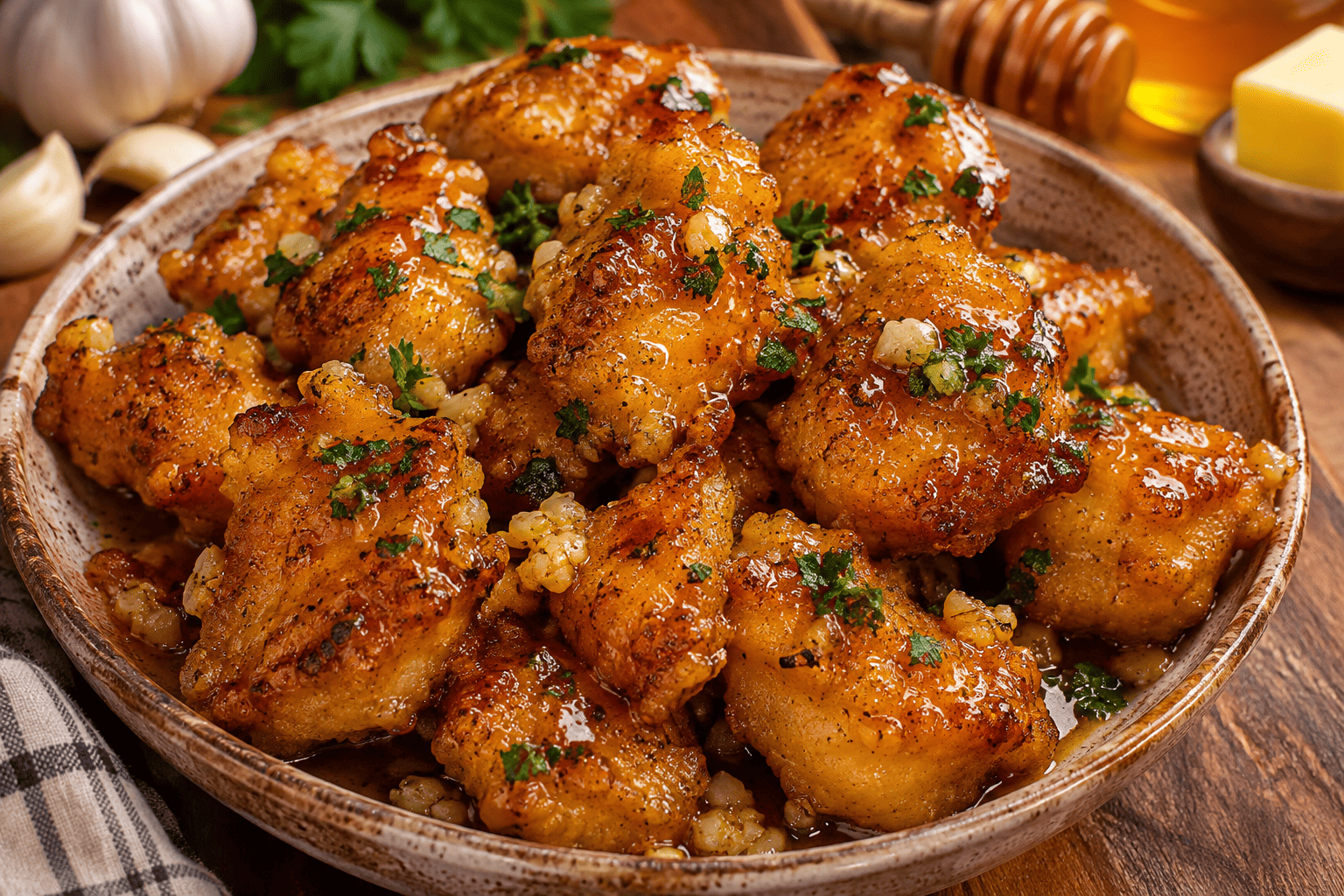
There are few culinary experiences quite as satisfying as biting into a piece of chicken that offers a perfect symphony of textures and flavors. Honey Butter Garlic Chicken Bites represent the pinnacle of modern comfort food—a dish that has taken social media by storm and secured a permanent spot in home cooks’ weekly rotation. Imagine tender, juicy morsels of chicken, encased in a shatteringly crisp golden shell, tossed in a glossy, amber-colored glaze that balances the floral sweetness of honey with the rich, savory depth of browned butter and the aromatic punch of fresh garlic.
This dish is not just dinner; it is an event. It bridges the gap between the sophisticated flavor profiles found in high-end Asian fusion restaurants and the nostalgic comfort of a home-cooked meal. Whether you are serving this as a main course over steamed jasmine rice, an appetizer for a game night gathering, or a late-night snack that hits all the right notes, these chicken bites deliver an explosion of flavor in every single bite. The magic lies in the sauce: it is sticky, savory, slightly sweet, and utterly addictive.
The History
While “Honey Butter Garlic Chicken” might sound like a timeless classic passed down through generations, its roots are actually a fascinating example of modern culinary fusion. The dish draws heavy inspiration from Korean Fried Chicken (KFC), a global phenomenon known for its double-fried technique that creates an incredibly light and crispy crust that stays crunchy even when sauced.
In the early 2010s, as Korean cuisine began to permeate Western pop culture, chefs and home cooks began experimenting with traditional Korean soy-garlic sauces. However, the Western palate often craves a sweeter profile. The addition of honey and a significant amount of butter transformed the traditional savory glaze into something richer and more decadent. This evolution created a hybrid dish that honors the technique of Asian frying while utilizing the flavor profile of American “honey butter” biscuits and sides. It is a true testament to how globalization has improved our dinner plates, merging the best techniques of the East with the comfort flavors of the West.
Ingredients Breakdown
To achieve restaurant-quality results, understanding the role of each ingredient is crucial. This isn’t just a list; it is a blueprint for flavor.
The Chicken
Chicken Thighs vs. Breasts: While you can use chicken breasts, boneless, skinless chicken thighs are highly recommended. Thighs have a higher fat content, which keeps the meat moist and tender even after high-heat cooking. They are also more forgiving if you accidentally overcook them by a minute or two.
The Coating
Cornstarch: This is the secret weapon for crispiness. Unlike flour, which can become doughy when wet, cornstarch creates a light, airy, and glass-like crunch. It absorbs moisture from the surface of the chicken, ensuring a dry exterior that fries up perfectly.
Salt and Pepper: Essential for seasoning the meat itself, not just the sauce. Without seasoning the meat directly, the inside of the bite will taste bland.
The Honey Butter Garlic Glaze
Unsalted Butter: We use unsalted butter to control the sodium levels. Salted butter can make the sauce too salty, overpowering the honey. The milk solids in the butter will brown slightly, adding a nutty flavor profile.
Honey: Use a high-quality, pure honey. Cheap honey blends often contain high fructose corn syrup which can burn quickly and lack complex floral notes. Clover honey or Wildflower honey works best here.
Fresh Garlic: Do not use jarred minced garlic or garlic powder for the sauce. Fresh garlic, minced finely or pressed, releases essential oils that provide the necessary aromatic punch. You need a lot of it—this is a garlic-forward dish.
Soy Sauce: This provides the umami backbone. It cuts through the sweetness of the honey and the richness of the butter, creating a balanced savory-sweet profile. Low-sodium soy sauce is preferred to keep the dish from becoming too salty.
Step-by-Step Recipe
Phase 1: Preparation and Marinating
Begin by cutting your chicken into uniform bite-sized pieces, roughly 1 to 1.5 inches. Uniformity is key to ensuring everything cooks at the same rate. Place the chicken in a large bowl. Sprinkle with salt, black pepper, and a pinch of garlic powder. Toss to coat evenly. Let this sit for at least 15 minutes while you prepare your station; this allows the salt to penetrate the meat.
Phase 2: The Dredge
In a separate shallow bowl or a large Ziploc bag, combine your cornstarch with a little extra salt and pepper. Take the chicken pieces one by one and dredge them thoroughly in the cornstarch. Shake off any excess powder. You want a thin, even dusting, not a thick clumpy batter. Place the coated chicken on a wire rack. Pro Tip: Let the coated chicken sit for 10 minutes before cooking. This helps the cornstarch adhere to the moisture on the chicken, preventing the coating from falling off in the pan.
Phase 3: Cooking the Chicken
Heat a large skillet (cast iron works best) over medium-high heat with about 2 tablespoons of neutral oil (like canola or vegetable oil). Once the oil shimmers, add the chicken in a single layer. Do not overcrowd the pan; cook in batches if necessary. Overcrowding steams the chicken rather than frying it. Cook for 3-4 minutes per side until golden brown and crispy. The internal temperature should reach 165°F (74°C). Remove the chicken and set it aside on a paper towel-lined plate.
Phase 4: Creating the Glaze
Wipe out the skillet with a paper towel to remove any burnt bits, but leave a tiny bit of fond (browned bits) for flavor. Lower the heat to medium. Add the butter. Once melted and foaming, add the minced garlic. Sauté for 1-2 minutes until fragrant, being careful not to burn the garlic. Add the honey and soy sauce. Stir constantly. The mixture will bubble vigorously. Let it simmer for 2 minutes until it thickens slightly and becomes glossy.
Phase 5: The Toss
Add the cooked chicken bites back into the skillet. Toss gently but quickly to coat every piece in the glaze. Cook for another 30 seconds to let the sauce cling to the crust. Garnish immediately with sliced green onions and sesame seeds.
Tips for Perfection
- The Double Fry Method: For the ultimate crunch, fry the chicken once until lightly golden, remove them, let them rest for 5 minutes, and then fry them again for 2 minutes. This renders out more fat and creates a harder crust.
- Garlic Management: Garlic burns easily. If your pan is too hot, the garlic will turn bitter before the sauce thickens. Keep the heat at a steady medium when making the glaze.
- Sauce Consistency: If the sauce is too thin, mix 1 teaspoon of cornstarch with 1 tablespoon of cold water and whisk it into the bubbling sauce. It will thicken instantly.
- Serving Temperature: Serve immediately. Like all fried foods, these are best eaten hot. If they sit too long, the steam from the chicken will soften the crust.
Variations and Customizations
While the classic honey butter garlic profile is divine, this recipe is highly adaptable:
- Spicy Honey Butter: Add 1 teaspoon of Gochujang (Korean chili paste) or Sriracha to the glaze for a sweet-heat kick.
- Lemon Pepper Twist: Add the zest of one lemon and extra cracked black pepper to the glaze for a brighter, zestier flavor profile.
- Air Fryer Version: Spray the coated chicken generously with oil spray. Air fry at 400°F (200°C) for 10-12 minutes, flipping halfway through. Toss in the sauce immediately after cooking.
- Gluten-Free: Ensure your soy sauce is replaced with Tamari or Coconut Aminos. Cornstarch is naturally gluten-free, making this an easy GF adaptation.
Health Considerations and Nutritional Value
It is important to acknowledge that this is an indulgent dish. The primary caloric drivers are the frying oil, the butter, and the sugar content in the honey. A standard serving (approx. 4-5 bites) can range between 350 to 450 calories depending on the size of the chicken and the amount of sauce used.
Protein Power: Chicken is an excellent source of lean protein, essential for muscle repair and satiety.
Modification for Health: To make this lighter, you can bake the chicken at 425°F on a wire rack instead of pan-frying. This eliminates the need for frying oil. You can also reduce the butter in the sauce by half and replace the missing volume with a splash of chicken broth, though this will alter the richness of the flavor.
Ingredients
- 1.5 lbs boneless, skinless chicken thighs, cut into bite-sized pieces
- 1/2 cup cornstarch
- 1 tsp salt (divided)
- 1/2 tsp black pepper (divided)
- 1/2 tsp garlic powder
- 2 tbsp vegetable or canola oil (for frying)
- 4 tbsp unsalted butter
- 6 cloves garlic, minced finely
- 1/3 cup honey
- 2 tbsp soy sauce
- 1 tbsp fresh parsley or green onions, chopped (for garnish)
- 1 tsp sesame seeds (for garnish)
Directions
- Prep the Chicken: Cut chicken into 1-inch cubes. Season with 1/2 tsp salt, 1/4 tsp pepper, and garlic powder. Toss to coat.
- Coat: Place cornstarch in a bowl. Dredge chicken pieces in cornstarch, shaking off excess. Place on a wire rack and let sit for 10 minutes.
- Fry: Heat oil in a large skillet over medium-high heat. Add chicken in a single layer (work in batches). Cook 3-4 minutes per side until golden brown and cooked through (165°F internal temp). Remove and set aside.
- Make Sauce: Wipe skillet clean. Melt butter over medium heat. Add minced garlic and sauté for 1 minute until fragrant. Stir in honey and soy sauce. Simmer for 2 minutes until slightly thickened.
- Combine: Add chicken back to the skillet. Toss gently to coat in the glaze. Cook for 30 seconds more.
- Serve: Garnish with green onions and sesame seeds. Serve hot.
FAQ
Can I make this ahead of time?
It is best served fresh. However, you can fry the chicken up to 2 hours in advance and keep it warm in a 200°F oven. Make the sauce right before serving and toss the chicken in it just before eating to maintain crispiness.
My sauce is too runny, what do I do?
Simmer it longer to reduce the liquid. If that doesn’t work, create a slurry with 1 tsp cornstarch and 1 tbsp cold water, whisk it into the bubbling sauce, and let it cook for another minute.
Can I use chicken breast?
Yes, but be careful not to overcook it as breasts dry out faster than thighs. Pound the breasts to an even thickness before cutting to ensure even cooking.
Summary
Honey Butter Garlic Chicken Bites are a crispy, golden fried chicken dish tossed in a rich, sticky glaze made from butter, honey, soy sauce, and fresh garlic. This easy-to-make recipe combines the crunch of Korean-style frying with sweet and savory American flavors for a perfect weeknight dinner or party appetizer.