
Introduction
Embarking on a journey with GLP-1 receptor agonists such as Wegovy, Zepbound, or Ozempic is a transformative step toward better health and sustainable weight management. However, the physiological changes brought about by these medications require a strategic approach to nutrition. As appetite suppresses and gastric emptying slows, the risk of inadequate protein intake and muscle loss (sarcopenia) increases significantly. This comprehensive 7-Day GLP-1 Meal Plan is meticulously designed to prioritize high protein consumption, ensure nutrient density, and offer easy dinner ideas that accommodate reduced stomach capacity and potential nausea.
The goal of this guide is not merely to provide a list of foods, but to empower you with the knowledge to fuel your body correctly while maximizing the efficacy of your medication. High protein intake is crucial during this phase to preserve lean muscle mass, maintain metabolism, and promote satiety without requiring large volumes of food. Whether you are in the titration phase or on a maintenance dose, this plan offers flexibility, flavor, and physiological support. Below, you will find a deep dive into the history of these medications, a breakdown of essential ingredients, a flagship step-by-step recipe, and a complete weekly roadmap to success.
The History
The development of GLP-1 (Glucagon-Like Peptide-1) agonists represents one of the most significant breakthroughs in modern endocrinology and weight management science. The story begins not in a pharmaceutical lab, but in the saliva of the Gila monster, a venomous lizard native to the southwestern United States. In the 1990s, researchers discovered a peptide in the lizard’s saliva called exendin-4, which was structurally similar to human GLP-1 but lasted much longer in the body. This discovery paved the way for the creation of synthetic analogs that could mimic the hormone’s effects without being immediately degraded by enzymes.
Initially, GLP-1 medications were developed strictly for the management of Type 2 diabetes, helping to regulate blood sugar levels by stimulating insulin secretion in response to meals. Drugs like exenatide (Byetta) were the pioneers in this space. However, clinicians soon noticed a secondary effect: significant weight loss among patients. This observation spurred further research into higher dosages specifically for obesity treatment, leading to the approval of liraglutide (Saxenda) and subsequently semaglutide (Wegovy) and tirzepatide (Zepbound). Zepbound introduced a dual agonist approach, targeting both GLP-1 and GIP receptors, enhancing weight loss outcomes even further.
Alongside the pharmacological evolution, dietary guidelines for users have also evolved. Early advice focused simply on calorie restriction. However, as long-term data emerged, the medical community recognized the critical importance of protein preservation. Patients on these medications experience rapid weight loss, which can include both fat and muscle tissue. Without intentional high-protein nutrition and resistance training, users risk lowering their basal metabolic rate, making weight maintenance difficult later. This meal plan is built upon the latest nutritional science regarding GLP-1 therapy, shifting the focus from “eating less” to “eating strategically.”
Ingredients Breakdown
Success on a GLP-1 meal plan hinges on selecting ingredients that are nutrient-dense, easy to digest, and high in biological value protein. Because your appetite will be significantly reduced, every bite must count. The following breakdown categorizes the essential components you will need for the 7-day plan, focusing on quality and tolerability.
1. Lean Proteins (The Foundation):
Protein is the non-negotiable macronutrient for GLP-1 users. Aim for 20-30 grams per meal. Excellent sources include skinless chicken breast, ground turkey (93% lean or higher), white fish like cod or tilapia, eggs, Greek yogurt, and cottage cheese. Plant-based options like tofu, tempeh, and lentils are also viable but should be paired with complementary proteins to ensure a complete amino acid profile. Protein powders (whey isolate or plant-based) are highly recommended for days when solid food is unappealing.
2. Digestible Carbohydrates:
Complex carbohydrates provide energy without spiking blood sugar. However, high-fiber grains can sometimes cause bloating when combined with GLP-1 side effects. Opt for well-cooked quinoa, white rice (easier to digest than brown during nausea phases), sweet potatoes, and oats. Avoid refined sugars and processed white breads which offer little nutritional value.
3. Healthy Fats:
Fats slow gastric emptying further, which can be beneficial for satiety but detrimental if you are experiencing nausea. Use fats sparingly. Avocado, olive oil, nuts, and seeds are excellent choices. Incorporate them in moderation to avoid feeling overly full or sluggish.
4. Low-Acid Vegetables:
Vegetables are vital for micronutrients, but raw cruciferous vegetables (like broccoli or cauliflower) can cause gas and bloating. Focus on cooked vegetables such as spinach, zucchini, carrots, green beans, and bell peppers. Steaming or roasting them makes them easier on the digestive system.
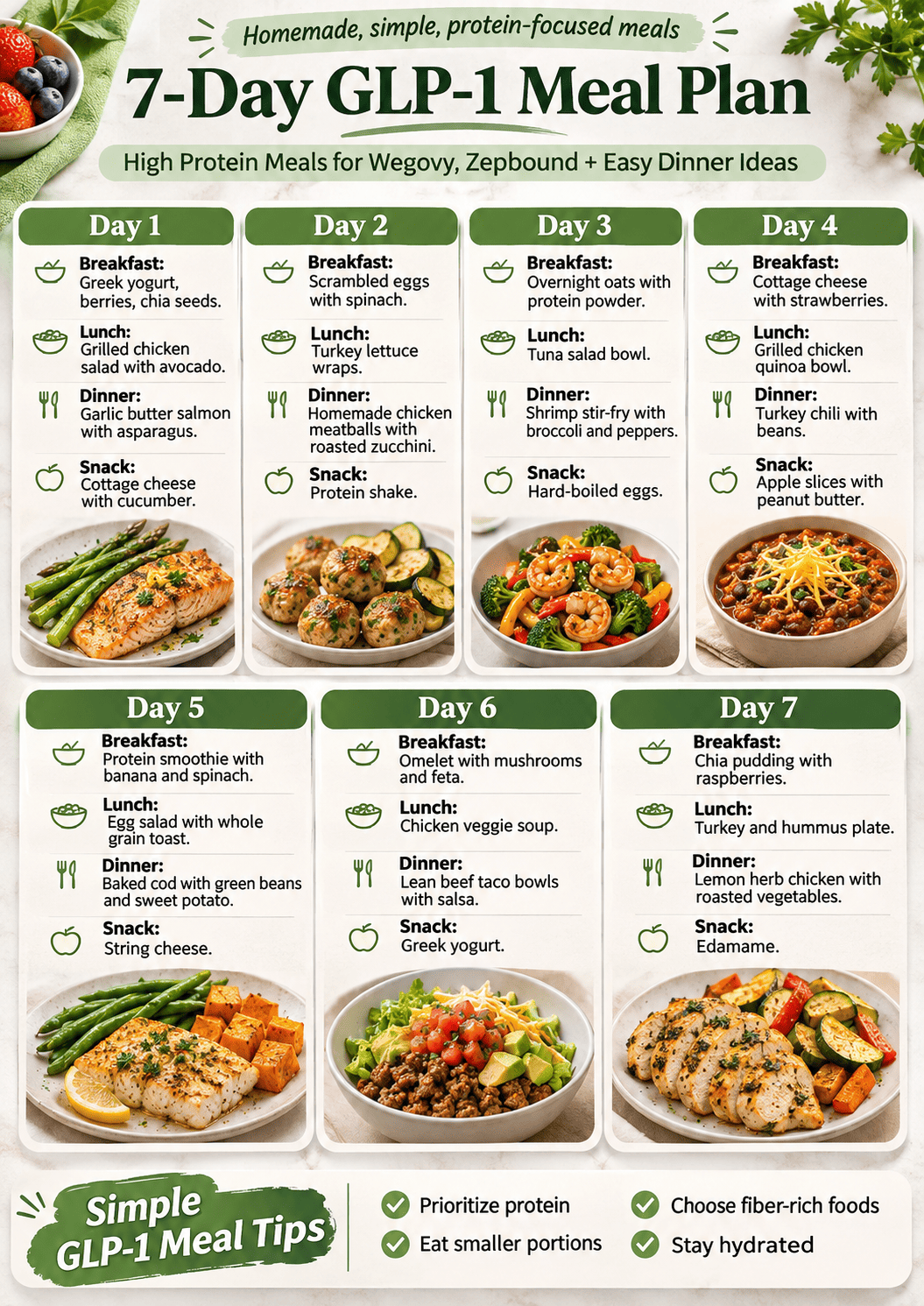
7-Day Menu Overview:
To ensure you stay on track, here is a high-level overview of the weekly rotation designed to minimize cooking fatigue while maximizing protein:
- Day 1: Greek Yogurt Parfait (Breakfast), Chicken Salad (Lunch), Turkey Skillet (Dinner)
- Day 2: Scrambled Eggs with Spinach (Breakfast), Leftover Turkey Skillet (Lunch), Baked Salmon with Asparagus (Dinner)
- Day 3: Protein Smoothie (Breakfast), Tuna Lettuce Wraps (Lunch), Lean Beef Stir-Fry (Dinner)
- Day 4: Cottage Cheese with Fruit (Breakfast), Leftover Stir-Fry (Lunch), Grilled Chicken with Quinoa (Dinner)
- Day 5: Oatmeal with Protein Powder (Breakfast), Hard Boiled Eggs & Fruit (Lunch), Shrimp Zucchini Noodles (Dinner)
- Day 6: Greek Yogurt Parfait (Breakfast), Chicken Salad (Lunch), Vegetarian Lentil Soup (Dinner)
- Day 7: Protein Smoothie (Breakfast), Leftover Soup (Lunch), Roasted Chicken Thighs with Roots (Dinner)
Step-by-Step Recipe
While the 7-day plan offers variety, consistency is key. The following recipe is a flagship dinner idea featured prominently in the plan: High-Protein GLP-1 Friendly Turkey & Veggie Skillet. This dish is designed to be cooked in one pan to minimize cleanup, uses ground turkey for easy digestion, and incorporates vegetables that are cooked until tender to reduce gastrointestinal distress. It yields approximately 4 servings, allowing for leftovers for lunch the following day.
Preparation Time: 10 Minutes
Cooking Time: 20 Minutes
Total Time: 30 Minutes
Servings: 4
This recipe focuses on texture and flavor without heavy sauces that might trigger acid reflux, a common side effect of GLP-1 medications. The protein content is high to support muscle retention, and the portion sizes are adjustable based on your current tolerance levels.
Tips
Navigating life on Wegovy or Zepbound involves more than just food selection; it requires behavioral adjustments and mindful eating habits. Here are expert tips to maximize your results and minimize side effects:
1. Prioritize Protein First:
When you sit down to eat, consume your protein source before touching your carbohydrates or vegetables. Since your stomach capacity is limited, this ensures you get your essential macros before feeling full. If you fill up on rice or salad first, you may not have room for the chicken or fish.
2. Hydrate Between Meals, Not During:
Drinking large amounts of water while eating can flush food through your system too quickly or cause bloating. Aim to drink 16 ounces of water 30 minutes before a meal and wait 30 minutes after eating to drink again. Sip slowly during the meal only if necessary to swallow.
3. Small, Frequent Meals:
The traditional three-square-meals structure may not work. You might find better success with 5-6 mini-meals throughout the day. This keeps blood sugar stable and prevents the nausea associated with an empty stomach or an overly full stomach.
4. Chew Thoroughly:
Digestion begins in the mouth. Because gastric emptying is slowed by medication, large chunks of food can sit in the stomach and cause discomfort. Chew each bite until it is almost liquid before swallowing. This reduces the workload on your stomach and improves nutrient absorption.
5. Manage Nausea Proactively:
Keep ginger tea, peppermint candies, or plain crackers on hand. If you feel nausea rising, pause eating immediately. Forcing food down can lead to vomiting. Cold foods often tolerate better than hot foods during nausea episodes because they emit less aroma.
6. Track Your Intake:
Use a tracking app to monitor your protein grams. It is easy to overestimate how much protein you are eating when portions are small. Aim for a minimum of 80-100 grams of protein daily, adjusted for your body weight and doctor’s advice.
Variations and Customizations
Dietary needs are personal, and what works for one GLP-1 user may not work for another. This plan is designed to be modular. Below are several variations to accommodate dietary restrictions, preferences, and specific side effect management.
Vegetarian/Vegan Adaptation:
Replace animal proteins with high-quality plant alternatives. Use crumbled tempeh or extra-firm tofu instead of ground turkey. Lentils and chickpeas are excellent but should be well-cooked to reduce gas. Consider a pea-protein based powder to meet daily goals if solid plant protein is too filling.
Dairy-Free Options:
If dairy causes bloating or mucus production, swap Greek yogurt for coconut or almond-based yogurts fortified with protein. Replace cottage cheese with silken tofu blends. Ensure you are getting enough calcium from leafy greens or fortified plant milks.
Low-Fat Modification:
Some users experience severe nausea with any fat intake. In this case, strip all added oils from the recipe. Use non-stick cookware or parchment paper for baking. Choose ultra-lean cuts of meat (chicken breast instead of thighs) and avoid avocado or nuts until tolerance improves.
Spice and Flavor Adjustments:
GLP-1 medications can sometimes alter taste perception, making things taste metallic or bland. Combat this with fresh herbs like cilantro, basil, or parsley rather than heavy salt. Acidic flavors like lemon juice can help cut through nausea, but avoid if you have acid reflux. Spicy foods should be introduced cautiously as they can irritate a sensitive stomach lining.
Texture Modifications:
If chewing is fatiguing or solid food is unappealing, blend your meals. Smoothies are an excellent way to consume spinach, protein powder, fruit, and nut butters without the texture of solid food. Soups can also be pureed for easier digestion.
Health Considerations and Nutritional Value
Understanding the nutritional landscape of this meal plan is vital for long-term health. While weight loss is the primary goal for many, the preservation of metabolic health is equally important. This section outlines the key health considerations and the nutritional profile you should aim for.
Muscle Preservation (Sarcopenia Prevention):
Rapid weight loss often correlates with muscle loss. Muscle tissue is metabolically active, meaning it burns calories at rest. Losing muscle can slow your metabolism, leading to weight plateaus or regain once medication stops. The high protein focus of this plan (aiming for 1.2 to 1.6 grams of protein per kilogram of ideal body weight) is specifically calculated to mitigate this risk. Combining this nutrition plan with resistance training is highly recommended.
Blood Sugar Stability:
GLP-1 agonists improve insulin sensitivity. However, skipping meals can lead to hypoglycemia, especially if you are also on other diabetes medications. The inclusion of complex carbohydrates in moderation ensures a steady release of glucose into the bloodstream, preventing energy crashes and dizziness.
Gut Health:
Constipation is a very common side effect of GLP-1 medications due to slowed intestinal movement. The fiber content in this plan is balanced; too much fiber without enough water can worsen constipation. Ensure you are drinking adequate fluids and consider a magnesium supplement or probiotic if recommended by your healthcare provider. The inclusion of cooked vegetables provides soluble fiber which is gentler on the gut than insoluble fiber.
Nutritional Value Estimate (Per Day):
Following this plan generally provides:
Calories: 1,200 – 1,500 (adjust based on activity level)
Protein: 100g – 120g
Carbohydrates: 100g – 130g
Fats: 40g – 50g
Fiber: 25g
This macro split prioritizes protein while keeping calories in a deficit suitable for weight loss without triggering starvation mode.
Ingredients
For the flagship High-Protein Turkey & Veggie Skillet recipe detailed in the Step-by-Step section, gather the following ingredients. These quantities are for 4 servings.
- 1 lb Lean Ground Turkey: (93% lean or higher to reduce fat content)
- 1 Medium Zucchini: (Diced into small cubes for easier digestion)
- 1 Bell Pepper: (Any color, diced)
- 1 Cup Spinach: (Fresh, washed)
- 1/2 Cup Onion: (Finely chopped)
- 2 Cloves Garlic: (Minced)
- 1 Tablespoon Olive Oil: (Or avocado oil)
- 1 Teaspoon Italian Seasoning: (Dried blend)
- 1/2 Teaspoon Paprika: (For mild flavor depth)
- Salt and Black Pepper: (To taste)
- 1/4 Cup Low-Sodium Chicken Broth: (To keep moisture without heavy sauces)
- Optional: 1/4 cup Quinoa (cooked) to bulk up the meal if hunger persists
Directions
Follow these detailed instructions to prepare the Turkey & Veggie Skillet. This method ensures even cooking and maximizes flavor while keeping the dish light.
- Prep Your Vegetables: Wash all produce thoroughly. Dice the zucchini and bell pepper into uniform small pieces (approximately 1/2 inch cubes). Small pieces cook faster and are easier to digest. Finely chop the onion and mince the garlic.
- Heat the Pan: Place a large non-stick skillet or frying pan over medium heat. Add the olive oil and allow it to warm for about 1 minute. Do not let the oil smoke.
- Sauté Aromatics: Add the chopped onion to the pan. Cook for 2-3 minutes until translucent and soft. Add the minced garlic and cook for an additional 30 seconds until fragrant. Be careful not to burn the garlic.
- Brown the Turkey: Increase heat to medium-high. Add the ground turkey to the skillet. Use a wooden spoon or spatula to break the meat into small crumbles. Cook for 5-7 minutes, stirring occasionally, until the turkey is fully browned and no pink remains.
- Add Vegetables and Seasoning: Add the diced zucchini and bell pepper to the skillet. Sprinkle the Italian seasoning, paprika, salt, and black pepper over the mixture. Stir well to combine.
- Simmer: Pour in the low-sodium chicken broth. This creates steam to help cook the vegetables without frying them in excess oil. Reduce heat to medium-low, cover the pan with a lid, and let it simmer for 5-8 minutes until the vegetables are tender but not mushy.
- Wilt the Spinach: Remove the lid and stir in the fresh spinach. Cook for 1-2 minutes until the spinach has wilted down into the mixture.
- Serve: Remove from heat. Let it cool slightly before eating to avoid burning your mouth, as sensitivity can be heightened on medication. Divide into 4 portions. Store leftovers in an airtight container in the refrigerator for up to 3 days.
FAQ
Q: Can I drink alcohol while on Wegovy or Zepbound?
A: It is generally recommended to limit or avoid alcohol. Alcohol adds empty calories, can worsen nausea, and may increase the risk of hypoglycemia. If you do choose to drink, do so in moderation and never on an empty stomach.
Q: What if I cannot eat enough protein?
A: If solid protein is difficult, rely on protein shakes. Look for options with 20-30 grams of protein per serving and low sugar content. You can also mix protein powder into oatmeal or yogurt to boost intake without additional volume.
Q: How do I handle constipation on this plan?
A: Increase water intake immediately. Consider adding a fiber supplement like psyllium husk, but introduce it slowly. Walking after meals can also stimulate bowel movements. Consult your doctor if issues persist.
Q: Is this meal plan suitable for Type 1 Diabetes?
A: This plan is designed with GLP-1 agonists in mind, which are typically prescribed for Type 2 Diabetes or obesity. Type 1 Diabetics should consult their endocrinologist before making significant dietary changes, as insulin requirements may shift with weight loss.
Q: Can I freeze the leftovers?
A: Yes, the turkey skillet freezes well. Portion it into individual containers and freeze for up to 3 months. Thaw in the refrigerator overnight before reheating.
Q: Why do I feel full so quickly?
A: This is the intended mechanism of GLP-1 medications. They signal satiety to the brain and slow stomach emptying. Listen to your body and stop eating when you feel comfortably full to avoid vomiting.
Q: How long should I follow this high-protein plan?
A: You should maintain a high-protein diet indefinitely while on the medication to preserve muscle mass. Even after stopping the medication, maintaining higher protein intake helps prevent weight regain.
Summary
This 7-Day GLP-1 Meal Plan prioritizes high protein and digestible nutrients to support muscle retention and manage side effects while using Wegovy or Zepbound. By following the structured recipes and tips provided, you can optimize your health outcomes and maintain sustainable weight loss.