
Introduction
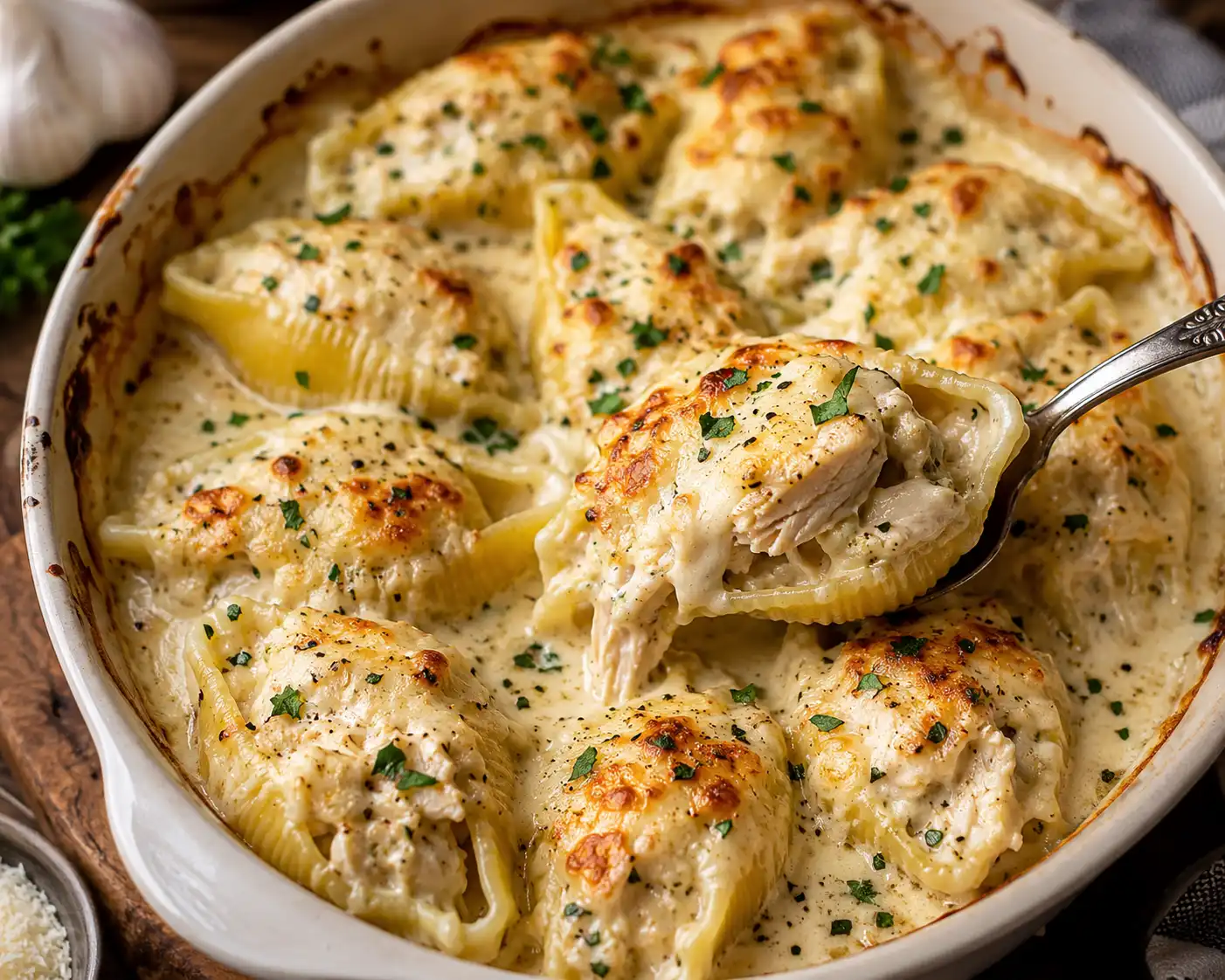
Garlic Butter Chicken Alfredo Stuffed Shells is a decadent, restaurant-worthy pasta dish that brings together the comforting richness of creamy alfredo sauce, the savory depth of sautéed garlic butter chicken, and the tender, pillowy texture of jumbo pasta shells—all baked to golden perfection. This isn’t just a meal; it’s an experience—layers of bold flavor, luxurious mouthfeel, and nostalgic warmth, elevated with thoughtful technique and premium ingredients. Whether you’re planning a cozy family dinner, impressing guests at a weekend gathering, or simply treating yourself to something truly special, this dish delivers on every front: aroma that fills the kitchen, visual appeal that invites immediate photos, and a taste profile that balances indulgence with balance. It marries Italian-American tradition with modern culinary flair—transforming humble pantry staples into a showstopping centerpiece worthy of celebration.
The History
The origins of stuffed shells trace back to mid-20th century American-Italian cuisine, where immigrant chefs adapted classic Italian pastasciutta and timballo techniques for accessible ingredients and home kitchens. Traditional conchiglie ripiene (stuffed shells) were often filled with ricotta, spinach, and mozzarella—inspired by Sicilian and Campanian antipasti traditions—but evolved in the U.S. to embrace richer, creamier fillings as dairy availability increased and palates leaned toward bolder, more decadent profiles. The alfredo sauce itself—though rooted in early 1900s Rome (credited to Alfredo di Lelio)—was dramatically reimagined stateside: swapped from its original butter-and-Parmigiano base to include heavy cream, garlic, and sometimes cheese blends for enhanced stability and flavor intensity. Adding grilled or sautéed chicken reflects the late-20th-century rise of protein-forward pasta dishes, popularized by chains like Olive Garden and later refined by food bloggers and TV chefs seeking “gourmet comfort food.” Garlic butter, meanwhile, has ancient roots—from Roman garum-infused oils to medieval European herb-butters—but its modern American iteration—emphasizing browned butter, fresh minced garlic, and aromatic herbs like parsley and thyme—became a cornerstone of upscale home cooking in the 2010s. This recipe is thus a delicious convergence: Old World technique meets New World abundance, filtered through decades of culinary innovation, social media-driven presentation trends, and the ever-growing demand for make-ahead, freezer-friendly, yet undeniably impressive weeknight elegance.
Ingredients Breakdown
Every element of this dish serves a precise sensory and structural purpose—nothing is arbitrary. Let’s explore each component in depth:
- Jumbo Pasta Shells (30–32 count): Specially designed for stuffing, these extra-large conchiglie have deep cavities and ridged exteriors that grip sauce and retain shape during boiling and baking. Opt for bronze-die extruded varieties—they offer superior sauce adhesion and al dente resilience. Avoid overcooking; they’ll finish in the oven, so aim for *just* tender with slight resistance (“molto al dente”).
- Boneless, Skinless Chicken Breasts (1.5 lbs): Lean but flavorful when properly prepared. Cut into ½-inch cubes—not too small (they’ll dry out), not too large (they won’t integrate smoothly into the filling). Brining for 20 minutes in ¼ cup water + 1 tsp salt + 1 tsp sugar enhances juiciness and seasoning penetration. Pat *extremely* dry before searing—critical for achieving golden garlic-butter fond.
- Unsalted Butter (12 tbsp / 1.5 sticks): Divided use is key: 6 tbsp for the chicken, 4 tbsp for the alfredo, and 2 tbsp reserved for finishing. High-fat, European-style butter (82–84% fat) yields deeper nuttiness when browned and superior emulsification in the sauce. Never substitute margarine—it lacks milk solids needed for flavor development and can separate under heat.
- Fresh Garlic (12 cloves, finely minced): Not powdered, not jarred—fresh only. Mince by hand or microplane for maximum volatile oil release. Half is gently cooked in butter for aromatic depth; half is added raw at the end for bright, pungent lift. Garlic’s alliinase enzyme activates on cutting—wait 10 minutes before heating to maximize beneficial allicin formation.
- Heavy Cream (2 cups, minimum 36% fat): Non-negotiable for velvety texture and thermal stability. Lower-fat creams (half-and-half, whole milk) will curdle or thin out. Cold cream added gradually to warm (not boiling) base prevents splitting. For ultra-luxury, substitute ½ cup crème fraîche stirred in off-heat.
- Freshly Grated Parmigiano-Reggiano (1.5 cups, finely grated): Authentic DOP-certified cheese only—pre-grated contains anti-caking agents that impede melting and create graininess. Use a microplane for maximum surface area and seamless integration. Reserve ¼ cup for topping to ensure crisp, salty crunch.
- Grated Romano Pecorino (½ cup): Adds sharp, salty, sheepy complexity that cuts through richness. Aged 8–12 months for optimal crystalline texture and umami punch. Do not omit—this is the secret layer of depth distinguishing “good” from “extraordinary.”
- Full-Fat Ricotta (1.5 cups, whole-milk, drained): Must be well-drained (line a fine-mesh strainer with cheesecloth, refrigerate 1 hour) to prevent watery filling. Opt for artisanal brands like Calabro or Polly-O—avoid low-fat versions, which lack body and richness. Stirring in 1 egg yolk (not whole egg) adds binding power without rubberiness.
- Fresh Spinach (4 cups, baby, packed): Adds color, subtle earthiness, and vital nutrients. Wilt separately in olive oil with a pinch of nutmeg—excess moisture must be squeezed out thoroughly (use clean kitchen towel) or it will dilute the filling. No frozen spinach unless fully thawed, pressed, and chopped fine.
- Dry White Wine (½ cup, e.g., Pinot Grigio or Sauvignon Blanc): Deglazes the chicken pan, lifting caramelized fond and adding acidity to balance fat. Alcohol cooks off, leaving only bright, fruity nuance. Substitute dry vermouth if wine isn’t available.
- Fresh Herbs (¼ cup each finely chopped flat-leaf parsley & fresh thyme leaves): Parsley provides grassy freshness and visual pop; thyme contributes floral-earthy backbone. Add parsley in two stages—half in filling, half garnish—to preserve vibrancy. Thyme stems are removed—only tender leaves used.
- Nutmeg (¼ tsp freshly grated): Warm, sweet-spicy note that harmonizes dairy and garlic. Pre-ground loses potency within weeks—always grate whole nutmeg on a microplane.
- Red Pepper Flakes (¼ tsp, optional but recommended): Not for heat, but for aromatic complexity—adds subtle fruitiness and dimension. Toast lightly in butter before adding garlic to bloom oils.
- Sea Salt & Freshly Cracked Black Pepper: Kosher salt for seasoning; Maldon or flaky sea salt for finishing. Tellicherry black peppercorns, cracked just before use, deliver citrusy, floral notes absent in pre-ground pepper.
Step-by-Step Recipe
- Prep & Brine Chicken (20 min ahead): In a bowl, combine ¼ cup cold water, 1 tsp kosher salt, and 1 tsp sugar. Submerge cubed chicken, refrigerate 20 minutes. Drain, pat *bone-dry* with paper towels. Toss with 1 tsp olive oil, ½ tsp black pepper, and ¼ tsp red pepper flakes.
- Toast Shells & Parboil (12 min): Bring 5 quarts salted water (2 tbsp Diamond Crystal) to rolling boil. Add shells, stir immediately to prevent sticking. Cook exactly 9 minutes—test one: should offer gentle resistance when bitten. Drain in colander, rinse *briefly* with cool water to halt cooking, then lay flat on parchment-lined sheet trays in single layer. Lightly spray with neutral oil (avocado or grapeseed) to prevent drying.
- Sear Chicken & Build Garlic Butter Base (10 min): Heat 6 tbsp butter in large stainless skillet over medium-high. When foaming subsides and butter turns golden (not brown), add chicken in single layer—do not crowd. Sear 2–3 min per side until deeply golden. Remove chicken; set aside. Reduce heat to medium. Add 6 minced garlic cloves, ¼ tsp red pepper flakes, and 1 tsp fresh thyme. Sauté 60 seconds until fragrant—do not brown garlic. Deglaze with ½ cup white wine, scraping up all browned bits. Simmer 2 min until reduced by half. Stir in seared chicken and 2 tbsp chopped parsley. Cool completely (refrigerate 15 min if rushed).
- Prepare Ricotta Filling (8 min): In large bowl, combine drained ricotta, 1 egg yolk, ½ cup Parmigiano, ¼ cup Romano, 2 tbsp parsley, 2 tbsp thyme, ¼ tsp nutmeg, ½ tsp black pepper, and 1 tsp kosher salt. Fold in cooled chicken mixture and squeezed spinach. Taste and adjust—should be rich, savory, balanced. Cover and chill 15 min for flavors to meld.
- Make Restaurant-Quality Alfredo Sauce (15 min): In heavy-bottomed saucepan, melt 4 tbsp butter over medium-low. Add remaining 6 garlic cloves; cook 2 min until soft but not colored. Whisk in 2 cups cold heavy cream. Bring to *bare simmer* (tiny bubbles at edges)—do NOT boil. Reduce heat to low. Gradually whisk in remaining 1 cup Parmigiano and ¼ cup Romano, ¼ cup at a time, waiting for full melting before next addition. Simmer 5–7 min, stirring constantly with silicone whisk, until thickened to coat back of spoon (nappe stage). Remove from heat. Stir in 2 tbsp cold butter for shine and silkiness. Season with salt and white pepper.
- Stuff & Assemble (10 min): Preheat oven to 375°F (190°C). Spread 1.5 cups alfredo in bottom of 13×9″ baking dish. Using a piping bag fitted with ½” round tip (or sturdy zip-top bag with corner snipped), pipe ¼ cup filling into each shell. Gently place, seam-side up, into dish. Nestle tightly in staggered rows. Pour remaining alfredo evenly over shells—cover completely. Sprinkle with reserved ¼ cup Parmigiano and extra black pepper.
- Bake to Perfection (35–40 min): Cover dish *tightly* with foil (tent slightly to prevent cheese sticking). Bake 25 minutes. Remove foil. Bake uncovered 10–15 min until top is bubbling vigorously at edges and golden spots appear. Rotate dish halfway. For ultimate finish: broil 1–2 min until surface is mottled brown and crisp—watch closely!
- Rest & Serve (10 min): Let rest *undisturbed* for 10 minutes—this allows sauce to reabsorb, shells to settle, and filling to firm slightly for clean scooping. Garnish generously with remaining parsley and flaky sea salt. Serve with garlic bread, arugula salad dressed in lemon vinaigrette, and chilled Pinot Grigio.
Tips
- Temperature Control is Everything: Garlic burns at 300°F—keep butter below smoking point and garlic below golden-brown. If garlic sizzles violently, remove pan from heat instantly and swirl to cool.
- The “Cold Fill, Hot Sauce” Rule: Always chill the ricotta-chicken filling before stuffing. Warm filling melts cheese prematurely and causes leakage. Conversely, alfredo must be hot (but not boiling) when poured—cold sauce won’t cling or thicken properly in oven.
- Al Dente is Non-Negotiable: Overcooked shells turn mushy and collapse. Undercooked shells remain chalky. The 9-minute mark is precise—set timer, test at 8:30, adjust by 30-second increments.
- Sauce Consistency Mastery: If alfredo thickens too much while resting, whisk in 1–2 tbsp warm cream. If too thin after baking, return dish uncovered to 400°F for 3–4 min to reduce.
- No-Stick Shell Strategy: After parboiling, toss shells *lightly* in 1 tsp olive oil—just enough to coat, not pool. Lay flat without overlapping. Refrigerate uncovered 10 min to dry surface—prevents steam pockets during baking.
- Freezer-Friendly Assembly: Assemble fully (unbaked), cover tightly with foil + plastic wrap. Freeze up to 3 months. Bake from frozen: add 20 min covered, then 15–20 min uncovered, plus 3–5 min broil.
- Leftover Magic: Extra filling? Stuff portobello caps and bake 20 min at 375°F. Leftover alfredo? Thin with pasta water, toss with linguine and roasted cherry tomatoes.
- Golden Pan Secret: Use a light-colored, non-stick or enameled cast iron 13×9″. Dark pans over-brown edges. Preheat dish in oven 5 min before assembling for even heat transfer.
- Herb Timing Matters: Add delicate herbs (parsley, chives, basil) only in final 2 minutes of baking or as garnish—heat destroys volatile oils and turns them bitter.
- Resting = Structural Integrity: Cutting too soon releases steam, making shells slide apart and sauce run. That 10-minute rest lets starches reset and proteins relax—resulting in clean, elegant portions.
Variations and Customizations
This recipe is a canvas—adaptable for dietary needs, seasonal ingredients, global flavors, and pantry constraints—without sacrificing luxury or cohesion:
- Gluten-Free: Use certified GF jumbo shells (Barilla GF or Jovial). Ensure all sauces, wines, and cheeses are GF-tested (some Romano contains gluten-based mold cultures). Thicken alfredo with 1 tsp xanthan gum whisked into cold cream before heating.
- Dairy-Free / Vegan: Replace butter with high-oleic sunflower oil or vegan butter (Miyoko’s). Use cashew cream (1 cup soaked raw cashews + ¾ cup water, blended ultra-smooth) instead of heavy cream. Swap cheeses for nutritional yeast (¼ cup), white miso (1 tbsp), and lemon zest (1 tsp) for umami. Fill with lentil-walnut “chicken” and sautéed shiitakes.
- Low-Carb / Keto: Substitute shells with blanched, large napa cabbage leaves or zucchini ribbons (peeled with vegetable peeler, salted, pressed dry). Reduce ricotta to ½ cup, boost with 1 cup mascarpone. Use ghee instead of butter. Skip wine; deglaze with chicken broth + 1 tsp apple cider vinegar.
- Seafood Twist: Replace chicken with 1 lb lump crabmeat (picked, patted dry) and ½ lb sautéed shrimp. Add 1 tbsp Old Bay to garlic butter. Finish with lemon zest and dill instead of parsley.
- Vegetarian Luxe: Omit chicken; add 1 cup roasted butternut squash (cubed, tossed in maple syrup + smoked paprika), ½ cup toasted pine nuts, and ¼ cup sun-dried tomatoes (oil-packed, chopped). Boost umami with 1 tsp truffle oil in alfredo.
- Spicy Arrabbiata Fusion: Stir 2 tbsp Calabrian chili paste into alfredo. Top baked shells with crispy pancetta and pickled Fresno chilies.
- Mediterranean Herb Garden: Replace parsley/thyme with 3 tbsp chopped oregano, mint, and dill. Add crumbled feta (¼ cup) to filling and kalamata olives (⅓ cup, pitted) to chicken mixture.
- Smoky Chipotle Version: Blend 1–2 canned chipotles in adobo into alfredo. Rub chicken with 1 tsp chipotle powder before searing. Garnish with cotija and lime crema.
- Thanksgiving Leftover Remix: Use shredded turkey instead of chicken. Stir in ½ cup chopped giblet gravy solids and ¼ cup dried cranberries to filling. Top with toasted pecans.
- Breakfast-for-Dinner: Add 2 beaten eggs to ricotta mixture. Fold in crumbled cooked bacon and caramelized onions. Top with fried sage and poached eggs before serving.
Health Considerations and Nutritional Value
While inherently rich, this dish can be thoughtfully optimized for wellness without compromising satisfaction. A standard serving (3 shells + sauce) contains approximately 780–850 calories, 42g protein, 48g fat (24g saturated), 38g carbohydrates, and 3g fiber. Key nutritional highlights and mindful modifications:
- Protein Powerhouse: Chicken provides complete amino acids, B6, and selenium. Ricotta offers whey and casein proteins for sustained satiety. Boost protein further with 2 tbsp hemp hearts stirred into filling.
- Calcium & Vitamin K Synergy: Parmigiano and Romano supply highly bioavailable calcium (≈30% DV per serving) and vitamin K2 (menaquinone), critical for bone mineralization and arterial health. Pair with spinach’s vitamin K1 for synergistic activation.
- Garlic’s Cardio-Protective Compounds: Allicin (formed when raw garlic is crushed and rested) supports healthy blood pressure and cholesterol metabolism. Including raw-minced garlic in the final stir ensures maximal retention.
- Healthy Fat Profile: Butter’s CLA (conjugated linoleic acid) and butyrate support gut barrier integrity. Heavy cream provides fat-soluble vitamins A, D, E, and K. For heart-health focus, replace 2 tbsp butter with extra-virgin olive oil in chicken sear.
- Fiber Optimization: Traditional shells are low-fiber. Increase to 6g/serving by using whole-wheat jumbo shells or adding 2 tbsp ground flaxseed to ricotta mixture.
- Sodium Management: Most sodium comes from cheese and added salt. Reduce by 30% using low-sodium Parmigiano (BelGioioso brand) and omitting added salt in filling—relying on cheese and herbs for savoriness.
- Lower-Saturated Fat Options: Substitute half the butter with avocado oil. Use part-skim ricotta (drain extra well) and reduce Romano to ¼ cup. Add 1 tbsp lemon juice to alfredo for brightness that reduces perceived need for salt/fat.
- Gut-Friendly Fermentation: Aged cheeses contain natural probiotics. For enhanced microbiome support, serve with a side of unpasteurized sauerkraut or kimchi.
- Portion Mindfulness: Serve in smaller 9×9″ dish for 6 generous servings (vs. 4 oversized), or pair with double portion of roasted vegetables (asparagus, broccoli, cherry tomatoes) to increase volume and nutrient density without excess calories.
- Allergen Notes: Contains dairy, gluten, eggs. Nut-free and soy-free as written. For shellfish allergy, avoid seafood variations. Always verify cheese rennet source (microbial vs. animal) for vegetarian diets.
Ingredients
- 30–32 jumbo pasta shells (bronze-die preferred)
- 1.5 lbs boneless, skinless chicken breasts, cubed ½-inch
- 12 tbsp unsalted European-style butter, divided
- 12 cloves garlic, finely minced (6 for chicken, 6 for alfredo)
- 2 cups heavy cream (36% fat minimum)
- 1.5 cups freshly grated Parmigiano-Reggiano (DOP-certified), divided
- ¾ cup grated Romano Pecorino (aged 8–12 months), divided
- 1.5 cups full-fat whole-milk ricotta, well-drained
- 4 cups fresh baby spinach, packed
- ½ cup dry white wine (Pinot Grigio or Sauvignon Blanc)
- ¼ cup finely chopped fresh flat-leaf parsley, divided
- 2 tbsp fresh thyme leaves, finely chopped
- ¼ tsp freshly grated nutmeg
- ¼ tsp red pepper flakes
- 1 large egg yolk
- 2 tbsp extra-virgin olive oil
- 2 tbsp Diamond Crystal kosher salt, divided
- 1.5 tsp freshly cracked black pepper, divided
- Flaky sea salt (e.g., Maldon), for finishing
Directions
- Brine chicken in ¼ cup water + 1 tsp salt + 1 tsp sugar for 20 minutes. Drain, pat *extremely* dry. Toss with 1 tsp olive oil, ½ tsp black pepper, and ¼ tsp red pepper flakes.
- Bring 5 quarts salted water to rolling boil. Add shells; cook 9 minutes until *molto al dente*. Drain, rinse briefly with cool water, lay flat on parchment-lined trays, lightly spray with oil.
- In large skillet, melt 6 tbsp butter over medium-high. When golden, add chicken in single layer. Sear 2–3 min per side until deeply golden. Remove. Reduce heat to medium; add 6 minced garlic cloves, ¼ tsp red pepper flakes, 1 tsp thyme. Sauté 60 sec. Deglaze with wine; simmer 2 min. Return chicken; cool completely (refrigerate 15 min).
- In bowl, combine ricotta, egg yolk, ½ cup Parmigiano, ¼ cup Romano, 2 tbsp parsley, 2 tbsp thyme, nutmeg, ½ tsp black pepper, 1 tsp salt. Fold in cooled chicken and squeezed spinach. Chill 15 min.
- In saucepan, melt 4 tbsp butter over medium-low. Add remaining 6 garlic cloves; cook 2 min. Whisk in cold cream. Bring to bare simmer. Reduce heat to low. Whisk in remaining cheeses ¼ cup at a time. Simmer 5–7 min until nappe-thick. Remove; stir in 2 tbsp cold butter.
- Preheat oven to 375°F. Spread 1.5 cups alfredo in 13×9″ dish. Pipe ¼ cup filling into each shell. Place seam-up in dish. Pour remaining alfredo over. Top with reserved ¼ cup Parmigiano and extra black pepper.
- Cover tightly with foil. Bake 25 min. Uncover; bake 10–15 min until bubbling and golden. Broil 1–2 min for crisp top. Rest 10 min. Garnish with parsley and flaky salt.
FAQ
- Can I make this ahead?
- Absolutely. Assemble up to 24 hours ahead, cover tightly, and refrigerate. Add 5–8 minutes to covered bake time. For longer storage, freeze unbaked (see Tips section).
- Why does my alfredo sauce break or look greasy?
- Three main causes: (1) Boiling the cream—heat must stay below simmer; (2) Adding cheese too fast or while sauce is too hot—temper cheese by whisking in cold, then gradually warming; (3) Using pre-grated cheese with anti-caking agents. Always use freshly grated, high-quality cheese.
- Can I use ground chicken?
- Yes—but texture changes significantly. Brown ground chicken thoroughly, drain all fat, and cool completely. Mix with 1 tbsp tomato paste for binding and umami depth. Expect a softer, more uniform filling.
- What’s the best way to reheat leftovers?
- Individual portions: Microwave covered with damp paper towel on 50% power for 90 seconds, then 30 sec bursts until hot. For oven reheating: 350°F, covered, 15–20 min. Add 1 tbsp cream to sauce before reheating to restore silkiness.
- My shells stuck together after boiling—how do I prevent that?
- Stir shells constantly for first 2 minutes of boiling. Use ample water (5 quarts) and generous salt. After draining, toss *immediately* with 1 tsp neutral oil before spreading on trays. Do not stack or overlap.
- Can I substitute the heavy cream?
- For best results, no. Half-and-half will curdle; coconut cream alters flavor drastically. If essential, use 1 cup heavy cream + 1 cup whole-milk ricotta blended until smooth for partial substitution.
- Is there a way to make this lower in calories without losing richness?
- Yes: (1) Use 1 cup heavy cream + 1 cup evaporated skim milk; (2) Replace half the ricotta with low-fat cottage cheese (blended smooth
Advertisment