
Introduction
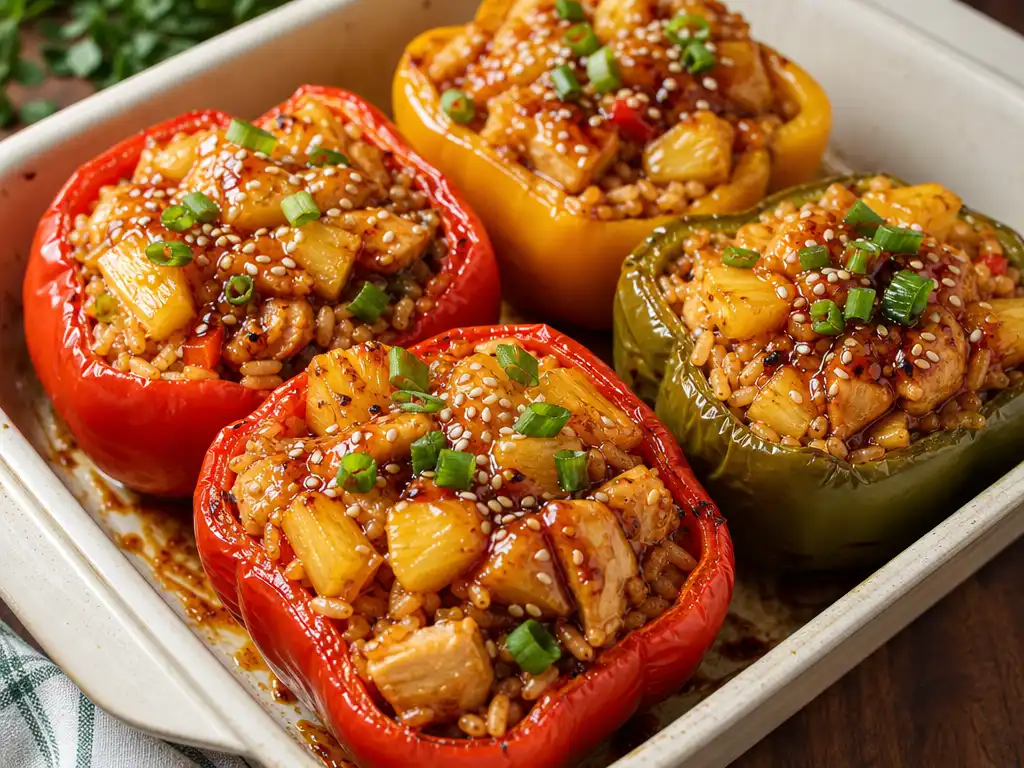
Teriyaki Pineapple Chicken and Rice Stuffed Peppers are a vibrant, flavor-forward fusion dish that marries the sweet-savory depth of Japanese teriyaki with the tropical brightness of fresh pineapple—and anchors it all in the wholesome, colorful vessel of bell peppers. This recipe transforms humble ingredients into a restaurant-worthy, nutritionally balanced meal that’s as visually stunning as it is delicious. Perfect for weeknight dinners, potlucks, or impressing guests, these stuffed peppers deliver bold umami, gentle heat, juicy tenderness, and subtle sweetness—all in one beautifully presented, oven-baked package. Unlike traditional stuffed peppers that rely heavily on tomato-based sauces or heavy cheeses, this version celebrates clean, aromatic layers: tender grilled or pan-seared chicken glazed in house-made teriyaki, fragrant jasmine rice infused with ginger and garlic, crisp-tender vegetables, and juicy pineapple chunks that caramelize slightly during baking. The result? A harmonious, multi-textured, globally inspired entrée that satisfies cravings while supporting mindful eating—without sacrificing indulgence.
The History
The evolution of Teriyaki Pineapple Chicken and Rice Stuffed Peppers reflects a rich tapestry of culinary cross-pollination spanning centuries and continents. Teriyaki itself traces its roots to 17th-century Japan, where “teri” (gloss or luster) and “yaki” (grill or broil) described the technique of glazing proteins with a soy-based marinade to create a shiny, caramelized finish. Early versions used naturally fermented soy sauce, mirin, and sake—ingredients prized for preservation and umami enhancement. Pineapple, native to South America and introduced to Asia via Portuguese traders in the 16th century, became deeply embedded in Southeast Asian and Hawaiian cuisines by the 19th century—especially in sweet-and-sour preparations and tropical grilling applications. In mid-20th-century Hawaii, Japanese immigrants adapted teriyaki techniques using locally abundant pineapples and chicken, giving rise to the iconic “Hawaiian teriyaki chicken”—a precursor to today’s global favorite. Meanwhile, stuffed peppers have ancient origins, appearing in Ottoman, Balkan, and Mediterranean traditions (e.g., dolma, sarma, and kapuska), later evolving in North America with rice-and-meat fillings popularized during the Great Depression and WWII rationing eras. This recipe synthesizes all three lineages: Japanese glaze mastery, Polynesian-Pacific fruit integration, and American comfort-food presentation—making it a true emblem of modern fusion cuisine rooted in resilience, adaptation, and celebration.
Ingredients Breakdown
Each component in this dish serves both functional and sensory purposes—building layers of flavor, texture, aroma, and nutrition:
- Bell Peppers (4 large): Preferably red, orange, or yellow for natural sweetness and higher vitamin C content. Their thick walls hold up to baking without collapsing, while their hollow shape acts as a natural, edible serving vessel. Roasting them first enhances depth and reduces bitterness.
- Chicken Breast or Thighs (1.5 lbs): Boneless, skinless chicken breast offers lean protein and mild flavor, ideal for absorbing marinades; thighs provide richer taste and superior moisture retention—especially important in baked preparations. Diced into uniform ½-inch cubes ensures even cooking and optimal glaze adhesion.
- Uncooked Jasmine Rice (1 cup, dry): Chosen for its floral aroma, delicate stickiness, and ability to absorb teriyaki flavors without becoming mushy. Rinsed thoroughly to remove excess starch prevents clumping and yields fluffy, separate grains.
- Fresh Pineapple (1.5 cups diced, plus ¼ cup juice): Fresh—not canned—is essential for enzymatic brightness (bromelain adds subtle tang and aids digestion) and superior caramelization. Reserve juice for the teriyaki glaze to intensify fruit notes and balance saltiness.
- Low-Sodium Soy Sauce (¾ cup): Provides foundational umami and salt balance. Low-sodium versions allow precise control over sodium levels—critical when pairing with salty cheeses or store-bought broths.
- Mirin (¼ cup): Japanese sweet rice wine adds gentle sweetness, acidity, and gloss. Authentic hon-mirin (with 14% alcohol) delivers best results; if unavailable, substitute with 2 tbsp sugar + 2 tbsp water + 1 tsp rice vinegar.
- Grated Fresh Ginger (1.5 tbsp): Adds zesty, warming complexity and natural anti-inflammatory compounds. Grating—not mincing—releases maximum volatile oils.
- Minced Garlic (4 cloves): Offers pungent depth and antimicrobial benefits. Lightly sautéed to mellow raw bite while preserving allicin potency.
- Arrowroot Powder (1.5 tbsp): A clean-label, gluten-free thickener that creates a velvety, non-gritty glaze without clouding—superior to cornstarch for high-heat reduction and freezer stability.
- Sesame Oil (1 tbsp toasted): Drizzled at the end for nutty aroma and finishing richness. Never cooked at high heat, as it burns easily and turns bitter.
- Green Onions & Toasted Sesame Seeds (for garnish): Provide visual contrast, fresh allium bite, and crunch—enhancing mouthfeel and encouraging mindful eating through varied sensory input.
- Optional Flavor Enhancers: A splash of rice vinegar (brightens), pinch of red pepper flakes (adds dimension—not just heat), and grated lime zest (lifts fruit notes).
Step-by-Step Recipe
- Prep the Peppers: Preheat oven to 375°F (190°C). Slice off the tops of 4 large bell peppers (reserve tops); carefully remove seeds and white membranes. Lightly brush interiors and exteriors with neutral oil (e.g., avocado or grapeseed), then place upright in a parchment-lined baking dish. Roast uncovered for 20 minutes until slightly softened but still holding shape—this pre-cooking step ensures tender-yet-structured peppers post-stuffing.
- Cook the Rice: While peppers roast, rinse 1 cup jasmine rice under cold water until runoff is clear. Combine with 1.5 cups low-sodium chicken broth (or water), ½ tsp grated ginger, and a pinch of salt in a saucepan. Bring to boil, cover, reduce heat to lowest setting, and simmer 15 minutes. Remove from heat; let steam, covered, 10 minutes. Fluff gently with fork—cool slightly before mixing with other fillings.
- Prepare the Teriyaki Glaze: In a small saucepan, whisk together ¾ cup low-sodium soy sauce, ¼ cup mirin, 2 tbsp brown sugar (or coconut sugar), 1.5 tbsp grated ginger, 4 minced garlic cloves, ¼ cup reserved fresh pineapple juice, and 1.5 tbsp arrowroot powder dissolved in 1 tbsp cold water. Bring to gentle simmer over medium-low heat, stirring constantly. Reduce 5–7 minutes until thickened to a glossy, coat-the-back-of-a-spoon consistency. Remove from heat; stir in 1 tsp toasted sesame oil. Set aside ½ cup for glazing chicken, reserve remainder for drizzling.
- Cook the Chicken & Pineapple: Heat 1 tbsp neutral oil in a large nonstick skillet over medium-high heat. Add diced chicken in single layer; cook undisturbed 3–4 minutes until golden sear forms. Flip, add ½ cup diced fresh pineapple, and continue cooking 3–4 more minutes until chicken reaches 165°F internally and pineapple edges begin to caramelize. Pour in ½ cup teriyaki glaze; stir constantly 2–3 minutes until sauce coats evenly and reduces slightly. Remove from heat; cool 5 minutes.
- Assemble the Filling: In a large bowl, combine cooled rice, teriyaki chicken-pineapple mixture, ½ cup finely diced red bell pepper (for color/texture), ¼ cup chopped green onions, 2 tbsp chopped cilantro, and 1 tbsp toasted sesame seeds. Gently fold—avoid overmixing to preserve grain integrity. Taste and adjust: add splash of rice vinegar if too rich; pinch of lime zest if lacking brightness.
- Stuff & Bake: Spoon filling generously into pre-roasted peppers, mounding slightly. Replace reserved pepper tops askew (for steam release) or omit for cleaner look. Cover dish loosely with foil; bake 25 minutes. Uncover, brush tops with reserved teriyaki glaze, and bake uncovered 10–12 more minutes until peppers are tender-crisp and filling is heated through (internal temp ≥165°F). Optional: Broil 2 minutes for light char—watch closely!
- Rest & Serve: Let rest 5 minutes before serving—allows juices to redistribute and prevents scalding. Garnish with extra green onions, sesame seeds, lime wedges, and micro cilantro. Serve with extra warm teriyaki glaze on the side.
Tips
- Selecting Peppers: Choose blocky, flat-bottomed peppers that stand steadily—avoid thin-walled or tapered varieties. Organic peppers often have thicker flesh and sweeter flavor profiles.
- Rice Perfection Secret: After cooking, spread rice on a rimmed baking sheet and refrigerate uncovered 15 minutes before assembling. This removes surface moisture, preventing soggy stuffing.
- Chicken Texture Hack: For ultra-tender chicken, marinate diced pieces in 2 tbsp teriyaki glaze + 1 tsp rice vinegar for 15–20 minutes before cooking—then pat *very* dry before searing.
- Pineapple Prep Tip: Cut pineapple against the grain for maximum juiciness; use core sparingly—it’s fibrous but packed with bromelain. Freeze leftover pineapple chunks for smoothies or future glazes.
- Glossy Glaze Guarantee: Always dissolve arrowroot in cold liquid *before* adding to hot sauce—never sprinkle directly. Simmer no longer than needed; overcooking breaks down starch and causes thinning.
- Oven Variance Note: Convection ovens reduce baking time by ~15%. If using glass bakeware, lower temp by 25°F to prevent over-browning.
- Make-Ahead Magic: Roast peppers and cook rice up to 2 days ahead. Store separately, chilled. Assemble and bake day-of—glaze right before baking for maximum shine.
- No-Stick Trick: Line baking dish with parchment *and* lightly spray with oil—peppers lift cleanly without tearing.
- Flavor Layering: Sauté aromatics (ginger/garlic) in sesame oil *before* adding soy/mirin—blooming them unlocks deeper fragrance than raw addition.
- Serving Temperature Sweet Spot: Serve within 10 minutes of baking—peppers retain ideal texture, and glaze stays glossy rather than drying into a film.
Variations and Customizations
This recipe is inherently adaptable—here’s how to tailor it to dietary needs, seasonal availability, pantry constraints, or adventurous palates:
- Vegetarian/Vegan Version: Replace chicken with extra-firm tofu (pressed, cubed, and pan-fried until golden), tempeh, or a blend of black beans + lentils. Use tamari instead of soy sauce, maple syrup instead of brown sugar, and vegan mirin (or the sugar/vinegar substitute). Add shiitake mushrooms for “meaty” umami.
- Low-Carb/Keto Adaptation: Swap rice for riced cauliflower (sautéed until dry) or shirataki rice. Increase healthy fats: add ¼ avocado per serving or 1 tbsp macadamia nuts to filling. Use coconut aminos (lower sodium, no soy) and erythritol-based sweetener.
- Spice-Lover’s Upgrade: Infuse glaze with 1 tsp gochujang or sambal oelek; add pickled jalapeños to filling; top with chili crisp or crushed Sichuan peppercorns.
- Meal-Prep Friendly Format: Bake peppers fully, then freeze individually wrapped. Reheat covered at 350°F for 35 minutes, uncover last 10 minutes. Glaze after reheating.
- Grill or Air Fryer Option: Skip oven roasting—char peppers directly on gas grill or air fryer basket (400°F, 12 mins, flipping halfway). Stuff and finish in air fryer at 375°F for 10–12 mins.
- Breakfast or Brunch Twist: Add scrambled eggs or tofu scramble to filling, swap pineapple for mango, and garnish with crumbled feta or goat cheese.
- Global Fusion Swaps: Use lemongrass-infused coconut milk instead of broth; add kaffir lime leaves to glaze; replace sesame with crushed roasted peanuts and cilantro.
- Kid-Friendly Simplification: Omit garlic/ginger from glaze (add back in adult portions); use mild pineapple-only glaze; mix in shredded cheddar; serve with teriyaki dipping sauce for dunking.
- Gluten-Free Assurance: Verify soy sauce is certified GF (tamari or coconut aminos); ensure mirin is GF (some contain barley); use certified GF arrowroot.
- Herb Garden Variation: Stir in chopped Thai basil, mint, or shiso just before stuffing for aromatic freshness that doesn’t wilt in baking.
Health Considerations and Nutritional Value
Per serving (1 stuffed pepper, approx. 580 calories), this dish delivers exceptional macro- and micronutrient synergy—designed to support sustained energy, gut health, metabolic function, and cellular repair:
- Protein Powerhouse (42g): Chicken provides complete amino acids for muscle synthesis and satiety. Pairing with rice creates a complementary protein profile—even without animal sources, the combo covers all 9 essential amino acids.
- Fiber-Rich Foundation (8g): Bell peppers supply soluble and insoluble fiber—supporting digestive regularity, microbiome diversity (via prebiotic pectins), and blood sugar stabilization. Pineapple adds additional fiber plus bromelain, shown in clinical studies to improve protein digestion and reduce intestinal inflammation.
- Antioxidant Density: Red/orange peppers contain 3x more vitamin C than oranges and significant lycopene (enhanced by gentle roasting). Ginger and garlic contribute gingerols and allicin—potent anti-inflammatory and immune-modulating compounds validated in >200 peer-reviewed studies.
- Smart Carbs & Glycemic Control: Jasmine rice has moderate GI (~68), further lowered by vinegar in glaze (acetic acid slows gastric emptying) and fiber from veggies. Portion-controlled servings prevent insulin spikes—ideal for prediabetes or PCOS management.
- Healthy Fat Profile (14g): Primarily monounsaturated (from sesame oil, avocado garnish) and omega-6 balanced with anti-inflammatory gamma-linolenic acid (GLA) in sesame seeds—linked in cohort studies to reduced cardiovascular risk.
- Sodium Awareness: At ~620mg/serving (using low-sodium soy), this meets <30% of daily limit—significantly lower than takeout teriyaki (often 1,200–1,800mg). Further reduction possible with coconut aminos (330mg/serving).
- Nutrient Synergy Highlights: Vitamin C (peppers) dramatically increases non-heme iron absorption from plant-based components; zinc (chicken) supports wound healing and immune cell production; manganese (pineapple, rice) activates enzymes critical for bone formation and antioxidant defense.
- Dietitian-Approved Modifications: For hypertension: reduce soy sauce by 25%, add ¼ tsp potassium-rich nutritional yeast. For IBS: omit garlic/onion, use garlic-infused oil instead. For renal diets: substitute low-phosphorus quinoa for rice, limit soy sauce to 2 tbsp.
Note: Values are estimates based on USDA FoodData Central and may vary with ingredient brands and prep methods. Always consult a registered dietitian for personalized medical nutrition therapy.
Ingredients
- 4 large red, orange, or yellow bell peppers, tops sliced off and reserved, seeds and membranes removed
- 1.5 lbs boneless, skinless chicken breast or thighs, diced into ½-inch cubes
- 1 cup uncooked jasmine rice, rinsed thoroughly
- 1.5 cups fresh pineapple, peeled, cored, and diced (plus ¼ cup reserved juice)
- ¾ cup low-sodium soy sauce (or tamari for GF)
- ¼ cup authentic mirin (or 2 tbsp brown sugar + 2 tbsp water + 1 tsp rice vinegar)
- 2 tbsp packed light brown sugar or coconut sugar
- 1.5 tbsp fresh ginger, finely grated
- 4 garlic cloves, minced
- 1.5 tbsp arrowroot powder
- 1 tbsp neutral high-heat oil (avocado or grapeseed)
- 1 tbsp toasted sesame oil (for finishing)
- ½ cup finely diced red bell pepper (for filling texture)
- ¼ cup thinly sliced green onions, plus extra for garnish
- 2 tbsp fresh cilantro, chopped
- 1 tbsp toasted white or black sesame seeds
- Pinch of red pepper flakes (optional)
- Lime wedges and micro cilantro for serving
Directions
- Preheat oven to 375°F (190°C). Brush insides and outsides of hollowed bell peppers lightly with neutral oil. Place upright in a parchment-lined 9×13-inch baking dish. Roast uncovered for 20 minutes until slightly softened but still holding shape. Remove and set aside. Reduce oven temperature to 350°F (175°C) for final bake.
- While peppers roast, prepare rice: Combine rinsed rice, 1.5 cups low-sodium chicken broth, ½ tsp grated ginger, and pinch of salt in a saucepan. Bring to boil, cover, reduce heat to low, and simmer 15 minutes. Remove from heat; let steam, covered, 10 minutes. Fluff with fork and spread on baking sheet to cool 15 minutes.
- In a small saucepan, whisk together soy sauce, mirin, brown sugar, 1.5 tbsp ginger, 4 cloves garlic, ¼ cup pineapple juice, and arrowroot slurry (1.5 tbsp arrowroot + 1 tbsp cold water). Bring to gentle simmer over medium-low heat, stirring constantly. Cook 5–7 minutes until thickened to glossy, coat-the-back-of-a-spoon consistency. Remove from heat; stir in 1 tsp toasted sesame oil. Reserve ½ cup for chicken, remaining for drizzling.
- Heat 1 tbsp neutral oil in large nonstick skillet over medium-high heat. Add chicken in single layer; cook undisturbed 3–4 minutes until golden. Flip, add ½ cup diced pineapple, and cook 3–4 more minutes until chicken reaches 165°F and pineapple begins to caramelize. Pour in reserved ½ cup teriyaki; stir constantly 2–3 minutes until glazed and slightly reduced. Remove from heat; cool 5 minutes.
- In large bowl, combine cooled rice, teriyaki chicken-pineapple mixture, ½ cup diced red bell pepper, ¼ cup green onions, 2 tbsp cilantro, 1 tbsp sesame seeds, and optional red pepper flakes. Gently fold until evenly distributed. Taste and adjust seasoning.
- Spoon filling into pre-roasted peppers, mounding slightly. Replace reserved pepper tops askew or omit. Cover dish loosely with foil. Bake at 350°F for 25 minutes.
- Remove foil. Brush tops with remaining teriyaki glaze. Bake uncovered 10–12 minutes until peppers are tender-crisp and internal temperature reaches 165°F. For optional char, broil 1–2 minutes—watch closely.
- Let rest 5 minutes. Garnish with extra green onions, sesame seeds, lime wedges, and micro cilantro. Serve immediately with extra warm teriyaki glaze on the side.
FAQ
- Can I use frozen pineapple?
- Yes—but thaw completely and drain *extremely* well (squeeze in paper towels) to avoid watery filling. Fresh pineapple is preferred for enzyme activity and brighter flavor.
- Why rinse the rice?
- Rinsing removes surface starch that causes gummy, clumped rice—essential for fluffy, separate grains that hold up in stuffing without turning mushy.
- Can I make this ahead and reheat?
- Absolutely. Assemble stuffed peppers (unbaked), cover tightly, and refrigerate up to 24 hours. Add 5–10 minutes to initial covered bake time. For frozen prep: bake fully, cool completely, wrap individually in parchment + foil, freeze up to 3 months. Reheat covered at 350°F for 35 minutes, uncover last 10 minutes.
- What if my teriyaki glaze breaks or becomes lumpy?
- Immediately remove from heat and vigorously whisk in 1 tsp cold water or pineapple juice. Strain through fine-mesh sieve if needed. Next time, ensure arrowroot is fully dissolved *before* heating and stir constantly during reduction.
- Are bell pepper tops edible?
- Yes! Finely dice and sauté them with aromatics for added sweetness and zero waste—or chop and stir into filling for extra veggie boost.
- Can I use brown rice instead of jasmine?
- You can—but adjust liquid (2.25 cups water/broth) and cook time (45 minutes simmer + 10 min steam). Brown rice yields heartier texture and higher fiber, though it absorbs less glaze flavor.
- Why not use cornstarch?
- Arrowroot creates a clearer, glossier, more stable glaze that freezes and reheats without thinning or becoming stringy—cornstarch can break down under acid (pineapple juice) and high heat.
- How do I prevent soggy peppers?
- Key steps: (1) Pre-roast peppers to drive off moisture, (2) Cool rice thoroughly before mixing, (3) Drain pineapple well, (4) Avoid overfilling—leave ¼-inch space at top for expansion.
- Is this dish suitable for freezing?
- Yes—both unbaked assembled peppers (freeze up to 2 weeks) and fully baked peppers (up to 3 months). Thaw overnight in fridge before baking. Glaze *after* reheating for best appearance.
- Can I cook this on the stovetop only?
- Yes! After stuffing, place peppers upright in deep skillet with ½ inch water. Cover tightly, simmer on low 30–40 minutes until peppers are tender and filling is hot. Finish under broiler 2 minutes for glaze sheen.
Summary
Teriyaki Pineapple Chicken and Rice Stuffed Peppers are a masterclass in global flavor harmony—melding Japanese umami depth, tropical fruit brightness, and American comfort-food ingenuity into a nutritionally robust, visually captivating, and deeply satisfying meal.
With customizable variations, make-ahead flexibility, and science-backed health benefits—from bromelain-enhanced digestion to antioxidant-rich produce and smart carb balancing—this dish transcends trendiness to become a timeless, kitchen-essential staple for cooks of all levels.