
Introduction
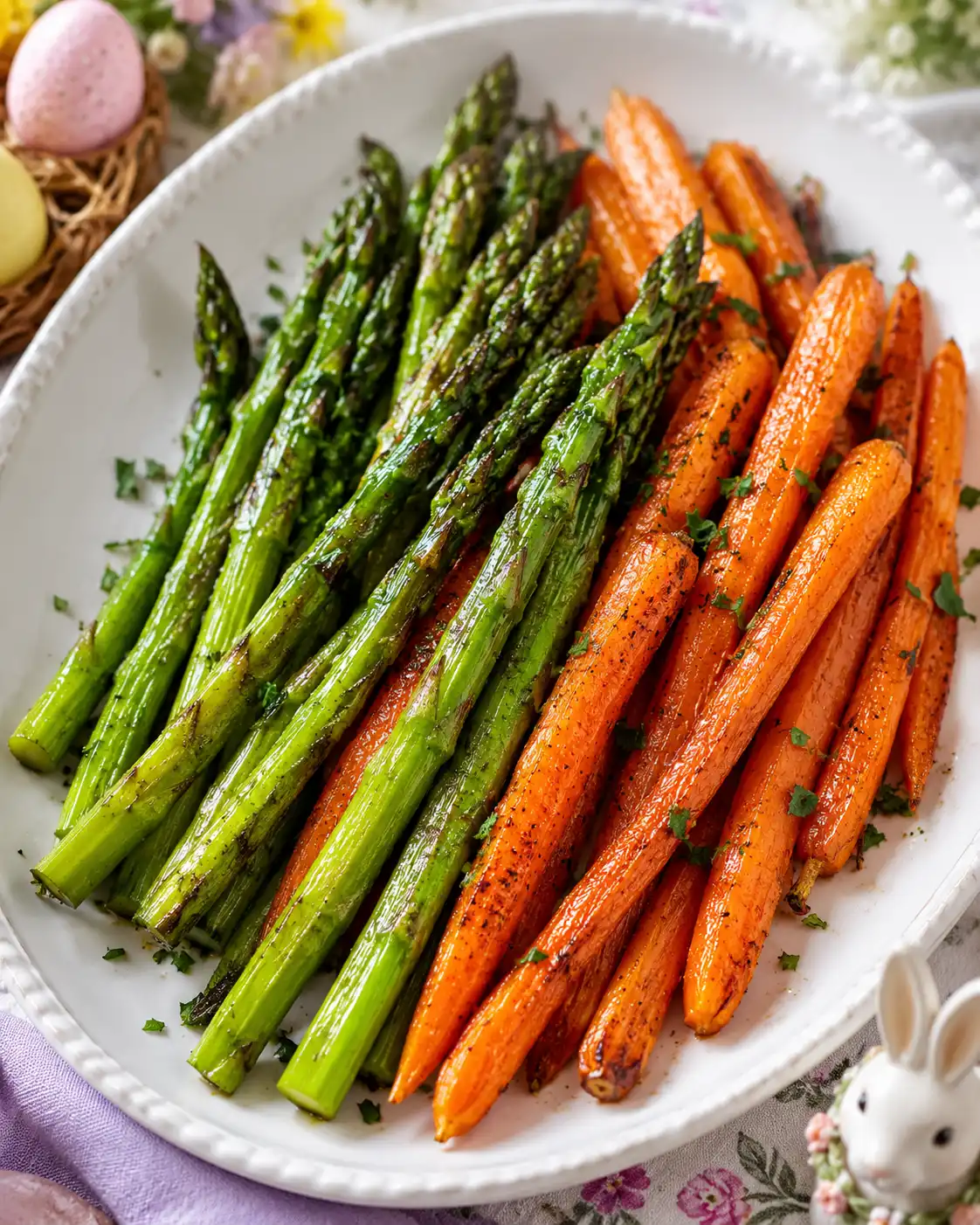
Welcome to a vibrant, seasonal celebration on your plate—Roasted Asparagus & Carrots: A Fresh Easter Side! This dish is more than just a side—it’s a joyful herald of spring, a testament to nature’s renewal, and a centerpiece that bridges tradition with modern simplicity. With its golden-orange carrots and tender-crisp emerald asparagus spears, this recipe brings color, texture, and wholesome flavor to your Easter table. Whether served alongside herb-roasted leg of lamb, honey-glazed ham, or as part of a bountiful vegetarian spread, it’s a side that delights the eye, warms the heart, and nourishes the body. Thoughtfully balanced, naturally sweet, earthy, and aromatic, it embodies the spirit of Easter: lightness, hope, and abundance.
The History
Roasting vegetables is one of humanity’s oldest cooking techniques—dating back thousands of years to open-fire hearths where roots and shoots were nestled in hot coals for slow, caramelizing transformation. Carrots, originally cultivated in Central Asia over 5,000 years ago, were initially purple and yellow before Dutch horticulturists in the 16th–17th centuries selectively bred the vibrant orange variety we cherish today—often associated with Dutch royalty and national pride. Asparagus, revered by ancient Egyptians, Greeks, and Romans alike, was not only a delicacy but also believed to possess medicinal and aphrodisiac properties. In medieval Europe, both vegetables appeared in monastic gardens and royal feasts—especially during Lent and Easter, when meatless yet celebratory meals called for nutrient-dense, flavorful produce. By the 19th century, roasting became increasingly popular in home kitchens with the advent of reliable cast-iron ovens and later, modern gas and electric ranges. Today, Roasted Asparagus & Carrots has evolved into a beloved Easter staple—not because of rigid tradition, but because its timing aligns perfectly with peak seasonality: asparagus emerges in early spring (March–June), while young, sweet baby carrots reach their zenith in April. Its rise in popularity over the past two decades reflects a broader culinary shift toward whole-food, vegetable-forward dining—elevated not by complexity, but by respect for ingredient integrity, mindful technique, and joyful presentation.
Ingredients Breakdown
Every element in this recipe serves a purpose—flavor, texture, color, nutrition, or function—and nothing is included without intention:
- Asparagus: Choose fresh, pencil-thin to medium-thick spears (6–8 inches long) with tightly closed, compact tips and firm, smooth stalks. Vibrant green color indicates freshness; slight purple tinges suggest higher anthocyanin content (a potent antioxidant). Avoid limp, woody, or discolored ends. Trim only the tough, fibrous bottom 1–1.5 inches—or use the “snap test”: gently bend each spear near the base until it naturally breaks—the point of separation reveals where tenderness ends and stringiness begins.
- Carrots: Opt for heirloom rainbow carrots (purple, yellow, red, white) for visual drama and phytonutrient diversity—or classic Nantes or Imperator varieties for sweetness and uniform roasting. Baby carrots are convenient but often peeled and treated with chlorine; for maximum flavor and nutrition, choose whole, organic carrots scrubbed well (no peeling needed—the skin contains fiber, vitamin A precursors, and polyphenols). Smaller carrots (½ inch thick) roast more evenly than large, dense ones.
- Olive Oil: Use extra-virgin olive oil with a fruity, peppery finish—its low smoke point (~375°F) is ideal for roasting at 400–425°F. It carries flavor, promotes caramelization, and delivers heart-healthy monounsaturated fats and polyphenols like oleocanthal (a natural anti-inflammatory).
- Garlic: Fresh minced garlic adds depth and savory umami. For subtler notes, slice cloves thinly; for bolder impact, crush and mince. Roasting mellows its pungency into sweet, nutty complexity—avoid pre-minced jarred garlic, which often contains preservatives and lacks vibrancy.
- Fresh Herbs: Thyme and rosemary are Easter classics—aromatic, woodsy, and resilient under heat. Thyme’s delicate leaves cling beautifully to vegetables; rosemary’s pine-like essence pairs exquisitely with carrots’ natural sugars. Add them at the start for infused aroma, or sprinkle fresh sprigs on top in the last 5 minutes for bright, herbal pop.
- Lemon Zest & Juice: Added post-roasting, lemon zest contributes volatile citrus oils for brightness and aromatic lift; juice balances sweetness with acidity, enhancing perception of all other flavors. Never add lemon before roasting—it can cause browning inconsistencies and dull vegetable color.
- Sea Salt & Black Pepper: Use flaky sea salt (like Maldon) for textural contrast and clean salinity; freshly cracked black pepper delivers piperine—a bioavailability enhancer that increases absorption of nutrients like beta-carotene from carrots.
- Optional Enhancements: Toasted slivered almonds or pine nuts add crunch and healthy fats; crumbled feta or goat cheese lends creamy tang; a drizzle of local wildflower honey or pure maple syrup deepens caramelization (add in final 3–5 minutes); a pinch of smoked paprika or ground coriander introduces warmth and complexity.
Step-by-Step Recipe
This method prioritizes even roasting, maximum flavor development, and minimal hands-on time—ideal for busy Easter preparations.
- Preheat & Prep: Position oven rack in the upper third. Preheat oven to 425°F (220°C). Line a large, rimmed baking sheet with parchment paper (for easy cleanup and non-stick performance) or lightly grease with olive oil. Avoid aluminum foil unless necessary—it can trap steam and inhibit caramelization.
- Wash & Trim: Rinse asparagus and carrots thoroughly under cool running water. Pat dry completely with clean kitchen towels—excess moisture steams instead of roasts. Snap or cut asparagus stems as described above. Peel carrots only if skin is very gritty or waxed; otherwise, scrub vigorously with a vegetable brush. Slice carrots on a sharp diagonal into ¼-inch-thick ovals (increases surface area for browning) or leave whole if small (<4 inches).
- Toss Thoughtfully: In a large mixing bowl, combine carrots first with 2 tablespoons olive oil, 1 tablespoon fresh minced garlic, 1 teaspoon finely chopped fresh thyme leaves, ½ teaspoon finely chopped rosemary, ¾ teaspoon flaky sea salt, and ½ teaspoon freshly ground black pepper. Toss vigorously to coat every surface. Let sit 5 minutes—this allows salt to begin drawing out moisture and seasoning to penetrate. Then add asparagus and 1 more tablespoon olive oil. Gently fold together—do not overmix, as asparagus bruises easily. Ensure all pieces are glistening but not swimming in oil.
- Arrange Strategically: Spread vegetables in a single layer with space between pieces—crowding causes steaming. Place carrots slightly toward the back (they take longer) and asparagus toward the front (more delicate). Nestle any garlic bits and herb stems among the vegetables for maximum infusion.
- Roast with Precision: Place sheet in preheated oven. Roast undisturbed for 12 minutes. Rotate pan front-to-back and switch racks if using convection (or just rotate for even heat distribution). Continue roasting 8–12 more minutes—total time 20–24 minutes—until carrots are fork-tender with caramelized edges and asparagus is vibrant green, slightly blistered, and yields to gentle pressure with a slight “give” (not mushy). Internal carrot temperature should reach 190–205°F for optimal tenderness and sweetness.
- Finish with Finesse: Remove from oven. Immediately zest 1 small lemon directly over the hot vegetables (the heat releases essential oils). Squeeze 1 tablespoon fresh lemon juice evenly across the surface. Taste and adjust seasoning—often a tiny pinch more salt unlocks flavor. Optional: scatter 2 tablespoons toasted almonds or ¼ cup crumbled goat cheese. Let rest 2–3 minutes before serving—this allows juices to redistribute and flavors to harmonize.
Tips
- Uniformity Is Key: Cut carrots to similar thickness so they cook at the same rate. If using mixed sizes, group by diameter and stagger roasting times—add thicker pieces first, then thinner ones or asparagus later.
- Don’t Skip the Dry Step: Moisture is the enemy of crisp roasting. Always pat vegetables bone-dry—even residual water creates steam and prevents Maillard reaction (the flavorful browning process).
- Oil Temperature Matters: Warm your olive oil slightly (10–15 seconds in microwave or over low stove heat) before tossing—it coats more evenly than cold oil.
- Herb Timing Strategy: Add hardy herbs (rosemary, thyme, sage) at the beginning. Delicate herbs (parsley, dill, chives, basil) should be added after roasting to preserve freshness and color.
- Roasting Pan Science: Use a heavy-gauge aluminum or stainless-steel sheet pan—not thin, flimsy ones. Heavy pans retain heat better, promote even browning, and prevent hot spots.
- Acid Last, Always: Lemon, vinegar, or wine reductions should be added off-heat. Acid denatures proteins and softens cell walls—adding it pre-roast makes vegetables soggy and dulls color.
- Resist Stirring: Let vegetables roast undisturbed for the first 12 minutes. Stirring too soon disrupts caramelization and risks breaking asparagus.
- Trust Your Senses: Don’t rely solely on timer. Look for deep golden edges on carrots and slight blistering on asparagus tips. Sniff for sweet, nutty, toasty aromas—not raw or grassy notes.
- Rest Before Serving: Allowing 2–3 minutes of carryover cooking ensures perfect tenderness and lets flavors settle—especially important when adding cheese or nuts.
- Make-Ahead Friendly: Prep vegetables up to 24 hours ahead—store trimmed, washed, and dried in airtight containers lined with paper towels in the fridge. Toss with oil and seasonings up to 2 hours before roasting (but hold off on garlic and acid until just before oven).
Variations and Customizations
This recipe is a canvas—adaptable for dietary needs, global flavors, holiday themes, and pantry creativity:
- Mediterranean-Inspired: Add ¼ cup kalamata olives, 2 tablespoons capers, and 1 tablespoon chopped preserved lemon after roasting. Finish with crumbled feta and a dusting of za’atar.
- Maple-Dijon Glaze: Whisk together 1 tbsp pure maple syrup, 1 tsp Dijon mustard, 1 tsp apple cider vinegar, and a pinch of cayenne. Drizzle over vegetables in the last 5 minutes of roasting.
- Spiced Moroccan: Toss with 1 tsp ground cumin, ½ tsp ground coriander, ¼ tsp ground cinnamon, and a pinch of saffron threads soaked in 1 tsp warm water before roasting. Garnish with toasted pistachios and fresh mint.
- Vegan “Parmesan” Boost: Sprinkle with homemade nutritional yeast “cheese” (3 tbsp nutritional yeast, 1 tbsp tapioca starch, ½ tsp garlic powder, ¼ tsp onion powder, pinch of salt) before or after roasting.
- Easter Egg Accent: For playful presentation, arrange roasted vegetables around a nest of shredded coconut dyed with natural food coloring (turmeric for yellow, beet powder for pink, spirulina for green) and nestle a chocolate or marzipan egg in the center.
- Low-Carb/Keto-Friendly: Increase healthy fats—add 2 tbsp avocado oil, ¼ cup macadamia nuts, and 1 oz crumbled aged gouda. Reduce carrots to ½ cup and emphasize asparagus volume.
- Gluten-Free & Allergen-Safe: Naturally GF—just verify all add-ins (e.g., tamari instead of soy sauce if using Asian variations) and avoid cross-contamination with shared utensils or surfaces.
- Kid-Approved Version: Roast carrots longer (28–30 mins) until very soft and sweet; skip garlic and herbs; toss with 1 tsp honey + ¼ tsp cinnamon pre-roast. Serve with mild herb dip (Greek yogurt + dill + lemon).
- Meal-Prep Power Bowl Base: Roast a double batch. Cool completely, store in airtight container for up to 4 days. Reheat gently in skillet with splash of broth or serve chilled over mixed greens with lemon-tahini dressing.
- Grill Variation: For outdoor Easter gatherings, toss veggies in oil and herbs, then skewer or use a grill basket. Cook over medium-high direct heat 8–10 minutes, turning once, until charred and tender.
Health Considerations and Nutritional Value
Per standard serving (1 cup roasted asparagus + ½ cup roasted carrots, approx. 180g total), this dish delivers exceptional nutritional synergy—enhanced by roasting, which actually increases bioavailability of key compounds:
- Vitamin A Powerhouse: Carrots supply over 300% DV of vitamin A (as beta-carotene), crucial for immune function, vision, and skin health. Roasting ruptures plant cell walls, releasing up to 30% more beta-carotene than raw consumption—and fat (olive oil) enables its absorption.
- Folate & Vitamin K Synergy: Asparagus provides 67% DV folate (vital for DNA synthesis and especially important for women of childbearing age) and 70% DV vitamin K1—essential for blood clotting and bone mineralization. Vitamin K absorption is also fat-dependent, making olive oil an ideal partner.
- Antioxidant Diversity: Asparagus contains glutathione (a master antioxidant), rutin, and kaempferol; carrots boast falcarinol (anti-inflammatory) and lutein. Together, they offer broad-spectrum protection against oxidative stress and chronic inflammation.
- Fiber-Rich & Low Glycemic: Combined, they provide ~5g dietary fiber (20% DV)—supporting gut microbiome diversity, satiety, and stable blood sugar. Despite carrots’ natural sweetness, their glycemic load is low (GL ≈ 3) due to high fiber and polyphenol content.
- Nitrate Benefits: Both vegetables contain dietary nitrates, which convert to nitric oxide—supporting healthy blood pressure, circulation, and cognitive function.
- Low-Calorie, High-Nutrient Density: Only ~95 calories per serving—but packed with potassium (420mg), magnesium (45mg), and B vitamins—making it ideal for weight-conscious diners and active families alike.
- Dietary Considerations: Naturally vegan, gluten-free, nut-free (unless customized), dairy-free (unless cheese added), and soy-free. Low-FODMAP compliant when carrots are limited to ½ cup and garlic is replaced with garlic-infused oil (FODMAPs reside in garlic solids, not oil).
- Cautions & Notes: Those on blood thinners (e.g., warfarin) should maintain consistent vitamin K intake—this recipe offers a reliable, moderate amount. Individuals with fructose malabsorption may tolerate roasted carrots better than raw, as heat breaks down some fructans.
Ingredients
- 1 bunch fresh asparagus (about 1 lb / 450g), woody ends trimmed
- 1 lb (450g) rainbow or organic carrots, scrubbed (peeled only if desired)
- 3 tablespoons extra-virgin olive oil, divided
- 1 tablespoon fresh garlic, finely minced (about 3 cloves)
- 1 teaspoon fresh thyme leaves, finely chopped
- ½ teaspoon fresh rosemary, finely chopped
- 1 teaspoon flaky sea salt (such as Maldon), plus more to taste
- ½ teaspoon freshly ground black pepper
- Zest of 1 small lemon
- 1 tablespoon fresh lemon juice
- Optional garnishes: 2 tbsp toasted slivered almonds, ¼ cup crumbled goat cheese or feta, microgreens, or fresh parsley
Directions
- Preheat oven to 425°F (220°C). Line a large rimmed baking sheet with parchment paper.
- Prepare vegetables: Snap or cut asparagus ends. Scrub carrots thoroughly; slice diagonally into ¼-inch ovals (or leave whole if small). Pat both vegetables completely dry with clean kitchen towels.
- In a large bowl, combine carrots, 2 tablespoons olive oil, minced garlic, thyme, rosemary, salt, and pepper. Toss well and let sit 5 minutes.
- Add asparagus and remaining 1 tablespoon olive oil. Gently fold to coat without bruising.
- Spread mixture in a single layer on prepared sheet—carrots toward back, asparagus toward front. Arrange so pieces aren’t touching.
- Roast for 12 minutes. Rotate pan. Continue roasting 8–12 minutes more, until carrots are tender-crisp with golden edges and asparagus is bright green and slightly blistered.
- Remove from oven. Immediately zest lemon over hot vegetables, then squeeze lemon juice evenly. Taste and adjust salt if needed.
- Optional: Sprinkle with toasted almonds or cheese. Let rest 2–3 minutes.
- Serve warm, family-style, as a vibrant Easter side dish.
FAQ
- Can I roast asparagus and carrots together if they have different cook times?
- Yes—with strategic placement and timing. Carrots take longer, so position them toward the hotter rear of the oven and add asparagus after the carrots have roasted for 8–10 minutes. Alternatively, slice carrots thinner or use smaller ones to align cook times.
- Why do my roasted vegetables turn out soggy?
- Sogginess results from excess moisture (not drying well), overcrowding the pan, using too-low heat, or roasting in a non-preheated oven. Ensure vegetables are bone-dry, use high heat (425°F+), and give them breathing room.
- Can I make this ahead and reheat?
- Absolutely! Roast fully, cool completely, and refrigerate in an airtight container up to 4 days. Reheat gently in a 350°F oven (10–12 mins) or in a skillet with a splash of veggie broth to revive texture. Avoid microwaving uncovered—it steams them.
- Is it better to peel carrots for roasting?
- No—peeling removes valuable nutrients and fiber concentrated in and just under the skin. Simply scrub well. If using conventional carrots, a vinegar-water soak (1:3 ratio) for 2 minutes helps remove residues.
- What’s the best way to store fresh asparagus?
- Stand spears upright in a jar with 1 inch of water (like flowers), loosely cover tops with a plastic bag, and refrigerate for up to 5 days. Change water every 2 days.
- Can I use frozen asparagus or carrots?
- Not recommended. Frozen asparagus becomes mushy and loses flavor; frozen carrots lack the structural integrity for proper caramelization. Always use fresh for roasting.
- How do I keep asparagus from getting too brown or bitter?
- Roast at 425°F—not higher—and watch closely. Overcooking breaks down chlorophyll and concentrates bitter compounds. Remove as soon as tips show gentle blistering and stems yield to pressure.
- Can I add other vegetables to this roast?
- Yes—consider parsnips, fennel bulbs (thinly sliced), cherry tomatoes (add last 8 minutes), or red onions (wedges, tossed with carrots). Avoid watery veggies like zucchini or summer squash—they release too much moisture.
- Is this dish suitable for Passover?
- Yes—when prepared with kosher-certified olive oil and no leavened additives, it’s naturally kosher for Passover. Just ensure all utensils and surfaces are Passover-dedicated.
- How do I get maximum caramelization without burning?
- Use high heat, dry vegetables, space them evenly, and rotate the pan halfway. Watch closely in the final 5 minutes—caramelization accelerates rapidly. A light dusting of turbinado sugar (½ tsp) can enhance browning if desired.
Summary
Roasted Asparagus & Carrots is a radiant, nutrient-dense Easter side that celebrates spring’s bounty through simple, intentional technique—transforming humble vegetables into a vibrant, flavorful, and deeply satisfying centerpiece.
With its balance of earthy sweetness, herbal brightness, and textural contrast, it honors tradition while embracing modern wellness—making it not just a seasonal favorite, but a timeless addition to every joyful gathering.