
Introduction
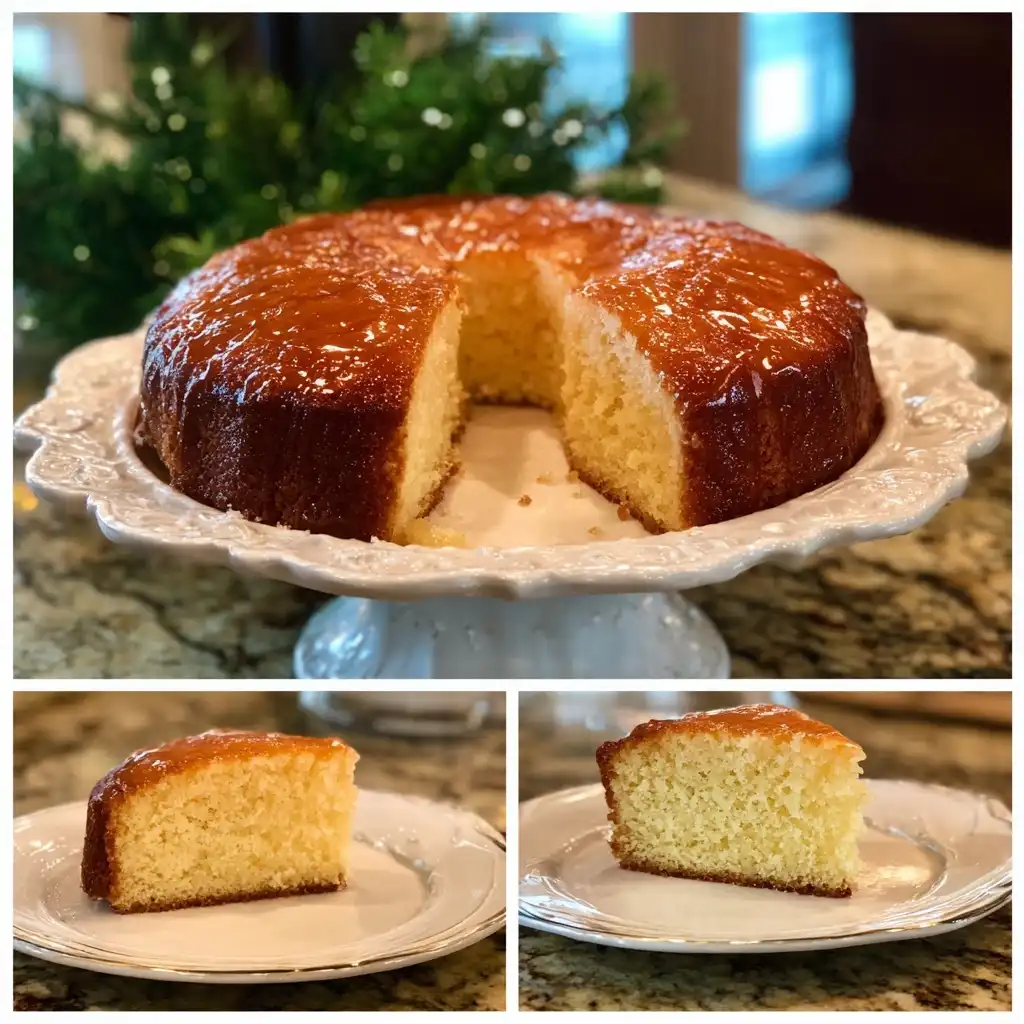
Grandma’s Famous Kentucky Butter Cake isn’t just a dessert—it’s a cherished heirloom, a warm embrace in cake form, and a beloved Southern tradition passed down through generations with love, patience, and a generous hand with real butter. This iconic confection is revered for its dense-yet-tender crumb, its luxuriously moist texture that improves with time, and its signature rich, velvety butter glaze that soaks deep into every layer—creating a harmonious balance of sweet, salty, and deeply caramelized notes. Whether served at Sunday suppers, holiday gatherings, or quiet afternoons with strong coffee and heartfelt conversation, this cake evokes nostalgia, comfort, and the unmistakable aroma of home baking—where flour dusts the counter like snowfall and vanilla beans are steeped in buttermilk like sacred herbs. It’s more than a recipe; it’s a love letter written in sugar, butter, and time.
The History
The origins of Kentucky Butter Cake trace back to mid-20th-century American home kitchens, particularly across the Bluegrass State, where resourceful bakers transformed humble pantry staples—butter, sour cream, buttermilk, and brown sugar—into something extraordinary. Though often attributed to community cookbooks published by churches and women’s auxiliaries (notably the 1963 *Kentucky Housewives’ Cookbook* and the 1978 *Lexington Junior League’s Savor the South*), the cake’s true genesis lies in oral tradition: grandmothers teaching daughters at worn wooden tables, adjusting measurements “by feel,” substituting buttermilk when milk soured, and saving every last drop of glaze to drizzle over pound cake slices the next day. The name “Kentucky Butter Cake” gained national recognition in the early 1990s after being featured in *Southern Living* magazine’s “Best Regional Cakes” roundup—and later immortalized on Food Network’s *Throwdown! with Bobby Flay*, where its decadent simplicity outshone even gourmet competitors. What distinguishes it from standard butter cakes is its method: the glaze isn’t merely poured on top—it’s meticulously spooned over the hot cake while still in the pan, allowing capillary action and residual heat to draw the mixture deep into the crumb—a technique refined over decades of trial, error, and tender devotion.
Ingredients Breakdown
Every ingredient in Grandma’s Kentucky Butter Cake serves a precise, time-tested purpose—no element is arbitrary, and substitutions should be approached with reverence and understanding:
- Unsalted Butter (2 cups, 4 sticks, room temperature): The soul of the cake. Real, high-fat (82–84%) European-style butter yields superior flavor and structure. Salted butter may be used, but reduce added salt accordingly—Grandma always insisted on controlling salinity herself.
- Granulated Sugar (2 cups): Provides sweetness, tenderness, and aids in creaming to trap air. Not superfine—its slight graininess helps create lift during mixing.
- Brown Sugar (½ cup, light or dark, packed): Adds molasses depth, moisture retention, and subtle caramel complexity. Dark brown enhances richness; light preserves delicate butter notes.
- Eggs (5 large, room temperature): Act as emulsifiers and structural binders. Yolks contribute fat and richness; whites add volume. Cold eggs risk curdling the batter—always bring them to room temp (1 hour or warm water bath for 5 minutes).
- Buttermilk (1 cup, full-fat, well-shaken): Acidic tang reacts with baking soda for lift, while lactic acid tenderizes gluten for ultra-soft crumb. Never substitute with milk + vinegar unless absolutely necessary—cultured buttermilk’s viscosity and bacterial profile are irreplaceable.
- Sour Cream (½ cup, full-fat): Enhances moisture, adds subtle tang, and contributes fat for unparalleled mouthfeel. Low-fat versions yield drier, less cohesive results.
- Pure Vanilla Extract (2 tsp) + Vanilla Bean Paste (1 tsp, optional but highly recommended): For layered aromatic depth. Grandma split a Madagascar bean lengthwise, scraped the seeds into the butter-sugar mixture, and steeped the pod in warm buttermilk for 20 minutes before straining.
- All-Purpose Flour (3 cups, measured correctly—spooned & leveled, not scooped): Provides structure without toughness. Avoid bread or cake flour—AP strikes the perfect balance. Sift twice for uniform incorporation and zero lumps.
- Baking Powder (1 tsp) + Baking Soda (½ tsp): Dual-leavening system ensures rise without bitterness. Freshness is critical—test baking powder by adding ½ tsp to hot water; it must fizz vigorously within 2 seconds.
- Real Salt or Fine Sea Salt (1 tsp): Not just for seasoning—salt amplifies all other flavors and controls yeast-like fermentation in the batter during resting.
- For the Signature Butter Glaze: Unsalted butter (½ cup), granulated sugar (1 cup), heavy cream (¼ cup), pure vanilla extract (1 tsp), and a pinch of flaky sea salt (like Maldon). The glaze is intentionally simple—its magic lies in timing, temperature, and absorption—not complexity.
Step-by-Step Recipe
- Prep & Preheat: Generously grease and flour a 12-cup Bundt pan (preferably nonstick with intricate design—Grandma used a vintage Nordic Ware “Anniversary” pan). Place oven rack in center position. Preheat oven to 325°F (163°C)—lower temperature ensures even baking and prevents doming or cracking.
- Cream Butter & Sugars: In a large bowl of a stand mixer fitted with paddle attachment, beat unsalted butter on medium speed until creamy and pale (about 2 minutes). Add granulated and brown sugars; beat on medium-high for 4–5 minutes until light, fluffy, and nearly white—scraping bowl thoroughly every 90 seconds. This step incorporates vital air; under-creaming yields dense cake.
- Incorporate Eggs: Add eggs one at a time, beating on medium speed for 45 seconds after each addition until fully emulsified and glossy. Pause to scrape bottom and sides. If mixture appears slightly curdled, don’t panic—sour cream and buttermilk will rescue it.
- Combine Dry Ingredients: In a separate bowl, whisk together flour, baking powder, baking soda, and salt. Sift twice to ensure no lumps or clumps remain.
- Alternate Wet & Dry: Reduce mixer to low. Add one-third of dry ingredients; mix until just combined (5–7 seconds). Add half of buttermilk mixture (buttermilk + sour cream + vanilla); mix until incorporated. Repeat, ending with final third of dry ingredients. Do not overmix—batter will be thick, smooth, and slightly shiny. Overmixing develops gluten = tough cake.
- Pan & Bake: Pour batter into prepared Bundt pan, smoothing top with offset spatula. Tap pan sharply on countertop 3 times to release air bubbles. Bake 65–75 minutes—or until a long skewer inserted into thickest part (avoiding center tube) emerges with only a few moist crumbs clinging. Rotate pan front-to-back at 45 minutes for even browning.
- Rest Before Glazing (The Sacred Pause): Let cake cool in pan on wire rack for exactly 15 minutes—no more, no less. This allows structure to set enough to hold shape, yet remain hot enough to absorb glaze. Meanwhile, prepare glaze.
- Make the Butter Glaze: In a small saucepan over medium-low heat, melt butter. Stir in sugar, cream, and salt. Bring to gentle simmer—do not boil vigorously. Simmer 2 minutes, stirring constantly, until slightly thickened and glossy. Remove from heat; stir in vanilla. Glaze should coat the back of a spoon and hold a clear line when finger is drawn through it.
- Glaze While Hot: Using a heatproof spoon or ladle, slowly pour warm glaze over the hot cake in the pan—starting at edges and moving inward. Let first batch soak in for 2 minutes, then repeat with remaining glaze. Allow cake to absorb fully for 10 minutes before inverting.
- Invert & Finish: Run thin knife around outer and inner edges. Place wire rack over pan; invert with firm, confident motion. Lift pan straight up. Let cake cool completely (at least 2 hours) before slicing—this allows glaze to fully permeate and flavors to meld. For best texture, serve at cool room temperature—not chilled.
Tips
- Room Temperature Is Non-Negotiable: Butter, eggs, buttermilk, and sour cream must all be between 68–72°F. Cold ingredients cause separation, curdling, and uneven crumb. Warm ingredients accelerate chemical reactions—leading to collapsed layers.
- Weigh Your Flour: For absolute consistency, use a digital scale: 3 cups AP flour = 360g. Volume measurements vary up to 25% based on humidity and scooping technique.
- Don’t Skip the 15-Minute Rest: Inverting too soon causes breakage; waiting too long means glaze pools and slides off. Set a timer—and never walk away.
- Glaze Temperature Matters: Too hot = runs off; too cool = won’t penetrate. Ideal glaze temp: 140–150°F. Use an instant-read thermometer if uncertain.
- Embrace the “Crust”: A thin, crackly, golden-brown crust forms naturally—this is desirable! It adds textural contrast and intensifies buttery flavor. Don’t over-grease the pan to prevent it.
- Patience Is Flavor: This cake tastes better on Day 2 and peaks on Day 3. Store wrapped tightly in plastic at cool room temperature (not refrigerated—cold dries it out). Glaze continues to migrate inward, enriching every bite.
- Knife Technique: Use a long, thin, serrated knife dipped in hot water and wiped dry between slices for clean cuts. Never saw—draw gently forward and back.
- Revive Stale Slices: Lightly toast under broiler for 45 seconds, or warm in 300°F oven for 5 minutes. Drizzle with extra glaze or bourbon-infused whipped cream.
Variations and Customizations
While Grandma held firm to her original formula, she encouraged thoughtful, respectful adaptations—especially for seasonal abundance or dietary accommodations:
- Bourbon-Kentucky Butter Cake: Add 2 tbsp Kentucky straight bourbon to the buttermilk mixture. For glaze, replace 1 tbsp cream with bourbon and add a pinch of freshly grated orange zest. (Note: Alcohol does not fully bake out—reduce for children.)
- Lemon-Buttermilk Variation: Add 2 tsp finely grated lemon zest to butter-sugar mixture and 1 tbsp fresh lemon juice to buttermilk. Glaze includes 1 tsp lemon juice and 1 tsp lemon zest—brightens richness without overwhelming.
- Nutty Pecan Crunch: Fold 1 cup toasted, chopped pecans into batter. Sprinkle ½ cup additional toasted pecans over warm cake before glazing—creates delightful textural contrast.
- Spiced Heritage Version: Add 1 tsp ground cinnamon, ¼ tsp ground nutmeg, and ⅛ tsp ground clove to dry ingredients. Glaze infused with steeped cinnamon stick (remove before pouring).
- Gluten-Free Adaptation: Substitute 360g King Arthur Gluten-Free Measure-for-Measure Flour (includes xanthan gum). Increase buttermilk to 1¼ cups and add 1 extra egg yolk for binding. Bake 5–8 minutes longer—check early and often.
- Lower-Sugar Option: Reduce granulated sugar to 1½ cups and brown sugar to ¼ cup. Compensate with 2 tbsp honey (added with wet ingredients) and increase sour cream to ¾ cup for moisture. Glaze uses ¾ cup sugar—still decadent, noticeably less sweet.
- Mini Bundt or Muffin Version: Fill greased mini Bundt pans ¾ full. Bake at 325°F for 22–26 minutes. Glaze immediately—mini cakes absorb faster. Yields ~24 mini cakes.
- Chocolate Swirl Butter Cake: Reserve 1 cup batter. Whisk ¼ cup unsweetened cocoa powder + 2 tbsp hot coffee into reserved portion until smooth. Alternate dollops into pan, then swirl gently with knife—not overmixed.
Health Considerations and Nutritional Value
Grandma always said, “A little butter makes the heart glad—and the body remembers how to rejoice.” That said, mindful enjoyment is part of Southern wisdom. Per standard slice (1/12 of cake, approx. 145g), nutritional estimates are:
- Calories: ~520 kcal
- Total Fat: 28g (17g saturated, 1g trans—none if using pure butter)
- Cholesterol: 145mg (from 5 eggs + butter)
- Sodium: 310mg (mostly from butter, salt, and leaveners)
- Total Carbohydrates: 63g (48g sugars—naturally occurring lactose + added sucrose/maltose)
- Protein: 6g (from eggs, dairy, flour)
- Fiber: 0.8g (unfortified flour is low-fiber; add 1 tbsp ground flaxseed to dry ingredients for +2g fiber/slice)
Dietary Notes: Contains gluten, dairy, eggs, and soy (if using soy-based lecithin in commercial butter). Naturally nut-free unless customized. Not vegan or keto-friendly in traditional form—but see variations above for modified approaches. Those managing hypertension should monitor sodium intake; those with lactose sensitivity may tolerate cultured buttermilk/sour cream better than plain milk due to lower lactose content post-fermentation. Always consult a registered dietitian for personalized guidance—Grandma believed good health began with joy, not restriction.
Ingredients
For the Cake:
- 2 cups (454g / 4 sticks) unsalted butter, room temperature
- 2 cups (400g) granulated sugar
- ½ cup (100g) packed light or dark brown sugar
- 5 large eggs, room temperature
- 1 cup (240ml) full-fat cultured buttermilk, well-shaken
- ½ cup (120g) full-fat sour cream
- 2 teaspoons pure vanilla extract
- 1 teaspoon vanilla bean paste (or seeds from 1 whole Madagascar bean)
- 3 cups (360g) all-purpose flour, spooned & leveled (or weighed)
- 1 teaspoon aluminum-free baking powder
- ½ teaspoon baking soda
- 1 teaspoon fine sea salt or Real Salt
For the Kentucky Butter Glaze:
- ½ cup (113g / 1 stick) unsalted butter
- 1 cup (200g) granulated sugar
- ¼ cup (60ml) heavy cream (36–40% fat)
- 1 teaspoon pure vanilla extract
- ¼ teaspoon flaky sea salt (e.g., Maldon)
Directions
- Preheat oven to 325°F (163°C). Generously grease and flour a 12-cup Bundt pan—use melted butter or shortening, then toss with flour, tapping out excess. Set aside.
- In the bowl of a stand mixer fitted with paddle attachment, beat butter on medium speed until creamy and pale (~2 minutes). Add granulated and brown sugars; beat on medium-high for 4–5 minutes until light, fluffy, and nearly white—scraping bowl and beater thoroughly every 90 seconds.
- Add eggs one at a time, beating on medium speed for 45 seconds after each addition until fully incorporated and glossy. Scrape bowl well between additions.
- In a medium bowl, whisk together flour, baking powder, baking soda, and salt. Sift twice into another bowl to ensure uniformity.
- Reduce mixer to low. Add one-third of flour mixture; mix on low for 5–7 seconds until just incorporated. Add half of buttermilk mixture (buttermilk + sour cream + vanilla extracts); mix until just combined. Repeat, ending with final third of flour mixture. Stop mixing as soon as no dry streaks remain—do not overmix. Batter will be thick and smooth.
- Pour batter into prepared Bundt pan. Smooth top with offset spatula. Tap pan firmly on countertop 3 times to release air pockets.
- Bake for 65–75 minutes, rotating pan front-to-back at 45 minutes, until a long skewer inserted into thickest part (avoiding center tube) comes out with only a few moist crumbs clinging.
- Let cake cool in pan on a wire rack for exactly 15 minutes.
- While cake cools, prepare glaze: In a small heavy-bottomed saucepan, melt butter over medium-low heat. Stir in sugar, cream, and salt. Bring to a gentle simmer—do not boil rapidly. Simmer 2 minutes, stirring constantly, until slightly thickened and glossy. Remove from heat; stir in vanilla. Keep warm.
- After 15 minutes, carefully spoon warm glaze evenly over hot cake in pan—beginning at outer edge and moving inward. Let soak 2 minutes, then repeat with remaining glaze. Let absorb fully for 10 minutes.
- Run a thin, flexible knife around outer rim and center tube. Place a wire rack over pan; invert with steady pressure. Lift pan straight up. Let cool completely (2+ hours) before slicing.
- Store covered at cool room temperature up to 5 days. For longer storage, wrap tightly and freeze unfrosted cake up to 3 months—thaw overnight in fridge, then bring to room temp before glazing (glaze fresh upon serving).
FAQ
- Can I make this cake ahead of time?
- Absolutely—and you should! It reaches peak flavor and tenderness on Day 2–3. Prepare, glaze, cool completely, then wrap tightly in plastic wrap and store at cool room temperature (65–70°F) away from direct sunlight or heat sources. Avoid refrigeration—it accelerates staling.
- Why did my cake sink in the center?
- Most commonly: underbaking (check with skewer, not just visual cues), opening oven door too early (wait until 50+ minutes), or overmixing batter after adding flour. Also verify oven temperature with an independent oven thermometer—many ovens run hot or cold.
- Can I use a different pan—like a 9×13 or layer pans?
- You can—but it changes everything. A 9×13 requires 50–60 minutes at 325°F and yields a thinner, faster-cooking cake with less dramatic glaze absorption. Layer pans (two 9-inch rounds) need 30–35 minutes; glaze must be applied while cake is still hot in pans, then cooled before frosting. Bundt is ideal for tradition and texture.
- My glaze hardened into a sugary shell—is that wrong?
- No—this is actually a hallmark of authentic Kentucky Butter Cake! A thin, glossy, slightly firm top layer forms as the glaze cools and crystallizes. It’s meant to be broken through with your fork, releasing buttery aroma and revealing the moist interior beneath.
- Can I substitute oil for butter?
- Not without compromising identity. Oil yields a different crumb—softer, less structured, and lacking the nuanced dairy richness that defines this cake. If dairy-free is required, use high-quality vegan butter (Miyoko’s or Country Crock Plant Butter) — but expect subtle differences in rise and mouthfeel.
- Is there a way to make it less rich?
- Yes—try the “Lower-Sugar Option” detailed in Variations, or serve smaller portions with unsweetened whipped cream or fresh seasonal berries to balance richness. Grandma always said, “Eat slowly. Savor the butter. Then have one more slice tomorrow.”
- What’s the best way to transport this cake?
- Cool completely, then place upright on a cardboard round. Cover loosely with inverted large mixing bowl or dome lid—never wrap in plastic while warm (traps steam → sogginess). For travel >1 hour, chill 30 minutes first to firm glaze, then pack in insulated carrier with ice packs (not touching cake).
- Can I add fruit—like blueberries or peaches?
- Fresh fruit adds moisture and acidity that can disrupt structure. Instead, fold in 1 cup frozen blueberries (unthawed, tossed in 1 tbsp flour) or 1 cup finely diced, peeled, and lightly sautéed peaches (cooled and patted dry). Reduce buttermilk by 2 tbsp to compensate.
Summary
Grandma’s Famous Kentucky Butter Cake is a masterclass in restrained indulgence—where premium ingredients, precise technique, and patient timing converge to create a dessert of profound comfort and timeless elegance. Its dense-yet-moist crumb, slow-soaked butter glaze, and deep caramel-vanilla aroma embody the soul of Southern hospitality: generous, unhurried, and unforgettably heartfelt.
More than a recipe, it’s a ritual—a reminder that the greatest recipes aren’t found in books alone, but in the warmth of shared stories, the scent of butter browning in a cast-iron skillet, and the quiet pride in passing something truly precious, slice by golden slice, from one generation to the next.