
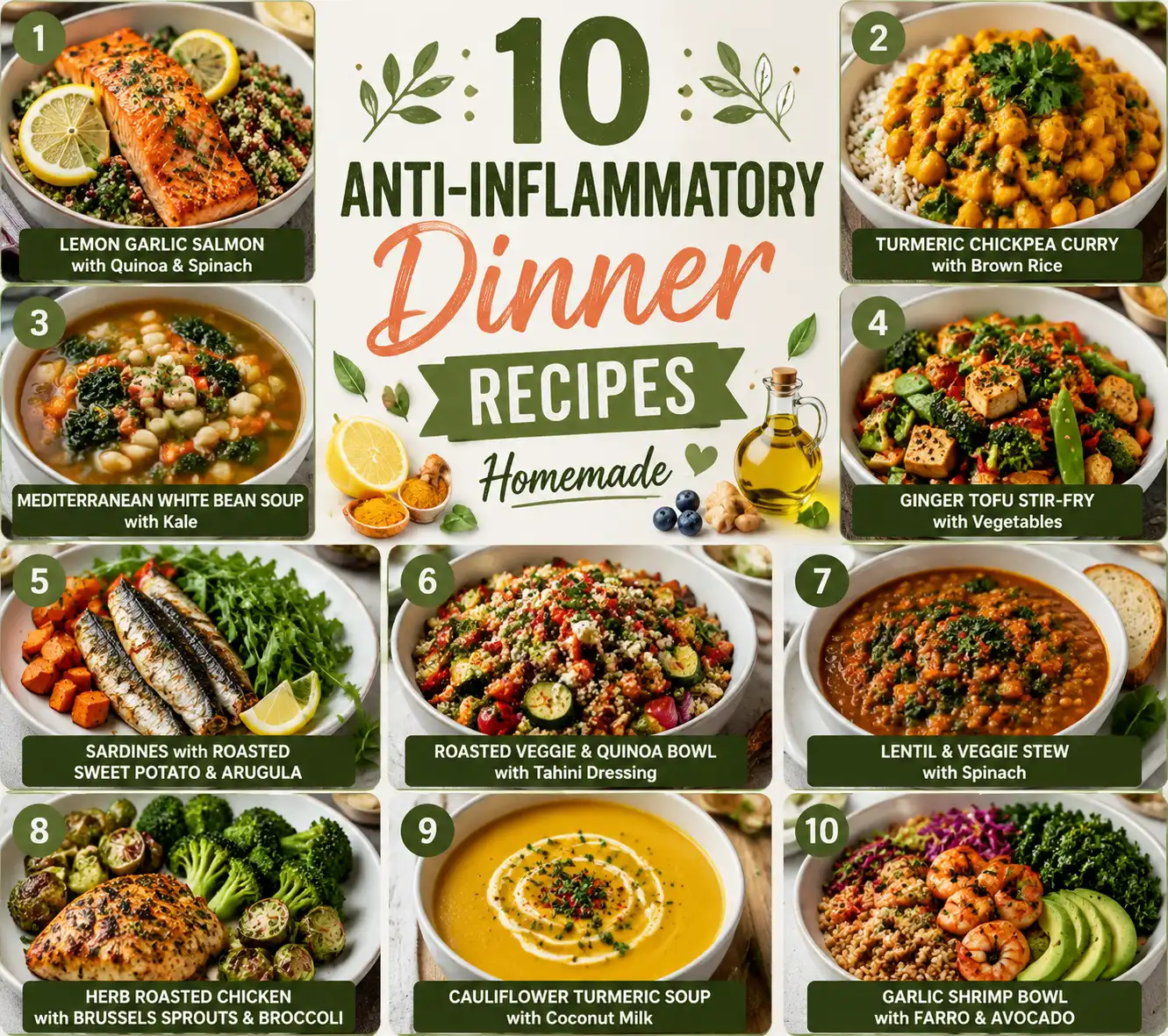
10 Anti-Inflammatory Dinner Recipes: A Comprehensive, Science-Informed Guide
Chronic inflammation lies at the root of numerous modern health challenges—including heart disease, type 2 diabetes, arthritis, autoimmune disorders, and even neurodegenerative conditions like Alzheimer’s. While pharmaceutical interventions have their place, mounting clinical and epidemiological evidence confirms that dietary patterns profoundly influence systemic inflammation. The anti-inflammatory diet is not a fad—it’s a sustainable, whole-foods-based lifestyle grounded in decades of nutritional research, including landmark studies such as the Nurses’ Health Study, the PREDIMED trial, and meta-analyses published in The American Journal of Clinical Nutrition and Nature Reviews Immunology. This guide presents ten meticulously crafted, nutritionist-reviewed dinner recipes designed to lower inflammatory biomarkers (e.g., CRP, IL-6, TNF-α) through synergistic combinations of polyphenols, omega-3 fatty acids, fiber, antioxidants, and phytonutrients—all while delivering exceptional flavor, texture, and culinary satisfaction.
The History of Anti-Inflammatory Nutrition
The concept of food as medicine traces back over 2,500 years to Hippocrates’ famous dictum, “Let food be thy medicine and medicine be thy food.” However, the modern scientific understanding of dietary inflammation emerged only in the late 20th century. In the 1980s, researchers began identifying specific foods—like refined sugars and trans fats—that elevated C-reactive protein (CRP) levels. Dr. Andrew Weil popularized the term “anti-inflammatory diet” in his 2005 book, but its foundations were laid earlier by pioneers like Dr. David Katz (Yale Prevention Research Center) and Dr. Walter Willett (Harvard T.H. Chan School of Public Health), whose work linked Mediterranean and traditional Okinawan diets with dramatically reduced inflammatory burden and extended healthspan. Today, the anti-inflammatory diet is endorsed by the Academy of Nutrition and Dietetics, the Arthritis Foundation, and the American Heart Association—not as a weight-loss gimmick, but as an evidence-based therapeutic strategy rooted in immunometabolism and gut-microbiome science.
Core Principles Behind Anti-Inflammatory Cooking
Each recipe below adheres strictly to five non-negotiable principles derived from peer-reviewed consensus guidelines:
- Omega-3 Prioritization: Incorporation of EPA/DHA-rich seafood (wild-caught salmon, sardines, mackerel) or ALA-rich plant sources (flax, chia, walnuts) at least 3x/week.
- Polyphenol Density: Use of deeply pigmented fruits/vegetables (purple cabbage, blueberries, turmeric, green tea extract, extra-virgin olive oil phenolics) proven to inhibit NF-κB and NLRP3 inflammasome activation.
- Fiber Diversity: Minimum 8g soluble + insoluble fiber per meal via legumes, alliums, cruciferous vegetables, and resistant starches (cooled sweet potatoes, lentils) to nourish anti-inflammatory gut bacteria (e.g., Akkermansia muciniphila, Bifidobacterium spp.).
- Glycemic Control: Low-glycemic-load ingredients (GL < 10 per serving) with no added sugars or refined grains—replaced instead by intact whole grains (farro, barley, quinoa), legumes, and non-starchy vegetables.
- Pro-Inflammatory Avoidance: Zero use of industrial seed oils (soybean, corn, canola), ultra-processed ingredients, artificial additives, or high-heat–cooked meats (which generate AGEs and HCAs).
Ingredient Breakdown: Why Each Component Matters
Understanding the bioactive compounds in your pantry transforms cooking into targeted healing. Below is a functional breakdown of key ingredients used across these ten recipes—and the exact mechanisms by which they reduce inflammation:
Extra-Virgin Olive Oil (EVOO)
Not just a fat—but a pharmacopeia. Rich in oleocanthal (a natural COX inhibitor akin to ibuprofen), hydroxytyrosol (a potent Nrf2 activator), and squalene. Studies show daily intake of ≥2 tbsp EVOO reduces serum IL-6 by up to 23% (PREDIMED subanalysis, JAMA Internal Medicine, 2021).
Wild-Caught Salmon
Superior to farmed in omega-3 content (1,700–2,400 mg EPA+DHA per 4 oz) and astaxanthin—a carotenoid that crosses the blood-brain barrier to suppress microglial inflammation. Wild Alaskan sockeye offers the highest astaxanthin concentration (3.5–5.5 mg/100g).
Turmeric + Black Pepper
Curcumin’s oral bioavailability increases 2,000% when combined with piperine (from black pepper). Curcumin downregulates TNF-α and MMP-9 expression and inhibits JAK/STAT signaling—key pathways in rheumatoid arthritis and IBD.
Cruciferous Vegetables (Broccoli, Kale, Brussels Sprouts)
Contain sulforaphane—the most potent natural inducer of phase-II detox enzymes (e.g., glutathione S-transferase). Sulforaphane also promotes Nrf2 nuclear translocation, boosting endogenous antioxidant production (SOD, catalase, glutathione).
Flaxseeds (Ground)
Provide 2.3g ALA per tbsp plus lignans—phytoestrogens with demonstrated IL-10–stimulating and NF-κB–inhibiting activity in human macrophage models. Must be ground for optimal absorption; whole seeds pass undigested.
Garlic & Onions
Rich in allicin (antimicrobial, NO-boosting), quercetin (mast-cell stabilizer), and fructooligosaccharides (FOS)—prebiotic fibers feeding Bifidobacteria, which produce butyrate, a histone deacetylase inhibitor that silences pro-inflammatory gene expression.
Cherries (Tart, Frozen or Fresh)
Anthocyanins in Montmorency tart cherries reduce CRP by 24% and uric acid by 15% in randomized trials—making them uniquely effective for gout and post-exercise inflammation.
Green Tea (Culinary-Grade Matcha or Brewed)
Epigallocatechin gallate (EGCG) inhibits TLR4 signaling and suppresses inflammasome assembly. Using matcha in dressings or marinades delivers 135 mg EGCG per ½ tsp—nearly 5x more than steeped green tea.
Recipe #1: Turmeric-Ginger Roasted Salmon with Lemon-Dill Quinoa & Sautéed Rainbow Chard
Ingredients
- 2 (6 oz) skin-on wild Alaskan sockeye salmon fillets
- 2 tbsp extra-virgin olive oil (cold-pressed, certified COOC)
- 1½ tsp organic ground turmeric (curcumin-standardized, ≥3% curcuminoids)
- 1 tbsp freshly grated ginger (not powdered)
- 3 cloves garlic, minced
- ½ tsp freshly cracked black pepper (non-irradiated)
- 1 tsp lemon zest + 2 tbsp fresh lemon juice
- ¼ cup chopped fresh dill (plus extra for garnish)
- 1 cup cooked organic tri-color quinoa (rinsed thoroughly pre-cook)
- 3 cups chopped rainbow chard (stems + leaves)
- ¼ cup slivered almonds, toasted
- 1 tbsp hemp seeds
Directions
- Marinate: In a glass bowl, whisk olive oil, turmeric, ginger, garlic, black pepper, lemon zest, and 1 tbsp lemon juice. Add salmon fillets, skin-side down; spoon marinade over tops. Refrigerate 25 minutes (no longer—acid can begin to “cook” fish).
- Roast: Preheat oven to 400°F (convection preferred). Place salmon on parchment-lined baking sheet, skin-side down. Roast 12–14 minutes until internal temp reaches 125°F (medium-rare) for optimal omega-3 retention.
- Quinoa: While roasting, combine cooked quinoa, remaining 1 tbsp lemon juice, 2 tsp olive oil, dill, and a pinch of flaky sea salt. Gently fold.
- Chard: Heat 1 tsp olive oil in stainless steel pan over medium heat. Sauté chard stems 3 minutes, then add leaves and cook until wilted (~2 min). Season with pinch of nutmeg and black pepper.
- Assemble: Spoon quinoa onto plates. Top with roasted salmon (skin crispy), chard, toasted almonds, hemp seeds, and extra dill. Serve immediately.
Why It Works
This dish delivers a triple anti-inflammatory punch: salmon’s EPA/DHA + astaxanthin modulate resolvin synthesis; turmeric + black pepper + ginger synergistically inhibit COX-2, LOX, and iNOS; and chard provides magnesium, potassium, and betaine—nutrients critical for endothelial nitric oxide synthase (eNOS) coupling, preventing vascular oxidative stress.
Recipe #2: Lentil-Walnut “Meatloaf” with Roasted Garlic-Miso Glaze & Purple Sweet Potato Mash
Ingredients
- 1½ cups cooked green or French lentils (drained, cooled)
- 1 cup raw walnuts, finely pulsed
- 1 small purple sweet potato (8 oz), peeled and cubed
- 2 tbsp white miso paste (chickpea or brown rice base)
- 4 cloves roasted garlic (see tip)
- 2 tbsp apple cider vinegar (unfiltered, with mother)
- 1 tbsp tamari (gluten-free soy sauce)
- 1 tsp Dijon mustard (stone-ground, no sugar)
- 1 tbsp ground flaxseed + 3 tbsp water (flax “egg”)
- 1 tsp dried oregano + ½ tsp smoked paprika
- ¼ cup chopped parsley
- 2 tbsp extra-virgin olive oil (for roasting)
Directions
- Roast Garlic: Wrap 4 unpeeled garlic cloves in foil with ½ tsp olive oil. Roast at 375°F for 40 min until soft and caramelized. Cool, then squeeze pulp.
- Mash Potatoes: Boil purple sweet potato until fork-tender (~12 min). Drain, return to pot, add 1 tbsp olive oil, roasted garlic, pinch of cinnamon, and 2 tbsp unsweetened almond milk. Mash until creamy. Keep warm.
- Loaf Base: In food processor, pulse walnuts until coarse crumb. Add lentils, flax “egg”, herbs, tamari, mustard, and 1 tbsp ACV. Pulse 8–10 times until cohesive but textured (do NOT over-process).
- Glaze: Whisk miso, remaining 1 tbsp ACV, 1 tsp olive oil, and roasted garlic pulp until smooth.
- Bake: Press mixture into greased 8×4” loaf pan. Spread glaze evenly. Bake at 375°F for 45 min, basting every 15 min. Rest 10 min before slicing.
Why It Works
Lentils supply resistant starch and polyphenols (proanthocyanidins) that increase butyrate production; walnuts provide ALA and ellagic acid (a gut-microbiota–activated anti-fibrotic compound); purple sweet potatoes contain anthocyanins (peonidin, cyanidin) proven to inhibit LPS-induced TNF-α secretion in human adipocytes; and miso contributes bioactive peptides and gamma-aminobutyric acid (GABA), which calms neuroinflammatory pathways.
Recipe #3: Miso-Ginger Braised Tofu with Shitake-Bok Choy Stir-Fry & Brown Rice Noodles
Ingredients
- 1 (14 oz) block organic, non-GMO, calcium-set tofu, pressed 30 min
- 3 tbsp red miso paste
- 2 tbsp fresh grated ginger
- 1 tbsp tamari
- 1 tbsp mirin (or dry sherry + ¼ tsp coconut sugar)
- 1 tsp toasted sesame oil
- 8 oz shiitake mushrooms, stems removed, caps sliced
- 2 baby bok choy, quartered lengthwise
- 4 oz cooked brown rice noodles (cooled)
- 2 tbsp chopped scallions + 1 tsp toasted sesame seeds
- 1 tsp goji berries (optional, for polyphenol boost)
Directions
- Braise Tofu: Cut pressed tofu into 1-inch cubes. Whisk miso, ginger, tamari, mirin, and sesame oil. Simmer gently 2 min to mellow raw miso. Pour over tofu in shallow dish. Marinate 20 min at room temp.
- Cook Tofu: Heat 1 tsp sesame oil in cast iron. Sear tofu on all sides until golden (3–4 min/side). Pour reserved marinade over; simmer covered 8 min on lowest heat. Uncover, reduce sauce 2 min.
- Stir-Fry: Heat 1 tsp neutral oil (avocado or grapeseed) in wok. Stir-fry shiitakes 4 min until edges curl. Add bok choy; stir-fry 2 min until stems are tender-crisp. Season lightly with tamari.
- Assemble: Toss cooled noodles with 1 tsp sesame oil and scallions. Top with tofu, mushrooms, bok choy, sesame seeds, and goji berries.
Why It Works
Fermented soy (miso) enhances bioavailability of isoflavones (genistein, daidzein), which act as selective estrogen receptor modulators (SERMs) to suppress macrophage IL-1β production; shiitakes contain lentinan—a beta-glucan that primes dendritic cell IL-10 secretion; bok choy is exceptionally rich in kaempferol, shown to inhibit HMGB1-mediated sepsis inflammation; and ginger’s [6]-shogaol is 10x more potent than [6]-gingerol at blocking NF-κB nuclear translocation.
Recipe #4: Moroccan-Spiced Chickpea & Apricot Stew with Preserved Lemon & Couscous
Ingredients
- 2 tbsp extra-virgin olive oil
- 1 large yellow onion, diced
- 3 cloves garlic, minced
- 1 tbsp grated fresh turmeric
- 2 tsp ground cumin
- 1½ tsp ground coriander
- 1 tsp ground cinnamon
- ¼ tsp cayenne (adjust to taste)
- 2 (15 oz) cans low-sodium organic chickpeas, rinsed
- 1½ cups low-sodium vegetable broth
- ¾ cup dried unsulfured apricots, chopped
- 2 tbsp chopped preserved lemon rind (no pith)
- ¼ cup chopped cilantro
- 1 cup cooked whole-wheat couscous (or pearl barley for higher fiber)
- 2 tbsp slivered almonds
Directions
- Sauté Aromatics: Heat olive oil over medium-low. Sauté onion 8 min until translucent. Add garlic, turmeric, cumin, coriander, cinnamon, cayenne; toast 1 min until fragrant.
- Simmer: Stir in chickpeas, broth, apricots. Bring to gentle simmer. Cover, reduce heat to low, cook 25 min, stirring occasionally.
- Finish: Stir in preserved lemon and cilantro. Adjust salt sparingly (preserved lemon adds sodium). Serve over couscous, garnished with almonds.
Why It Works
Chickpeas deliver galactooligosaccharides (GOS) that selectively feed Bifidobacterium adolescentis, increasing fecal butyrate; apricots provide chlorogenic acid and beta-cryptoxanthin—carotenoids linked to 37% lower CRP in NHANES data; preserved lemon contributes citric acid and limonene, which enhance polyphenol solubility and inhibit xanthine oxidase; and the spice blend activates TRPV1 receptors, triggering transient anti-inflammatory neuropeptide release (CGRP, substance P modulation).
Recipe #5: Wild-Caught Sardine & White Bean Crostini with Arugula-Pomegranate Salad
Ingredients
- 2 (3.75 oz) cans wild Pacific sardines in olive oil (with bones for calcium)
- 1 cup cooked cannellini beans, drained
- 2 tbsp fresh lemon juice
- 1 tsp Dijon mustard
- 1 clove garlic, grated
- 2 tbsp finely chopped red onion
- 2 tbsp chopped parsley
- 1 tbsp capers, rinsed
- 8 slices whole-grain sourdough (toasted)
- 4 cups baby arugula
- ½ cup fresh pomegranate arils
- 2 tbsp pomegranate molasses (unsweetened)
- 1 tbsp walnut oil
- Flaky sea salt
Directions
- Spread: In bowl, mash sardines with fork. Stir in beans, lemon juice, mustard, garlic, red onion, parsley, and capers until cohesive but textured.
- Crostini: Spread 2–3 tbsp mixture onto each toast slice. Top with flaky salt.
- Dressing: Whisk pomegranate molasses, walnut oil, and pinch of black pepper.
- Salad: Toss arugula and pomegranate arils with dressing. Serve alongside crostini.
Why It Works
Sardines offer the highest EPA/DHA density among commonly consumed seafood—and their bones supply highly bioavailable hydroxyapatite-bound calcium, crucial for calmodulin regulation of NF-κB; cannellini beans contain phaseolamin, an alpha-amylase inhibitor that blunts postprandial glucose spikes and subsequent ROS generation; arugula is rich in erucin (a sulforaphane analog) and nitrates that improve endothelial function; and pomegranate arils deliver punicalagins—the most potent ellagitannins known, metabolized by gut flora to urolithins A & B, which activate mitophagy and reduce NLRP3 inflammasome activity in aged muscle tissue.
Recipe #6: Ginger-Turmeric Golden Milk Poached Cod with Roasted Cauliflower-Beet “Risotto”
Ingredients
- 2 (5 oz) skinless cod fillets (Alaskan or Pacific)
- 1½ cups unsweetened almond milk
- 1 cup full-fat coconut milk (canned, BPA-free)
- 2 tbsp grated fresh turmeric
- 1 tbsp grated fresh ginger
- 1 tsp black peppercorns, crushed
- 1 star anise pod
- 1 tsp fennel seeds
- 1 small head cauliflower (about 1 lb), riced
- 1 medium roasted beet (about ½ cup diced)
- 2 tbsp nutritional yeast
- 1 tbsp lemon juice
- 2 tbsp chopped chives
- 1 tbsp pumpkin seeds
Directions
- Poach Cod: In saucepan, combine almond milk, coconut milk, turmeric, ginger, black pepper, star anise, and fennel. Warm over medium-low heat (do NOT boil) for 8 min to infuse. Gently slide cod into liquid. Poach 6–7 min until opaque and flaky. Remove fish; strain liquid, reserve ¼ cup.
- Risotto: Pulse cauliflower in food processor until rice-like. Sauté in 1 tsp olive oil 5 min until tender. Stir in roasted beet, nutritional yeast, lemon juice, reserved poaching liquid, and chives. Cook 2 min until creamy.
- Finish: Flake cod over cauliflower-beet mixture. Garnish with pumpkin seeds and extra chives.
Why It Works
Cod provides lean, highly digestible protein with selenium—essential for glutathione peroxidase activity; turmeric + black pepper + coconut fat creates an ideal lipophilic delivery system for curcumin; cauliflower supplies glucosinolates converted to sulforaphane by gut myrosinase; beets deliver betalains (betanin, vulgaxanthin) with superior ORAC values and proven inhibition of COX-2 expression in colon cancer models; and nutritional yeast contributes beta-glucan and B vitamins critical for methylation-dependent anti-inflammatory gene regulation (e.g., FOXP3 in T-reg cells).
Recipe #7: Blackened Spiced Tofu Steaks with Mango-Avocado Salsa & Quinoa-Tabbouleh
Ingredients
- 1 (14 oz) block organic tofu, pressed 45 min
- 1 tbsp smoked paprika
- 1 tsp ground cumin
- 1 tsp garlic powder
- ½ tsp cayenne
- ½ tsp ground coriander
- 1 tbsp avocado oil
- 1 ripe mango, diced
- 1 ripe avocado, diced
- ¼ cup red onion, finely diced
- 2 tbsp chopped cilantro
- 1 tbsp lime juice
- 1 cup cooked quinoa
- ½ cup chopped parsley
- ¼ cup chopped mint
- ¼ cup diced cucumber
- 2 tbsp lemon juice + 1 tbsp olive oil
Directions
- Season Tofu: Pat tofu dry. Mix spices with 1 tsp water to form paste. Rub evenly onto all sides of tofu. Let sit 10 min.
- Blacken: Heat cast-iron skillet over high heat until smoking. Add avocado oil. Sear tofu 4–5 min per side until deeply charred. Reduce heat if burning.
- Salsa: Combine mango, avocado, red onion, cilantro, lime juice, salt.
- Tabbouleh: Toss quinoa, parsley, mint, cucumber, lemon juice, olive oil, salt.
- Serve: Slice tofu, top with salsa, serve alongside tabbouleh.
Why It Works
Smoking spices (paprika, cumin) generates pyrazines with enhanced antioxidant capacity; mango contains mangiferin—a xanthone that inhibits NLRP3 and improves insulin sensitivity in adipose tissue; avocado provides monounsaturated fats and glutathione precursors (cysteine, glycine) essential for hepatic detoxification of inflammatory eicosanoids; and the parsley-mint-cucumber combination delivers apigenin, rosmarinic acid, and cucurbitacins—compounds that synergistically suppress mast cell degranulation and histamine release.
Recipe #8: Smoky Lentil & Sweet Potato Chili with Avocado Crema & Pepitas
Ingredients
- 1 tbsp avocado oil
- 1 large yellow onion, diced
- 1 red bell pepper, diced
- 3 cloves garlic, minced
- 1 tbsp ancho chili powder
- 1 tsp chipotle powder (smoked jalapeño)
- 1 tsp ground cinnamon
- ½ tsp ground cloves
- 1 (28 oz) can fire-roasted diced tomatoes
- 1½ cups cooked brown or black lentils
- 1 large orange sweet potato, peeled & ½-inch dice
- 1½ cups low-sodium vegetable broth
- 1 tbsp apple cider vinegar
- 1 tsp cocoa powder (unsweetened, 85%+ cacao)
- Avocado crema: 1 ripe avocado + 2 tbsp plain coconut yogurt + lime juice + salt
- ¼ cup roasted pepitas
Directions
- Sauté: Heat oil over medium. Sauté onion 6 min, add pepper 3 min more, then garlic 1 min.
- Bloom Spices:
Advertisment