
Introduction
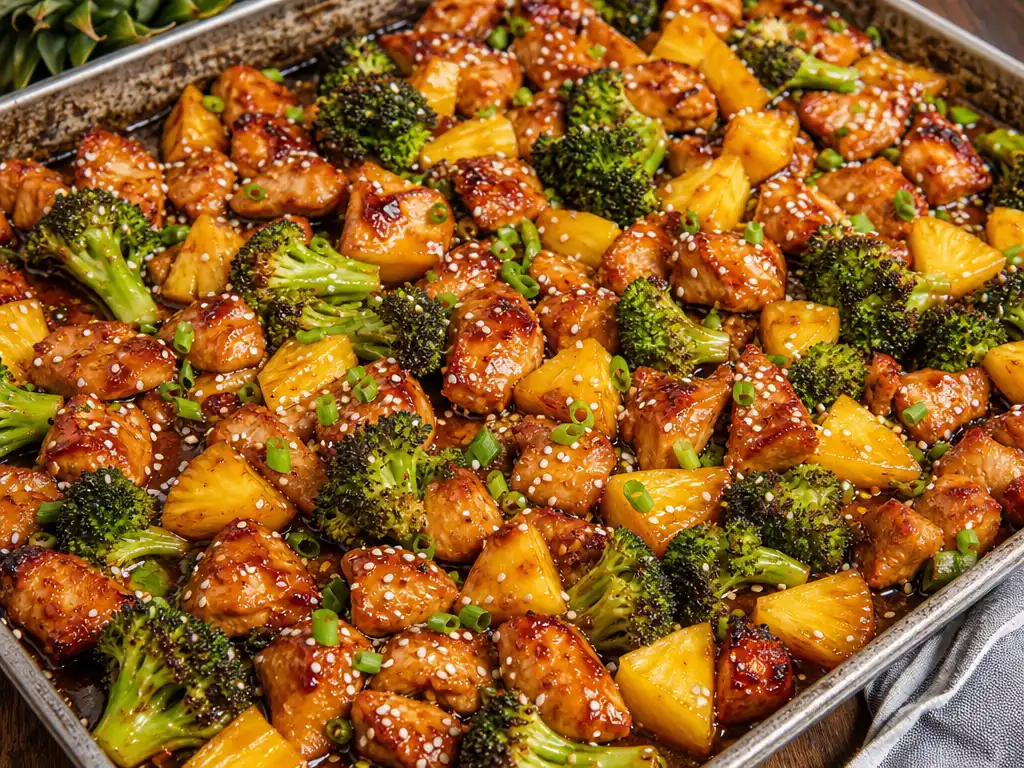
Teriyaki Sheet Pan Pineapple Chicken and Broccoli is a vibrant, flavor-packed, one-pan wonder that brings together the sweet-savory depth of Japanese-inspired teriyaki, the tropical brightness of fresh pineapple, the tender juiciness of boneless chicken, and the earthy crunch of broccoli—all roasted to perfection on a single sheet pan. Designed for busy weeknights yet elegant enough for casual entertaining, this dish delivers restaurant-quality taste with minimal prep, zero fuss, and virtually no cleanup. Its harmonious balance of umami, acidity, sweetness, and texture makes it universally appealing—whether you’re feeding picky eaters, health-conscious adults, meal-prep enthusiasts, or gluten-free or low-carb seekers (with simple swaps). More than just convenience food, it’s a celebration of bold global flavors meeting modern kitchen practicality.
The History
While teriyaki itself traces its roots to 17th-century Japan—where “teri” (luster or shine) and “yaki” (grill or broil) described the glossy glaze applied to grilled fish or meat—the sheet pan iteration is a distinctly 21st-century American culinary innovation. Teriyaki gained widespread popularity in the U.S. during the mid-20th century, especially through Japanese-American restaurants and supermarket bottled sauces. The rise of sheet pan cooking emerged in the 2010s as home cooks embraced minimalist, time-efficient techniques aligned with wellness trends, social media food culture (think Instagram-worthy golden-brown edges and colorful arrangements), and sustainability efforts to reduce dishwashing and energy use. Pineapple entered the teriyaki fold via Hawaiian-Japanese fusion cuisine—particularly influenced by plantation-era culinary exchanges in Hawaii, where Japanese immigrants adapted local ingredients like pineapple into familiar preparations such as teriyaki-glazed meats. This recipe honors that rich cross-cultural lineage while optimizing for today’s kitchens: honoring tradition in flavor profile, but revolutionizing execution through smart, unified roasting.
Ingredients Breakdown
Every ingredient in this dish serves a distinct functional and sensory purpose—no filler, no afterthoughts:
- Boneless, skinless chicken thighs (or breasts): Thighs offer superior moisture retention and richer flavor due to their higher fat content—ideal for roasting without drying out. Breasts work well for leaner preference but require careful timing to avoid toughness.
- Fresh pineapple chunks (not canned in syrup): Provides natural fructose, bromelain (a tenderizing enzyme), and bright acidity that cuts through richness. Fresh pineapple caramelizes beautifully, deepening sweetness and adding subtle floral notes. Canned pineapple (especially in heavy syrup) risks oversweetening and soggy texture; if using canned, opt for 100% juice-packed and pat dry thoroughly.
- Broccoli florets (with some stem): A nutritional powerhouse rich in sulforaphane, fiber, vitamin C, and folate. Using stems (peeled and sliced) maximizes yield and adds pleasant crunch. Uniform cutting ensures even roasting—too-small pieces burn; too-large ones steam instead of char.
- Low-sodium soy sauce or tamari: Delivers foundational umami and saltiness. Tamari is naturally gluten-free and less wheat-forward, ideal for sensitive palates. Low-sodium versions give precise control over final salt levels—critical when balancing with sweeteners.
- Real maple syrup or raw honey: Adds complex sweetness and viscosity for glaze adhesion. Maple contributes subtle woody, caramelized notes; honey offers floral depth and natural antibacterial properties. Avoid corn syrup or artificial sweeteners—they lack nuance and can scorch easily.
- Grated fresh ginger and garlic: Not powdered—they’re enzymatic powerhouses. Ginger adds zesty warmth and anti-inflammatory benefits; garlic lends pungent depth that mellows beautifully when roasted. Microplane-grated for maximum surface area and infusion.
- Rice vinegar (unseasoned): Introduces clean, mild acidity to balance sweetness and enhance overall brightness—far more nuanced than white vinegar.
- Toasted sesame oil: Used *only* at the end (never roasted), this finishing oil imparts an intoxicating nutty aroma and rich mouthfeel. Its low smoke point makes it unsuitable for high-heat cooking—but essential for aromatic lift.
- Sesame seeds (white or black) and sliced green onions: Textural contrast and visual pop. Toasted sesame seeds add crunch and nuttiness; green onions contribute fresh, mild oniony sharpness and vibrant color.
- Neutral high-smoke-point oil (avocado, grapeseed, or refined coconut): Ensures even browning and prevents sticking without imparting competing flavors.
Step-by-Step Recipe
- Prep & Marinate (15–30 minutes, optional but recommended): In a large bowl, whisk together soy sauce/tamari, maple syrup/honey, rice vinegar, grated ginger, minced garlic, and a pinch of black pepper. Add chicken pieces and toss thoroughly to coat. Let marinate at room temperature for 15 minutes—or refrigerate up to 2 hours for deeper flavor penetration. (Note: Do not marinate longer than 2 hours with pineapple present—bromelain will begin to break down proteins excessively, resulting in mushy texture.)
- Preheat & Prep Pan: Position oven rack in the upper third of the oven. Preheat to 425°F (220°C). Line a large, heavy-duty rimmed baking sheet (18″x13″) with parchment paper or a silicone mat—this prevents sticking and simplifies cleanup. Lightly brush or spray with neutral oil.
- Arrange Components Strategically: Remove chicken from marinade (reserve marinade!) and place on the prepared sheet pan in a single layer with space between pieces. Scatter broccoli florets and stems around and *between* chicken—not piled on top—to ensure air circulation and even roasting. Nestle pineapple chunks among the broccoli and chicken, distributing them evenly but keeping them slightly separated to encourage caramelization rather than steaming.
- Initial Roast (20 minutes): Place pan in preheated oven. Roast undisturbed for 20 minutes. This allows chicken to develop a light golden crust and broccoli to begin tenderizing while pineapple starts releasing juices.
- Baste & Rotate (10 minutes): Remove pan carefully. Pour reserved marinade evenly over the entire surface—avoid pooling. Use tongs to gently flip chicken pieces and stir broccoli/pineapple to promote even browning and glaze absorption. Return to oven.
- Final Roast & Glaze (10–12 minutes): Roast until chicken reaches 165°F internally (use an instant-read thermometer inserted into thickest piece), broccoli is fork-tender with crisp edges, and pineapple is deeply golden and slightly shrunken. For extra gloss, broil on HIGH for 1–2 minutes at the very end—watch closely to prevent burning!
- Rest & Finish: Remove pan and let rest 3–5 minutes. Drizzle generously with toasted sesame oil. Sprinkle with sesame seeds and sliced green onions. Serve immediately.
Tips
- Uniform Sizing Is Non-Negotiable: Cut chicken into 1.5-inch cubes, broccoli into 1.5-inch florets (stems peeled and cut into ¼-inch coins), and pineapple into 1-inch chunks. Consistency guarantees simultaneous doneness.
- Pat Everything Dry: Before marinating chicken—and especially before roasting pineapple and broccoli—pat all components thoroughly with paper towels. Surface moisture inhibits browning and causes steaming.
- Marinade Safety: Never reuse raw marinade that touched uncooked chicken unless boiled vigorously for at least 2 minutes to kill pathogens. Our method reserves the marinade *before* adding chicken—so it’s safe to use as baste.
- Oven Calibration Matters: Many home ovens run hot or cold. Use an oven thermometer for accuracy—especially critical for achieving caramelization without charring.
- Parchment > Foil: Aluminum foil can react with acidic ingredients (like vinegar and pineapple) and may leach trace metals. Parchment is inert, non-stick, and compostable.
- Don’t Crowd the Pan: Overloading creates steam, leading to soggy broccoli and pale chicken. Use two pans if doubling the recipe.
- Broccoli Stem Hack: Don’t discard those stalks! Peel the tough outer layer with a vegetable peeler, then slice thinly—roasted stems are sweeter and more tender than florets.
- Resting = Juiciness: Allowing the sheet pan to rest lets juices redistribute into the chicken and reabsorb into the glaze-coated vegetables—resulting in moister bites and intensified flavor.
- Toast Your Own Sesame Seeds: Heat raw sesame seeds in a dry skillet over medium-low heat 2–3 minutes, shaking constantly, until fragrant and golden. Store in an airtight container for up to 1 month.
- Acid Timing: Adding rice vinegar *to the marinade*, not after roasting, ensures balanced flavor integration—not a harsh, separate tang.
Variations and Customizations
This recipe is gloriously adaptable—here’s how to make it your own without compromising integrity:
- Protein Swaps: Try shrimp (add in last 6–8 minutes), firm tofu (pressed & cubed), tempeh (marinated 30+ minutes), or thinly sliced flank steak (slice against grain post-roast). For vegetarian/vegan, double the broccoli and add red bell peppers, zucchini ribbons, or shiitake mushrooms.
- Vegetable Rotations: Swap broccoli for cauliflower (roast 5 min longer), asparagus (add last 10 minutes), snap peas (last 5 minutes), baby bok choy (halved, core side down), or sweet potato wedges (parboil 5 min first). Keep total veg volume similar to maintain roast time.
- Pineapple Alternatives: Mango (ripe but firm), peaches (grilled or fresh), or even roasted pear slices offer complementary sweetness. For tart contrast, try pomegranate arils sprinkled *after* roasting.
- Sauce Twists: Add 1 tsp gochujang for gentle heat and fermented depth; ½ tsp ground coriander for citrusy warmth; 1 tbsp mirin for enhanced sweetness and sheen; or 1 tsp lime zest + juice for Southeast Asian flair. Replace maple with brown sugar (dissolve in warm marinade first).
- Dietary Adaptations:
- Gluten-Free: Use certified GF tamari or coconut aminos (reduce salt slightly—coconut aminos are milder).
- Lower Sugar: Reduce maple syrup to 1 tbsp and add 1 tsp monk fruit blend or erythritol; increase ginger and garlic to compensate for flavor depth.
- Keto/Low-Carb: Omit pineapple entirely (or use ¼ cup finely diced); replace maple with 1 tsp allulose or erythritol; boost volume with extra broccoli, zucchini, and bell peppers.
- Whole30/Paleo: Use coconut aminos, raw honey (if compliant), and omit sesame oil (substitute avocado oil finish) and seeds (optional).
- Flavor Infusions: Add star anise or cinnamon stick to warm marinade (remove before using); infuse oil with lemongrass or kaffir lime leaves; or finish with yuzu kosho for citrus-chili complexity.
- Texture Boosters: Top with crushed macadamia nuts, crispy fried shallots, nori strips, or furikake seasoning blend.
- Meal-Prep Friendly: Roast components separately—chicken and broccoli at 425°F for 20 min, pineapple alone at 400°F for 12 min—then combine and glaze before serving. Stores beautifully for 4 days refrigerated or 3 months frozen (reheat gently with splash of water or broth to refresh moisture).
Health Considerations and Nutritional Value
A single 1.5-cup serving (approx. 420g) provides approximately:
- Calories: 380–420 kcal (varies by protein choice and oil amount)
- Protein: 32–38g (excellent complete source—supports muscle repair, satiety, and metabolic health)
- Carbohydrates: 28–34g (primarily from pineapple and maple syrup—rich in natural antioxidants and fiber; glycemic load moderated by protein/fat)
- Fiber: 5–7g (from broccoli, pineapple, and optional stems—supports gut microbiome diversity and digestive regularity)
- Healthy Fats: 12–16g (mostly monounsaturated from avocado oil and sesame oil—linked to improved cholesterol profiles and reduced inflammation)
- Vitamins & Minerals: Exceptionally high in Vitamin C (180% DV), Vitamin K (120% DV), Folate (45% DV), Potassium (35% DV), Manganese (85% DV), and Selenium (40% DV). Bromelain in pineapple aids protein digestion; sulforaphane in broccoli activates cellular detox pathways.
Key Health Notes:
- Sodium Control: Using low-sodium soy sauce and omitting added salt keeps sodium under 600mg/serving—heart-healthy per AHA guidelines.
- Sugar Awareness: Natural sugars from fruit and maple are accompanied by fiber and polyphenols, preventing blood sugar spikes. Ideal for diabetics when portion-controlled and paired with mindful carb intake elsewhere.
- Anti-Inflammatory Profile: Ginger, garlic, broccoli, pineapple, and sesame oil collectively deliver potent anti-inflammatory compounds (gingerols, allicin, sulforaphane, bromelain, sesamin) clinically associated with reduced joint pain, improved cognitive function, and lower chronic disease risk.
- Gut-Friendly: Prebiotic fiber from broccoli and pineapple feeds beneficial gut bacteria; fermented soy sauce (if traditionally brewed) adds trace probiotics.
- Allergen-Conscious: Naturally nut-free and dairy-free. Easily made gluten-free and egg-free. Always verify tamari or sauce labels for hidden allergens like wheat, corn, or soy derivatives.
Ingredients
- 1.5 lbs boneless, skinless chicken thighs, cut into 1.5-inch cubes (or chicken breasts)
- 2 cups fresh pineapple, cut into 1-inch chunks (core removed, patted dry)
- 4 cups broccoli florets and peeled, sliced stems (about 1 large head)
- ⅓ cup low-sodium soy sauce or tamari
- 3 tbsp pure maple syrup or raw honey
- 1 tbsp unseasoned rice vinegar
- 1 tbsp freshly grated ginger (about 1-inch knob)
- 3 cloves garlic, finely minced (about 1 tbsp)
- ¼ tsp freshly ground black pepper
- 2 tbsp neutral high-heat oil (avocado, grapeseed, or refined coconut)
- 1 tsp toasted sesame oil (for finishing—do NOT roast with this)
- 2 tbsp toasted white or black sesame seeds
- ¼ cup thinly sliced green onions (scallions), for garnish
Directions
- In a large mixing bowl, whisk together soy sauce/tamari, maple syrup/honey, rice vinegar, grated ginger, minced garlic, and black pepper until smooth and emulsified.
- Add chicken pieces to the marinade and toss thoroughly to coat every surface. Let sit at room temperature for 15 minutes (or refrigerate up to 2 hours—do not exceed).
- Preheat oven to 425°F (220°C). Line a large rimmed baking sheet with parchment paper. Lightly brush or spray with 1 tablespoon of neutral oil.
- Remove chicken from marinade (reserving all marinade) and arrange in a single layer on the prepared sheet pan. Scatter broccoli and pineapple evenly around and between chicken pieces—do not pile or overlap.
- Roast in preheated oven for 20 minutes, undisturbed.
- Remove pan carefully. Pour reserved marinade evenly over entire surface. Gently flip chicken and stir broccoli/pineapple with tongs to redistribute and coat.
- Return pan to oven and roast for another 10 minutes.
- Check doneness: Chicken should register 165°F internally; broccoli should be tender-crisp with browned edges; pineapple should be golden and slightly caramelized. If needed, roast 2–3 minutes more.
- For ultimate glaze and sheen, switch oven to BROIL (HIGH) and broil 1–2 minutes—watch constantly to avoid burning.
- Remove pan and let rest 3–5 minutes. Drizzle with toasted sesame oil. Sprinkle generously with sesame seeds and green onions.
- Serve immediately—ideal over steamed brown rice, quinoa, cauliflower rice, or on its own as a nutrient-dense main.
FAQ
- Can I use frozen chicken?
- Yes—but thaw completely in the refrigerator overnight and pat *very* dry before marinating. Frozen chicken releases excess water, diluting the marinade and hindering browning.
- Why not use bottled teriyaki sauce?
- Most commercial versions contain high-fructose corn syrup, excessive sodium, preservatives, and artificial colors/flavors. Homemade marinade gives full control over quality, sweetness level, and clean-label integrity—and tastes infinitely brighter and fresher.
- My broccoli turned mushy. What went wrong?
- Likely causes: overcrowded pan, insufficient preheating, wet broccoli, or roasting too long. Ensure dry florets, ample space, and accurate timing—broccoli should retain slight bite and vibrant green color.
- Can I make this ahead for meal prep?
- Absolutely. Fully roasted and cooled portions keep refrigerated for 4 days in airtight containers. Reheat gently in a covered skillet with 1 tsp water/broth, or in the microwave with a damp paper towel. Freezes well for up to 3 months—thaw overnight before reheating.
- Is pineapple really necessary?
- It’s highly recommended—but not mandatory. Pineapple contributes enzymatic tenderness, natural sweetness, acidity, and textural contrast. Omit only if allergic or strongly averse; consider mango or peach as alternatives for similar function.
- How do I prevent the chicken from drying out?
- Use thighs (higher fat), don’t overcook (165°F is safe and juicy), marinate briefly (max 2 hours), and let rest before serving. Thighs forgive timing errors far better than breasts.
- Can I cook this on the grill?
- Yes! Use a heavy-duty disposable foil pan or cast-iron grill pan. Grill over medium-high indirect heat, stirring once halfway. Watch closely—grill temps fluctuate more than ovens.
- What’s the best rice to serve with this?
- Short-grain brown rice offers nutty depth and fiber; black rice adds antioxidants and visual drama; sushi rice provides classic sticky texture; cauliflower rice keeps it low-carb. Rinse rice well before cooking to remove excess starch.
- Can I double this recipe?
- Yes—use two sheet pans placed on separate oven racks (rotate halfway through). Avoid stacking pans or overcrowding one pan, which leads to uneven cooking.
- Why toast the sesame oil separately?
- Because toasted sesame oil has a very low smoke point (~350°F). Heating it during roasting burns off its delicate aroma and creates bitter, acrid notes. Finishing with it preserves its signature fragrance and enhances mouthfeel.
Summary
Teriyaki Sheet Pan Pineapple Chicken and Broccoli is a masterclass in effortless elegance—uniting Japanese umami, tropical sweetness, cruciferous nutrition, and foolproof sheet pan technique into one dazzling, family-approved meal.
With customizable ingredients, built-in health benefits, make-ahead flexibility, and vibrant flavor that belies its simplicity, it’s not just dinner—it’s a joyful, nourishing ritual you’ll return to again and again.