
Introduction
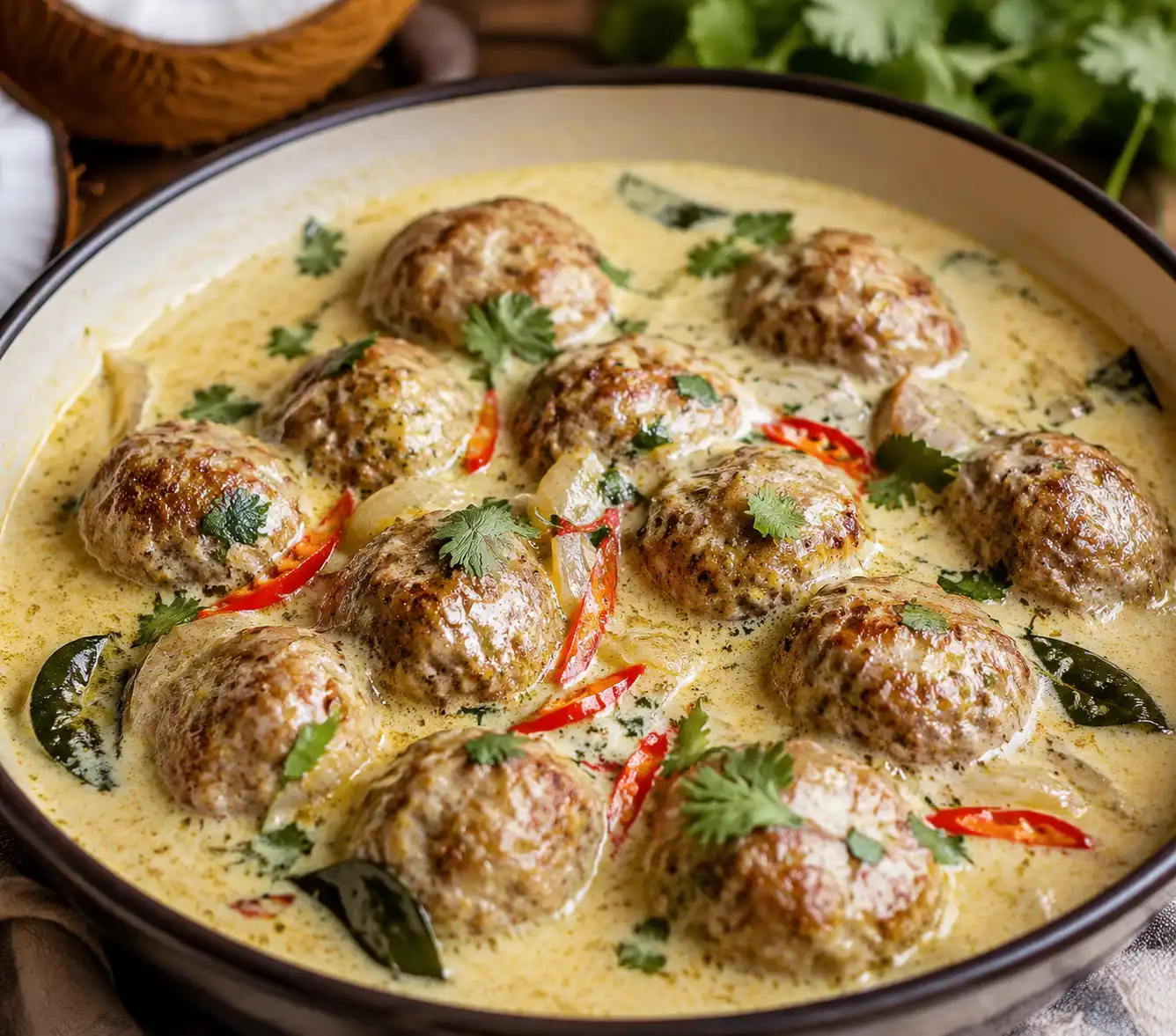
Creamy Coconut Curry Meatballs are a luscious, aromatic fusion dish that marries the comforting heartiness of savory meatballs with the rich, velvety depth of Southeast Asian–inspired coconut curry. This globally inspired creation delivers bold layers of flavor—sweet, spicy, tangy, and umami—balanced by the natural creaminess of full-fat coconut milk and the gentle warmth of toasted spices. Whether served over jasmine rice, tucked into warm naan, or enjoyed as a soul-soothing bowl meal, these meatballs offer restaurant-quality elegance with accessible home-kitchen techniques. Their versatility makes them ideal for weeknight dinners, potlucks, meal prep, or even elegant dinner parties where guests will delight in their complex yet harmonious profile.
The History
While there is no single documented origin for “Creamy Coconut Curry Meatballs” as a formalized dish, its lineage traces across centuries of culinary cross-pollination. Meatballs themselves have ancient roots—from Persian *koofteh*, Turkish *köfte*, Chinese *wonton* and *lion’s head*, to Italian *polpette*—all testaments to humanity’s universal love for compacted, seasoned ground protein. Coconut-based curries, meanwhile, flourished across tropical regions of South India, Sri Lanka, Thailand, Malaysia, and the Philippines, where coconut milk was traditionally used to temper heat, add body, and lend a subtle sweetness that complements pungent aromatics like lemongrass, galangal, and chilies. The modern fusion likely emerged in the late 20th and early 21st centuries, accelerated by global travel, food media, and immigrant chefs reimagining ancestral techniques through new cultural lenses. In Western kitchens, this dish gained traction via food blogs, wellness influencers, and cookbooks promoting “cleaner” takes on takeout favorites—replacing heavy cream with coconut milk, reducing refined sugar, and emphasizing whole spices and fresh herbs. Today, Creamy Coconut Curry Meatballs stand as a delicious symbol of culinary diplomacy: a tender, spiced sphere of tradition, gently cradled in a silk-smooth, golden-hued sauce rooted in tropical terroir.
Ingredients Breakdown
Every element in this recipe serves a distinct functional and sensory purpose—no ingredient is arbitrary. Here’s an in-depth look at why each matters:
- Ground Meat (Beef, Pork, Chicken, or Turkey): Provides structure, savory depth (umami), and binding capacity. Beef offers richness and fat content essential for juiciness; pork adds sweetness and tenderness; chicken or turkey yield a lighter, leaner option but benefit from added moisture (e.g., grated zucchini or soaked breadcrumbs). A blend (e.g., 70% beef + 30% pork) often delivers optimal flavor and texture.
- Panko or Fresh Breadcrumbs: Acts as a moisture-retaining binder—not just filler. Panko’s airy, flaky structure absorbs liquid without turning gummy, helping meatballs stay tender rather than dense. Gluten-free alternatives include almond flour, oat flour, or cooked quinoa.
- Fresh Aromatics (Onion, Garlic, Ginger, Lemongrass): Form the flavor foundation. Finely minced or grated onion adds sweetness and moisture; garlic contributes pungent savoriness; ginger brings bright, peppery warmth; and bruised lemongrass stalks (simmered then removed) infuse citrusy floral notes unique to Thai and Vietnamese curries.
- Fish Sauce: A non-negotiable umami catalyst—even in tiny amounts (½–1 tsp). It deepens savoriness without tasting “fishy,” balancing sweetness and acidity much like Worcestershire or soy sauce—but with more nuanced fermentation-derived complexity.
- Coconut Milk (Full-Fat, Canned): The soul of the sauce. Look for brands with minimal additives (ideally just coconut and water) and high cream content (the thick layer that rises to the top). Avoid “light” versions—they lack the fat needed for emulsification, richness, and proper reduction. The fat carries fat-soluble flavor compounds from spices and aromatics, creating mouth-coating silkiness.
- Curry Paste (Red, Green, Massaman, or Panang): Not just heat—it’s a concentrated paste of roasted chilies, fermented shrimp paste (*kapi*), toasted spices, and herbs. Authentic Thai red curry paste contains dried red chilies, shallots, garlic, galangal, lemongrass, kaffir lime zest, and coriander root. Store-bought pastes vary widely in quality; choose ones with real ingredients and avoid artificial colors or MSG if preferred. For control, homemade paste is transformative—but time-intensive.
- Spice Blooming Agents (Cumin, Coriander, Turmeric, Mustard Seeds): Toasting whole or ground spices in oil before adding liquids unlocks volatile oils, transforming raw bitterness into warm, nutty, earthy fragrance—this “blooming” step is critical for depth.
- Aromatics for Simmering (Kaffir Lime Leaves, Thai Basil, Cilantro Stems): Kaffir lime leaves impart a distinctive citrus-floral perfume that cannot be substituted with regular lime zest; they’re best added whole and removed before serving. Thai basil adds anise-like brightness; cilantro stems (not just leaves) contain intense herbal essence ideal for building broth foundations.
- Acidic Finish (Lime Juice, Tamarind Paste, or Fish Sauce): Added at the end to lift the richness, balance fat, and brighten all other flavors. Lime juice provides sharp citrus; tamarind lends fruity tang; extra fish sauce reinforces umami without sourness.
- Garnishes (Toasted Coconut Flakes, Roasted Peanuts, Pickled Red Onions, Micro Cilantro): Add contrasting textures (crunch vs. cream), temperature (cool pickles against warm curry), and visual vibrancy—elevating the dish from nourishing to unforgettable.
Step-by-Step Recipe
- Prepare the Meatball Mixture: In a large mixing bowl, combine 1 lb (450g) ground meat (beef/pork blend recommended), ¼ cup panko breadcrumbs, ¼ cup finely grated yellow onion, 2 tbsp freshly grated ginger, 3 minced garlic cloves, 1 egg, 1 tbsp fish sauce, 1 tsp soy sauce (or tamari), 1 tsp brown sugar, ½ tsp ground coriander, ½ tsp ground cumin, ¼ tsp white pepper, and ¼ tsp fine sea salt. Use clean hands to mix *just until combined*—overmixing leads to tough, rubbery meatballs. Cover and refrigerate for 30 minutes (chilling firms the mixture and prevents crumbling during cooking).
- Shape the Meatballs: With damp hands, roll mixture into 1½-inch (3.8 cm) balls—about 20–22 total. Place on a parchment-lined tray. For uniformity, use a small cookie scoop (1.5 tbsp capacity). Optional: Lightly dust each ball with additional panko for extra crisp exterior.
- Pre-Cook the Meatballs: Heat 2 tbsp neutral oil (e.g., peanut or avocado) in a wide, heavy-bottomed Dutch oven or deep skillet over medium-high heat. Working in batches to avoid crowding, sear meatballs on all sides until deeply golden brown (about 6–8 minutes total per batch). Do not pierce—let them develop crust. Transfer to a plate lined with paper towels. Reserve 1 tbsp of rendered fat in pan (discard excess).
- Bloom the Spices: Reduce heat to medium-low. Add 1 tbsp reserved fat, then 2 tbsp red curry paste and 1 tsp each ground cumin, coriander, and turmeric. Stir constantly for 1–2 minutes until fragrant and oil begins to separate slightly around edges—a sign the paste is “cooked out.”
- Sauté Aromatics: Add ½ cup finely chopped shallots or red onion, 2 tbsp minced lemongrass (tender inner core only), and 2 bruised kaffir lime leaves. Sauté 3–4 minutes until softened and aromatic. Stir in 1 tbsp grated galangal (or extra ginger) and 1 minced bird’s eye chili (optional, for heat).
- Build the Coconut Broth: Carefully pour in 2 (13.5 oz) cans full-fat coconut milk—stirring constantly to incorporate paste evenly. Add 1 cup low-sodium chicken or vegetable broth (for depth without overwhelming salt), 1 tbsp fish sauce, 1 tbsp palm sugar or light brown sugar, and ½ tsp lime zest. Bring to a gentle simmer—do not boil vigorously, or coconut milk may separate.
- Simmer the Meatballs: Return seared meatballs to the pot, nestling them gently into the sauce. Reduce heat to low, cover partially (leave a 1-inch gap), and simmer for 25–30 minutes, turning meatballs gently halfway through. Sauce should thicken slightly and coat the back of a spoon. Avoid stirring aggressively—meatballs are delicate.
- Final Seasoning & Texture Refinement: Remove kaffir lime leaves. Stir in 1 tbsp fresh lime juice and 1 tsp tamarind paste (or substitute ½ tsp apple cider vinegar + ½ tsp brown sugar). Taste and adjust: more fish sauce for umami, lime for brightness, sugar for balance. If sauce is too thin, simmer uncovered 5 minutes; if too thick, whisk in 1–2 tbsp warm broth. For extra richness, stir in 1 tbsp cold unsalted butter or 2 tsp coconut cream (the thick top layer from a chilled can).
- Rest & Garnish: Let curry rest off heat for 10 minutes—this allows flavors to meld and meatballs to reabsorb juices. Just before serving, fold in ¼ cup loosely packed Thai basil leaves (not cooked—heat wilts them perfectly). Ladle into bowls and top generously with toasted coconut flakes, crushed roasted peanuts, pickled red onions, fresh cilantro, and extra lime wedges.
Tips
- Chill Before Shaping: Cold meat mixture holds shape better and prevents fat from smearing, which ensures even browning and tender interiors.
- Don’t Skip the Sear: That caramelized crust locks in moisture and adds Maillard-derived complexity that simmers into the sauce. Use high smoke-point oil and ensure pan is hot before adding meatballs.
- Control Coconut Separation: Always stir curry paste into hot oil *before* adding coconut milk. Never boil rapidly—maintain a bare simmer. If separation occurs, whisk vigorously off heat or blend ¼ cup sauce with an immersion blender, then stir back in.
- Use Bruised, Not Chopped, Kaffir Lime Leaves: Crushing releases essential oils without introducing bitter fibers. Remove before serving—they’re not meant to be eaten.
- Toast Your Own Spices: Whole cumin and coriander seeds toasted in dry pan until fragrant (30–60 seconds), then ground, taste exponentially fresher than pre-ground versions.
- Make-Ahead Friendly: Meatballs can be shaped and refrigerated up to 24 hours—or frozen raw on a tray, then bagged for up to 3 months. Simmer frozen (add 5–7 mins to cook time). Fully cooked curry keeps refrigerated for 4 days or frozen for 3 months (coconut milk may grain slightly upon thawing—whisk well and reheat gently).
- Test Doneness Without Piercing: Insert an instant-read thermometer into center of a meatball—it should read 160°F (71°C) for beef/pork, 165°F (74°C) for poultry. Or cut one open: no pink, juices run clear.
- Reserve Broth for Next Time: When straining aromatics, save the flavorful liquid—freeze in ice cube trays for future soups, rice, or marinades.
- Balance Is Everything: Keep a “flavor triad” nearby while cooking: something salty (fish sauce), something sweet (palm sugar), something sour (lime). Adjust incrementally—one drop at a time—until harmonious.
- Low-and-Slow Wins: Rushing the simmer causes meatballs to tighten and squeeze out moisture. Gentle heat preserves tenderness and lets collagen break down slowly into gelatin for luxurious mouthfeel.
Variations and Customizations
This recipe is a vibrant canvas—adapt it to dietary needs, pantry availability, regional preferences, or seasonal produce:
- Vegetarian/Vegan Version: Replace meatballs with baked tofu cubes (marinated in tamari, lime, and curry paste), chickpea-lentil falafel balls, or king oyster mushroom “scallops” sautéed until golden. Use coconut aminos instead of fish sauce, and add 1 tsp miso paste for fermented depth. Ensure curry paste is vegan (some contain shrimp paste).
- Seafood Twist: Swap meatballs for firm white fish (cod, halibut) formed into delicate patties or poached shrimp skewers. Reduce simmer time to 8–10 minutes. Add lemongrass-infused coconut broth with lime leaf and dill instead of basil.
- Thai-Inspired Green Curry Style: Use green curry paste, add ½ cup sliced bamboo shoots and ½ cup Thai eggplant (small, round, purple), and finish with torn makrut lime leaves and extra Thai basil.
- Indian-Inspired Korma Style: Use garam masala + cashew paste instead of curry paste; replace fish sauce with 1 tsp amchur (mango powder); garnish with fried cashews and rose petals.
- Low-Carb/Keto Adaptation: Bind meatballs with almond flour or crushed pork rinds instead of panko; serve over cauliflower rice or shirataki noodles; thicken sauce with xanthan gum (⅛ tsp) instead of reduction.
- Gluten-Free: Use certified GF tamari or coconut aminos; verify curry paste and broth are GF (many contain wheat-based soy sauce or maltodextrin).
- Extra-Veggie Boost: Fold 1 cup finely grated zucchini (squeezed dry) or shredded carrots into meat mixture. Stir in baby spinach or bok choy during final 2 minutes of simmering.
- Smoky Depth: Add ½ tsp smoked paprika to spice bloom or char whole shallots/ginger over flame before mincing.
- Breakfast Version: Shape smaller meatballs, bake until set, then serve over coconut-curry scrambled eggs with mango salsa and crispy shallots.
- Meal Prep Bowls: Portion curry + meatballs into containers with brown rice, roasted sweet potatoes, and quick-pickled cucumbers. Reheat gently with splash of coconut milk to refresh sauce.
Health Considerations and Nutritional Value
Creamy Coconut Curry Meatballs can be both deeply satisfying and nutritionally thoughtful—with mindful adjustments, they align beautifully with diverse wellness goals:
- Protein Powerhouse: A standard serving (3–4 meatballs + ¾ cup sauce) delivers ~25–30g high-quality complete protein—supporting muscle maintenance, satiety, and metabolic health. Grass-fed beef adds conjugated linoleic acid (CLA); pasture-raised pork contributes vitamin B12 and zinc.
- Healthy Fats Done Right: Full-fat coconut milk provides medium-chain triglycerides (MCTs), metabolized differently than long-chain fats—potentially supporting energy utilization and cognitive function. Paired with omega-3-rich garnishes (toasted walnuts or flaxseed), it forms a balanced fat profile. Moderation remains key: 1–2 servings per week fits most heart-healthy diets.
- Anti-Inflammatory Ingredients: Ginger and turmeric contain potent bioactive compounds (gingerol and curcumin) linked to reduced oxidative stress and inflammation. Garlic supports cardiovascular health and immune modulation. Lime juice supplies vitamin C, enhancing iron absorption from meat.
- Fiber & Phytonutrients: While not inherently high-fiber, easy upgrades exist: add lentils or black beans to meatballs; stir in kale, broccoli rabe, or edamame; serve with fiber-rich brown rice or quinoa. Each ½ cup of added vegetables contributes antioxidants, folate, potassium, and digestive-supportive prebiotic fibers.
- Sodium Awareness: Traditional versions can be sodium-dense due to fish sauce, soy sauce, and store-bought curry paste. Mitigate by using low-sodium broth, reducing fish sauce by 25%, choosing no-salt-added pastes, or making your own paste. Rinsing canned coconut milk is unnecessary—and removes beneficial cream.
- Dietary Restriction Notes: Naturally dairy-free and egg-free options exist (use flax “egg” or aquafaba); nut-free if omitting peanut garnish; nightshade-free by skipping chilies and using curry blends based on turmeric/coriander only.
- Gut-Friendly Potential: Fermented components (fish sauce, some curry pastes) contain beneficial microbes. Pair with probiotic-rich garnishes like kimchi or coconut yogurt for enhanced gut synergy.
- Portion Guidance: To optimize nutrient density without excess calories, aim for 4–5 oz (115–140g) cooked meatballs + ½–¾ cup sauce + ½ cup whole grain or veggie base = ~550–650 kcal, balanced across macros.
- Special Considerations: Those managing blood sugar should monitor added sugars (palm sugar, brown sugar)—substitute monk fruit or erythritol blends if needed. Individuals with IBS may tolerate low-FODMAP versions using garlic-infused oil (instead of raw garlic) and limiting onion.
Ingredients
- 1 lb (450g) ground beef (80/20) or beef-pork blend
- ¼ cup plain panko breadcrumbs (or gluten-free alternative)
- ¼ cup finely grated yellow onion
- 2 tbsp freshly grated ginger (peeled)
- 3 garlic cloves, minced
- 1 large egg
- 1 tbsp fish sauce
- 1 tsp low-sodium soy sauce or tamari
- 1 tsp palm sugar or light brown sugar
- ½ tsp ground coriander
- ½ tsp ground cumin
- ¼ tsp white pepper
- ¼ tsp fine sea salt
- 2 tbsp neutral high-smoke-point oil (e.g., peanut, avocado, or refined coconut)
- 2 tbsp Thai red curry paste (check for shrimp paste if vegetarian)
- 1 tsp ground turmeric
- ½ cup finely chopped red shallots or red onion
- 2 tbsp finely minced lemongrass (tender inner stalk only)
- 2–3 kaffir lime leaves, bruised
- 1 tbsp grated galangal (or extra ginger)
- 1–2 Thai bird’s eye chilies, minced (optional, for heat)
- 2 (13.5 oz) cans full-fat coconut milk (do not shake cans—reserve thick cream)
- 1 cup low-sodium chicken or vegetable broth
- 1 tbsp additional fish sauce
- 1 tbsp palm sugar or light brown sugar
- ½ tsp lime zest
- 1 tbsp fresh lime juice
- 1 tsp tamarind paste (or ½ tsp apple cider vinegar + ½ tsp brown sugar)
- ¼ cup loosely packed Thai basil leaves, torn
- Garnishes: Toasted unsweetened coconut flakes, roasted peanuts or cashews, pickled red onions, fresh cilantro, lime wedges, microgreens
Directions
- In a large bowl, combine ground meat, panko, grated onion, ginger, garlic, egg, 1 tbsp fish sauce, soy sauce, 1 tsp palm sugar, coriander, cumin, white pepper, and salt. Mix gently with hands just until uniform—do not overwork. Cover and chill 30 minutes.
- With damp hands, roll chilled mixture into 1½-inch balls (20–22 total). Arrange on parchment-lined tray. Refrigerate 15 minutes.
- Heat 2 tbsp oil in heavy-bottomed Dutch oven over medium-high heat. Sear meatballs in batches until deeply golden on all sides (6–8 minutes). Transfer to paper towel–lined plate. Reserve 1 tbsp oil in pan.
- Reduce heat to medium-low. Add curry paste, turmeric, cumin, and coriander. Stir 1–2 minutes until fragrant and oil separates.
- Add shallots, lemongrass, kaffir lime leaves, galangal, and chilies (if using). Sauté 3–4 minutes until softened.
- Whisk in coconut milk (start with creamy top layer, then liquid), broth, 1 tbsp fish sauce, 1 tbsp palm sugar, and lime zest. Bring to gentle simmer—do not boil.
- Nestle meatballs into sauce. Partially cover, reduce heat to low, and simmer 25–30 minutes, turning gently halfway.
- Remove kaffir lime leaves. Stir in lime juice and tamarind paste. Taste and adjust: more fish sauce for savoriness, lime for brightness, sugar for balance.
- Let rest 10 minutes off heat. Gently fold in Thai basil.
- Ladle into bowls. Top generously with toasted coconut, peanuts, pickled onions, cilantro, and lime wedges. Serve immediately with jasmine rice, roti, or crusty bread.
FAQ
- Can I make these meatballs ahead of time?
- Absolutely! Shape raw meatballs and refrigerate up to 24 hours—or freeze on a tray, then transfer to freezer bags for up to 3 months. Cook from frozen (add 5–7 minutes simmer time). Fully cooked curry refrigerates for 4 days or freezes for 3 months (reheat gently, whisking to re-emulsify).
- Why does my coconut milk separate in the curry?
- Separation occurs when coconut milk is boiled too hard, added cold to hot paste, or stirred too vigorously. Prevent it by blooming paste in oil first, warming coconut milk slightly before adding, and maintaining a gentle simmer—not a rolling boil. If separation happens, whisk vigorously off heat or blend ¼ cup sauce and stir back in.
- Can I use light coconut milk?
- Not recommended. Light coconut milk lacks the fat necessary for richness, emulsification, and carrying flavor. It yields a thin, watery, and less satisfying sauce. If calorie-conscious, reduce portion size and boost veggies instead.
- What’s the best substitute for fish sauce?
- For vegetarian/vegan: coconut aminos (milder, sweeter) or soy sauce (saltier, less complex). For depth without fish: 1 tsp miso paste + 1 tsp lemon juice. Note: no substitute fully replicates fish sauce’s umami–fermented nuance—but these work well in context.
- Can I air-fry the meatballs instead of pan-searing?
- Yes! Preheat air fryer to 375°F (190°C). Lightly spray meatballs with oil and cook 10–12 minutes, shaking basket halfway, until golden and internal temp reaches target. Air-fried meatballs are crispier but slightly drier—compensate by adding 1 tbsp extra coconut milk to sauce.
- Is this dish spicy? Can I control the heat?
- Heat level depends entirely on curry paste and chilies used. Start with 1 tbsp paste and omit fresh chilies. Taste sauce before adding meatballs—if too mild, stir in ¼ tsp cayenne or ½ minced jalapeño. Remember: heat builds during simmering.
- Can I use ground turkey or chicken?
- Yes—but they’re leaner, so add 1 tbsp grated zucchini (squeezed dry) or 1 tsp olive oil to meat mixture to retain moisture. Reduce simmer time to 20 minutes to prevent drying.
- How do I store leftovers?
- Cool completely within 2 hours. Store curry + meatballs together in airtight container in refrigerator for up to 4 days. Freeze in portioned containers for up to 3 months. Thaw overnight in fridge; reheat gently on stove with splash of broth or coconut milk to refresh texture.
- What sides pair best with this dish?
- Classic: steamed jasmine or brown rice, coconut rice, or turmeric-infused quinoa. For low-carb: cauliflower rice, zucchini noodles, or roasted sweet potato wedges. Refreshing contrasts: mango-cucumber salad, papaya slaw, or cooling cucumber-yogurt raita.
- Can I make this in a slow cooker?
- Yes—with adjustments. Sear meatballs first, then place in slow cooker with sauce ingredients (omit lime juice/tamarind until end). Cook on LOW 4–5 hours. Stir in lime juice, tamarind, and basil in last 10 minutes. Avoid HIGH setting—it toughens meatballs.
Summary
Creamy Coconut Curry Meatballs are a masterclass in balance—tender, spiced protein spheres luxuriating in a velvety, aromatic coconut sauce infused with toasted spices, fermented depth, and bright citrus. Rooted in global traditions yet endlessly adaptable, they deliver restaurant-worthy comfort with home-kitchen practicality, nutritional mindfulness,