
Introduction
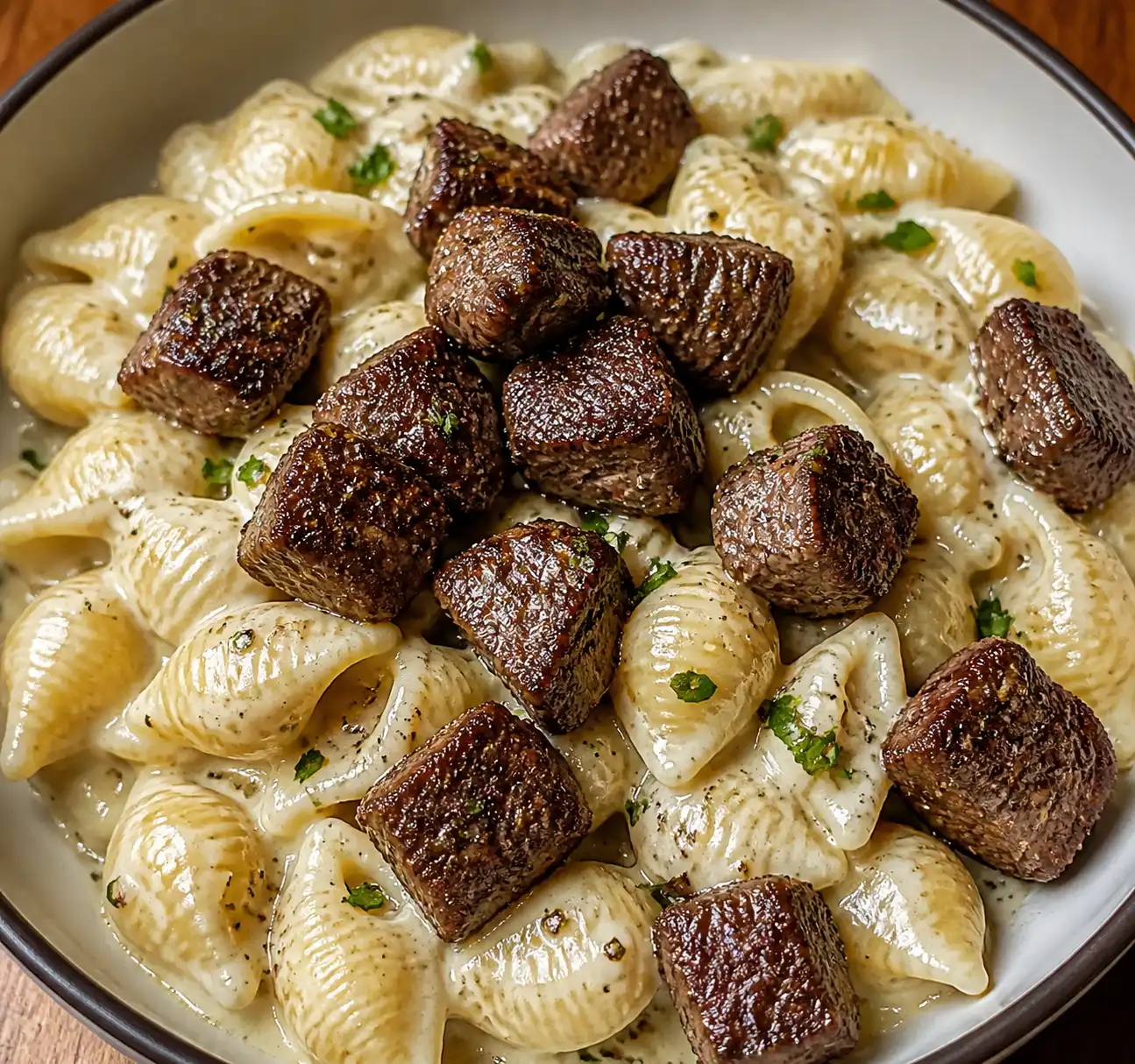
Steak Bites and Shell Pasta in Garlic Butter Alfredo Sauce is a luxurious, restaurant-worthy comfort dish that masterfully balances rich umami, creamy indulgence, and aromatic depth—all in one satisfying bowl. Unlike traditional Alfredo, which relies heavily on heavy cream and Parmesan alone, this elevated version layers flavor through seared, herb-seasoned steak bites, tender-to-the-bite shell pasta (perfect for cradling sauce), and a luscious, emulsified garlic butter Alfredo built with slow-infused shallots, roasted garlic, fresh thyme, and a touch of white wine for brightness. Designed for home cooks who crave sophistication without compromise, it delivers bold texture contrast—crisp-edged, juicy beef morsels nestled among plump, sauce-clinging shells—and an aroma that instantly transforms any kitchen into a cozy bistro. Whether served for an elegant weeknight dinner, a special-occasion centerpiece, or a crowd-pleasing potluck star, this recipe bridges rustic heartiness and refined technique, proving that decadence need not be complicated—just intentional.
The History
The origins of this dish are rooted in culinary evolution rather than a single historical moment—blending three distinct traditions into a modern American classic. Alfredo sauce traces back to early 20th-century Rome, where chef Alfredo di Lelio created a simple, butter-and-cheese emulsion to soothe his pregnant wife’s nausea—a minimalist preparation far removed from today’s richer interpretations. The Americanized “Alfredo” emerged post-WWII, popularized by Italian-American restaurants that added cream, garlic, and parmesan for robustness and shelf stability. Meanwhile, steak bites—tender, bite-sized cuts of premium beef—gained traction in the 1980s and ’90s as chefs sought faster-searing proteins for high-turnover service, later embraced by home cooks via viral social media recipes emphasizing quick, high-heat cooking. Shell pasta (conchiglie), originating in Southern Italy, was traditionally paired with chunky sauces and cheeses; its concave shape made it ideal for trapping thick, clingy preparations. This recipe synthesizes those lineages: honoring Alfredo’s emulsification principle, leveraging steak bites’ textural efficiency, and choosing shells for functional elegance—resulting in a dish that feels both time-honored and freshly inventive. Its rise in popularity over the past decade reflects broader food trends: craveable comfort, visual appeal (especially on Instagram), and the growing demand for “elevated pantry meals”—dishes that transform accessible ingredients into memorable experiences with minimal specialty items.
Ingredients Breakdown
Every component in this dish serves a precise purpose—no filler, no afterthoughts. Let’s deconstruct why each ingredient matters:
- Filet Mignon or Ribeye (1.5 lbs): Filet offers unparalleled tenderness and neutral richness, ideal for showcasing the garlic butter sauce without competing flavors; ribeye adds marbling and deeper beefiness—both respond beautifully to high-heat searing and retain juiciness when cut into uniform 1-inch cubes. Avoid lean cuts like sirloin or round, which dry out quickly.
- Triple-Sifted All-Purpose Flour (¼ cup): Not just for coating—the fine texture ensures a light, even crust without gumminess. Sifting eliminates lumps and promotes seamless integration into the sauce later as a gentle thickener.
- Freshly Cracked Black Pepper & Diamond Crystal Kosher Salt: Coarse kosher salt adheres evenly and seasons deeply; freshly cracked pepper delivers volatile oils that bloom under heat, adding aromatic spice—not just heat.
- Unsalted Butter (1 cup / 2 sticks, cold + 2 tbsp reserved): Cold butter is essential for the roux-like base; the reserved tablespoon finishes the sauce, adding glossy sheen and raw butter nuance.
- Shallots (3 large, finely minced): Sweeter and more delicate than onions, shallots build foundational aroma without harshness—and caramelize beautifully into savory-sweet depth.
- Roasted Garlic (1 whole head, cloves squeezed): Roasting transforms raw garlic’s pungency into mellow, caramelized sweetness and silken texture—critical for balancing the sauce’s richness without sharpness.
- Dry White Wine (½ cup—Pinot Grigio or Sauvignon Blanc): Adds acidity to cut fat, enhances meat flavor via deglazing, and evaporates cleanly, leaving only complexity—never “winey.” Avoid oaky Chardonnays or sweet varieties.
- Whole Milk (1 cup) + Heavy Cream (1 cup): Milk provides dairy sweetness and body; heavy cream contributes unctuous mouthfeel and stabilizes the emulsion. Using both prevents curdling and yields silkier texture than cream alone.
- Freshly Grated Parmigiano-Reggiano (1.5 cups, finely grated on microplane): Authentic, aged Parmigiano delivers nutty, crystalline umami and melts smoothly—pre-grated “Parmesan” contains anti-caking agents that cause graininess and oil separation.
- Fresh Thyme Leaves (1 tbsp, stripped from stems): Earthy, floral notes complement beef and cut richness; added late to preserve volatile oils. Dried thyme lacks vibrancy and can taste dusty.
- Conchiglie Rigate (16 oz / 450g, medium shells): The ridges (rigate) grip sauce tenaciously; the hollow center traps pools of creamy Alfredo and tucks in steak bits. Farfalle or fusilli work secondarily—but shells are non-negotiable for optimal sauce distribution.
- Fresh Parsley (¼ cup, flat-leaf, finely chopped): Added solely at the end for vibrant color and clean, grassy finish—balances heaviness without competing.
- Red Pepper Flakes (¼ tsp, optional): A whisper—not for heat, but for subtle fruit-forward complexity that lifts the entire profile.
Step-by-Step Recipe
- Prep & Dry the Steak (15 minutes ahead): Pat filet or ribeye cubes *extremely* dry with paper towels—moisture is the enemy of sear. Toss gently with 1 tsp kosher salt, 1 tsp black pepper, and 1 tbsp flour until evenly coated. Refrigerate uncovered on a wire rack for 15 minutes to further dry the surface—this guarantees a deep mahogany crust.
- Roast the Garlic: Preheat oven to 400°F (200°C). Slice ½ inch off the top of a whole garlic head to expose cloves. Drizzle generously with olive oil, wrap tightly in foil, and roast for 40–45 minutes until cloves are golden-brown and squishy. Cool slightly, then squeeze flesh into a small bowl. Mash with a fork until smooth. Set aside.
- Cook the Pasta Al Dente: Bring 5 quarts well-salted water (2 tbsp Diamond Crystal) to a rolling boil. Add shells and cook 1 minute *less* than package directions (typically 9 minutes for medium shells). Reserve 1.5 cups pasta water before draining—starchy water is liquid gold for adjusting sauce consistency. Rinse *not at all*—starch helps sauce adhere.
- Sear the Steak Bites (Critical Step): Heat a heavy 12-inch stainless steel or cast-iron skillet over medium-high until shimmering. Add 2 tbsp neutral oil (grapeseed or avocado). When oil just begins to smoke, add steak in a *single layer*—do not crowd. Sear undisturbed for 90 seconds until deeply browned, then flip and sear 60–75 seconds more for medium-rare (internal temp 130°F). Transfer to a plate; tent loosely with foil. Repeat with remaining batches, wiping pan between if needed. Let rest 5 minutes—juices will reabsorb.
- Build the Garlic Butter Alfredo Base: In the same skillet (reduce heat to medium-low), melt ½ cup cold butter. Add minced shallots; cook 3–4 minutes until translucent and fragrant—do not brown. Stir in roasted garlic paste and cook 1 minute to meld. Sprinkle in remaining 3 tbsp flour; whisk constantly 2 minutes to cook out raw taste—mixture should bubble gently and turn pale gold.
- Emulsify the Sauce: Gradually whisk in white wine, scraping up browned bits. Simmer 2 minutes until reduced by half. Slowly stream in milk, then cream, whisking continuously. Bring to bare simmer (do not boil vigorously). Reduce heat to low. Whisk in Parmigiano-Reggiano, ¼ cup at a time, waiting until fully melted and glossy before adding more. Sauce should coat the back of a spoon thickly. If too thick, add reserved pasta water 1 tbsp at a time. Stir in thyme, red pepper flakes (if using), and reserved 1 tbsp cold butter.
- Combine & Finish: Return drained pasta and rested steak bites to the skillet. Gently fold with tongs for 60–90 seconds until everything is heated through and luxuriously coated. Adjust seasoning with additional salt/pepper *only if needed* (cheese and steak add salt). Fold in parsley. Serve immediately.
Tips
- Temperature Control is Everything: Steak must hit >400°F surface temp for Maillard reaction—use an infrared thermometer if unsure. If your pan smokes excessively before adding steak, it’s too hot; if no sizzle on contact, it’s too cool. Ideal sear temperature: 425–450°F.
- Don’t Skip the Flour Coating: It’s not for crispiness—it creates micro-particles that help stabilize the sauce’s emulsion and prevent breaking. Too much flour = pasty; too little = thin, greasy sauce.
- Pasta Water is Your Secret Weapon: That starchy liquid doesn’t just thin sauce—it binds fat and water molecules. Add it warm, not cold, and stir vigorously while incorporating to create velvety cohesion.
- Grate Cheese Yourself—No Exceptions: Pre-grated cheese contains cellulose and potato starch, which repel fat and cause separation. A microplane yields superfine shreds that melt invisibly into the sauce.
- Rest Steak, Then Reheat Gently: Resting ensures juices stay *in* the meat. When combining with hot pasta/sauce, the brief 60-second fold reheats without overcooking—never return steak to high heat after searing.
- Sauce Consistency Check: Dip a spoon, hold it horizontally—if sauce runs off in a steady sheet (not drops), it’s perfect. Too thin? Simmer 30 seconds longer. Too thick? Add pasta water, ½ tbsp at a time, stirring 10 seconds between additions.
- Make-Ahead Friendly: Roast garlic and cook pasta up to 2 hours ahead. Store separately, covered. Reheat pasta in salted water for 30 seconds before saucing. Steak bites reheat best in air fryer (375°F, 2 min) or skillet (medium heat, 60 sec/side).
- Skillet Choice Matters: Stainless steel gives superior sear control and fond development. Non-stick prevents sticking but sacrifices fond—essential for flavor. Cast iron retains heat impeccably but requires careful temp management to avoid burning dairy.
Variations and Customizations
- Protein Swaps: For lighter fare, use grilled chicken breast or shrimp (add in last 30 seconds). Vegetarian? Sear king oyster mushrooms or marinated tempeh “steak” strips—same sear method. For pescatarian, pan-seared scallops add oceanic sweetness.
- Pasta Alternatives: Campanelle (ruffled bells) trap sauce with equal effectiveness. Orecchiette (“little ears”) offer delightful chew. Gluten-free? Use brown rice shells or chickpea pasta—cook 30 seconds less and rinse briefly to remove excess starch.
- Sauce Twists: Truffle Alfredo: Stir in 1 tsp white truffle oil at the end. Herb-Forward: Double thyme and add 1 tsp lemon zest. Smoky Depth: Add ¼ tsp smoked paprika with shallots. Green Goddess: Blend in ¼ cup blanched spinach and 2 tbsp fresh basil.
- Vegetable Add-Ins (Sautéed Fresh): Asparagus tips (blanched, then pan-seared), sautéed wild mushrooms, roasted cherry tomatoes (halved, roasted at 425°F for 15 min), or charred broccolini add color, texture, and nutrition without diluting flavor.
- Dairy-Free/Vegan Version: Replace butter with vegan butter (Miyoko’s), milk/cream with full-fat coconut milk + unsweetened oat milk blend, and Parmigiano with nutritional yeast + white miso (2 tbsp yeast + 1 tsp miso per cup cheese). Roast garlic remains essential.
- Spice Level Adjustments: Mild: Omit red pepper flakes. Medium: Keep as written. Bold: Add 1 finely minced Fresno chili with shallots. Fiery: Infuse oil with ½ tsp crushed Sichuan peppercorns before searing steak.
- Wine Pairing Variations: Serve with the same wine used in cooking—or elevate with a chilled, mineral-driven Vermentino or earthy Pinot Noir (for steak-forward versions).
- Leftover Reinvention: Transform into baked pasta: toss with extra cheese, top with panko-butter crumbs, bake at 375°F for 20 minutes. Or chill, form into patties, pan-fry for “Alfredo steak cakes.”
Health Considerations and Nutritional Value
This dish is intentionally indulgent—but mindful preparation maximizes nutrient density and minimizes common pitfalls. Per serving (1/6th of recipe, approx. 1.5 cups):
- Calories: ~780 kcal (balanced across protein, complex carbs, and healthy fats—no empty calories)
- Protein: 42g (complete, high-bioavailability protein from beef and dairy—supports muscle synthesis and satiety)
- Fat: 48g total (28g unsaturated: from olive oil, butter, and beef marbling; 14g saturated—within daily limits when consumed as part of varied diet)
- Carbohydrates: 44g (primarily from whole-grain pasta alternative or standard semolina; fiber content increases significantly with veggie additions)
- Vitamins & Minerals: Exceptional source of Vitamin B12 (120% DV), Zinc (85% DV), Calcium (45% DV), and Selenium (70% DV). Roasted garlic contributes allicin (immune-supportive) and manganese.
- Considerations: Sodium is moderate (~680mg) due to cheese and minimal added salt—easily reduced by omitting added salt and using low-sodium broth (if subbing for wine). For lower saturated fat, opt for trimmed filet and reduce butter by 1 tbsp (compensate with extra pasta water for silkiness). Those managing cholesterol should prioritize leaner cuts and limit servings to 1x/week within overall dietary pattern.
- Functional Benefits: The combination of high-quality protein, healthy fats, and complex carbs provides sustained energy and blood sugar stability. Garlic and thyme offer potent antioxidants; parsley delivers vitamin K and apiol (anti-inflammatory). No added sugars or processed ingredients—flavor comes from technique and whole foods.
Remember: “Healthy” isn’t about restriction—it’s about nutrient synergy, portion awareness, and joyful eating. This dish fits beautifully into a balanced lifestyle when enjoyed mindfully and paired with a side salad or steamed greens.
Ingredients
- 1.5 lbs high-quality filet mignon or well-marbled ribeye, cut into 1-inch cubes
- 1 tsp Diamond Crystal kosher salt (plus more for pasta water)
- 1 tsp freshly cracked black pepper
- ¼ cup triple-sifted all-purpose flour
- 1 cup (2 sticks) unsalted butter, cold, cubed (plus 1 tbsp reserved)
- 3 large shallots, finely minced (about ½ cup)
- 1 whole head garlic, roasted (see Step-by-Step)
- ½ cup dry white wine (Pinot Grigio or Sauvignon Blanc)
- 1 cup whole milk
- 1 cup heavy cream (minimum 36% fat)
- 1.5 cups freshly grated Parmigiano-Reggiano (finely grated on microplane)
- 1 tbsp fresh thyme leaves, stripped from stems
- ¼ tsp red pepper flakes (optional)
- 16 oz conchiglie rigate (medium shell pasta)
- ¼ cup fresh flat-leaf parsley, finely chopped
Directions
- Pat steak cubes extremely dry with paper towels. Toss with 1 tsp salt, 1 tsp pepper, and 1 tbsp flour until evenly coated. Refrigerate uncovered on a wire rack for 15 minutes.
- Preheat oven to 400°F. Slice top off garlic head, drizzle with olive oil, wrap in foil, and roast 40–45 minutes until soft. Cool, squeeze cloves into bowl, and mash smooth.
- Bring 5 quarts water to boil with 2 tbsp salt. Cook shells 1 minute less than package directions. Reserve 1.5 cups pasta water, then drain—do not rinse.
- Heat heavy skillet over medium-high until shimmering. Add 2 tbsp neutral oil. When lightly smoking, add steak in single layer. Sear 90 seconds per side for medium-rare. Transfer to plate; tent with foil. Rest 5 minutes.
- In same skillet over medium-low, melt ½ cup butter. Add shallots; cook 3–4 minutes until soft. Stir in roasted garlic; cook 1 minute. Whisk in remaining 3 tbsp flour; cook 2 minutes, stirring constantly.
- Whisk in wine, scraping fond. Simmer 2 minutes until reduced by half. Gradually whisk in milk, then cream. Bring to bare simmer. Reduce heat to low.
- Whisk in Parmigiano-Reggiano, ¼ cup at a time, waiting for full melt before next addition. Sauce should coat spoon thickly. Adjust with pasta water if needed.
- Stir in thyme, red pepper flakes (if using), and reserved 1 tbsp cold butter.
- Return pasta and steak to skillet. Gently fold 60–90 seconds until heated through and coated. Fold in parsley. Serve immediately.
FAQ
- Can I use pre-minced garlic instead of roasting?
- No—raw or jarred garlic lacks the mellow, sweet depth essential to balance the sauce’s richness. Roasting is non-negotiable for authentic flavor. If pressed for time, roast garlic while pasta water heats—it takes just 40 minutes.
- Why does my Alfredo sauce break or look greasy?
- Three main causes: 1) Adding cheese to boiling liquid (heat denatures proteins—always use low simmer), 2) Using pre-grated cheese (anti-caking agents repel fat), or 3) Insufficient emulsification base (undercooked flour or inadequate whisking). Fix: Remove from heat, whisk in 1 tbsp cold butter or 2 tbsp pasta water, and stir vigorously off-heat until silky.
- Can I make this gluten-free?
- Absolutely. Substitute gluten-free shells (brown rice or lentil-based) and use gluten-free certified tamari instead of soy sauce if adding umami depth. Ensure all other ingredients (wine, cheese) are GF-certified. Cook pasta in separate water to avoid cross-contamination.
- How do I store and reheat leftovers?
- Store cooled pasta and steak separately in airtight containers for up to 3 days. To reheat: Place pasta in saucepan with 2 tbsp reserved pasta water. Warm over low heat, stirring. Gently fold in steak (reheated separately in skillet or air fryer) at the end. Never microwave the full dish—it makes pasta gummy and sauce oily.
- What’s the best way to get a perfect sear on steak bites?
- Dry meat thoroughly, use high-smoke-point oil, heat pan until shimmering (not smoking), and avoid moving steak for first 90 seconds. Crowding lowers pan temp—cook in batches. A cast-iron or stainless skillet is mandatory; non-stick won’t achieve proper Maillard reaction.
- Can I prepare components ahead for meal prep?
- Yes! Roast garlic and grate cheese up to 5 days ahead (refrigerated). Cook pasta and chill up to 2 days. Sear steak bites and refrigerate up to 3 days. Reheat components separately, then combine with fresh sauce (made day-of) for best texture and flavor.
- Is there a lower-calorie version without sacrificing satisfaction?
- Reduce butter to ¾ cup and replace ½ cup cream with evaporated skim milk. Use 1 cup cheese + 2 tbsp nutritional yeast for umami. Add 1 cup sautéed spinach or zucchini noodles (spiralized, lightly cooked) to bulk volume. Flavor remains robust—calories drop ~220 per serving.
- Why use shallots instead of onions?
- Shallots have a higher fructose content and lower sulfur compounds, yielding sweeter, more nuanced caramelization without bitterness. Onions can dominate and become acrid when cooked down in dairy-heavy sauces—shallots integrate seamlessly.
Summary
Steak Bites and Shell Pasta in Garlic Butter Alfredo Sauce is a masterclass in layered luxury—featuring perfectly seared, herb-kissed beef morsels nestled in tender rigati shells, all enveloped in a velvety, slow-roasted-garlic-enriched Alfredo that’s balanced by white wine acidity and finished with fresh thyme and parsley.
It’s a dish that honors tradition through technique—roasting garlic for depth, emulsifying dairy with precision, and respecting pasta’s starch—while delivering unmistakable modern appeal: photogenic, deeply flavorful, and endlessly adaptable for dietary needs or seasonal produce.