
Introduction
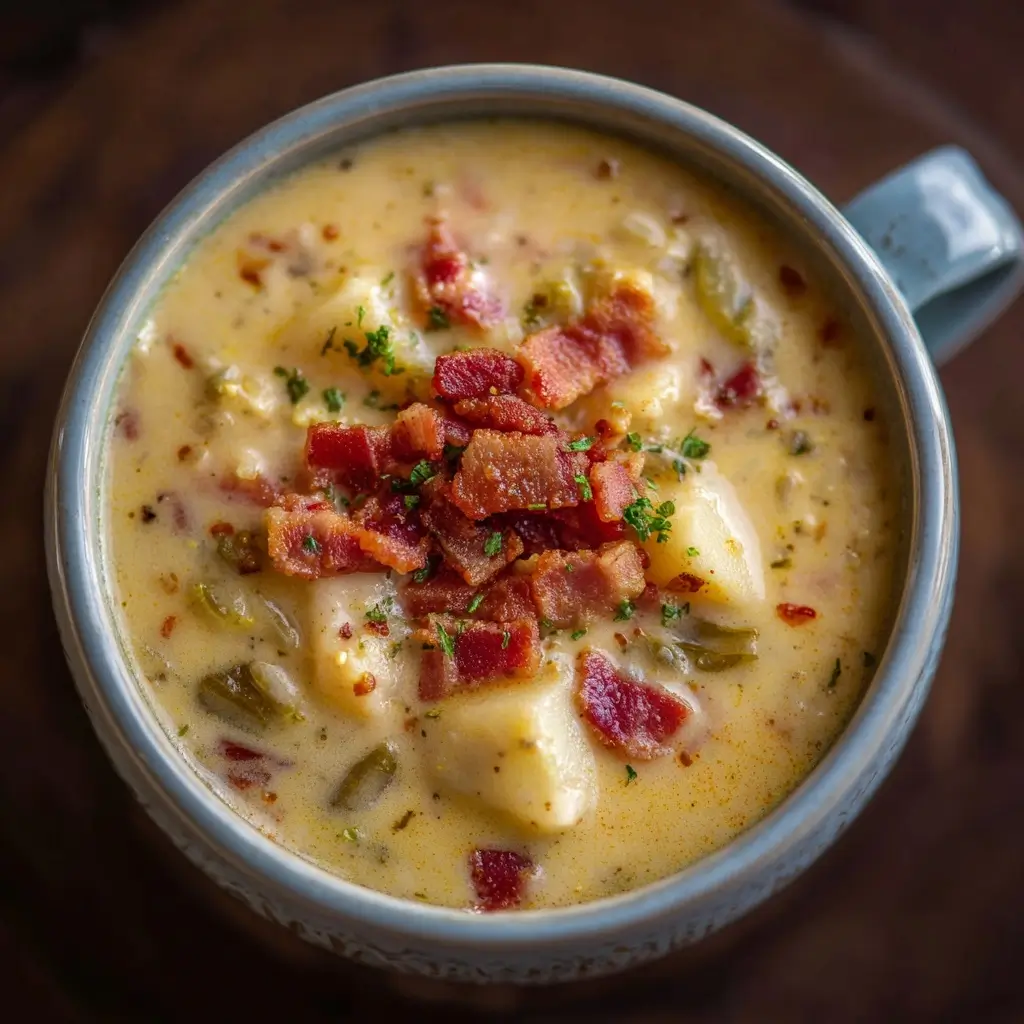
Warm, creamy, and packed with flavor, Potato Bacon Chowder is a beloved comfort dish that brings together the rich earthiness of potatoes, the smoky crunch of bacon, and the velvety texture of a perfectly seasoned broth. Whether you’re enjoying it on a chilly winter evening or as a hearty lunch on a rainy afternoon, this chowder delivers satisfaction in every spoonful. Ideal for family dinners, potlucks, or meal prepping, Potato Bacon Chowder is both filling and deliciously customizable to suit various tastes and dietary preferences. In this comprehensive guide, we’ll walk you through everything you need to know—from its historical roots to step-by-step cooking instructions, ingredient insights, variations, nutritional benefits, and frequently asked questions—to master this classic American staple.
The History
The origins of chowder trace back to 16th-century Europe, particularly among coastal communities in France, Portugal, and England, where fishermen created thick, stew-like soups using readily available seafood, salted pork, root vegetables, and shipboard staples like hardtack. The word “chowder” is believed to derive from the French term chaudière, meaning “cauldron,” referring to the large pots used to prepare these rustic meals over open fires. As European settlers brought their culinary traditions to North America, chowder evolved—especially in New England, where clam chowder became iconic. However, regional interpretations soon emerged, including potato-based versions that incorporated local produce and ingredients like corn, onions, and dairy.
Potato Bacon Chowder, while not as historically documented as its seafood counterpart, gained popularity in the 20th century as home cooks sought heartier, land-based alternatives to traditional seafood chowders. With the rise of convenience foods and the widespread availability of pre-cooked bacon and instant milk products post-World War II, this version became a household favorite across the United States. It symbolizes American comfort food at its finest—simple, satisfying, and adaptable—often passed down through generations with personal tweaks and cherished secrets.
Ingredients Breakdown
The magic of Potato Bacon Chowder lies in its balance of textures and flavors, each ingredient playing a crucial role in creating a harmonious and deeply satisfying dish. Here’s a detailed look at what goes into a classic version:
- Bacon (8 oz): Thick-cut smoked bacon provides a smoky, salty base. When rendered, it releases flavorful fat used to sauté aromatics—this is key to building depth.
- Butter (3 tbsp): Adds richness and helps create a smooth roux when combined with flour, contributing to the chowder’s creamy consistency.
- Onion (1 medium, diced): Offers sweetness and aromatic complexity when sautéed, forming the flavor foundation.
- Celery (2 stalks, chopped): Adds a subtle bitterness and crispness, balancing the richness of the other ingredients.
- Garlic (2 cloves, minced): Introduces a pungent, warm note that enhances overall savoriness.
- All-purpose flour (1/4 cup): Used to make a roux, which thickens the soup and gives it body without making it heavy.
- Chicken or vegetable broth (4 cups): Forms the liquid base, adding savory depth. Homemade broth intensifies flavor, but quality store-bought works well.
- Potatoes (2 lbs, peeled and cubed): Russet or Yukon Gold potatoes are ideal—they break down slightly to thicken the chowder while maintaining tender chunks.
- Dried thyme (1 tsp) and bay leaf (1): Earthy herbs that complement the smokiness of bacon and enhance warmth.
- Whole milk (2 cups) and heavy cream (1 cup): Provide luxurious creaminess. Whole milk ensures richness; heavy cream adds silkiness.
- Salt and freshly ground black pepper (to taste): Essential for seasoning and balancing flavors.
- Shredded sharp cheddar cheese (optional, 1 cup): Melts into the chowder for added tang and richness.
- Green onions or fresh parsley (for garnish): Brightens the dish with color and a fresh herbal note.
Each component contributes to a layered flavor profile, ensuring no single ingredient overwhelms the others.
Step-by-Step Recipe
- Cook the Bacon: In a large Dutch oven or heavy-bottomed pot over medium heat, cook the bacon until crisp—about 8–10 minutes. Remove with a slotted spoon and drain on paper towels. Reserve 3 tablespoons of bacon fat in the pot; discard excess or save for another use.
- Sauté Aromatics: Add butter to the reserved bacon fat. Once melted, stir in the diced onion and celery. Cook for 5–7 minutes until softened and translucent. Add minced garlic and cook for 30 seconds more until fragrant.
- Create the Roux: Sprinkle in the flour and whisk constantly for 2 minutes to cook out the raw flour taste and form a light golden paste.
- Add Liquids: Gradually pour in the chicken or vegetable broth, whisking continuously to avoid lumps. Bring the mixture to a gentle simmer.
- Add Potatoes and Seasonings: Stir in the cubed potatoes, dried thyme, bay leaf, salt, and pepper. Simmer uncovered for 15–20 minutes, stirring occasionally, until potatoes are fork-tender.
- Incorporate Dairy: Reduce heat to low. Slowly stir in the milk and heavy cream. Do not boil—this prevents curdling. Warm gently for 5–7 minutes.
- Add Cheese (Optional): If using cheddar, stir it in gradually until fully melted and smooth.
- Finish with Bacon: Crumble the cooked bacon and add most of it to the chowder. Reserve some for garnish.
- Adjust Seasoning: Taste and adjust salt, pepper, or herbs as needed. Remove the bay leaf before serving.
- Serve Hot: Ladle into bowls, garnish with green onions or parsley, and top with reserved bacon bits. Serve with crusty bread or oyster crackers.
Tips
- Don’t Rush the Roux: Cooking the flour-butter mixture thoroughly eliminates any raw taste and ensures a smooth, lump-free base.
- Use Starchy Potatoes: Russets or Yukon Golds break down slightly, naturally thickening the chowder. Avoid waxy potatoes like red bliss, which hold their shape too firmly.
- Reserve Bacon Fat: This flavorful fat is liquid gold in soups. Never substitute neutral oils if you want authentic depth.
- Simmer Gently: High heat after adding dairy can cause separation. Keep the temperature low and steady.
- Enhance Umami: Add a splash of Worcestershire sauce or a teaspoon of tomato paste during sautéing for extra savory complexity.
- Make Ahead Friendly: This chowder tastes even better the next day. Reheat slowly on the stove with a splash of broth or milk to loosen consistency.
- Freeze with Caution: Due to dairy content, freezing may alter texture. For best results, omit cream and freeze the base, then add fresh dairy when reheating.
- Thicken Naturally: For a gluten-free option, mash a few cooked potato cubes against the side of the pot and stir back in to thicken.
Variations and Customizations
Potato Bacon Chowder is incredibly versatile. Here are popular twists to tailor it to your taste or dietary needs:
- Vegetarian Version: Omit bacon and use olive oil or butter. Add smoked paprika (½ tsp) and a dash of liquid smoke for a smoky flavor. Include mushrooms or roasted bell peppers for umami.
- Gluten-Free: Replace all-purpose flour with cornstarch (mix 2 tbsp with cold water) or a gluten-free flour blend. Add slurry after potatoes are tender, just before dairy.
- Dairy-Free: Substitute milk and cream with full-fat coconut milk and unsweetened almond or oat milk. Add a tablespoon of nutritional yeast for cheesy flavor.
- Add Vegetables: Stir in frozen corn, peas, carrots, or diced leeks for added color, sweetness, and nutrition.
- Seafood Twist: Add cooked shrimp, flaked salmon, or crab meat in the last 5 minutes for a surf-and-turf chowder.
- Spicy Kick: Add diced jalapeño with the onions or a pinch of cayenne pepper for heat.
- Loaded Style: Top servings with sour cream, extra cheddar, chives, and crumbled tortilla chips for a decadent twist.
- Slow Cooker Method: After browning bacon and sautéing veggies, transfer everything to a slow cooker. Cook on low for 6–8 hours, then stir in dairy before serving.
- Instant Pot Version: Use Sauté function for bacon and veggies, then pressure cook with broth and potatoes for 8 minutes. Natural release, then add dairy manually.
Health Considerations and Nutritional Value
While undeniably rich and indulgent, Potato Bacon Chowder can be adapted to fit various health goals. Here’s a general nutritional breakdown per serving (based on 6 servings, without optional cheese):
- Calories: ~320–380 kcal
- Fat: 18–22g (mostly from bacon, butter, and cream)
- Saturated Fat: 9–12g
- Carbohydrates: 30–35g (primarily from potatoes and milk)
- Fiber: 3–4g (from potatoes and vegetables)
- Protein: 10–12g (from bacon and dairy)
- Sodium: 700–1000mg (high due to bacon and broth; can be reduced with low-sodium options)
Health Tips:
- Lower Sodium: Use low-sodium broth and reduce added salt. Opt for turkey bacon or lean Canadian bacon.
- Reduce Fat: Use half-and-half instead of heavy cream, or replace part of the cream with evaporated skim milk.
- Boost Fiber: Leave potato skins on for added fiber and nutrients.
- Heart-Healthy Swaps: Use olive oil instead of butter and limit high-fat dairy if managing cholesterol.
- Portion Control: Serve in smaller bowls with a side salad to balance the meal.
- Diabetes-Friendly: Monitor carbohydrate intake; pair with protein-rich sides and consider lower-glycemic root vegetables like turnips in partial substitution.
Despite its richness, this chowder offers potassium from potatoes, calcium from dairy, and B vitamins from meat and vegetables—making it a nutrient-dense choice when enjoyed in moderation.
Ingredients
- 8 oz thick-cut smoked bacon, chopped
- 3 tbsp unsalted butter
- 1 medium yellow onion, diced
- 2 celery stalks, finely chopped
- 2 cloves garlic, minced
- 1/4 cup all-purpose flour
- 4 cups low-sodium chicken or vegetable broth
- 2 lbs russet or Yukon Gold potatoes, peeled and cubed into 1/2-inch pieces
- 1 tsp dried thyme
- 1 bay leaf
- 2 cups whole milk
- 1 cup heavy cream
- Salt and freshly ground black pepper, to taste
- 1 cup shredded sharp cheddar cheese (optional)
- 2 green onions, sliced (for garnish)
- Fresh parsley, chopped (for garnish)
Directions
- In a large Dutch oven over medium heat, cook the chopped bacon until crisp, about 8–10 minutes. Transfer to a plate lined with paper towels and set aside. Reserve 3 tablespoons of bacon fat in the pot.
- Add butter to the bacon fat. Once melted, add onion and celery. Sauté for 5–7 minutes until soft and translucent. Stir in garlic and cook for 30 seconds until fragrant.
- Sprinkle flour over the vegetables and whisk constantly for 2 minutes to form a roux.
- Gradually pour in the broth, whisking continuously to prevent lumps. Bring to a simmer.
- Add potatoes, thyme, bay leaf, 1 tsp salt, and 1/2 tsp black pepper. Simmer for 15–20 minutes, stirring occasionally, until potatoes are tender.
- Reduce heat to low. Stir in milk and heavy cream. Warm gently for 5–7 minutes—do not boil.
- If using, stir in cheddar cheese until melted and smooth.
- Add the majority of the cooked bacon, reserving some for topping. Stir to combine.
- Taste and adjust seasoning. Remove bay leaf.
- Ladle into bowls and garnish with green onions, parsley, and reserved bacon. Serve immediately with crusty bread or crackers.
FAQ
Can I make this chowder ahead of time?
Yes! This chowder reheats beautifully. Store in an airtight container in the refrigerator for up to 4 days. Reheat gently on the stove with a splash of milk to restore creaminess.
Why did my chowder curdle?
Dairy can curdle if boiled. Always keep heat low after adding milk and cream. If slight separation occurs, blend briefly with an immersion blender or strain through a sieve.
Can I freeze Potato Bacon Chowder?
Due to the dairy content, freezing may result in a grainy texture. For best results, freeze the base (without dairy), then add fresh milk and cream when reheating.
What kind of potatoes work best?
Russet or Yukon Gold potatoes are ideal because they’re starchy and help thicken the chowder naturally while maintaining tender texture.
How can I make it thicker without flour?
Mash some of the cooked potatoes against the pot wall and stir back in. Alternatively, blend 1 cup of chowder and mix it back into the pot.
Is there a lighter version?
Yes! Use turkey bacon, reduce cream to 1/2 cup, and substitute milk with 1% or skim. Add Greek yogurt at the end for creaminess and protein.
Can I use sweet potatoes?
Absolutely. Swap half or all of the regular potatoes with sweet potatoes for a sweeter, nutrient-rich variation. Pairs well with a pinch of nutmeg.
Can I make it in a crockpot?
Yes. Sauté bacon, onions, and celery first, then transfer to a slow cooker with remaining ingredients (except dairy and cheese). Cook on low 6–8 hours. Stir in dairy before serving.
Summary
Potato Bacon Chowder is a rich, creamy, and deeply satisfying soup that combines tender potatoes, smoky bacon, and a velvety broth infused with herbs and aromatics. Hearty enough for a main course and endlessly customizable, it’s the ultimate comfort food for any season.