
Introduction
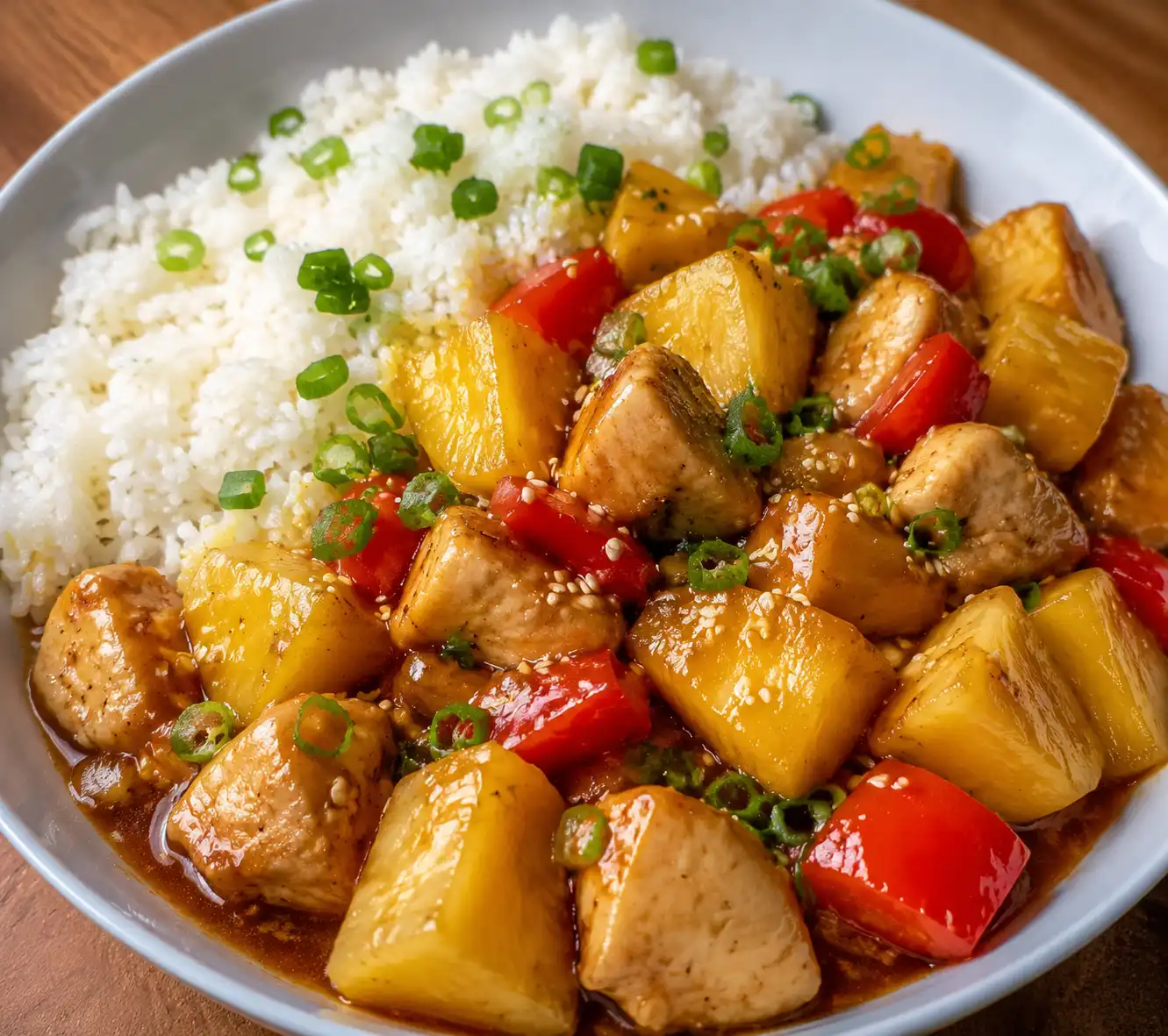
Pineapple chicken and rice is a vibrant, globally beloved dish that masterfully bridges sweet, tangy, savory, and umami flavors in one harmonious bowl. With its golden-hued sauce glistening over tender pieces of chicken, juicy pineapple chunks, crisp bell peppers, and fluffy steamed rice, it’s a meal that delights the senses and satisfies cravings across age groups and culinary preferences. Though often associated with American-Chinese or tropical fusion cuisine, its roots stretch across continents—drawing inspiration from Southeast Asian stir-fry traditions, Hawaiian luau influences, and the pan-Asian love for fruit-based glazes. Whether served at family dinners, weekend potlucks, or as a comforting weeknight staple, pineapple chicken and rice offers both nostalgic familiarity and exciting flavor complexity—making it far more than just a takeout favorite.
The History
The origins of pineapple chicken and rice are delightfully layered—much like the dish itself—and reflect centuries of culinary exchange, colonial trade routes, and immigrant innovation. Pineapples, native to South America (specifically the Paraná–Paraguay River basin), were introduced to Europe by Columbus in 1493 and later spread across Asia via Portuguese and Spanish traders in the 16th century. By the 1700s, pineapples were cultivated in the Philippines, Malaysia, Thailand, and southern China—regions where they became integrated into local cooking not only as dessert but also as a balancing agent in savory preparations.
In Hawaii—where commercial pineapple cultivation boomed in the early 20th century thanks to James Dole’s Hawaiian Pineapple Company (founded 1901)—pineapple found its way into meat marinades, glazes, and even grilled skewers. Meanwhile, Chinese immigrants arriving in Hawaii and the U.S. West Coast adapted traditional stir-fry techniques using locally available ingredients—including canned pineapple, which was widely accessible and shelf-stable. The result was a new hybrid: a glossy, sweet-and-sour chicken dish that resonated with American palates accustomed to bold, approachable flavors.
By the 1950s and 60s, pineapple chicken appeared in mainstream American cookbooks, community recipe collections, and early TV cooking segments. It gained further traction through frozen dinner lines, school lunch programs, and neighborhood Chinese-American restaurants catering to families seeking flavorful yet mild entrées. Over time, home cooks began customizing it with fresh pineapple, homemade sauces, brown rice alternatives, and vegetable upgrades—transforming it from a retro “canned” classic into a versatile, health-conscious, and culturally rich centerpiece worthy of modern kitchens worldwide.
Ingredients Breakdown
Every exceptional pineapple chicken and rice dish begins with intentional, high-quality components—each playing a distinct functional and sensory role. Below is an in-depth breakdown of each core ingredient, including purpose, substitutions, sourcing tips, and flavor chemistry insights:
- Chicken Breast or Thighs: Boneless, skinless chicken breast offers lean tenderness; thighs provide richer flavor and juicier texture due to higher fat content. For optimal stir-fry results, cut against the grain into uniform 1-inch cubes or thin strips to ensure even cooking and maximum sauce adhesion.
- Fresh Pineapple: The star fruit—provides natural sweetness, bright acidity, and bromelain enzymes that gently tenderize proteins. Ripe but firm pineapple yields the best balance: too soft = mushy; underripe = harsh acidity. Canned pineapple in 100% juice (not syrup) is acceptable—but drain thoroughly and pat dry to avoid excess water diluting the sauce. Avoid canned pineapple packed in heavy syrup unless reducing sugar elsewhere.
- Low-Sodium Soy Sauce: Delivers essential umami depth and saltiness without overpowering. Tamari is a gluten-free alternative; coconut aminos offer a milder, slightly sweeter profile ideal for sensitive palates or soy allergies.
- Rice Vinegar or Apple Cider Vinegar: Adds bright, clean acidity that cuts through richness and balances sweetness. Rice vinegar contributes subtle floral notes; apple cider vinegar adds fruity complexity. White vinegar is sharper and best used sparingly.
- Honey or Pure Maple Syrup: Natural liquid sweeteners that caramelize beautifully during cooking, contributing viscosity, sheen, and rounded sweetness. Honey also contains trace antioxidants; maple syrup adds mineral notes (zinc, manganese). Agave nectar works but lacks nuanced flavor; brown sugar dissolves well but may darken sauce excessively if overheated.
- Fresh Ginger & Garlic: Non-negotiable aromatics. Grated fresh ginger brings pungent warmth and anti-inflammatory compounds; minced garlic adds sulfurous depth. Pre-minced jarred versions lack vibrancy and contain preservatives—always prefer freshly prepared when possible.
- Red Bell Pepper & Onion: Provide color, crunch, and natural sugars that caramelize alongside the sauce. Red peppers are sweeter and richer in lycopene and vitamin C than green; yellow or orange peppers add visual appeal and mild sweetness. Sweet onions (Vidalia, Walla Walla) enhance caramelization; red onions offer sharper bite and anthocyanin antioxidants.
- Sesame Oil (Toasted): Used *only* as a finishing oil—never for frying—due to its low smoke point. Imparts nutty, toasty aroma and enhances mouthfeel. Cold-pressed, unrefined sesame oil delivers superior flavor versus refined versions.
- Cornstarch: Critical thickener that creates the signature glossy, clingy sauce. Mixed with cold liquid (slurry) before adding to hot pan to prevent clumping. Arrowroot powder is a paleo-friendly, neutral-tasting alternative; tapioca starch works similarly but may yield slightly chewier texture.
- Vegetable Broth or Chicken Stock: Forms the liquid base of the sauce—adds body and savory depth without overwhelming salt. Low-sodium versions allow precise control. Homemade stock vastly improves complexity (collagen, gelatin, roasted veg notes); powdered bouillon cubes should be used sparingly and chosen for clean ingredient lists (no MSG unless desired).
- Green Onions & Sesame Seeds (Garnish): Add freshness, mild onion sharpness, visual contrast, and textural interest. Toasted white sesame seeds contribute nuttiness and healthy fats (omega-6, calcium, magnesium); black sesame seeds add earthy depth and anthocyanins.
Step-by-Step Recipe
This meticulously tested, chef-informed method ensures restaurant-quality results every time—emphasizing timing, temperature control, and layering of flavors. Total active time: ~35 minutes. Serves 4–5.
- Prep & Marinate (10 min): Cube 1.5 lbs boneless, skinless chicken (breast or thigh) into 1-inch pieces. In a bowl, combine chicken with 1 tbsp low-sodium soy sauce, 1 tsp grated fresh ginger, 1 minced garlic clove, and 1 tsp cornstarch. Gently toss to coat. Let marinate 10–15 minutes at room temperature (do not refrigerate—cold chicken steams instead of sears).
- Prepare Aromatics & Veggies (5 min): Finely mince 2 cloves garlic and 1 tbsp fresh ginger. Slice 1 large red bell pepper into thin 1.5-inch strips. Dice 1 medium yellow onion. Drain and pat dry 1 cup fresh or canned pineapple chunks. Chop ¼ cup green onions (reserve greens for garnish).
- Make Sauce Slurry (3 min): In a small bowl, whisk together: ⅓ cup low-sodium soy sauce, ¼ cup pineapple juice (freshly squeezed or reserved from canned), 3 tbsp honey (or maple syrup), 2 tbsp rice vinegar, 1 tbsp toasted sesame oil (set aside—add later), 1 tsp grated ginger, ½ tsp red pepper flakes (optional), and 2 tbsp cornstarch. Whisk until completely smooth—no lumps. Set aside.
- Stir-Fry Chicken (4–5 min): Heat 1.5 tbsp high-smoke-point oil (peanut, avocado, or refined coconut) in a 14-inch flat-bottom wok or heavy-bottomed skillet over medium-high heat until shimmering (~375°F). Add marinated chicken in a single layer—do not crowd. Cook undisturbed 1.5–2 minutes until lightly golden on bottom, then stir-fry 2–3 more minutes until just cooked through (165°F internal temp). Remove chicken and set aside on a plate—do not rinse or drain juices; they’ll enrich the sauce.
- Sauté Aromatics & Veggies (3 min): Reduce heat to medium. Add remaining ½ tbsp oil, then ginger and garlic—stir constantly 30 seconds until fragrant (do not brown). Add bell pepper and onion; stir-fry 2–2.5 minutes until crisp-tender and edges begin to soften but retain bite.
- Combine & Simmer Sauce (4 min): Return chicken to pan. Pour sauce slurry directly into center of pan—avoid pouring down sides. Increase heat to medium-high. Stir constantly as mixture comes to a gentle boil. Within 60–90 seconds, sauce will thicken dramatically, turning glossy and coating ingredients. If too thick, add 1–2 tsp warm broth; if too thin, simmer 30 sec longer.
- Add Pineapple & Finish (2 min): Gently fold in pineapple chunks—do not overmix or they’ll break down. Cook 60 seconds just to warm through (excessive heat degrades pineapple’s texture and enzymes). Remove from heat. Drizzle with reserved 1 tbsp toasted sesame oil and stir once. Taste and adjust: a pinch of sea salt if needed, splash of vinegar for brightness, or honey for roundness.
- Rest & Serve (1 min): Let sit off heat 60 seconds—allows sauce to settle and flavors to meld. Garnish generously with green onion tops and toasted sesame seeds. Serve immediately over hot steamed jasmine, basmati, or brown rice.
Tips
- Velveting Secret: For silkier, more tender chicken (like in Cantonese restaurants), add ½ tsp baking soda to marinade along with soy sauce and cornstarch. Let sit 15 minutes, then rinse *very* well and pat dry before cooking. This alkaline treatment breaks down surface proteins—resulting in unprecedented tenderness.
- Wok Hei Mastery: Achieve authentic “breath of the wok” by preheating your wok until smoking hot, using high-heat oil, and keeping ingredients moving constantly. A gas stove is ideal—but electric coil or induction can work with extra preheat time and careful temperature management.
- Pineapple Juice Hack: Save every drop of fresh pineapple juice—simmer it down by half to intensify sweetness and reduce water content in sauce. Or freeze juice in ice cube trays for future use in smoothies, marinades, or cocktails.
- No-Stick Stir-Fry: Ensure chicken is *completely dry* before adding to hot oil. Pat with paper towels—even after marinating—to prevent splattering and steaming.
- Sauce Consistency Control: If sauce separates or looks greasy, remove from heat, whisk vigorously for 15 seconds, then return to low heat while whisking. Cornstarch needs sustained heat to fully activate—undercooking causes “weeping” (liquid separation).
- Rice Perfection: Rinse rice 3x in cold water until water runs clear to remove excess starch—results in fluffier, non-gummy grains. Cook rice with a 1:1.25 ratio (rice:water) for jasmine; 1:2 for brown rice. Let steam covered 10 minutes off heat before fluffing.
- Meal Prep Friendly: Store components separately: cooked rice (cool completely before refrigerating), sauce (up to 5 days), and pre-marinated raw chicken (up to 2 days). Reheat sauce gently—avoid boiling vigorously post-thickening.
- Browning Boost: For deeper color and flavor, dust chicken lightly with ½ tsp smoked paprika or Chinese five-spice before marinating.
- Acid Timing: Always add vinegar *before* heating—not after—as heat transforms its sharpness into mellow brightness. Adding it at the end makes sauce taste harsh and unbalanced.
- Garnish Impact: Toast sesame seeds in a dry skillet over medium-low heat 2–3 minutes, shaking constantly, until golden and fragrant. Cool before sprinkling—enhances nuttiness and prevents burning on hot dish.
Variations and Customizations
This dish is inherently adaptable—ideal for dietary needs, seasonal produce, pantry limitations, or global flavor exploration. Here are 12 thoughtfully curated variations, each with cultural context and practical execution notes:
- Thai-Inspired Pineapple Chicken: Replace soy sauce with Thai fish sauce (nam pla) and add 1 tbsp lime juice + 1 tsp palm sugar. Include kaffir lime leaves (torn), lemongrass (bruised stalk), and Thai chilies. Garnish with cilantro and crushed roasted peanuts.
- Hawaiian Luau Style: Add ½ cup diced ham or Canadian bacon, ¼ cup macadamia nuts, and 1 tbsp dark rum (flambé optional). Serve over coconut rice (cooked with ½ can coconut milk + ½ cup water).
- Keto/Low-Carb Version: Swap rice for cauliflower rice (sautéed separately with garlic and tamari). Use erythritol or monk fruit blend instead of honey; increase coconut aminos for umami. Add avocado slices and hemp hearts for healthy fats.
- Vegan Pineapple “Chicken”: Substitute chicken with extra-firm tofu (pressed & cubed), seitan strips, or king oyster mushrooms (shredded to mimic texture). Use tamari + nutritional yeast for depth. Add 1 tsp miso paste to sauce for fermented savoriness.
- Spicy Szechuan Pineapple: Infuse oil with 1 tsp Szechuan peppercorns before stir-frying. Add 1 tbsp doubanjiang (fermented broad bean paste) with aromatics and 1 tsp chili oil at finish. Top with sichuan pepper powder.
- Mediterranean Twist: Replace soy sauce with reduced balsamic vinegar + lemon zest. Use feta cheese crumbles, kalamata olives, and chopped mint instead of green onions. Add artichoke hearts and cherry tomatoes.
- Japanese Teriyaki-Pineapple: Use mirin, sake, and tamari as base. Add 1 tsp grated yuzu or sudachi if available. Garnish with bonito flakes (katsuobushi) and pickled ginger (beni shoga).
- Caribbean Jerk-Pineapple: Marinate chicken in jerk seasoning (allspice, scotch bonnet, thyme, cinnamon) before cooking. Add mango puree to sauce and serve with coconut rice and fried plantains.
- Smoky Chipotle Version: Blend 1–2 canned chipotles in adobo into sauce. Add ½ tsp ground cumin and smoked paprika. Garnish with crumbled cotija cheese and lime wedges.
- Detox Green Pineapple: Blend spinach, kale, or parsley into sauce for hidden nutrients. Add spirulina (¼ tsp) for vibrant green hue and protein. Use quinoa or farro instead of rice.
- Breakfast Pineapple Scramble: Scramble eggs with cooked pineapple chicken and rice. Fold in goat cheese and chives. Serve with avocado slices and hot sauce.
- Sheet Pan Roasted Version: Toss chicken, pineapple, peppers, and onions with sauce ingredients (minus cornstarch slurry). Roast at 425°F for 20–25 minutes. Thicken pan drippings with cornstarch slurry on stovetop before tossing back.
Health Considerations and Nutritional Value
A single 1.5-cup serving (chicken + sauce + 1 cup cooked jasmine rice) provides approximately:
- Calories: 420–480 kcal (varies by oil, sweetener, and rice type)
- Protein: 32–38g (excellent source—supports muscle repair, satiety, and metabolic health)
- Carbohydrates: 48–56g (primarily complex carbs from rice + natural sugars from pineapple; fiber ranges 2–4g depending on brown rice or added veggies)
- Fat: 9–13g (mostly unsaturated from sesame and cooking oils; minimal saturated fat)
- Vitamins & Minerals: Exceptionally high in Vitamin C (from pineapple + bell peppers—150–200% DV), Manganese (pineapple—70% DV), Vitamin B6 (chicken—45% DV), Selenium (chicken—55% DV), and Copper (sesame seeds—30% DV). Also rich in antioxidants: bromelain (anti-inflammatory enzyme), quercetin (onion), lycopene (red pepper), and ferulic acid (rice bran).
Health Highlights & Considerations:
- Bromelain Benefits: Pineapple’s proteolytic enzyme aids digestion, reduces post-meal bloating, and exhibits anti-inflammatory properties—especially potent in fresh, ripe fruit. Cooking diminishes but doesn’t eliminate it; adding raw pineapple garnish preserves full enzymatic activity.
- Sugar Awareness: While naturally occurring fructose from pineapple is metabolized differently than added sugars, those managing insulin resistance or diabetes should monitor portions and pair with high-fiber rice or legumes to slow glucose absorption.
- Sodium Management: Traditional versions can exceed 800mg sodium per serving. Using low-sodium soy sauce, omitting added salt, and boosting herbs/spices instead keeps sodium under 500mg—aligned with AHA guidelines.
- Gluten-Free Integrity: Naturally GF when using tamari or certified GF soy sauce. Verify all condiments (fish sauce, hoisin, oyster sauce) are GF-certified if used in variations.
- Heart-Healthy Profile: Monounsaturated fats (sesame oil), potassium (banana-like levels in pineapple), and zero cholesterol make this dish supportive of cardiovascular wellness—especially when paired with leafy greens or avocado.
- Gut Microbiome Support: Fermented soy sauce (naturally brewed, not chemical hydrolysate) contains beneficial peptides and probiotic precursors. Adding kimchi or sauerkraut on the side further enhances microbial diversity.
- Pregnancy & Pediatric Notes: Safe for all ages—just ensure chicken reaches 165°F. Pineapple is safe during pregnancy (myth about bromelain causing contractions is unsupported by clinical evidence). For toddlers, chop pineapple into smaller pieces and reduce spice.
Ingredients
Makes 4–5 servings
- 1.5 lbs boneless, skinless chicken breast or thighs, cut into 1-inch cubes
- 1 cup fresh pineapple chunks (or unsweetened canned in juice, drained and patted dry)
- 1 large red bell pepper, sliced into thin 1.5-inch strips
- 1 medium yellow onion, diced
- 3 cloves garlic, finely minced (divided: 1 for marinade, 2 for sauce)
- 1 tbsp fresh ginger, grated (divided: 1 tsp for marinade, 1 tbsp for sauce)
- 2 tbsp high-heat oil (peanut, avocado, or refined coconut)
- ¼ cup low-sodium soy sauce (or tamari for GF)
- ¼ cup fresh pineapple juice (reserved from canned or freshly squeezed)
- 3 tbsp raw honey or pure maple syrup
- 2 tbsp unseasoned rice vinegar
- 1 tsp toasted sesame oil (for finishing—do NOT cook with)
- ½ tsp red pepper flakes (optional, for heat)
- 3 tbsp cornstarch (divided: 1 tsp for marinade, 2 tbsp for sauce slurry)
- ½ cup low-sodium vegetable or chicken broth
- ¼ cup chopped green onions (scallions), whites and greens separated
- 2 tbsp toasted white sesame seeds
- 1 cup cooked jasmine rice (or brown rice, quinoa, or cauliflower rice)
Directions
- In a medium bowl, combine chicken cubes with 1 tbsp soy sauce, 1 tsp grated ginger, 1 minced garlic clove, and 1 tsp cornstarch. Toss gently to coat. Let marinate at room temperature for 10–15 minutes.
- While chicken marinates, prepare vegetables: slice bell pepper, dice onion, mince remaining garlic, grate remaining ginger, drain and pat dry pineapple.
- In a separate small bowl, whisk together remaining ¼ cup soy sauce, pineapple juice, honey, rice vinegar, 1 tbsp grated ginger, 2 minced garlic cloves, red pepper flakes, and 2 tbsp cornstarch until completely smooth. Set aside.
- Heat 1.5 tbsp oil in a large wok or heavy-bottomed skillet over medium-high heat until shimmering (~375°F). Add marinated chicken in a single layer. Cook undisturbed 1.5 minutes, then stir-fry 2–3 more minutes until no longer pink. Transfer to a clean plate—reserve juices.
- Reduce heat to medium. Add remaining ½ tbsp oil. Immediately add ginger and garlic (the 2 minced cloves); stir constantly 30 seconds until aromatic. Add bell pepper and onion; stir-fry 2–2.5 minutes until crisp-tender.
- Return chicken (and any accumulated juices) to pan. Give sauce slurry a final vigorous whisk, then pour into center of pan. Increase heat to medium-high. Stir constantly as mixture simmers and thickens—about 60–90 seconds—until glossy and coating.
- Gently fold in pineapple chunks. Cook 60 seconds just to warm through. Remove from heat.
- Drizzle with 1 tsp toasted sesame oil. Stir once. Taste and adjust seasoning—add a pinch of sea salt or extra vinegar if desired.
- Garnish with green onion greens and toasted sesame seeds. Serve immediately over hot steamed rice.
FAQ
- Can I use frozen pineapple?
- Yes—but thaw completely and drain *very* well, then pat dry with paper towels. Excess moisture will prevent proper sauce thickening and cause steaming instead of glazing.
- Why does my sauce turn watery after plating?
- This usually occurs from undercooking the slurry (cornstarch needs full boil to activate), adding cold ingredients to hot sauce, or using too much liquid. Solution: Simmer 30 seconds longer after thickening begins, or make a fresh 1 tsp cornstarch + 1 tbsp cold broth slurry and whisk in off-heat.
- Is canned pineapple less nutritious than fresh?
- Surprisingly, no—canned pineapple in juice retains nearly all Vitamin C, manganese, and bromelain. In fact, the canning process may slightly increase bioavailability of certain antioxidants. Just avoid syrup-packed versions with added sugars.
- Can I make this in a slow cooker?
- Yes—with adjustments: Skip marinating. Sear chicken first. Combine all sauce ingredients (including cornstarch) in cooker. Add chicken, pineapple, peppers, onion. Cook on LOW 3–4 hours. Stir in sesame oil and green onions last 5 minutes.
- How do I reheat leftovers without drying out the chicken?
- Steam or microwave with 1 tsp water or broth, covered, at 50% power for 90 seconds. Stir, then heat 30 seconds more. Or gently reheat in a skillet with 1 tsp broth over low heat, stirring constantly.
- What’s the best rice to serve with pineapple chicken?
- Jasmine rice is ideal—its floral aroma and slightly sticky texture holds sauce beautifully. Brown jasmine or basmati adds fiber and nuttiness. For lower glycemic impact, try black rice (rich in anthocyanins) or shirataki rice (zero-carb, konjac-based).
- Can I freeze pineapple chicken?
- Yes—freeze sauce and chicken separately from rice. Cool completely, portion into airtight containers, and freeze up to 3 months. Thaw overnight in fridge; reheat gently on stove with splash of broth to refresh sauce consistency.
- Why does my ginger taste bitter?
- Overcooking fresh ginger (beyond 60 seconds on high heat) releases harsh compounds. Always add it late in the aromatic stage and remove from direct flame quickly—or use young, pale ginger with thin skin, which is milder
Advertisment