
Introduction
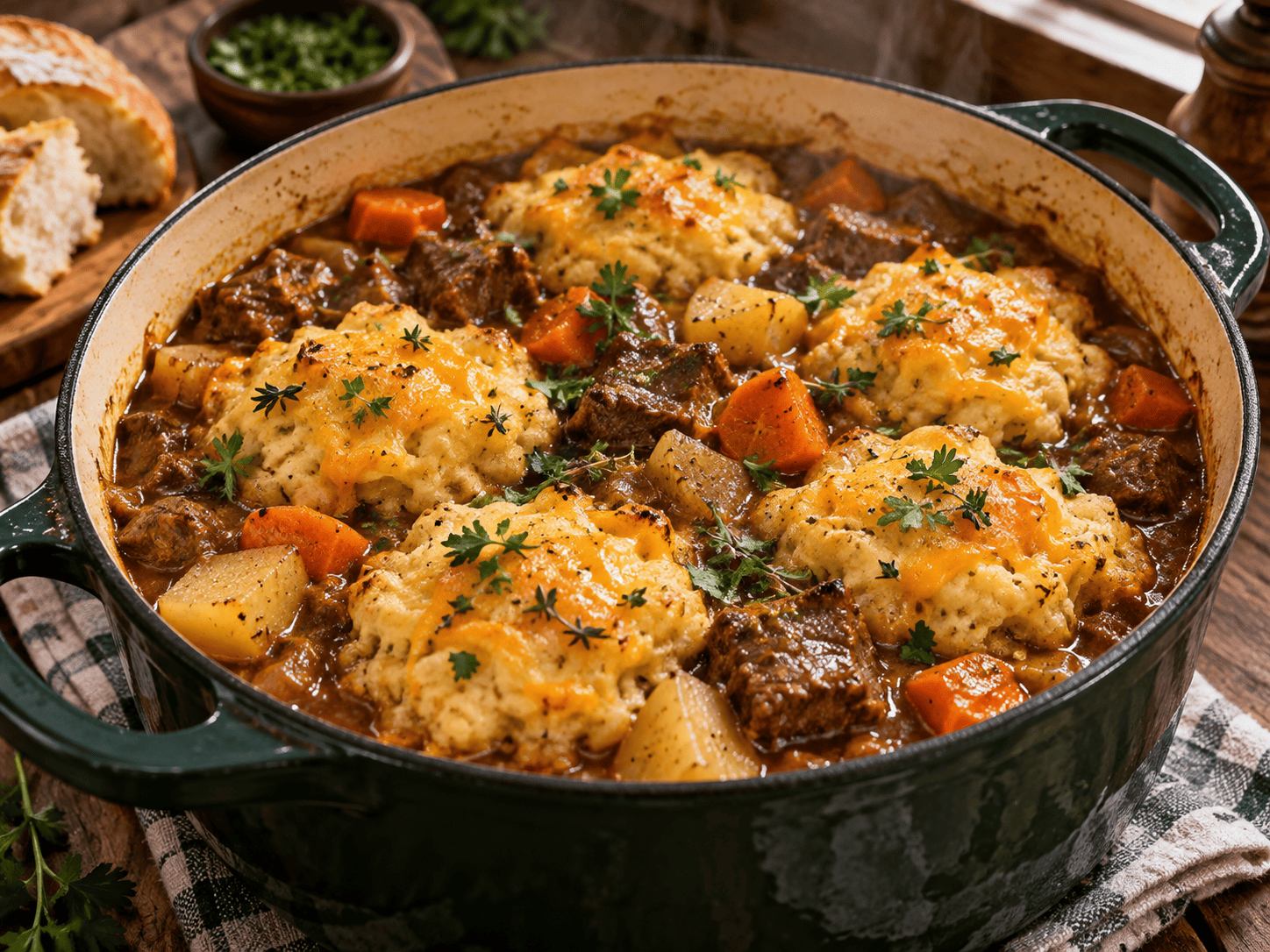
There is a profound sense of comfort that comes from a simmering pot on the stove, especially when the weather outside turns chilly and the days grow shorter. Irish Stew With Cheddar Dumplings represents the pinnacle of cozy one-pot cooking, merging the rustic, hearty traditions of the Emerald Isle with the rich, savory indulgence of melted cheese. This dish is not merely a meal; it is an experience that fills the kitchen with an aromatic blend of herbs, slow-cooked meat, and earthy vegetables, all crowned with fluffy, cheese-infused dumplings that steam to perfection atop the rich gravy. Whether you are looking to reconnect with your heritage, impress guests with a humble yet sophisticated dinner, or simply seek a warming bowl of sustenance after a long week, this recipe delivers on every front. The beauty of this one-pot wonder lies in its simplicity and depth; it requires minimal active cooking time but rewards the patient cook with layers of flavor that have developed over hours of gentle simmering. The tender lamb or beef falls apart at the touch of a fork, the potatoes have absorbed the essence of the stock, and the dumplings provide a textural contrast that is both soft and satisfying. In the following guide, we will explore every facet of this dish, from its historical roots to the nutritional breakdown, ensuring you have all the knowledge required to master this classic comfort food.
The History
To truly appreciate Irish Stew With Cheddar Dumplings, one must understand the lineage of the stew itself, which dates back to the 18th century in Ireland. Originally known as “mutton stew,” it was a dish born of necessity and resourcefulness among the farming communities of Ireland. The traditional recipe was incredibly sparse, relying heavily on what was readily available on the farm: older mutton sheep which required long cooking to become tender, potatoes which were the staple crop of the nation, onions for flavor, and water or a simple stock. There were no fancy spices or exotic vegetables; the flavor profile was built on the quality of the meat and the slow extraction of juices into the broth. Over time, as lamb became more preferred than mutton due to its tenderness, the recipe evolved, but the core triad of meat, potatoes, and onions remained sacred. The addition of dumplings is a fascinating evolution of the dish. While suet dumplings have long been a staple in British and Irish cooking, often served with stews or puddings, the incorporation of cheddar cheese into the dumpling dough is a more modern twist that adds a sharp, salty kick to balance the sweetness of the root vegetables. This fusion of the ancient stewing method with the richer, dairy-forward dumpling creates a bridge between the poverty cuisine of the past and the comfort food culture of the present. Today, this dish is celebrated globally not just as an Irish export, but as a universal symbol of home cooking, representing warmth, family gatherings, and the satisfaction of a meal made with care and time.
Ingredients Breakdown
Understanding the role of each component in this stew is crucial for achieving the perfect balance of flavor and texture. The foundation of the dish is the meat, typically lamb shoulder or beef chuck. These cuts are chosen specifically because they are rich in connective tissue and collagen. When subjected to low and slow cooking, this collagen breaks down into gelatin, which naturally thickens the stew and gives the meat a melt-in-your-mouth quality that leaner cuts simply cannot provide. The vegetables are not mere fillers; they are flavor agents. Onions provide the aromatic base, releasing sweetness when caramelized slightly before the liquid is added. Carrots add a subtle earthy sweetness that counters the savory depth of the meat, while potatoes serve a dual purpose: they act as a starch to make the meal filling, and as they cook, they release starch into the liquid, helping to thicken the gravy naturally. Herbs are the soul of the stew. Fresh thyme and bay leaves are traditional choices that impart a woody, floral note that cuts through the richness of the fat. For the dumplings, the choice of flour matters; self-raising flour is preferred for its built-in leavening agents which ensure the dumplings rise light and airy rather than becoming dense dough balls. The cheddar cheese should be mature or sharp; a mild cheese might melt too quickly and lose its flavor profile, whereas a sharp cheddar retains its identity within the dough, providing pockets of savory intensity in every bite. Finally, the stock is the medium that binds everything together. A high-quality beef or lamb stock is essential, as water alone would result in a bland broth that fails to complement the high-quality ingredients.
Step-by-Step Recipe
Creating this masterpiece requires a methodical approach to ensure every element is cooked to perfection. The process begins with preparation, where the meat is cut into uniform cubes to ensure even cooking. It is vital to pat the meat dry before searing; moisture is the enemy of browning, and you want a deep mahogany crust on the meat to develop the Maillard reaction, which adds complex flavor notes to the final stew. Once the meat is seared in batches to avoid overcrowding the pot, it is set aside, and the onions are softened in the same pot to pick up the flavorful browned bits left behind, known as fond. This deglazing process is critical for flavor depth. Next, the meat is returned to the pot along with the hardy vegetables and the stock. The simmering phase is where patience is key; the liquid should barely bubble, just shaking gently, to prevent the meat from becoming tough due to aggressive boiling. While the stew simmers, the dumpling dough is mixed. It is important not to overwork the dough, as this can develop gluten and make the dumplings chewy rather than fluffy. The cheese is folded in gently at the last moment. When the stew is nearly done, the dumplings are spooned onto the surface. They must not be submerged; they need to steam on top of the liquid. The pot must be covered tightly with a lid to trap the steam, which cooks the dumplings through without making them soggy. Once the dumplings have doubled in size and are cooked through, the dish is rested for a few minutes before serving to allow the flavors to settle and the gravy to thicken slightly.
Tips
- Do Not Lift the Lid: When the dumplings are steaming, resist the urge to lift the lid to check on them. Releasing the steam drops the temperature inside the pot and can cause the dumplings to collapse or become dense.
- Rest the Stew: After turning off the heat, let the stew sit for about ten minutes. This allows the fat to rise slightly for easier skimming if desired, and the gravy to thicken as it cools slightly.
- Uniform Cutting: Ensure all your vegetable pieces are roughly the same size. This prevents a scenario where the carrots are mushy while the potatoes are still hard.
- Cheese Selection: Grate your own cheese from a block rather than using pre-packaged grated cheese, which often contains anti-caking agents that can prevent smooth melting within the dumpling dough.
- Make Ahead: The stew base actually tastes better the next day after the flavors have had time to meld. You can prepare the stew a day in advance and simply make the fresh dumplings on the day of serving.
- Thickening: If you prefer a thicker gravy, you can mix a little cornstarch with cold water and stir it in during the last ten minutes of simmering before adding the dumplings.
- Pot Choice: Use a heavy-bottomed pot or a Dutch oven. These retain heat evenly and prevent the bottom of the stew from scorching during the long simmering process.
Variations and Customizations
While the traditional recipe is beloved, cooking is an art that invites personal expression. For those who prefer beef over lamb, chuck steak works beautifully and offers a richer, darker flavor profile that pairs well with the sharp cheddar. For a lighter option, chicken thighs can be used, though the cooking time should be reduced significantly to prevent the poultry from drying out. Vegetarian adaptations are also entirely possible; replace the meat with hearty mushrooms like portobello or king oyster mushrooms, and use a robust vegetable stock enriched with soy sauce or miso paste for umami depth. Gluten-free diners can substitute the plain flour in the dumplings with a high-quality gluten-free self-raising flour blend, though the texture may be slightly more crumbly. To add a kick of heat, consider adding a pinch of cayenne pepper or some chopped fresh chili to the stew base before simmering. For a creamier texture, a splash of heavy cream or crème fraîche can be stirred in just before serving. Some cooks like to add pearl barley to the stew, which absorbs the liquid and adds a chewy texture, making the dish even more filling. If you want to incorporate more greens, stir in chopped kale or spinach during the last five minutes of cooking to add color and nutritional value without overpowering the main flavors. The dumplings themselves can be customized with herbs like chopped chives or parsley mixed into the dough for a fresh note.
Health Considerations and Nutritional Value
This dish is a substantial meal that provides a significant amount of energy, making it ideal for cold weather or active days. The primary source of protein comes from the lamb or beef, which is rich in essential amino acids, iron, and zinc, supporting muscle repair and immune function. The root vegetables contribute complex carbohydrates, fiber, and vital vitamins such as Vitamin A from the carrots and Vitamin C from the potatoes. However, due to the presence of red meat and cheese, the dish is relatively high in saturated fats and calories. Portion control is advisable for those monitoring their caloric intake or cholesterol levels. The sodium content can vary significantly depending on the stock used; opting for a low-sodium stock allows you to control the salt levels manually. The dumplings add additional carbohydrates and fats, so reducing the number of dumplings per serving can lighten the meal. For a heart-healthy version, consider trimming visible fat from the meat before cooking and using a reduced-fat cheddar cheese. Despite the richness, the dish offers a balanced macronutrient profile when served with a side of green vegetables to increase fiber intake without adding many calories. It is a nutrient-dense meal that supports satiety, reducing the likelihood of snacking later in the evening.
Ingredients
- For the Stew:
- 2 lbs (900g) lamb shoulder or beef chuck, cut into 1.5-inch cubes
- 2 tablespoons vegetable oil or beef drippings
- 2 large onions, roughly chopped
- 4 large carrots, peeled and cut into chunks
- 1.5 lbs (700g) potatoes, peeled and quartered
- 4 cups (1 liter) beef or lamb stock, preferably low sodium
- 2 sprigs fresh thyme
- 2 bay leaves
- Salt and black pepper to taste
- 1 tablespoon tomato paste (optional for depth)
- For the Cheddar Dumplings:
- 2 cups (250g) self-raising flour
- 1 teaspoon baking powder
- 1/2 teaspoon salt
- 1/2 cup (115g) cold unsalted butter, cubed
- 1 cup (100g) sharp cheddar cheese, finely grated
- 3/4 cup (180ml) cold milk or buttermilk
- 1 tablespoon fresh parsley, chopped (optional)
Directions
- Prepare the meat by patting it dry with paper towels and seasoning generously with salt and black pepper.
- Heat the oil in a large Dutch oven or heavy-bottomed pot over medium-high heat.
- Sear the meat in batches, ensuring not to overcrowd the pot, until browned on all sides. Remove and set aside.
- In the same pot, add the onions and cook for 5 minutes until softened. Stir in the tomato paste if using.
- Return the meat to the pot and add the carrots, potatoes, thyme, bay leaves, and stock.
- Bring to a boil, then reduce the heat to low. Cover and simmer gently for 1.5 to 2 hours until the meat is tender.
- While the stew simmers, prepare the dumplings. In a bowl, mix flour, baking powder, salt, and parsley.
- Rub the cold butter into the flour mixture until it resembles breadcrumbs. Stir in the cheese.
- Gradually add the milk to form a soft, sticky dough. Do not overmix.
- Once the meat is tender, drop spoonfuls of the dumpling dough onto the surface of the stew. Do not submerge them.
- Cover the pot tightly and simmer for another 15 to 20 minutes until the dumplings have doubled in size and are cooked through.
- Remove from heat and let stand for 5 minutes before serving hot.
FAQ
Can I freeze this stew?
Yes, the stew base freezes very well. However, it is recommended to freeze the stew without the dumplings. Dumplings tend to become soggy and dense when frozen and reheated. Make fresh dumplings when you reheat the stew.
Why are my dumplings dense?
This usually happens if the dough is overworked or if the lid was lifted during steaming. Handle the dough gently and keep the pot covered tightly during the cooking process.
Can I use lamb leg instead of shoulder?
You can, but leg is leaner. Shoulder has more fat and connective tissue, which results in a more tender and flavorful stew. If using leg, reduce the cooking time slightly to prevent drying out.
How do I know when the dumplings are done?
Insert a skewer into the center of a dumpling; it should come out clean. The dumplings should also look puffed up and feel firm to the touch.
Can I make this in a slow cooker?
Yes, sear the meat and onions first, then transfer everything to the slow cooker. Cook on low for 8 hours. Add the dumplings in the last 30 minutes on high, ensuring the lid stays on.
Summary (in two lines)
Irish Stew With Cheddar Dumplings is a hearty one-pot meal featuring tender meat and root vegetables topped with savory cheese dumplings.
Perfect for cold weather, this dish combines historical tradition with modern comfort for a satisfying family dinner.