
Introduction
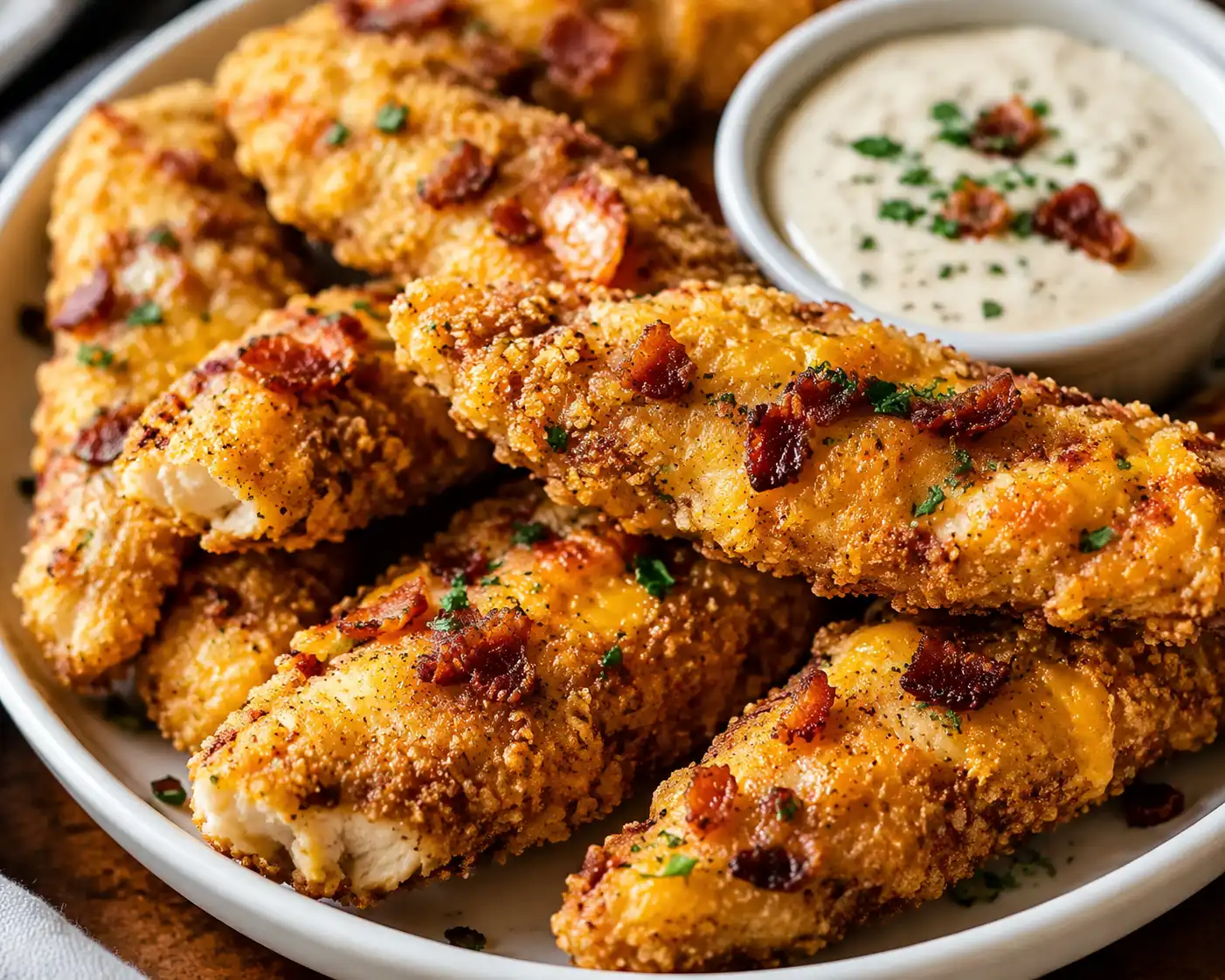
Crack chicken tenders—yes, the name is bold, unapologetic, and utterly accurate—are a crave-worthy fusion of rich, creamy, savory, and cheesy flavors wrapped around tender, golden-brown chicken strips. Born from the viral popularity of “crack chicken” (a decadent slow-cooker or Instant Pot dish featuring cream cheese, ranch seasoning, cheddar, and shredded chicken), this inventive spin transforms the beloved casserole concept into a handheld, bite-sized, crowd-pleasing appetizer or main course. With their irresistible crunch, velvety interior, and addictive umami depth, crack chicken tenders deliver restaurant-quality indulgence with surprising ease—making them perfect for weeknight dinners, game-day spreads, potlucks, meal prep, or even elegant cocktail parties when served with refined dipping sauces and garnishes. Whether you’re a seasoned home cook or a beginner eager to impress, these tenders offer foolproof technique, flexible customization, and flavor so compelling it’s no wonder they’ve earned their “addictive” moniker.
The History
While “crack chicken” itself emerged in the early 2010s as part of the broader wave of viral comfort-food recipes shared across Pinterest, Facebook food groups, and recipe blogs, its origins trace back to the convergence of several culinary trends: the rise of convenience-driven ranch seasoning mixes (popularized by brands like Hidden Valley in the 1970s), the enduring American love affair with cream cheese (introduced commercially in the U.S. in 1872 by William A. Lawrence), and the mid-century embrace of cheddar as the quintessential melty, sharp, approachable cheese. The original “crack chicken” moniker was coined tongue-in-cheek—referencing how irresistibly habit-forming the dish felt—thanks to the synergistic combination of fat (cream cheese), salt (ranch and cheese), glutamate (cheddar and cooked chicken), and umami-rich depth. As home cooks began experimenting beyond the slow cooker, the logical evolution arrived: breading and frying (or baking) the mixture into tenders. Food bloggers and TikTok creators accelerated adoption around 2019–2021, with variations popping up under names like “crack chicken nuggets,” “ranch-stuffed tenders,” and “cheesy bacon crack tenders.” Today, crack chicken tenders represent a modern American classic—a testament to how nostalgic pantry staples, clever textural layering, and social media-fueled creativity can reimagine tradition into something wholly new and wildly popular.
Ingredients Breakdown
Every extraordinary crack chicken tender begins with intentional, high-quality ingredients—each playing a precise sensory and functional role. Below is an in-depth analysis of each component and why substitutions (when made) must respect its purpose:
- Chicken Breast Tenderloins (or Cutlets): The structural backbone. Tenderloins are naturally lean, tender, and uniform—ideal for consistent cooking and stuffing. If using boneless, skinless breasts, slice horizontally into ½-inch thick cutlets, then pound gently to ¼-inch thickness for pliability and even filling distribution. Avoid over-pounding, which can tear the meat.
- Cream Cheese (Full-Fat, Room Temperature): Provides luxurious creaminess, binds the filling, and melts into a velvety, cohesive matrix. Low-fat versions lack sufficient fat content to emulsify properly and often separate or become grainy when baked or fried. Always soften fully—cold cream cheese won’t blend smoothly and risks tearing the chicken during rolling.
- Sharp Cheddar Cheese (Shredded, Not Pre-Shredded): Delivers bold, tangy depth and superior meltability. Pre-shredded cheeses contain anti-caking agents (e.g., cellulose) that inhibit smooth melting and can yield a greasy or rubbery texture. Freshly shredded aged cheddar (12+ months) offers intensified flavor and optimal stretch.
- Ranch Seasoning Mix (Homemade Preferred): Store-bought packets work in a pinch but often contain excess sodium, MSG, fillers, and artificial flavors. A homemade blend—combining dried dill, parsley, chives, garlic powder, onion powder, mustard powder, white pepper, and a touch of citric acid—offers cleaner flavor, balanced herbaceousness, and full control over sodium and allergens.
- Bacon (Cooked, Crumbled): Adds smoky savoriness, textural contrast, and rendered fat that enriches the filling. Thick-cut bacon yields more substantial, meaty bits; turkey bacon may be used but lacks depth and renders less fat—compensate with ½ tsp smoked paprika + ¼ tsp liquid smoke if authenticity is desired.
- Green Onions (Fresh, Thinly Sliced): Provide bright, grassy freshness and aromatic lift that cuts through richness. Add just before assembling—heat dulls their vibrancy. Chives make an elegant substitute; avoid yellow onions, which impart harsh raw bite.
- Garlic Powder & Onion Powder: Concentrated umami boosters that deepen savory complexity without moisture or texture interference. Fresh garlic or onion would release water and compromise filling integrity.
- Worcestershire Sauce: A secret weapon—its fermented anchovy base, tamarind, and molasses lend subtle funk, acidity, and caramelized depth that enhances all other ingredients without tasting “fishy.” Omit only if allergic; no direct substitute replicates its layered profile.
- Heavy Cream or Half-and-Half: Adjusts filling consistency—just enough liquid to make it spreadable but not runny. Too thin = leakage; too thick = difficult to roll. Evaporated milk works for dairy-free adjacent options; coconut cream (unsweetened) suits vegan adaptations.
- Eggs (for Breading Station): Act as a viscous binder for the breading. Adding 1 tsp Dijon mustard or hot sauce to the egg wash improves adhesion and adds subtle tang.
- Panko Breadcrumbs (Unseasoned): Critical for maximum crunch and airy, flaky crispness. Their larger, irregular flakes create more surface area and resist sogginess better than fine breadcrumbs. Toasting panko lightly in butter or olive oil before breading amplifies nuttiness and improves structural integrity.
- Seasoned Flour (All-Purpose + Paprika, Garlic Powder, Black Pepper): Creates a foundational crust layer that seals in moisture and provides initial browning. The flour’s starch gelatinizes upon contact with hot oil or air, forming a protective barrier.
- Neutral High-Heat Oil (Avocado, Peanut, or Canola): Essential for deep-frying at 350–375°F—temperatures that crisp exteriors before interiors overcook. For baking, high-smoke-point oils ensure even browning without burning.
Step-by-Step Recipe
- Prep the Chicken: Pat tenderloins *very* dry with paper towels. Place between two sheets of parchment or plastic wrap and gently pound to ¼-inch thickness using a meat mallet or heavy skillet. This ensures tenderness and creates ample surface area for filling. Arrange on a rimmed tray lined with parchment.
- Prepare Filling: In a medium bowl, combine softened cream cheese, shredded cheddar, crumbled bacon, green onions, ranch seasoning, garlic powder, onion powder, Worcestershire sauce, and heavy cream. Use a hand mixer on low speed (or sturdy spatula) until *just* combined—do not overmix, which can cause separation. Refrigerate 15 minutes to firm slightly for easier handling.
- Assemble Tenders: Spoon ~1 tablespoon of filling onto the wide end of each pounded tenderloin. Fold short sides inward, then tightly roll away from you like a jelly roll. Secure seam-side down. Optional but recommended: insert a toothpick lengthwise through center to prevent unrolling during cooking.
- Set Up Breading Station: Three shallow dishes: (1) Seasoned flour blend, (2) Whisked eggs + 1 tsp Dijon, (3) Panko mixed with 1 tbsp melted butter, ½ tsp smoked paprika, and pinch of cayenne. Work efficiently to prevent cross-contamination.
- Bread Methodically: Lightly dredge rolled tender in flour, shaking off excess. Dip fully into egg wash, letting excess drip off. Press firmly into panko mixture, turning to coat all sides—press again for extra adherence. Place breaded tenders on a wire rack set over parchment; refrigerate 20–30 minutes. This chilling step is non-negotiable—it sets the crust, prevents breading loss, and firms the filling.
- Cook Options:
- Frying (Crispiest Result): Heat 2 inches of oil in a heavy Dutch oven to 350°F. Fry 2–3 tenders at a time (don’t crowd) for 3–4 minutes, turning once, until deep golden and internal temp reaches 165°F. Drain on wire rack over paper towels.
- Baking (Health-Conscious & Hands-Off): Preheat oven to 425°F. Line sheet pan with parchment + wire rack. Lightly spray tenders with avocado oil. Bake 18–22 minutes, flipping halfway, until golden and 165°F internally.
- Air-Frying (Speed + Crisp Balance): Preheat air fryer to 400°F. Spray basket. Cook tenders in single layer (no overlap) for 12–15 minutes, flipping at 7 minutes, until deeply golden and 165°F.
- Rest & Serve: Let tenders rest 3–5 minutes before serving—this allows juices to redistribute and filling to settle. Remove toothpicks. Serve warm with dipping sauces.
Tips
- Dry Chicken is Key: Moisture is the enemy of breading adhesion. Pat chicken *thoroughly*—even residual dampness causes coating to slide off during frying or baking.
- Chill Before Cooking: That 20–30 minute refrigeration after breading isn’t optional. It solidifies the fat in the breading and filling, dramatically reducing oil absorption and preventing unraveling.
- Oil Temperature Matters: Use a deep-fry thermometer. Oil below 350°F leads to greasy, soggy tenders; above 375°F burns the exterior before the interior cooks. Adjust heat as needed between batches.
- Don’t Overfill: Too much filling expands when heated and bursts seams. Stick to 1 tbsp per tenderloin—precision ensures clean rolls and zero leakage.
- Use a Wire Rack for Cooling: Placing hot tenders directly on paper towels steams the bottom crust. A wire rack ensures airflow and maintains crispness on all sides.
- Double-Dip for Extra Crunch: For ultra-crispy tenders, repeat the egg wash → panko step after the first breading dries (10 min chill), then chill again before cooking.
- Batch Cooking Hack: Assemble and bread tenders up to 24 hours ahead. Store covered on a wire rack in the fridge. Cook straight from cold—no need to bring to room temp.
- Freeze for Later: Breaded, uncooked tenders freeze beautifully for up to 3 months. Freeze on a tray first (to prevent sticking), then transfer to airtight bag. Cook from frozen—add 2–3 minutes to bake/fry time.
- Uniform Sizing = Even Cooking: Trim tenderloins to similar lengths (4–5 inches) before pounding. Irregular shapes cook at different rates.
- Thermometer Check: Visual cues can deceive. Always verify doneness with an instant-read thermometer inserted into the thickest part of the chicken—not the filling—for 165°F.
Variations and Customizations
The beauty of crack chicken tenders lies in their extraordinary adaptability—flavor profiles, dietary needs, heat levels, and textures can all be reimagined without compromising integrity. Here’s how to personalize them thoughtfully:
- Spicy Southwest: Swap ranch for taco seasoning; add 1 minced chipotle in adobo + ¼ tsp cumin to filling; use pepper jack instead of cheddar; top with pickled red onions and cilantro-lime crema.
- Buffalo Blue: Replace ranch with 1 tbsp buffalo wing sauce + ½ tsp garlic powder; use crumbled Gorgonzola or Maytag blue cheese; drizzle finished tenders with extra buffalo sauce and blue cheese crumbles.
- Herb Garden: Use fresh dill, tarragon, and lemon zest in place of ranch; sub feta and goat cheese for cheddar; add finely chopped sun-dried tomatoes and toasted pine nuts to filling.
- Breakfast Tender: Incorporate 1 scrambled egg + ¼ cup crumbled breakfast sausage into filling; use maple-glazed bacon; serve with sriracha-maple syrup dip.
- Vegan “Crack” Tender: Use seitan or pressed tofu cutlets; filling = blended cashew cream cheese + nutritional yeast + smoked paprika + liquid smoke + vegan cheddar shreds + crispy tempeh “bacon.” Bread with gluten-free panko and flax “egg.”
- Gluten-Free: Use certified GF oat flour or rice flour blend for dredging; GF panko (like Ian’s or Schar); tamari instead of Worcestershire (check label for GF certification); ensure ranch mix is GF.
- Keto/Low-Carb: Skip flour dredge; use crushed pork rinds + grated Parmesan + almond flour for breading; replace ranch mix with keto-approved herbs/spices; use full-fat cream cheese and heavy cream only.
- Smoky Maple-Bacon: Add 1 tsp pure maple extract + ½ tsp smoked paprika to filling; use applewood-smoked bacon; glaze baked tenders with reduced maple syrup + Dijon before serving.
- Gourmet Mushroom: Sauté ½ cup finely diced cremini mushrooms in butter until dry; cool completely before mixing into filling; add truffle salt and grated Pecorino Romano.
- Seafood Twist: Substitute pounded cod or haddock fillets; filling = crab or shrimp mousse (blended with cream cheese, Old Bay, lemon zest, and dill); top with lemon-dill aioli.
Health Considerations and Nutritional Value
While crack chicken tenders are undeniably indulgent, mindful preparation allows for meaningful nutritional optimization without sacrificing satisfaction. A standard serving (2 tenders, ~180g) made with lean chicken breast, full-fat dairy, and moderate breading contains approximately:
- Calories: 380–420 kcal (frying adds ~40–60 kcal vs. baking)
- Protein: 28–32g (excellent complete protein source supporting muscle maintenance and satiety)
- Fat: 22–26g (primarily unsaturated from olive/avocado oil if baked; saturated fat mainly from cheese, cream cheese, and bacon—moderate portions keep intake within daily guidelines)
- Carbohydrates: 12–16g (mostly from breading; GF or keto versions reduce to 2–5g net carbs)
- Sodium: 680–850mg (highly dependent on ranch mix and bacon—homemade ranch cuts sodium by 40–60% vs. store-bought)
- Vitamins & Minerals: Rich in B12 (chicken, cheese), calcium (cheddar), choline (eggs, chicken), selenium (chicken), and zinc (bacon, cheese). Green onions contribute vitamin K and antioxidants.
Health-Conscious Swaps & Strategies:
- Reduce Sodium: Make your own ranch seasoning (no added salt), choose low-sodium bacon, omit added salt in breading flour.
- Increase Fiber: Use whole-grain panko or add 1 tbsp ground flaxseed to breadcrumb mixture.
- Boost Omega-3s: Incorporate 1 tsp ground chia or flax into filling; use omega-3 enriched eggs for wash.
- Lower Saturated Fat: Use part-skim ricotta (blended smooth) to replace ½ the cream cheese; opt for turkey bacon or Canadian bacon; bake instead of fry.
- Allergen Awareness: Naturally nut-free and soy-free (check ranch mix labels); easily dairy-free with cashew-based cream cheese and coconut-based “cheddar.”
- Portion Control: Serve as appetizers (1–2 tenders) alongside a large, colorful salad dressed in lemon-tahini vinaigrette—balancing richness with volume, fiber, and phytonutrients.
Note: Individuals managing hypertension, kidney disease, or heart conditions should consult a registered dietitian for personalized sodium and saturated fat guidance. Those with lactose intolerance may tolerate aged cheddar and cream cheese in moderation due to low lactose content—but lactase enzyme supplements or dairy-free alternatives provide safer options.
Ingredients
- 1 lb chicken breast tenderloins (or 1 lb boneless, skinless chicken breasts, sliced and pounded)
- 8 oz full-fat cream cheese, softened to room temperature
- 1 cup sharp cheddar cheese, freshly shredded (avoid pre-shredded)
- 4 slices thick-cut bacon, cooked until crisp and crumbled
- ¼ cup finely sliced green onions (green parts only)
- 2 tbsp homemade ranch seasoning (see note) or 1 (1-oz) packet store-bought (low-sodium preferred)
- 1 tsp garlic powder
- 1 tsp onion powder
- 1 tsp Worcestershire sauce
- 2 tbsp heavy cream or half-and-half
- ½ tsp freshly ground black pepper
- ¼ tsp cayenne pepper (optional, for heat)
- For Breading Station:
- ½ cup all-purpose flour (or GF blend)
- 1 tsp smoked paprika
- ½ tsp garlic powder
- ½ tsp onion powder
- ½ tsp black pepper
- 2 large eggs
- 1 tsp Dijon mustard
- 1 cup panko breadcrumbs (unseasoned)
- 2 tbsp unsalted butter, melted (or avocado oil)
- ½ tsp smoked paprika (for panko)
- Pinch of cayenne (for panko)
- Neutral high-heat oil for frying (avocado, peanut, or canola) OR avocado oil spray for baking
Note: Homemade Ranch Seasoning Blend — Combine 2 tbsp dried parsley, 1 tbsp dried dill weed, 1 tbsp dried chives, 2 tsp garlic powder, 2 tsp onion powder, 1 tsp mustard powder, 1 tsp white pepper, ½ tsp citric acid (optional, for tang), and ½ tsp sea salt. Store in airtight jar for up to 6 months.
Directions
- Prep Chicken: Place tenderloins between two sheets of parchment paper. Using a meat mallet or rolling pin, gently pound to an even ¼-inch thickness. Transfer to a parchment-lined baking sheet. Refrigerate while preparing filling.
- Make Filling: In a medium bowl, combine cream cheese, cheddar, crumbled bacon, green onions, ranch seasoning, garlic powder, onion powder, Worcestershire sauce, heavy cream, black pepper, and cayenne (if using). Beat with a hand mixer on low speed for 30–45 seconds, just until smooth and homogenous. Do not overmix. Cover and refrigerate 15 minutes.
- Assemble: Remove chicken from fridge. Spoon 1 level tablespoon of filling onto the wider end of each tenderloin. Fold in the short sides, then tightly roll away from you into a compact cylinder. Place seam-side down. Insert a toothpick lengthwise through the center of each tender to secure. Arrange on a clean parchment-lined tray.
- Prepare Breading Station: In Dish 1: Whisk flour, smoked paprika, garlic powder, onion powder, and black pepper. In Dish 2: Whisk eggs and Dijon until frothy. In Dish 3: Combine panko, melted butter (or oil), smoked paprika, and cayenne; stir until evenly moistened and clumping slightly.
- Bread Tenders: Working with one tender at a time: lightly coat in seasoned flour, shaking off excess. Dip fully into egg wash, letting excess drip off for 3 seconds. Press firmly into panko mixture, turning to coat all sides—press again for maximum adherence. Place breaded tender on a wire rack set over parchment. Repeat. Refrigerate uncovered for 25–30 minutes.
- Cook:
- To Fry: Heat 2 inches of oil in a heavy-bottomed Dutch oven to 350°F (use thermometer). Carefully lower 2–3 tenders into oil using tongs. Fry 3–4 minutes, turning once, until deep golden brown and internal temperature reads 165°F. Transfer to wire rack to drain. Repeat, adjusting heat to maintain temperature.
- To Bake: Preheat oven to 425°F. Place wire rack on baking sheet; line with parchment. Arrange chilled tenders on rack. Lightly spray tops and sides with avocado oil. Bake 18 minutes, flip carefully, spray again, and bake 4–5 more minutes until golden and 165°F.
- To Air-Fry: Preheat air fryer to 400°F. Lightly spray basket. Arrange tenders in single layer (no touching). Cook 7 minutes, flip, spray lightly, cook 5–6 more minutes until deeply golden and 165°F.
- Rest & Serve: Let tenders rest 4 minutes. Carefully remove toothpicks. Serve immediately with your favorite dipping sauces—classic ranch, spicy honey mustard, chipotle lime crema, or sugar-free keto ketchup.
FAQ
- Can I make these ahead and reheat?
- Absolutely! Cooked tenders reheat beautifully. For best texture: place on a wire rack in a 375°F oven for 8–10 minutes (until heated through and crisp). Avoid microwaving—they’ll steam and lose crunch. Uncooked breaded tenders freeze for up to 3 months; cook from frozen (add 2–3 min to bake/fry time).
- Why did my filling leak out during cooking?
- Three common causes: (1) Overfilling—stick to 1 tbsp per tender; (2) Inadequate chilling—breaded tenders *must* rest 20+ minutes to set the crust and firm filling; (3) Rolling too loosely—seam must be tight and secured with a toothpick. Also ensure chicken is thoroughly dry before filling.
- Can I use ground chicken instead of tenderloins?
- Yes—with adjustments. Mix 1 lb ground chicken with 1 tsp baking powder (for tenderness) and 1 tbsp cold water. Form into 4–5 inch logs, flatten slightly, then fill and roll as directed. Ground chicken benefits from extra binding—add 1 tbsp grated onion (squeezed dry) to filling.
- What’s the best dipping sauce pairing?
- Classic ranch is iconic—but elevate it: mix ½ cup full-fat Greek yogurt, 2 tbsp buttermilk, 1 tsp each fresh dill, chives, and lemon juice, ½ tsp garlic powder, salt, and pepper. For contrast: spicy honey (½ cup honey + 1 tbsp sriracha + 1 tsp lime zest) or cool cucumber-dill tzatziki.
- My breading fell off—what went wrong?
- Most likely culprit: moisture. Ensure chicken is *bone-dry*, and never skip the flour-egg-panko sequence or the 25-minute chill. Also, avoid overcrowding the fryer or oven—steam loosens breading. Double-dipping (egg → panko → egg → panko) adds insurance for extra-crispy applications.
- Can I make these dairy-free?
- Yes! Use soaked & blended cashews (¾ cup) + 2 tbsp lemon juice + 1 tsp apple cider vinegar + ¼ tsp salt for cream cheese base. Replace cheddar with shredded Violife or Daiya cheddar shreds. Use coconut cream instead of heavy cream. Confirm ranch seasoning is dairy-free (many are).
- Is there a way to make them gluten-free?
- 100%. Use certified gluten-free oat flour or rice flour blend for dredging, GF panko (Schar or Ian’s), tamari instead of Worcestershire (verify GF), and ensure ranch mix is GF-certified. Double-check bacon labels—some contain gluten-containing flavorings.
- How do I prevent the chicken from drying out?
- Pounding to uniform thickness ensures even cooking. More importantly: do not overcook. Pull at 165°F—carryover heat will raise it 2–3°. Baking at high heat (425°F) and air-frying also minimize moisture loss versus low-and-slow methods.
- Can I cook these on the grill?