
Introduction
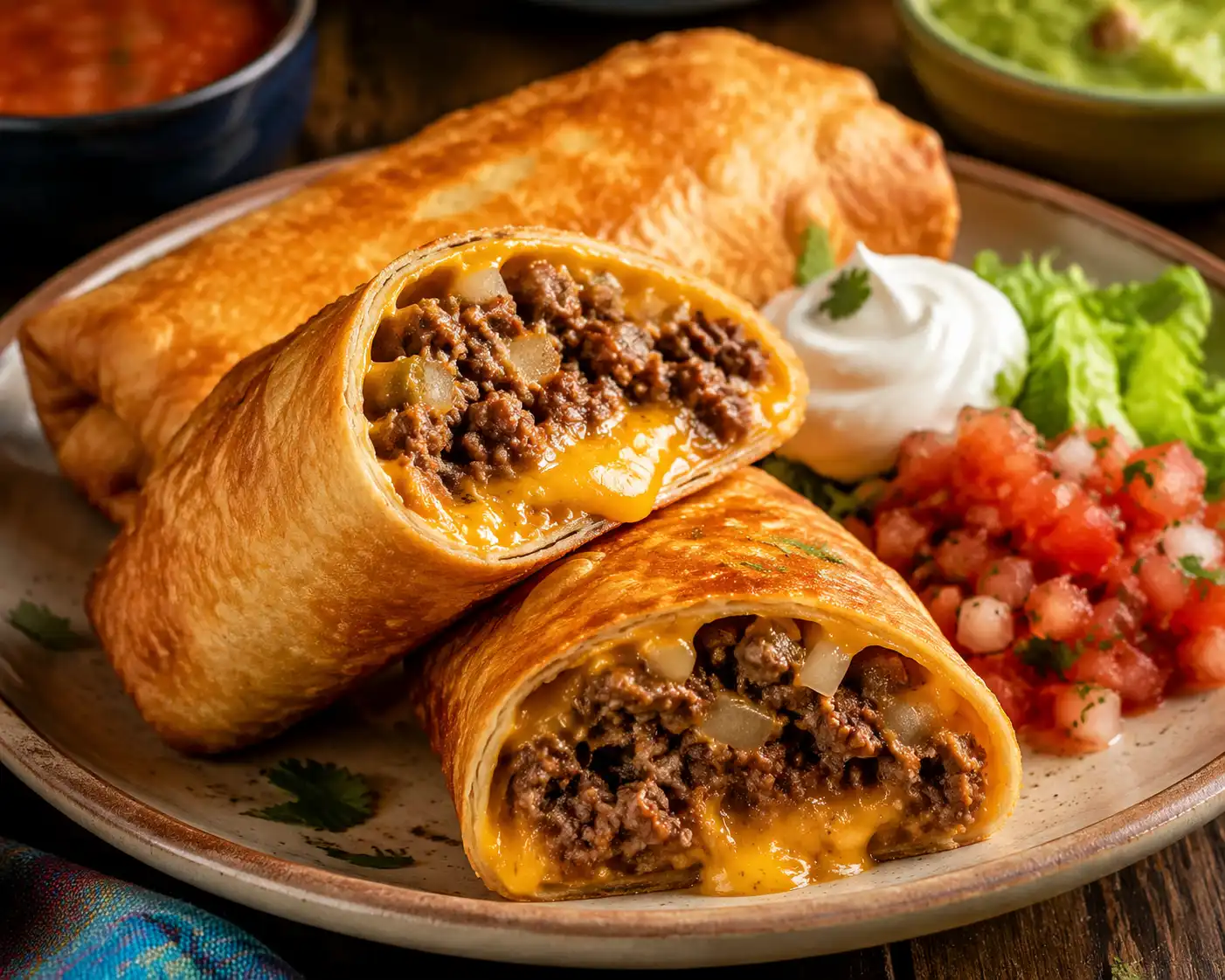
Beef and Cheese Chimichangas are the ultimate fusion of bold Mexican flavors and comforting American Tex-Mex flair—crispy, golden-brown flour tortillas enveloping a rich, savory filling of seasoned ground beef, melted cheese, and aromatic spices, then deep-fried (or oven-crisped) to irresistible perfection. More than just a handheld meal, chimichangas embody culinary ingenuity: a humble burrito transformed into a crowd-pleasing, shareable, restaurant-worthy dish that delivers crunch, creaminess, warmth, and depth in every bite. Whether served as a hearty weeknight dinner, game-day appetizer, or make-ahead freezer favorite, these chimichangas strike an exquisite balance between tradition and versatility—offering endless opportunities for customization while remaining deeply rooted in Southwestern soul.
The History
The origins of the chimichanga are delightfully contested—and deliciously debated—among food historians, chefs, and regional purists. While many assume chimichangas are a centuries-old Mexican staple, they are, in fact, a relatively modern American innovation born in the mid-20th century Southwest. The most widely accepted origin story traces back to El Charro Café in Tucson, Arizona, where founder Monica Flin reportedly “accidentally” dropped a burrito into a fryer in the early 1940s—then coined the playful, Spanish-sounding portmanteau “chimichanga” (a whimsical twist on “chamagonga,” a nonsense word she used to scold children, avoiding profanity). Another compelling claim comes from Macayo’s Mexican Kitchen in Phoenix, which began serving fried burritos in the 1950s and trademarked the term “chimichanga” in 1975. Regardless of its precise birthplace, the chimichanga rapidly gained popularity across Arizona, New Mexico, Texas, and California—evolving from roadside diner fare to mainstream grocery freezer aisle staple and now gourmet menu highlight. Unlike traditional Mexican burritos (which are rarely fried) or quesadillas (grilled or griddled), chimichangas proudly embrace their deep-fried identity—making them a distinct Tex-Mex icon symbolizing culinary improvisation, cultural blending, and unapologetic indulgence.
Ingredients Breakdown
Understanding each component is key to mastering authentic, flavorful, and texturally balanced chimichangas. Below is a meticulous breakdown—not just of what goes in, but why it matters:
- Flour Tortillas (10-inch, extra-large): Essential for structural integrity—larger tortillas prevent tearing during folding and frying; look for pliable, slightly thick, restaurant-style tortillas with minimal additives. Corn tortillas are not recommended—they lack flexibility and won’t hold up to frying or freezing.
- Ground Beef (80/20 lean-to-fat ratio): The fat content is non-negotiable—it renders during cooking, basting the meat, carrying flavor, and ensuring juiciness. Leaner beef (90/10 or higher) yields dry, crumbly filling. Grass-fed or organic options add nuanced flavor but require careful browning to avoid toughness.
- Yellow Onion & Garlic: Finely diced onion adds sweetness and body when sautéed until translucent; fresh minced garlic provides aromatic depth—but must be added after onions to prevent burning.
- Chili Powder Blend: Not just generic “chili powder”—ideally a custom mix including ancho, guajillo, and chipotle for layered heat, fruitiness, and smokiness. Commercial blends vary wildly; read labels to avoid fillers like wheat flour or excessive sodium.
- Cumin & Dried Oregano (Mexican variety preferred): Cumin offers earthy warmth; Mexican oregano (more citrusy and less sweet than Mediterranean oregano) contributes herbal brightness essential to Southwestern authenticity.
- Tomato Paste: A secret umami booster—cooked until brick-red and fragrant, it deepens color, adds richness, and balances acidity without making the filling watery.
- Beef Broth (low-sodium): Adds moisture and savory depth without diluting flavor. Avoid bouillon cubes high in MSG unless desired; homemade or bone-based broths elevate the entire dish.
- Shredded Cheese Blend: A strategic trio works best: Mexican blend (for meltability), sharp cheddar (for tang and structure), and Monterey Jack (for creamy stretch). Avoid pre-shredded cheeses coated in cellulose—they don’t melt evenly and inhibit binding.
- Refried Beans (optional but highly recommended): Traditional Sonoran-style chimichangas often include a thin layer of vegetarian refried beans (not canned “fat-free” versions) for creaminess, protein, and authentic mouthfeel. Warm them gently and spread thinly to avoid sogginess.
- Heavy Cream or Sour Cream (for binding): A small amount (1–2 tbsp per batch) helps unify the filling, prevents separation during frying, and enhances richness without making it heavy.
- Vegetable Oil (for frying): High smoke point is critical—peanut, canola, or refined avocado oil ensure even browning without off-flavors. Never reuse oil more than 2–3 times for chimichangas; residual moisture and starch degrade quality quickly.
Step-by-Step Recipe
- Prep Work & Mise en Place: Dice 1 large yellow onion (½ cup); mince 4 cloves garlic; measure all spices, cheeses, and liquids. Warm tortillas briefly (10 sec per side in dry skillet or wrapped in damp paper towel, microwaved 20 sec) to increase pliability—this prevents cracking during folding.
- Brown the Beef: In a heavy-bottomed skillet or Dutch oven over medium-high heat, add 1 tbsp oil. Crumble and cook 1.5 lbs ground beef, breaking into fine pieces, until no pink remains (~6–8 mins). Drain excess grease *only* if pooling heavily—retain ~1 tbsp for flavor and sautéing.
- Sauté Aromatics: Push beef to edges; add onion to center. Cook 3 mins until softened. Add garlic and stir 1 minute until fragrant—do not brown.
- Bloom Spices: Stir in 2 tbsp chili powder, 1 tsp ground cumin, ½ tsp dried Mexican oregano, ½ tsp smoked paprika, ¼ tsp cayenne (optional), and 1 tsp kosher salt. Toast 45 seconds—stirring constantly—to awaken oils and deepen flavor.
- Build Depth with Tomato Paste: Push mixture aside; add 2 tbsp tomato paste to center. Cook 2 minutes, stirring, until darkened and caramelized—this step eliminates raw acidity and builds foundational richness.
- Simmer & Reduce: Return beef mixture to center. Pour in ¾ cup low-sodium beef broth. Simmer uncovered 8–10 minutes, stirring occasionally, until liquid reduces by half and mixture thickens to a moist-but-not-wet consistency. Cool completely (refrigerate 20 mins if rushed)—warm filling melts cheese prematurely and causes leakage.
- Combine Filling: In a large bowl, combine cooled beef mixture, 1.5 cups shredded cheese blend, ½ cup warm refried beans (if using), 1 tbsp sour cream or heavy cream, ¼ tsp black pepper, and optional 2 tbsp chopped fresh cilantro. Mix gently—overmixing compacts the filling and reduces tenderness.
- Assemble Chimichangas: Lay a warmed tortilla flat. Place ⅔ cup filling horizontally centered, leaving 2-inch borders on all sides. Fold bottom edge up over filling, then fold left and right edges inward (like an envelope), and roll tightly away from you into a compact cylinder. Seal seam with a dab of water or egg wash (1 egg + 1 tsp water, beaten).
- Chill Before Frying (Critical!): Place assembled chimichangas seam-side down on parchment-lined tray. Refrigerate 30–45 minutes—this firms the filling, tightens the tortilla, and prevents unraveling during frying.
- Heat Oil: Fill a heavy pot (Dutch oven ideal) with 2–3 inches oil. Heat to 350°F (use candy/oil thermometer—never guess). Maintain temperature within ±5°F throughout frying.
- Fry to Golden Perfection: Carefully lower 2–3 chimichangas (do not overcrowd) into oil using tongs or spider strainer. Fry 3–4 minutes, turning once, until deep golden brown and crisp. Remove, drain vertically on wire rack over paper towels. Repeat, adjusting heat to maintain temp.
- Optional Oven Finish: For lighter version: Brush chilled chimichangas with oil, bake at 425°F on parchment-lined sheet 20–25 mins, flipping halfway, until blistered and crisp.
- Rest & Serve: Let rest 2 minutes before cutting—allows steam to settle and cheese to set slightly. Serve hot with garnishes and cooling accompaniments.
Tips
- Tortilla Temperature Matters: Cold tortillas crack; overheated ones become gummy. Ideal temp: 95–105°F—warm to the touch but not hot. Keep covered with a clean kitchen towel to retain steam and pliability.
- Fillings Must Be Cool—Not Just Room Temp: Even 10°F above room temp softens cheese and loosens structure. Chill filled chimichangas—not just the beef mixture—for foolproof rolling.
- The “Envelope Fold” is Your Friend: Unlike burritos, chimichangas benefit from a secure, multi-fold technique: bottom-up → sides-in → tight roll. Practice with a flour tortilla and rice first to build muscle memory.
- Fry in Batches—Never Rush: Dropping cold chimichangas lowers oil temp drastically, causing greasiness and uneven browning. Let oil recover to 350°F between batches (takes ~90 seconds).
- Drain Vertically, Not Horizontally: Laying hot chimichangas flat traps steam and softens the bottom crust. Use a wire rack elevated over paper towels to allow air circulation on all sides.
- Double-Dip for Extra Crunch (Gourmet Trick): After first fry and draining, chill 10 minutes, then dip lightly in tempura batter or seasoned cornstarch slurry before second 60-second fry—creates shatteringly crisp, restaurant-grade shell.
- Freeze Like a Pro: Flash-freeze assembled (unfried) chimichangas on a parchment-lined tray for 2 hours, then transfer to airtight freezer bags. Label with date and cook-from-frozen instructions: bake at 400°F for 35–40 mins, or air-fry at 375°F for 18–22 mins, flipping halfway.
- Rescue Soggy Chimichangas: If filling was too wet or under-chilled: slice in half, pat dry with paper towels, refrigerate 15 mins, then reseal seam with egg wash and refry 60–90 seconds.
- Oil Quality Impacts Flavor: Use neutral oil—but never rancid or reused more than 3x. Strain post-fry through cheesecloth into clean container; store refrigerated up to 1 week.
- Keep It Safe: Never leave hot oil unattended. Keep lid nearby to smother flames (never use water!). Have baking soda ready for minor grease fires.
Variations and Customizations
Chimichangas are a canvas—not a cage. Embrace creativity while honoring texture and balance:
- Protein Swaps: Ground turkey (add 1 tsp poultry seasoning + extra ½ tbsp oil), shredded carnitas (cool & chop finely), grilled carne asada strips, pulled chicken tinga (chipotle-tomato braised), or plant-based crumbles (season aggressively—they absorb flavor).
- Cheese Reinventions: Queso fresco + Oaxaca for authentic melt-and-crumb; pepper jack + cotija for heat and salt; smoked gouda + fontina for umami depth; vegan cashew-miso “cheese” for dairy-free integrity.
- Bean Brilliance: Black bean & roasted corn; pinto beans with epazote; lentil-walnut “refried” for earthy richness; charred sweet potato & black bean for sweetness and fiber.
- Veggie Power-Ups: Sautéed bell peppers & zucchini ribbons; roasted poblano & corn; caramelized fennel & white bean; spinach-kale pesto swirl; pickled red onions folded in last-minute for brightness.
- Global Twists: Korean BBQ chimichangas (gochujang-beef, kimchi, sesame); Indian-spiced (garam masala, ginger-garlic paste, paneer); Mediterranean (lamb, mint, lemon zest, feta); Thai-inspired (lemongrass, fish sauce, peanut crunch).
- Breakfast Chimichangas: Scrambled eggs, chorizo, roasted potatoes, queso, and avocado crema—ideal for brunch or hangover recovery.
- Dietary Accommodations: Gluten-free: Use certified GF flour tortillas (Bob’s Red Mill or Mission GF). Keto: Replace tortillas with large lettuce leaves or almond-flour wraps (bake until crisp first). Low-carb: Stuff into halved bell peppers and bake.
- Texture Layers: Add toasted pepitas, crushed tortilla chips, or crispy shallots inside or on top. For elegance: finish with microgreens, edible flowers, or flaky sea salt.
- Sauce Synergy: Beyond standard salsa—try hibiscus-pomegranate molasses, roasted tomatillo-avocado crema, chipotle-mango, or adobo-lime aioli. Serve sauces on the side to preserve crispness.
- Mini & Mega Sizes: Bite-sized “chimi bites” (2-inch tortillas, 1 tbsp filling) for appetizers; “Chimichanga Pie” (layered in cast iron, baked, sliced like lasagna) for feeding crowds.
Health Considerations and Nutritional Value
A single standard (6-oz) beef and cheese chimichanga—deep-fried, made with 80/20 beef, full-fat cheese, and traditional tortillas—contains approximately 580–650 calories, 32–38g total fat (12–15g saturated), 34–40g protein, 38–45g carbohydrates, and 850–1,100mg sodium. While undeniably indulgent, thoughtful modifications can significantly improve nutritional alignment without sacrificing satisfaction:
- Heart-Healthy Swaps: Use 90/10 grass-fed beef + increase beans to boost fiber (8–10g per serving); replace half the cheese with nutritional yeast or reduced-fat mozzarella; opt for air-frying or oven-baking to cut 30–40% fat and calories.
- Sodium Savvy: Rely on herbs, citrus zest, smoked salt, and spice blends instead of pre-salted broths or canned beans. Rinse canned beans thoroughly—reduces sodium by up to 40%.
- Fiber Forward: Incorporate ¼ cup cooked lentils or mashed black beans into filling; add 2 tbsp ground flaxseed to binding cream; serve with high-fiber sides (jicama slaw, roasted broccoli, black bean-corn salad).
- Probiotic Pairings: Counterbalance richness with fermented sides: house-made curtido (Salvadoran cabbage slaw), tepache (fermented pineapple drink), or a dollop of cultured cashew sour cream.
- Glycemic Awareness: Choose sprouted grain or whole-wheat tortillas (higher fiber, lower glycemic index); avoid sugary sauces—opt for roasted tomato or tomatillo-based salsas.
- Allergen Transparency: Naturally gluten-free? Only if using certified GF tortillas—most flour tortillas contain wheat. Dairy-free? Use vegan cheese and coconut-based sour cream. Nut-free? Skip nut-based cheeses and check spice blend labels for cross-contamination warnings.
- Portion Mindfulness: Serve one chimichanga alongside a large, vibrant salad (massaged kale, radish, cucumber, lime vinaigrette) rather than double-frying or adding nacho cheese drizzle—prioritizes volume, nutrients, and satiety.
- Food Safety First: Ensure internal temp reaches 165°F when reheating frozen or refrigerated chimichangas. Never thaw at room temperature—always refrigerate or microwave-defrost.
- Balanced Indulgence Philosophy: Rather than labeling chimichangas “unhealthy,” reframe them as nutrient-dense comfort food—packed with iron, zinc, B12, calcium, and gut-supportive ingredients when built intentionally. Enjoy mindfully, not guiltily.
Ingredients
- 1.5 lbs (680g) ground beef (80% lean / 20% fat)
- 1 large yellow onion, finely diced (½ cup)
- 4 cloves garlic, minced
- 2 tbsp vegetable oil (for browning)
- 2 tbsp chili powder (ancho-based blend preferred)
- 1 tsp ground cumin
- ½ tsp dried Mexican oregano
- ½ tsp smoked paprika
- ¼ tsp cayenne pepper (optional, for heat)
- 1 tsp kosher salt (plus more to taste)
- 2 tbsp tomato paste
- ¾ cup low-sodium beef broth
- 1.5 cups shredded cheese blend (Mexican, sharp cheddar, Monterey Jack)
- ½ cup warm vegetarian refried beans (optional but recommended)
- 1 tbsp sour cream or heavy cream
- ¼ tsp freshly ground black pepper
- 2 tbsp fresh cilantro, chopped (optional)
- 8–10 extra-large (10-inch) flour tortillas (restaurant-style)
- Vegetable, peanut, or refined avocado oil (for frying — ~1 quart)
- Water or egg wash (1 egg + 1 tsp water, beaten) for sealing
Directions
- Warm tortillas individually in a dry skillet over medium heat for 10 seconds per side, or wrap in a damp paper towel and microwave for 20 seconds. Stack and cover with a clean kitchen towel to keep pliable.
- In a large heavy-bottomed skillet or Dutch oven over medium-high heat, heat 1 tbsp oil. Add ground beef and cook, crumbling with a wooden spoon, until fully browned and no pink remains (6–8 minutes). Drain excess grease, reserving ~1 tbsp in pan.
- Add diced onion to skillet; cook 3 minutes until softened. Stir in minced garlic and cook 1 minute more—until fragrant but not browned.
- Push mixture to edges; add chili powder, cumin, oregano, smoked paprika, cayenne, and salt to center. Toast spices 45 seconds, stirring constantly.
- Add tomato paste to center; cook 2 minutes, stirring, until darkened and thickened.
- Return beef mixture to center; pour in beef broth. Simmer uncovered 8–10 minutes, stirring occasionally, until liquid is mostly absorbed and mixture is thick, moist, and cohesive. Transfer to a bowl and cool completely (refrigerate 20 minutes if needed).
- To cooled beef, add shredded cheese, refried beans (if using), sour cream, black pepper, and cilantro. Gently fold together until evenly combined. Do not overmix.
- Place one warmed tortilla on a clean surface. Spoon ⅔ cup filling horizontally centered, leaving 2 inches bare on all edges.
- Fold bottom edge up over filling. Fold left and right edges inward snugly. Roll tightly away from you into a sealed cylinder. Press seam to seal; dab with water or egg wash to secure.
- Place seam-side down on a parchment-lined baking sheet. Repeat with remaining tortillas and filling. Refrigerate uncovered 30–45 minutes to firm up.
- Fill a heavy pot (Dutch oven) with 2–3 inches of oil. Heat to 350°F using a reliable thermometer. Maintain temperature carefully.
- Carefully lower 2–3 chilled chimichangas into hot oil using tongs or a spider strainer. Fry 3–4 minutes, turning once, until deep golden brown and crisp. Remove and drain vertically on a wire rack over paper towels.
- Repeat with remaining chimichangas, allowing oil to return to 350°F between batches.
- Let rest 2 minutes before serving. Cut in half diagonally to showcase the melty interior—or serve whole with dipping sauces and garnishes.
FAQ
- Can I make chimichangas ahead of time?
- Absolutely! Assemble unfried chimichangas, freeze on a parchment-lined tray for 2 hours, then transfer to airtight freezer bags. Freeze up to 3 months. Cook from frozen: bake at 400°F for 35–40 minutes (flip halfway) or air-fry at 375°F for 18–22 minutes.
- Why did my chimichanga burst open while frying?
- Most commonly due to warm filling (melting cheese weakens structure), insufficient chilling, overfilling (>⅔ cup), or improper folding technique. Always chill assembled chimichangas and use the envelope fold for security.
- Can I bake instead of fry?
- Yes—but texture differs. For best results: brush chilled chimichangas generously with oil, bake at 425°F on parchment-lined sheet 20–25 minutes, flipping halfway, until deeply golden and blistered. For extra crispness, spray with oil again before flipping.
- What’s the best cheese for melting?
- A blend performs best: Monterey Jack for stretch, sharp cheddar for flavor and structure, and a mild Mexican blend for authentic notes. Avoid pre-shredded cheeses—they contain anti-caking agents that impede melt.
- Are chimichangas gluten-free?
- Only if made with certified gluten-free flour tortillas. Most standard flour tortillas contain wheat. Always verify labels—cross-contamination is common in shared facilities.
- How do I reheat leftover chimichangas without getting soggy?
- Avoid the microwave alone. Instead: preheat oven or air fryer to 375°F. Lightly brush chimichangas with oil and reheat 10–12 minutes (oven) or 6–8 minutes (air fryer), flipping once, until heated through and crisp.
- Can I use corn tortillas?
- Not recommended. Corn tortillas lack the elasticity and structural integrity needed for folding and frying—they crack, leak, and disintegrate. Stick with pliable, large flour tortillas.
- What sauces pair best with beef and cheese chimichangas?
- Classic pairings include fresh pico de gallo, creamy avocado crema, smoky chipotle ranch, tangy lime-cilantro crema, or roasted tomato salsa. For contrast, try pineapple-jalapeño salsa or pickled red onion relish.
- How do I prevent greasiness?
- Maintain oil temperature at 350°F (too cool = absorption; too hot = surface burns before interior cooks), drain vertically on a wire rack (not flat on paper towels), and avoid overcrowding the pot.
- Can I make vegetarian chimichangas?
- Easily! Swap beef for black beans + roasted sweet potato + sautéed mushrooms + corn + cumin-chili seasoning. Add nutritional yeast or cashew queso for cheesy depth. Texture and satisfaction remain high.
Summary
Beef and Cheese Chimichangas are a masterclass in Tex-Mex craftsmanship—crispy, golden shells encasing a luxuriously seasoned, cheesy, deeply savory filling, born from mid-century Southwestern ingenuity and perfected through generations of culinary care. With meticulous attention to ingredient quality, temperature control, and technique—plus boundless room for creative customization—they deliver restaurant-caliber satisfaction at home, whether fried to shattering perfection or baked for mindful indulgence.