
Introduction
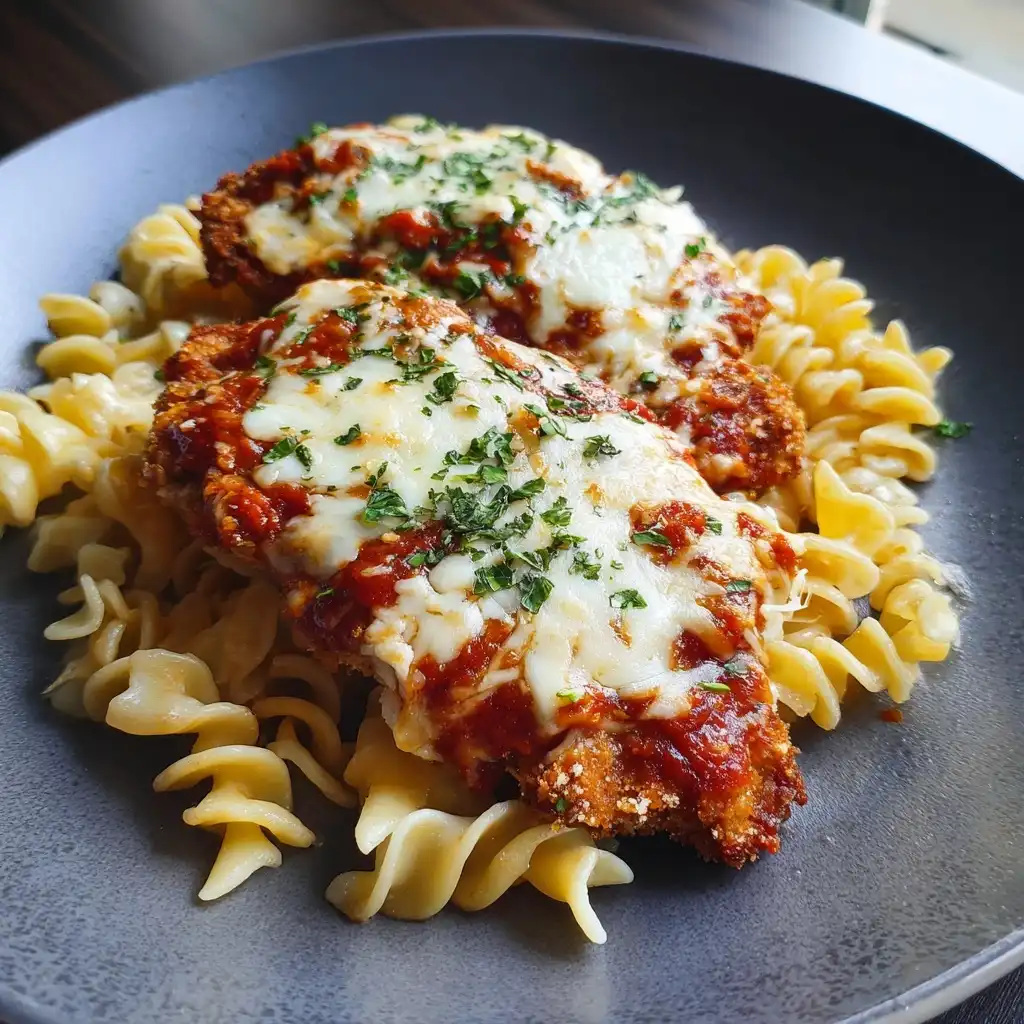
Chicken Parmesan—often affectionately called “Chicken Parm” or “Chicken Parmigiana”—is a beloved Italian-American classic that bridges Old World tradition and New World ingenuity. Though its roots trace back to Southern Italy, the dish as we know it today is a proud product of American immigrant kitchens, where resourceful cooks transformed humble ingredients into something rich, comforting, and deeply satisfying. Served with a side of spaghetti, a generous sprinkle of fresh basil, and a glass of robust Chianti or simple red wine, Chicken Parmesan is more than just dinner—it’s a culinary embrace, a celebration of texture and flavor, and a staple at family dinners, Sunday suppers, and festive gatherings across the United States and beyond. Its irresistible combination of tender, breaded chicken cutlets, slow-simmered tomato sauce, melted mozzarella, and sharp Parmigiano-Reggiano creates a symphony of savory, tangy, creamy, and umami notes that lingers long after the last bite.
The History
The origins of Chicken Parmesan are steeped in both culinary evolution and cultural adaptation. While the name suggests an Italian lineage—and indeed, the technique shares DNA with traditional Italian dishes—the modern version is largely an American invention. In Italy, melanzane alla parmigiana (eggplant Parmesan) is a centuries-old Sicilian and Neapolitan specialty: layers of fried eggplant, tomato sauce, and cheese baked until golden and bubbling. When Italian immigrants arrived in the United States in the late 19th and early 20th centuries—particularly from Campania and Calabria—they brought their love for this layered, baked preparation but adapted it to local ingredients and tastes. Chicken, more affordable and widely available than veal in many American communities, gradually replaced eggplant—and sometimes even veal—in home kitchens and neighborhood trattorias.
The term “Parmigiana” does not refer to the city of Parma alone, but rather denotes a cooking style originating from the Parma region—characterized by layering, baking, and finishing with Parmigiano-Reggiano. Over time, “Chicken Parmigiana” was shortened colloquially to “Chicken Parmesan,” especially in English-speaking contexts. By the 1940s and ’50s, the dish appeared in American cookbooks, diner menus, and community cookbooks across the Northeast. It gained further popularity through postwar suburbanization, frozen food innovations (like TV dinners featuring Chicken Parm), and its starring role in iconic films and television shows—cementing its status as a cornerstone of Italian-American identity and comfort cuisine. Today, chefs and home cooks continue to reinterpret the dish—from air-fryer versions and gluten-free adaptations to gourmet twists with house-made marinara, burrata, and aged balsamic reductions—proving that tradition and innovation can coexist on the same plate.
Ingredients Breakdown
Every exceptional Chicken Parmesan begins with thoughtful, high-quality ingredients—not just for flavor, but for structure, texture, and balance. Below is a detailed breakdown of each component and why it matters:
- Chicken Breasts: Boneless, skinless chicken breasts are preferred for their lean protein and uniform thickness—ideal for pounding and even cooking. Opt for air-chilled, antibiotic-free, or organic options when possible. Some chefs prefer chicken thighs for added moisture and richness, though breasts remain the standard for authenticity and lightness.
- All-Purpose Flour: Acts as the foundational “glue” in the breading process. It helps the egg wash adhere and creates a subtle crispness. For gluten-free versions, a 1:1 certified GF flour blend (with xanthan gum) works beautifully.
- Eggs & Dairy: Large eggs—preferably pasture-raised—are whisked with a splash of milk or cream (or even buttermilk for extra tenderness and tang). This liquid binder ensures the breadcrumbs cling without sliding off during frying or baking.
- Breadcrumbs: A blend of panko (for airy crunch) and Italian-seasoned dry breadcrumbs (for herbal depth) yields ideal texture. Homemade breadcrumbs made from day-old ciabatta or sourdough add unparalleled flavor and reduce waste. Avoid ultra-fine or overly salty pre-packaged varieties unless you control the seasoning.
- Cheeses: Three cheeses play distinct roles: Parmigiano-Reggiano (aged minimum 24 months) delivers nutty, salty, crystalline complexity; fresh mozzarella (whole-milk, packed in water—not low-moisture shreds) provides creamy melt and delicate milky sweetness; and optionally, a small amount of provola or scamorza adds smoky depth. Never substitute pre-shredded mozzarella—it contains anti-caking agents that impede melting.
- Tomato Sauce: Authenticity demands a slow-simmered, San Marzano–based marinara—simmered at least 45 minutes to concentrate flavor and eliminate raw acidity. Canned whole San Marzano tomatoes (DOP-certified), crushed by hand, form the ideal base. Fresh basil, garlic, extra-virgin olive oil, and a pinch of red pepper flakes round it out. Jarred sauces can be used in a pinch—but always choose ones with minimal additives, no high-fructose corn syrup, and real herbs.
- Herbs & Aromatics: Fresh basil is non-negotiable for finishing—its bright, sweet-anise aroma cuts through richness. Garlic (minced or roasted), onion (finely diced or sautéed), and oregano (used sparingly) build aromatic foundations in the sauce. Dried herbs should be fresh—ideally less than 6 months old—for maximum potency.
- Olive Oil: Extra-virgin olive oil is used for finishing the sauce and drizzling before serving. For frying, a high-smoke-point oil like avocado, grapeseed, or light olive oil is recommended—never extra-virgin for high-heat applications, as it burns easily and turns bitter.
- Salt & Black Pepper: Kosher salt (like Diamond Crystal) is preferred for its clean flavor and easy pinchability. Freshly ground black pepper adds warmth and complexity—never pre-ground, which loses volatile oils rapidly.
Step-by-Step Recipe
This meticulously tested, chef-approved method yields perfectly crisp, juicy, cheesy Chicken Parmesan every time—whether pan-fried for maximum crunch or baked for ease and consistency.
- Prep the Chicken: Place two boneless, skinless chicken breasts between sheets of parchment paper or plastic wrap. Using a meat mallet or heavy skillet, pound evenly to ¼-inch thickness—taking care not to tear. This ensures quick, even cooking and prevents dryness. Season both sides generously with kosher salt and freshly ground black pepper. Let rest 10 minutes at room temperature.
- Set Up Your Breading Station: Prepare three shallow dishes: (1) All-purpose flour seasoned with ½ tsp salt and ¼ tsp black pepper; (2) Whisked eggs + 2 tbsp whole milk + 1 tsp Dijon mustard (optional, for enhanced binding and subtle tang); (3) Breadcrumb mixture: 1 cup panko + ½ cup Italian-seasoned dry breadcrumbs + ¼ cup finely grated Parmigiano-Reggiano + 1 tsp dried oregano + ½ tsp garlic powder.
- Bread the Cutlets: Dredge each pounded breast in flour—shaking off excess. Dip fully into egg mixture, letting excess drip off. Press firmly into breadcrumb mixture, coating both sides evenly. Gently press crumbs to adhere. Place on a wire rack and refrigerate uncovered for 20–30 minutes—this crucial step sets the crust and prevents slippage during cooking.
- Cook the Chicken: For Pan-Frying (Recommended for Ultimate Crispness): Heat ¼ inch of avocado oil in a heavy-bottomed skillet (cast iron preferred) over medium-high heat until shimmering (350°F). Carefully place 1–2 cutlets in the pan—do not crowd. Fry 3–4 minutes per side, until deep golden brown and internal temperature reaches 160°F. Transfer to a wire rack set over paper towels to drain excess oil. For Baking (Health-Conscious or Batch Cooking): Preheat oven to 425°F. Lightly grease a baking sheet with olive oil or line with parchment. Arrange breaded cutlets on sheet. Spray tops generously with olive oil spray. Bake 15 minutes, flip, spray again, and bake 10–12 more minutes until golden and cooked through.
- Assemble & Broil: Spoon ¼ cup warm marinara onto each cooked cutlet. Top with 2 oz fresh mozzarella (torn, not shredded), then 1 tbsp grated Parmigiano-Reggiano. Optional: Add a thin slice of provola or a few fresh basil leaves beneath the cheese for complexity. Place under a preheated broiler on high (4–6 inches from heating element) for 2–4 minutes—until cheese is bubbly, lightly bronzed, and edges curl slightly. Watch closely—broiling times vary dramatically by oven.
- Rest & Serve: Let rest 3 minutes before serving—this allows juices to redistribute and cheese to settle. Garnish with fresh basil ribbons, a drizzle of high-quality extra-virgin olive oil, and additional grated Parmigiano-Reggiano. Serve immediately alongside spaghetti tossed in reserved marinara, garlic sautéed greens, or a crisp arugula salad with lemon vinaigrette.
Tips
- Pound Evenly—But Don’t Overdo It: Aim for consistent ¼-inch thickness. Too thin = dry and tough; too thick = uneven cooking and chewy centers. Use the flat side of the mallet—not the ridged side—to avoid tearing.
- Chill Before Cooking: That 20–30 minute refrigeration isn’t optional. It dries the surface slightly, firms the breading, and prevents steam from loosening the crust during cooking.
- Oil Temperature Is Everything: Too cool = greasy, soggy chicken. Too hot = burnt breading, raw interior. Use a thermometer—or test with a cube of bread: it should sizzle vigorously and turn golden in 60 seconds.
- Don’t Skip the Mustard in Egg Wash: Dijon adds emulsifying power and subtle acidity that enhances browning and balances richness—without tasting “mustardy.”
- Fresh Mozzarella Matters—A Lot: Buy mozzarella di bufala or fior di latte packed in whey or water—not vacuum-sealed low-moisture blocks. Pat gently with paper towel before using to prevent excess water from diluting the sauce.
- Sauce Should Be Warm—Not Boiling: Cold sauce cools the chicken and steams the crust. Reheat marinara gently before assembling—just until steaming, not bubbling aggressively.
- Broil, Don’t Bake the Final Layer: Baking the cheese-covered chicken leads to rubbery, separated mozzarella. Broiling gives rapid, radiant heat for perfect melt-and-brown in under 3 minutes.
- Use a Wire Rack, Not Paper Towels, for Frying: Elevating fried chicken prevents steaming on the bottom—keeping the entire crust crisp, not just the top.
- Double-Dip for Extra Crunch (Optional Pro Move): After first breading, dip again in egg wash and breadcrumbs for a thicker, shatteringly crisp exterior—ideal for restaurant-style presentation.
- Make Ahead Smartly: Breaded cutlets freeze beautifully for up to 3 months (layer between parchment). Cook from frozen—add 2–3 minutes per side when pan-frying, or bake at 400°F for 25–30 minutes before saucing and broiling.
Variations and Customizations
Chicken Parmesan is gloriously adaptable—respecting its soul while inviting creativity. Here are time-tested, chef-curated variations for every palate and need:
- Gluten-Free Chicken Parm: Substitute 1:1 gluten-free all-purpose flour and certified GF panko (like Kikkoman or Ian’s). Add ½ tsp xanthan gum to the flour mixture for improved binding. Serve with gluten-free pasta or roasted vegetables.
- Low-Carb/Keto Version: Replace breadcrumbs with crushed pork rinds + grated Parmigiano-Reggiano + almond flour + Italian herbs. Use sugar-free marinara (check labels!) and serve over zucchini noodles or cauliflower mash.
- Vegetarian “Chicken” Parm: Use thick-cut, marinated tofu steaks or seitan cutlets. Press tofu for 30 minutes, marinate in soy sauce, garlic, and oregano, then bread and cook as directed. Add nutritional yeast to breading for umami depth.
- Spicy Arrabbiata Style: Stir 1 tsp crushed red pepper flakes and ½ tsp smoked paprika into the marinara. Top finished dish with pickled cherry peppers or Calabrian chili paste.
- Gourmet Truffle & Burrata Finish: After broiling, top each cutlet with a spoonful of fresh burrata and a drizzle of white truffle oil. Finish with micro basil and flaky sea salt.
- Whole30/Paleo Adaptation: Use almond flour and crushed plantain chips for breading; coconut aminos instead of soy-based marinara enhancers; and skip cheese entirely—or use compliant A2 cow’s milk mozzarella if tolerated. Serve over roasted sweet potato ribbons.
- Air Fryer Chicken Parm: Bread as usual. Air fry at 375°F for 12 minutes (flip halfway), then top with sauce and cheese and air fry 4–5 more minutes until bubbly and golden. No oil needed—just a light mist if desired.
- Meal-Prep Friendly Sheet-Pan Version: Arrange breaded cutlets on one half of a rimmed sheet pan; scatter cherry tomatoes, garlic cloves, and fresh basil on the other half. Roast at 425°F for 20 minutes. Deglaze pan with balsamic and spoon roasted tomatoes over chicken before adding cheese and broiling.
- Stovetop-Only One-Pan Method: After frying chicken, remove from pan. Sauté minced garlic and onions in residual oil, add marinara, simmer 5 minutes, return chicken, spoon sauce over, top with cheese, cover, and steam on low 4 minutes—then uncover and broil briefly.
- Brunch Chicken Parm Benedict: Serve mini chicken cutlets atop English muffins with poached eggs and a creamy basil-pesto hollandaise—topped with shaved Parmigiano and crispy pancetta.
Health Considerations and Nutritional Value
Chicken Parmesan can be both deeply nourishing and mindfully balanced—with smart ingredient choices and portion awareness. A traditionally prepared 6-oz breaded, pan-fried chicken breast with ½ cup marinara, 1.5 oz fresh mozzarella, and 2 tbsp Parmigiano-Reggiano delivers approximately:
- Calories: 580–650 kcal
- Protein: 52–58 g (excellent complete protein source—supports muscle repair, satiety, and metabolic health)
- Fat: 28–34 g (mostly unsaturated from olive oil and cheese; includes beneficial conjugated linoleic acid (CLA) from dairy)
- Carbohydrates: 22–28 g (primarily from tomatoes and breadcrumbs; fiber ~3–4 g with whole-grain or homemade crumbs)
- Sodium: ~950–1,200 mg (moderate—reduced significantly by using low-sodium marinara and limiting added salt)
- Vitamins & Minerals: Rich in calcium (35% DV), vitamin B12 (85% DV), selenium (60% DV), vitamin A (from tomatoes), lycopene (a potent antioxidant boosted by cooking), and zinc (supports immunity and wound healing)
Heart-Healthy Tweaks: Use olive oil exclusively, opt for part-skim mozzarella (reduces saturated fat by ~30%), increase vegetable content (add spinach or grated zucchini to sauce), and serve with a large side salad dressed in lemon-olive oil vinaigrette.
Dietary Accommodations: Naturally low-FODMAP when using garlic-infused oil (not raw garlic) and lactose-free mozzarella; suitable for Mediterranean, DASH, and flexitarian diets. Those with dairy sensitivities can explore cashew-based “ricotta” or nutritional yeast–enhanced breadcrumb toppings.
Portion Guidance: Stick to one 5–6 oz cutlet per serving. Pair with ≥1 cup non-starchy vegetables and ½ cup whole-grain pasta or quinoa for balanced macros. Avoid heavy cream-based sides or garlic bread laden with butter—opt instead for grilled asparagus, roasted broccoli, or a farro-tomato salad.
Myth-Busting: Contrary to popular belief, moderate cheese consumption (especially fermented, aged varieties like Parmigiano) is associated with reduced cardiovascular risk in multiple cohort studies—including the landmark PURE study. The key lies in quality, fermentation, and overall dietary pattern—not elimination.
Ingredients
Makes 4 servings
- 2 large boneless, skinless chicken breasts (about 1 lb / 450 g total)
- 1 tsp kosher salt, plus more to taste
- ½ tsp freshly ground black pepper, plus more to taste
- ⅓ cup all-purpose flour (or certified gluten-free 1:1 flour)
- 2 large pasture-raised eggs
- 2 tbsp whole milk or buttermilk
- 1 tsp Dijon mustard (optional but recommended)
- 1 cup panko breadcrumbs
- ½ cup Italian-seasoned dry breadcrumbs
- ¼ cup finely grated Parmigiano-Reggiano (aged minimum 24 months)
- 1 tsp dried oregano
- ½ tsp garlic powder
- ¼ tsp onion powder
- ½ cup high-quality extra-virgin olive oil (for finishing and optional frying)
- ¾ cup avocado oil or light olive oil (for pan-frying)
- 2 cups slow-simmered San Marzano marinara sauce (homemade or premium store-bought)
- 8 oz fresh whole-milk mozzarella, drained and torn into 1-inch pieces
- ¼ cup additional finely grated Parmigiano-Reggiano
- Fresh basil leaves, for garnish
- Flaky sea salt, for finishing
Directions
- Prepare the Chicken: Place chicken breasts on a clean cutting board. Cover with parchment or plastic wrap. Using the flat side of a meat mallet or heavy skillet, pound evenly to ¼-inch thickness. Season both sides with 1 tsp kosher salt and ½ tsp black pepper. Let sit at room temperature for 10 minutes.
- Set Up Breading Station: In three separate shallow dishes: (1) Flour + pinch of salt and pepper; (2) Eggs + milk + Dijon, whisked until smooth; (3) Panko + dry breadcrumbs + ¼ cup Parmigiano + oregano + garlic powder + onion powder. Mix crumb mixture well.
- Bread the Cutlets: Dredge each breast in flour, shaking off excess. Dip fully into egg mixture, letting excess drip off. Press firmly into breadcrumb mixture, coating thoroughly. Place on a wire rack set over parchment. Refrigerate uncovered for 25 minutes.
- Heat Oil for Frying: In a 12-inch cast iron or heavy stainless skillet, heat ¼ inch avocado oil over medium-high heat to 350°F (use thermometer or bread test).
- Fry the Chicken: Carefully place 1–2 cutlets in hot oil—do not crowd. Fry 3½ minutes per side, until deep golden and internal temperature reaches 160°F. Transfer to wire rack over paper towels. Repeat with remaining cutlets, adjusting heat as needed to maintain temperature.
- Warm the Sauce: In a small saucepan, gently reheat marinara over low heat until steaming (do not boil). Stir in 1 tbsp olive oil.
- Assemble: Preheat broiler to high. Place fried cutlets on a foil- or parchment-lined baking sheet. Spoon ¼ cup warm marinara over each. Top evenly with torn mozzarella, then 1 tbsp additional Parmigiano.
- Broil: Place sheet 4–5 inches below broiler element. Broil 2 minutes 30 seconds—watch closely. Rotate pan if needed. Broil up to 1 minute more until cheese is bubbling, golden at edges, and lightly blistered.
- Rest & Finish: Let rest 3 minutes. Garnish with fresh basil ribbons, a drizzle of extra-virgin olive oil, flaky sea salt, and extra grated Parmigiano. Serve immediately with spaghetti, garlic bread, or seasonal vegetables.
FAQ
- Can I make Chicken Parmesan ahead of time?
- Yes! Breaded, uncooked cutlets freeze beautifully for up to 3 months—layer between parchment in an airtight container. Thaw overnight in fridge before cooking. Fully assembled, unbaked Chicken Parm can be refrigerated up to 24 hours before broiling—but note: sauce may soften the crust slightly. For best results, prep components separately and assemble just before cooking.
- Why does my breading fall off?
- Most commonly due to skipping the chill step, using wet chicken (not patted dry), overcrowding the pan (lowers oil temp), or insufficient pressing during breading. Also ensure your egg wash isn’t too thin—add a touch more flour or mustard to thicken if needed.
- Can I use frozen chicken breasts?
- Absolutely—but thaw completely in the refrigerator (never at room temperature), then pat *extremely* dry before pounding and seasoning. Excess moisture is the enemy of adhesion.
- Is Chicken Parmesan Italian?
- It is Italian-*American*. While inspired by Southern Italian techniques (especially melanzane alla parmigiana), the chicken-based version evolved in U.S. immigrant communities. In Italy, you’ll find polpette al pomodoro or pollo al forno, but not “Chicken Parmesan” on traditional menus.
- What’s the best cheese to use?
- Authenticity calls for fresh mozzarella (fior di latte or mozzarella di bufala) + Parmigiano-Reggiano. Avoid pre-shredded mozzarella—it won’t melt properly. If you must substitute, try scamorza or provolone—but never cheddar or Monterey Jack.
- Can I bake instead of fry?
- Yes—and it’s excellent for meal prep or lower-oil cooking. Bake breaded cutlets at 425°F on a parchment-lined sheet for 15 minutes, flip, spray with oil, and bake 10–12 more minutes before saucing and broiling. Texture will be lighter, not shatter-crisp—but still delicious.
- How do I keep it from getting soggy?
- Key tactics: (1) Always use a wire rack for cooling/frying, (2) Warm (not hot) sauce, (3) Pat mozzarella dry, (4) Broil—not bake—the final cheese layer, (5) Serve immediately—don’t let it sit in pooled sauce.
- What wine pairs best with Chicken Parmesan?
- A medium-bodied, high-acid red like Chianti Classico, Barbera d’Alba, or Montepulciano d’Abruzzo cuts through richness and complements tomato acidity. For white lovers, try an oak-aged Vermentino or Soave Classico Superiore.
- Can I make it spicy?
- Easily! Add ½ tsp crushed Calabrian chilies to the breadcrumb mix, stir 1 tsp harissa into the marinara, or finish with pickled jalapeños and cilantro. For heat seekers: infuse the frying oil with dried arbol chiles.
- How do I reheat leftovers without ruining the texture?
- Avoid the microwave—it makes cheese rubbery and crust limp. Instead: preheat oven to 350°F. Place Chicken Parm on a wire rack over a baking sheet. Reheat 10–12 minutes. For extra crispness, finish under broiler 1–2 minutes. Add fresh basil after reheating.
Summary
Chicken Parmesan is a masterclass in balance—crisp yet tender, rich yet bright, hearty yet nuanced—born from Italian tradition and perfected in American home kitchens through generations of love, adaptation, and culinary intuition. With its golden breadcrumb crust, slow-simmered San Marzano sauce, and luxuriously melted cheeses, it remains timeless not because it’s static, but because it welcomes reinvention while honoring its soul.
Whether you’re cooking for a weeknight dinner, hosting a holiday feast, or seeking comfort in simplicity, Chicken Parmesan delivers profound satisfaction—not just as food, but as memory, culture, and connection served on a plate.