
Introduction
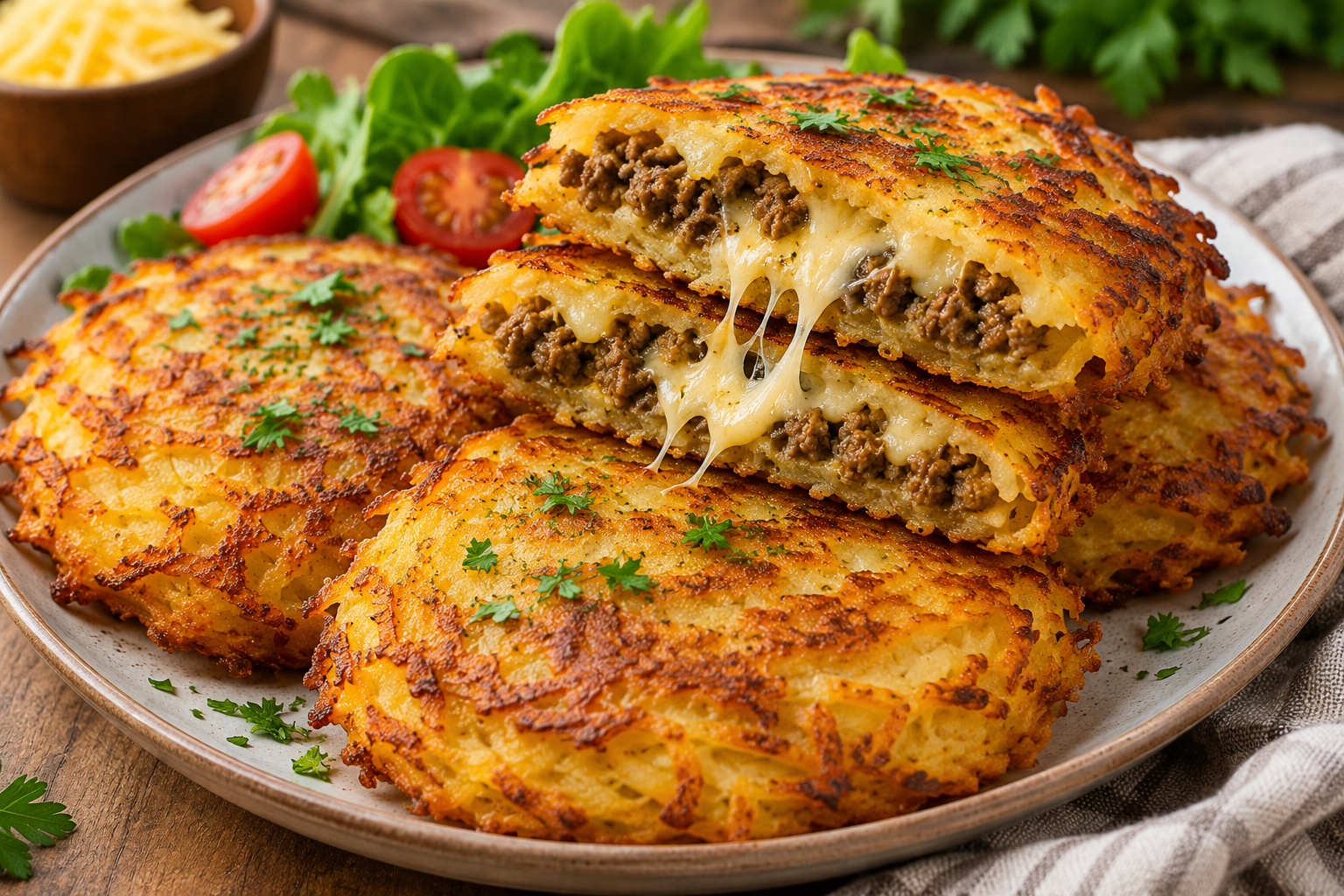
There is a specific kind of comfort food that transcends borders and generations, combining the humble earthiness of the potato with the rich, savory depth of seasoned beef and the indulgent melt of sharp cheese. Potato pancakes with savory beef and cheese are not merely a side dish; they are a culinary event. Imagine biting into a golden-brown, crispy exterior that gives way to a fluffy, starchy interior, only to be greeted by a warm, juicy pocket of spiced ground beef and molten cheese. This dish bridges the gap between the traditional Eastern European latke and the hearty stuffed dumplings of Central Europe, creating a fusion that satisfies the deepest cravings for texture and flavor.
Whether you are hosting a dinner party, looking for a hearty weeknight meal, or seeking the ultimate comfort food for a cold winter evening, these savory stuffed pancakes deliver. They offer a perfect balance of carbohydrates, proteins, and fats, making them a filling and satisfying meal on their own or paired with a crisp green salad. The aroma of frying onions and searing beef mixed with the scent of browning potatoes is enough to make any kitchen feel like home.
The History
The potato pancake, known variously as latkes in Jewish cuisine, draniki in Belarus, or reibekuchen in Germany, has a history as rich and varied as the cultures that claim it. Originating in Eastern Europe where the potato became a staple crop in the 18th and 19th centuries, the basic concept was born out of necessity: stretching limited ingredients to feed large families. Traditionally, these were simple mixtures of grated potato, onion, egg, and flour, fried in fat.
However, the evolution into the “stuffed” or “savory beef and cheese” variant is a testament to culinary innovation. As families migrated and ingredients became more accessible, cooks began experimenting with fillings. In some regions, leftover meat from Sunday roasts was minced and hidden inside the pancakes to make the meal go further. In others, the influence of dumpling cultures (like Polish pierogi) inspired cooks to encase savory fillings within the potato batter. Today, this specific combination of beef and cheese represents a modern comfort food classic, merging the crispiness of the traditional pancake with the heartiness of a burger or a stuffed pastry.
Ingredients Breakdown
To achieve the perfect potato pancake, understanding your ingredients is half the battle. Each component plays a specific chemical and textural role in the final dish.
The Potatoes
Russet Potatoes: For this recipe, high-starch potatoes are non-negotiable. Russets (or Idaho potatoes) have a low moisture content and high starch levels. This ensures that when fried, the exterior becomes incredibly crispy while the interior remains fluffy. Waxy potatoes like red or new potatoes contain too much water and sugar, which can lead to soggy pancakes that burn before they cook through.
The Beef
Ground Chuck (80/20): While lean beef is often touted as healthier, flavor lives in the fat. An 80/20 blend of ground chuck provides enough fat to keep the beef filling juicy and flavorful without making the pancake greasy. The beef acts as the savory core, contrasting the mild sweetness of the potato.
The Cheese
Sharp Cheddar or Gruyère: You need a cheese that melts well but retains some flavor intensity. Sharp cheddar offers a tangy bite that cuts through the starch, while Gruyère offers a nutty, sophisticated depth. Avoid pre-shredded bagged cheese if possible, as the anti-caking agents (usually potato starch) can prevent the cheese from melting into a smooth, gooey pool.
The Binder and Aromatics
Onions: Yellow onions provide a necessary sweetness and pungency that balances the saltiness of the beef and cheese. Eggs: The eggs act as the glue, holding the grated potato shreds together so the pancake doesn’t fall apart in the pan. Flour: A small amount of all-purpose flour absorbs excess moisture and helps create a structural crust.
Step-by-Step Recipe Narrative
Before diving into the formal instructions, let’s walk through the process to understand the flow of cooking. First, you must prepare the filling. This involves sautéing your ground beef with onions and spices until it is fully browned and crumbly. You want to evaporate as much liquid as possible here so the filling doesn’t make the potato dough soggy. Once the beef is cooked, mix in your cheese and let it cool slightly.
Next comes the potato preparation, which is the most critical step. You will grate the potatoes and immediately submerge them in cold water to prevent oxidation (turning brown). Then, the most important action: draining and squeezing. You must wring out every drop of liquid from the potatoes using a cheesecloth or clean kitchen towel. Dry potatoes equal crispy pancakes.
Mix the dry potatoes with your egg, flour, and seasonings. Now, you assemble. Take a handful of the potato mixture, flatten it into a patty, place a spoonful of the beef-cheese mixture in the center, and carefully seal another layer of potato on top, pressing the edges to ensure no filling leaks out. Finally, fry these patties in hot oil until they are deep golden brown on both sides. The result is a crispy shell protecting a molten, savory center.
Tips for Success
- The Squeeze is Key: Do not skip squeezing the liquid out of the potatoes. If the batter is too wet, the pancakes will steam instead of fry, resulting in a mushy texture.
- Oil Temperature: Ensure your oil is hot enough (around 350°F / 175°C) before adding the pancakes. If the oil is too cool, the pancakes will absorb grease. If it’s too hot, the outside will burn before the inside cooks.
- Don’t Overcrowd the Pan: Fry in batches. Crowding the pan lowers the oil temperature and causes the pancakes to stick together.
- Keep Them Warm: If cooking for a crowd, keep finished pancakes warm in a 200°F (95°C) oven on a wire rack. This keeps them crispy. Do not stack them on a plate while hot, or the steam will make them soggy.
- Seal the Edges: When stuffing the pancakes, ensure the top layer of potato completely covers the filling and pinches into the bottom layer. Leaking cheese can burn in the pan and create a mess.
Variations and Customizations
While the beef and cheese combination is classic, this recipe is a canvas for your creativity.
Cheese Variations
Swap the cheddar for Pepper Jack for a spicy kick, or use Mozzarella for an incredible cheese pull. For a gourmet twist, try Blue Cheese crumbles mixed with the beef for a bold, tangy flavor profile.
Meat Substitutions
Not a fan of beef? Ground pork or sausage (removed from casings) works beautifully and adds a sweeter, richer fat profile. For a lighter option, ground turkey seasoned heavily with paprika and cumin can mimic the texture of beef without the heaviness.
Vegetarian Option
To make this meat-free, replace the beef filling with a mixture of sautéed mushrooms, spinach, and feta cheese. The umami from the mushrooms mimics the savory depth of the beef.
Spice It Up
Add a teaspoon of smoked paprika or cayenne pepper to the potato batter for a subtle heat. You can also mix fresh herbs like dill or chives into the potato mixture for a burst of freshness.
Health Considerations and Nutritional Value
Potato pancakes are an energy-dense food. Potatoes provide potassium, Vitamin C, and fiber (especially if you leave the skins on, though peeling is traditional for smoother texture). The beef offers high-quality protein, iron, and B vitamins. However, because this dish is fried and contains cheese, it is higher in calories and saturated fats.
Moderation is Key: Enjoy these as a main course rather than a side dish to control portion sizes. Healthier Cooking: You can bake these in the oven at 400°F (200°C) on a greased baking sheet for about 20 minutes, flipping halfway through, to reduce the oil content significantly, though the texture will be less crispy than the fried version. Gluten-Free: This recipe is easily made gluten-free by substituting the all-purpose flour with almond flour or a gluten-free baking blend.
Ingredients
- For the Potato Batter:
- 4 large Russet potatoes, peeled and grated
- 1 medium yellow onion, finely grated
- 2 large eggs, beaten
- 3 tablespoons all-purpose flour
- 1 teaspoon salt
- 1/2 teaspoon black pepper
- 1/2 teaspoon garlic powder
- For the Savory Beef Filling:
- 1 lb (450g) ground beef (80/20 blend recommended)
- 1/2 medium onion, diced
- 2 cloves garlic, minced
- 1 teaspoon Worcestershire sauce
- 1 teaspoon dried oregano
- Salt and pepper to taste
- 1 cup shredded sharp cheddar cheese (or cheese of choice)
- For Frying:
- Vegetable oil, canola oil, or beef tallow (enough to fill the pan 1/4 inch deep)
Directions
- Prepare the Filling: In a skillet over medium-high heat, cook the ground beef, diced onion, and garlic. Break the meat apart with a wooden spoon until fully browned. Drain excess grease if necessary. Stir in the Worcestershire sauce, oregano, salt, and pepper. Remove from heat and stir in the shredded cheese until melted and combined. Set aside to cool slightly.
- Prep the Potatoes: Peel and grate the potatoes and the medium onion using a box grater or food processor. Immediately place the grated mixture into a large bowl of cold water to prevent browning. Let sit for 5 minutes.
- Drain and Squeeze: Drain the potato mixture in a colander. Transfer the mixture to a clean kitchen towel or cheesecloth. Gather the corners and twist tightly over the sink to squeeze out as much liquid as possible. This is crucial for crispiness.
- Make the Batter: Place the dry potato mixture in a large mixing bowl. Add the beaten eggs, flour, salt, pepper, and garlic powder. Mix thoroughly until well combined.
- Assemble the Pancakes: Heat about 1/4 inch of oil in a large skillet over medium-high heat. Take a large spoonful of the potato mixture and flatten it into a patty in the palm of your hand. Place a tablespoon of the beef-cheese filling in the center. Top with another spoonful of potato mixture and press the edges firmly to seal the filling inside. Flatten gently into a pancake shape.
- Fry: Carefully place the pancakes into the hot oil. Do not overcrowd the pan. Fry for 3-4 minutes per side, or until deep golden brown and crispy. Adjust heat if they are browning too quickly.
- Drain and Serve: Remove pancakes from the oil and place them on a wire rack or paper towels to drain excess oil. Serve immediately while hot and the cheese is still gooey.
FAQ
Can I make these ahead of time?
Yes, you can assemble the uncooked pancakes and place them on a baking sheet separated by parchment paper. Freeze them for up to 2 months. Fry them directly from frozen, adding an extra minute or two to the cooking time.
Why are my pancakes falling apart?
This usually happens if there is too much moisture in the potatoes or not enough binder (egg/flour). Ensure you squeeze the potatoes very dry. Also, make sure the oil is hot enough before adding the batter.
What do I serve with these?
These are hearty enough to stand alone, but they pair wonderfully with sour cream, applesauce, a dollop of Greek yogurt, or a crisp arugula salad with lemon vinaigrette to cut the richness.
Can I bake these instead of frying?
Absolutely. Preheat your oven to 400°F (200°C). Place the assembled pancakes on a greased baking sheet, brush the tops with a little oil, and bake for 15-20 minutes, flipping halfway through, until golden.
Summary
Crispy grated potato pancakes stuffed with seasoned ground beef and melted cheese offer the ultimate savory comfort food experience. Master the technique of squeezing moisture from the potatoes to ensure a golden, crunchy exterior that perfectly encases a juicy, flavorful filling.