
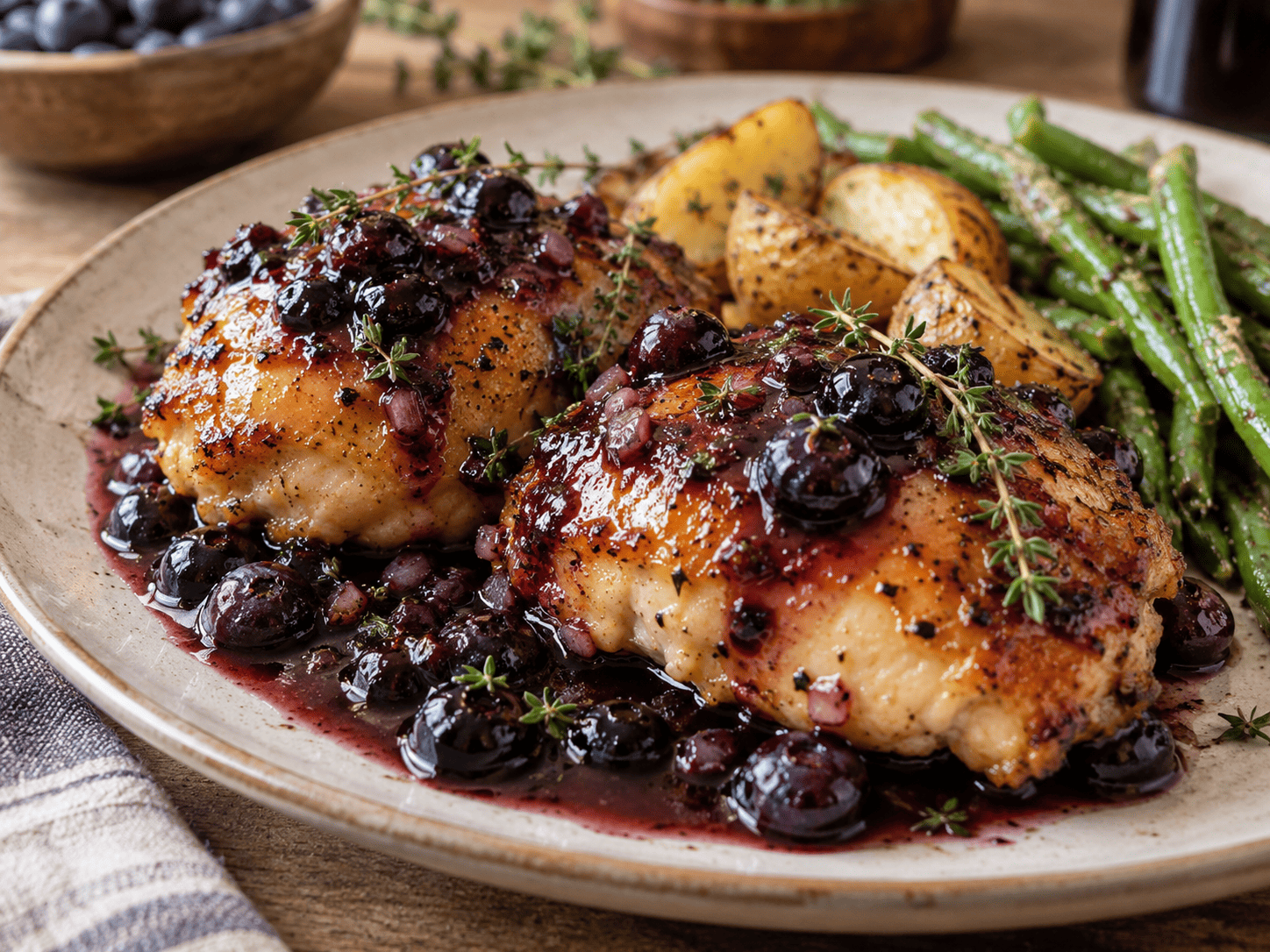
Savory Blueberry Thyme Chicken: A Flavorful Twist on a Classic Dish
Introduction
Welcome to the culinary frontier where sweet meets savory in a harmonious symphony of flavors. Savory Blueberry Thyme Chicken is not merely a recipe; it is an experience that challenges the conventional boundaries of poultry preparation. Often, chicken dishes are relegated to the realm of the mundane, seasoned with standard herbs like rosemary or sage and served with predictable starches. However, this dish invites you to explore the nuanced complexity of fruit-based sauces paired with aromatic herbs. The natural sweetness of blueberries caramelizes during the cooking process, creating a rich, glossy glaze that clings to tender, juicy chicken pieces, while the earthy, slightly floral notes of fresh thyme provide a grounding counterbalance that prevents the dish from becoming overly sugary.
This recipe is designed for the home cook who seeks to impress without spending hours in the kitchen. It strikes a perfect balance between elegance and accessibility. Whether you are hosting a intimate dinner party, preparing a special anniversary meal, or simply wishing to elevate your weekly family dinner, this dish delivers sophistication on a plate. The vibrant purple hue of the reduced blueberry sauce adds a visual stunning element to the presentation, making it as photogenic as it is delicious. By the end of this guide, you will not only know how to cook this dish but understand the science and history behind why these flavors work so beautifully together.
The History
The concept of combining fruit with meat is far from a modern fusion trend; it is a practice rooted deeply in culinary history dating back to ancient civilizations. In Medieval European cooking, particularly within French and English traditions, it was common to serve roasted meats with fruit-based sauces. Cooks utilized apples, plums, and berries to cut through the richness of fatty meats like pork and duck. The acidity and sweetness of the fruit acted as a palate cleanser and a flavor enhancer. While chicken was often reserved for simpler preparations, the nobility frequently enjoyed game birds served with compotes made from foraged berries.
Blueberries specifically have a rich history in North American cuisine. Indigenous peoples of North America revered the blueberry, not only for its nutritional value but for its versatility. They dried them for winter storage and incorporated them into stews and meat dishes long before European settlers arrived. The combination of thyme with poultry has strong roots in French cuisine, specifically in the herbes de Provence blend, where thyme is a dominant member. Bringing these two historical threads together—the Indigenous appreciation for the blueberry and the French mastery of herb-infused poultry—creates a dish that honors global culinary heritage. In recent decades, the farm-to-table movement has revived interest in savory fruit applications, leading to a renaissance of recipes like this Savory Blueberry Thyme Chicken, proving that old-world wisdom still holds valuable lessons for the modern kitchen.
Ingredients Breakdown
To truly master this dish, one must understand the role each component plays in the final flavor profile. This is not just a list of items; it is an analysis of flavor chemistry.
The Chicken
We recommend using bone-in, skin-on chicken thighs for this recipe. While chicken breasts are leaner, thighs contain more connective tissue and fat, which renders down during cooking to keep the meat moist. The skin is crucial for the initial searing process; it provides texture and absorbs the sauce beautifully. If you must use breasts, pound them to an even thickness to ensure consistent cooking and prevent drying out. The quality of the chicken matters; organic or free-range birds often have a richer flavor profile that stands up well against the boldness of the blueberry sauce.
The Blueberries
Fresh blueberries are ideal when in season, typically during the summer months. They hold their shape better during the initial cooking phase and provide bursts of fresh juice. However, frozen blueberries are an excellent year-round alternative. When using frozen berries, do not thaw them beforehand; add them directly to the pan to prevent them from becoming mushy before they hit the heat. Wild blueberries are smaller and more intense in flavor compared to cultivated highbush blueberries, offering a deeper color and a more tart profile that works exceptionally well in savory sauces. The anthocyanins in the skin are what give the sauce its luxurious dark purple color.
The Thyme
Fresh thyme is non-negotiable for the best results. The volatile oils in fresh thyme leaves provide a bright, aromatic quality that dried thyme simply cannot replicate. Dried thyme can become hay-like and bitter when reduced in a sauce. Look for thyme with vibrant green leaves and woody stems. You will strip the leaves from the stems during preparation. The essential compound thymol found in thyme has antimicrobial properties and provides that distinct, warm herbaceous scent that pairs perfectly with the sweetness of the berries. If fresh thyme is unavailable, oregano or marjoram can be substitutes, though the flavor profile will shift slightly.
The Aromatics and Liquid
Shallots are preferred over onions for this dish due to their delicate, sweet flavor that blends seamlessly into the sauce without overpowering the blueberries. Garlic adds a necessary pungency to balance the sweetness. For the liquid component, a dry white wine such as Sauvignon Blanc or Pinot Grigio adds acidity that deglazes the pan and lifts the fond (the browned bits) from the bottom. Chicken stock provides the body for the sauce, while a touch of balsamic vinegar enhances the depth and adds a subtle tang that highlights the fruit flavors.
Step-by-Step Recipe
Follow this detailed workflow to ensure every element of the dish is cooked to perfection. Patience and attention to heat management are key.
Phase 1: Preparation and Seasoning
Begin by removing the chicken from the refrigerator at least 30 minutes before cooking. Cooking cold chicken can lead to uneven results. Pat the chicken pieces completely dry with paper towels; moisture is the enemy of a good sear. Season the chicken generously on both sides with kosher salt and freshly cracked black pepper. Do not be shy with the seasoning, as the sauce will dilute some of the saltiness. While the chicken comes to room temperature, wash your blueberries gently and pick through the thyme to separate the leaves from the woody stems. Mince the shallots and garlic finely to ensure they melt into the sauce rather than remaining chunky.
Phase 2: The Sear
Heat a large, heavy-bottomed skillet over medium-high heat. Cast iron is ideal for heat retention, but a stainless steel skillet works well too. Add a combination of olive oil and butter. The oil prevents the butter from burning, while the butter adds richness. Once the fat is shimmering, place the chicken in the pan skin-side down. Do not overcrowd the pan; cook in batches if necessary. Overcrowding steams the chicken instead of searing it. Press the chicken down gently to ensure full contact with the hot surface. Allow it to cook undisturbed for 5 to 7 minutes until the skin is golden brown and crispy. Flip the chicken and sear the other side for 3 minutes. Remove the chicken from the pan and set it aside on a plate. It will not be fully cooked yet, which is intentional.
Phase 3: Building the Sauce
In the same pan with the rendered chicken fat and fond, add the minced shallots. Sauté for 2 minutes until translucent. Add the garlic and cook for another 30 seconds until fragrant, being careful not to burn it. Pour in the white wine to deglaze the pan. Use a wooden spoon to scrape up all the browned bits from the bottom; this is where much of the flavor lies. Allow the wine to reduce by half. Next, add the chicken stock, balsamic vinegar, and half of the thyme leaves. Bring the liquid to a simmer. Gently stir in the blueberries. As the sauce simmers, the blueberries will begin to burst, releasing their juices and thickening the liquid naturally.
Phase 4: Braising and Finishing
Return the chicken to the pan, nestling it into the sauce skin-side up to preserve the crispness. Reduce the heat to low, cover the pan, and let it simmer gently for 15 to 20 minutes. The internal temperature of the chicken should reach 165°F (74°C). Once cooked, remove the chicken again. Increase the heat to medium-high to reduce the sauce further until it coats the back of a spoon. Stir in the remaining fresh thyme and a knob of cold butter to give the sauce a glossy finish. Taste and adjust seasoning with salt and pepper. Pour the sauce over the chicken and serve immediately.
Tips
- Pan Selection: Avoid non-stick pans if possible. You need the fond (browned bits) to stick to the pan initially so you can deglaze it later. Stainless steel or cast iron is superior for this technique.
- Sauce Consistency: If the sauce is too thin after reducing, you can create a slurry with one teaspoon of cornstarch and one tablespoon of cold water. Whisk this into the simmering sauce to thicken it instantly.
- Acidity Balance: If the blueberries are very sweet, the dish may taste cloying. Add a squeeze of fresh lemon juice at the very end to brighten the flavors and cut through the sugar.
- Resting the Meat: Always let the chicken rest for 5 minutes after removing it from the heat before serving. This allows the juices to redistribute throughout the meat, ensuring every bite is moist.
- Blueberry Selection: If your blueberries are particularly large, you can prick them with a fork before adding them to the sauce to encourage them to burst and release their juices faster.
Variations and Customizations
Cooking is an art form that invites personal expression. Here are several ways to adapt this recipe to suit different dietary needs or flavor preferences.
Protein Substitutions
This sauce is versatile enough to work with other proteins. Pork chops are a classic pairing with fruit sauces and would work beautifully here. Duck breasts are another excellent option, as the rich fat of the duck complements the tartness of the blueberries. For a vegetarian option, use large portobello mushroom caps or extra-firm tofu pressed and seared until golden.
Herb Swaps
While thyme is the star, you can experiment with other herbs. Rosemary offers a piney robustness that stands up well to blueberries. Sage provides an earthy depth that pairs well with poultry. For a Mediterranean twist, try adding a few sprigs of fresh oregano and a pinch of red pepper flakes for heat.
Adding Vegetables
To make this a one-pan meal, add roasted root vegetables. Carrots, parsnips, or small potatoes can be seared in the pan before the chicken and then braised alongside it. Spinach or kale can be stirred into the sauce at the very end to wilt, adding a nutritional boost and a pop of green color to contrast the purple sauce.
Slow Cooker Method
For a hands-off approach, sear the chicken first, then transfer everything to a slow cooker. Cook on low for 4 hours. Note that the sauce will not reduce as much in a slow cooker, so you may need to transfer the liquid to a skillet at the end to thicken it.
Health Considerations and Nutritional Value
Beyond its exquisite taste, Savory Blueberry Thyme Chicken offers several health benefits. Chicken is a high-quality source of lean protein, essential for muscle repair and maintenance. Using skin-on thighs provides more fat, which is satiating, but you can remove the skin after cooking if you are monitoring calorie intake.
Blueberries are often labeled as a superfood due to their high antioxidant content, specifically anthocyanins, which have been linked to improved heart health and reduced inflammation. They are also rich in Vitamin C and Vitamin K. Thyme is not just a garnish; it contains compounds like thymol which have antiseptic properties and can support respiratory health. Garlic and shallots belong to the allium family, known for supporting immune function and potentially lowering blood pressure. By using a moderate amount of butter and oil, you keep the saturated fat content reasonable while ensuring the absorption of fat-soluble vitamins from the herbs and vegetables. This dish is naturally gluten-free, making it suitable for those with celiac disease or gluten sensitivity, provided you check the labels on your chicken stock and wine.
Ingredients
- 4 bone-in, skin-on chicken thighs (approximately 2 lbs)
- 1 cup fresh or frozen blueberries
- 3 sprigs fresh thyme, leaves stripped and divided
- 2 shallots, finely minced
- 3 cloves garlic, minced
- 1/2 cup dry white wine (such as Sauvignon Blanc)
- 1 cup low-sodium chicken stock
- 1 tablespoon balsamic vinegar
- 2 tablespoons olive oil
- 1 tablespoon unsalted butter (cold)
- 1 teaspoon kosher salt (or to taste)
- 1/2 teaspoon freshly cracked black pepper
- 1 teaspoon cornstarch mixed with 1 tablespoon water (optional, for thickening)
- Lemon wedges for serving
Directions
- Pat the chicken thighs dry with paper towels and season generously on both sides with salt and pepper. Let sit at room temperature for 30 minutes.
- Heat olive oil in a large skillet over medium-high heat. Add chicken skin-side down and sear for 5-7 minutes until golden and crispy. Flip and sear for 3 minutes. Remove chicken and set aside.
- In the same skillet, add minced shallots. Sauté for 2 minutes until soft. Add garlic and cook for 30 seconds until fragrant.
- Pour in the white wine to deglaze the pan, scraping up browned bits with a wooden spoon. Simmer until reduced by half.
- Add chicken stock, balsamic vinegar, half of the thyme leaves, and the blueberries. Bring to a gentle simmer.
- Return the chicken to the skillet, nestling it into the sauce. Cover and reduce heat to low. Simmer for 15-20 minutes until chicken reaches 165°F internally.
- Remove chicken from the pan. Increase heat to medium-high to reduce the sauce until it thickens slightly. If needed, stir in the cornstarch slurry.
- Remove from heat and whisk in the cold butter and remaining fresh thyme leaves.
- Plate the chicken, pour the blueberry thyme sauce over the top, and serve with lemon wedges.
FAQ
Can I use dried blueberries instead of fresh?
It is not recommended. Dried blueberries lack the moisture content needed to create the sauce base. They will remain chewy and will not burst to release juices. Stick to fresh or frozen.
What side dishes pair well with this chicken?
This dish pairs wonderfully with creamy mashed potatoes, polenta, or wild rice. The starches help soak up the delicious blueberry sauce. Roasted asparagus or green beans add a nice crisp texture contrast.
Can I make this ahead of time?
Yes, you can prepare the sauce and cook the chicken up to 24 hours in advance. Reheat gently on the stove. However, the chicken skin may lose some crispness upon reheating. For best results, sear the chicken fresh and use pre-made sauce.
Is this dish suitable for freezing?
The sauce freezes well for up to 3 months. The cooked chicken can be frozen, but the texture of the skin will suffer upon thawing. It is best to freeze the sauce separately and cook fresh chicken when ready to serve.
Can I omit the alcohol?
Absolutely. You can substitute the white wine with additional chicken stock and a teaspoon of apple cider vinegar to mimic the acidity the wine would have provided.
Summary
Savory Blueberry Thyme Chicken combines sweet berries and earthy herbs to create a sophisticated, easy-to-make dinner.
This gluten-free dish offers a perfect balance of flavor and nutrition, ideal for elevating any home-cooked meal.