
Introduction
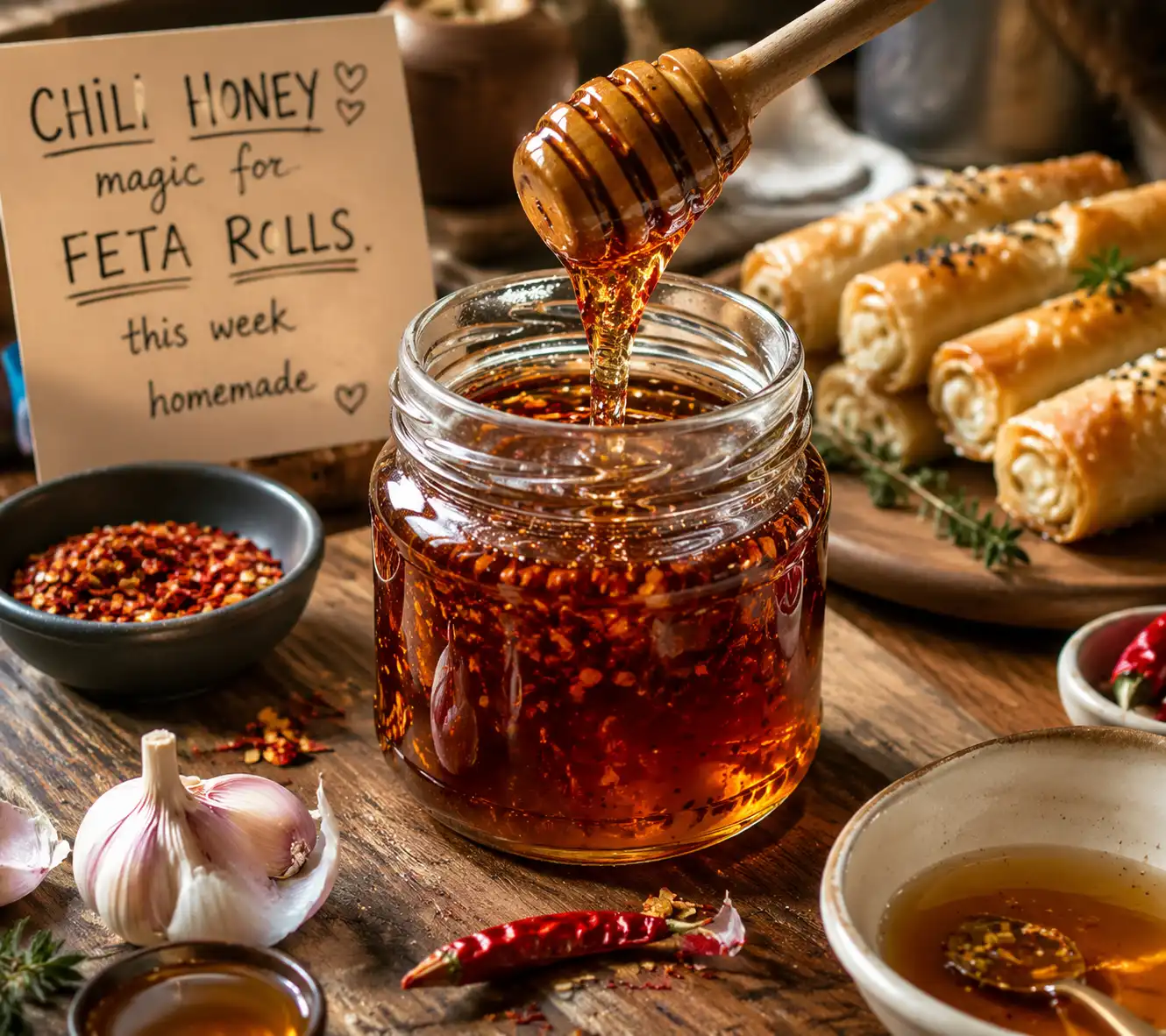
Welcome to a culinary revelation that’s taking food lovers, home cooks, and cheese enthusiasts by storm—Chili Honey Magic for Feta Rolls. This isn’t just another condiment or drizzle—it’s a vibrant, soul-warming fusion of sweet, heat, tang, and umami that transforms simple feta-stuffed rolls into an unforgettable centerpiece. Whether you’re hosting a dinner party, prepping appetizers for game day, or elevating your weekly charcuterie board, this Chili Honey Magic adds depth, dimension, and drama in every golden drip. It’s bold enough to command attention, balanced enough to complement without overwhelming, and versatile enough to double as a glaze, dip, marinade, or even a salad finisher. Get ready to experience how a few pantry staples—elevated with intention and technique—can redefine your understanding of flavor synergy.
The History
While there’s no single documented origin story for “Chili Honey Magic,” its roots run deep through multiple culinary traditions. Honey-based spicy condiments trace back centuries: ancient Romans mixed honey with pepper for medicinal and culinary uses; Korean maesil-cheong (plum syrup) inspired modern fruit-honey infusions; and Middle Eastern muhammara and North African harissa both celebrate the interplay of sweetness and fire. The specific chili-honey-feta pairing gained momentum in the early 2010s via food blogs experimenting with Mediterranean mezze upgrades—particularly after viral TikTok clips in 2022 showcased honey-drizzled feta baked until caramelized and crumbled over flaky phyllo rolls. Chefs in Athens, Beirut, and Tel Aviv began riffing on the concept—adding smoked paprika, Aleppo pepper, or local wildflower honey—and by 2023, “Chili Honey Magic” emerged as a beloved umbrella term across Instagram, Pinterest, and gourmet grocers’ artisanal shelves. What began as an accidental pantry experiment has now evolved into a global kitchen staple—a testament to how cross-cultural curiosity and digital food communities can birth enduring, joyful flavors.
Ingredients Breakdown
Every extraordinary sauce begins with intentional, high-quality components—and this recipe is no exception. Below is a meticulous breakdown of each ingredient, including why it matters, what to look for, and common pitfalls to avoid:
- Raw, Unfiltered Wildflower Honey (½ cup): The backbone of sweetness and viscosity. Choose locally sourced if possible—its floral complexity adds nuance that mass-produced clover honey lacks. Avoid pasteurized or “light” honeys, which lose aromatic compounds and enzymatic richness. Never substitute with corn syrup or agave—they lack honey’s natural acidity and Maillard-reactive sugars crucial for caramelization.
- Smoked Ancho Chile Powder (1½ tsp): Not just heat—depth. Ancho is dried poblano—fruity, raisin-like, with mild warmth (1,000–2,000 SHU). Its smokiness complements feta’s saltiness and enhances browning. Substitutes? Chipotle powder adds more heat and smoke; guajillo brings tartness; but avoid cayenne alone—it’s all burn, no body.
- Crushed Red Pepper Flakes (¾ tsp, preferably Calabrian or Turkish): For bright, electric heat. Calabrian flakes are oil-cured and jammy; Turkish ones offer floral notes. Toast them lightly in a dry pan for 45 seconds before grinding to awaken volatile oils. Skip pre-ground “red pepper” unless labeled as pure chile—many contain fillers like wheat starch.
- Apple Cider Vinegar (1 tbsp, raw & unfiltered): The secret balancing agent. Its gentle acidity cuts through honey’s density and feta’s fat, preventing cloyingness while enhancing perception of sweetness (a well-documented sensory phenomenon). Do not omit—even ½ tsp makes a measurable difference in brightness and shelf stability.
- Garlic Infused Olive Oil (2 tbsp, cold-pressed, extra virgin): Adds savory richness and carries fat-soluble chile compounds. Use *infused* oil—not raw garlic minced in oil (risk of botulism). Opt for Arbequina or Koroneiki varietals for buttery, peppery notes that harmonize with feta’s lactic tang.
- Ground Cumin (¼ tsp, toasted & freshly ground): A whisper of earthiness that bridges Mediterranean and Latin influences. Toast whole cumin seeds in a skillet until fragrant (90 seconds), then grind. Pre-ground loses potency within weeks.
- Fine Sea Salt (¼ tsp, non-iodized): Enhances all other flavors without competing. Iodized salt imparts a faint metallic note that dulls honey’s florals.
- Optional Luxe Additions: A pinch of saffron threads (steeped in 1 tsp warm water), ½ tsp orange blossom water (add at the end), or 1 tsp finely grated preserved lemon rind for citrus-fermented brightness.
Step-by-Step Recipe
This isn’t a dump-and-stir sauce—it’s a layered, temperature-conscious emulsion built for maximum flavor extraction and texture control. Follow each step precisely for restaurant-quality results:
- Toast & Bloom the Spices: In a small, heavy-bottomed saucepan (preferably stainless steel or enameled cast iron), combine smoked ancho powder, crushed red pepper flakes, and ground cumin. Warm over low heat for 60–75 seconds, stirring constantly with a silicone spatula. You’ll smell toasted nuts, dried fruit, and distant campfire—this is the Maillard reaction unlocking aromatic volatiles. Remove from heat immediately to prevent bitterness.
- Infuse the Oil: Pour in the garlic-infused olive oil. Return pan to *lowest possible heat* (just enough to shimmer, ~180°F/82°C). Stir gently for 2 minutes—this gently extracts capsaicin and essential oils without degrading antioxidants. Remove from heat and let cool 3 minutes.
- Acid Integration: Whisk in apple cider vinegar. The brief heat helps meld acidity with oil, creating a stable micro-emulsion base. Let mixture cool to lukewarm (~100°F/38°C).
- Honey Incorporation: Slowly drizzle in honey while whisking *vigorously* in one direction. Start with ¼ cup, whisk 45 seconds until glossy and slightly thickened, then add remaining honey in two more increments, whisking 30 seconds between each. This prevents graininess and ensures full hydration of honey’s glucose crystals.
- Salt & Rest: Stir in sea salt. Transfer to a clean glass jar, seal tightly, and rest at room temperature for 2 hours minimum. This allows flavors to marry and viscosity to stabilize. For optimal depth, refrigerate overnight—cold thickens the sauce slightly and mellows sharp edges.
- Final Adjustment: Before serving, bring to room temperature. If too thick, stir in ½ tsp warm water. If too thin, place jar in a bowl of warm (not hot) water for 5 minutes and stir. Never microwave—it degrades honey’s enzymes and volatiles.
Tips
- Temperature is Everything: Never heat honey above 118°F (48°C) if preserving raw enzymes is important—or above 140°F (60°C) if avoiding caramelization scorch. Our method keeps peak temps safely below both thresholds.
- Batch Scaling Secret: Double or triple the recipe—but never quadruple. Spice-to-honey ratios shift unpredictably beyond 1.5x due to surface-area evaporation and thermal mass variables.
- Phyllo Perfection Pairing: Brush feta rolls with *this sauce* before baking—not after. The sugars caramelize beautifully, forming a lacquered, crackling crust that contrasts the creamy interior.
- No Separation Anxiety: Natural separation is normal (oil rises). Simply invert jar 3x before opening, then stir vigorously for 20 seconds. No emulsifiers needed—proper blooming and whisking create a stable suspension.
- Storage Wisdom: Keeps 4 weeks refrigerated in an airtight, amber glass jar (blocks UV light that degrades chile pigments). Stir before each use. Freezing is not recommended—honey crystallizes and won’t fully re-liquefy evenly.
- Taste Like a Pro: Evaluate in stages: first, the aroma (should smell like spiced figs + woodsmoke); second, the initial hit (sweetness first, then slow-building warmth); third, the finish (clean acidity, no harsh afterburn). Adjust vinegar (+¼ tsp) if finish feels flat; add ⅛ tsp more ancho if depth feels thin.
Variations and Customizations
This recipe is a canvas—not a cage. Here’s how to adapt it for dietary needs, seasonal produce, global palates, and creative expression:
- Vegan Adaptation: Swap honey for date syrup (reduced by 20%—it’s thinner) or organic brown rice syrup. Add ¼ tsp blackstrap molasses for mineral depth and color. Note: flavor profile shifts toward earthy caramel—not floral—so boost orange blossom water to 1 tsp.
- Low-Sugar / Keto-Friendly: Replace honey with ¼ cup erythritol-based “golden” monk fruit blend + 1 tbsp warm water + ½ tsp xanthan gum (whisked in last). Add 1 tsp MCT oil for mouthfeel. Expect slightly less gloss and a cooler heat perception.
- Seasonal Twists: Summer: Fold in 1 tbsp strained raspberry coulis and 1 tsp fresh thyme leaves. Fall: Add ½ tsp ground cinnamon + 1 tsp roasted pear purée. Winter: Stir in ½ tsp black sesame paste + 1 tsp pomegranate molasses. Spring: Infuse oil with lemon zest + add 1 tsp chopped chives.
- Global Riffs: Moroccan: Add ½ tsp ground ginger + 1 tsp ras el hanout. Korean-Inspired: Replace vinegar with gochujang-thinned rice vinegar (1:1) + ½ tsp toasted sesame oil. Mexican Mole-Style: Add 1 tsp unsweetened cocoa powder + 1 crushed allspice berry.
- Texture Play: For crunch, stir in 1 tbsp toasted pine nuts or crushed Marcona almonds *after cooling*. For creaminess, whisk in 1 tsp labneh or Greek yogurt (add last, keep refrigerated, use within 5 days).
- Heat-Level Tiers: Mild: Omit red pepper flakes; use only ancho. Medium: As written. Fiery: Add ¼ tsp ghost pepper powder (use gloves!) + 1 minced serrano (seeds removed). Smoky-Intense: Replace half ancho with chipotle-in-adobo purée (½ tsp, drained).
Health Considerations and Nutritional Value
Per 1-tablespoon (18g) serving (standard drizzle amount):
- Calories: 52 kcal
- Total Carbohydrates: 13.8 g (13.2 g sugars, naturally occurring)
- Fat: 0.3 g (mostly monounsaturated from olive oil)
- Protein: 0.1 g
- Sodium: 28 mg
- Antioxidants: Rich in polyphenols from raw honey, chile peppers (capsaicin), and olive oil (oleocanthal, hydroxytyrosol). Capsaicin may support metabolic rate and circulation; honey’s pinocembrin supports neuroprotection.
- Gut Health Notes: Raw honey contains prebiotic oligosaccharides. Apple cider vinegar supports gastric acid balance—though those with GERD should consult a provider before regular use.
- Allergen Alert: Naturally gluten-free, dairy-free, nut-free, soy-free, and vegan *if honey is substituted*. Contains no common allergens—ideal for most restricted diets. Always verify spice brand sourcing if severe allergies exist (cross-contamination varies).
- Moderation Guidance: While nutrient-dense, this is still a concentrated sweetener. Limit to 1–2 tbsp per serving. Ideal paired with high-protein/fiber foods (like feta rolls wrapped in whole-grain lavash or stuffed into grilled zucchini boats) to blunt glycemic impact.
Ingredients
- ½ cup raw, unfiltered wildflower honey
- 1½ tsp smoked ancho chile powder
- ¾ tsp crushed red pepper flakes (Calabrian or Turkish preferred)
- 1 tbsp raw, unfiltered apple cider vinegar
- 2 tbsp garlic-infused extra virgin olive oil
- ¼ tsp freshly toasted and ground cumin
- ¼ tsp fine sea salt (non-iodized)
Directions
- In a small heavy-bottomed saucepan over low heat, toast ancho powder, red pepper flakes, and cumin for 60–75 seconds, stirring constantly, until fragrant. Remove from heat immediately.
- Pour in olive oil. Return to lowest heat (just shimmering) and stir gently for 2 minutes. Remove and cool 3 minutes.
- Whisk in apple cider vinegar. Cool mixture to lukewarm (~100°F/38°C).
- Slowly drizzle in honey while whisking vigorously in one direction—start with ¼ cup, whisk 45 sec, then add remainder in two more batches, whisking 30 sec between each.
- Stir in sea salt. Transfer to a clean glass jar, seal, and rest at room temperature for 2+ hours (or refrigerate overnight for deeper flavor).
- Before using, bring to room temperature. Stir well. Adjust consistency with warm water (if too thick) or brief warm-water bath (if too thin). Do not microwave.
FAQ
- Can I make this without a stove?
- Yes—but with trade-offs. Combine spices, vinegar, and oil in a mason jar. Shake vigorously for 2 minutes. Stir in honey and salt. Let sit 6+ hours at room temp. Flavor will be less complex (no blooming), and shelf life drops to 10 days refrigerated.
- Why does my sauce separate or crystallize?
- Separation is natural—just stir! Crystallization happens if honey was cold or exposed to temperature swings. Gently warm jar in warm water (max 110°F) while stirring—never boil. Adding ½ tsp corn syrup inhibits crystallization (not recommended for clean-label goals).
- What cheeses pair best besides feta?
- Ricotta salata, halloumi (grilled), burrata (drizzled tableside), aged goat cheese, or even creamy blue like Gorgonzola Dolce. Avoid fresh mozzarella—it’s too mild and watery.
- Can I use this on meats or vegetables?
- Absolutely. Brush on chicken thighs before grilling; glaze roasted sweet potatoes or carrots in last 10 minutes; toss with air-fried chickpeas; swirl into Greek yogurt for a veggie dip. Its acidity makes it uniquely versatile.
- Is this safe for kids?
- Yes—with heat adjustment. Reduce red pepper flakes to ¼ tsp and omit cumin for milder palates. Many children love the sweet-spicy contrast—especially when paired with familiar textures like crispy phyllo.
- How do I scale this for catering or meal prep?
- For batches up to 2 cups: follow recipe ×2 or ×3. For larger volumes (1 quart+), use a stand mixer with whisk attachment on low speed for emulsification, and monitor temperature with an instant-read thermometer (keep under 115°F). Label with batch date and “Refrigerate—Use by [date].”
Summary
Chili Honey Magic for Feta Rolls is a masterclass in balanced contrast—where the floral sweetness of raw honey, the smoldering depth of toasted ancho, the bright spark of Calabrian chile, and the cleansing lift of apple cider vinegar converge into a luxuriously glossy, deeply aromatic sauce that transforms humble feta rolls into a showstopping, globally resonant delicacy.
With precise spice blooming, mindful emulsification, and intentional resting, this recipe delivers restaurant-quality complexity in under 15 active minutes—proving that extraordinary flavor doesn’t demand complexity, but rather clarity, care, and the courage to let quality ingredients speak for themselves.