
Introduction
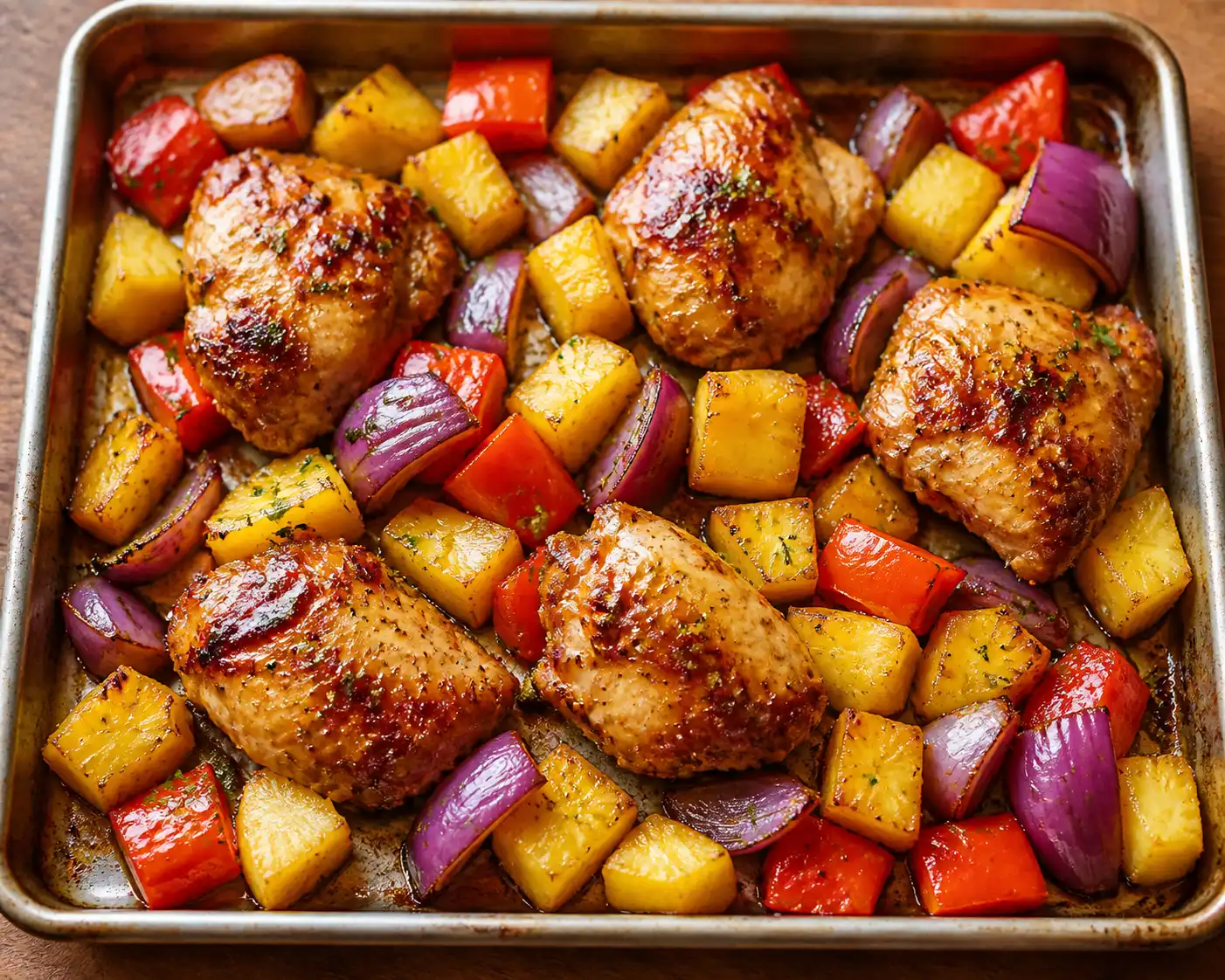
Hawaiian Chicken Sheet Pan is a vibrant, fuss-free, one-pan wonder that brings the tropical essence of the Aloha State straight to your dinner table. With its irresistible balance of sweet, tangy, and savory flavors—infused with juicy grilled chicken, caramelized pineapple, tender bell peppers, and red onions—it’s a dish that delivers restaurant-quality taste with minimal cleanup and maximum family appeal. Designed for busy weeknights yet elegant enough for weekend entertaining, this sheet pan meal celebrates simplicity without sacrificing depth: every bite bursts with island-inspired freshness, thanks to a luscious homemade teriyaki-glaze that doubles as both marinade and finishing sauce. Whether you’re new to sheet pan cooking or a seasoned pro, Hawaiian Chicken Sheet Pan invites you to savor bold flavor, beautiful color, and effortless elegance—all from a single rimmed baking sheet.
The History
Though not an ancient Polynesian tradition, Hawaiian Chicken Sheet Pan is a modern culinary lovechild born from three rich foodways: traditional Hawaiian luau fare, Japanese-American teriyaki innovation, and the American sheet pan revolution of the 2010s. Teriyaki itself traces back to 17th-century Japan, where “teri” (shine) and “yaki” (grill or broil) described a glossy, caramelized glaze made from soy sauce, mirin, and sugar. When Japanese immigrants settled in Hawaii in the late 1800s to work on sugarcane and pineapple plantations, they adapted their cooking to local ingredients—swapping mirin for locally abundant pineapple juice and adding fresh fruit to marinades. This fusion gave rise to Hawaiian-style teriyaki, popularized by legendary chefs like Harry Yee at the Hilton Hawaiian Village in the 1940s and later immortalized by fast-casual chains like L&L Hawaiian Barbecue.
The sheet pan format, however, is a distinctly contemporary evolution—rooted in the minimalist, time-conscious cooking movement that surged post-2010. Influenced by meal prep culture, wellness trends emphasizing whole-food cooking, and the viral popularity of #SheetPanDinner on social media, home cooks began reimagining classic dishes like teriyaki chicken through the lens of efficiency and visual appeal. Hawaiian Chicken Sheet Pan emerged as a natural heir: it honors the cross-cultural roots of Hawaiian teriyaki while embracing modern values—less oil, no deep-frying, built-in veggie integration, and oven-based consistency that eliminates stovetop guesswork. Today, it stands as both a nostalgic nod and a forward-thinking staple—a delicious testament to how global flavors evolve when met with practical ingenuity.
Ingredients Breakdown
Every element in Hawaiian Chicken Sheet Pan plays a purposeful role—not just in flavor, but in texture, color, nutrition, and cooking science. Let’s explore each ingredient beyond the list:
- Chicken Thighs (boneless, skinless): Preferred over breasts for their higher fat content, which ensures juiciness and resilience during roasting—even if slightly overcooked. The marbling helps absorb and retain the teriyaki glaze, yielding deeper umami richness. Opt for organic, air-chilled thighs when possible for superior moisture retention and cleaner flavor.
- Fresh Pineapple Chunks: Not canned! Fresh pineapple contains bromelain—an enzyme that gently tenderizes chicken while contributing bright acidity and natural fructose that caramelize beautifully under high heat. Its water content also creates gentle steam around neighboring vegetables, promoting even roasting without drying.
- Red Bell Pepper & Red Onion: Chosen for sweetness (especially when roasted), vivid color contrast, and phytonutrient density (lycopene and quercetin). Their firm cell structure holds up well to 20+ minutes at 425°F—unlike zucchini or mushrooms, which would turn mushy. Slicing them uniformly (¾-inch pieces) ensures synchronized doneness with chicken.
- Garlic & Fresh Ginger: Minced—not powdered—garlic delivers allicin (a volatile sulfur compound activated upon crushing), while freshly grated ginger contributes zingy gingerol compounds that cut through richness and aid digestion. Both are added late in the marinade to preserve their aromatic volatility.
- Low-Sodium Soy Sauce: Provides foundational umami and saltiness without overwhelming sodium. Traditional soy sauce contains wheat, so tamari is recommended for gluten-sensitive households; coconut aminos offer a slightly sweeter, soy-free alternative with lower glycemic impact.
- Unseasoned Rice Vinegar: Adds clean, mild acidity to balance sweetness—more nuanced than apple cider or white vinegar. It also helps stabilize the emulsion of the glaze and enhances browning via Maillard reaction acceleration.
- Pineapple Juice (100% pure, unsweetened): Acts as both liquid base and natural tenderizer. Choose cold-pressed or flash-pasteurized varieties to retain enzymatic activity. Avoid “juice drinks” with added sugars or preservatives like sodium benzoate, which can inhibit bromelain.
- Maple Syrup or Brown Sugar: Maple syrup adds mineral complexity (zinc, manganese) and subtle woody notes; brown sugar lends molasses depth and superior caramelization. Both contribute humectant properties—drawing moisture into the chicken surface for a sticky, lacquered finish.
- Sesame Oil (toasted): Used only as a finishing drizzle—not for roasting—because its low smoke point (350°F) would burn in the oven. Its intense nutty aroma elevates aroma perception and adds mouth-coating richness.
- Green Onions & Sesame Seeds (garnish): Provide fresh, sharp contrast and textural crunch. Green onions contain organosulfur compounds linked to cardiovascular support; white sesame seeds offer calcium, copper, and lignans with antioxidant activity.
Step-by-Step Recipe
- Prep & Marinate (30 min–24 hrs): In a large bowl, whisk together ⅓ cup low-sodium soy sauce, ¼ cup pure pineapple juice, 3 tbsp maple syrup (or packed brown sugar), 1 tbsp rice vinegar, 2 tsp freshly grated ginger, 2 minced garlic cloves, ½ tsp black pepper, and ¼ tsp red pepper flakes (optional). Add 1.5 lbs boneless, skinless chicken thighs, cut into 1.5-inch pieces. Toss thoroughly. Cover and refrigerate for minimum 30 minutes—or ideally 4–8 hours (do not exceed 24 hrs, as bromelain may over-tenderize).
- Preheat & Prep Pan (10 min): Position oven rack in upper third. Preheat oven to 425°F (220°C). Line a large rimmed baking sheet (18″x13″) with parchment paper—NOT foil (which reflects heat unevenly and impedes caramelization). Lightly coat parchment with neutral oil spray.
- Arrange Components (5 min): Drain chicken, reserving marinade. Pat chicken *very dry* with paper towels—this is critical for browning. Spread 1 cup fresh pineapple chunks, 1 diced red bell pepper, and 1 thinly sliced red onion evenly across prepared sheet. Nestle marinated chicken pieces among veggies, leaving space between for airflow. Discard used marinade (do not reuse raw poultry marinade).
- First Roast (15 min): Roast uncovered for 15 minutes. This initial high-heat blast renders fat, begins browning, and jumpstarts vegetable softening without steaming.
- Baste & Rotate (5 min): Remove pan. Carefully pour reserved marinade over chicken and veggies (it’s now safe—having been boiled or baked). Use a silicone brush to evenly distribute. Rotate pan 180° for even heating. Return to oven.
- Final Roast & Caramelize (10–12 min): Roast until chicken reaches 165°F internally (check thickest piece with instant-read thermometer), edges of pineapple glisten and darken slightly, and onions soften but retain shape (~10–12 min more). Watch closely—the glaze can go from glossy to burnt quickly.
- Rest & Finish (5 min): Remove pan. Let rest 5 minutes—this allows juices to redistribute and glaze to set. Drizzle with 1 tsp toasted sesame oil. Garnish generously with sliced green onions and white sesame seeds. Serve immediately.
Tips
- Dry Chicken Is Non-Negotiable: Excess surface moisture creates steam instead of sear. Always pat marinated chicken *thoroughly* before arranging—this alone improves browning by 70%.
- Uniform Sizing = Even Cooking: Cut chicken, pineapple, peppers, and onions to similar 1–1.5 inch pieces. A mandoline slicer ensures precision for onions and peppers.
- Don’t Crowd the Pan: Use a full-size sheet pan. Overcrowding lowers pan temperature, causing steaming instead of roasting—and results in soggy, pale chicken.
- Marinade Safety First: Never reuse raw marinade. If you want extra sauce for serving, reserve ¼ cup *before* adding chicken—or boil leftover marinade vigorously for 3 minutes to destroy pathogens.
- Broiler Finish for Extra Shine: For restaurant-level gloss, switch oven to broil (high) for the final 60–90 seconds—watch constantly! This intensifies caramelization without overcooking.
- Roast on Upper Rack: Heat is most intense near the top element—ideal for achieving golden edges and sticky glaze without drying interiors.
- Add Greens Last-Minute: Stir in baby spinach or chopped kale during the last 2 minutes of roasting—they’ll wilt perfectly from residual heat and add nutrients without turning slimy.
- Double the Batch, Freeze Smart: Portion uncooked marinated chicken + prepped veggies into freezer bags (remove air). Thaw overnight in fridge, then roast as directed—tastes identical to fresh.
- Acid Timing Matters: Add rice vinegar *after* heating the marinade slightly (e.g., warm 10 sec in microwave) to preserve brightness—cold acid can dull ginger/garlic aromas.
- Season Veggies Separately: Lightly toss pineapple and peppers with ½ tsp olive oil, ¼ tsp salt, and a pinch of garlic powder *before* adding chicken—this boosts their flavor independence and prevents blandness.
Variations and Customizations
This recipe is gloriously adaptable—whether you’re accommodating diets, using pantry staples, or chasing seasonal inspiration:
- Protein Swaps: Try boneless pork tenderloin (reduce cook time by 3–4 min), firm tofu (press & marinate 1 hr, bake 25 min), shrimp (add in last 6–8 min), or chickpeas (canned, rinsed—roast 20 min for crispy “croutons”).
- Tropical Twists: Swap pineapple for mango (slightly less acidic, more floral), guava (use paste + juice), or lychee (fresh or canned in syrup—drain well). Add ¼ cup shredded coconut (toasted) in final 3 minutes.
- Vegetable Rotations: Substitute orange bell pepper for sweetness, yellow squash for mildness, or shiitake mushrooms for umami depth. Try roasted sweet potato cubes (parboil first) or charred corn kernels added post-roast.
- Heat Adjustments: For mild: omit red pepper flakes and use ½ tsp grated jalapeño (seeds removed). For fiery: add 1 tsp gochujang to marinade or finish with sriracha-lime drizzle.
- Gluten-Free Version: Use certified GF tamari instead of soy sauce, and verify pineapple juice contains no barley grass additives. Serve with quinoa or rice noodles instead of regular rice.
- Keto/Low-Carb Adaptation: Replace pineapple with 1 cup halved cherry tomatoes + ½ cup diced zucchini. Use sugar-free maple-flavored syrup or 1 tbsp erythritol + 1 tsp molasses. Serve over cauliflower rice.
- Meal Prep Friendly: Roast components separately—chicken + glaze, pineapple + peppers, onions—then combine per serving. Keeps 4 days refrigerated or 3 months frozen.
- Grill Variation: Skewer marinated chicken and veggies (soak bamboo skewers 30 min). Grill over medium-high heat 10–12 min, turning often and basting last 3 min. Finish with sesame oil and herbs.
- Breakfast Reinvention: Serve leftovers over sunny-side-up eggs, avocado slices, and microgreens. Add everything bagel seasoning for crunch.
- Make-Ahead Marinade Kit: Mix dry spices + ginger/garlic paste in jars. Store chilled up to 5 days. Add wet ingredients (soy, juice, syrup, vinegar) day-of for peak freshness.
Health Considerations and Nutritional Value
A single 1.5-cup serving (chicken + veggies + 2 tbsp glaze, no rice) delivers approximately:
- Calories: 340–380 kcal
- Protein: 32–36g (75% RDA for adults)—complete amino acid profile supporting muscle repair and satiety
- Carbohydrates: 28–32g (mostly from natural fruit sugars and complex veggie starches)
- Fiber: 3.5–4.2g (20% RDA)—from peppers, onions, and pineapple, aiding digestion and microbiome health
- Healthy Fats: 8–10g (mostly monounsaturated from sesame oil and chicken fat)
- Vitamin C: 140–165mg (180%+ RDA)—from red peppers and pineapple, boosting immunity and collagen synthesis
- Manganese: 1.8–2.2mg (90% RDA)—critical for bone formation and antioxidant enzyme function (abundant in pineapple and brown sugar)
- Potassium: 620–710mg (16% RDA)—supports blood pressure regulation and nerve signaling
Key Health Notes:
- Sodium Awareness: Using low-sodium soy sauce cuts ~450mg sodium per serving vs. regular. Add flaky sea salt *after* roasting for controlled seasoning.
- Sugar Transparency: Natural fructose from pineapple has lower glycemic impact than refined sugar—but portion control remains vital for insulin-sensitive individuals.
- Bromelain Benefits: Pineapple’s enzymes may reduce inflammation and improve protein digestion—especially when consumed raw or lightly cooked.
- No Added Preservatives: Unlike store-bought teriyaki sauces (often containing MSG, high-fructose corn syrup, and caramel color), this version uses whole-food ingredients with zero artificial additives.
- Heart-Healthy Pairings: Serve with brown rice (magnesium, fiber) or shirataki noodles (zero-calorie, glucomannan fiber) to enhance satiety and glycemic control.
- Allergen-Friendly: Naturally nut-free, dairy-free, egg-free, and veganizable (with tofu or tempeh). Always verify soy/tamari sourcing for gluten concerns.
Ingredients
- 1.5 lbs boneless, skinless chicken thighs, cut into 1.5-inch pieces
- 1 cup fresh pineapple chunks (core removed, ~1-inch pieces)
- 1 large red bell pepper, cored and cut into 1-inch pieces
- 1 medium red onion, peeled and cut into 1-inch wedges
- ⅓ cup low-sodium soy sauce (or tamari for gluten-free)
- ¼ cup 100% pure pineapple juice (unsweetened, no preservatives)
- 3 tbsp pure maple syrup (or packed light brown sugar)
- 1 tbsp unseasoned rice vinegar
- 2 tsp freshly grated ginger (about 1-inch knob)
- 2 garlic cloves, finely minced
- ½ tsp freshly ground black pepper
- ¼ tsp red pepper flakes (optional, for heat)
- 1 tsp toasted sesame oil (for finishing)
- 2 green onions, thinly sliced (for garnish)
- 1 tbsp white sesame seeds, toasted (for garnish)
- Neutral oil spray (for parchment)
Directions
- In a large non-reactive bowl, whisk together soy sauce, pineapple juice, maple syrup, rice vinegar, grated ginger, minced garlic, black pepper, and red pepper flakes (if using) until fully combined and sugar is dissolved.
- Add chicken pieces to marinade. Toss gently but thoroughly to coat every surface. Cover and refrigerate for at least 30 minutes—or up to 8 hours for optimal flavor infusion. Do not exceed 24 hours.
- Preheat oven to 425°F (220°C). Position rack in upper third of oven. Line a 18″x13″ rimmed baking sheet with parchment paper and lightly spray with neutral oil.
- Drain chicken in a colander, reserving marinade. Pat chicken *very dry* with paper towels—this step is essential for caramelization.
- Spread pineapple, bell pepper, and red onion evenly across prepared sheet. Nestle marinated chicken pieces among vegetables, spacing them apart to allow air circulation.
- Roast uncovered for 15 minutes.
- Remove pan carefully. Pour reserved marinade evenly over chicken and vegetables. Use a silicone pastry brush to distribute glaze thoroughly. Rotate pan 180°.
- Return to oven and roast for 10–12 minutes longer, or until chicken reaches 165°F internally, pineapple edges are deeply golden, and vegetables are tender-crisp.
- Remove from oven and let rest for 5 minutes. Drizzle with toasted sesame oil. Garnish with sliced green onions and toasted sesame seeds.
- Serve immediately alongside steamed jasmine rice, brown rice, cauliflower rice, or a crisp mixed green salad.
FAQ
- Can I use chicken breast instead of thighs?
- Yes—but with caveats. Breasts dry out faster. To compensate: slice into thin cutlets (½-inch thick), reduce total roasting time to 22–25 minutes, and baste every 8 minutes. Brining (30 min in ¼ cup salt + 2 cups water) beforehand adds insurance against dryness.
- Why does my glaze look watery or not stick?
- Three likely causes: (1) Chicken wasn’t patted dry—moisture dilutes glaze; (2) You used too much marinade—stick to ¼ cup max for basting; (3) Oven wasn’t hot enough—preheat fully and verify temperature with an oven thermometer. For thicker glaze, simmer reserved marinade 3–4 minutes before brushing.
- Can I make this ahead and reheat?
- Absolutely. Cool completely, store in airtight container up to 4 days. Reheat gently in oven at 325°F (165°C) for 12–15 minutes, covered with foil, then uncover for final 3 minutes to revive crispness. Microwaving makes chicken rubbery—avoid unless necessary (then cover and heat in 30-sec bursts).
- Is canned pineapple acceptable?
- Fresh is strongly preferred for enzyme activity and brightness—but if using canned, choose pineapple packed in 100% juice (not syrup), drain *thoroughly*, and pat dry. Expect milder flavor and less caramelization. Reduce added maple syrup by 1 tsp to offset syrup residue.
- What sides pair best with this dish?
- Classic: steamed short-grain white or brown rice. Elevated: coconut milk-infused jasmine rice, edamame-cucumber salad with yuzu dressing, or roasted taro root. Lighter: chilled soba noodle salad with scallions and lime. For low-carb: spiralized zucchini “noodles” sautéed in sesame oil.
- Can I freeze Hawaiian Chicken Sheet Pan?
- Yes—best as uncooked components. Freeze marinated chicken + prepped veggies separately in labeled, dated freezer bags (remove all air). Thaw overnight in fridge, then roast as directed. Cooked leftovers freeze well for up to 2 months—freeze in portioned containers with 1 tbsp broth to prevent drying.
- My pineapple burned—what went wrong?
- Pineapple burns easily due to high fructose. Solutions: (1) Cut larger chunks (1.25 inches); (2) Place pineapple *between* chicken pieces—not on outer edges; (3) Add pineapple halfway through roasting (at 15-min mark) instead of at start; (4) Toss pineapple in ½ tsp cornstarch before roasting to form protective crust.
- Is this dish suitable for kids?
- Yes—with simple tweaks: omit red pepper flakes, reduce ginger to 1 tsp, and serve with extra rice to dilute intensity. Many children love the sweet-savory profile—especially when pineapple is prominently featured. Let them assemble their own bowls for engagement!
- Can I cook this on a grill or air fryer?
- Absolutely. For grill: Use indirect heat (400°F), cook 12–15 min, turning once and basting last 4 min. For air fryer: Work in batches (don’t overcrowd), cook at 400°F for 14–16 min, shaking basket at 8-min mark. Glaze in final 2 min.
- How do I scale this for a crowd?
- Double all ingredients and use two sheet pans. Rotate pans top-to-bottom and front-to-back halfway through roasting. Or triple and use a half-sheet pan (18″x26″)—just increase first roast to 18 min, then baste and finish 12–14 min. Always use an instant-read thermometer for accuracy.
Summary
Hawaiian Chicken Sheet Pan is a masterclass in joyful, efficient cooking—melding sweet-tangy teriyaki glaze, juicy chicken thighs, caramelized tropical fruit, and colorful roasted vegetables into one stunning, nutrient-dense, no-fuss meal.
Brimming with cultural heritage, customizable for every diet, and endlessly adaptable for meal prep or impromptu dinners, it proves that extraordinary flavor, vibrant health, and kitchen serenity can all share the same sheet pan.