
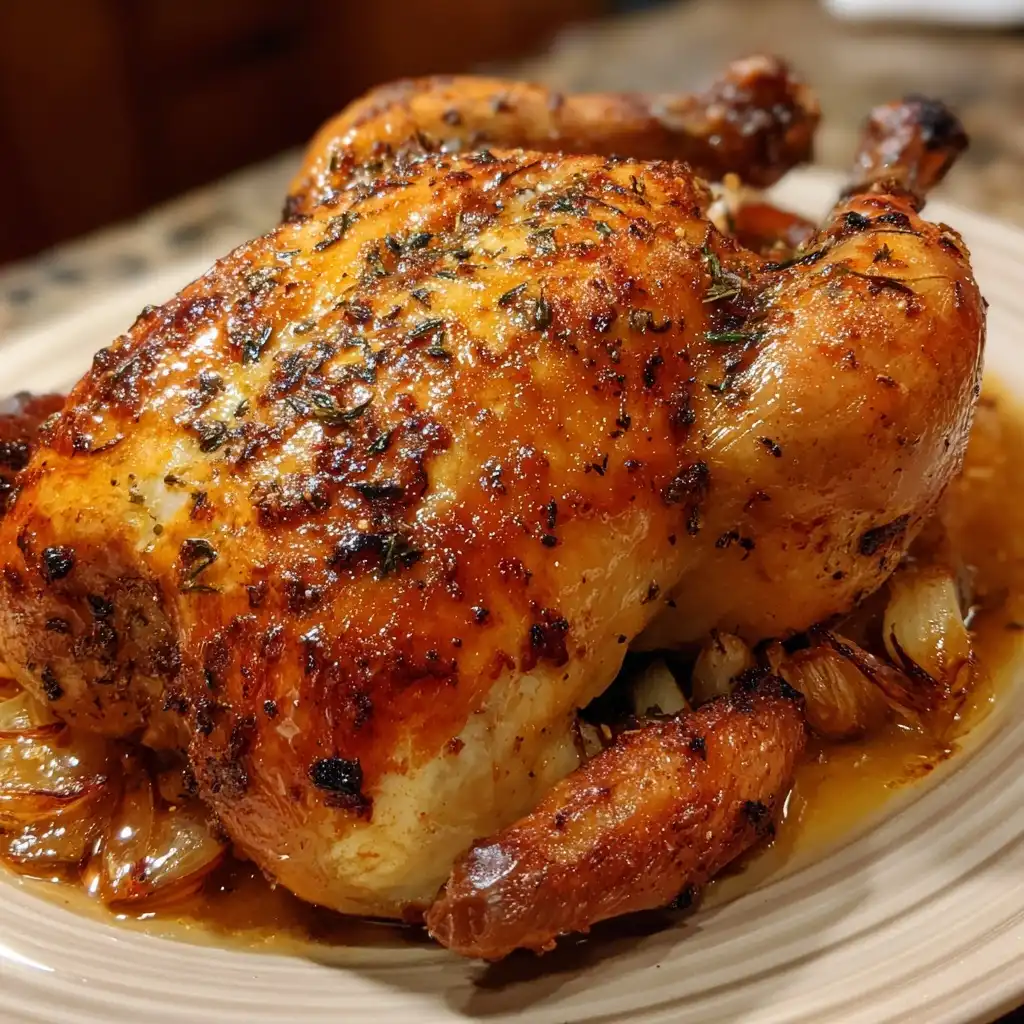
Introduction
There are few dishes as universally beloved, deeply comforting, and culinarily foundational as the Classic Roast Chicken. More than just a meal, it’s a ritual — a centerpiece that brings families together, a canvas for seasonal ingredients, and a benchmark by which home cooks measure their skill and confidence in the kitchen. Its golden, crackling skin, tender and succulent meat infused with aromatic herbs and natural juices, and the rich, savory aroma that fills the entire house evoke nostalgia, warmth, and timeless tradition. Whether served on a Sunday supper table, carved at a holiday gathering, or repurposed into next-day soups, sandwiches, and salads, roast chicken is the ultimate expression of simplicity elevated through technique, patience, and respect for quality ingredients. This guide is not merely a recipe — it’s an immersive exploration of everything that makes this dish endure across generations and cultures.
The History
The history of roasted chicken stretches back millennia, deeply rooted in human civilization’s earliest domestication of fowl. Chickens were first domesticated in Southeast Asia around 8,000–10,000 years ago, likely from the red junglefowl (Gallus gallus), and quickly spread along trade routes to India, the Middle East, and eventually Europe. By the time of ancient Rome, chickens were prized not only for eggs but also for roasting — Roman cookbooks such as Apicius (1st century CE) include instructions for roasting poultry with honey, garum (fermented fish sauce), and herbs like lovage and pennyroyal. In medieval Europe, whole roasted birds were central to feasts among nobility, often presented with gilded beaks and elaborate sauces. However, it wasn’t until the 19th and early 20th centuries — with advances in poultry farming, refrigeration, and oven technology — that roast chicken became truly accessible to middle- and working-class households. Julia Child’s iconic demonstration of “Roast Chicken with Herbs” on The French Chef in 1963 helped cement its status as an essential American culinary skill. Today, variations abound globally — from Moroccan lemon-and-olive versions and Chinese five-spice renditions to Peruvian pollo a la brasa and French poulet rôti aux herbes — yet the core principles remain unchanged: proper seasoning, controlled heat, resting, and reverence for the bird itself.
Ingredients Breakdown
While minimal in number, each ingredient in a classic roast chicken plays a precise, synergistic role in building flavor, texture, and moisture. Understanding their function transforms rote cooking into intentional artistry:
- Whole Chicken (3.5–4.5 lbs / 1.6–2 kg): Opt for air-chilled, pasture-raised, or organic birds when possible — they yield superior flavor, firmer texture, and richer fat. A medium-sized bird ensures even cooking; too small risks drying out, too large may result in uneven doneness. Look for pale pink, firm flesh, clean scent (no ammonia or sulfur notes), and supple, unblemished skin.
- Kosher Salt: Preferred over table salt for its larger crystals and absence of anti-caking agents. It seasons deeply without oversalting and aids in drying the skin for crispness. Salting ahead (dry-brining) — ideally 12–48 hours before roasting — allows salt to penetrate muscle fibers, enhancing juiciness and seasoning throughout.
- Freshly Ground Black Pepper: Adds subtle heat and aromatic complexity. Always grind whole peppercorns just before use for maximum volatile oil release and pungency.
- Unsalted Butter (¼–½ cup / 60–115 g): Acts as both flavor carrier and moisture insulator. Clarified butter or compound herb butter (see Variations) can elevate richness and aroma. Butter under the skin lubricates breast meat, slows surface evaporation, and promotes browning.
- Fresh Aromatics (Onion, Garlic, Lemon, Herbs): These are not mere garnishes — they are steam-infused flavor engines. Quartered yellow onion adds sweetness and depth; smashed garlic cloves release allicin and mellow caramelized notes; halved lemons contribute acidity and citrus oils that brighten richness and prevent greasiness; fresh thyme, rosemary, and sage offer earthy, camphorous, and minty top notes that harmonize with poultry fat.
- Olive Oil or Avocado Oil (1–2 tbsp): Used sparingly for high-heat searing and surface sheen. Avocado oil is preferred for its higher smoke point (~520°F/271°C), ensuring stable browning without bitter compounds.
- Chicken Stock or Dry White Wine (¼ cup, optional but recommended): Added to the roasting pan to create a flavorful base for pan drippings and future gravy. Prevents scorching of fond and contributes gelatinous body and umami.
Crucially, no water is needed — the chicken itself contains ~70% water, and adding liquid steams rather than roasts, compromising skin texture.
Step-by-Step Recipe
- Prep the Bird (Day Before or Morning Of): Remove chicken from packaging; pat *extremely* dry inside and out using triple-layered paper towels — moisture is the enemy of crisp skin. Trim excess fat from neck and cavity. Optional but transformative: dry-brine by rubbing 1 tbsp kosher salt evenly over all surfaces (including under wings and legs, inside cavity); refrigerate uncovered on a wire rack set over a baking sheet for 12–48 hours. This dehydrates the skin while seasoning deeply.
- Bring to Room Temperature (1–1.5 Hours Before Roasting): Remove chicken from fridge and let sit, uncovered, on the counter. This equalizes internal temperature, ensuring uniform cooking — cold centers won’t overcook outer meat trying to reach safe temp.
- Preheat Oven & Prepare Pan: Position rack in lower third of oven. Preheat to 425°F (220°C) convection or 450°F (230°C) conventional for at least 30 minutes. Use a heavy-duty, rimmed stainless steel or enameled cast-iron roasting pan — avoid nonstick (can’t withstand high heat) or flimsy aluminum (warps, conducts poorly).
- Season & Aromatize: Pat skin *again* with fresh paper towels until squeaky-dry. In a small bowl, mash softened unsalted butter with 1 tsp black pepper, 1 tbsp finely chopped fresh thyme, 1 tsp minced rosemary, and 1 minced garlic clove. Gently loosen skin over breasts and thighs using fingers (don’t tear); rub ¾ of herb butter directly onto meat. Reserve remainder. Season cavity generously with salt and pepper; stuff with 1 quartered onion, 4 smashed garlic cloves, 1 halved lemon (squeezed over bird first), and remaining herbs.
- Truss for Even Cooking: Use 100% cotton kitchen twine to truss: tie legs together at ankles, then loop twine around wingtips and pull snugly to body. This promotes compact shape, minimizes exposed surface area, and prevents wingtips from burning.
- Rub & Roast: Rub exterior lightly with oil. Place chicken breast-side up on a V-rack inside roasting pan (elevates bird, allowing hot air circulation). Pour ¼ cup stock or wine into pan bottom (not under bird). Roast uncovered for 20 minutes at 450°F to jumpstart browning.
- Reduce Heat & Continue Roasting: Lower oven to 375°F (190°C). Roast 45–65 more minutes (depending on weight), rotating pan halfway through. Baste *only once*, gently, with pan juices at 30-minute mark — excessive basting cools oven and softens skin.
- Check Doneness Accurately: Insert an instant-read thermometer into thickest part of thigh (avoiding bone): target 165°F (74°C). Breast should read 160°F (71°C) — carryover cooking will raise it. Juices should run clear, not pink. Leg should wiggle freely in socket.
- Rest Religiously: Transfer chicken to cutting board; tent *loosely* with foil (never tight — traps steam and sogs skin). Rest 30–45 minutes. This allows muscle fibers to relax and reabsorb juices — skipping this step forfeits up to 30% of moisture.
- Carve & Serve: Using a sharp chef’s knife, remove legs/thighs, then breasts, slicing against the grain. Arrange on warmed platter. Spoon warm pan drippings over meat. Garnish with fresh herbs and lemon wedges.
Tips
- Skin-Crisping Science: Crispness hinges on three factors: surface dryness (pat *twice*), high initial heat (Maillard reaction), and fat rendering (butter under skin + adequate roasting time). Never cover during roasting — steam is the archenemy.
- Oven Thermometer Essential: Built-in oven thermostats are notoriously inaccurate (+/- 25°F). A standalone oven thermometer prevents under- or over-roasting.
- Rotate, Don’t Flip: Rotating the pan ensures even heat exposure; flipping the bird disrupts collagen structure and causes juice loss.
- Resist the Poke: Probing repeatedly with a fork or thermometer releases precious juices. Use one precise, final check.
- Pan Placement Matters: Roasting on a low rack ensures proximity to heating element for optimal browning; too high = pale, steamed skin.
- Crisp Leftovers: Reheat slices in a skillet over medium heat with a splash of broth — skin regains crunch better than in oven or microwave.
- Save Every Bit: Freeze neck, giblets (except liver), and carcass for rich stock. Simmer 12+ hours with onions, carrots, celery, herbs, and peppercorns for golden, collagen-rich broth.
- Butter Temperature: Use butter just soft enough to spread — cold butter won’t adhere; melted butter pools and steams.
- Herb Timing: Add delicate herbs (parsley, chives, basil) *after* roasting for brightness; woody herbs (rosemary, thyme, sage) go in *before* for heat-stable flavor.
- Acid Balance: A final squeeze of lemon or drizzle of sherry vinegar just before serving cuts richness and lifts flavors profoundly.
Variations and Customizations
The beauty of roast chicken lies in its adaptability. Here are thoughtfully curated variations — each preserving structural integrity while honoring regional authenticity and modern dietary preferences:
- Mediterranean Herb-Roasted: Replace thyme/rosemary with 2 tbsp za’atar, 1 tsp sumac, and ¼ cup crumbled feta tucked under skin. Add sliced Kalamata olives and cherry tomatoes to roasting pan.
- Lemon-Garlic Provencal: Use 4 garlic heads (cut horizontally), 3 lemons (2 halved, 1 zested), and ¼ cup olive oil infused with 2 tbsp fresh tarragon. Deglaze pan with dry vermouth for gravy.
- Smoky Paprika & Cumin (Spanish-Inspired): Rub skin with 2 tsp smoked paprika, 1 tsp ground cumin, 1 tsp garlic powder, and 1 tbsp sherry vinegar. Finish with pickled red onions and romesco sauce.
- Asian Five-Spice & Ginger: Dry-brine with 1 tbsp five-spice powder + 2 tsp brown sugar. Stuff cavity with 1-inch ginger coins, scallions, and star anise. Glaze last 10 mins with hoisin-mirin mixture.
- Herb-Crusted (Gluten-Free Breadcrumb Alternative): Pulse 1 cup roasted almonds, 2 tbsp grated Parmesan, 2 tbsp fresh parsley, and 1 tsp lemon zest; press onto buttered skin before roasting.
- Low-and-Slow Crispy Skin (For Tender Meat Lovers): Roast at 275°F for 3–4 hours until internal temp hits 155°F, then crank to 500°F for 10–15 mins to blister skin. Yields ultra-tender, fall-off-the-bone texture with incredible crunch.
- Dairy-Free/Vegan “Roast”: While not chicken, a whole roasted cauliflower rubbed with nutritional yeast, turmeric, smoked salt, and miso paste delivers umami depth and impressive presentation for plant-based guests.
- Brined & Beer-Can Style (Grill Variation): Wet-brine 8–12 hours in 1 qt water + ½ cup salt + ¼ cup brown sugar + aromatics. Grill over indirect heat with half-full lager can inserted into cavity — stabilizes bird and steams gently.
- Spiced Honey-Glazed (Sweet & Savory): In final 15 minutes, brush skin with mixture of 3 tbsp honey, 1 tbsp Dijon, 1 tsp chipotle powder. Broil 2 mins for glossy, caramelized finish.
- Keto-Friendly Crispy Skin Emphasis: Eliminate all sugars; use duck fat instead of butter; increase salt; extend resting to 45 mins; serve with roasted brassicas and garlic aioli.
Health Considerations and Nutritional Value
A 3.5-oz (100g) serving of roasted chicken breast (skinless) provides approximately 165 calories, 31g high-quality complete protein (containing all 9 essential amino acids), 3.6g total fat (1g saturated), and zero carbohydrates — making it ideal for low-carb, high-protein, and gluten-free diets. Dark meat (thigh/drumstick) offers more iron, zinc, and B-vitamins (especially B12 and niacin) but contains slightly more fat and calories (~170–200 cal per 100g, depending on skin inclusion). The skin itself contributes ~40% of total calories but also delivers fat-soluble vitamins (A, D, E, K) and flavor compounds that enhance satiety and nutrient absorption — moderate consumption is nutritionally sound. Sodium content varies significantly based on brining: dry-brined chicken averages 250–350mg sodium per serving, well within FDA daily limits (2,300mg), whereas commercial pre-brined birds can exceed 600mg. Health-conscious adaptations include using herbs/spices instead of salt for flavor, substituting avocado oil for butter to reduce saturated fat, and pairing with fiber-rich vegetables (roasted Brussels sprouts, kale, sweet potatoes) to balance glycemic load and support gut health. Notably, pasture-raised chickens show higher omega-3 fatty acid ratios and vitamin E levels versus conventionally raised. For those managing cholesterol, removing skin reduces saturated fat by ~50%; however, recent research (American Heart Association, 2021) indicates dietary cholesterol has less impact on serum cholesterol than previously believed — saturated fat and refined carbohydrate intake are now considered greater modifiable risk factors. As always, portion control, variety, and overall dietary pattern matter more than any single food.
Ingredients
- 1 whole chicken (3.5–4.5 lbs / 1.6–2 kg), air-chilled preferred
- 1 tbsp kosher salt (plus more for cavity)
- 1 tbsp freshly ground black pepper (divided)
- ½ cup (115g) unsalted butter, softened
- 2 tbsp fresh thyme leaves, finely chopped
- 1 tbsp fresh rosemary, finely minced
- 1 tsp fresh sage, finely minced
- 2 garlic cloves, minced
- 1 medium yellow onion, quartered
- 4 garlic cloves, smashed with side of knife
- 1 lemon, halved (juice reserved)
- 2 tbsp extra-virgin olive oil or avocado oil
- ¼ cup low-sodium chicken stock or dry white wine
- Fresh thyme sprigs and lemon wedges, for garnish
Directions
- At least 12 hours before roasting, pat chicken *extremely* dry inside and out with paper towels. Rub 1 tbsp kosher salt evenly over entire surface, including under wings, between legs, and inside cavity. Place on a wire rack over a baking sheet, uncovered, in refrigerator for 12–48 hours.
- 1–1.5 hours before roasting, remove chicken from fridge. Pat skin *again* until completely dry. Let sit at room temperature.
- Preheat oven to 450°F (230°C) with rack in lower third. Place heavy roasting pan inside to heat.
- In a bowl, combine softened butter, 1 tsp black pepper, thyme, rosemary, sage, and minced garlic. Gently loosen skin over breasts and thighs; rub ¾ of butter mixture directly onto meat. Reserve remainder.
- Season cavity with additional salt and ½ tsp pepper. Stuff with onion quarters, smashed garlic, lemon halves (squeezed over bird first), and herb sprigs.
- Truss chicken securely with cotton twine. Rub exterior with oil. Place on V-rack in preheated roasting pan. Pour stock or wine into pan bottom.
- Roast at 450°F for 20 minutes. Reduce heat to 375°F (190°C). Roast 45–65 minutes more, rotating pan halfway, until thigh registers 165°F and breast 160°F on instant-read thermometer.
- Transfer chicken to cutting board; loosely tent with foil. Rest 30–45 minutes.
- Carve: remove legs/thighs, then slice breasts crosswise. Serve with pan drippings, garnished with fresh herbs and lemon.
FAQ
- Can I roast chicken without a rack?
- Yes, but not ideally. Without elevation, the underside steams in its juices, yielding soggy skin and uneven browning. If no rack, place chicken atop thickly sliced onions or carrots — they lift the bird *and* become delicious roasted vegetables.
- Why does my chicken skin never get crispy?
- Three primary causes: insufficient drying (pat *twice*), low oven temp or overcrowded oven (prevents airflow), or covering during roasting. Also, wet brines or marinades inhibit crisping — dry-brining is superior.
- Can I use frozen chicken?
- Only if fully thawed in refrigerator (24–48 hours). Never roast partially frozen — unsafe and uneven. Thawed birds must be patted *extra* dry due to ice crystal moisture.
- What’s the best way to store leftovers?
- Remove meat from bones within 2 hours of cooking. Store in airtight container with some pan juices for moisture. Refrigerate up to 4 days or freeze up to 4 months. Freeze broth separately in ice cube trays for easy portioning.
- Can I make gravy from the pan drippings?
- Absolutely. After removing chicken, pour off excess fat, leaving 2–3 tbsp. Whisk in 2 tbsp all-purpose flour (or gluten-free alternative) over medium heat for 1 minute. Gradually whisk in 1.5 cups warm stock, scraping up browned bits. Simmer 5–8 minutes until thickened. Strain and season.
- Is it safe to stuff the chicken cavity?
- Yes — *if* the stuffing is cooked separately and added just before roasting (not raw), and the chicken reaches 165°F *in the stuffing*. For safety and even cooking, we recommend aromatics-only stuffing (onion, lemon, herbs) and serving dressing/cornbread separately.
- My chicken cooked faster/slower than expected. Why?
- Oven variance, starting temperature (cold vs. room-temp bird), altitude (higher = longer cook time), and chicken density (pasture-raised birds may have denser muscle) all affect timing. Always rely on thermometer, not clock.
- Can I roast two chickens at once?
- Yes — but ensure space between them for airflow. Rotate pans halfway and add 10–15 minutes to total time. Avoid stacking or crowding the oven.
- What sides pair best with roast chicken?
- Classic pairings include garlic mashed potatoes, roasted root vegetables (carrots, parsnips, potatoes), sautéed green beans with almonds, crusty bread for sopping, and simple arugula salad with lemon vinaigrette. For lighter options: quinoa pilaf, farro with roasted grapes, or massaged kale salad.
- How do I know if my chicken is done without a thermometer?
- While thermometers are safest, visual cues include: leg joints moving easily, clear (not pink) juices when pierced in thigh, and meat pulling away from drumstick bone. However, color alone is unreliable — undercooked poultry can appear white, and overcooked can appear pink near bones due to myoglobin reactions.
Summary
A perfectly roasted chicken is the triumphant intersection of science, patience, and soul — where dry-brining transforms texture, high-heat searing triggers Maillard magic, and unhurried resting ensures every bite bursts with succulence.
It’s not just dinner; it’s heritage on a platter, adaptable to every pantry, season, and celebration — a humble bird, gloriously elevated by time-honored care and uncompromising attention to detail.