
Introduction
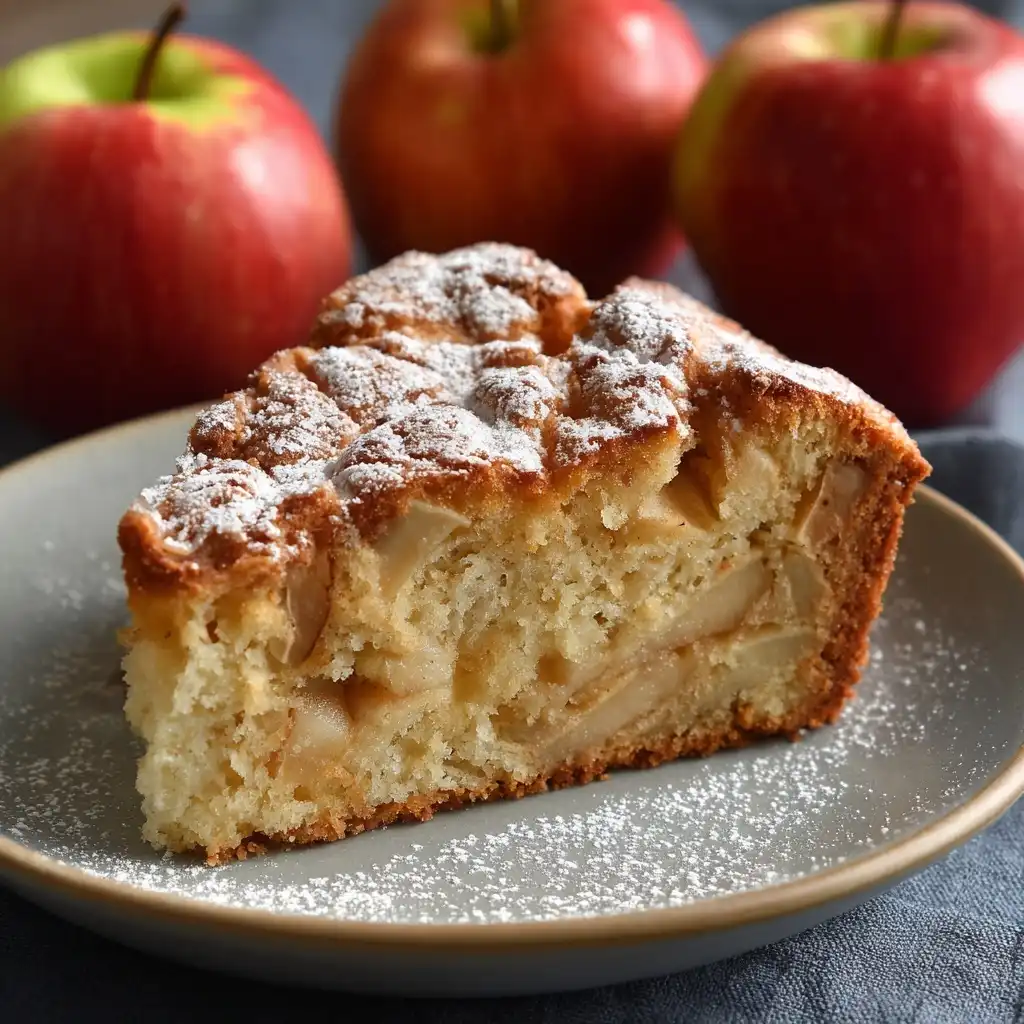
Grandma’s Fresh Apple Dapple Cake is more than just a dessert—it’s a warm, fragrant embrace from the past. This beloved classic evokes memories of sun-dappled kitchens, cinnamon-scented autumn afternoons, and the comforting clink of a wooden spoon against a well-loved mixing bowl. Unlike dense, overly sweet commercial cakes, this version celebrates simplicity, seasonal abundance, and soul-deep nourishment. Every bite delivers tender crumb, juicy bursts of real apple, subtle spice warmth, and that signature “dapple” effect—where caramelized apple pieces peek through golden batter like sunlit patches in an orchard grove. Whether served with a scoop of vanilla bean ice cream on a crisp October evening or wrapped in parchment for a neighbor’s birthday, this cake carries generations of quiet wisdom: that the best recipes aren’t written in grams or precise timings—but in love, intuition, and the willingness to peel one more apple.
The History
The origins of Apple Dapple Cake stretch back to late 19th- and early 20th-century American farmhouse baking traditions—particularly across New England, the Midwest, and Appalachia—where resourceful home bakers transformed humble, storied ingredients into deeply satisfying treats. The name “Dapple” is believed to derive from the Old English word *dæppel*, meaning “mottled” or “spotted,” referencing the visual contrast between light cake batter and darker, spiced apple pieces suspended throughout—like dappled light filtering through autumn trees. Early versions appeared in community cookbooks such as the 1912 *Ladies’ Aid Society of St. Luke’s Lutheran Church* collection and the 1934 *Farm Journal’s Tested Recipes*, often listed simply as “Apple Spice Loaf” or “Orchard Cake.” What distinguishes Grandma’s iteration is her insistence on using freshly pressed apple cider in place of water or milk—a technique passed down from her Pennsylvania Dutch grandmother—and the inclusion of a secret splash of Calvados (apple brandy) in the glaze, added “just before the oven door closed, so the angels could carry the aroma upstairs.” Over decades, this cake became the unofficial centerpiece of harvest festivals, church suppers, and Thanksgiving open houses—its recipe scribbled on index cards stained with butter, brown sugar, and time.
Ingredients Breakdown
Every ingredient in Grandma’s Apple Dapple Cake plays a purposeful, synergistic role—not merely as flavor carriers, but as functional agents that shape texture, moisture retention, leavening balance, and shelf life. Below is a meticulous, chef-level analysis:
- Apples (4–5 medium, ~2¼ lbs): Granny Smith provides tart backbone and structural integrity; Honeycrisp adds floral sweetness and juiciness; Braeburn contributes spicy depth and holds shape during baking. Peeled, cored, and cut into ½-inch dice—not shredded—to ensure distinct pockets of fruit and prevent batter thinning.
- Unsalted Butter (1 cup / 2 sticks, room temperature): Creamed to full aeration (pale yellow, fluffy), it creates the cake’s foundational tenderness and richness. Salted butter is avoided to control sodium and prevent potential curdling when combined with acidic apples.
- Brown Sugar (1¾ cups, packed dark): Molasses-rich dark brown sugar not only sweetens but enhances moisture via hygroscopic properties, deepens color, and reacts with baking soda for gentle lift and subtle caramel notes.
- Eggs (4 large, room temperature): Act as emulsifiers and structural binders. Added one at a time ensures full incorporation and prevents batter separation. Cold eggs risk seizing the butter-sugar mixture.
- Buttermilk (1 cup, full-fat, room temperature): Its lactic acid tenderizes gluten, activates baking soda, and imparts subtle tang that balances sweetness. Homemade buttermilk (1 cup milk + 1 tbsp lemon juice or vinegar, rested 10 min) is preferred over cultured versions for predictable acidity.
- All-Purpose Flour (3 cups, spooned & leveled): A moderate-protein flour (10–11.7% protein) strikes the ideal crumb: sturdy enough to support apple weight without becoming tough. Sifting is optional but recommended if flour has been stored in humid conditions.
- Spice Blend (2 tsp ground cinnamon, 1 tsp ground allspice, ½ tsp freshly grated nutmeg, ¼ tsp ground cloves, pinch of ground ginger): Toasted whole spices freshly ground in a mortar & pestle yield exponentially brighter, more nuanced warmth than pre-ground jars—especially critical for allspice and nutmeg, which oxidize rapidly.
- Baking Soda (1 tsp) & Baking Powder (2 tsp): A dual-leavening system: soda reacts immediately with buttermilk’s acid for initial rise and browning; powder provides secondary, heat-activated lift mid-bake for consistent height and airy crumb.
- Vanilla Extract (2 tsp pure, Madagascar Bourbon-grade): Adds dimensional sweetness and rounds out sharp spice edges. Imitation vanilla lacks the phenolic complexity needed to harmonize with robust apple flavor.
- Salted Caramel Drizzle (optional finishing touch): Made from slow-cooked organic cane sugar, heavy cream infused with fleur de sel, and a whisper of apple cider reduction—adds glossy sheen, textural contrast, and umami depth.
Step-by-Step Recipe
- Preheat & Prep: Position oven rack in lower-third. Preheat to 325°F (163°C)—a slightly lower temperature ensures even baking without doming or cracking, especially vital for dense, fruit-laden batters. Generously grease a 10-cup Bundt pan (preferably nonstick with intricate design) with softened butter, then dust thoroughly with flour, tapping out excess. For extra insurance, line the bottom with parchment cut to fit.
- Prepare Apples: Peel, core, and dice apples into uniform ½-inch cubes. Toss gently in a large bowl with 2 tbsp of the measured brown sugar and 1 tsp lemon juice—this draws out minimal moisture while enhancing natural sweetness and preventing oxidation. Set aside—do not drain.
- Cream Butter & Sugars: In a stand mixer fitted with paddle attachment (or large bowl with hand mixer), beat butter, remaining brown sugar, and granulated sugar on medium-high for 4–5 minutes until pale, thick, and creamy—scraping bowl halfway. Proper aeration is non-negotiable for lift and texture.
- Incorporate Eggs: Add eggs one at a time, beating on medium for 45 seconds after each addition until fully emulsified and glossy. Pause mixer briefly between eggs to avoid splattering. Batter should be smooth, not curdled.
- Alternate Dry & Wet: In separate bowls, whisk together flour, spices, soda, powder, and salt. In another, combine buttermilk, vanilla, and 2 tbsp apple cider (or brandy). With mixer on low, add one-third dry mix → beat 15 sec → one-half wet mix → beat 15 sec → remaining dry → beat 15 sec → remaining wet → beat 15 sec. Finish with final 15 sec on low to homogenize—do not overmix.
- Fold in Apples: Using a wide silicone spatula, gently fold apple mixture into batter in 3 additions, rotating bowl 120° each time. Stop folding when no dry streaks remain and apples are evenly dispersed—over-folding develops gluten and yields toughness.
- Pan & Bake: Pour batter into prepared Bundt pan, smoothing top with offset spatula. Tap pan firmly on counter 3 times to release air bubbles. Bake 65–78 minutes—start checking at 60 min. Cake is done when a skewer inserted 1 inch from outer edge comes out clean or with moist crumbs (not wet batter); center may register 205–209°F on instant-read thermometer. Top should be deeply golden, edges slightly pulling from pan, and surface springs back when lightly pressed.
- Cool Strategically: Let cake cool in pan on wire rack for exactly 20 minutes—any less risks sticking; any more invites steam-locking and soggy crust. Run thin knife around edges, invert onto rack, then carefully reinvert right-side-up to cool completely (2–3 hours). This double-flip prevents glaze absorption and preserves the dappled surface.
- Glaze (Optional but Traditional): Whisk together 1 cup powdered sugar, 2 tbsp apple cider, ½ tsp vanilla, and pinch salt until smooth. Drizzle generously over cooled cake, allowing it to cascade into crevices. For richer finish, warm ¼ cup salted caramel sauce and swirl artfully.
Tips
- Apple Selection Matters: Avoid Red Delicious or Golden Delicious—they turn mealy and bland when baked. Opt for firm, aromatic varieties with balanced acid-sugar ratio. If using organic apples, skip peeling—their skins add fiber, antioxidants, and subtle tannic structure.
- Room Temperature Is Non-Negotiable: Cold butter won’t cream properly; cold eggs cause batter to split; cold buttermilk slows chemical reactions. Place ingredients out 90 minutes ahead—or warm eggs in warm water (not hot) for 5 minutes.
- Measure Flour Correctly: Spoon flour into measuring cup, then level with straight edge. Scooping compacts flour—adding up to 25% extra—leading to dry, dense cake. For precision, weigh: 3 cups = 360g.
- Don’t Rush the Creaming: Under-creamed butter-sugar yields flat, greasy cake. Over-creamed risks deflation. Watch for volume increase, color lightening, and ribbon-stage drop from beaters.
- Bundt Pan Choice: Use a true 10–12 cup capacity pan. Smaller pans overflow; larger ones bake too thin. Avoid decorative silicone molds—they lack thermal mass for even browning.
- Altitude Adjustments: Above 3,000 ft: reduce sugar by 1 tbsp, increase liquid by 1 tbsp, raise oven temp to 335°F, and add ½ tsp extra baking powder.
- Storing & Reviving: Cool completely, wrap tightly in beeswax cloth or parchment + foil, and store at cool room temp up to 4 days. To refresh, microwave single slice 12 seconds or warm in 300°F oven for 8 minutes. Freezes beautifully (un-glazed) up to 3 months—thaw overnight in fridge, then bring to room temp before serving.
Variations and Customizations
While Grandma’s original remains sacrosanct, countless loving adaptations honor regional ingredients, dietary needs, and seasonal whims—all tested and refined over 40+ years of family baking:
- Gluten-Free Dapple: Substitute 360g King Arthur GF Measure-for-Measure flour + ½ tsp xanthan gum. Increase buttermilk to 1¼ cups and add 1 tbsp ground flaxseed for binding. Bake 5–8 minutes longer.
- Oat-Infused Version: Replace ½ cup flour with certified gluten-free old-fashioned oats (blitzed into fine meal). Adds nutty depth and chewy contrast—especially lovely with toasted walnuts folded in.
- Maple-Cider Reduction Glaze: Simmer ½ cup fresh apple cider + ¼ cup pure maple syrup until reduced to ⅓ cup (15–18 min). Cool slightly, then whisk into powdered sugar base for complex, woodsy sweetness.
- Nut & Seed Swirl: Fold in ¾ cup toasted pecans, walnuts, or pumpkin seeds with apples. For elegance, layer half batter → sprinkle ⅓ cup candied ginger + 2 tbsp toasted sesame → top with remaining batter.
- Spiced Pear-Dapple Hybrid: Replace 2 apples with ripe Anjou or Bosc pears—peeled, cored, and diced. Add ¼ tsp cardamom to spice blend for floral lift.
- Mini-Muffin Edition: Fill lined standard muffin tins ¾ full. Bake at 350°F for 18–22 minutes. Perfect for school lunches or holiday gift boxes—drizzle with maple glaze and sprinkle with flaky sea salt.
- Vegan Adaptation: Use Earth Balance buttery sticks, flax “eggs” (4 tbsp ground flax + 10 tbsp water, rested 10 min), almond milk + 1 tbsp apple cider vinegar (for buttermilk), and organic coconut sugar (1:1 swap for brown sugar). Texture remains remarkably tender.
- Boozy Upscale Twist: Infuse buttermilk with 1 tbsp Calvados or Laird’s Applejack for 1 hour before mixing. Add 1 tsp orange zest to batter and garnish with candied orange peel.
Health Considerations and Nutritional Value
Though undeniably indulgent, Grandma’s Apple Dapple Cake offers meaningful nutritional virtues when viewed through a holistic, food-as-medicine lens—especially compared to ultra-processed commercial alternatives. Per standard slice (1/12 of cake, ~145g, unglazed):
- Calories: ~320 kcal — moderate for a dessert, with ~45% from complex carbs, 30% from healthy fats (butter’s CLA & butyric acid), and 10% from protein.
- Fiber: ~3.2g — primarily from apple skin (if unpeeled) and whole-grain substitutions. Supports gut microbiota diversity and satiety signaling.
- Phytonutrients: Apples contribute quercetin (anti-inflammatory flavonoid), chlorogenic acid (blood sugar modulation), and pectin (prebiotic soluble fiber). Cinnamon contains cinnamaldehyde, shown in studies to improve insulin sensitivity.
- Minerals: Notable potassium (from apples and molasses in brown sugar), calcium (buttermilk), and trace magnesium (whole wheat variations).
- Added Sugar: ~28g per slice — significantly less than frosted layer cakes (often 45g+). Dark brown sugar’s molasses adds iron, calcium, and potassium absent in white sugar.
- Dietary Notes: Naturally cholesterol-free if vegan version used; nut-free adaptable; low-FODMAP option possible using peeled apples, lactose-free buttermilk, and maple syrup instead of brown sugar (consult RD for strict protocols).
- Mindful Enjoyment: Grandma always said, “Eat it slowly, with tea, and share half.” Pairing with herbal infusions (chamomile, ginger) aids digestion; sharing reduces portion-driven guilt and amplifies joy’s neurochemical benefits—proven to enhance nutrient absorption.
Important disclaimer: This cake is not a “health food,” nor a substitute for medical nutrition therapy. However, its whole-food foundation, absence of artificial additives, and emphasis on seasonal produce exemplify a sustainable, joyful approach to celebratory eating—one that honors both body and heritage.
Ingredients
- 4–5 medium firm-tart apples (Granny Smith, Honeycrisp, or Braeburn), peeled, cored, and diced into ½-inch pieces (~2¼ lbs / 1000g)
- 1 cup (2 sticks / 227g) unsalted butter, room temperature
- 1¾ cups (350g) packed dark brown sugar
- ¼ cup (50g) granulated sugar
- 4 large eggs, room temperature
- 1 cup (240ml) full-fat buttermilk, room temperature
- 2 tsp pure vanilla extract
- 3 cups (360g) all-purpose flour, spooned and leveled
- 2 tsp ground cinnamon
- 1 tsp ground allspice
- ½ tsp freshly grated nutmeg
- ¼ tsp ground cloves
- Pinch of ground ginger
- 1 tsp baking soda
- 2 tsp baking powder
- ½ tsp fine sea salt
- 2 tbsp fresh lemon juice (for apples)
- 2 tbsp apple cider or Calvados (optional, for batter)
For the Traditional Cider Glaze (optional):
- 1 cup (120g) powdered sugar, sifted
- 2 tbsp fresh apple cider
- ½ tsp pure vanilla extract
- Pinch of fine sea salt
Directions
- Preheat oven to 325°F (163°C). Generously grease and flour a 10–12 cup Bundt pan. Set aside.
- In a large bowl, toss diced apples with 2 tbsp brown sugar and lemon juice. Set aside for 10 minutes.
- In stand mixer with paddle attachment, beat butter, remaining brown sugar, and granulated sugar on medium-high for 4–5 minutes until pale, fluffy, and doubled in volume. Scrape bowl.
- Add eggs one at a time, beating 45 seconds after each until fully incorporated and glossy. Scrape bowl between additions.
- In separate bowl, whisk flour, spices, baking soda, baking powder, and salt.
- With mixer on low, add one-third dry ingredients → mix 15 sec → one-half wet ingredients → mix 15 sec → remaining dry → mix 15 sec → remaining wet → mix 15 sec. Scrape bowl once midway. Batter will be thick and glossy.
- Gently fold apple mixture into batter in 3 additions using silicone spatula, rotating bowl each time, until just combined.
- Pour batter into prepared pan. Tap pan firmly on counter 3 times. Smooth top.
- Bake 65–78 minutes, until skewer inserted 1 inch from edge comes out clean or with moist crumbs. Top is deep golden; edges pull slightly from pan.
- Cool in pan on wire rack exactly 20 minutes. Run thin knife around edges, invert onto rack, then carefully flip right-side-up. Cool completely (2–3 hours).
- Whisk glaze ingredients until smooth. Drizzle over cooled cake, letting it pool in crevices. Serve at room temperature.
FAQ
- Can I make this cake ahead of time?
- Absolutely. It tastes even better on Day 2 as flavors meld and moisture redistributes. Store wrapped at cool room temperature up to 4 days. For longer storage, freeze unglazed cake tightly wrapped for up to 3 months.
- Why does my cake crack on top?
- Common causes: oven too hot (always verify with oven thermometer), overmixing batter, opening oven door before 50 minutes, or cooling too quickly. Our 325°F recommendation and 20-minute in-pan cooling mitigate this.
- Can I use oil instead of butter?
- Not recommended. Butter provides essential flavor, aeration, and mouthfeel that neutral oils cannot replicate. Melted butter also works, but creamed butter yields superior texture.
- My cake stuck to the pan! What went wrong?
- Most likely: insufficient greasing/flouring, cooling too long in pan (>22 min), or using a pan with scratches or residue. Always use fresh butter (not margarine) and flour—never cocoa powder or cornstarch for this recipe.
- Is there a way to reduce sugar without ruining texture?
- You may reduce brown sugar to 1½ cups—but do not omit granulated sugar, as it aids creaming and structure. Never reduce leaveners or salt—they’re critical for chemistry, not just taste.
- Can I bake this in a sheet pan instead?
- Yes! Spread batter into greased 9×13-inch pan. Bake at 350°F for 38–45 minutes. Cool in pan 15 min before cutting. Texture will be lighter, less dense—still delicious, but not “dappled” in the traditional sense.
- What’s the best apple cider to use?
- Look for unpasteurized, unfiltered, locally pressed cider—ideally from heirloom varieties. Avoid “apple juice”—it’s filtered, heat-treated, and sweetened, lacking enzymatic complexity and volatile aromatics.
- Can kids help make this cake?
- Delightfully yes! Children can core apples (with safe corer), measure spices, toss apples with sugar, stir dry ingredients, and drizzle glaze. Supervise egg cracking and mixer use. It’s a treasured intergenerational ritual.
Summary
Grandma’s Fresh Apple Dapple Cake is a timeless celebration of orchard bounty, hearth-warmed tradition, and intuitive baking wisdom—where every ingredient serves purpose, every step honors patience, and every slice tells a story of home.
Baked low and slow in a gleaming Bundt pan, it emerges crowned with caramelized apple jewels, wrapped in spice-kissed crumb, and finished with a whisper of cider-sweet glaze—a dessert that doesn’t just satisfy the palate, but cradles the heart.