
Introduction
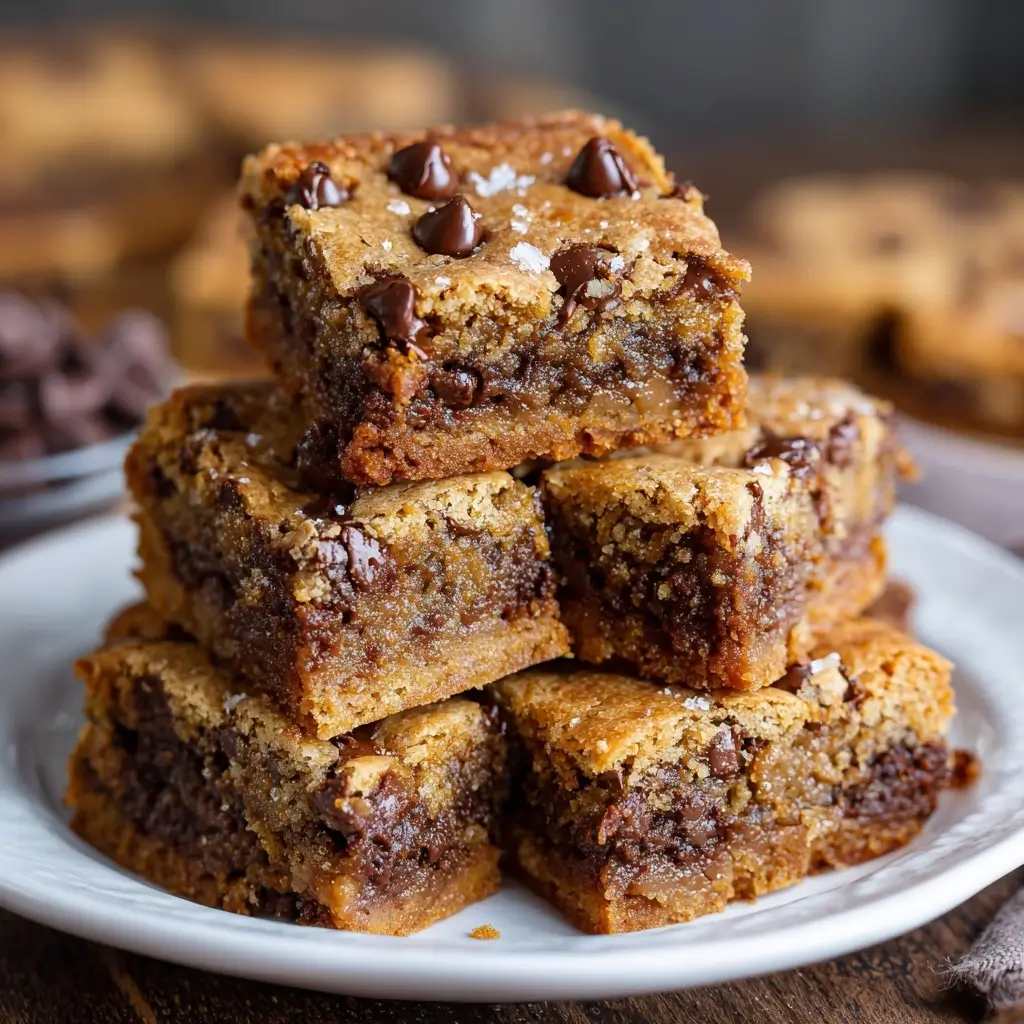
Thick Cookie Bars with Chocolate Chips are the ultimate indulgence for cookie lovers who crave richness, chewiness, and generous pockets of melty chocolate—without the hassle of scooping, rolling, or spacing individual cookies on a baking sheet. Unlike traditional drop cookies, these bars deliver consistent thickness, even browning, and an irresistibly soft-yet-sturdy texture that holds its shape when lifted with a spatula but yields to a tender, buttery bite. They’re perfect for potlucks, school bake sales, office snack trays, or simply satisfying a late-night craving with minimal cleanup. Whether you’re a seasoned baker or a beginner seeking foolproof results, this recipe delivers bakery-quality thickness and depth of flavor in every square—dense enough to feel substantial, yet tender enough to melt on the tongue.
The History
The origin of cookie bars traces back to the early-to-mid 20th century, when home bakers sought convenience amid shifting domestic routines—especially during wartime rationing and the post-war rise of suburban homemaking culture. Early iterations appeared in community cookbooks and women’s magazines like Good Housekeeping and Ladies’ Home Journal, where recipes emphasized efficiency, minimal equipment, and pantry-friendly ingredients. The classic “Chocolate Chip Cookie Bar” emerged as a natural evolution of Ruth Wakefield’s 1938 Toll House Chocolate Chip Cookie—adapted into a pan-baked format to maximize yield, reduce labor, and ensure uniform doneness. By the 1950s and ’60s, brands like Betty Crocker and Pillsbury popularized bar versions through printed recipe cards and television commercials, touting them as “slice-and-serve simplicity.” Over time, bakers began experimenting with higher butter ratios, brown sugar dominance, and extended chilling times—culminating in today’s beloved “thick” iteration: a 1.5- to 2-inch tall, ultra-chewy, golden-edged confection that proudly defies the thin-and-crispy cookie stereotype.
Ingredients Breakdown
Every ingredient in this Thick Cookie Bars recipe plays a precise functional and flavor role—no filler, no redundancy:
- Unsalted Butter (1 cup / 2 sticks / 227g): Provides richness, tenderness, and flakiness in the crumb. Melted (not browned) ensures optimal moisture distribution and dense structure; unsalted allows full control over sodium levels.
- Packed Light Brown Sugar (1¼ cups / 260g): The cornerstone of chewiness and moisture retention thanks to molasses content. Its acidity also gently activates the baking soda for subtle lift without cakey airiness.
- Granulated Sugar (½ cup / 100g): Balances molasses intensity, adds crispness to the top crust, and aids in caramelization during baking.
- Large Eggs (2, room temperature): Bind the batter, add structure via proteins, and contribute emulsification for smooth texture. Room temperature prevents re-solidification of melted butter.
- Pure Vanilla Extract (2 tsp): Enhances sweetness perception and rounds out buttery, caramelized notes—alcohol-based extract integrates more fully than imitation.
- All-Purpose Flour (2¼ cups / 280g, spooned & leveled): Provides gluten network for cohesion and chew. Spooned-and-leveled (not scooped) prevents excess flour—a common cause of dry, crumbly bars.
- Baking Soda (1 tsp): Reacts with brown sugar’s acidity to create fine, even bubbles—just enough lift to avoid density without compromising chew.
- Fine Sea Salt (1 tsp): Not just for seasoning—salt sharpens sweetness, deepens caramel tones, and strengthens gluten for better bite integrity.
- Semi-Sweet Chocolate Chips (2 cups / 340g): Preferably high-quality chips with 52–60% cacao for balanced bitterness and reliable melting behavior. Mini chips offer more distributed pockets; standard chips create dramatic, gooey clusters. Avoid “baking chips” with added waxes—they resist melting and dull flavor.
- (Optional Add-In) Flaky Sea Salt (¼ tsp, for finishing): A light sprinkle pre-bake or immediately post-bake intensifies contrast and elevates each bite with a savory spark.
Note: This recipe intentionally omits nuts, oats, or white chocolate to spotlight pure chocolate chip decadence—but those are elegantly accommodated in the Variations section.
Step-by-Step Recipe
- Prep the Pan: Line a 9×13-inch metal baking pan with two overlapping sheets of parchment paper, leaving ~2-inch overhang on two opposite sides for easy lifting. Lightly grease exposed parchment and pan edges with butter or non-stick spray. Chill lined pan in freezer for 10 minutes (this prevents butter from pooling at edges during batter spread).
- Melt & Cool Butter: In a medium saucepan over low heat—or in a heatproof bowl set over simmering water—melt butter completely. Remove from heat, stir in both sugars, and whisk vigorously for 1 minute until glossy and slightly thickened. Let cool to lukewarm (about 105°F/40°C)—critical to avoid cooking eggs when added.
- Combine Wet Ingredients: Whisk in eggs one at a time, fully incorporating after each. Stir in vanilla. Mixture should be smooth, homogenous, and slightly thickened—not separated or grainy.
- Dry Ingredients & Fold: In a separate bowl, whisk together flour, baking soda, and salt until fully aerated and lump-free. Using a flexible silicone spatula, gently fold dry mixture into wet in 3 additions, rotating bowl between folds. Stop mixing as soon as no streaks remain—overmixing develops excess gluten and causes toughness.
- Incorporate Chocolate: Add chocolate chips and fold just until evenly dispersed. For extra-thick clusters, reserve ⅓ cup chips and press them into the top surface after spreading batter.
- Chill the Batter (Non-Negotiable Step): Transfer batter to chilled pan. Use an offset spatula to spread evenly, smoothing top. Cover tightly with plastic wrap and refrigerate for *at least 2 hours*, preferably 4–24 hours. Chilling solidifies butter, prevents excessive spread, enhances flavor development, and yields denser, more fudgy texture.
- Preheat & Bake: Position oven rack to center. Preheat to 325°F (163°C)—a lower temperature ensures slow, even baking without burnt edges or raw centers. Remove chilled batter from fridge; let sit 5 minutes while oven heats. Sprinkle optional flaky salt over surface.
- Bake Until Perfectly Set: Bake for 38–45 minutes. Bars are done when edges are deeply golden and pull slightly away from pan, top appears matte (not shiny), and center jiggles *only slightly* when gently shaken—like firm Jell-O. A toothpick inserted 1 inch from edge should come out with moist crumbs (not wet batter); center should show a few moist crumbs clinging—not clean.
- Cool Completely—Patience Required: Place pan on a wire rack. Cool *undisturbed* for 2 hours at room temperature. Then, use parchment overhang to lift entire slab onto rack. Flip carefully (chocolate-side up) and peel off bottom parchment. Cool completely—minimum 3 more hours, ideally overnight—for clean slicing and optimal chew.
- Cut & Serve: Using a large, sharp chef’s knife wiped clean between cuts, slice into 12–16 rectangles (for thick bars: aim for 12). For clean edges, chill fully sliced bars for 15 minutes before serving.
Tips
- Measure Flour Correctly: Use the “spoon-and-level” method: fluff flour in bag, spoon into measuring cup, then level with straight edge. Scooping packs flour—adding up to 25% extra—and guarantees dry, tough bars.
- Chill Time is Flavor Time: Don’t skip or shorten refrigeration. Cold batter yields thicker bars, deeper caramel notes, and intensified chocolate flavor. Overnight chilling is ideal for complex, almost toffee-like depth.
- Oven Thermometer Essential: Most home ovens run hot or cold. An accurate oven thermometer prevents under- or over-baking—especially critical at the low 325°F setting.
- Rotate Pan Mid-Bake: At 25 minutes, rotate pan 180° for even browning—oven hotspots vary widely.
- Don’t Overbake for Chew: Err on the side of underdone. Bars continue to set as they cool. Pulling them out when center is *just* set ensures maximum chewiness.
- Cooling = Setting: Cutting warm bars leads to crumbling and loss of structural integrity. Full cooling allows starches to retrograde and fats to re-solidify—locking in that signature dense, cohesive bite.
- Sharp Knife Technique: Dip knife in hot water and wipe dry before each cut. This prevents sticking and smearing chocolate.
- Storage Matters: Keep cooled bars in an airtight container at room temperature for up to 5 days. For longer storage, freeze unfrosted bars layered with parchment for up to 3 months—thaw at room temp for 30 minutes.
Variations and Customizations
This foundational recipe is endlessly adaptable—each variation preserves the thick, chewy architecture while inviting creativity:
- Double Chocolate: Replace ¼ cup flour with unsweetened cocoa powder (Dutch-process preferred). Add ½ cup finely chopped dark chocolate (70%) to chips for layered intensity.
- Snickerdoodle Bars: Omit chocolate chips. Add 1½ tsp ground cinnamon + 2 tbsp granulated sugar to dry ingredients. Roll chilled batter surface in cinnamon-sugar before baking.
- Peanut Butter Swirl: After spreading batter, dollop ⅔ cup creamy peanut butter over top. Use a butter knife to swirl gently—don’t overmix. Optional: sprinkle with chopped roasted peanuts pre-bake.
- Oatmeal Chocolate Chip: Reduce flour to 1¾ cups. Add 1 cup old-fashioned rolled oats (not instant) with dry ingredients. Soak oats in 2 tbsp milk for 5 minutes before folding in for plump, chewy texture.
- White Chocolate Macadamia: Swap semi-sweet chips for high-quality white chocolate chips and ¾ cup toasted macadamia nuts. Add ¼ tsp nutmeg to dry mix for warmth.
- Gluten-Free: Substitute 2¼ cups certified GF all-purpose blend (like King Arthur or Bob’s Red Mill 1-to-1) + ½ tsp xanthan gum. Ensure baking soda is GF-certified.
- Vegan: Use vegan butter (Miyoko’s or Earth Balance), flax eggs (2 tbsp ground flax + 6 tbsp water, rested 10 min), and dairy-free chocolate chips. Increase salt to 1¼ tsp to compensate for butter’s missing umami.
- Espresso Infused: Dissolve 1½ tsp instant espresso powder in vanilla extract before adding to batter. Pairs beautifully with dark chocolate chips.
- Sea Salt & Caramel: Drizzle cooled bars with homemade salted caramel sauce (cooled to room temp), then sprinkle with flaky sea salt. Refrigerate 15 min to set.
- Mini-Muffin Tin Version: For portion-controlled thick “cookie cupcakes,” line standard muffin tin with liners. Fill cups ¾ full. Bake at 325°F for 22–26 min. Cool in tin 10 min before removing.
Health Considerations and Nutritional Value
While Thick Cookie Bars are inherently a treat—not a health food—their nutritional profile can be contextualized responsibly. Per standard 12-serving batch (approx. 2.5″ x 2.5″ bar), each portion contains approximately:
- Calories: 320–350 kcal
- Total Fat: 16–18g (10–12g saturated)
- Carbohydrates: 44–47g (32–35g sugars)
- Protein: 3–4g
- Fiber: 0.8–1.2g
- Sodium: 220–260mg
Key Considerations:
- Sugar Source: Primarily from refined sucrose and molasses-rich brown sugar—provides quick energy but lacks fiber or micronutrients. For reduced glycemic impact, consider substituting up to ¼ cup brown sugar with coconut sugar (similar moisture properties) or monk fruit-blend erythritol (requires testing for texture changes).
- Fat Profile: Butter contributes cholesterol and saturated fat. While recent research nuances dietary cholesterol concerns, those managing LDL may opt for a 50/50 blend of butter and avocado oil (neutral flavor, heart-healthy monounsaturates) — though texture will be slightly less rich.
- Portion Control: The thick, dense nature naturally encourages mindful eating—most people find one bar deeply satisfying versus multiple thin cookies.
- Nutrient Gaps: Low in fiber, vitamins, and antioxidants unless modified (e.g., adding oats, chopped nuts, or dark chocolate ≥70%).
- Allergens: Contains wheat (gluten), dairy (butter, chocolate), and eggs. Easily adapted for common allergies—as detailed in Variations.
- Mindful Indulgence: These bars contain no artificial preservatives, colors, or hydrogenated oils. When made with whole-food ingredients and enjoyed occasionally as part of a balanced diet, they represent a far cleaner choice than commercially processed snack bars laden with emulsifiers and high-fructose corn syrup.
Ingredients
- 1 cup (2 sticks / 227g) unsalted butter, melted and cooled to lukewarm
- 1¼ cups (260g) packed light brown sugar
- ½ cup (100g) granulated sugar
- 2 large eggs, room temperature
- 2 teaspoons pure vanilla extract
- 2¼ cups (280g) all-purpose flour, spooned and leveled
- 1 teaspoon baking soda
- 1 teaspoon fine sea salt
- 2 cups (340g) semi-sweet chocolate chips (high-quality recommended)
- (Optional) ¼ teaspoon flaky sea salt, for finishing
Directions
- Line a 9×13-inch metal baking pan with parchment paper, allowing overhang on two sides. Lightly grease and chill in freezer 10 minutes.
- In a medium heatproof bowl, melt butter. Whisk in both sugars until glossy (1 min). Cool to 105°F (40°C).
- Whisk in eggs one at a time, then vanilla, until smooth.
- In separate bowl, whisk flour, baking soda, and salt. Fold into wet ingredients in 3 additions until just combined.
- Fold in chocolate chips. Spread evenly into chilled pan. Smooth top. Cover and refrigerate 2–24 hours.
- Preheat oven to 325°F (163°C) with rack in center.
- Remove batter from fridge; let sit 5 minutes. Sprinkle with flaky salt if using.
- Bake 38–45 minutes—until edges are deeply golden and center jiggles slightly.
- Cool in pan on wire rack for 2 hours. Lift out using parchment. Peel off bottom parchment. Cool completely (3+ hours or overnight).
- Cut into 12–16 rectangles with sharp, hot-wiped knife. Store airtight at room temperature up to 5 days.
FAQ
- Can I use dark brown sugar instead of light?
- Yes—but expect a more robust molasses flavor, slightly darker color, and marginally chewier texture due to higher moisture content. Reduce chill time by 30 minutes if batter feels overly soft.
- Why did my bars turn out cakey instead of chewy?
- Most likely causes: (1) Overmixing after adding flour, developing too much gluten; (2) Using too much flour (scooping vs. spooning); (3) Skipping the chill step; (4) Baking at too high a temperature or too long. Double-check measurements and timing.
- Can I double the recipe for a larger batch?
- Avoid doubling in one pan—it leads to uneven baking. Instead, make two separate batches and bake in two pans simultaneously on different racks (rotate halfway). Or use a 10×15-inch jelly roll pan—reduce bake time by 5–7 minutes and check early.
- My bars cracked on top—is that normal?
- Minor surface cracking is typical and harmless—it occurs as the top sets faster than the center expands. To minimize: ensure batter is evenly spread, avoid opening oven door before 30 minutes, and cool gradually (don’t move hot pan to cold surface).
- Can I add nuts without changing texture?
- Absolutely—fold in 1 cup toasted walnuts or pecans with chocolate chips. Toasting enhances flavor and prevents sogginess. Reduce chips to 1¾ cups if you prefer balanced ratio.
- Why does the recipe use melted butter instead of creamed?
- Melted butter creates a denser, fudgier crumb ideal for bars. Creamed butter incorporates air, yielding a lighter, more cake-like result—perfect for cookies, but counter to the thick-bar goal.
- Can I bake these in a glass or ceramic pan?
- Not recommended. Glass and ceramic retain and radiate heat differently, increasing risk of over-browned edges and undercooked centers. Metal conducts heat evenly and cools rapidly—essential for control.
- How do I prevent chocolate chips from sinking?
- Toss chips in 1 tsp of the measured flour before folding in—this lightly coats them and helps suspension. Also, avoid over-spreading batter; leave it slightly mounded for even distribution.
- Can I make these ahead for an event?
- Yes! Bake and cool completely 1–2 days ahead. Store airtight at room temp. For peak freshness, freeze unbaked, chilled dough in pan (covered tightly) up to 1 month—bake straight from freezer, adding 5–8 minutes to bake time.
- What’s the best way to transport these?
- Layer bars in a rigid container with parchment between layers. Chill 30 minutes before travel. Include a small ice pack if ambient temperature exceeds 75°F (24°C) to prevent softening.
Summary
Thick Cookie Bars with Chocolate Chips are a masterclass in controlled indulgence—melding nostalgic comfort with modern precision baking techniques to deliver unparalleled chew, depth, and chocolate-laden satisfaction in every generously portioned square. From meticulous ingredient science to non-negotiable chilling and low-and-slow baking, this recipe transforms humble pantry staples into a showstopping, reliably decadent dessert that’s as practical for weeknight treats as it is for holiday gatherings.
Whether you stick to the classic formula or explore creative riffs—from double chocolate intensity to vegan adaptability—these bars promise consistency, crowd-pleasing appeal, and the profound joy of biting into something luxuriously thick, deeply flavorful, and unapologetically delicious.