
Introduction
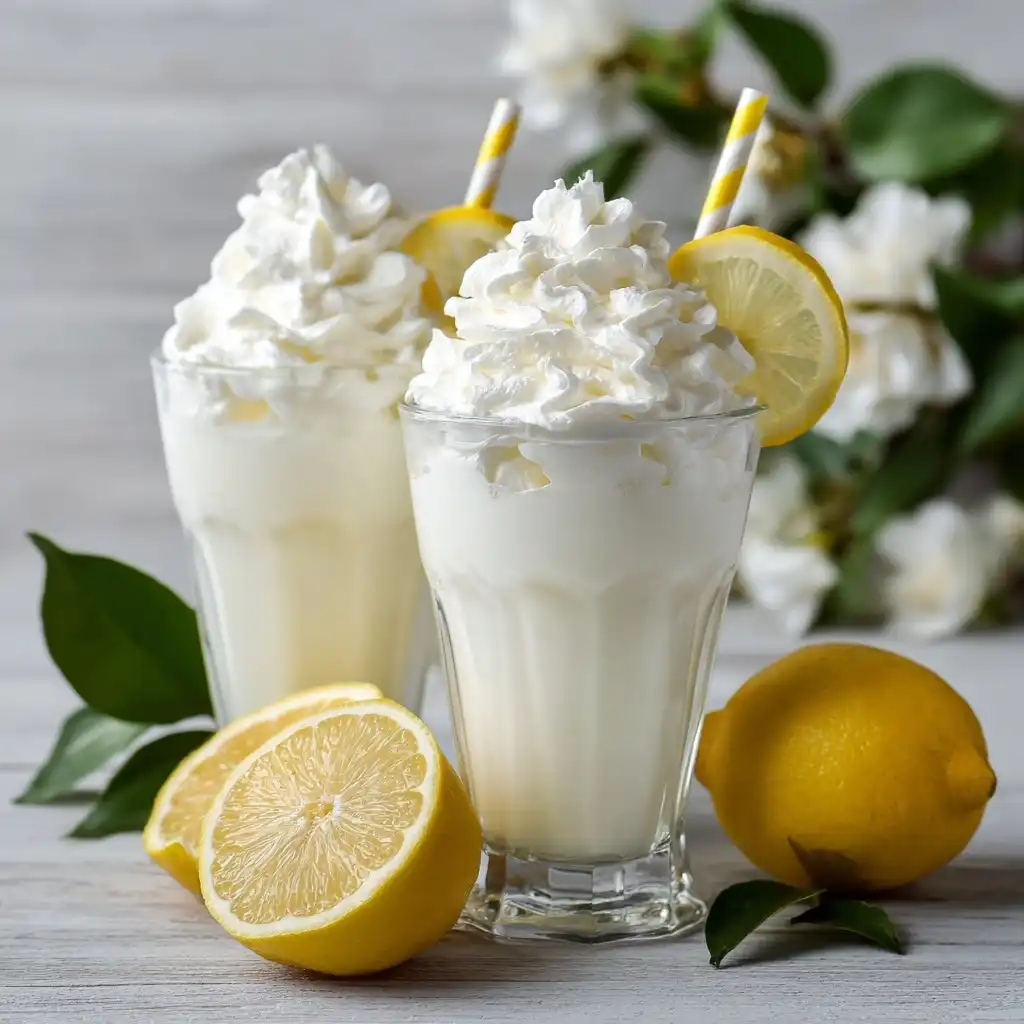
Whipped Lemonade is a revolutionary twist on the classic summer staple—transforming tart, refreshing lemonade into an impossibly light, cloud-like beverage with a luxuriously airy texture and delicate froth. Unlike traditional lemonade served still or over ice, whipped lemonade is aerated to perfection using modern blending techniques, resulting in a velvety foam that floats atop a bright, citrus-forward base. It’s not just a drink—it’s an experience: visually stunning, texturally captivating, and refreshingly complex. Whether served at brunch gatherings, rooftop soireés, farmers’ market pop-ups, or as a sophisticated mocktail alternative at upscale bars, whipped lemonade bridges nostalgia and innovation, honoring the timeless appeal of lemon while elevating it with culinary artistry and science.
The History
Though lemonade itself dates back to 10th-century Egypt—where citron and lemon juices were mixed with honey and water—the concept of *whipped* lemonade is a distinctly 21st-century evolution. Its origins are loosely traced to early-2020s viral food trends on TikTok and Instagram, where home bakers and beverage enthusiasts began experimenting with frothing techniques borrowed from coffee culture (think cold foam and nitro infusions) and molecular gastronomy (like siphon-whipped emulsions). A pivotal moment occurred in 2022 when a Los Angeles-based café launched “Cloud Citrus,” a lavender-infused whipped lemonade topped with edible flower dust and stabilized aquafaba foam—prompting copycat recipes across food blogs and culinary schools. The trend gained further legitimacy when James Beard Award–nominated mixologists began incorporating sous-vide–infused lemon bases and precision-aeration tools into craft non-alcoholic menus. Historically, the “whipping” technique echoes older traditions—such as Middle Eastern *qamar al-din* (apricot leather whisked into drinks) or Filipino *buko juice* frothed with hand-cranked whisks—but modern whipped lemonade represents the first widespread fusion of high-speed emulsification, pH-balanced acidity control, and stabilizer science specifically applied to lemonade. Its rapid ascent reflects broader cultural shifts toward texture-driven dining, mindful indulgence, and visually shareable wellness-adjacent beverages.
Ingredients Breakdown
Every exceptional whipped lemonade begins with intentionality—not just in flavor, but in function. Each ingredient plays a precise role in achieving both stability and sensory delight:
- Fresh Lemons (6–8 medium, preferably unwaxed): The soul of the drink. Meyer lemons offer floral sweetness and lower acidity; Eureka or Lisbon provide bold, clean tartness. Juice yield averages 2–3 tbsp per lemon—always hand-squeeze for maximum volatile oil extraction from the peel, which contributes aromatic complexity. Avoid bottled juice: its enzymatic degradation and preservatives inhibit proper aeration and create off-flavors.
- Raw Cane Sugar or Organic Turbinado Sugar (¾–1 cup): Unrefined sugars retain molasses notes and subtle minerals that enhance mouthfeel and stabilize foam. Granulated white sugar works but yields a thinner, quicker-collapsing foam. For vegan or low-glycemic versions, erythritol blended with a touch of inulin (a prebiotic fiber) mimics sucrose’s foam-supporting viscosity without crystallization.
- Warm Water (½ cup, ~110°F / 43°C): Critical for full sugar dissolution without cooking off lemon volatiles. Cold water leaves micro-crystals that puncture air bubbles; boiling water denatures pectin and heat-sensitive citric acid esters essential for emulsion integrity.
- Cold Filtered Water (1½ cups, chilled to 38–40°F / 3–4°C): Temperature contrast is non-negotiable. The chilled base rapidly cools the aerated mixture, slowing bubble coalescence and extending foam longevity. Tap water with chlorine or high mineral content (e.g., hard water) interferes with protein–acid interactions in stabilizers—always use reverse-osmosis or activated-carbon filtered water.
- Stabilizing Trio (The Secret Architecture):
- Acacia Gum (½ tsp): A natural, soluble fiber from the Senegalia senegal tree, it increases viscosity without gumminess and forms protective colloidal shells around air bubbles.
- Organic Sunflower Lecithin (¼ tsp, powdered): An emulsifier that bridges water and citrus oils, preventing phase separation and reinforcing foam structure at the air–liquid interface.
- Real Vanilla Bean Paste (½ tsp) or Seeds from ¼ Pod: Not for flavor alone—vanillin interacts synergistically with citral (lemon’s primary terpene), enhancing perceived brightness and stabilizing foam via hydrogen bonding networks.
- Optional Enhancers:
- Pink Himalayan Salt (a generous pinch): Amplifies sweetness perception and balances sourness via sodium ion modulation of taste receptors.
- Freeze-Dried Lemon Powder (1 tsp): Concentrated citrus solids add intense aroma and act as nucleation sites for finer, longer-lasting bubbles.
- Chilled Coconut Water (¼ cup, unsweetened): Adds natural electrolytes (potassium, magnesium) and subtle sweetness while improving foam elasticity due to its polysaccharide profile.
Step-by-Step Recipe
- Pre-Chill Everything: Place your high-speed blender jar, stainless steel mixing bowl, fine-mesh strainer, and serving glasses in the freezer for 15 minutes. Cold surfaces dramatically reduce thermal agitation during aeration, preserving bubble integrity.
- Extract & Strain Lemon Juice: Roll lemons firmly on the counter to rupture juice vesicles. Halve and juice using a citrus press or reamer—never a juicer with spinning blades (they aerosolize bitter pith oils). Strain immediately through a triple-layered cheesecloth-lined fine-mesh strainer into a heatproof measuring cup. Discard pulp but reserve 1 tsp of strained zest for garnish.
- Create the Simple Syrup Base: In a small saucepan, combine warm water and sugar. Stir gently over low heat until fully dissolved (do not boil). Remove from heat and stir in acacia gum, lecithin, vanilla paste, salt, and lemon powder (if using). Let cool to room temperature—about 8–10 minutes. This resting period allows hydrocolloids to fully hydrate.
- Combine & Chill Base: Whisk the cooled syrup into the strained lemon juice until homogenous. Gradually whisk in chilled filtered water (and coconut water, if using). Cover and refrigerate for *at least 1 hour*—this equilibrates temperature, dissolves any residual crystals, and allows pectin molecules to begin forming weak gel networks that support foam.
- Aerate with Precision: Pour the chilled base into the pre-chilled blender jar, filling no more than halfway. Secure lid and blend on low for 10 seconds to incorporate. Then, increase to *highest speed* for exactly 45 seconds—no more, no less. Use a timer: under-blending yields coarse, short-lived foam; over-blending causes coalescence and “weeping” (liquid separation). For ultra-luxury texture, immediately transfer to a chilled French press and pump the plunger 12 times—this introduces micro-bubbles and further refines foam density.
- Rest & Layer: Let the whipped mixture rest undisturbed in the blender jar for 90 seconds. This allows larger bubbles to rise and pop, leaving only stable microfoam. Gently pour into chilled coupe or stemless wine glasses—tilt the glass and pour down the side to preserve layers. Top each serving with a delicate spoonful of remaining foam (skimmed from the surface) and a sprinkle of reserved lemon zest or edible violas.
- Serve Immediately: Whipped lemonade peaks at 3–5 minutes post-aeration. Foam begins gradual collapse after 7 minutes due to natural drainage (syneresis). Never store whipped lemonade—it cannot be re-whipped successfully.
Tips
- Lemon Selection Matters: Choose lemons with thin, pebbly rinds and heavy weight for their size—they indicate higher juice content and optimal acidity-to-sugar ratios. Avoid waxed or overly glossy fruit, as wax inhibits proper emulsification.
- Temperature Is Your Co-Conspirator: Every element—from juice to blender jar to glass—must be cold. A 5°F difference can reduce foam volume by up to 40%. Keep a thermometer in your fridge drawer for precision.
- Blender Choice Impacts Outcome: High-speed blenders (Vitamix, Blendtec) generate superior shear force for microfoam. Immersion blenders work only if used with a tall, narrow container and pulsed in 3-second bursts. Standard countertop blenders rarely achieve stable whip—upgrade if serious about consistency.
- No Overmixing, Ever: Set a kitchen timer. Foam stability follows a Goldilocks principle: too little aeration = flat; too much = broken emulsion. If foam appears grainy or separates, the base was too warm or under-chilled.
- Straining Is Non-Negotiable: Even “pulp-free” juicers leave microscopic particles that act as destabilizing nuclei. Triple-straining ensures clarity and smoothness critical for light-as-air texture.
- Glassware Elevates Experience: Serve in footed glasses chilled to 35°F (2°C). The stem prevents hand warmth from transferring to the drink, preserving foam integrity for an extra 90 seconds.
- Timing Is Everything: Whip lemonade *only* after guests have arrived. It’s a performance beverage—part of its magic lies in witnessing the transformation from liquid to cloud before your eyes.
- Clean Tools Thoroughly: Residual oils or soap film on the blender jar will prevent foam formation. Rinse with vinegar-water (1:3 ratio) before chilling to remove invisible residues.
Variations and Customizations
Whipped lemonade is a masterclass in modular creativity—its stable base welcomes infinite seasonal, cultural, and dietary adaptations without sacrificing texture:
- Herbal Elegance: Infuse the simple syrup base with fresh herbs: 3 sprigs of thyme (steeped 15 min off-heat), 1 tbsp crushed rosemary, or 2 tbsp torn basil leaves. Strain before chilling. Pairs exquisitely with a float of whipped coconut cream.
- Floral Whimsy: Add 1 tsp culinary-grade dried lavender buds to the warm syrup (steep 8 min, then strain meticulously). Finish with a single drop of orange blossom water and candied violets. Ideal for afternoon tea service.
- Spiced Complexity: Toast 1 star anise, 3 green cardamom pods, and ¼ tsp black peppercorns in a dry pan. Grind finely and whisk into syrup. Serve with a cinnamon-sugar rim and a whisper of smoked sea salt.
- Tropical Fusion: Replace ¼ cup lemon juice with cold-pressed yuzu or calamansi. Add 2 tbsp pure passionfruit purée (strained) and 1 tsp toasted coconut flakes to the blender. Garnish with grilled pineapple skewers.
- Berry Brilliance: Fold 3 tbsp seedless raspberry coulis (simmered & strained) into the chilled base *after* whipping—swirl gently to create marbled ribbons. Avoid blending, which breaks foam.
- Earthy Depth: Incorporate ½ tsp matcha powder (ceremonial grade) into the warm syrup. Its umami and tannins balance acidity while lending a soft jade hue and grounding finish.
- Vegan Protein Boost: Add 1 scoop unflavored pea protein isolate (hydrolyzed) to the syrup stage. It enhances foam thickness and adds 8g plant protein per serving—ideal for post-workout hydration.
- Zero-Waste Innovation: Repurpose lemon peels: dehydrate into powder, cold-infuse in olive oil, or ferment into shrub vinegar. The whipped base accepts citrus oil infusions beautifully—add 2 drops of cold-pressed lemon oil post-whip for amplified aroma.
- Global Interpretations:
- Mexican Chamoy Swirl: Drizzle chamoy sauce (chili-salt-tamarind) inside glass before pouring; top with whipped lemonade and Tajín rim.
- Japanese Yuzu-Kosho: Whisk ½ tsp yuzu-kosho (citrus-chili paste) into base for vibrant heat and fragrance.
- Middle Eastern Date Syrup: Substitute ¼ cup date syrup for part of the sugar—adds caramel depth and natural invert sugars for enhanced foam retention.
Health Considerations and Nutritional Value
When crafted mindfully, whipped lemonade transcends “just a treat” to become a functional, nutrient-dense beverage aligned with holistic wellness principles:
- Vitamin C Powerhouse: One 8-oz serving delivers ~90mg of vitamin C (100% DV), supporting collagen synthesis, iron absorption, and antioxidant defense against oxidative stress. Fresh lemon juice retains significantly more bioactive ascorbic acid than pasteurized alternatives.
- Electrolyte-Replenishing: Naturally rich in potassium (≈120mg/serving) and enhanced with coconut water or a pinch of trace-mineral sea salt, it aids hydration more effectively than plain water—especially after exercise or in hot climates.
- Low Glycemic Impact (When Balanced): Using raw cane sugar at a 1:1 juice-to-sugar ratio yields ~22g total sugar per serving—well below many sodas (39g) and fruit juices (28g). Pairing with fiber-rich stabilizers (acacia gum) slows glucose absorption, reducing insulin spikes.
- Digestive Support: Citric acid stimulates gastric secretions and bile flow, aiding digestion. Acacia gum acts as a prebiotic, feeding beneficial gut bacteria like Bifidobacterium—linked to improved immunity and reduced inflammation.
- No Artificial Additives: Free from synthetic colors, preservatives, or high-fructose corn syrup, it avoids common triggers for headaches, digestive upset, and behavioral fluctuations in sensitive individuals.
- Mindful Hydration Catalyst: Its luxurious texture and vivid flavor encourage slower sipping and greater fluid intake—particularly valuable for children, seniors, or those recovering from illness who struggle with plain water consumption.
- Cautions & Modifications:
- For diabetics: Reduce sugar to ⅓ cup and add 1 tsp glucomannan (konjac root fiber) for viscosity and glycemic buffering.
- For acid reflux: Limit to 4 oz serving and add ¼ tsp slippery elm bark powder to soothe mucosal linings.
- For histamine sensitivity: Avoid fermented enhancers (e.g., kombucha additions) and opt for freshly squeezed lemon within 15 minutes of juicing to minimize histamine buildup.
- For kidney stones (calcium oxalate): Lemonade’s citrate actually *inhibits* stone formation—making it clinically recommended at 4+ servings daily under physician guidance.
- Nutrition Snapshot (Per 8-oz Serving):
- Calories: 142 kcal
- Total Carbohydrates: 36g (Dietary Fiber: 1g, Sugars: 33g)
- Protein: 0.5g
- Potassium: 124mg (3% DV)
- Vitamin C: 92mg (102% DV)
- Calcium: 11mg
- Iron: 0.2mg
- Naturally caffeine-free, dairy-free, gluten-free, soy-free, and nut-free (unless customized).
Ingredients
- 6–8 medium fresh lemons (unwaxed, preferably Meyer or Eureka)
- ¾ cup raw cane sugar or organic turbinado sugar
- ½ cup warm filtered water (110°F / 43°C)
- 1½ cups ice-cold filtered water (chilled to 38–40°F / 3–4°C)
- ½ teaspoon food-grade acacia gum
- ¼ teaspoon sunflower lecithin (powdered)
- ½ teaspoon pure vanilla bean paste (or seeds from ¼ vanilla bean)
- Pinch of fine pink Himalayan salt
- 1 teaspoon freeze-dried lemon powder (optional, for intensity)
- ¼ cup unsweetened chilled coconut water (optional, for electrolytes)
- Edible flowers or lemon zest, for garnish
Directions
- Place blender jar, mixing bowl, strainer, and serving glasses in freezer for 15 minutes.
- Roll lemons on counter, halve, and juice using a citrus press. Strain juice through triple-layered cheesecloth into a heatproof cup. Reserve 1 tsp zest.
- In a small saucepan, combine warm water and sugar. Heat gently on low, stirring until fully dissolved (do not boil). Remove from heat.
- Stir in acacia gum, lecithin, vanilla paste, salt, lemon powder, and coconut water (if using). Let cool to room temperature (8–10 min).
- Whisk cooled syrup into lemon juice until smooth. Gradually whisk in chilled filtered water. Cover and refrigerate ≥1 hour.
- Pour chilled mixture into pre-chilled blender jar (no more than halfway full). Blend on low 10 sec, then highest speed for exactly 45 sec.
- For ultra-refined foam, transfer to chilled French press and pump plunger 12 times.
- Let rest undisturbed 90 sec. Gently pour into chilled glasses, tilting to preserve layers.
- Top each with a spoonful of foam and reserved lemon zest or edible flowers.
- Serve immediately—enjoy within 5 minutes for peak texture and freshness.
FAQ
- Can I make whipped lemonade ahead of time?
- No—foam collapses rapidly due to gravity-driven drainage (syneresis) and bubble coalescence. Always whip immediately before serving. You *can*, however, prep the chilled base up to 24 hours ahead and store covered in the refrigerator.
- Why does my foam collapse instantly?
- Most commonly: (1) Base or equipment wasn’t cold enough; (2) Under-strained juice left pulp particles acting as destabilizers; (3) Over-blending past 45 seconds; (4) Using tap water with high mineral content; (5) Skipping the acacia gum/lecithin stabilizers.
- Can I use bottled lemon juice?
- Not recommended. Bottled juice lacks volatile citrus oils, contains preservatives (e.g., sodium benzoate) that inhibit foaming, and undergoes heat pasteurization that degrades pectin and ascorbic acid—critical for emulsion stability and nutritional value.
- Is there a dairy-free way to make it extra creamy?
- Absolutely. Add 1 tbsp cold-pressed avocado oil (emulsifies beautifully) or 2 tsp soaked and blended raw cashews (strained) to the syrup stage. Both add luxurious mouthfeel without dairy.
- Can I carbonate whipped lemonade?
- Not advised—carbonation disrupts foam architecture. Instead, serve alongside a chilled sparkling water chaser or infuse the base with a *tiny* amount of CO₂ using a soda siphon *before* whipping for subtle effervescence beneath the foam.
- How do I scale this for a crowd?
- Double or triple ingredients, but whip in *batches*—never fill blender beyond halfway. Use a commercial-grade blender for consistent results. Pre-chill multiple jars and rotate them through the freezer.
- What’s the best way to store leftover base?
- In an airtight glass jar, refrigerated for up to 3 days. Stir well before re-chilling and whipping—do not freeze, as ice crystals destroy emulsifiers.
- Can kids help make this?
- Yes—with supervision! Children can roll lemons, measure sugar, stir the syrup (with adult handling heat), and garnish. Blending requires adult operation due to high-speed risk.
- Why use acacia gum instead of xanthan or guar?
- Acacia gum provides superior clarity, neutral flavor, and cold-solubility without sliminess. Xanthan creates undesirable stringiness; guar can impart beany off-notes and doesn’t stabilize citrus foams as effectively.
- Is whipped lemonade gluten-free and allergy-friendly?
- Yes—when made with certified gluten-free acacia gum and pure ingredients. It’s naturally free of gluten, dairy, soy, eggs, and nuts. Always verify lecithin source (sunflower vs. soy) for strict allergies.
Summary
Whipped lemonade is a masterful reimagining of a timeless classic—where science, seasonality, and sensory artistry converge to create a cloud-like, vibrantly tart, and nutritionally vibrant beverage that delights the eye, tongue, and gut alike.
By honoring lemon’s ancient legacy while embracing modern stabilization techniques and mindful customization, it transforms hydration into ritual, simplicity into sophistication, and refreshment into revelation—one ethereal sip at a time.