
Introduction
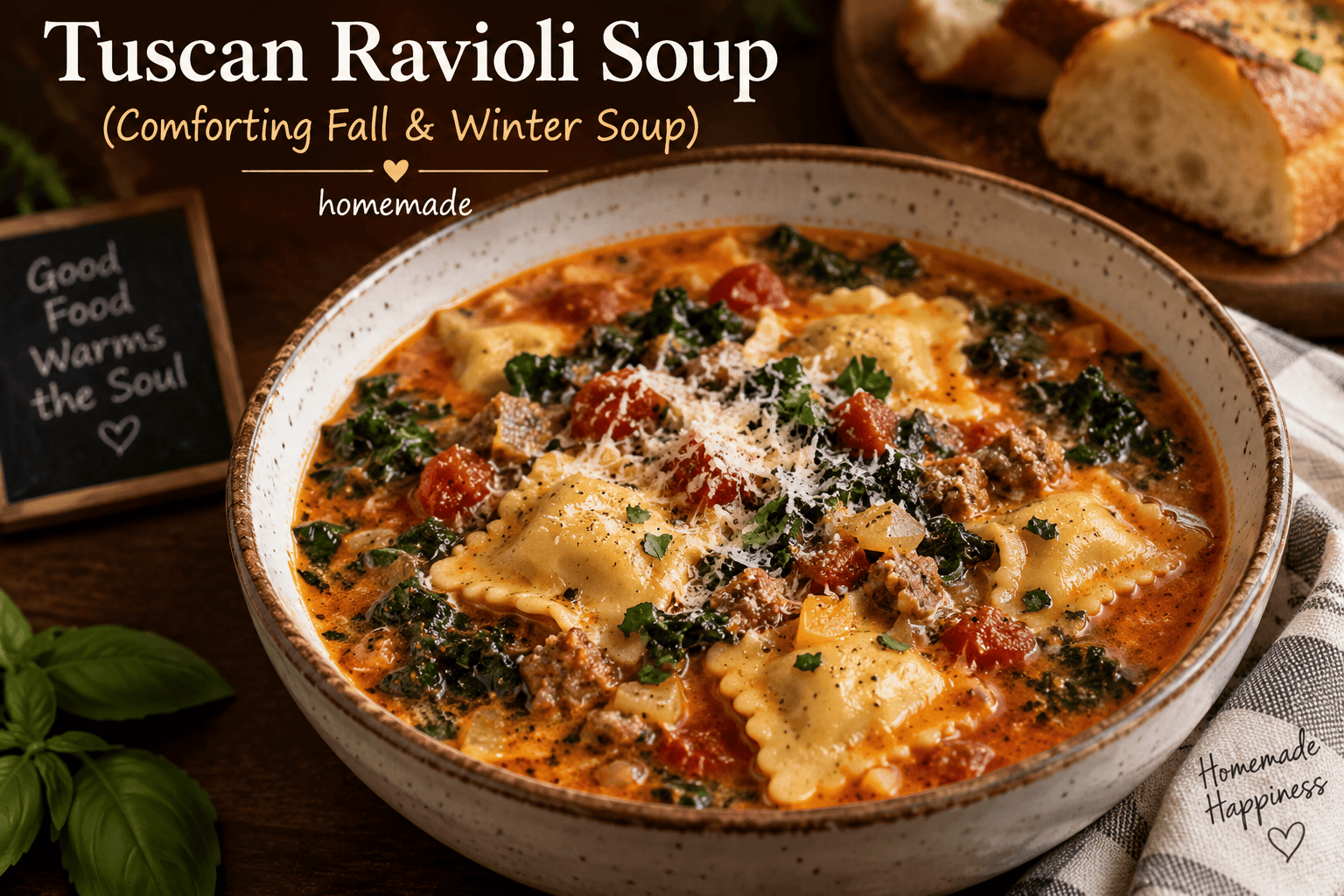
There is a specific kind of magic that happens in the kitchen when the air outside turns crisp and the days grow shorter. Tuscan Ravioli Soup is more than just a meal; it is a warm embrace in a bowl, designed specifically to combat the chill of fall and winter evenings. This comforting dish marries the delicate richness of cheese-filled pasta with the robust, savory depth of a tomato-based broth, finished with creamy swirls and vibrant fresh spinach. It represents the pinnacle of home cooking, where simplicity meets sophistication, allowing the quality of individual ingredients to shine through without unnecessary complication.
Perfect for busy weeknights or leisurely weekend gatherings, this soup comes together with surprising speed while delivering flavors that seem to have simmered all day. The combination of tender ravioli, aromatic herbs like basil and oregano, and the slight tang of San Marzano tomatoes creates a harmonious balance that appeals to both children and adults. Whether you are looking to restore warmth after a cold walk or simply desire a nourishing meal that feels like a hug, this Tuscan-inspired creation stands as a testament to the enduring power of comfort food.
The History
To understand the soul of this soup, one must look back to the rolling hills of Tuscany, Italy, a region renowned for its Cucina Povera or “poor kitchen” tradition. This culinary philosophy emphasizes making the most of humble, locally sourced ingredients to create dishes that are deeply flavorful and sustaining. While ravioli itself has ancient roots dating back to the Middle Ages, often associated with festive occasions and family gatherings, the concept of serving pasta within a broth is a staple of Italian domestic life. In Tuscany, soup is not merely an appetizer; it is often the main event, known as primo, capable of standing alone as a complete meal.
The evolution of tomato-based soups in Italy coincided with the introduction of tomatoes from the Americas in the 16th century, which eventually became a cornerstone of Southern and Central Italian cooking. The specific combination found in this Tuscan Ravioli Soup reflects a modern adaptation of traditional principles. It honors the past by utilizing classic flavor profiles—garlic, onion, basil, and high-quality olive oil—while embracing the convenience of modern pasta production. Historically, fresh pasta was made by hand for special occasions, but today, high-quality store-bought ravioli allows home cooks to replicate the essence of a Tuscan nonna’s kitchen without spending hours rolling dough. This dish bridges the gap between historical tradition and contemporary convenience, keeping the spirit of Italian hospitality alive in kitchens around the world.
Ingredients Breakdown
Understanding the role of each component in this soup is crucial for achieving the perfect balance of texture and flavor. Here is a detailed look at what goes into the pot and why each element matters:
- Cheese Ravioli: The star of the show. Opt for fresh refrigerated ravioli rather than dried packages if possible, as they cook faster and have a more tender texture. The filling should be a blend of ricotta, parmesan, and herbs for authenticity.
- Italian Sausage (Optional): Adding sweet or spicy Italian sausage introduces a savory, fennel-infused depth that complements the tomatoes. It adds protein and makes the soup heartier, though it can be omitted for a vegetarian version.
- San Marzano Tomatoes: Grown in the volcanic soil near Mount Vesuvius, these tomatoes are sweeter and less acidic than standard varieties. Using whole peeled San Marzano tomatoes that you crush by hand ensures a superior sauce base.
- Chicken or Vegetable Broth: The liquid foundation. A low-sodium broth allows you to control the salt level. Bone broth can be used for added collagen and nutritional benefits.
- Fresh Spinach: Added at the very end to wilt slightly without losing its vibrant green color or nutritional value. It provides a fresh contrast to the rich broth.
- Heavy Cream or Half-and-Half: This creates the signature creamy texture that defines this specific soup style. It mellows the acidity of the tomatoes and adds a luxurious mouthfeel.
- Aromatics (Onion, Garlic, Carrots, Celery): Known as soffritto in Italian cooking, this base builds the foundational flavor profile. Finely dicing them ensures they melt into the soup rather than remaining chunky.
- Herbs (Basil, Oregano, Thyme): Fresh herbs added at the end brighten the dish, while dried herbs added during simmering infuse the broth with earthy notes.
- Parmesan Cheese: Used as a garnish, aged Parmigiano-Reggiano adds a salty, umami kick that enhances every spoonful.
Step-by-Step Recipe
Creating this soup is a journey of layering flavors. Follow this narrative guide to ensure every step contributes to the final taste experience.
Phase 1: Building the Base
Begin by heating a large Dutch oven or heavy-bottomed pot over medium-high heat. If you are using sausage, remove it from its casing and crumble it into the pot. Cook until browned and crispy, which renders the fat and creates fond (browned bits) on the bottom of the pot. This fond is flavor gold. If cooking without meat, add a generous splash of olive oil. Add your diced onions, carrots, and celery. Sauté these vegetables for about 5 to 7 minutes until they are soft and translucent. Add the minced garlic during the last minute to prevent burning, as burnt garlic turns bitter quickly.
Phase 2: Developing the Broth
Once the aromatics are fragrant, pour in the chicken or vegetable broth. Scrape the bottom of the pot with a wooden spoon to release the fond created during the browning phase. Add the crushed San Marzano tomatoes along with their juices. Stir in your dried herbs (oregano, thyme, Italian seasoning) now, as dried spices need time and heat to rehydrate and release their oils. Bring the mixture to a gentle boil, then reduce the heat to low. Allow this base to simmer uncovered for about 15 minutes. This step is vital; it allows the flavors to meld and the raw tomato taste to cook out.
Phase 3: Cooking the Pasta
Increase the heat slightly to bring the soup back to a gentle simmer. Carely drop in the cheese ravioli. Stir gently to ensure they do not stick to the bottom. Cook according to the package instructions, usually around 3 to 5 minutes for fresh ravioli. Be careful not to overcook, as the pasta will continue to absorb liquid even after the heat is turned off. You want the pasta to be al dente so it holds its shape in the bowl.
Phase 4: The Creamy Finish
Once the ravioli is cooked, reduce the heat to low. Stir in the heavy cream or half-and-half. Watch as the broth transforms from a rustic red to a creamy orange-pink hue. Immediately add the fresh spinach leaves. Stir them in until they are just wilted, which should take no more than one minute. Taste the soup and adjust seasoning with salt and black pepper. Serve immediately while hot, garnished with fresh basil and grated Parmesan.
Tips
- Prevent Soggy Pasta: If you plan to have leftovers, consider cooking the ravioli separately and adding it to individual bowls when serving. Pasta left in soup overnight will absorb all the broth and become mushy.
- Acidity Balance: If your tomato sauce tastes too acidic or sharp, add a pinch of sugar or a extra splash of cream to neutralize the pH balance without altering the flavor profile significantly.
- Broth Quality: Use high-quality broth. Since the soup has few ingredients, the taste of the broth is prominent. Homemade or organic store-bought broth makes a noticeable difference.
- Garlic Management: Never add garlic to hot oil at the very beginning of the sauté process unless you are watching it constantly. Adding it with the onions or towards the end of the vegetable sauté prevents bitterness.
- Cream Separation: To prevent the cream from curdling, ensure the soup is not at a rolling boil when you add the dairy. Lower the heat to a simmer before stirring in the cream.
- Fresh Herbs: Always add delicate fresh herbs like basil at the very end. Heat destroys their volatile oils, diminishing their aroma and flavor.
Variations and Customizations
This recipe is highly adaptable to suit various dietary needs and flavor preferences. Here are several ways to customize your Tuscan Ravioli Soup:
- Vegetarian/Vegan: Omit the sausage and use vegetable broth. Substitute cheese ravioli with vegan ravioli filled with spinach or nut-based cheese. Use coconut cream or cashew cream instead of dairy cream.
- Protein Boost: Add shredded rotisserie chicken, white beans (cannellini), or lentils to increase the protein content without relying on sausage.
- Low Carb/Keto: Replace the ravioli with zucchini noodles (zoodles) or use keto-friendly pasta alternatives. Increase the amount of spinach and add mushrooms for bulk.
- Spicy Kick: Use hot Italian sausage instead of sweet. Add red pepper flakes during the sauté phase or a drizzle of chili oil before serving.
- Gluten-Free: Ensure you purchase gluten-free ravioli, which is widely available in most grocery stores. Check that the broth and sausage are also certified gluten-free.
- Vegetable Heavy: Add diced zucchini, bell peppers, or kale along with the spinach to increase the vitamin content and add more texture to the spoon.
- Slow Cooker Method: Sauté the aromatics and meat first, then transfer everything except the ravioli and cream to a slow cooker. Cook on low for 6 hours, then add ravioli and cream for the last 30 minutes.
Health Considerations and Nutritional Value
While this soup is a comfort food, it can be part of a balanced diet when consumed in moderation. The tomatoes provide a significant source of lycopene, an antioxidant linked to heart health and cancer prevention. Spinach adds iron, vitamin K, and vitamin A to the meal. However, there are considerations to keep in mind regarding sodium and carbohydrates.
Commercial broths and cheeses can be high in sodium. To manage this, choose low-sodium broth and limit the amount of added salt, relying instead on herbs and garlic for flavor. The ravioli contributes carbohydrates and protein, but also calories. For those watching their caloric intake, reducing the portion of pasta and increasing the ratio of vegetables and broth can make the meal lighter. The cream adds saturated fat; swapping for half-and-half or whole milk reduces the fat content while maintaining creaminess. Overall, this dish offers a good mix of macronutrients, providing energy from carbs, sustenance from protein, and satisfaction from fats, making it a well-rounded meal for cold weather.
Ingredients
- 1 tablespoon olive oil
- 1 pound Italian sausage (sweet or spicy), casings removed (optional)
- 1 medium yellow onion, diced
- 2 carrots, peeled and diced
- 2 stalks celery, diced
- 4 cloves garlic, minced
- 6 cups low-sodium chicken or vegetable broth
- 1 can (28 oz) crushed San Marzano tomatoes
- 1 teaspoon dried oregano
- 1 teaspoon dried basil
- 1/2 teaspoon dried thyme
- 1 package (9 oz) fresh cheese ravioli
- 3 cups fresh spinach, packed
- 1/2 cup heavy cream or half-and-half
- Salt and black pepper to taste
- Fresh basil and grated Parmesan cheese for garnish
Directions
- Heat the olive oil in a large pot or Dutch oven over medium-high heat. If using sausage, add it to the pot and cook until browned and crumbled, about 5-7 minutes. Drain excess fat if necessary.
- Add the onion, carrots, and celery to the pot. Sauté for 5 minutes until the vegetables begin to soften.
- Stir in the minced garlic and cook for another minute until fragrant, being careful not to burn it.
- Pour in the broth and add the crushed tomatoes, dried oregano, dried basil, and dried thyme. Stir well to combine.
- Bring the soup to a boil, then reduce the heat to low. Simmer uncovered for 15 minutes to allow the flavors to meld.
- Increase heat to medium-low to bring the soup back to a gentle simmer. Add the fresh ravioli and cook according to package directions (usually 3-5 minutes) until tender.
- Reduce heat to low. Stir in the heavy cream and fresh spinach. Cook until the spinach is wilted, about 1 minute.
- Season with salt and black pepper to taste. Ladle into bowls and garnish with fresh basil and grated Parmesan cheese before serving.
FAQ
Can I freeze Tuscan Ravioli Soup?
Yes, but with a caveat. The dairy and pasta do not freeze well together. For best results, freeze the soup base without the ravioli and cream. When ready to eat, thaw, reheat, and then add fresh cream and cooked ravioli.
How long does this soup last in the fridge?
Stored in an airtight container, the soup will last for 3 to 4 days in the refrigerator. Keep in mind the pasta will continue to absorb liquid, so you may need to add a splash of broth when reheating.
Can I make this in an Instant Pot?
Absolutely. Use the Sauté function for the meat and vegetables. Add the liquids and herbs, seal the lid, and cook on High Pressure for 5 minutes. Quick release, then stir in the cream, spinach, and ravioli (using the Sauté function to cook the ravioli).
What type of ravioli works best?
Fresh, refrigerated cheese ravioli is ideal because it cooks quickly and has a delicate texture. Frozen ravioli can be used but may require a few extra minutes of cooking time.
Is this soup gluten-free?
Standard ravioli contains wheat. To make it gluten-free, simply substitute with certified gluten-free ravioli and ensure your broth and sausage are also gluten-free certified.
Summary
Tuscan Ravioli Soup is a creamy, tomato-based dish featuring cheese pasta and spinach, perfect for cold weather comfort. Customize with sausage or vegetables to suit your dietary preferences while enjoying a rich, flavorful meal.