
Introduction
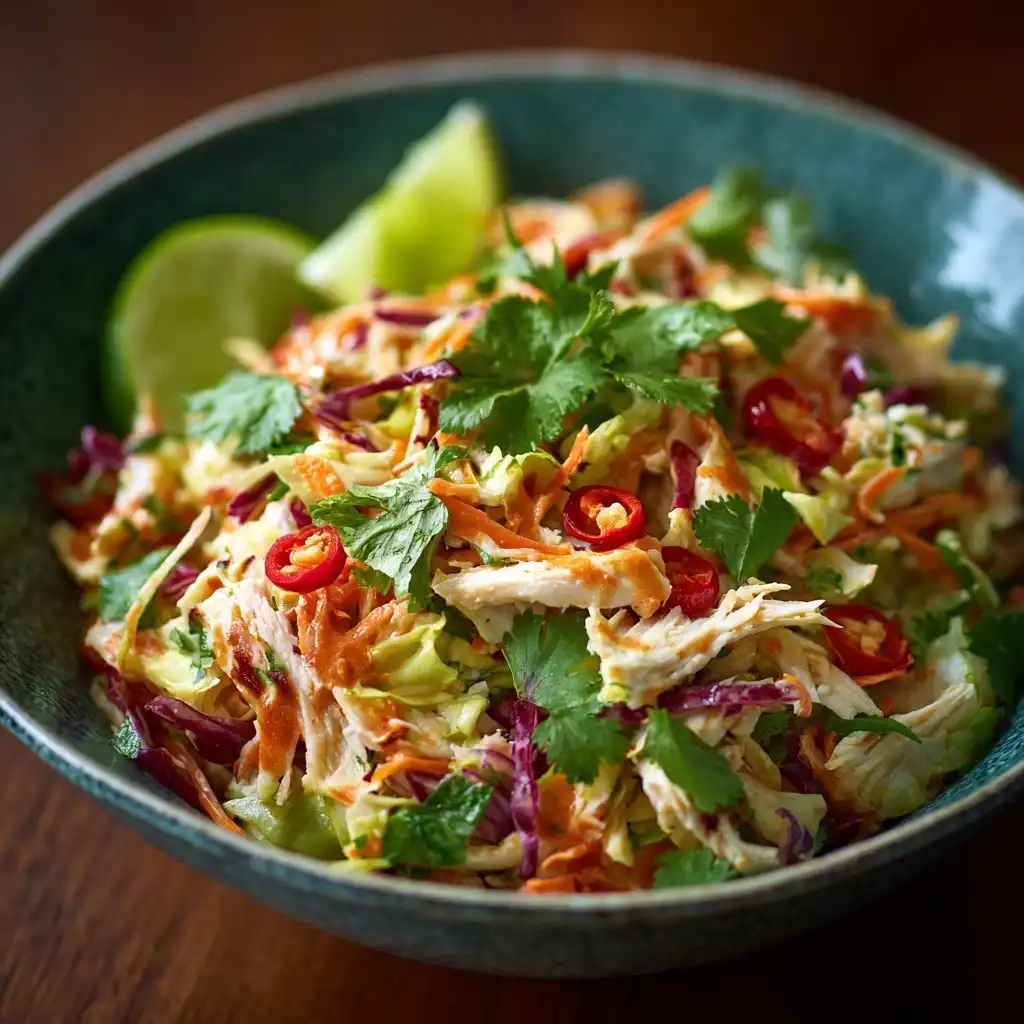
Thai Chicken Salad is a vibrant, zesty, and nutritionally balanced dish that embodies the soul of Southeast Asian cuisine—bold, aromatic, and refreshingly balanced. Unlike Western-style chicken salads drenched in heavy mayonnaise or creamy dressings, this Thai-inspired version celebrates the harmony of sweet, sour, salty, spicy, and umami flavors through fresh herbs, crisp vegetables, tender grilled or poached chicken, and a bright, herb-forward dressing. It’s as much a feast for the senses as it is a nourishing meal—light enough for a summer lunch yet substantial enough to serve as a main course for dinner. Whether served poolside on a hot afternoon, packed into a bento box for work, or presented elegantly at a dinner party, Thai Chicken Salad delivers complexity without compromise and freshness without fuss.
The History
While there is no single documented “origin story” for Thai Chicken Salad—as it is a modern fusion interpretation rather than a centuries-old royal recipe—it draws deeply from Thailand’s rich culinary traditions and regional foodways. Traditional Thai cuisine has long emphasized balance, texture contrast, and the use of raw and cooked elements together: think yam (spicy-sour salads), larb (minced meat salads with toasted rice and herbs), and phla (seafood-based “smoky” salads). These dishes are rarely served cold in isolation; instead, they’re communal, interactive, and designed to awaken the palate.
The “Thai Chicken Salad” as known internationally emerged in the late 20th and early 21st centuries—popularized first by Thai restaurants abroad seeking approachable gateway dishes, then embraced by health-conscious home cooks and food media. Chefs like David Thompson, Andy Ricker, and cookbook authors such as Nancie McDermott and Leela Punyaratabandhu helped contextualize authentic Thai salad principles for global audiences, paving the way for accessible adaptations featuring grilled chicken breast, cabbage, carrots, and peanuts. Its rise parallels broader trends toward clean eating, plant-forward meals, and globally inspired weeknight dinners—making it not just a recipe, but a cultural touchstone of culinary globalization done thoughtfully.
Ingredients Breakdown
Understanding each component—and why it matters—is key to mastering this salad. This isn’t just a list; it’s a symphony of function and flavor:
- Chicken: Boneless, skinless chicken breasts or thighs—preferably organic, air-chilled, and humanely raised. Thighs offer more moisture and richness; breasts yield leaner, firmer texture. Marinating before cooking adds depth; poaching preserves tenderness, while grilling imparts smoky char.
- Herbs: Fresh cilantro (coriander leaves), Thai basil, and mint are non-negotiable. Cilantro contributes citrusy brightness; Thai basil adds anise-like warmth and resilience to heat; mint brings cooling sweetness and aroma. Never substitute dried—freshness is structural here.
- Aromatics: Shallots (thinly sliced), garlic (minced or grated), and fresh red or green bird’s eye chilies (prik kee noo) provide layered pungency and heat. Lime zest amplifies citrus oil without acidity, while lemongrass (finely julienned inner core) lends floral-citrus backbone.
- Vegetables: Shredded green cabbage offers crunch and neutral base; julienned carrots add sweetness and color; cucumber ribbons (peeled or unpeeled, seeded) contribute cool hydration; bean sprouts bring enzymatic freshness and delicate snap. Optional additions include red bell pepper (for sweetness and crunch), sugar snap peas (blanched), or kohlrabi (for earthy crispness).
- Nuts & Seeds: Roasted unsalted peanuts are traditional—but cashews, macadamias, or even toasted sesame seeds offer textural nuance. For nut-free versions, use roasted sunflower or pumpkin seeds—or double down on crispy fried shallots or garlic.
- Dressing Foundation: Freshly squeezed lime juice (never bottled—its volatile oils dissipate rapidly); fish sauce (nam pla) for savory depth and fermented umami; palm sugar (or light brown sugar) for caramelized, low-molasses sweetness that balances acidity; and a touch of toasted sesame oil or neutral oil (like grapeseed or avocado) to emulsify and carry flavor.
- Umami & Heat Boosters (Optional but Recommended): A splash of tamarind paste for tangy complexity; a teaspoon of fermented shrimp paste (kapi) for funk-forward authenticity (use sparingly!); chili oil or sambal oelek for controllable heat; or a pinch of ground dried shrimp for oceanic savoriness.
Step-by-Step Recipe
- Prepare the Chicken: Pound chicken breasts to ½-inch thickness for even cooking. Marinate 20–30 minutes in 1 tbsp fish sauce, 1 tsp lime juice, 1 tsp minced garlic, and ½ tsp grated ginger. Grill over medium-high heat 4–5 minutes per side until internal temp reaches 165°F (74°C), or poach gently in simmering coconut-infused broth (1 cup water + ¼ cup coconut milk + 1 stalk lemongrass + 1 slice galangal) for 12–15 minutes. Rest 5 minutes, then slice thinly against the grain.
- Toast the Nuts: In a dry skillet over medium-low heat, toast ⅓ cup raw peanuts 4–6 minutes, shaking frequently, until golden and fragrant. Cool completely before chopping coarsely.
- Prep Aromatics & Herbs: Thinly slice 2 shallots (soak in ice water 10 minutes for crispness and mellow bite). Mince 1–2 Thai chilies (seeds removed for less heat). Finely julienne 1 stalk lemongrass (tender inner part only). Pick ½ cup cilantro leaves and stems, ¼ cup Thai basil leaves, and ¼ cup mint leaves—wash, spin-dry thoroughly.
- Shred Vegetables: Using a mandoline or sharp knife, shred 3 cups green cabbage, julienne 1 large carrot, ribbon ½ English cucumber (with peeler), and rinse 1 cup mung bean sprouts. Pat all *very* dry—excess water dilutes dressing.
- Make the Dressing: In a small bowl, whisk together ¼ cup fresh lime juice, 2 tbsp fish sauce, 1½ tbsp palm sugar (dissolved in 1 tsp warm water), 1 tsp toasted sesame oil, and 1 tbsp neutral oil. Stir in 1 tsp grated lime zest, 1 tsp minced garlic, and 1 finely chopped chili. Taste and adjust: more lime for brightness, more fish sauce for saltiness, more sugar for roundness.
- Assemble with Intention: In a large, wide mixing bowl, combine cabbage, carrots, cucumber, and sprouts. Add half the dressing and toss *gently* with clean hands or tongs—just enough to coat. Let sit 2 minutes to soften cabbage slightly. Add chicken, herbs, shallots, lemongrass, and peanuts. Drizzle remaining dressing. Toss *once more*, lightly—avoid bruising herbs.
- Rest & Serve: Let salad rest 5 minutes before serving—this allows flavors to marry without wilting. Garnish with extra herbs, lime wedges, crushed peanuts, and optional chili threads or edible flowers. Serve at room temperature—not chilled—to preserve aromatic volatility.
Tips
- Chicken Texture Is Everything: Overcooked chicken ruins the salad. Use a meat thermometer—165°F is the absolute max. Carryover cooking will raise temp 3–5°F after removal from heat. If grilling, oil the grates well and avoid pressing down with a spatula.
- Dry Ingredients Religiously: Wet lettuce = watery salad. Spin-dry herbs, cucumbers, and sprouts until no moisture remains—even a few drops weaken the dressing’s cling and mute flavor.
- Layer Dressing, Don’t Drown: Toss in stages: first veggies only, then add proteins and herbs. This prevents delicate leaves from turning limp and ensures even distribution without oversaturating.
- Chili Control: Bird’s eye chilies vary wildly in Scoville units—even within the same bunch. Slice one, taste the membrane (not the flesh), then decide how many to use. Remove seeds and white ribs for milder heat.
- Fish Sauce Nuance: Not all fish sauces are equal. Look for 3–4 star grade (nam pla with rao or extra premium on label), made from anchovies fermented ≥12 months. Red Boat, Squid, or Tiparos are reliable U.S. brands. Avoid “seasoning sauce” blends—they contain MSG, corn syrup, and caramel color.
- Lime Juice Timing: Squeeze limes *just before dressing prep*. Juice oxidizes quickly—within 15 minutes, top notes fade and bitterness emerges. Roll limes firmly on counter before cutting to maximize yield.
- Make-Ahead Strategy: Prep components separately up to 1 day ahead: cook & slice chicken (store airtight, chilled), toast nuts, julienne veggies (store in damp paper towel-lined container), make dressing (refrigerate up to 5 days). Assemble no more than 30 minutes before serving.
- Bowl Matters: Serve in wide, shallow bowls—not deep plates. This maximizes surface area for aroma release and visual appeal. Traditional Thai clay bowls or hand-thrown ceramics enhance authenticity and temperature retention.
Variations and Customizations
This salad is gloriously adaptable—here are 12 thoughtful, tested variations spanning dietary needs, seasonal availability, and global pantry swaps:
- Coconut-Glazed Chicken Version: Brush grilled chicken with a reduction of 2 tbsp coconut milk, 1 tbsp fish sauce, 1 tbsp palm sugar, and ½ tsp turmeric before final sear—adds creamy-savory depth and golden hue.
- Shrimp & Mango Twist: Replace chicken with sautéed wild Gulf shrimp and add 1 cup ripe mango cubes. Swap mint for cilantro-heavy profile and add 1 tbsp shredded unsweetened coconut.
- Vegan “No-Chicken” Option: Use marinated baked tofu, tempeh “bacon,” or king oyster mushroom “scallop” strips. Boost umami with 1 tsp white miso + ½ tsp liquid smoke in marinade.
- Low-Carb/Keto Adaptation: Double leafy greens (bok choy, butter lettuce, frisée), omit carrots and mango, use almond slivers instead of peanuts, and sweeten dressing with erythritol-blend (½ tsp) instead of palm sugar.
- Winter Root Veggie Edition: Swap cabbage for shaved fennel and kohlrabi; replace cucumber with roasted delicata squash ribbons; add pomegranate arils and candied ginger for festive contrast.
- Peanut Allergy-Safe: Use roasted pepitas, sunflower seeds, or crushed rice crackers. Infuse dressing with ½ tsp toasted sesame oil + 1 tsp tamari for nutty depth.
- Spice-Lover’s Fire Bowl: Add 1 tsp gochujang + ½ tsp Sichuan peppercorns (toasted & ground) to dressing; garnish with pickled mustard greens and crispy garlic chips.
- Herb-Forward “Green Goddess” Style: Triple the mint and Thai basil; add purslane or microgreens; finish with lemon verbena syrup (1:1 lemon juice/sugar infused with leaves) in dressing.
- Smoky Grilled Vegetable Version: Skip chicken; grill zucchini, eggplant, red onion, and shiitakes; marinate in dressing pre-grill for intensified char and absorption.
- Leftover-Friendly “Fridge Cleanout” Bowl: Toss in cooked quinoa or brown rice (cool completely), roasted sweet potato cubes, wilted spinach (blanched), and any fresh herbs on hand—even dill or parsley lend surprising synergy.
- Restaurant-Style “Yam Gai” Inspiration: Add 1 tbsp dried shrimp, 1 tsp fermented soybean paste (tauchu), and a sprinkle of toasted rice powder (kao kung) for authentic street-food funk and crunch.
- Kids’ Mild & Crunchy Version: Omit chilies entirely; use mild green serrano; swap fish sauce for 1 tsp soy sauce + ½ tsp bonito flakes (dissolved); add apple matchsticks and raisins for natural sweetness.
Health Considerations and Nutritional Value
A 2-cup serving (approx. 380g) of classic Thai Chicken Salad—with grilled chicken breast, cabbage, carrots, cucumber, herbs, peanuts, and standard dressing—offers exceptional macro- and micronutrient density:
- Calories: ~320–380 kcal (varies with oil/nut quantity)
- Protein: 28–32g (complete amino acid profile from chicken + peanuts)
- Fat: 16–20g (mostly heart-healthy monounsaturated fats from peanuts and sesame oil; zero trans fat)
- Carbohydrates: 14–18g (low-glycemic, high-fiber—6–8g dietary fiber from vegetables and peanuts)
- Vitamins & Minerals: Exceptionally high in Vitamin C (lime, herbs, peppers), Vitamin K (cabbage, herbs), folate (sprouts, herbs), potassium (cucumber, chicken), and magnesium (peanuts, greens). Contains bioactive compounds like apigenin (cilantro), rosmarinic acid (basil), and limonene (lime zest)—all linked to anti-inflammatory and antioxidant activity.
Dietary Notes:
- Gluten-Free: Naturally GF—if using certified GF fish sauce (some contain wheat; check labels) and avoiding soy sauce substitutes with hydrolyzed wheat protein.
- Dairy-Free & Vegan-Adaptable: No dairy present; easily modified (see Variations section).
- Low-Sodium Option: Reduce fish sauce by half and boost flavor with extra lime, herbs, roasted garlic, and a pinch of sea salt. Opt for low-sodium fish sauce (available in Asian markets).
- Weight Management Friendly: High-volume, low-energy-density food—fills you up with minimal calories thanks to water-rich vegetables and satiating protein/fat combo.
- Gut Health Supportive: Raw herbs and vegetables provide prebiotic fibers; fermented fish sauce contains beneficial microbes (though pasteurized versions lose live cultures—choose artisanal, unpasteurized brands if available and safe for your region).
- Cautions: Those with histamine intolerance may react to aged fish sauce or fermented ingredients; substitute coconut aminos. Peanuts pose allergy risk—always label clearly when serving others.
Ingredients
- 2 boneless, skinless chicken breasts (about 1 lb / 450g), pounded to ½-inch thickness
- ¼ cup fresh lime juice (from about 3–4 limes)
- 3 tbsp premium fish sauce (such as Red Boat or Squid brand)
- 2 tbsp palm sugar (or light brown sugar), finely grated or dissolved in 1 tsp warm water
- 1½ tsp toasted sesame oil
- 1 tbsp neutral oil (grapeseed, avocado, or refined coconut)
- 2 shallots, very thinly sliced (soaked in ice water 10 minutes, drained and patted dry)
- 1–2 Thai bird’s eye chilies, finely minced (seeds removed for milder heat)
- 1 stalk lemongrass, tender inner core only, very finely julienned
- 3 cups shredded green cabbage (core removed, tightly packed)
- 1 large carrot, julienned or grated
- ½ English cucumber, peeled, seeded, and cut into thin ribbons
- 1 cup mung bean sprouts, rinsed and patted extremely dry
- ½ cup fresh cilantro leaves and tender stems
- ¼ cup Thai basil leaves
- ¼ cup fresh mint leaves
- ⅓ cup roasted unsalted peanuts, coarsely chopped
- Lime wedges, extra chopped peanuts, and chili threads for garnish
Optional Marinade for Chicken: 1 tbsp fish sauce, 1 tsp lime juice, 1 tsp minced garlic, ½ tsp grated ginger, ½ tsp white pepper.
Directions
- In a small bowl, prepare the dressing: Whisk together lime juice, fish sauce, palm sugar (or sugar solution), toasted sesame oil, and neutral oil until sugar is fully dissolved. Stir in lime zest (if using), minced garlic, and minced chili. Set aside.
- Marinate chicken (if using optional marinade) for 20–30 minutes at room temperature. Heat grill pan or outdoor grill to medium-high. Lightly oil grates. Cook chicken 4–5 minutes per side until internal temperature reaches 165°F (74°C). Transfer to cutting board, tent loosely with foil, and rest 5 minutes. Slice thinly against the grain.
- Toast peanuts in a dry skillet over medium-low heat 4–6 minutes, stirring constantly, until golden and fragrant. Cool completely, then chop coarsely.
- Prep aromatics: Drain and pat dry soaked shallots. Julienne lemongrass core. Wash and spin-dry all herbs and vegetables thoroughly—crucial step!
- In a large mixing bowl, combine cabbage, carrot, cucumber, and bean sprouts. Add half the dressing and toss gently with hands or tongs until evenly coated. Let sit 2 minutes.
- Add sliced chicken, herbs (cilantro, basil, mint), shallots, lemongrass, and chopped peanuts. Drizzle remaining dressing over top.
- Toss *once more*, very gently—just enough to distribute ingredients without bruising delicate herbs.
- Let rest 5 minutes for flavors to meld. Taste and adjust: a pinch more fish sauce for savoriness, lime for brightness, or sugar for balance.
- Serve immediately at room temperature in wide, shallow bowls. Garnish generously with lime wedges, extra peanuts, and optional chili threads or edible flowers.
FAQ
- Can I make this salad ahead of time?
- Yes—but never fully assembled. You can prep and refrigerate components separately up to 24 hours: cooked & sliced chicken (in airtight container), toasted nuts (in cool, dry jar), julienned veggies (in container lined with damp paper towel), and dressing (refrigerated). Assemble no sooner than 30 minutes before serving to preserve texture and aroma.
- What can I use instead of fish sauce?
- For vegetarian/vegan: coconut aminos (milder, sweeter) or liquid aminos (soy-based, saltier). For depth without fish: 1 tsp white miso + 1 tsp rice vinegar + ½ tsp soy sauce. Note: substitutions alter authenticity—fish sauce is irreplaceable for true Thai balance.
- Why does my salad taste bland or “flat”?
- Most commonly: lime juice was bottled (loses volatile oils), fish sauce is low-grade or expired, sugar wasn’t fully dissolved, or vegetables weren’t dried—diluting dressing. Also common: skipping lime zest (brightens top notes) or using insufficient chilies (heat lifts flavor perception). Always taste dressing *before* tossing.
- Can I use pre-shredded cabbage from the bag?
- You can—but it’s often treated with calcium chloride to retain crunch, which interferes with dressing absorption and adds subtle bitterness. Freshly shredded cabbage is sweeter, more tender, and carries dressing beautifully. Worth the 90 seconds.
- Is Thai basil essential—or can I use regular basil?
- Thai basil is strongly recommended. Its licorice-anise notes and sturdy leaves hold up to acidic dressing and don’t blacken like sweet basil. If unavailable, use a mix of ¾ sweet basil + ¼ mint—but expect a milder, greener profile.
- How spicy is this salad traditionally?
- Authentically, it’s “moderately spicy”—a warming tingle, not face-melting heat. Bird’s eye chilies average 50,000–100,000 SHU, but only 1–2 are used for the whole batch. Adjust to your tolerance—start with ½ chili, taste dressing, then add more.
- Can I add rice or noodles?
- Absolutely—transform it into a heartier “salad bowl.” Add ½ cup cooked jasmine rice, brown rice, or cold rice noodles. Reduce dressing by 1 tbsp to prevent sogginess. For gluten-free, use 100% rice vermicelli.
- My chicken turned out dry—what went wrong?
- Overcooking is the #1 culprit. Use a thermometer—remove at 160–162°F (71–72°C); carryover will reach 165°F. Also, pounding ensures even thickness; marinating adds moisture; and resting lets juices redistribute. Poaching in flavorful broth is the gentlest method.
- Can I freeze leftovers?
- No—freezing destroys the texture of fresh herbs, cucumbers, and sprouts, and causes dressing separation. Best enjoyed fresh. Refrigerate uneaten portions up to 12 hours (without herbs/nuts), then refresh with new garnishes.
- Is this salad suitable for meal prep?
- Yes—with strategy. Portion dressed base (veggies + chicken) into jars—keep herbs, nuts, and lime wedges separate in small containers. Assemble each morning. Stays vibrant for 3–4 days when prepped this way.
Summary
Thai Chicken Salad is a masterclass in balancing bold Thai flavors—tangy lime, funky fish sauce, aromatic herbs, and fiery chilies—with crisp, colorful vegetables and tender, protein-rich chicken, all bound by a vibrant, emulsified dressing that sings on the palate.
It’s endlessly customizable, nutritionally dense, culturally resonant, and effortlessly elegant—proving that healthy eating need never sacrifice excitement, authenticity, or soul-satisfying depth.