
Introduction
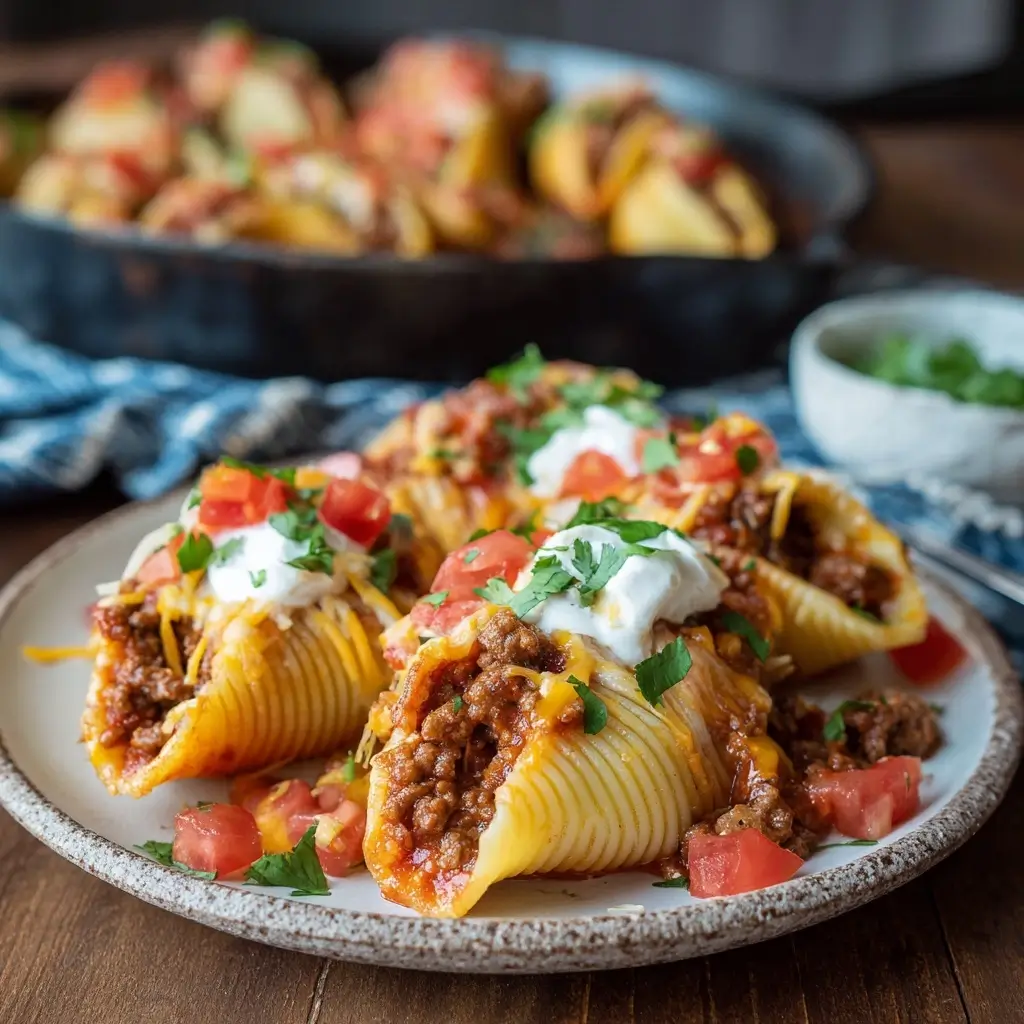
Taco Stuffed Shells are a vibrant, crowd-pleasing fusion dish that marries the comforting, cheesy indulgence of classic stuffed pasta with the bold, zesty flavors of Mexican-inspired street food. Imagine tender jumbo pasta shells—plump, slightly chewy, and perfectly al dente—filled to bursting with a savory, spiced ground beef (or plant-based) taco filling, then generously layered with melted Monterey Jack and sharp cheddar cheeses, topped with a golden, bubbly cheese crust, and finished with fresh, colorful garnishes like crisp lettuce, juicy tomatoes, creamy guacamole, tangy sour cream, and zingy pickled red onions. This dish is more than just dinner—it’s an experience: hearty enough for family weeknights, impressive enough for game-day spreads or potlucks, and endlessly adaptable to dietary preferences and pantry realities. Whether you’re a seasoned home cook or a beginner looking for a reliable, flavorful centerpiece recipe, Taco Stuffed Shells deliver satisfaction in every bite—and offer a playful, customizable canvas that invites creativity without compromising on comfort.
The History
While no single chef or restaurant can claim sole authorship of Taco Stuffed Shells, this inventive dish is a quintessential product of American culinary evolution—born from the cross-pollination of Italian-American pasta traditions and the rising mainstream popularity of Tex-Mex and Southwestern flavors beginning in the mid-to-late 20th century. Its lineage traces back to two foundational pillars: first, the beloved Italian-American “stuffed shells” (conchiglie ripiene), which emerged in U.S. immigrant communities as a budget-friendly, make-ahead casserole using affordable jumbo pasta, ricotta, mozzarella, and Parmesan; second, the widespread adoption of taco seasoning, canned tomatoes, and taco-style ground beef fillings in postwar American kitchens—accelerated by the commercial success of brands like Old El Paso in the 1950s and 1960s. By the 1980s and 1990s, home cooks began experimenting with hybrid concepts—replacing traditional ricotta mixtures with seasoned meat fillings—and food magazines, community cookbooks, and early internet recipe forums helped codify variations. The dish gained viral traction in the 2010s via Pinterest and Facebook groups, where its photogenic layers, make-ahead convenience, and kid-friendly appeal made it a staple for busy parents and meal-prep enthusiasts alike. Today, Taco Stuffed Shells stand as a delicious testament to culinary adaptation—honoring tradition while boldly embracing flavor fusion, regional diversity, and the modern desire for dishes that are both deeply satisfying and effortlessly shareable.
Ingredients Breakdown
Every exceptional Taco Stuffed Shell begins with thoughtful, high-quality ingredients—each playing a distinct role in building texture, depth, balance, and authenticity. Let’s explore them in detail:
- Jumbo Pasta Shells (30–36 count): Specifically “jumbo” or “extra-large” conchiglie—these are non-negotiable. Their wide, cup-like shape holds generous fillings without tearing, provides structural integrity during baking, and creates delightful pockets of sauce and cheese. Look for bronze-die extruded varieties for superior sauce adhesion and al dente resilience.
- Ground Beef (1½ lbs, 85/15 lean-to-fat ratio): The ideal fat content ensures rich flavor and moisture without greasiness. For a lighter option, substitute 93/7 ground turkey or chicken—but add 1 tbsp olive oil when browning to compensate for lower fat. Plant-based cooks can use certified taco-seasoned crumbles (like Beyond Meat or Gardein) or finely chopped, sautéed lentils + walnuts for umami-rich texture.
- Taco Seasoning (2 tbsp homemade or 1 standard packet): Store-bought packets are convenient but often loaded with sodium, anti-caking agents, and MSG. Our recommended homemade blend includes 1 tsp chili powder (Ancho for depth, Chipotle for smoke), ½ tsp ground cumin, ½ tsp smoked paprika, ¼ tsp garlic powder, ¼ tsp onion powder, ¼ tsp dried oregano, ⅛ tsp cayenne (adjustable), and ½ tsp fine sea salt—freshly toasted and ground for maximum aroma.
- Aromatics & Flavor Builders: 1 large yellow onion (finely diced), 4 garlic cloves (minced), 1 poblano pepper (diced for mild heat and earthy sweetness), and 1 tbsp tomato paste—cooked low and slow to deepen savoriness and eliminate raw edges.
- Liquid Components: ½ cup low-sodium beef or vegetable broth (for moisture and collagen-rich richness) + ½ cup crushed fire-roasted tomatoes (not plain tomato sauce)—the charred notes add dimension and prevent dryness.
- Cheese Blend (3 cups total, shredded): A strategic trio: 1½ cups sharp cheddar (for tang and melt), 1 cup Monterey Jack (for buttery stretch), and ½ cup freshly grated Parmesan (for salty, nutty umami). Avoid pre-shredded cheeses—they contain cellulose and anti-caking agents that hinder melting.
- Creamy Element: 1 cup full-fat ricotta cheese (drained overnight in cheesecloth if watery) — provides essential creaminess, mild sweetness, and binding power. Substitute with small-curd cottage cheese (blended until smooth) for extra protein and less richness.
- Herbs & Brighteners: ¼ cup fresh cilantro (stems included for intensity), juice of 1 lime (added off-heat to preserve brightness), and 1 tsp apple cider vinegar (a secret acidity booster that balances richness).
- For Baking & Topping: 2 cups enchilada sauce (red or green—homemade preferred) or mild salsa verde for layering; additional 1 cup shredded cheese for the crown; and optional toppings: pickled jalapeños, crumbled queso fresco, avocado crema, microgreens, and radish ribbons.
Step-by-Step Recipe
- Prep & Preheat: Bring a large stockpot of heavily salted water (2 tbsp kosher salt per gallon) to a rolling boil. Meanwhile, preheat oven to 375°F (190°C). Lightly grease a 9×13-inch ceramic or glass baking dish with olive oil or cooking spray.
- Cook the Shells: Add jumbo shells to boiling water. Cook for 9–10 minutes—just until pliable but still very firm (they’ll finish cooking in the oven). Drain thoroughly in a colander, then rinse under cool water to halt cooking and prevent sticking. Lay shells in a single layer on parchment-lined baking sheets; gently separate any that cling. Set aside.
- Sauté Aromatics: In a large Dutch oven or heavy-bottomed skillet over medium heat, warm 2 tbsp olive oil. Add diced onion, poblano, and a pinch of salt. Sauté 5–6 minutes until softened and translucent. Stir in minced garlic and tomato paste; cook 2 minutes more until fragrant and brick-red—this step builds foundational umami.
- Brown the Meat: Increase heat to medium-high. Add ground beef in even crumbles. Cook undisturbed 2 minutes, then break apart with a wooden spoon. Continue cooking 6–8 minutes until deeply browned and no pink remains. Drain excess fat (leave ~1 tbsp for flavor).
- Season & Simmer: Sprinkle in all taco spices (homemade or packet) and stir vigorously for 1 minute to toast. Pour in broth and crushed fire-roasted tomatoes. Reduce heat to low, cover, and simmer gently for 12–15 minutes—stirring occasionally—until thickened and glossy. Remove from heat; stir in lime juice, apple cider vinegar, and half the cilantro. Cool filling to lukewarm (critical for ricotta stability).
- Prepare Cheese Filling: In a large bowl, combine drained ricotta, 1½ cups shredded cheddar/Monterey Jack blend, ½ cup Parmesan, remaining cilantro, and a generous pinch of black pepper. Mix gently with a spatula until uniform—do not overmix or whip air in.
- Combine Fillings: Gently fold the cooled taco mixture into the ricotta-cheese blend in two additions, using a folding motion to preserve texture and avoid breaking down the ricotta. Taste and adjust salt—remember cheese adds saltiness.
- Stuff the Shells: Using a small cookie scoop (1.5 tbsp capacity) or a piping bag with a wide tip, fill each shell generously—about 2 heaping tablespoons. Place upright in prepared baking dish, snug but not crushed. Discard any broken shells or repurpose for a “chef’s snack.”
- Layer Sauce & Cheese: Evenly spoon 1½ cups enchilada sauce over and around shells, ensuring coverage without submerging them. Sprinkle remaining 1 cup shredded cheese evenly across the top.
- Bake to Perfection: Cover dish tightly with aluminum foil (tent it slightly to prevent cheese from sticking). Bake 25 minutes. Remove foil and bake uncovered 12–15 minutes more until cheese is deeply golden, bubbling at edges, and internal temperature reaches 165°F (74°C) when checked with an instant-read thermometer in the center shell.
- Rest & Serve: Let rest 10 minutes before serving—this allows juices to redistribute and shells to set, preventing collapse. Garnish lavishly: dollops of cool sour cream, bright pico de gallo, sliced avocado, crumbled cotija, and a final flourish of fresh cilantro.
Tips
- Al Dente is Non-Negotiable: Undercook shells by 2–3 minutes—overcooked pasta turns mushy and disintegrates during baking. Test at 8 minutes: they should resist gentle pressure but bend without snapping.
- Cool That Filling: Never mix hot taco meat directly with ricotta—it will curdle and weep. Let it cool to room temperature (about 20–25 minutes) or chill 10 minutes in the freezer—this ensures a smooth, cohesive, sliceable filling.
- Drain Ricotta Like a Pro: Line a fine-mesh strainer with cheesecloth or paper towels, add ricotta, and refrigerate 2+ hours—or overnight. You’ll gain ¼–½ cup of liquid, yielding denser, richer stuffing.
- Season in Layers: Salt the pasta water generously, season the aromatics, taste the meat mixture before adding ricotta, and adjust final filling with flaky sea salt—not just at the end. Layered salting builds complexity.
- Enchilada Sauce Matters: Use a quality red or green sauce—not plain tomato sauce. If making homemade, simmer dried chiles (guajillo + ancho for red; tomatillo + serrano for green) with onion, garlic, and cumin for 30+ minutes. Canned sauces vary wildly—look for “no added sugar” and “real chile peppers” on the label.
- Baking Dish Choice: Ceramic or stoneware distributes heat evenly and retains warmth longer than metal. If using glass, reduce oven temp by 25°F and check 5 minutes earlier—the sides may brown faster.
- Make-Ahead Magic: Assemble up to 24 hours ahead: stuff shells, arrange in dish, cover tightly, and refrigerate. Add 5–8 minutes to covered bake time. For freezer prep: freeze unbaked, fully assembled dish (wrap in double foil + plastic); thaw overnight in fridge before baking.
- Prevent Soggy Bottoms: Lightly coat the baking dish with sauce *before* placing shells—creates a moisture barrier. Also, avoid over-saucing; too much liquid causes steaming instead of baking.
- Texture Contrast is Key: Always serve with crunchy elements—shredded iceberg or romaine, crushed tortilla chips, or jicama matchsticks—to cut through richness and elevate mouthfeel.
- Resist Overmixing: When combining meat and cheese mixture, fold gently—like folding meringue into batter. Aggressive stirring breaks down the ricotta and releases whey, leading to separation.
Variations and Customizations
Taco Stuffed Shells are gloriously versatile—designed to adapt to seasons, pantries, dietary needs, and flavor moods. Here’s how to reinvent them with confidence:
- Protein Swaps: Swap beef for ground chorizo (reduce added fat), shredded carnitas (simmered in orange and cumin), pulled jackfruit (simmered in chipotle adobo), or crispy crumbled tempeh (marinated in liquid smoke + cumin + tamari).
- Vegetarian Powerhouse: Replace meat with 1½ cups cooked black beans (rinsed), 1 cup roasted sweet potato cubes, ½ cup sautéed mushrooms, ¼ cup toasted pepitas, and 2 tbsp nutritional yeast for cheesy depth. Add 1 tsp chipotle powder for smokiness.
- Vegan Version: Use tofu ricotta (blended firm tofu + lemon juice + garlic + nutritional yeast), vegan cheddar shreds (Miyoko’s or Daiya), and cashew-based queso blanco. Skip dairy entirely—rely on roasted corn, caramelized onions, and chipotle-lime crema for richness.
- Low-Carb/Keto Adaptation: Substitute jumbo shells with large, blanched napa cabbage leaves or roasted portobello caps. Fill with high-fat taco meat (add avocado oil), extra cheese, and sour cream. Bake at 400°F for 15 minutes.
- Breakfast Stuffed Shells: Fill with scrambled eggs, chorizo, roasted potatoes, sautéed spinach, and queso fresco. Top with hollandaise or avocado crema—bake at 350°F for 18 minutes.
- Seafood Twist: Use lump crab or seasoned shrimp with Old Bay, lemon zest, and tarragon. Mix with mascarpone instead of ricotta and top with Gruyère. Finish with dill and lemon wedges.
- Global Fusion Flavors: Korean-Mexican: swap taco seasoning for gochujang + soy + ginger + sesame oil; add kimchi relish and nori strips. Indian-Inspired: use garam masala, turmeric, and ginger-garlic paste; fill with spiced paneer and peas; top with mint-cilantro chutney.
- Spice-Level Spectrum: Mild: omit cayenne, use poblano only. Medium: add 1 deseeded jalapeño. Hot: include 1–2 serranos + ½ tsp cayenne + chipotle powder. Extra Heat: stir in 1 tsp ghost pepper powder *after* baking—never during cooking.
- Gluten-Free Option: Use certified GF jumbo shells (Barilla or Jovial). Ensure all seasonings, broth, and sauces are GF-certified—many taco packets contain wheat-derived maltodextrin.
- Meal-Prep Friendly: Stuff shells individually, freeze on a tray, then bag. Reheat in toaster oven at 375°F for 18–22 minutes—perfect for single servings without waste.
Health Considerations and Nutritional Value
When thoughtfully composed, Taco Stuffed Shells can be a nutritionally balanced, protein-forward, fiber-rich entrée—far beyond “comfort food” stereotypes. A standard serving (3 stuffed shells + ¼ cup sauce + 2 tbsp toppings) delivers approximately 480–520 calories, with 28–32g protein, 22–26g carbohydrates (including 3–4g fiber), and 26–30g total fat (11–13g saturated). Let’s unpack key health considerations and smart optimizations:
- Protein Power: Ground beef contributes complete protein, iron (heme iron, highly bioavailable), zinc, and B12. Opting for grass-fed beef adds omega-3s and conjugated linoleic acid (CLA), linked to anti-inflammatory benefits. For plant-based versions, combining beans + cheese + seeds offers complementary amino acids.
- Fiber Focus: Traditional recipes skimp on fiber—but easy upgrades abound: add ½ cup finely grated zucchini or carrots to the meat mixture (they disappear but boost volume and micronutrients), stir in 2 tbsp ground flaxseed into the ricotta, or top with high-fiber black bean salsa or roasted nopales (cactus paddles).
- Sodium Savvy: Store-bought taco seasoning and enchilada sauce are sodium landmines—often containing 400–600mg per serving. Homemade seasoning slashes sodium by 70%. Use low-sodium broth and rinse canned beans thoroughly. Rely on herbs, citrus, and spice—not salt—for flavor.
- Healthy Fat Strategy: While cheese and meat provide satiating fats, prioritize unsaturated sources: drizzle finished shells with avocado oil or toasted sesame oil, garnish with sliced avocado or hemp hearts, and use olive oil instead of butter for sautéing.
- Digestive Wellness: Garlic, onions, and fermented toppings (pickled red onions, jalapeños, or a spoonful of kimchi) support gut microbiota. Adding 1 tsp apple cider vinegar also aids digestion and stabilizes blood sugar response.
- Glycemic Balance: Pasta shells have a moderate glycemic index (~45), especially when cooked al dente and paired with protein/fat/fiber. For lower-GI impact, choose whole-wheat or legume-based shells (lentil or chickpea pasta), which add 5–7g extra fiber and slow glucose absorption.
- Nutrient Density Boosters: Stir 1 tsp spirulina powder into ricotta for iron and antioxidants. Top with microgreens (sunflower or radish) for sulforaphane and vitamin K. Add roasted cherry tomatoes for lycopene—a potent antioxidant enhanced by heat and fat.
- Portion & Mindful Eating: Serve shells alongside a large leafy green salad dressed with lime vinaigrette—increases volume, fiber, and satiety without added calories. Encourage slower eating: the resting time (10 min) isn’t just practical—it supports mindful enjoyment and better digestion.
- Allergen Awareness: Naturally free of nuts, eggs, and soy (if using beef and dairy cheeses), but easily adapted: use sunflower seed “ricotta” for nut allergies, soy-free cheese for soy sensitivity, and coconut aminos instead of soy-based sauces.
- For Diabetics & Heart Health: Emphasize lean proteins, limit cheese to 1½ cups total, increase non-starchy veggie content (spinach, bell peppers, corn), and pair with a side of grilled asparagus or broccoli. Monitor portion size—2–3 shells is ample with balanced sides.
Ingredients
- 30–36 jumbo pasta shells (about 12 oz)
- 1½ lbs 85/15 ground beef (or ground turkey/chicken/plant-based crumbles)
- 2 tbsp homemade taco seasoning (see breakdown) OR 1 (1-oz) packet unsalted taco seasoning
- 2 tbsp olive oil, divided
- 1 large yellow onion, finely diced
- 1 poblano pepper, finely diced
- 4 garlic cloves, minced
- 1 tbsp tomato paste
- ½ cup low-sodium beef or vegetable broth
- ½ cup crushed fire-roasted tomatoes (no salt added)
- 1 cup full-fat ricotta cheese, well-drained
- 1½ cups sharp cheddar cheese, shredded
- 1 cup Monterey Jack cheese, shredded
- ½ cup freshly grated Parmesan cheese
- ¼ cup fresh cilantro, finely chopped (stems included)
- Juice of 1 lime (about 2 tbsp)
- 1 tsp apple cider vinegar
- ½ tsp freshly ground black pepper
- 2 cups red or green enchilada sauce (low-sodium, no added sugar)
- 1 cup additional shredded cheddar/Monterey Jack blend (for topping)
- Kosher salt, to taste (start with 1 tsp, adjust after cooling)
Directions
- Bring 5 quarts of water to a rolling boil in a large stockpot. Add 2 tbsp kosher salt. Carefully add jumbo shells and cook for 9–10 minutes, stirring gently every 2 minutes, until pliable but very firm. Drain in a colander and rinse under cool water. Spread shells in a single layer on parchment-lined baking sheets. Set aside to air-dry slightly.
- Heat 1 tbsp olive oil in a large Dutch oven over medium heat. Add onion and poblano; season with ¼ tsp salt. Sauté 5–6 minutes until softened. Stir in garlic and tomato paste; cook 2 minutes until fragrant and deepened in color.
- Increase heat to medium-high. Add ground beef in even crumbles. Cook undisturbed 2 minutes, then break apart. Continue cooking 6–8 minutes until deeply browned. Drain excess fat, leaving ~1 tbsp.
- Sprinkle in taco seasoning. Stir constantly for 1 minute to toast spices. Pour in broth and crushed tomatoes. Reduce heat to low, cover, and simmer 12–15 minutes, stirring occasionally, until thickened. Remove from heat. Stir in lime juice, apple cider vinegar, and half the cilantro. Cool completely to room temperature (20–25 minutes).
- In a large bowl, combine ricotta, 1½ cups cheddar/Jack blend, ½ cup Parmesan, remaining cilantro, black pepper, and ½ tsp salt. Mix gently with a spatula until uniform.
- Gently fold cooled taco mixture into ricotta mixture in two additions, using a folding motion. Taste and adjust salt only after full incorporation.
- Preheat oven to 375°F (190°C). Lightly grease a 9×13-inch baking dish. Spoon ½ cup enchilada sauce into the bottom of the dish and spread evenly.
- Using a 1.5-tbsp cookie scoop or piping bag, fill each shell generously. Place upright in dish, snug but not touching. Pour remaining 1 cup enchilada sauce over and around shells.
- Sprinkle remaining 1 cup cheese evenly over the top. Cover tightly with foil (tent slightly).
- Bake covered for 25 minutes. Remove foil and bake uncovered 12–15 minutes, until cheese is golden and bubbling and internal temperature reaches 165°F.
- Let rest 10 minutes. Garnish with sour cream, pico de gallo, avocado slices, crumbled queso fresco, and extra cilantro. Serve warm.
FAQ
- Can I make these ahead of time?
- Absolutely! Assemble up to 24 hours in advance: stuff shells, arrange in dish, cover tightly with plastic wrap + foil, and refrigerate. Add 5–8 minutes to the initial covered bake time. For longer storage, freeze unbaked (double-wrap in foil + plastic); thaw overnight in fridge before baking.
- Why do my shells crack when I stuff them?
- Shells crack when overcooked (they become fragile) or handled while too hot. Always rinse with cool water after boiling, let cool 2–3 minutes, and handle gently with tongs. If a shell cracks, use it as a “filler” in the center of the dish—topping sauce hides imperfections.
- Can I use ricotta substitutes?
- Yes—but texture varies. Small-curd cottage cheese (blended until smooth) works best for similar creaminess and protein. Mascarpone is richer but lacks binding power—mix with 2 tbsp Greek yogurt. Silken tofu blended with lemon and nutritional yeast makes a viable vegan option.
- My filling is too wet—what went wrong?
- Common causes: ricotta wasn’t drained, meat mixture wasn’t cooled sufficiently, or too much liquid (broth/tomatoes) was added. Next time, drain ricotta overnight, cool filling completely, and simmer meat mixture 2–3 minutes longer to evaporate excess moisture.
- What’s the best cheese for melting and flavor?
- Monterey Jack melts smoothly and buttery; sharp cheddar adds tang and structure; Parmesan lends umami depth. Avoid pre-shredded blends—they contain anti-caking agents that inhibit melting. Freshly grate all cheeses for optimal performance.
- Can I bake these in individual ramekins?
- Yes! Use 6-oz ramekins. Fill each with 3–4 shells, ½ cup filling, and 2 tbsp sauce. Top with cheese. Bake covered at 375°F for 20 minutes, uncovered for 8–10 minutes. Perfect for portion control and elegant presentation.
- How do I reheat leftovers without drying them out?
- Best method: cover tightly with damp paper towel and microwave in 30-second intervals until warmed through (usually 90 seconds). For oven reheating: add 1 tbsp broth or water to dish, cover with foil, and bake at 350°F for 15 minutes.
- Are Taco Stuffed Shells gluten-free?
- Only if you use certified gluten-free jumbo shells (like Barilla GF or Jovial) and verify all sauces, seasonings, and broths are GF-certified. Many taco packets contain wheat-derived fill
Advertisment