
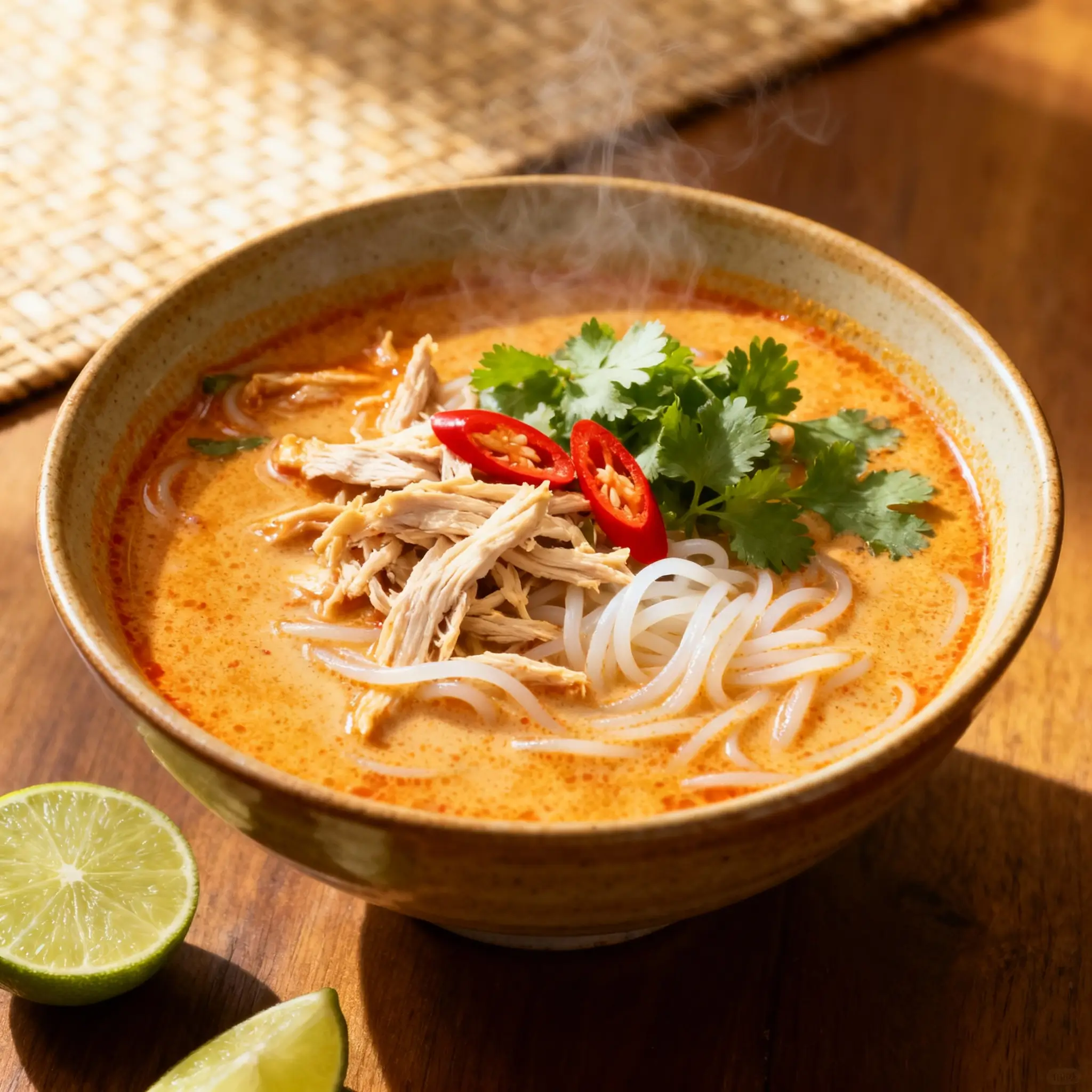
Spicy Thai Coconut Noodle Soup: A Flavorful Journey Through Thailand’s Culinary Soul
The History of Spicy Thai Coconut Noodle Soup
Spicy Thai Coconut Noodle Soup, often referred to as Tom Yum Ba Mee or a fusion variation of Tom Kha and traditional noodle soups, has its roots deeply embedded in the rich culinary traditions of Thailand. The history of Thai cuisine is one of balance—balancing sweet, sour, salty, bitter, and spicy flavors in every dish. Coconut milk-based soups have been a staple in Southern and Central Thai cooking for centuries, where coconut palms are abundant and seafood and poultry are commonly used proteins.
The use of aromatic herbs like lemongrass, galangal, kaffir lime leaves, and chilies dates back to ancient Thai medicine and Ayurvedic influences from India. These ingredients were not only prized for their flavor but also for their digestive and immune-boosting properties. Over time, as trade routes expanded, Thai cooks began incorporating noodles—likely influenced by Chinese immigration—which led to the evolution of hearty, soup-based meals that combined fragrant broths with soft rice or egg noodles.
Modern versions of Spicy Thai Coconut Noodle Soup emerged in the 20th century as urbanization and globalization brought regional dishes into mainstream Thai restaurants. Today, this soup is celebrated worldwide for its bold, complex flavors and comforting warmth. It’s a dish that tells the story of Thailand’s diverse cultural influences, agricultural abundance, and culinary ingenuity.
Ingredients Breakdown: What Makes This Soup Sing?
The magic of Spicy Thai Coconut Noodle Soup lies in its harmonious blend of fresh aromatics, creamy coconut milk, fiery chilies, and umami-rich seasonings. Let’s break down the key components:
- Lemongrass: Fresh stalks are bruised and simmered to release citrusy, floral notes without becoming bitter. It forms the backbone of the broth’s fragrance.
- Galangal: Often mistaken for ginger, galangal is sharper, more pine-like, and essential for authentic Thai flavor. It adds depth and warmth without overpowering.
- Kaffir Lime Leaves: These glossy green leaves contribute a distinctive citrus aroma that enhances the soup’s freshness. They’re typically torn and added whole, removed before serving.
- Fresh Chilies (Thai Bird’s Eye or Red Fresno): Bring the heat! Adjust quantity based on spice tolerance. They add both capsaicin fire and fruity undertones.
- Coconut Milk: Full-fat canned coconut milk provides richness and mellows the spiciness, creating a velvety texture that coats each spoonful.
- Fish Sauce: The umami powerhouse. It seasons the soup with savory depth and saltiness, balancing sweetness and acidity.
- Lime Juice: Freshly squeezed lime juice adds bright acidity, cutting through the richness and elevating all other flavors.
- Rice Noodles or Egg Noodles: Soft, springy noodles absorb the flavorful broth. Rice noodles keep it gluten-free; egg noodles add protein and heartiness.
- Protein (Chicken, Shrimp, Tofu, or Pork): Common choices include thinly sliced chicken breast, peeled shrimp, or pan-seared tofu for vegetarians. Each adds texture and sustenance.
- Mushrooms (Straw, Oyster, or Shiitake): Add earthiness and meaty texture, enhancing the soup’s body and nutritional value.
- Garlic and Shallots: Sautéed at the beginning to build a flavor foundation.
- Cilantro and Green Onions: Fresh herbs sprinkled on top for color, aroma, and a burst of freshness.
- Sriracha or Chili Oil (optional): For those who crave extra heat, these can be drizzled on top or served on the side.
Step-by-Step Recipe: How to Make Spicy Thai Coconut Noodle Soup at Home
Creating this vibrant soup at home is easier than you think. Follow these detailed steps to achieve restaurant-quality results in your kitchen.
- Prepare the Aromatics: Using a mortar and pestle or chef’s knife, lightly crush 2 stalks of lemongrass (white part only, finely chopped). Slice 3 thin rounds of galangal (or substitute ginger if unavailable). Tear 3–4 kaffir lime leaves into pieces. Mince 2 cloves of garlic and 1 small shallot.
- Sauté the Base: Heat 1 tablespoon of coconut oil in a large pot over medium heat. Add the minced garlic and shallot, sautéing for 1–2 minutes until fragrant. Add the lemongrass, galangal, and kaffir lime leaves, stirring for another minute to toast the aromatics.
- Bloom the Spices: Add 1–2 chopped red chilies (seeds in for heat, out for milder flavor) and stir briefly. You can also add 1 teaspoon of red curry paste here for deeper complexity.
- Add Liquids: Pour in 4 cups of vegetable or chicken broth. Bring to a gentle simmer and let cook for 10 minutes to infuse the flavors. Strain out the solids if desired for a smoother broth, or leave them in for rustic charm.
- Incorporate Coconut Milk: Stir in 1 can (13.5 oz) of full-fat coconut milk. Whisk well to combine. Allow the mixture to come back to a simmer, but do not boil vigorously to prevent separation.
- Cook the Protein: Add your choice of protein—chicken strips, shrimp, or cubed tofu. Simmer gently until fully cooked: about 5–7 minutes for chicken, 3–4 minutes for shrimp, or 5 minutes for pre-cooked tofu.
- Add Mushrooms: Stir in 1 cup of sliced mushrooms and cook for an additional 3–4 minutes until tender.
- Season the Broth: Add 2 tablespoons of fish sauce (or soy sauce/tamari for vegan), the juice of 1–2 limes, and 1 teaspoon of palm sugar or brown sugar. Taste and adjust: more lime for acidity, sugar for sweetness, fish sauce for saltiness.
- Cook the Noodles Separately: While the soup simmers, prepare 8 oz of rice or egg noodles according to package instructions. Drain and rinse under cold water if not using immediately to prevent sticking.
- Combine and Serve: Divide the cooked noodles among serving bowls. Ladle the hot, fragrant soup over the noodles. Top with fresh cilantro, sliced green onions, and a wedge of lime.
- Garnish Creatively: Offer optional toppings like bean sprouts, Thai basil, crushed peanuts, chili flakes, or a drizzle of chili oil.
Tips for Perfect Spicy Thai Coconut Noodle Soup Every Time
- Bruise, Don’t Chop Aromatics: Lightly crush lemongrass and galangal with the flat side of a knife before adding to help release essential oils without making them too fibrous.
- Use Full-Fat Coconut Milk: Lite coconut milk will result in a thinner, less creamy broth. Shake the can well before opening.
- Don’t Boil After Adding Coconut Milk: High heat can cause the coconut milk to separate. Keep the soup at a gentle simmer.
- Bloom Curry Paste: If using store-bought red curry paste, sauté it with the aromatics for 30 seconds to deepen its flavor.
- Balance Your Flavors: Always taste before serving. The ideal broth should be spicy, sour, salty, and slightly sweet. Adjust with lime, sugar, fish sauce, or chilies accordingly.
- Cook Noodles Separately: Prevents them from absorbing too much broth and becoming mushy, especially if planning leftovers.
- Make Ahead Broth: The soup base (without noodles or delicate proteins) can be made 2–3 days ahead and refrigerated. Reheat and add fresh ingredients when ready to serve.
- Fresh Lime Juice Last: Add lime juice just before serving to preserve its bright, zesty character.
Variations and Customizations
This soup is incredibly versatile and welcomes creativity. Here are some popular variations:
- Vegan/Vegetarian Version: Use tofu or tempeh as protein, vegetable broth, and swap fish sauce for soy sauce, tamari, or coconut aminos. Add edamame or chickpeas for extra protein.
- Seafood Lover’s Delight: Combine shrimp, scallops, squid, and mussels for a luxurious surf-and-turf feel. Add seafood in order of cooking time to avoid overcooking.
- Low-Carb/Keto Option: Skip noodles and serve over spiralized zucchini (zoodles), shirataki noodles, or cauliflower rice.
- Gluten-Free: Ensure fish sauce is gluten-free (many brands are), and use rice noodles or glass noodles made from mung bean or sweet potato starch.
- Extra Creamy Version: Blend half the soup after cooking and mix it back in for a silkier texture.
- Noodle Swap: Try glass noodles, udon, soba, or even ramen noodles for different textures and cultural fusions.
- Regional Twist: Add a splash of tamarind paste for a tangy Southern Thai profile, or a spoonful of fermented shrimp paste (kapi) for funkiness.
- Breakfast Version: Poach an egg in the finished soup and serve with crispy fried shallots—a comforting morning twist.
Health Considerations and Nutritional Value
Spicy Thai Coconut Noodle Soup isn’t just delicious—it can be part of a balanced diet when prepared mindfully. Here’s a breakdown of its health benefits and considerations:
- Immune-Boosting Ingredients: Lemongrass, garlic, and chilies contain antioxidants and antimicrobial compounds that may support immune function.
- Anti-Inflammatory Properties: Galangal and turmeric (if added via curry paste) are known for reducing inflammation.
- Healthy Fats: Coconut milk contains medium-chain triglycerides (MCTs), which are metabolized differently than other fats and may provide quick energy.
- High in Flavor, Low in Calories (When Done Right): A bowl with lean protein, veggies, and moderate coconut milk can range from 350–500 calories depending on portion size.
- Digestive Aid: The warm, aromatic broth stimulates digestion and soothes the stomach.
- Potassium-Rich: Ingredients like mushrooms, coconut water (in broth), and lime juice contribute electrolytes.
- Sodium Watch: Fish sauce and store-bought broths can be high in sodium. Opt for low-sodium versions and control portions.
- Allergens: Contains shellfish (if using shrimp), fish (fish sauce), coconut, and possibly eggs (in egg noodles). Always label accordingly for guests.
- For Weight Management: Load up on non-starchy vegetables (bok choy, mushrooms, spinach) and keep noodle portions moderate.
- Hydration Support: The broth base contributes to daily fluid intake, especially helpful during colds or recovery.
Ingredients
- 2 stalks lemongrass, white part only, bruised and chopped
- 3 slices galangal (or ginger), about 1/4 inch thick
- 4 kaffir lime leaves, torn
- 2 cloves garlic, minced
- 1 small shallot, finely chopped
- 1–2 red chilies, sliced (adjust to taste)
- 1 tsp red curry paste (optional, for depth)
- 4 cups chicken or vegetable broth
- 1 can (13.5 oz) full-fat coconut milk
- 2 tbsp fish sauce (or soy sauce/tamari for vegan)
- Juice of 1–2 limes
- 1 tsp palm sugar or brown sugar
- 8 oz rice noodles or egg noodles
- 1 cup mushrooms (straw, oyster, or shiitake), sliced
- 8 oz protein (chicken, shrimp, tofu, or pork), thinly sliced
- 2 green onions, sliced
- 1/4 cup fresh cilantro, chopped
- Lime wedges, for serving
- Optional toppings: bean sprouts, Thai basil, crushed peanuts, chili oil
Directions
- In a large pot, heat coconut oil over medium heat. Add garlic and shallot; sauté for 1–2 minutes until fragrant.
- Add lemongrass, galangal, kaffir lime leaves, and chilies. Stir for 1 minute to release aromas.
- If using, add red curry paste and stir for 30 seconds to bloom the spices.
- Pour in broth and bring to a simmer. Cook for 10 minutes to infuse flavors.
- Stir in coconut milk until fully blended. Do not boil.
- Add your chosen protein and cook until done: chicken (5–7 min), shrimp (3–4 min), tofu (5 min).
- Add mushrooms and cook for 3–4 minutes until tender.
- Season with fish sauce, lime juice, and sugar. Taste and adjust seasoning.
- Meanwhile, cook noodles separately according to package instructions. Drain and set aside.
- Divide noodles into bowls. Ladle hot soup over them.
- Garnish with green onions, cilantro, and lime wedges. Add optional toppings as desired.
- Serve immediately while hot and fragrant.
FAQ
Can I make this soup ahead of time?
Yes! Prepare the broth (without noodles and fresh garnishes) up to 3 days in advance. Store in the fridge and reheat gently. Add noodles and toppings just before serving.
How do I store leftovers?
Store soup and noodles separately in airtight containers in the refrigerator for up to 3 days. Reheat broth gently on the stove (not microwave) to avoid curdling coconut milk.
Why did my coconut milk separate?
Boiling the soup after adding coconut milk can cause separation. Always keep it at a simmer. If it does split, whisk in a splash of broth or lime juice to re-emulsify.
Can I freeze this soup?
Yes, though the texture of coconut milk may change slightly upon thawing. Freeze without noodles. Thaw in the fridge overnight and reheat gently.
Is this soup gluten-free?
It can be! Use gluten-free fish sauce or tamari, and ensure noodles are certified gluten-free (like rice noodles).
What can I use instead of galangal?
Fresh ginger is the closest substitute, though it lacks galangal’s piney sharpness. Use slightly less to avoid overpowering.
How spicy is this soup?
Adjustable! Start with one chili and add more to taste. Remove seeds for milder heat. Serve extra chilies on the side.
Can I make it creamier?
Absolutely. Use two cans of coconut milk or blend part of the soup for a richer consistency.
Summary
Spicy Thai Coconut Noodle Soup is a symphony of bold flavors—fiery chilies, tangy lime, fragrant lemongrass, and creamy coconut—all wrapped around tender noodles and your favorite protein. It’s comfort food with a kick, nourishing both body and soul.
Whether you stick to tradition or customize with your own twist, this soup brings the vibrant essence of Thailand straight to your table with every steaming, aromatic spoonful.