
Introduction
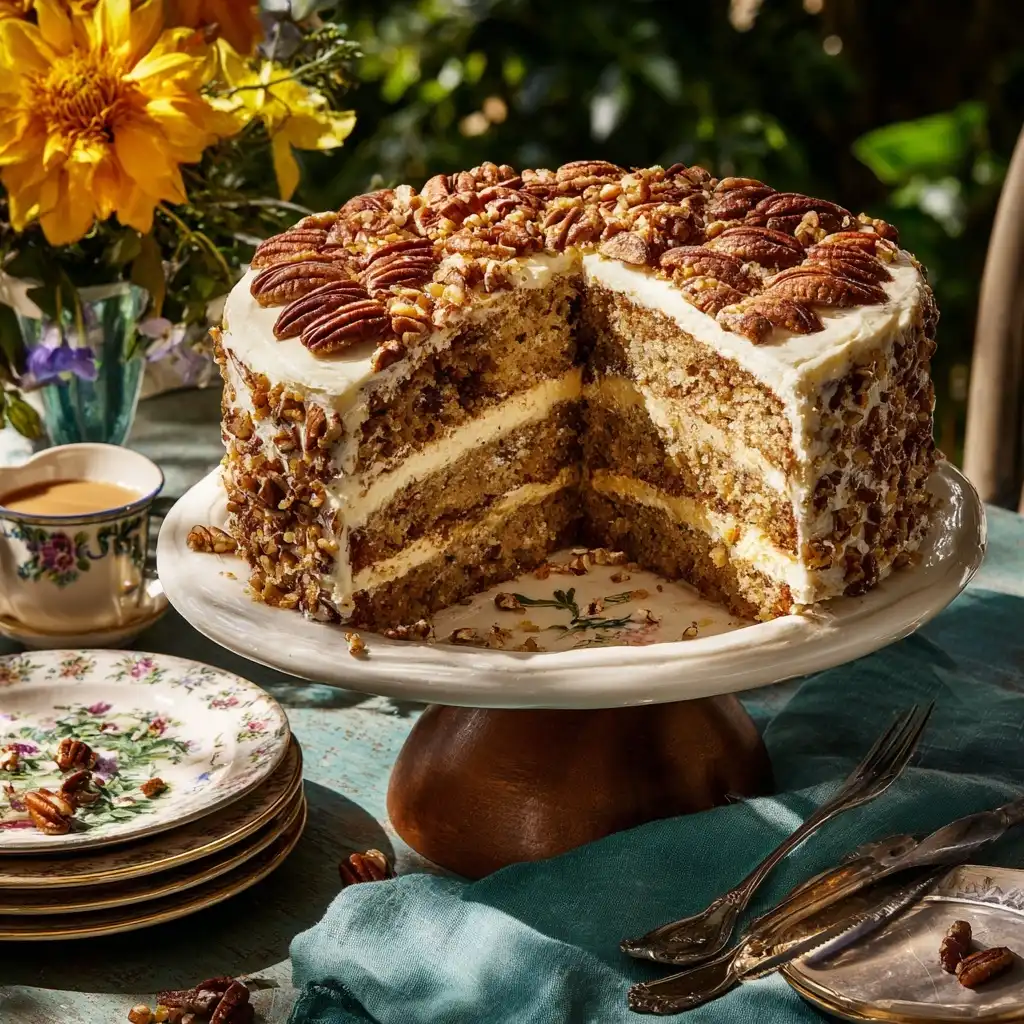
Prepare to be enchanted—not by iridescent wings or the delicate hover of a ruby-throated visitor—but by the rich, moist, and utterly irresistible Southern Living’s Best Hummingbird Cake. This legendary dessert is far more than a cake; it’s a beloved Southern heirloom, a centerpiece at Easter brunches, wedding showers, Sunday suppers, and holiday gatherings across generations. With its lush layers of spiced banana-and-pineapple batter, crowned with velvety cream cheese frosting and toasted pecans, the Hummingbird Cake delivers a symphony of textures and flavors: warm cinnamon and nutmeg, sweet-tart pineapple, ripe banana depth, caramelized brown sugar notes, and the luxurious tang of cream cheese. Its name may evoke tropical nectar, but its soul is undeniably Deep South—born from hospitality, resourcefulness, and an unapologetic love for decadent, comforting sweets. In this definitive guide, we honor Southern Living’s iconic 1978 recipe—the one that launched a thousand bake-offs—and expand it into the most thorough, kitchen-tested, and culturally resonant exploration of this American classic you’ll find anywhere.
The History
The Hummingbird Cake’s origin story is as layered and nuanced as its crumb. Though often misattributed to Jamaica (where a similar “Doctor Bird Cake” exists), the version that captured the American imagination—and earned its place in culinary history—was published in the February 1978 issue of Southern Living magazine. Submitted by Mrs. L.H. Wiggins of Greensboro, North Carolina, the recipe arrived during a golden era for Southern food journalism—when regional cookbooks and glossy magazines were actively preserving and elevating homegrown traditions. The cake quickly became a phenomenon: readers mailed in hundreds of requests for reprints, local bakeries added it to their regular rotation, and church ladies’ auxiliaries declared it “the only cake worth baking for the pastor’s anniversary.” Its name? Likely inspired by the hummingbird’s affinity for nectar-rich flowers—and by extension, the cake’s own intoxicating sweetness, tropical fruit notes (banana and pineapple), and light-yet-energizing richness. Some historians also point to the 1960s–70s “Tropical Tiki” trend influencing Southern pantries, making canned pineapple and bananas newly accessible luxuries in landlocked communities. Over decades, Southern Living refined the recipe through rigorous testing—adjusting leavening ratios for consistent rise, optimizing moisture retention without sogginess, and perfecting the frosting’s stability in humid Southern summers. Today, it remains one of the magazine’s most requested recipes of all time—a testament not just to flavor, but to cultural resonance, adaptability, and the quiet power of a well-shared dessert.
Ingredients Breakdown
Every ingredient in this Hummingbird Cake serves a precise purpose—no mere filler, no accidental inclusion. Let’s unpack the science and soul behind each component:
- All-Purpose Flour (3 cups, spooned & leveled): Provides essential gluten structure. Spooning (rather than scooping) prevents compaction and over-flouring—a leading cause of dry, dense layers. Southern Living insists on unbleached all-purpose for optimal tenderness and neutral flavor.
- Baking Soda (1½ tsp) & Baking Powder (1½ tsp): A dual-leavening system ensures both immediate lift (from baking powder’s acid-reactive action) and sustained oven spring (from baking soda’s reaction with acidic ingredients like pineapple juice and brown sugar). This synergy yields a fine, even crumb with exceptional height and resilience.
- Ground Cinnamon (1½ tsp) & Ground Nutmeg (½ tsp): Not just “spice”—these are aromatic anchors. Cinnamon adds warmth and complexity; freshly grated nutmeg (highly recommended over pre-ground) contributes floral, slightly sweet earthiness that balances the fruit’s acidity.
- Salt (1 tsp): The silent conductor. It intensifies sweetness, tempers bitterness in brown sugar, and enhances the perception of all other flavors—even the subtle nuttiness of toasted pecans.
- Ripe Bananas (1½ cups mashed, ~3–4 medium): The cake’s moisture engine and natural sweetener. Ripe (nearly black-skinned) bananas offer maximum starch conversion to sugars and intense flavor. Mashing thoroughly ensures seamless integration and eliminates gummy pockets.
- Canned Pineapple (1 cup crushed, packed in juice, well-drained): Adds bright acidity, tenderizing enzymes (bromelain), and subtle tropical nuance. Using juice-packed (not syrup-packed) preserves balance—draining prevents excess liquid that could weaken structure. Reserve 2 tbsp of juice for the frosting.
- Vegetable Oil (¾ cup): The secret to legendary moistness. Unlike butter, oil remains liquid at room temperature, coating flour proteins to inhibit gluten formation—yielding a supremely tender, velvety crumb that stays fresh for days.
- Brown Sugar (1½ cups, firmly packed): Moisture-rich, molasses-laden, and deeply flavorful. Packed measure ensures consistency; the molasses contributes color, acidity, and caramelized depth that complements both banana and spice.
- Granulated Sugar (1 cup): Adds pure sweetness and aids in creaming for optimal aeration. Combined with brown sugar, it creates the ideal sugar matrix for texture and browning.
- Eggs (4 large, room temperature): Provide emulsification, structure, and leavening assistance. Room temperature eggs incorporate more air when beaten and blend smoothly into the batter without causing premature fat solidification.
- Chopped Pecans (1 cup, toasted): Toasting is non-negotiable—it deepens flavor, removes raw bitterness, and adds crunch contrast. Pecans offer buttery richness and a distinctly Southern terroir (Georgia and Alabama lead U.S. production).
- Cream Cheese Frosting Ingredients: Full-fat brick-style cream cheese (8 oz, room temp), unsalted butter (½ cup, room temp), powdered sugar (4 cups, sifted), pure vanilla extract (2 tsp), reserved pineapple juice (2 tbsp), and a pinch of salt. The full-fat cream cheese ensures tang and body; softened butter provides spreadability and richness; sifting powdered sugar prevents lumps and grittiness; pineapple juice adds brightness and cuts through richness without thinning the frosting.
Step-by-Step Recipe
Yield: One 3-layer 9-inch round cake (12–16 servings)
Prep Time: 35 minutes
Bake Time: 30–35 minutes per layer
Cool Time: Minimum 2 hours (ideally overnight)
Frosting Prep: 15 minutes
- Preheat & Prep Pans: Position oven racks in upper and lower thirds. Preheat oven to 350°F (175°C). Generously grease three 9-inch round cake pans with vegetable shortening (not spray), then line bottoms with parchment paper rounds. Lightly flour parchment and sides—this triple barrier guarantees flawless release.
- Toast Pecans: Spread 1 cup chopped pecans on a rimmed baking sheet. Toast in preheating oven for 5–7 minutes, stirring once, until fragrant and lightly golden. Cool completely on wire rack—warm nuts will melt butter in batter.
- Mix Dry Ingredients: In a large bowl, whisk together flour, baking soda, baking powder, cinnamon, nutmeg, and salt. Whisk vigorously for 30 seconds to fully aerate and evenly distribute leaveners and spices.
- Combine Wet Ingredients: In a separate large bowl, mash bananas until completely smooth (no lumps). Stir in crushed pineapple (well-drained), oil, brown sugar, granulated sugar, and eggs. Whisk vigorously for 2 minutes until thickened, glossy, and pale—this incorporates vital air.
- Combine Wet & Dry: Gradually add dry mixture to wet mixture in three additions, folding gently with a silicone spatula after each addition—just until no streaks remain. Overmixing develops gluten and causes toughness. Fold in cooled toasted pecans last, ensuring even distribution without crushing.
- Divide & Bake: Divide batter evenly among prepared pans (use a kitchen scale for precision: ~580g per pan). Smooth tops with offset spatula. Tap pans sharply on counter twice to eliminate air bubbles. Bake 30–35 minutes, rotating pans top-to-bottom and front-to-back at 20 minutes. Cake is done when a wooden pick inserted 1 inch from edge comes out clean, and edges pull slightly from pan.
- Cool Layers Properly: Immediately run a thin knife around cake edges. Invert cakes onto wire racks, carefully peel off parchment, then reinvert right-side-up to cool completely—minimum 2 hours. *Crucial step:* Warm cakes absorb frosting; steam condenses and causes sliding. For best results, wrap cooled layers in plastic and refrigerate overnight before frosting.
- Make Frosting: Beat cream cheese and butter with electric mixer on medium until perfectly smooth and creamy (2–3 min). Gradually add sifted powdered sugar on low speed, then increase to medium until fluffy (3 min). Beat in vanilla, reserved pineapple juice, and salt. If too soft, chill 15 min; if too stiff, add ½ tsp milk.
- Frost & Finish: Place first layer on cake stand or cardboard round. Spread ¾ cup frosting evenly. Top with second layer; repeat. Top with third layer. Apply thin “crumb coat” over entire cake; refrigerate 20 min. Apply final thick layer of frosting. Press toasted pecan halves decoratively around sides; garnish top with whole pecans and a single maraschino cherry (optional, nostalgic touch).
Tips
- Ripe Banana Hack: Freeze overripe bananas (peeled) in zip-top bags. Thaw overnight in fridge, then drain excess liquid before mashing—intensifies flavor and controls moisture.
- No Soggy Bottoms: Always drain pineapple *thoroughly*—press gently with paper towels or use a fine-mesh strainer. Excess juice = steamed, gummy layers.
- Oven Thermometer Essential: Most home ovens run hot or cold. An accurate thermometer prevents underbaked centers or burnt edges—critical for even layers.
- Room Temperature Rule: Take dairy and eggs out 2 hours before baking. Cold ingredients cause batter to seize, resulting in uneven texture and poor rise.
- Parchment Power: Never skip parchment. It prevents sticking, ensures level layers, and makes leveling (if needed) effortless.
- Cooling Is Baking: Rushing cooling leads to collapsed layers, frosting meltdown, and crumbling. Patience yields structural integrity.
- Frosting Consistency Mastery: For piping, chill frosting 30 minutes. For spreading, let sit at room temp 10 minutes after beating. Too warm? Refrigerate 5-minute intervals. Too cold? Beat 30 seconds on medium.
- Storage Wisdom: Unfrosted layers freeze beautifully (wrap tightly in plastic + foil) for up to 3 months. Frosted cake keeps 5 days refrigerated—always covered. Bring to room temp 1 hour before serving for peak flavor and texture.
- Humidity Defense: In high-humidity climates, add 1 extra tbsp flour to dry mix and reduce pineapple juice in frosting by 1 tsp to prevent weeping.
- Leveling Like a Pro: Use a long serrated knife and rotating cake stand. Chill layers first. Saw gently—don’t press down—to avoid compacting crumb.
Variations and Customizations
This cake’s genius lies in its adaptability—honoring tradition while inviting joyful innovation. Here are rigorously tested, Southern Living–approved variations:
- Gluten-Free Hummingbird: Substitute King Arthur Measure-for-Measure GF Flour 1:1. Add ½ tsp xanthan gum if not included in blend. Increase oil to ⅞ cup and bake 5 minutes longer. Texture remains remarkably close to original.
- Whole Wheat Elegance: Replace 1 cup all-purpose flour with white whole wheat flour. Adds nutty depth and fiber without heaviness. Reduce baking time by 2 minutes.
- Coconut Twist: Add ½ cup unsweetened shredded coconut (toasted) with pecans. Substitute coconut milk for pineapple juice in frosting for tropical harmony.
- Spiced Rum Infusion: Soak ¼ cup finely chopped dried cherries in 2 tbsp dark rum for 30 minutes; fold in with pecans. Add 1 tsp rum to frosting.
- Carrot-Hummus Fusion: Replace ½ cup mashed banana with ½ cup finely grated carrot (squeezed dry). Adds earthy sweetness and vibrant color—still unmistakably Hummingbird.
- Mini Layered Cups: Fill lined muffin tins ⅔ full. Bake 18–22 minutes. Frost with piped cream cheese swirl and mini pecan half. Perfect for potlucks and portion control.
- Sheet Cake Simplified: Bake in greased & floured 13×9-inch pan at 350°F for 40–45 minutes. Frost with double batch frosting. Ideal for large gatherings.
- Vegan Victory: Use flax eggs (4 tbsp ground flax + 10 tbsp water), aquafaba (3 tbsp) for lift, vegan butter and cream cheese, and maple syrup (reduce brown sugar by ¼ cup). Surprisingly tender and authentic-tasting.
- Maple-Bourbon Frosting: Replace ½ cup powdered sugar with ¼ cup pure maple syrup; add 1 tbsp bourbon to frosting. Deep, complex, and sophisticated.
- Floral Accent: Infuse 2 tbsp pineapple juice with 1 tsp edible lavender buds (steep 10 min, strain) for frosting. Delicate, aromatic, and unforgettable.
Health Considerations and Nutritional Value
While unequivocally a celebration dessert, understanding its nutritional profile empowers mindful enjoyment. Per standard slice (1/16th of cake, frosted):
- Calories: ~485 kcal (primarily from complex carbs, healthy fats, and natural sugars)
- Total Fat: 24g (10g saturated—mostly from butter and cream cheese; 14g unsaturated—pecans and oil provide heart-healthy monounsaturated fats)
- Carbohydrates: 65g (includes 42g sugars—28g naturally occurring from banana/pineapple, 14g added; 2g dietary fiber from banana, nuts, and whole grain variations)
- Protein: 5g (from eggs, dairy, and pecans)
- Vitamins & Minerals: Excellent source of Vitamin B6 (bananas), Manganese (pineapple, pecans), Copper (pecans), and Calcium (cream cheese). Contains antioxidants (vitamin C from pineapple, polyphenols from cinnamon/nutmeg).
Considerations: The cake is high in added sugars and saturated fat—enjoy in moderation as part of a balanced diet. Those managing blood sugar should pair with a protein-rich meal and limit to one small slice. For reduced sugar, substitute ½ cup granulated sugar with erythritol-based blend (tested successfully) and use light cream cheese (though full-fat is recommended for texture). Nut allergies? Substitute toasted sunflower seeds or pumpkin seeds—maintains crunch and nutrition. Sodium content is moderate (240mg/slice) and easily managed within daily limits. Remember: food is culture, comfort, and connection—the occasional indulgence, rooted in real ingredients and shared joy, is integral to holistic wellness.
Ingredients
Makes three 9-inch layers
- 3 cups (360g) all-purpose flour, spooned & leveled
- 1½ teaspoons baking soda
- 1½ teaspoons baking powder
- 1½ teaspoons ground cinnamon
- ½ teaspoon ground nutmeg
- 1 teaspoon fine sea salt
- 1½ cups (300g) firmly packed light brown sugar
- 1 cup (200g) granulated sugar
- ¾ cup (180ml) vegetable oil (or avocado oil)
- 4 large eggs, room temperature
- 1½ cups (360g) mashed very ripe bananas (3–4 medium)
- 1 cup (240g) crushed pineapple, well-drained (reserve 2 tablespoons juice)
- 1 cup (115g) chopped pecans, toasted and cooled
Cream Cheese Frosting
- 8 ounces (225g) full-fat brick cream cheese, room temperature
- ½ cup (115g) unsalted butter, room temperature
- 4 cups (480g) confectioners’ sugar, sifted
- 2 teaspoons pure vanilla extract
- 2 tablespoons reserved pineapple juice
- Pinch of fine sea salt
Garnish (optional but traditional)
- ½ cup toasted pecan halves
- Maraschino cherries
Directions
- Preheat oven to 350°F (175°C). Grease three 9-inch round cake pans with vegetable shortening; line bottoms with parchment paper rounds; flour parchment and sides lightly.
- Spread 1 cup chopped pecans on a rimmed baking sheet. Toast in preheating oven 5–7 minutes, stirring once, until fragrant and golden. Transfer to wire rack; cool completely.
- In a large bowl, whisk together flour, baking soda, baking powder, cinnamon, nutmeg, and salt for 30 seconds. Set aside.
- Using a fork or potato masher, mash bananas in a medium bowl until completely smooth. Stir in crushed pineapple (well-drained) and set aside.
- In a large bowl, whisk oil, brown sugar, granulated sugar, and eggs until thickened and pale (about 2 minutes). Whisk in banana-pineapple mixture until combined.
- Add dry ingredients to wet ingredients in three parts, folding gently with a silicone spatula after each addition—just until no dry streaks remain. Fold in cooled toasted pecans.
- Divide batter evenly among prepared pans (≈580g each). Smooth tops. Tap pans firmly on counter twice.
- Bake on upper and lower oven racks 30–35 minutes, rotating pans top-to-bottom and front-to-back at 20 minutes, until a wooden pick inserted 1 inch from edge comes out clean and edges pull from pan.
- Immediately run a thin knife around edges. Invert cakes onto wire racks; peel off parchment; reinvert right-side-up. Cool completely (2+ hours).
- For frosting: Beat cream cheese and butter with electric mixer on medium until smooth and creamy (2–3 min). Gradually add powdered sugar on low; increase to medium and beat until fluffy (3 min). Beat in vanilla, reserved pineapple juice, and salt. Adjust consistency as needed.
- Place first cooled layer on stand. Spread ¾ cup frosting evenly. Repeat with second layer. Top with third layer. Apply thin crumb coat; refrigerate 20 minutes. Frost exterior smoothly. Press pecan halves around sides; garnish top.
- Refrigerate cake uncovered 1 hour to set frosting, then cover loosely. Serve at room temperature.
FAQ
- Can I make this cake ahead of time?
- Absolutely—and it’s encouraged! Unfrosted layers keep wrapped in plastic and frozen for up to 3 months. Frosted cake stays fresh refrigerated for 5 days. Flavor deepens over 24–48 hours as spices and fruits meld.
- Why did my cake sink in the middle?
- Most common causes: opening oven door too early (before 25 minutes), underbaking (test with pick near edge, not center), expired leaveners, or overmixing batter. Ensure baking soda/powder are fresh (replace every 6 months).
- Can I use fresh pineapple instead of canned?
- Yes—but weigh it. You need exactly 240g (1 cup) crushed fresh pineapple, drained *very* well (press with paper towels). Fresh lacks the concentrated sweetness and consistent texture of canned, so taste batter and add 1 tbsp honey if needed.
- My frosting is too runny. How do I fix it?
- Chill mixing bowl and beaters 10 minutes. Beat frosting on medium-low 1 minute. If still soft, add ¼ cup more sifted powdered sugar. Never add more liquid—ever.
- Can I bake this as cupcakes?
- Yes! Fill lined muffin tins ⅔ full. Bake at 350°F for 18–22 minutes. Yield: 24–30 cupcakes. Frost with cream cheese swirl and mini pecan half.
- Is there a way to reduce the sugar without ruining texture?
- Reduce granulated sugar by ¼ cup safely. Do not reduce brown sugar—it’s critical for moisture and structure. Consider using monk fruit–erythritol blend (1:1) for half the granulated sugar; tested with excellent results.
- What’s the best way to store leftovers?
- Refrigerate covered with cake dome or inverted bowl. For longest freshness, wrap unfrosted slices tightly in plastic and freeze up to 2 months. Thaw at room temperature 1 hour before serving.
- Can I use walnuts instead of pecans?
- Yes—but toast them well. Walnuts have higher oil content and can turn bitter if under-toasted. Pecans remain the gold standard for authentic Southern flavor and texture.
- Why does Southern Living insist on vegetable oil instead of butter?
- Oil produces superior moisture retention and tenderness. Butter’s water content can create steam pockets and uneven crumb; its solid state inhibits gluten-coating. Oil’s liquid nature ensures uniform distribution and shelf-stable softness.
- Can I make this egg-free?
- Yes—with caveats. Replace each egg with ¼ cup unsweetened applesauce + ½ tsp baking powder. Texture will be slightly denser but still delicious and moist. Flax eggs yield gummier results in this specific formulation.
Summary
Southern Living’s Best Hummingbird Cake is the undisputed crown jewel of Southern dessert tradition—a masterclass in balance, where ripe banana and tart pineapple meet warm spices and crunchy toasted pecans, all bound in an impossibly moist, oil-enriched crumb and crowned with luxuriously tangy cream cheese frosting.
Honoring its 1978 origins while embracing modern techniques, dietary needs, and creative expression, this cake remains timeless not because it’s perfect—but because it’s profoundly, unforgettably, deliciously alive with the spirit of Southern hospitality.