
Introduction
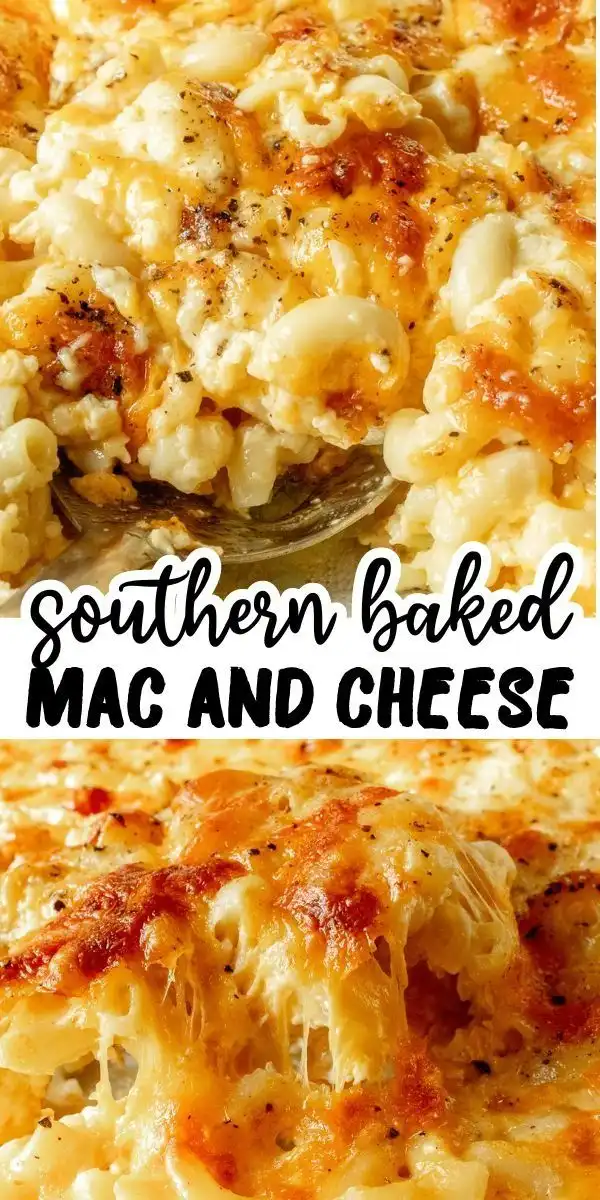
Southern Baked Mac and Cheese isn’t just a side dish—it’s a cornerstone of soul food tradition, a cherished heirloom recipe passed down through generations with love, pride, and a generous hand with cheese. More than mere pasta and dairy, it embodies comfort, celebration, resilience, and home. In the South, this dish graces Sunday suppers, holiday tables (especially Thanksgiving and Easter), church potlucks, family reunions, and even funerals—serving as both nourishment and emotional anchor. Its defining characteristics include a luxuriously creamy yet structurally sound interior, a golden-brown, slightly crisp, often buttery or breadcrumb-topped crust, and a complex, layered cheese profile that balances sharpness, tang, meltability, and richness. Unlike its stovetop or minimalist Northern cousins, Southern baked mac is unapologetically indulgent, slow-baked to develop depth, and deeply personal—every family has *their* version, guarded like state secrets and debated with the fervor of civil war historians.
The History
The roots of Southern Baked Mac and Cheese run deep, winding through centuries and continents before settling firmly in the American South. While pasta-based cheese dishes trace back to 13th-century England (*makerouns*) and medieval Italy, the version that evolved into today’s Southern classic was profoundly shaped by enslaved African American cooks working in plantation kitchens. These highly skilled culinary artisans—many trained in French and English techniques by European-trained chefs—had access to ingredients like imported cheeses, butter, cream, and fine wheat flour, but were also tasked with transforming meager rations into nourishing meals for both the enslaver’s family and the enslaved community. They adapted European baked pasta traditions using available resources: local dairy, aged cheddar from Southern dairies, and later, processed American cheese for consistent melt and affordability.
By the late 19th and early 20th centuries, recipes began appearing in African American community cookbooks like *The Carolina Housewife* (1847, though not exclusively Black-authored, widely used in Black households) and later, *The Blue Ribbon Cook Book* (1914) and *Soul Food Cookbook* (1969). The dish gained national prominence during the Great Migration, as Black families carried their recipes northward—yet it remained most authentically rooted in Southern soil, where regional dairy traditions (like Georgia’s cheddar production and Tennessee’s buttermilk culture) and agricultural abundance (cornmeal for breading, local eggs, pasture-raised dairy) elevated it further. The Civil Rights era saw mac and cheese become symbolic—not just food, but sustenance for movement workers, served at NAACP meetings and Freedom Schools. Today, it stands as a powerful emblem of Black culinary innovation, resistance, and joy—a dish born of constraint, refined by genius, and celebrated as cultural heritage.
Ingredients Breakdown
Every ingredient in authentic Southern Baked Mac and Cheese serves a precise, non-negotiable function—no element is merely decorative or optional. Below is an exhaustive, chef-level breakdown:
- Pasta: Traditionally elbow macaroni (small, curved tubes that cradle sauce and hold structure), though some families prefer cavatappi, shells, or gemelli for extra nooks. Must be cooked to *al dente*—slightly firm—to withstand baking without turning mushy. Overcooking is the single most common failure point.
- Cheeses (The Holy Trinity + Accents):
- Sharp Cheddar (White or Orange): The backbone—provides bold, tangy flavor and structural integrity. Aged 12–24 months preferred for complexity and less oil separation.
- Monterey Jack: Adds creaminess and superior melt without greasiness; bridges the gap between sharpness and smoothness.
- Colby or Colby-Jack: Milder, sweeter, and exceptionally creamy; contributes body and a gentle lactic note.
- Accent Cheeses (Optional but Traditional): A small amount of smoked Gouda (for earthy depth), fontina (for nutty silkiness), or even a whisper of pimento cheese (a Southern staple) stirred in for regional authenticity.
- Dairy Base:
- Whole Milk or Half-and-Half: Provides liquid volume and creaminess; never skim or low-fat—fat carries flavor and prevents graininess.
- Heavy Cream or Evaporated Milk: Critical for luxurious mouthfeel and sheen. Evaporated milk adds caramelized sweetness and stabilizes the sauce against curdling.
- Butter (Unsalted, High-Quality): Used both in the roux and brushed on top—adds richness, aroma, and browning power.
- Thickener:
- All-Purpose Flour: For the foundational roux (cooked with butter until nutty and blond), which prevents sauce thinning during baking and adds subtle toasty depth.
- Eggs (Large, Room Temperature): Often included in Southern versions—they act as a binder, lend custard-like richness, improve sliceability, and contribute to a golden, set interior. Not universal, but highly traditional in church-lady and grandmama recipes.
- Aromatics & Seasonings:
- Onion (Finely Diced or Grated): Sautéed until translucent—adds savory umami and sweetness; raw onion would burn.
- Garlic (Minced): Used sparingly—just one clove—to enhance, not dominate.
- Dry Mustard Powder: A secret weapon—enhances cheese flavor without tasting “mustardy,” cuts through fat, and aids emulsification.
- Paprika (Sweet or Smoked): For color, warmth, and subtle smokiness—never hot paprika unless intentionally spicy.
- Worcestershire Sauce: A few dashes add fermented depth, umami, and complexity—anchovy, tamarind, and molasses notes harmonize beautifully with cheese.
- Hot Sauce (Crystal or Louisiana-style): A Southern pantry staple—used more for brightness and balance than heat.
- Freshly Ground Black Pepper & Kosher Salt: Salt is adjusted carefully—cheeses vary in salt content; always season in layers (pasta water, sauce, final bake).
- Topping Elements:
- Buttery Breadcrumb Topping: Panko or fresh white bread crumbs toasted in melted butter, browned with parsley, thyme, and sometimes a touch of grated Parmesan or Romano for salty punch.
- Extra Cheese Layer: Often a final sprinkle of sharp cheddar or Gruyère over the top before baking for intensified crust formation.
- Crumbled Bacon or Andouille Sausage (Optional but Common): Adds smoke, salt, and crunch—deeply regional, especially in Louisiana and Mississippi.
Step-by-Step Recipe
Makes 12–14 servings | Prep: 45 minutes | Cook: 25 minutes | Bake: 45–60 minutes | Rest: 20 minutes
- Preheat & Prep: Position oven rack in center position. Preheat oven to 350°F (175°C). Generously grease a 13″x9″x2″ glass or ceramic baking dish (not metal—glass retains heat more evenly) with unsalted butter or non-stick spray. Set aside.
- Cook Pasta Perfectly: Bring a large stockpot of water to a rolling boil. Add 2 tbsp kosher salt (this seasons the pasta from within). Add 2 lbs (about 4 cups dry) elbow macaroni. Stir immediately and frequently. Cook for 1 minute *less* than package directions for al dente—typically 6–7 minutes. Drain thoroughly in a colander. Rinse *briefly* under cool water *only if* making ahead—otherwise, skip rinsing to preserve surface starch for sauce adhesion. Toss gently with 1 tbsp melted butter to prevent sticking. Set aside.
- Build the Flavor Foundation: In a heavy-bottomed Dutch oven or large saucepan, melt 1 cup (2 sticks) unsalted butter over medium-low heat. Add 1 finely diced medium yellow onion and 1 tsp minced garlic. Sauté gently for 6–8 minutes until soft, fragrant, and translucent—but do *not* brown. Stir in 1/4 cup all-purpose flour. Cook, whisking constantly, for 3–4 minutes until mixture turns pale golden and smells nutty—this is your roux. Do not rush; undercooked roux tastes raw, overcooked turns bitter.
- Temper & Thicken the Dairy Base: Slowly whisk in 4 cups whole milk and 1 cup heavy cream (or 2 cups evaporated milk), 1/2 cup at a time, ensuring each addition is fully incorporated and smooth before adding the next. Increase heat to medium. Whisk continuously as mixture comes to a gentle simmer (do not boil vigorously). Simmer for 5–7 minutes, stirring constantly, until thickened to a coat-the-back-of-a-spoon consistency. Remove from heat.
- Layer the Cheese Symphony: Gradually whisk in cheeses in stages: first the sharp cheddar (2 cups), then Monterey Jack (1.5 cups), then Colby (1.5 cups). Whisk until each addition is *fully melted and smooth* before adding the next. Avoid dumping all cheese in at once—this causes clumping and graininess. Stir in 2 tbsp dry mustard powder, 1 tsp sweet paprika, 1/2 tsp freshly ground black pepper, 1 tbsp Worcestershire sauce, and 1 tsp Louisiana-style hot sauce. Taste and adjust seasoning—remember, cheeses add salt, so add kosher salt judiciously (start with 1 tsp, taste, then add more if needed).
- Incorporate Eggs (Traditional Step): In a separate bowl, whisk 3 large room-temperature eggs with 1/2 cup of the warm cheese sauce to temper. Then slowly pour the tempered egg mixture back into the main pot while whisking constantly. This ensures eggs cook gently without scrambling. Return to low heat for 2 minutes, stirring constantly, until sauce thickens slightly more. Remove from heat.
- Combine Pasta & Sauce: Pour the hot cheese sauce over the drained, buttered pasta in a very large mixing bowl. Gently fold with a silicone spatula or wooden spoon until every noodle is evenly coated and glistening. Avoid overmixing, which can break the pasta. Let mixture rest 5 minutes to allow pasta to absorb some sauce.
- Transfer & Top: Pour mixture into the prepared baking dish. Smooth the top with a spatula. Sprinkle evenly with 1 cup shredded sharp cheddar and/or Gruyère. For the signature Southern crunch, prepare topping: melt 1/4 cup butter in a skillet, add 1.5 cups panko breadcrumbs, 2 tbsp finely chopped fresh parsley, 1 tsp dried thyme, 1/4 tsp garlic powder, and a pinch of smoked paprika. Toast over medium heat for 4–5 minutes until golden and fragrant. Sprinkle evenly over the cheese layer.
- Bake with Precision: Place dish on a parchment-lined baking sheet (to catch spills). Bake uncovered for 45 minutes. At 45 minutes, check: edges should be bubbling vigorously, top golden and crisp, center should jiggle *slightly* like set Jell-O (not liquid). If center is still loose, bake 5–10 minutes more. For deeper browning, broil on low for 1–2 minutes at the end—watch closely!
- Rest is Non-Negotiable: Remove from oven and let rest *undisturbed* for a full 20 minutes. This allows starches to fully set, fats to redistribute, and the structure to stabilize—cutting too soon yields a soupy, collapsed mess. The dish will continue to thicken as it cools.
- Serve with Soul: Scoop generously with a sturdy spatula or pie server. Serve alongside fried chicken, collard greens, cornbread, or simply on its own. Garnish with extra black pepper, a dusting of paprika, or a drizzle of hot sauce.
Tips
- Room-Temperature Dairy is Key: Cold milk or eggs hitting hot roux cause lumps and uneven emulsification. Pull dairy out 30 minutes before starting.
- Grate Your Own Cheese: Pre-shredded cheese contains anti-caking agents (cellulose) that inhibit melting and create grainy sauce. Invest in a box grater or food processor.
- Undercook Pasta Relentlessly: Err on the side of too firm—not too soft. Pasta absorbs liquid and softens significantly during baking.
- Roux Patience Pays Off: Stir constantly for the full 3–4 minutes. A properly cooked roux is the difference between silky sauce and gluey sludge.
- Low-and-Slow Cheese Incorporation: Never add cold cheese to hot sauce off-heat. Warm cheese melts smoothly; cold cheese seizes. Grate cheese while roux simmers.
- Don’t Skip the Rest: That 20-minute rest transforms texture. It’s not waiting—it’s essential chemistry.
- Bake in Glass or Ceramic: Metal pans conduct heat too quickly, causing uneven browning and potential scorching on the bottom.
- Check Doneness Correctly: The jiggle test is vital. Insert a knife into the center—if it comes out clean *and* the center wobbles like firm gelatin, it’s ready. If liquid pools around the knife, bake longer.
- Make-Ahead Magic: Assemble up to 24 hours ahead—cover tightly and refrigerate unbaked. Add 10–15 minutes to bake time. Or bake, cool completely, refrigerate, and reheat covered at 325°F for 30–40 minutes.
- Freeze with Confidence: Fully baked, cooled mac freezes beautifully for up to 3 months. Thaw overnight in fridge, then reheat covered at 325°F until heated through (50–60 min), uncovering last 10 minutes to recrisp top.
Variations and Customizations
While the core technique remains sacred, Southern Baked Mac and Cheese joyfully embraces regional and personal expression. Here are beloved, time-tested variations:
- Lowcountry Shrimp & Grits Mac: Fold in 2 cups sautéed Gulf shrimp, 1/2 cup cooked stone-ground grits, and 2 tbsp chopped green onions. Top with crispy fried okra.
- Creole Mac: Add 1/2 cup finely diced andouille sausage (pre-cooked), 1/4 cup diced green bell pepper, 1/4 cup diced celery (the “holy trinity”), and 1 tsp Creole seasoning to the roux step.
- Sweet Potato & Sage: Blend 1 cup roasted, mashed sweet potato into the warm cheese sauce. Stir in 2 tbsp chopped fresh sage. Top with candied pecans instead of breadcrumbs.
- Smoky BBQ Brisket Mac: Fold in 2 cups pulled, shredded smoked brisket and 1/4 cup reduced BBQ sauce. Garnish with pickled red onions and jalapeños.
- Vegan Southern Mac (Authentic Adaptation): Use gluten-free elbow pasta, cashew-based “cheese” sauce (soaked cashews, nutritional yeast, miso, lemon, smoked paprika), coconut milk, and a flax egg binder. Top with panko toasted in olive oil and smoked salt.
- Breakfast Mac: Stir in 1 cup crumbled cooked bacon, 1/2 cup diced ham, and 4 whisked eggs *before* baking. Top with chives and extra black pepper.
- Garden-Fresh Herb Mac: Stir 1/4 cup each finely chopped fresh dill, chives, and flat-leaf parsley into the finished sauce. Top with lemon zest.
- Spicy Cajun Mac: Add 1–2 tsp cayenne pepper, 1 tsp smoked paprika, and 1/2 tsp ground cumin to the roux. Include 1/2 cup diced roasted poblano peppers.
- Church Picnic Mac: Double the recipe, bake in two 13″x9″ dishes, and top one with crushed Ritz crackers mixed with melted butter and dried dill for nostalgic crunch.
- Decadent Truffle Mac: Stir 2 tbsp white truffle oil and 1/4 cup grated black truffle (or high-quality truffle paste) into the finished sauce. Top with shaved Parmigiano-Reggiano.
Health Considerations and Nutritional Value
Acknowledging Southern Baked Mac and Cheese as a celebratory, nutrient-dense *comfort food*—not a daily staple—is essential for balanced perspective. A standard 1-cup serving (approx. 320g) contains roughly:
- Calories: 480–550 kcal
- Protein: 22–26g (excellent source—cheese, milk, eggs, and pasta provide complete amino acid profiles)
- Fat: 28–34g (primarily saturated from dairy; however, recent research shows full-fat dairy consumption is not linked to increased heart disease risk when part of a balanced diet rich in fiber and vegetables)
- Carbohydrates: 36–42g (mostly complex carbs from enriched pasta; provides sustained energy)
- Calcium: ~450mg (90% DV—vital for bone health, muscle function, nerve transmission)
- Vitamin A: ~800mcg RAE (90% DV—from cheese and butter; supports vision and immunity)
- Vitamin B12: ~1.8mcg (75% DV—crucial for nerve health and red blood cell formation)
- Zinc & Phosphorus: Significant amounts—support immune function and cellular repair
Considerations for Mindful Enjoyment:
- Sodium: Naturally moderate (approx. 550–700mg/serving), but can rise with added salt or processed cheeses. Use low-sodium broth if subbing for milk, and rely on herbs/spices for flavor.
- Fiber: Standard pasta offers minimal fiber (2g/serving); boost with whole-grain or legume-based pasta (adds 5–8g fiber), or stir in 1 cup finely chopped spinach or kale during final mix.
- Saturated Fat: Can be moderated by using 2% milk instead of whole/cream (reduces fat by ~6g), swapping half the cheese for part-skim ricotta or cottage cheese (adds protein and creaminess), or incorporating 1/2 cup pureed cauliflower into the sauce.
- Gluten Sensitivity: Easily adapted with certified gluten-free elbow pasta (rice, corn, or quinoa blends work well) and GF flour for roux.
- Lactose Sensitivity: Aged cheddars and Swiss-style cheeses are naturally low in lactose. Lactose-free milk and butter are excellent substitutes.
- Diabetes-Friendly Tweaks: Focus on portion control (3/4 cup), pair with non-starchy vegetables, use whole-grain pasta, and avoid sugary add-ins like honey-glazed toppings.
Ultimately, Southern Baked Mac and Cheese delivers powerful nutritional benefits—high-quality protein, bioavailable calcium, brain-boosting B vitamins—and its cultural role in fostering connection, reducing stress, and supporting emotional well-being is itself a profound contributor to holistic health.
Ingredients
- 2 lbs (about 4 cups) dry elbow macaroni
- 1 cup (2 sticks) unsalted butter, divided
- 1 medium yellow onion, finely diced
- 1 tsp garlic, minced
- 1/4 cup all-purpose flour
- 4 cups whole milk
- 1 cup heavy cream (or 2 cups evaporated milk)
- 2 cups sharp white or orange cheddar, freshly grated
- 1 1/2 cups Monterey Jack, freshly grated
- 1 1/2 cups Colby cheese, freshly grated
- 2 tbsp dry mustard powder
- 1 tsp sweet or smoked paprika
- 1/2 tsp freshly ground black pepper
- 1 tbsp Worcestershire sauce
- 1 tsp Louisiana-style hot sauce (e.g., Crystal or Tabasco)
- Kosher salt, to taste (start with 1 tsp)
- 3 large eggs, room temperature
- For Topping:
1 cup shredded sharp cheddar or Gruyère
1/4 cup unsalted butter
1 1/2 cups panko breadcrumbs
2 tbsp fresh parsley, finely chopped
1 tsp dried thyme
1/4 tsp garlic powder
Pinch smoked paprika
Directions
- Preheat oven to 350°F (175°C). Grease a 13″x9″x2″ glass or ceramic baking dish with butter.
- Bring 6 quarts water to boil. Add 2 tbsp kosher salt. Cook macaroni 1 minute less than package’s al dente time. Drain, rinse briefly under cool water *only if making ahead*, toss with 1 tbsp melted butter. Set aside.
- In a Dutch oven, melt 1 cup butter over medium-low. Sauté onion and garlic 6–8 min until soft. Whisk in flour; cook 3–4 min until nutty and blond.
- Whisk in milk and cream, 1/2 cup at a time. Simmer 5–7 min, stirring, until thickened. Remove from heat.
- Gradually whisk in cheeses in stages until smooth. Stir in mustard, paprika, pepper, Worcestershire, hot sauce, and salt to taste.
- In a bowl, whisk eggs with 1/2 cup warm sauce. Temper into main pot. Return to low heat; stir 2 min until slightly thickened. Remove from heat.
- Fold cheese sauce into pasta until fully coated. Rest 5 minutes.
- Pour into baking dish. Top with 1 cup cheese. For breadcrumb topping: melt 1/4 cup butter, add panko, parsley, thyme, garlic powder, and smoked paprika; toast 4–5 min until golden. Sprinkle over cheese.
- Bake uncovered 45–60 min until edges bubble and center jiggles slightly like firm gelatin.
- Let rest 20 minutes before serving.
FAQ
- Can I make this gluten-free?
- Yes! Substitute gluten-free elbow pasta (rice/corn blend recommended) and use gluten-free all-purpose flour for the roux. Ensure all cheeses and condiments are certified GF (most natural cheeses are, but verify labels).
- Why does my mac turn out grainy or oily?
- Graininess usually means cheese was added too cold or too fast, or pre-shredded cheese was used. Oil separation occurs when sauce is overheated after cheese is added, or when low-moisture cheeses dominate. Always grate your own, add gradually to warm (not boiling) sauce, and never boil after cheese is incorporated.
- Can I omit the eggs?
- You can—but you’ll lose the custardy texture, improved sliceability, and richer mouthfeel central to traditional Southern style. For binding without eggs, add 1/4 cup full-fat ricotta or mascarpone to the sauce.
- What’s the best cheese ratio?
- The classic 2:1.5:1.5 (Cheddar:Jack:Colby) is ideal. Too much cheddar makes it sharp and dry; too much jack makes it bland and greasy. Adjust based on preference—but keep the total cheese volume at 5 cups for this yield.
- How do I reheat leftovers without drying them out?
- Place in oven-safe dish, cover tightly with foil, add 2 tbsp milk or cream, and bake at 325°F for 25–35 minutes until heated through. Stir halfway. For microwave, cover with damp paper towel and heat in 60-second intervals, stirring between.
- Can I use sour cream or Greek yogurt?
- Not in the main sauce—they curdle under heat. However, 1/2 cup full-fat sour cream stirred in *after* baking and before resting adds incredible tang and silkiness (a Nashville favorite).
- Is there a shortcut for the roux?
- Not without sacrificing authenticity. Roux is irreplaceable for texture and flavor. However, you *can* make it ahead and refrigerate for up to 5 days, or freeze in ice cube trays for future batches.
- My top gets too dark before the center is done—what do I do?
- Cover loosely with foil for the first 30 minutes of baking. Remove foil for remaining time to brown. Or lower oven temp to 325°F and extend bake time by
Advertisment