
Introduction
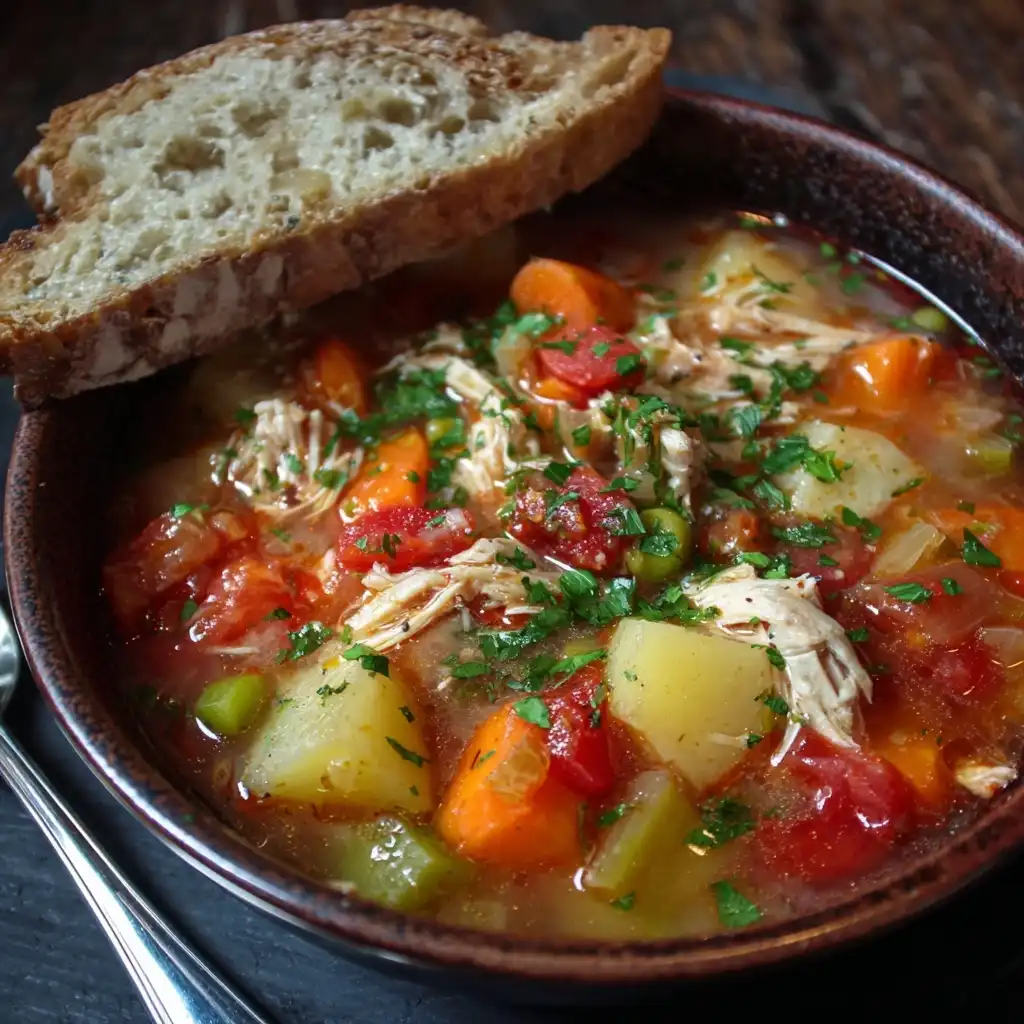
Slow Cooker Chicken Stew is the epitome of comforting, soul-warming home cooking — a harmonious blend of tender chicken, hearty vegetables, and rich, aromatic broth that simmers gently for hours to develop deep, layered flavors. Unlike rushed weeknight meals, this stew embraces patience as a virtue: the low-and-slow cooking method transforms humble, everyday ingredients into something profoundly nourishing, deeply savory, and effortlessly elegant. Whether you’re coming home to a snowy evening, recovering from a long day, or simply craving the kind of meal that wraps you in warmth like a well-worn blanket, this dish delivers with quiet confidence. Its versatility makes it ideal for busy professionals, families juggling multiple schedules, meal preppers seeking freezer-friendly options, and even novice cooks looking for a forgiving, nearly foolproof recipe. With minimal hands-on time — often under 20 minutes of prep — and maximum flavor payoff, Slow Cooker Chicken Stew isn’t just dinner; it’s self-care in a bowl.
The History
Stews have sustained humanity for millennia — archaeological evidence suggests early versions were cooked in clay pots over open fires as far back as 6000 BCE. In medieval Europe, communal cauldrons simmered for days, with ingredients added and replenished as available — a practical response to scarcity, seasonality, and preservation needs. Chicken, though less common than beef or mutton in historic stews due to its relative expense and delicacy, appeared regularly in French fricassées, Spanish ollas, and Eastern European varives. The modern slow cooker — originally introduced in 1940 as the “Crock-Pot” by Irving Naxon, inspired by his grandmother’s traditional Lithuanian bean pot — revolutionized home cooking in the 1970s. Marketed heavily to postwar American housewives seeking convenience without sacrificing wholesomeness, the appliance made stew-making accessible, safe, and consistent. Chicken stew, in particular, gained popularity as a leaner, more affordable alternative to red meat dishes — especially during economic downturns and health-conscious cultural shifts of the 1980s and ’90s. Today’s Slow Cooker Chicken Stew honors this legacy: it bridges ancestral resourcefulness with contemporary culinary science, marrying time-honored techniques (like collagen-rich bone-in chicken thighs, slow reduction of natural gelatin, and layering of aromatics) with the modern luxury of set-it-and-forget-it ease.
Ingredients Breakdown
Every ingredient in this stew plays a distinct, intentional role — none are merely filler. Let’s explore them not just by name, but by function, chemistry, and culinary wisdom:
- Chicken (bone-in, skin-on thighs preferred): The unsung hero. Bones contribute collagen that converts to silky gelatin during slow cooking, enriching mouthfeel and body. Skin adds fat-soluble flavor compounds and helps emulsify the broth. Thighs remain moist and succulent after 6–8 hours; breasts dry out easily and are best avoided unless added in the final 30–60 minutes.
- Aromatics (onion, carrots, celery, garlic): The classic mirepoix foundation. Onions lend sweetness and sulfur compounds that deepen umami; carrots provide natural sugars that caramelize subtly even at low temps; celery contributes herbal bitterness and volatile oils that lift heavier notes; garlic — added toward the end of sautéing or raw — releases allicin only when crushed and heated gently, offering pungent depth without harshness.
- Tomato paste: A concentrated source of glutamates and lycopene, it acts as a “flavor primer,” enhancing savoriness while lending subtle acidity and brick-red hue. Briefly cooking it in oil before adding liquid (a step called “blooming”) unlocks its full potential — transforming raw, tinny notes into rich, roasted complexity.
- Dry white wine (or apple cider vinegar + broth substitute): Acidity is the stew’s backbone. Wine’s tartaric and malic acids brighten richness, cut through fat, and help extract minerals from bones. It also carries volatile aromatic esters that survive slow cooking better than citrus juice. For non-alcoholic versions, a splash of high-quality apple cider vinegar stirred in during the last hour preserves brightness without alcohol’s volatility.
- Low-sodium chicken broth (preferably homemade or carton with no MSG or excessive gums): Provides the aqueous medium and foundational savoriness. Sodium content must be carefully controlled since slow cooking concentrates flavors — oversalting early leads to an irreversibly salty stew. Homemade broth adds collagen, hyaluronic acid, and trace minerals; look for brands listing only chicken, water, vegetables, and herbs.
- Herbs (fresh thyme, bay leaves, parsley stems): Thyme’s thymol offers antiseptic, earthy notes that meld seamlessly with poultry; bay leaves release eugenol slowly over heat, imparting subtle clove-like warmth (always remove before serving); parsley stems — often discarded — contain intense chlorophyll and apiol, adding vegetal nuance far beyond the leaves.
- Root vegetables (potatoes, parsnips, turnips): Waxy potatoes (Yukon Gold, Red Bliss) hold shape and lend creamy starch; parsnips add honeyed sweetness and delicate spice; turnips offer peppery contrast and structural integrity. All absorb broth while contributing fiber, potassium, and complex carbohydrates.
- Finishing elements (lemon zest, fresh dill, gremolata, dollop of crème fraîche): Added *after* cooking, these introduce volatile top-notes — citrus oils, herbal freshness, cultured tang — that would otherwise evaporate in the slow cooker. They elevate the stew from rustic to restaurant-worthy.
Step-by-Step Recipe
- Prep & Pat Dry (10 min): Remove chicken from packaging; rinse briefly under cold water and pat *thoroughly* dry with paper towels — moisture inhibits browning. Trim excess fat but leave skin intact. Chop onions, carrots, and celery into uniform ½-inch dice (for even cooking). Mince garlic. Measure tomato paste, wine, broth, and herbs.
- Sear the Chicken (5–7 min): Heat 2 tbsp high-smoke-point oil (avocado or grapeseed) in a large skillet over medium-high heat until shimmering. Season chicken generously with salt and black pepper. Place skin-side down — do *not* move for 4–5 minutes until deeply golden and crisp. Flip and sear second side 2 minutes. Transfer to a plate; pour off all but 1 tbsp rendered fat.
- Bloom the Aromatics (4 min): Add onions, carrots, and celery to skillet. Sauté 3 minutes until softened but not browned. Push veggies to edges; add tomato paste to center. Cook, stirring constantly, 1 minute until brick-red and fragrant. Stir in minced garlic; cook 30 seconds until aromatic.
- Deglaze & Build Broth (2 min): Pour in wine, scraping up every browned bit (fond) — those are flavor gold. Simmer 1 minute to burn off alcohol. Transfer entire mixture to slow cooker. Nestle seared chicken on top. Add broth (just enough to barely cover chicken), bay leaves, thyme sprigs, and parsley stems. Do *not* stir vigorously — preserve sear layers.
- Slow Cook (6–8 hrs on Low / 3–4 hrs on High): Cover and cook. At 4 hours (Low) or 2 hours (High), skim any foam or excess fat from surface with a ladle or fine-mesh skimmer. This clarifies broth and refines texture.
- Add Vegetables (Final 90–120 min): Discard bay leaves and parsley stems. Gently stir in cubed potatoes, parsnips, and turnips. Return lid. Continue cooking until vegetables are fork-tender but not mushy — test at 90 min.
- Shred & Finish (10 min): Carefully remove chicken. Discard skin and bones; shred meat with two forks. Return meat to stew. Stir in lemon zest, 2 tbsp fresh dill, and 1 tsp apple cider vinegar (if not using wine). Adjust salt *only now*, tasting broth first — it will have reduced and intensified. Garnish generously with chopped parsley and extra dill.
Tips
- Never skip the sear — it creates Maillard reaction compounds responsible for 80% of the stew’s savory depth. No sear = flat, boiled-chicken flavor.
- Use room-temperature chicken — cold chicken lowers pan temp, causing steaming instead of searing.
- Layer liquids wisely — always add wine *before* broth to maximize deglazing; never add cold broth to hot fond — it can cause curdling in dairy-fortified versions.
- Resist stirring early — stirring disrupts the gentle convection currents essential for even, tender cooking. Wait until vegetables go in.
- Thicken intelligently — if broth is too thin, whisk 1 tbsp cornstarch + 2 tbsp cold water, stir in during last 15 min. For gluten-free, use arrowroot or tapioca starch. Avoid flour slurry unless you bloom it first — raw flour tastes chalky.
- Acid is your friend — but timing matters — add vinegar or lemon juice *only at the end*. Early acidity toughens proteins and dulls vegetable color.
- Test doneness with touch, not time — chicken should yield to gentle pressure; potatoes should compress slightly but hold shape. Overcooking turns potatoes to glue.
- Cool before refrigerating — never place hot stew directly in fridge. Cool to lukewarm (≤90°F) in an ice-water bath to prevent bacterial growth in the danger zone (40–140°F).
- Freeze smartly — portion into quart-sized, BPA-free freezer bags laid flat. Remove air, label with date and contents. Use within 4 months for peak flavor. Thaw overnight in fridge — never at room temperature.
- Revive leftovers like a pro — reheat gently on stove with a splash of broth or water. Stir in a pat of butter or drizzle of olive oil to restore sheen and richness lost during storage.
Variations and Customizations
This stew is a canvas — adaptable across cuisines, seasons, and dietary needs:
- Mediterranean Style: Swap thyme for oregano and rosemary; add ½ cup kalamata olives, ¼ cup sun-dried tomatoes (oil-packed, chopped), and 1 tsp lemon zest. Finish with crumbled feta and chopped mint.
- Asian-Inspired: Replace wine with dry sherry; add 1 tbsp grated ginger, 2 star anise pods, and 1 cinnamon stick. Stir in 2 tbsp tamari and 1 tsp toasted sesame oil at the end. Top with scallions and cilantro.
- Southwestern Twist: Use smoked paprika + chipotle in adobo (1 tsp finely minced); add black beans, fire-roasted corn, and diced green chiles. Garnish with avocado, lime crema, and crushed tortilla chips.
- Autumn Harvest: Incorporate roasted delicata squash, dried cranberries, and toasted walnuts. Use sage instead of thyme; finish with maple syrup (½ tsp) and crispy fried sage leaves.
- Low-Carb/Keto: Omit potatoes and carrots; bulk up with radishes, celery root, and zucchini noodles added in the last 20 minutes. Increase healthy fats — stir in 2 tbsp ghee or MCT oil before serving.
- Paleo/Whole30: Skip tomato paste (or use compliant brand), omit wine (sub with additional broth + 1 tsp apple cider vinegar), and ensure all broth is sugar- and additive-free. Serve over mashed cauliflower.
- Creamy Dairy-Free: Blend ½ cup soaked cashews + ½ cup broth until silky; stir in during last 10 minutes for velvety richness without cream or coconut milk.
- Spice-Lover’s Version: Bloom 1 tsp cumin seeds + ½ tsp coriander seeds in oil before aromatics; add ½ tsp cayenne and 1 chopped jalapeño (seeds removed) with garlic.
- Herb Garden Delight: Infuse broth with fresh tarragon, chervil, and chives. Stir in ¼ cup chopped basil and 1 tbsp edible flower petals (nasturtium, pansy) at service.
- Breakfast Stew: Add 2 cups cooked steel-cut oats during last 30 minutes; top with poached eggs, microgreens, and everything bagel seasoning.
Health Considerations and Nutritional Value
A single 1.5-cup serving (without garnishes) delivers approximately:
- Calories: 320–380 kcal (varies by chicken cut and added fats)
- Protein: 32–38g (complete amino acid profile from chicken + collagen peptides)
- Fat: 12–16g (mostly unsaturated from olive oil and chicken skin; ~3g saturated)
- Carbohydrates: 22–28g (fiber-rich from vegetables; glycemic load low due to slow digestion)
- Fiber: 5–7g (supports microbiome diversity and satiety)
- Vitamins/Minerals: Exceptionally high in Vitamin A (carrots, parsley), Vitamin C (lemon zest, parsley), B6 & B12 (chicken), potassium (potatoes, parsnips), iron (dark meat), zinc (chicken thighs), and selenium (powerful antioxidant).
Key Health Highlights:
- Gut-Healing Potential: Long-simmered chicken bones release collagen, gelatin, and glycosaminoglycans (GAGs) — clinically shown to support intestinal barrier integrity and reduce inflammation in leaky gut syndrome.
- Blood Sugar Friendly: Low glycemic index (GI ≈ 42) thanks to high protein/fiber content and absence of refined carbs. Ideal for prediabetics and insulin-resistant individuals.
- Anti-Inflammatory Profile: Rich in polyphenols (thyme, parsley, garlic), omega-3 precursors (pasture-raised chicken), and carotenoids — all modulate NF-kB and COX-2 pathways.
- Digestive Ease: Gelatin aids gastric acid production and enzyme activity; soluble fiber feeds beneficial Bifidobacterium strains.
- Hydration Support: Broth-based format provides electrolytes (sodium, potassium, magnesium) crucial for cellular hydration — especially valuable during recovery, travel, or hot weather.
- Cautions: Those with histamine intolerance may react to long-simmered broths (histamine accumulates over time); opt for shorter cook times (4 hrs max) and consume fresh. Low-sodium diets should monitor added salt but benefit from naturally occurring potassium. Gluten-free? Ensure broth and tomato paste are certified GF.
Ingredients
- 2.5 lbs bone-in, skin-on chicken thighs (organic, pasture-raised preferred)
- 2 tbsp avocado oil or grapeseed oil (plus more for finishing)
- 1 large yellow onion, finely diced (about 2 cups)
- 3 medium carrots, peeled and diced (1½ cups)
- 3 celery stalks, diced (1 cup)
- 4 garlic cloves, minced
- 3 tbsp tomato paste (certified organic, no added sugar)
- ½ cup dry white wine (Sauvignon Blanc or Pinot Grigio) or ¼ cup apple cider vinegar + ¼ cup extra broth
- 6 cups low-sodium organic chicken broth (homemade strongly recommended)
- 3 large bay leaves
- 4–5 fresh thyme sprigs (or 1½ tsp dried)
- ½ cup parsley stems (reserve leaves for garnish)
- 1 lb Yukon Gold potatoes, peeled and cut into 1-inch cubes
- 2 medium parsnips, peeled and cubed (1½ cups)
- 1 medium rutabaga or turnip, peeled and cubed (1 cup)
- Zest of 1 organic lemon
- 2 tbsp fresh dill, finely chopped (plus extra for garnish)
- 2 tbsp apple cider vinegar (raw, unfiltered)
- Kosher salt and freshly ground black pepper to taste
- Optional garnishes: crème fraîche, flaky sea salt, microgreens, extra-virgin olive oil drizzle
Directions
- Pat chicken dry thoroughly with paper towels. Season generously with salt and pepper.
- In a large skillet over medium-high heat, warm 2 tbsp oil until shimmering. Place chicken skin-side down; cook undisturbed 4–5 minutes until deeply golden and releasing easily. Flip; cook 2 more minutes. Transfer to a plate. Pour off all but 1 tbsp fat.
- Add onion, carrots, and celery. Sauté 3 minutes until softened. Push to sides; add tomato paste to center. Cook 1 minute, stirring constantly, until darkened and fragrant. Stir in garlic; cook 30 seconds.
- Pour in wine, scraping up all browned bits. Simmer 1 minute. Transfer mixture to a 6–7 quart slow cooker. Nestle chicken on top.
- Add broth (enough to just cover chicken), bay leaves, thyme, and parsley stems. Cover and cook on LOW for 6 hours or HIGH for 3 hours.
- At 4 hours (LOW) or 2 hours (HIGH), skim foam/fat from surface. Discard bay leaves and parsley stems.
- Add potatoes, parsnips, and turnips. Cover and continue cooking 90–120 minutes until vegetables are tender.
- Remove chicken. Discard skin and bones. Shred meat with forks.
- Return shredded chicken to stew. Stir in lemon zest, dill, and apple cider vinegar.
- Taste and adjust salt *only now*. Ladle into bowls. Garnish with extra dill, parsley, flaky salt, and a drizzle of olive oil.
FAQ
- Can I use chicken breasts?
- Technically yes — but not recommended. Breasts lack collagen and fat, becoming stringy and dry after >2 hours. If essential, add *raw, cubed* breasts in the last 60 minutes only.
- Why does my stew taste bland?
- Most commonly: skipped sear, insufficient salting (salt early on chicken, not just at end), or using low-quality broth. Also, skipping acid at the finish dulls perception of other flavors.
- Can I cook this on Warm setting?
- No. Warm (≈165°F) is for *holding* cooked food, not cooking. It does not reach safe temperatures quickly enough to prevent bacterial growth in raw poultry.
- How do I fix a too-salty stew?
- Immediately add 1–2 peeled, quartered potatoes and simmer 20 minutes on stove — they absorb excess sodium. Remove before serving. Alternatively, dilute with unsalted broth + splash of lemon juice.
- Is it safe to put frozen chicken in the slow cooker?
- Per USDA guidelines: Not advised. Frozen poultry may remain in the “danger zone” (40–140°F) too long, increasing risk of salmonella. Always thaw fully in fridge (24–48 hrs) or cold water (30 min).
- Can I make this in an Instant Pot?
- Absolutely! Use Sauté mode for searing, then pressure cook on High for 25 minutes (natural release 10 min), followed by Quick Release. Add vegetables and finish as directed.
- What’s the best way to store leftovers?
- Cool completely, then refrigerate in airtight container up to 5 days. For longest shelf life, freeze portions in labeled, dated bags for up to 4 months. Never refreeze thawed stew.
- Why did my potatoes turn grey or black?
- Oxidation from exposure to air and iron in water. Prevent by soaking cut potatoes in cold water with 1 tsp vinegar until ready to add. Also, avoid aluminum or unlined copper cookware.
- Can I add dumplings?
- Yes — but only in the last 20 minutes of cooking. Drop spoonfuls of biscuit dough onto hot stew, cover, and steam. Uncover only at end to prevent sogginess.
- How do I achieve a clear, glossy broth?
- Skim diligently during first 2 hours, chill fully then defat with parchment paper, and avoid boiling post-cook. A final pass through a fine-mesh strainer lined with cheesecloth yields restaurant clarity.
Summary
Slow Cooker Chicken Stew is a masterclass in transformative, unhurried cooking — where collagen-rich chicken thighs, caramelized aromatics, slow-released herbs, and seasonal root vegetables unite in a broth that’s both restorative and revelatory. It rewards minimal effort with profound comfort, adapts gracefully to dietary needs and global palates, and nourishes body and spirit with every steaming, golden spoonful.
Whether you’re reviving ancestral traditions, optimizing for wellness, or simply craving a bowl that feels like home, this stew doesn’t just fill your stomach — it anchors your day, soothes your nerves, and reminds you that the most meaningful meals are those made with time, care, and unwavering attention to detail.