
Introduction
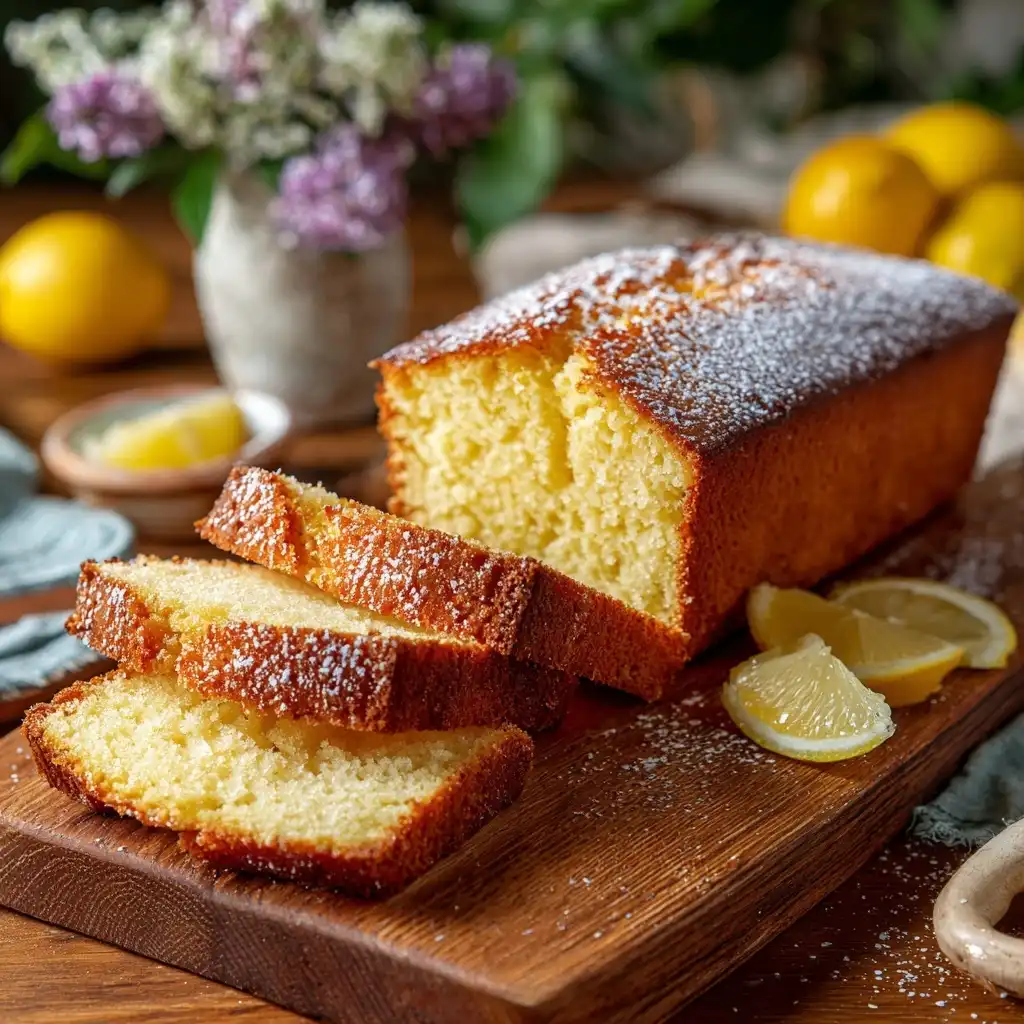
The Rustic French Yogurt Cake—known in France as Gâteau au Yaourt—is a humble yet profoundly beloved dessert that embodies the soul of French home baking: simplicity, resourcefulness, and quiet elegance. Unlike its more ornate cousins, this cake makes no pretense of perfection; its slightly irregular crumb, tender golden crust, and delicate tang are not flaws—they’re signatures of authenticity. Born from pantry staples and baked in a humble yogurt pot (yes, the iconic pot de yaourt), it’s a cake that asks for no special equipment, no fancy ingredients, and no complicated technique—yet delivers extraordinary comfort, moistness, and nuanced flavor with every bite. Whether served at Sunday brunch, tucked into a child’s lunchbox, or offered alongside afternoon tea with a dusting of powdered sugar and fresh berries, this cake whispers tradition while feeling utterly contemporary.
The History
The origins of the Rustic French Yogurt Cake trace back to mid-20th-century France, a time when post-war frugality and rising domestic appliance use converged to inspire ingenious, no-waste baking. In the 1950s and ’60s, as electric mixers and home ovens became more common—and as commercial yogurt gained popularity—the idea of repurposing the standard 125g (4.4 oz) yogurt container as a universal measuring tool took root. Brands like Danone actively promoted this clever hack in recipe booklets and newspaper inserts, encouraging families to bake using the empty pot itself: one pot of yogurt, two pots of flour, one-and-a-half pots of sugar, one pot of oil, three eggs, and a spoonful of baking powder. This “pot method” (la méthode du pot) democratized baking, eliminating the need for scales or measuring cups—especially valuable in rural households and multigenerational homes where literacy or access to tools varied. Over decades, the cake evolved beyond its utilitarian roots into a cultural touchstone: taught by grandmothers, adapted by bakers across Provence and Brittany, featured in regional cookbooks like La Cuisine des Mères, and even celebrated in literary works such as Mireille Guiliano’s French Women Don’t Get Fat. Today, it remains a staple in French bakeries (boulangeries), school cafeterias, and holiday tables—not as a showstopper, but as a quiet, reliable expression of le bon goût: good taste born of balance, restraint, and respect for ingredients.
Ingredients Breakdown
Every ingredient in the Rustic French Yogurt Cake serves a precise functional and sensory role—no element is arbitrary. Understanding their synergy reveals why substitutions must be thoughtful, not casual:
- Plain Whole-Milk Yogurt (125g / ½ cup): The cornerstone. Full-fat yogurt contributes acidity (activating baking powder), fat (for tenderness), moisture (preventing dryness), and subtle lactic tang that balances sweetness. Greek yogurt may be used but requires thinning with milk (1 tbsp per ¼ cup) to avoid density; low-fat or non-dairy yogurts often yield rubbery or crumbly textures due to altered protein and fat ratios.
- All-Purpose Flour (250g / 2 cups, spooned & leveled): Provides gluten structure. French farine T55 (medium-protein, ~10–11% gluten) is ideal—but American all-purpose (10–11.7%) works beautifully. Avoid bread flour (too chewy) or cake flour (too fragile). For rustic authenticity, 20–30g can be swapped with whole wheat or spelt flour for nutty depth and gentle heartiness—just add 1 tsp extra liquid.
- Granulated Sugar (180g / ¾ cup): Sweetens, tenderizes, and aids browning. Caster sugar dissolves more readily; raw cane sugars (like turbinado) add caramel notes but may impart grittiness if not finely ground. Honey or maple syrup can replace up to ¼ of the sugar—but reduce other liquids by 1 tbsp and lower oven temp by 10°C to prevent over-browning.
- Neutral Oil (125g / ½ cup): Typically sunflower, grapeseed, or light olive oil (not extra virgin). Oil ensures unparalleled moistness and shelf life (this cake stays tender for 5 days!). Butter may be substituted (melted & cooled), but it introduces water and milk solids—yielding a slightly denser, less springy crumb and shorter freshness window.
- Eggs (3 large, room temperature): Bind, leaven, and enrich. Their proteins coagulate to set the structure, while yolks lend silkiness and emulsify the batter. Cold eggs risk curdling the oil-yogurt mixture; always bring to room temperature (20–22°C).
- Baking Powder (12g / 2½ tsp): The sole chemical leavener. Freshness is non-negotiable—test by mixing ½ tsp with hot water; vigorous bubbling = active. Double-acting baking powder creates lift both at room temp and in heat—critical for the cake’s signature rise and open crumb. Do not substitute baking soda unless paired with additional acid (e.g., lemon juice), which alters flavor balance.
- Vanilla Extract (1½ tsp pure, not imitation): Adds aromatic warmth and complexity. For elevated nuance, infuse 1 split vanilla bean into warm oil for 15 minutes before mixing—or stir in ½ tsp orange or lemon zest for bright counterpoint to the yogurt’s tang.
- Pinch of Fine Sea Salt (¼ tsp): Not for saltiness—but to heighten all other flavors, suppress bitterness, and stabilize egg foam. Never omit.
Step-by-Step Recipe
This method honors the traditional “bowl-and-spoon” approach—no mixer required—to preserve airiness and prevent overdevelopment of gluten:
- Preheat & Prep: Position rack in center of oven. Preheat to 175°C (350°F) conventional / 160°C (320°F) convection. Generously grease a 9-inch (23 cm) round cake pan with softened butter, then line the bottom with parchment paper and lightly flour the sides. For true rustic charm, use a well-seasoned cast-iron skillet or ceramic terrine—just adjust baking time by ±5 minutes.
- Combine Wet Ingredients: In a large, deep mixing bowl, whisk yogurt, oil, and vanilla until fully emulsified (no streaks of oil). Add eggs one at a time, whisking vigorously for 30 seconds after each addition until thick, pale, and ribbon-like. The mixture should hold a faint trail when the whisk is lifted.
- Sift & Fold Dry Ingredients: In a separate bowl, sift together flour, sugar, baking powder, and salt. Whisk 3 times to ensure even distribution. Using a flexible silicone spatula, gently fold the dry mixture into the wet in three additions—each time cutting down the center, sweeping around the bowl’s edge, and lifting up from the bottom. Fold only until *just* combined; a few faint streaks of flour are preferable to overmixing. Overmixing develops gluten, yielding toughness instead of tenderness.
- Rest the Batter: Let batter sit uncovered for 15 minutes at room temperature. This allows flour to fully hydrate, gluten strands to relax, and air bubbles to stabilize—resulting in an even rise and finer, more uniform crumb.
- Pour & Smooth: Pour batter into prepared pan. Tap pan firmly on countertop 3 times to release large air pockets. Use an offset spatula to smooth the top—don’t worry about perfection; slight peaks and valleys enhance rustic character.
- Bake with Precision: Place pan in preheated oven. Bake 42–48 minutes. Begin checking at 40 minutes: cake is done when deep golden brown, a skewer inserted into the center emerges with *moist crumbs* (not wet batter, not completely clean), and the edges pull gently away from the pan. The top should spring back lightly when touched. Convection ovens may finish 5–7 minutes earlier—watch closely.
- Cool with Patience: Remove cake from oven. Let cool in pan on a wire rack for 15 minutes *exactly*. Then run a thin knife around the edge, invert onto rack, peel off parchment, and reinvert right-side-up to cool completely (1.5–2 hours). This double-inversion prevents soggy bottoms and sets the crumb. Cutting too soon releases steam, causing collapse or gummy texture.
Tips
- Yogurt Temperature Matters: Use cold yogurt straight from the fridge—it helps keep the batter cool during mixing, slowing gluten formation and preserving air bubbles for loftier rise.
- Measure by Weight, Not Volume: While the “pot method” is charming, gram measurements guarantee consistency—especially with flour, which varies wildly by humidity, brand, and scoop technique. Invest in a $20 digital scale.
- Don’t Skip the Rest: That 15-minute rest isn’t optional. It transforms batter texture and dramatically improves oven spring and crumb integrity.
- Rotate for Even Baking: At the 25-minute mark, rotate the pan 180°—oven hot spots are real, and this prevents lopsided browning or undercooked zones.
- Embrace the Crust: A thin, crisp, caramelized outer layer is a hallmark—not a flaw. If your oven runs cool, broil for 30–45 seconds at the end (watch constantly!) to deepen color and crunch.
- Storage Wisdom: Wrap *completely cooled* cake tightly in beeswax wrap or parchment-lined foil. Store at room temperature for up to 5 days. Refrigeration dries it out. To freeze: slice, wrap each piece individually, and freeze up to 3 months. Thaw wrapped at room temp for 2 hours.
- Revive Stale Slices: Lightly toast slices in a 180°C (350°F) oven for 4–5 minutes—crust crisps, interior softens, and aroma reawakens.
Variations and Customizations
The beauty of this cake lies in its adaptability—each variation honors its rustic soul while inviting personal expression:
- Lemon-Ricotta Swirl: Fold 120g full-fat ricotta + zest of 2 lemons + 1 tbsp lemon juice into batter just before pouring. Create a marbled effect with a knife—adds creamy richness and vibrant acidity.
- Provencal Lavender-Honey: Replace 60g sugar with mild acacia honey; whisk 1 tsp culinary-grade dried lavender into flour. Infuse honey in warm oil for 10 minutes, strain, then use. Delicate floral perfume with golden hue.
- Chocolate-Raspberry Ribbon: Whisk 30g unsweetened cocoa powder into dry ingredients. Before baking, dollop 120g fresh raspberries (lightly tossed in 1 tsp cornstarch) over batter and swirl gently with a toothpick—juices bleed into tender ribbons.
- Spiced Apple-Cardamom: Fold in 180g peeled, finely diced tart apple (Granny Smith) and 1 tsp ground cardamom. Add ¼ tsp cinnamon and 1 tbsp dark rum for depth. Top with coarse sugar before baking for crackly sparkle.
- Almond-Orange Polenta: Replace 60g flour with fine yellow polenta and 30g almond flour. Add 1 tbsp orange blossom water + zest of 1 orange. Yields a moist, grainy-silky texture with haunting citrus fragrance.
- Savory Herb & Feta: Omit sugar and vanilla. Add 2 tbsp chopped fresh rosemary, 1 tsp black pepper, 100g crumbled feta, and 30g toasted pine nuts. Serve warm with roasted tomatoes—a stunning brunch or cheese course cake.
- Gluten-Free Adaptation: Substitute flour blend (70g brown rice flour, 50g tapioca starch, 30g potato starch, 20g psyllium husk powder, 1 tsp xanthan gum). Increase yogurt by 1 tbsp and add 1 extra egg yolk. Rest batter 20 minutes. Bake 5–7 minutes longer.
Health Considerations and Nutritional Value
A 100g serving (approx. 1/12th of a standard cake) provides approximately:
- Calories: 275 kcal
- Total Fat: 12g (1.8g saturated)
- Carbohydrates: 36g (22g sugars, naturally occurring + added)
- Protein: 5g
- Fiber: 0.8g (increases to 2.1g with 30g whole wheat flour substitution)
- Calcium: 85mg (10% DV, from yogurt)
- Vitamin D: 1.2mcg (6% DV, if using fortified yogurt)
Nutritional Notes & Mindful Modifications:
- Lower-Sugar Option: Reduce sugar to 120g and add 1 tsp stevia glycerite + 2 tbsp unsweetened applesauce. Maintains moisture without dramatic sweetness loss.
- Protein Boost: Add 20g unflavored collagen peptides or whey isolate to dry ingredients—no texture change, +5g protein/serving.
- Dairy-Free Adaptation: Use coconut yogurt (full-fat, unsweetened) + refined coconut oil. Ensure baking powder is aluminum-free and gluten-free certified. Note: flavor shifts subtly tropical.
- Omega-3 Enrichment: Replace 2 tbsp neutral oil with cold-pressed flaxseed or walnut oil—adds nutty depth and 1.8g ALA per serving.
- Glycemic Consideration: While moderate in carbs, the cake’s fat/protein content slows glucose absorption. Pair with plain Greek yogurt or mixed berries to further lower glycemic load.
- Allergen Awareness: Naturally nut-free and soy-free (if using soy-free oil). Always verify yogurt label for hidden additives or cross-contamination warnings if severe allergies exist.
This cake is not “health food”—but it’s a nourishing, balanced treat rooted in whole-food ingredients, free of artificial preservatives, hydrogenated oils, or ultra-refined sweeteners. Its enduring appeal lies in mindful indulgence: satisfying without excess, comforting without compromise.
Ingredients
- 125g (½ cup) full-fat plain yogurt, cold
- 250g (2 cups) all-purpose flour, spooned & leveled (or 220g AP + 30g whole wheat flour)
- 180g (¾ cup) granulated sugar (caster preferred)
- 125g (½ cup) neutral oil (sunflower, grapeseed, or light olive)
- 3 large eggs, room temperature
- 12g (2½ tsp) aluminum-free baking powder
- 1½ tsp pure vanilla extract
- ¼ tsp fine sea salt
Directions
- Preheat oven to 175°C (350°F) conventional / 160°C (320°F) convection. Grease a 9-inch (23 cm) round cake pan, line bottom with parchment, and lightly flour sides.
- In a large bowl, whisk cold yogurt, oil, and vanilla until smooth and emulsified. Add eggs one at a time, whisking 30 seconds vigorously after each until pale and slightly thickened.
- In another bowl, sift together flour, sugar, baking powder, and salt. Whisk 3 times to aerate and combine.
- Using a silicone spatula, gently fold dry ingredients into wet in three additions—stopping as soon as no dry streaks remain. Do not overmix.
- Let batter rest uncovered for 15 minutes at room temperature.
- Pour batter into prepared pan. Tap pan firmly on counter 3 times. Smooth top gently.
- Bake 42–48 minutes, rotating pan at 25 minutes, until deep golden, edges pull from sides, and a skewer comes out with moist crumbs.
- Cool in pan 15 minutes exactly. Invert onto wire rack, peel off parchment, then reinvert to cool completely (1.5–2 hours) before slicing.
FAQ
- Can I make this cake gluten-free?
- Yes—with careful formulation. Use a 1:1 GF blend containing xanthan gum (e.g., King Arthur Measure for Measure or Bob’s Red Mill). Increase yogurt by 1 tbsp, add 1 extra egg yolk, and rest batter 20 minutes. Expect a slightly denser, more delicate crumb—best served same-day.
- Why did my cake sink in the middle?
- Most commonly: opening the oven too early (before 30 minutes), underbaking (skewer came out wet), overmixing (developed too much gluten), or expired baking powder. Always test with a skewer—not a toothpick—at the recommended time window.
- Can I use flavored yogurt?
- Not recommended. Flavored yogurts contain stabilizers (carrageenan, gums), excess sugar, and artificial acids that disrupt emulsion and leavening. Stick to plain, full-fat, live-culture yogurt for reliability and clean flavor.
- My batter looks curdled—did I ruin it?
- No! Cold yogurt + room-temp oil can cause momentary separation. Keep whisking vigorously—it will emulsify within 30–45 seconds. If eggs were added too quickly or too cold, whisk 1 minute longer to reincorporate.
- How do I get that perfect golden crust?
- Ensure your oven is fully preheated (use an oven thermometer!), bake on the center rack, and don’t underbake. For extra shine, brush top with 1 tbsp warmed apricot jam + 1 tsp water during the last 5 minutes.
- Can I add fruit directly to the batter?
- Absolutely—just toss berries, diced stone fruit, or grated apple in 1 tsp flour first to prevent sinking. Limit to 150g total to avoid weighing down the crumb.
- Is this cake suitable for freezing?
- Yes—and it freezes exceptionally well. Cool completely, wrap *tightly* in plastic wrap + foil or use vacuum seal. Freeze up to 3 months. Thaw overnight in fridge, then bring to room temp 1 hour before serving.
- What’s the best way to serve it?
- At room temperature, unadorned—its simplicity shines. For special occasions: dust with powdered sugar + lemon zest, serve with crème fraîche and stewed plums, or layer with vanilla whipped cream and blackberries. Never serve chilled—it mutes flavor and dulls texture.
Summary
The Rustic French Yogurt Cake is a timeless testament to culinary wisdom—where scarcity bred ingenuity, and simplicity became sublime. With pantry staples, intuitive technique, and profound respect for texture and balance, it delivers moist, tender crumb, delicate tang, and golden-honeyed aroma in every unhurried bite.
More than a recipe, it’s a philosophy: bake with presence, honor ingredients, embrace imperfection, and share generously—because the most memorable cakes aren’t the most elaborate, but the ones that taste like home, history, and heart, all at once.