
Introduction
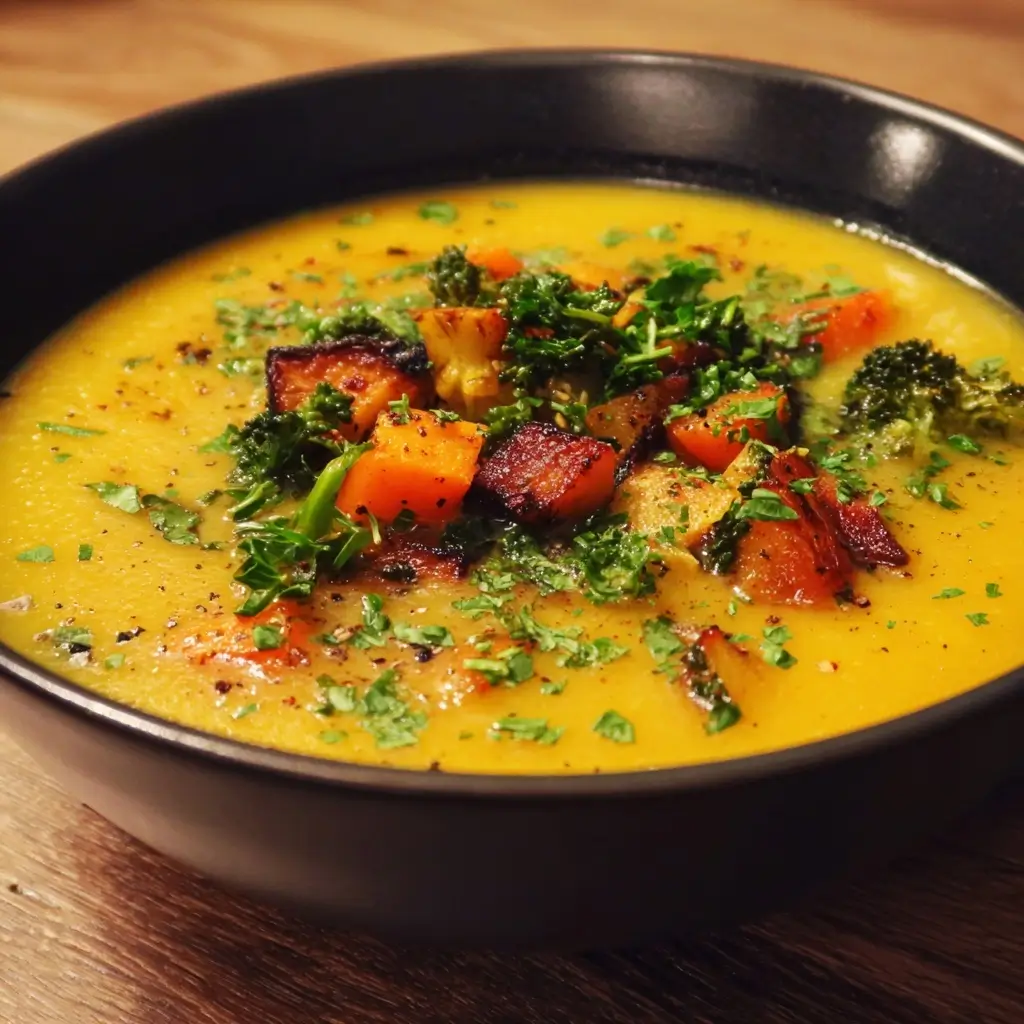
Welcome to a culinary journey that celebrates the rich, earthy flavors of vegetables transformed into a velvety, comforting masterpiece—Roasted Vegetable Purée Soup. This soup is more than just a meal; it’s an experience crafted through the slow caramelization of fresh produce, bringing out deep, complex flavors that simmered soups often miss. Whether you’re looking for a nutritious lunch, a cozy dinner option, or an elegant starter for a special occasion, this roasted vegetable purée soup delivers on every level. Its silky texture, vibrant color, and balanced taste make it a favorite among health enthusiasts, busy parents, gourmet cooks, and anyone who appreciates wholesome food made with love.
The History
The concept of puréed vegetable soups dates back centuries, with roots in French, Mediterranean, and Middle Eastern cuisines. In France, potage—thick vegetable soups—were staples in peasant diets as early as the 17th century, evolving into refined dishes served in royal courts. The technique of roasting vegetables before blending them into soup, however, gained popularity much later, particularly during the late 20th century with the rise of modern gastronomy. Chefs began experimenting with roasting to intensify natural sugars and deepen flavor profiles. Influenced by rustic Italian minestrone, Moroccan harira, and Provençal ratatouille, this method elevated simple vegetables into luxurious textures. Today, roasted vegetable purée soup symbolizes the perfect harmony between tradition and innovation, combining ancient cooking wisdom with contemporary techniques to create a dish that feels both timeless and refreshingly modern.
Ingredients Breakdown
The magic of this soup lies in its ingredients—each one chosen not only for flavor but also for nutritional synergy. Let’s explore them in detail:
- Carrots: Sweet and earthy, carrots add natural sweetness and a vibrant orange hue. Rich in beta-carotene, they support eye health and immune function.
- Parsnips: Often overlooked, parsnips bring a nutty, slightly peppery flavor that balances the sweetness of carrots and onions. They’re high in fiber and vitamin C.
- Onions: Yellow onions caramelize beautifully when roasted, contributing depth and umami. Their sulfur compounds offer anti-inflammatory benefits.
- Garlic: A cornerstone of flavor, roasted garlic becomes mellow and buttery, adding complexity without sharpness. Known for its antimicrobial and cardiovascular properties.
- Leeks: Softer and more delicate than onions, leeks lend a subtle onion-like aroma and enhance the soup’s silkiness. Packed with antioxidants and prebiotic fibers.
- Celery Root (Celeriac): Adds a refreshing, celery-like note and helps thicken the soup naturally. Low in calories but high in vitamin K and phosphorus.
- Butternut Squash: Creamy and sweet, squash contributes body and richness. High in vitamins A and C, potassium, and soluble fiber.
- Olive Oil: Used for roasting, extra virgin olive oil enhances browning and adds heart-healthy monounsaturated fats and polyphenols.
- Vegetable Broth: Forms the liquid base; choose low-sodium, organic broth for clean flavor. You can substitute mushroom or chicken broth for variation.
- Fresh Thyme and Rosemary: These aromatic herbs infuse the soup with woodsy, floral notes. Thyme contains thymol, known for respiratory support.
- Bay Leaf: Adds a subtle bitterness that rounds out the overall flavor profile. Remove before blending.
- Salt and Black Pepper: Essential seasonings that elevate all other flavors.
- Lemon Juice (optional): A splash brightens the final dish and balances richness.
- Heavy Cream or Coconut Milk (optional): For added creaminess. Use dairy-free options for vegan versions.
Step-by-Step Recipe
- Preheat Oven: Set your oven to 400°F (200°C). Position racks in the center and ensure even heat distribution.
- Prepare Vegetables: Wash and peel carrots, parsnips, and celery root. Peel and halve onions, remove outer layers. Trim and slice leeks (white and light green parts only), discarding dark greens. Peel garlic cloves. Cut butternut squash in half, scoop out seeds, peel, and cube.
- Chop Uniformly: Dice all vegetables into 1-inch pieces to ensure even roasting. Smaller pieces may burn; larger ones won’t caramelize properly.
- Toss with Olive Oil: Spread vegetables on two large rimmed baking sheets. Drizzle generously with olive oil (about ¼ cup total), then sprinkle with salt, black pepper, thyme sprigs, and rosemary. Toss thoroughly to coat evenly.
- Roast: Place sheets in the oven and roast for 40–50 minutes, flipping halfway through, until deeply golden brown and tender when pierced with a fork. Avoid overcrowding—this ensures proper browning instead of steaming.
- Transfer to Pot: Once roasted, transfer all vegetables to a large stockpot or Dutch oven. Add bay leaf and pour in 6 cups of vegetable broth, enough to cover everything by about an inch.
- Simmer: Bring to a gentle boil, then reduce heat to low. Simmer uncovered for 25–30 minutes to meld flavors and soften any firm bits.
- Remove Herbs: Discard bay leaf and any large herb stems before blending.
- Blend Until Smooth: Using an immersion blender directly in the pot, purée the soup until completely smooth. Alternatively, work in batches with a countertop blender—be cautious with hot liquids (vent the lid and cover with a towel).
- Adjust Consistency: If too thick, add more broth or water, ½ cup at a time, until desired texture is reached. For a thinner consommé-style soup, strain through a fine-mesh sieve.
- Final Seasoning: Stir in lemon juice if using. Taste and adjust salt, pepper, and acidity. For extra richness, stir in ¼ to ½ cup heavy cream or coconut milk.
- Serve Warm: Ladle into bowls and garnish as desired.
Tips
- Maximize Roasting Flavor: Do not rush the roasting process. Proper caramelization is key. Let vegetables sit undisturbed for the first 20 minutes to develop a deep crust.
- Avoid Crowding: Use two trays if necessary. Overlapping vegetables steam rather than roast, reducing flavor intensity.
- Enhance Umami: Add a small piece of kombu seaweed while simmering or a teaspoon of miso paste after blending for savory depth.
- Smooth Texture Secret: Strain the blended soup through a chinois or fine sieve for restaurant-quality silkiness.
- Safety First When Blending: Never fill the blender more than halfway with hot liquid. Hold the lid down with a kitchen towel and start on low speed.
- Make Ahead Friendly: This soup tastes even better the next day. Cool completely, store in airtight containers, and refrigerate for up to 5 days or freeze for 3 months.
- Reheat Gently: Warm over medium-low heat, stirring occasionally. Add broth if needed, as flavors concentrate upon storage.
- Garnish Creatively: Elevate presentation with a drizzle of chili oil, toasted pumpkin seeds, croutons, fresh herbs, or a swirl of pesto.
- Balancing Sweetness: If the soup turns out too sweet (especially with lots of squash), balance with a touch more lemon juice or a dash of apple cider vinegar.
- Oil Substitution: For a lighter version, use avocado oil or simply spray vegetables instead of drizzling oil.
Variations and Customizations
This recipe is highly adaptable—here are some creative twists to suit different tastes and dietary needs:
- Vegan Roasted Red Pepper & Tomato Version: Replace half the root vegetables with red bell peppers and plum tomatoes. Roast alongside and blend with smoked paprika for a bold, Spanish-inspired flavor.
- Curried Cauliflower & Carrot: Add cauliflower florets and 1–2 tablespoons of curry powder before roasting. Finish with a spoonful of mango chutney.
- Smoky Chipotle Sweet Potato: Swap butternut squash for sweet potatoes and add a minced chipotle in adobo sauce during simmering for heat and smokiness.
- Mediterranean Eggplant & Zucchini: Use eggplant and zucchini as primary vegetables. Roast with oregano and finish with a swirl of tahini.
- Root Vegetable Medley with Apples: Add peeled apples (like Honeycrisp or Fuji) to the roasting pan for a subtly fruity twist. Pairs well with cinnamon or star anise.
- Dairy-Free Creaminess: Use full-fat coconut milk or cashew cream (blend soaked cashews with water) instead of dairy cream.
- Protein Boost: Stir in white beans (cannellini or navy) after roasting, or top with grilled chicken, lentils, or chickpeas.
- Gluten-Free Friendly: Naturally gluten-free. Just ensure your broth is certified GF if needed.
- Kid-Friendly Version: Puree with mild veggies like carrots, potatoes, and squash. Serve with fun-shaped whole-grain croutons.
- Herb Variations: Try sage instead of rosemary in fall, or basil in summer for a fresher profile.
Health Considerations and Nutritional Value
Roasted Vegetable Purée Soup isn’t just delicious—it’s a powerhouse of nutrients. Here’s why it deserves a regular spot in your diet:
- Low in Calories, High in Volume: One serving (about 1.5 cups) contains approximately 180–220 calories, making it ideal for weight management without sacrificing satisfaction.
- Rich in Fiber: With multiple vegetables, especially root varieties and leeks, this soup offers 8–10 grams of dietary fiber per bowl, supporting digestive health and satiety.
- Packed with Antioxidants: Beta-carotene (from carrots and squash), quercetin (onions), and polyphenols (olive oil and herbs) help combat oxidative stress and inflammation.
- Supports Immune Function: High levels of vitamin C (leeks, celery root), vitamin A (from beta-carotene), and selenium (garlic) strengthen immune defenses.
- Heart-Healthy Fats: Olive oil provides monounsaturated fats linked to reduced LDL cholesterol and improved cardiovascular outcomes.
- Low Glycemic Index: Despite natural sugars from roasting, the fiber content slows glucose absorption, making it suitable for diabetics when portion-controlled.
- Hydration Support: Broth-based soups contribute to daily fluid intake, aiding kidney function and metabolism.
- Anti-Inflammatory Properties: Garlic, onions, rosemary, and olive oil contain compounds shown to reduce chronic inflammation markers.
- Digestive Benefits: Prebiotic fibers feed beneficial gut bacteria, promoting microbiome balance.
- Considerations: Be mindful of sodium if using store-bought broth—opt for low-sodium versions or make your own. Those with FODMAP sensitivities may need to limit onions, garlic, and leeks; consider using garlic-infused oil and green tops of scallions instead.
Nutrition Estimate (per 1.5-cup serving, without cream):
Calories: ~200 | Protein: 5g | Fat: 9g (mostly unsaturated) | Carbohydrates: 27g | Fiber: 9g | Sugar: 10g (natural) | Sodium: 400mg (varies by broth) | Vitamin A: 250% DV | Vitamin C: 60% DV | Potassium: 20% DV
Ingredients
- 2 large carrots, peeled and chopped
- 2 parsnips, peeled and chopped
- 1 medium onion, halved and sliced
- 4 cloves garlic, peeled
- 1 large leek (white and light green parts), cleaned and sliced
- 1 cup celery root (celeriac), peeled and cubed
- 2 cups butternut squash, peeled and cubed
- ¼ cup extra virgin olive oil
- 6 cups low-sodium vegetable broth (or homemade)
- 2 sprigs fresh thyme
- 1 sprig fresh rosemary
- 1 bay leaf
- Salt and freshly ground black pepper, to taste
- 1 tablespoon lemon juice (optional)
- ¼ to ½ cup heavy cream or coconut milk (optional, for creaminess)
Directions
- Preheat oven to 400°F (200°C).
- In a large bowl, combine carrots, parsnips, onion, garlic, leek, celery root, and butternut squash.
- Drizzle with olive oil and season with salt and pepper. Add thyme and rosemary, then toss until evenly coated.
- Spread mixture across two parchment-lined baking sheets in a single layer.
- Roast for 40–50 minutes, flipping halfway, until vegetables are tender and caramelized.
- Transfer roasted vegetables to a large pot. Add vegetable broth, bay leaf, and any pan juices.
- Bring to a boil, then reduce to a simmer. Cook uncovered for 25–30 minutes.
- Remove bay leaf and herb stems. Blend soup using an immersion blender until completely smooth.
- If desired, strain through a fine-mesh sieve for ultra-smooth texture.
- Stir in lemon juice and optional cream or coconut milk. Adjust seasoning.
- Serve warm, garnished with herbs, seeds, or a drizzle of oil.
FAQ
Can I make this soup in advance?
Absolutely! It keeps well in the fridge for up to 5 days and freezes beautifully for 3 months. Reheat gently on the stove.
Why is my soup grainy?
This usually happens if not blended long enough or if fibrous vegetables aren’t strained. Use a high-speed blender and consider straining for smoother results.
Can I use frozen vegetables?
Not recommended for roasting. Frozen veggies release too much water and won’t caramelize properly. Fresh or thawed roasted vegetables work best.
How do I make it thicker or thinner?
For thicker soup, simmer longer to reduce. For thinner, add more broth or water gradually until desired consistency.
Is this soup gluten-free?
Yes, as long as the broth used is certified gluten-free. Always check labels if cross-contamination is a concern.
Can I cook this in a slow cooker?
Yes, but skip roasting if doing so. However, you’ll lose the deep roasted flavor. For best results, roast first, then transfer to slow cooker to simmer on low for 4–6 hours.
What can I serve with this soup?
Pair with crusty bread, a crisp green salad, grilled cheese sandwiches, or roasted proteins like chicken or tofu.
Can I omit certain vegetables?
Certainly. Customize based on preference or availability. Just maintain a balance of sweet, earthy, and aromatic elements.
Summary
Roasted Vegetable Purée Soup is a nutrient-dense, flavor-rich dish that transforms humble vegetables into a luxurious, silky creation through the alchemy of roasting and blending. Hearty yet light, healthy yet indulgent, it’s a year-round favorite that nourishes the body and soul.