
Introduction
Pumpkin curry soup is a rich, velvety, and aromatic dish that brings together the earthy sweetness of pumpkin with the warm, complex flavors of Indian-inspired spices. This comforting soup is perfect for chilly evenings, festive gatherings, or as a nourishing meal that’s both satisfying and healthy. Whether you’re a seasoned cook or just beginning your culinary journey, this pumpkin curry soup recipe is easy to follow and endlessly customizable. With its vibrant orange hue, creamy texture, and bold flavor profile, it’s no wonder this soup has become a beloved favorite across kitchens worldwide.
The History
Soup, in general, has been a staple food across cultures for thousands of years, dating back to prehistoric times when early humans learned to boil ingredients in water over fire. Curries, on the other hand, have deep roots in South Asian cuisine—particularly India, where the use of spices like turmeric, cumin, coriander, and chili has been documented for over 4,000 years. The concept of combining vegetables with spiced broths evolved into what we now know as curry-based soups.
Pumpkin curry soup, while not a traditional historical dish in ancient texts, emerged more recently as a fusion creation influenced by global culinary exchange. As pumpkins—native to North America—spread throughout Europe, Asia, and Africa through trade routes after the Columbian Exchange, they became incorporated into various regional cuisines. In countries like India and Thailand, pumpkins were often stewed with coconut milk and spices, forming the basis for modern interpretations of pumpkin curry soup. Today, this dish reflects a beautiful blend of indigenous American produce and South Asian cooking techniques, making it a true example of international comfort food.
Ingredients Breakdown
The magic of pumpkin curry soup lies in the harmony of its ingredients. Each component plays a vital role in building layers of flavor, texture, and nutrition:
- Pumpkin (or butternut squash): Provides natural sweetness and a smooth, creamy base when blended. Choose sugar pumpkins or pie pumpkins rather than large carving pumpkins for better flavor and texture.
- Onion and garlic: Form the aromatic foundation, adding depth and savory umami notes.
- Fresh ginger: Adds a bright, zesty warmth that complements the spices beautifully.
- Curry powder: A blend of turmeric, coriander, cumin, fenugreek, and other spices; it gives the soup its signature golden color and warm, earthy flavor. You can use store-bought or make your own.
- Ground cumin and coriander: Enhance the spice profile with nutty and citrusy undertones.
- Turmeric: Offers anti-inflammatory benefits and contributes a vibrant yellow-orange hue.
- Coconut milk: Adds richness and creaminess without dairy, balancing the heat and acidity in the soup.
- Vegetable broth: Serves as the liquid base, enhancing flavor while keeping the soup vegan-friendly.
- Olive oil or coconut oil: Used for sautéing, helping to release the essential oils from the spices.
- Lime juice: Brightens the final dish with a touch of acidity.
- Fresh cilantro: For garnish, adding freshness and herbal contrast.
- Optional additions: Red pepper flakes for heat, maple syrup for extra sweetness, or roasted chickpeas for protein and crunch.
Step-by-Step Recipe
- Prepare the vegetables: Peel and dice one medium pumpkin (about 3–4 cups). Finely chop one large onion, mince 3 cloves of garlic, and grate 1 tablespoon of fresh ginger.
- Sauté the aromatics: In a large pot, heat 2 tablespoons of olive oil or coconut oil over medium heat. Add the chopped onion and cook until translucent (about 5 minutes). Stir in the garlic and ginger, cooking for another minute until fragrant.
- Bloom the spices: Add 2 tablespoons of curry powder, 1 teaspoon ground cumin, 1 teaspoon ground coriander, and ½ teaspoon turmeric. Stir constantly for 30–60 seconds to toast the spices, releasing their essential oils and deepening their flavor.
- Add the pumpkin: Stir in the diced pumpkin, coating it evenly with the spice mixture. Cook for 2–3 minutes to begin softening the pumpkin.
- Pour in liquids: Add 4 cups of vegetable broth and 1 can (13.5 oz) of full-fat coconut milk. Stir well to combine.
- Simmer: Bring the mixture to a boil, then reduce the heat to low. Cover and simmer for 25–30 minutes, or until the pumpkin is very tender when pierced with a fork.
- Blend until smooth: Carefully transfer the soup in batches to a blender and puree until silky smooth. Alternatively, use an immersion blender directly in the pot. Be cautious when blending hot liquids—remove the center cap of the blender lid and cover with a towel to allow steam to escape.
- Adjust seasoning: Return the blended soup to the pot if needed. Stir in the juice of half a lime. Taste and adjust salt, pepper, and spices as desired. For a thinner consistency, add more broth or water.
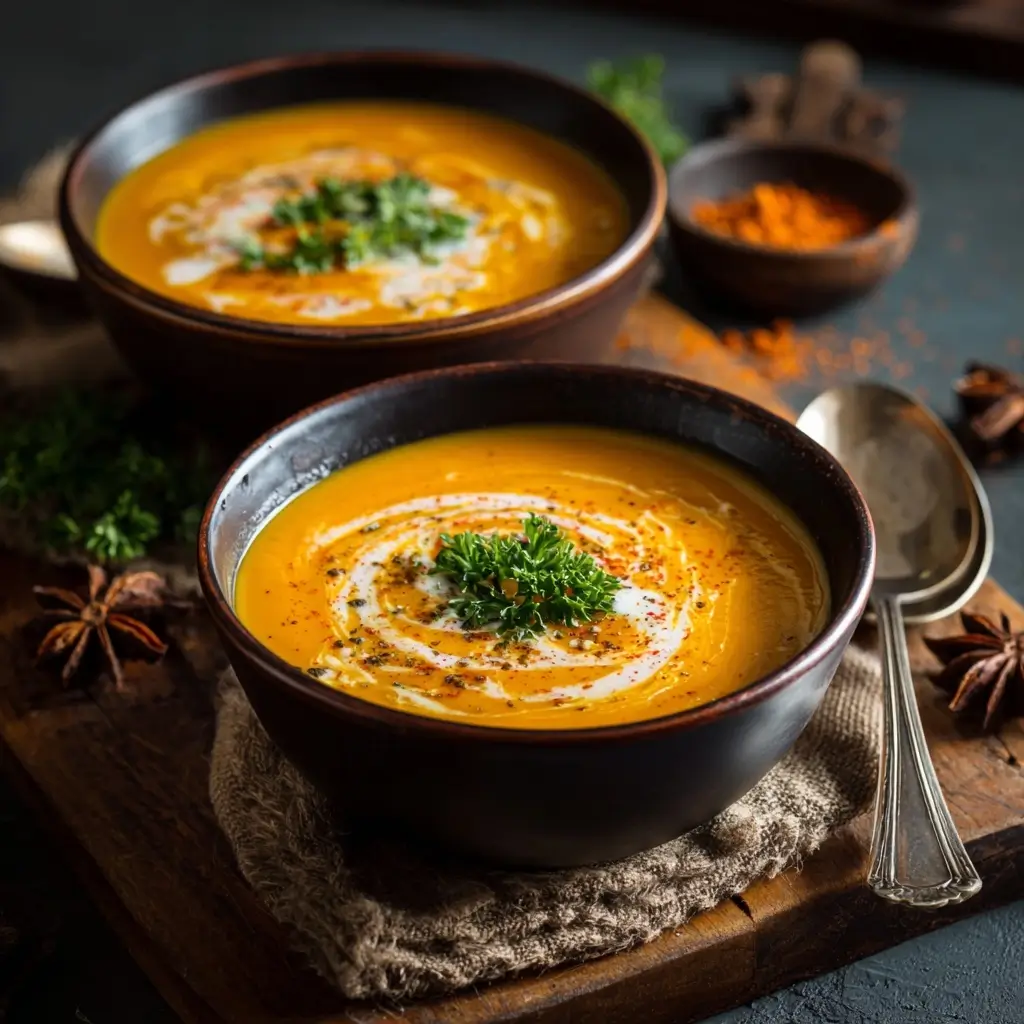
- Serve: Ladle into bowls, garnish with fresh cilantro, a drizzle of coconut milk, and optional toppings like toasted coconut flakes, pumpkin seeds, or naan bread on the side.
Tips
- Use quality curry powder: The flavor of your soup heavily depends on the freshness and quality of your curry powder. Consider toasting whole spices and grinding them yourself for maximum aroma.
- Don’t rush the sauté: Taking time to properly cook the onions, garlic, and ginger ensures a deeper flavor base.
- Toast spices well: Blooming the spices in oil unlocks their full potential. Watch closely to avoid burning.
- Choose the right pumpkin: Sugar pumpkins or kabocha squash are ideal. Avoid large jack-o’-lantern pumpkins—they’re watery and lack flavor.
- Blend carefully: Always vent the blender when puréeing hot soup to prevent pressure buildup and accidents.
- Creaminess hack: For an even richer texture, stir in a splash of heavy cream (if not vegan) or cashew cream before serving.
- Make ahead: This soup tastes even better the next day as the flavors continue to meld. Store in the fridge for up to 5 days or freeze for up to 3 months.
- Garnish generously: Toppings add visual appeal and textural contrast. Try crispy fried shallots, roasted chickpeas, or a swirl of yogurt.
Variations and Customizations
Pumpkin curry soup is incredibly versatile and welcomes creative twists. Here are some popular variations:
- Vegan & dairy-free: Already naturally vegan when made with vegetable broth and coconut milk. Ensure all packaged ingredients are certified vegan.
- Gluten-free: This recipe is inherently gluten-free. Just confirm that your broth and curry powder are certified GF if needed.
- Spicier version: Add ½–1 teaspoon of cayenne pepper, a chopped fresh chili (like serrano or Thai bird), or a dash of hot sauce.
- Sweeter twist: Stir in 1–2 teaspoons of maple syrup, honey, or brown sugar to enhance the pumpkin’s natural sweetness.
- Protein boost: Add cooked lentils, chickpeas, or shredded rotisserie chicken for a heartier meal.
- Different squash: Substitute pumpkin with butternut squash, acorn squash, or sweet potato—each brings a slightly different flavor and texture.
- Thai-inspired: Use red or green Thai curry paste instead of dry curry powder and add lemongrass, kaffir lime leaves, and fish sauce (or soy sauce for vegan option).
- Roasted version: Roast the pumpkin, onion, and garlic before blending for a deeper, caramelized flavor.
- Creamy finish: Swirl in Greek yogurt, sour cream, or cashew cream just before serving for added richness.
- Herb variation: Swap cilantro for mint or parsley depending on your taste preference.
Health Considerations and Nutritional Value
Pumpkin curry soup is not only delicious but also packed with nutrients that support overall health:
- Low in calories, high in fiber: Pumpkin is rich in dietary fiber, promoting digestive health and helping you feel full longer.
- Vitamin A powerhouse: One cup of pumpkin provides over 200% of your daily vitamin A needs, crucial for vision, immune function, and skin health.
- Antioxidant-rich: Beta-carotene (which gives pumpkin its orange color), along with vitamins C and E, helps combat oxidative stress and inflammation.
- Heart-healthy fats: Coconut milk contains medium-chain triglycerides (MCTs), which may support metabolism and heart health in moderation.
- Anti-inflammatory properties: Turmeric contains curcumin, a compound studied for its anti-inflammatory and antioxidant effects. Pairing it with black pepper enhances absorption.
- Immune support: Garlic and ginger are known for their immune-boosting and antimicrobial qualities.
- Plant-based protein options: When fortified with legumes or nuts, this soup becomes a balanced, plant-powered meal.
Note: While coconut milk adds beneficial fats, it is calorie-dense. Use light coconut milk for a lower-fat version, though the soup will be less creamy. Also, monitor sodium levels by using low-sodium broth and adjusting salt to taste, especially for those managing blood pressure.
Ingredients
- 2 tablespoons olive oil or coconut oil
- 1 large yellow onion, finely chopped
- 3 cloves garlic, minced
- 1 tablespoon fresh ginger, grated
- 3–4 cups peeled and cubed pumpkin (sugar pumpkin or butternut squash)
- 2 tablespoons curry powder (preferably high-quality or homemade)
- 1 teaspoon ground cumin
- 1 teaspoon ground coriander
- ½ teaspoon ground turmeric
- ¼ teaspoon cayenne pepper (optional, for heat)
- 4 cups vegetable broth (low-sodium preferred)
- 1 can (13.5 oz) full-fat coconut milk
- Juice of ½ lime
- Salt and freshly ground black pepper to taste
- Fresh cilantro, for garnish
- Additional toppings: coconut milk drizzle, pumpkin seeds, naan, or croutons
Directions
- Heat oil in a large pot over medium heat. Add onion and cook until soft and translucent, about 5–7 minutes.
- Stir in garlic and ginger; cook for 1 minute until fragrant.
- Add curry powder, cumin, coriander, turmeric, and cayenne (if using). Stir constantly for 30–60 seconds to toast the spices.
- Add pumpkin cubes and stir to coat with the spice mixture. Cook for 2–3 minutes.
- Pour in vegetable broth and coconut milk. Stir well, bring to a boil, then reduce heat to low.
- Cover and simmer for 25–30 minutes, or until pumpkin is very tender.
- Use an immersion blender to puree the soup directly in the pot until smooth. Alternatively, carefully blend in batches using a countertop blender.
- Stir in lime juice. Season with salt and pepper to taste. Adjust spices if needed.
- If soup is too thick, add more broth or water until desired consistency is reached.
- Serve hot, garnished with fresh cilantro, a swirl of coconut milk, and your choice of toppings.
FAQ
Can I use canned pumpkin instead of fresh?
Yes, you can substitute 2–3 cups of pure canned pumpkin (not pumpkin pie filling) for fresh. Reduce simmering time to 15–20 minutes since it’s already cooked.
Is this soup freezer-friendly?
Absolutely! Let the soup cool completely, then store in airtight containers or freezer bags for up to 3 months. Thaw overnight in the fridge and reheat gently on the stove.
How can I make it creamier without adding dairy?
Use full-fat coconut milk, blend in a small boiled potato, or stir in cashew cream (blend soaked cashews with water until smooth).
What can I serve with pumpkin curry soup?
Excellent pairings include warm naan bread, crusty baguette, rice, quinoa, or a simple green salad.
Can I make this in a slow cooker?
Yes! Sauté aromatics and toast spices first, then transfer to a slow cooker with remaining ingredients. Cook on low for 6–8 hours or high for 3–4 hours, then blend.
Why did my soup turn out bland?
Flavor can be enhanced by adjusting salt, acidity (more lime juice), or adding a pinch of sugar to balance. Also, ensure your spices are fresh—old spices lose potency.
Is this soup suitable for kids?
Yes! Its mild sweetness and creamy texture make it appealing to children. You can reduce spices slightly and serve with fun toppings like cheese or crackers.
Summary
Pumpkin curry soup blends the natural sweetness of pumpkin with aromatic Indian spices and creamy coconut milk for a comforting, nutrient-rich meal. Easy to customize and perfect for any season, this vibrant soup delights the palate and nourishes the body.