
Introduction
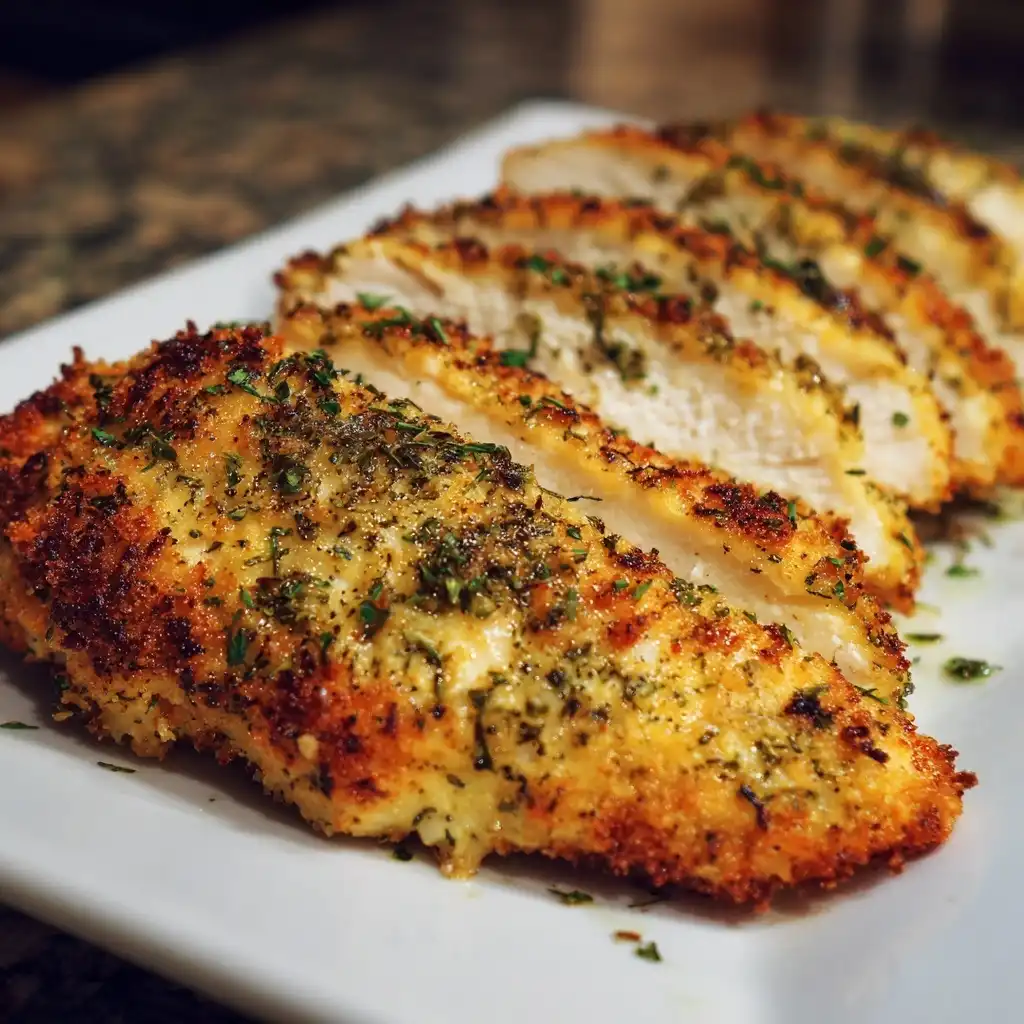
Parmesan Crusted Chicken is a beloved, restaurant-quality dish that brings bold flavor, golden crispiness, and comforting familiarity to any dinner table. With its irresistibly crunchy, savory-salty crust and tender, juicy interior, it’s no wonder this classic preparation has become a staple in home kitchens across North America and beyond. Whether served as a weeknight main course, an elegant appetizer, or even sliced into bite-sized tenders for parties, Parmesan Crusted Chicken delivers consistent satisfaction—effortlessly bridging simplicity and sophistication. Its versatility, minimal ingredient list, and forgiving technique make it ideal for beginners and seasoned cooks alike, while its rich umami depth ensures it never feels ordinary.
The History
While chicken itself has been a dietary cornerstone for millennia, the concept of breading and pan-frying poultry dates back to medieval Europe—particularly in Italy and Spain—where cooks developed techniques to preserve moisture and enhance texture using breadcrumbs, cheese, and herbs. The modern iteration of Parmesan Crusted Chicken emerged prominently in mid-20th-century American home cooking, fueled by the post-war proliferation of convenience ingredients like pre-grated Parmigiano-Reggiano (often marketed under the more accessible “Parmesan” label) and the rise of cookbooks emphasizing approachable gourmet flair. Influences from Italian-American cuisine—especially dishes like Pollo alla Parmigiana (a baked, saucy relative) and Cotoletta alla Milanese (veal with breadcrumb and cheese crust)—undoubtedly shaped its development. Over time, chefs and food writers refined the method: swapping traditional flour-egg-breadcrumb for richer, cheese-forward coatings; incorporating Dijon mustard or Greek yogurt for better adhesion; and embracing oven-baking as a healthier, hands-off alternative to deep-frying. Today, it stands as a cultural touchstone—a bridge between rustic tradition and contemporary culinary pragmatism.
Ingredients Breakdown
Every exceptional Parmesan Crusted Chicken starts with intentional, high-quality components. Below is a detailed analysis of each ingredient’s functional and sensory role:
- Chicken Breasts (boneless, skinless): Opt for air-chilled, antibiotic-free, and preferably organic or pasture-raised breasts. Their natural pH and moisture retention yield superior browning and tenderness. Uniform thickness (½-inch) ensures even cooking—pounding is essential if uneven.
- Grated Parmigiano-Reggiano: Authentic, freshly grated Parmigiano-Reggiano—not pre-shredded “Parmesan-style” blends—is non-negotiable. Its crystalline texture, nutty complexity, and natural enzymes promote caramelization and structural integrity in the crust. Pre-grated versions contain anti-caking agents (e.g., cellulose) that inhibit browning and create a greasy, chalky finish.
- Panko Breadcrumbs: Japanese-style panko offers airy, flaky structure that crisps dramatically without excessive oil absorption. Unlike fine traditional breadcrumbs, panko creates loft, crunch, and surface area for Maillard reactions. Toasting them lightly before mixing deepens their nuttiness.
- Garlic Powder & Onion Powder: These dehydrated alliums provide concentrated, evenly distributed savory depth without raw bite or moisture interference—ideal for dry coatings. Fresh garlic or onion would release water and cause sogginess or uneven browning.
- Dried Italian Herbs: A blend of oregano, basil, marjoram, and thyme contributes aromatic earthiness and subtle floral notes. Avoid “Italian seasoning” blends with fillers or salt—curate your own for purity and balance.
- Freshly Ground Black Pepper: Coarsely ground pepper adds bright, spicy heat that complements the cheese’s saltiness. Pre-ground pepper loses volatile oils rapidly, resulting in muted flavor.
- Smoked Paprika (optional but recommended): A small amount (¼ tsp) introduces warm, slightly sweet smokiness and enhances visual appeal with golden-red hue—without overpowering the cheese profile.
- Eggs & Dijon Mustard (for binder): Eggs provide protein-based adhesion, while Dijon mustard adds tang, emulsifying power, and slight acidity to tenderize surface proteins. Some variations use Greek yogurt, buttermilk, or even mayonnaise for richness and moisture control.
- Olive Oil or Avocado Oil (for baking or pan-searing): High-smoke-point oils ensure crisp, golden crust formation without burning. Extra-virgin olive oil is best reserved for finishing drizzle due to its low smoke point.
- Salt (Kosher or Sea Salt): Applied *only* to the chicken (not the coating), salt seasons the meat deeply and draws out surface moisture for optimal crust adherence. Salting the breading leads to oversalting and inhibits browning.
Step-by-Step Recipe
- Prep the Chicken: Place two boneless, skinless chicken breasts on a clean cutting board. Cover with parchment paper or plastic wrap. Using a meat mallet or heavy skillet, pound gently from center outward until uniformly ½-inch thick. This ensures rapid, even cooking and prevents curling. Pat *extremely* dry with paper towels—moisture is the enemy of crust formation.
- Season the Chicken: Lightly season both sides with ¾ tsp kosher salt and ¼ tsp freshly ground black pepper. Let rest 5–10 minutes at room temperature to allow salt penetration and surface drying.
- Prepare the Crust Mixture: In a wide, shallow bowl, combine 1 cup finely grated Parmigiano-Reggiano, 1 cup panko breadcrumbs, 1 tsp garlic powder, 1 tsp onion powder, 1 tsp dried Italian herbs, ½ tsp smoked paprika (if using), and ½ tsp freshly ground black pepper. Whisk thoroughly to distribute spices evenly. Optional: Toast mixture in a dry skillet over medium-low heat for 3–4 minutes, stirring constantly, until fragrant and lightly golden—cool completely before using.
- Set Up Your Breading Station: Use three separate, wide, shallow dishes: (1) All-purpose flour (½ cup), seasoned with a pinch of salt and pepper; (2) Egg wash—2 large eggs whisked with 1 tbsp Dijon mustard, 1 tsp lemon juice, and 1 tsp water; (3) Parmesan-panko mixture from Step 3.
- Bread the Chicken: Dredge each pounded breast in flour, shaking off excess. Dip fully into egg wash, letting excess drip off for 3–5 seconds. Then press firmly—*do not toss or shake*—into the crust mixture, ensuring full, even coverage. Press again gently on both sides to lock in adhesion. Place breaded cutlets on a wire rack set over a baking sheet—this prevents steaming and encourages airflow for maximum crispness.
- Chill (Critical Step): Refrigerate breaded chicken for *at least 20 minutes* (up to 1 hour). This allows the coating to hydrate slightly, bind to the egg layer, and firm up—dramatically reducing shedding during cooking.
- Choose Your Cooking Method:
- Oven-Baked (Health-Conscious & Hands-Off): Preheat oven to 425°F (220°C). Line a baking sheet with parchment and place a wire rack on top. Lightly spray crust with olive oil spray. Bake 18–22 minutes, flipping halfway, until internal temperature reaches 165°F (74°C) and crust is deep golden and audibly crisp.
- Pan-Seared (Restaurant-Quality Crispness): Heat 3 tbsp avocado oil in a heavy-bottomed stainless steel or cast-iron skillet over medium-high heat until shimmering (350°F). Carefully place chicken in hot oil—do not overcrowd. Sear undisturbed 5–6 minutes until deeply golden and crust releases easily. Flip, reduce heat to medium, and cook 4–6 more minutes until done. Optional: Finish in a 400°F oven for 2 minutes for full doneness without over-browning.
- Air Fryer (Quick & Crispy): Preheat air fryer to 400°F. Lightly spray basket. Arrange chicken in single layer. Spray tops generously with oil. Cook 12–15 minutes, flipping at 7 minutes, until golden and 165°F internally.
- Rest and Serve: Transfer cooked chicken to a clean wire rack or plate lined with paper towels. Let rest 3–5 minutes—this allows juices to redistribute and crust to set further. Do not cover with foil (traps steam and softens crust).
Tips
- Never Skip the Pound & Dry Steps: Uneven thickness causes dry edges and raw centers. Excess surface moisture = soggy crust. Be ruthless with paper towels.
- Use a Wire Rack Relentlessly: Whether chilling, resting, or baking—wire racks elevate food, allowing air circulation that crisps *all* surfaces, not just the bottom.
- Toast Your Breadcrumbs and Cheese Mixture: Even 2 minutes in a dry skillet unlocks deeper, roasted, almost buttery notes—transforming the crust from good to extraordinary.
- Press—Don’t Toss—During Breading: Gently pressing the crust into the egg-washed chicken creates mechanical adhesion far stronger than gravity alone. Think “velcro,” not “sprinkling.”
- Chill After Breading—No Exceptions: Skipping this causes immediate crust sloughing in the pan or oven. Cold coating contracts slightly, gripping tighter upon heating.
- Oil the Crust, Not Just the Pan: A light mist or brush of oil directly onto the breaded surface promotes even browning, faster crisping, and glossy sheen.
- Invest in an Instant-Read Thermometer: Visual cues are unreliable. Chicken is safe and perfectly juicy at 165°F—not “no pink.” Pull at 160°F; carryover cooking will reach 165°F during rest.
- Let It Rest Before Slicing: Cutting too soon releases precious juices, leaving meat dry and crust limp. Resting preserves both texture and flavor integrity.
- Clean As You Go: Breading stations get messy. Keep damp paper towels nearby and wipe bowls between batches to prevent cross-contamination and clumping.
- Double-Bread for Ultimate Crunch: For ultra-gourmet texture, repeat the egg wash and crust step after chilling once—then chill again for 15 minutes before cooking.
Variations and Customizations
Parma-crusted chicken is a canvas—not a rigid formula. Explore these thoughtfully crafted adaptations for dietary needs, global flavors, or creative inspiration:
- Gluten-Free Version: Substitute certified GF panko (like Kikkoman or Ian’s) and GF all-purpose flour (or almond flour for grain-free). Ensure Parmesan is labeled GF—some brands use wheat starch as anti-caking agent.
- Low-Carb/Keto Adaptation: Replace panko with crushed pork rinds (3:1 ratio), almond flour, or crushed keto crackers. Add 1 tbsp grated Romano for extra salt/umami. Use full-fat Greek yogurt instead of egg wash for binding.
- Herb-Infused Crust: Fold in 2 tbsp finely chopped fresh parsley, basil, or chives into the breadcrumb mixture just before breading. Add 1 tsp lemon zest for brightness.
- Spicy Arrabbiata Style: Add ½ tsp crushed red pepper flakes + ¼ tsp cayenne to crust. Serve with roasted cherry tomatoes, garlic confit, and basil oil.
- Lemon-Pepper Crust: Increase black pepper to 1 tsp and add 1 tbsp finely grated lemon zest + 1 tsp lemon juice to egg wash. Garnish with lemon wedges and micro-planed zest.
- Truffle-Infused Luxury: Stir 1 tsp white truffle oil into egg wash and finish cooked chicken with shaved black truffle and flaky sea salt.
- “Everything Bagel” Twist: Replace dried herbs with 1 tbsp everything bagel seasoning in crust mixture. Serve with scallion cream cheese dip.
- Buffalo-Style Crusted Chicken: After baking/searing, toss hot chicken in ¼ cup buffalo sauce + 1 tbsp melted butter. Top with crumbled blue cheese and pickled red onions.
- Asian-Inspired Umami Bomb: Swap Parmesan for ½ cup nutritional yeast + ¼ cup toasted sesame seeds. Use ginger-soy egg wash (1 egg + 1 tbsp tamari + 1 tsp grated ginger + 1 tsp rice vinegar). Garnish with nori strips and wasabi aioli.
- Vegan “Parm” Crusted Seitan or Tofu: Use pressed extra-firm tofu or homemade seitan cutlets. Bind with aquafaba or flax “egg.” Crust: nutritional yeast, toasted panko, garlic powder, onion powder, smoked paprika, and miso paste for depth.
Health Considerations and Nutritional Value
A single 6-ounce serving of oven-baked Parmesan Crusted Chicken (made with whole ingredients, minimal oil) delivers approximately:
- Calories: ~320–360 kcal
- Protein: 42–46g (excellent complete protein source supporting muscle synthesis and satiety)
- Fat: 12–16g (mostly unsaturated from olive/avocado oil and cheese; includes ~5g saturated fat—well within daily recommendations when balanced)
- Carbohydrates: 4–6g (primarily from panko; negligible fiber unless whole-grain panko is used)
- Sodium: ~580–720mg (moderate; controlled by omitting added salt in breading and choosing low-sodium cheese options)
- Calcium: ~220mg (17% DV from Parmigiano-Reggiano—supports bone health)
- Vitamin B12, Phosphorus, Zinc, Selenium: Highly bioavailable nutrients critical for energy metabolism, immunity, and antioxidant defense.
Key Health Notes:
- Heart-Healthy Potential: When prepared with heart-smart oils (avocado, olive) and limited sodium, this dish aligns with Mediterranean and DASH diet principles. Pair with leafy greens, roasted vegetables, or quinoa for a balanced plate.
- Weight Management Friendly: High protein content increases thermic effect of food and promotes prolonged fullness—reducing snacking urges. The satisfying crunch also enhances mindful eating.
- Digestive Considerations: Parmigiano-Reggiano is naturally lactose-free (<0.1g per ounce) due to extended aging, making it well-tolerated by many with lactose sensitivity.
- Antioxidant-Rich Options: Adding turmeric to the crust or serving with polyphenol-dense sides (kale, berries, purple cabbage) boosts overall antioxidant load.
- Caution for Hypertension: Those on strict low-sodium regimens should use unsalted butter/oil, omit added salt, and select low-sodium Parmesan alternatives (though flavor impact is significant).
- Allergen Awareness: Contains eggs, dairy (cheese), and gluten (unless modified). Always verify labels on pre-grated cheeses and panko for hidden allergens.
Ingredients
- 2 (6-oz) boneless, skinless chicken breasts, pounded to ½-inch uniform thickness
- ¾ tsp kosher salt (divided: ½ tsp for chicken, ¼ tsp optional in crust)
- 1 tsp freshly ground black pepper (divided: ½ tsp for chicken, ½ tsp for crust)
- ½ cup all-purpose flour (or gluten-free 1:1 blend)
- 2 large eggs
- 1 tbsp Dijon mustard
- 1 tsp fresh lemon juice
- 1 tsp water
- 1 cup finely grated authentic Parmigiano-Reggiano (NOT pre-shredded “Parmesan”)
- 1 cup panko breadcrumbs (Japanese-style, plain)
- 1 tsp garlic powder
- 1 tsp onion powder
- 1 tsp dried Italian herb blend (oregano, basil, marjoram, thyme)
- ½ tsp smoked paprika (optional but recommended)
- 3 tbsp high-heat oil (avocado, grapeseed, or light olive oil) OR olive oil spray
- Fresh lemon wedges, chopped parsley, or microgreens for garnish (optional)
Directions
- Place chicken breasts between two sheets of parchment or plastic wrap. Using a meat mallet or rolling pin, pound gently from center outward until ½-inch thick and even. Pat *very* dry with paper towels. Season both sides with ½ tsp kosher salt and ½ tsp black pepper. Let sit 5–10 minutes at room temperature.
- In a medium bowl, whisk together flour and a pinch of pepper. In a second bowl, whisk eggs, Dijon mustard, lemon juice, and water until smooth and frothy. In a third wide, shallow dish, combine grated Parmigiano-Reggiano, panko, garlic powder, onion powder, Italian herbs, smoked paprika (if using), remaining ½ tsp black pepper, and optional ¼ tsp salt.
- Working with one piece at a time: dredge chicken in flour, shaking off excess. Dip fully into egg mixture, letting excess drip off for 3–5 seconds. Press firmly into Parmesan-panko mixture, coating both sides evenly and pressing to adhere. Place on a wire rack set over a baking sheet.
- Refrigerate breaded chicken for 20–60 minutes (non-negotiable for crust integrity).
- For Oven Baking: Preheat oven to 425°F. Line a baking sheet with parchment and top with wire rack. Lightly spray crust with oil. Bake 18–22 minutes, flipping halfway, until golden and internal temp reads 165°F.
- For Pan-Searing: Heat oil in heavy skillet over medium-high heat until shimmering. Carefully add chicken (don’t crowd). Sear 5–6 minutes until golden and releases easily. Flip, reduce heat to medium, cook 4–6 more minutes until 165°F. Optional: transfer to 400°F oven for 2 minutes.
- Transfer to clean wire rack or paper towel–lined plate. Rest 3–5 minutes. Serve immediately with lemon wedges and fresh herbs.
FAQ
- Can I make this ahead of time?
- Yes! Bread chicken up to 24 hours in advance. Place on wire rack, cover loosely with plastic wrap, and refrigerate. Bake straight from fridge—add 2–3 minutes to cook time. Do not freeze breaded raw chicken—it compromises crust texture.
- Why does my crust fall off?
- Most commonly: insufficient drying of chicken, skipping the chill step, tossing instead of pressing during breading, or overcrowding the pan/sheet. Also check if your cheese contains anti-caking agents—always grate fresh.
- Can I use pre-grated Parmesan?
- Technically yes—but expect inferior browning, greasiness, and muted flavor due to cellulose and preservatives. For best results, invest 90 seconds in grating your own block.
- Is there a dairy-free version?
- Absolutely. Replace Parmesan with ¾ cup nutritional yeast + ¼ cup toasted almond meal + 1 tsp white miso paste. Use flax or aquafaba egg wash. Results are surprisingly savory and crisp.
- What sides pair best?
- Classic: Garlic mashed potatoes, roasted asparagus, lemon-dressed arugula salad, or creamy polenta. Lighter options: Quinoa tabbouleh, grilled zucchini ribbons, or balsamic-glazed heirloom carrots.
- Can I bake instead of pan-fry and still get crunch?
- Yes—with caveats. Use convection bake mode if available, always bake on a wire rack, spray crust generously with oil, and broil for final 1–2 minutes (watch closely!). Convection + rack = near-pan-fry crispness.
- How do I reheat leftovers without losing crispness?
- Avoid microwave. Re-crisp in a 400°F oven or air fryer for 6–8 minutes. A toaster oven works beautifully. Never cover—steam is the crust’s nemesis.
- Can I use chicken thighs?
- Yes—boneless, skinless thighs work wonderfully. They’re more forgiving and flavorful. Adjust cook time: bake 20–24 minutes; pan-sear 6–7 min per side. Thighs are done at 175°F for optimal juiciness.
- Why use Dijon mustard in the egg wash?
- Dijon acts as an emulsifier, improves adhesion, adds subtle tang to balance richness, and its acidity gently tenderizes surface proteins—yielding more succulent meat beneath the crust.
- My crust isn’t browning enough—what’s wrong?
- Possible causes: Oven not properly preheated, insufficient oil spray, chicken too cold going in, overcrowded pan, or using low-smoke-point oil that burns before browning. Also confirm your Parmesan is fresh-grated.
Summary
Parma-crusted chicken is a masterclass in simple elegance—transforming humble ingredients into a golden, savory, deeply satisfying centerpiece through precise technique, quality components, and thoughtful customization.
From its Italian-American roots to modern health-conscious and globally inspired iterations, it remains endlessly adaptable, nutritionally robust, and universally beloved—proving that extraordinary flavor need not demand extraordinary effort.