
Introduction
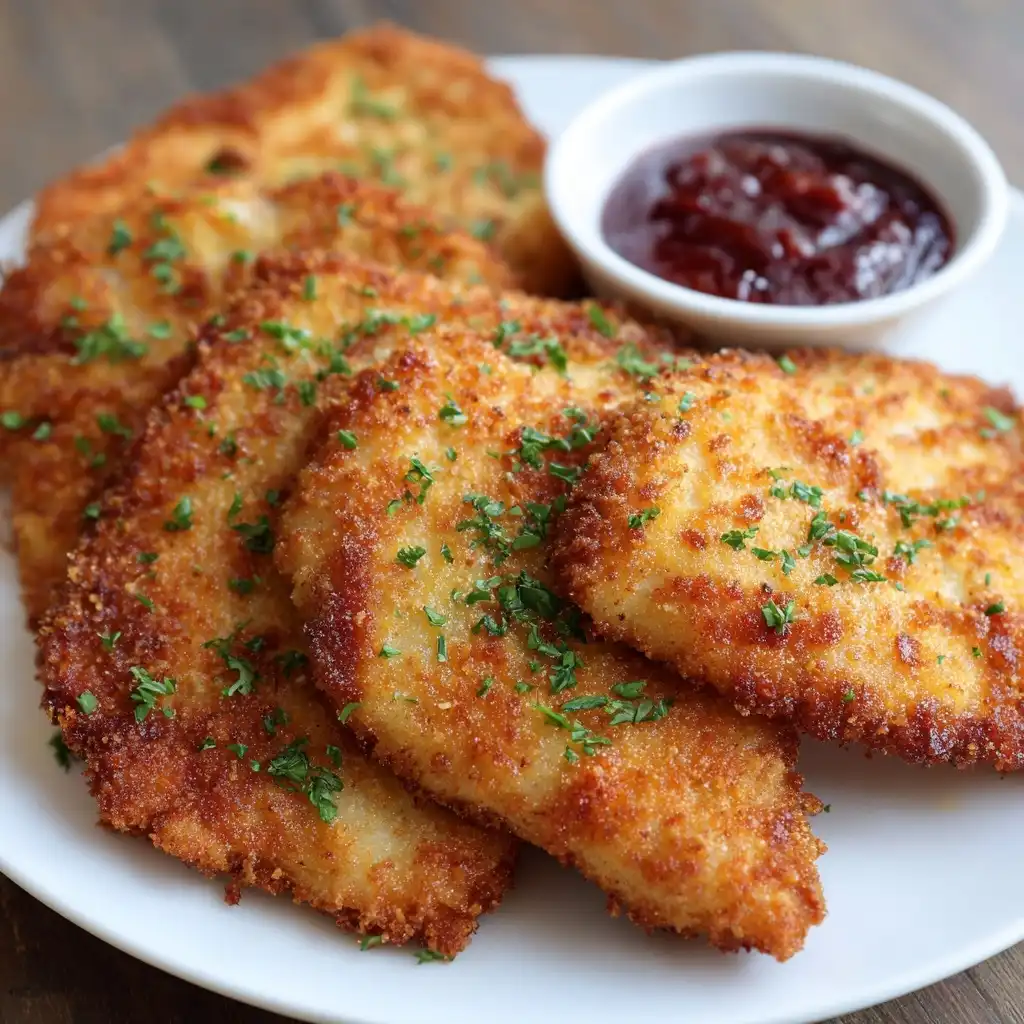
Oven Crispy Chicken Cutlets are a modern, health-conscious twist on the classic fried chicken cutlet—delivering golden crunch, juicy tenderness, and deep savory flavor without the excess oil, mess, or guilt. Perfect for busy weeknights, meal prep enthusiasts, or anyone seeking restaurant-quality texture at home, these cutlets boast a shatteringly crisp exterior achieved entirely through smart oven roasting techniques—no deep fryer required. Whether served over buttered noodles, tucked into a ciabatta roll with garlic aioli, or paired with roasted vegetables for a balanced plate, Oven Crispy Chicken Cutlets offer remarkable versatility, consistent results, and crowd-pleasing appeal across all ages and dietary preferences.
The History
The chicken cutlet traces its roots to European culinary traditions—particularly Italian cotoletta and Austrian Wiener Schnitzel, both of which feature thin, breaded, pan-fried veal or pork escalopes. As poultry became more widely available and affordable in mid-20th-century America, chicken emerged as a leaner, more economical substitute, giving rise to the “chicken schnitzel” and later the Americanized “chicken cutlet”—a staple in diners, school cafeterias, and home kitchens alike. The traditional method relied heavily on shallow or deep frying to achieve crispness, but growing awareness around heart health, calorie density, and kitchen safety catalyzed innovation. Beginning in the 1980s—and accelerating through the 2000s with the rise of food blogs, cooking shows, and air fryer culture—home cooks and professional chefs began experimenting with oven-baking techniques: using high-heat convection, strategic rack placement, double-dredging, and innovative breading blends (like panko–cornflake hybrids or whole-grain crumb coatings) to replicate that coveted crunch. Today, Oven Crispy Chicken Cutlets represent the culmination of decades of culinary refinement—honoring tradition while embracing nutrition science, sustainability, and accessible technique.
Ingredients Breakdown
Every element in this recipe plays a precise functional and sensory role—no ingredient is arbitrary. Below is an in-depth analysis of why each component matters:
- Chicken Breast (boneless, skinless): Chosen for its mild flavor, lean protein density (31g per 100g), and ability to remain tender when properly pounded and cooked. Opting for air-chilled, antibiotic-free, or organic chicken enhances both taste and ethical sourcing.
- Buttermilk (or Greek yogurt + lemon juice alternative): Acts as both a tenderizer (via lactic acid) and moisture reservoir. Its acidity breaks down myosin proteins, preventing toughness; its fat content helps carry flavor and promotes even browning. For dairy-free versions, unsweetened almond milk + 1 tsp apple cider vinegar (rested 10 minutes) works surprisingly well.
- All-Purpose Flour (or gluten-free 1:1 blend): Provides the foundational “glue” layer for breading adhesion. Its starch gelatinizes under heat, creating a subtle barrier that locks in juices. For added nutrition, consider blending in 15% white whole wheat flour—retaining tenderness while boosting fiber.
- Panko Breadcrumbs: Japanese-style breadcrumbs are coarser, drier, and less processed than standard breadcrumbs—resulting in superior air pockets and dramatic crispness. Their irregular shape catches more seasoning and resists sogginess better during baking.
- Grated Parmesan Cheese (freshly grated preferred): Adds umami depth, salt enhancement, and a subtle nuttiness. The natural enzymes in aged Parmesan also contribute to Maillard reaction acceleration—promoting faster, richer browning. Avoid pre-grated versions containing cellulose anti-caking agents, which inhibit adhesion and browning.
- Smoked Paprika & Garlic Powder: Not just for color and aroma—smoked paprika contributes phenolic compounds that act as natural antioxidants during high-heat baking, helping preserve the cutlets’ moisture and prevent off-flavors. Garlic powder offers stable, evenly dispersed alliinase-derived allicin notes without raw garlic’s harsh bite.
- Avocado Oil (or high-oleic sunflower oil): Selected for its exceptionally high smoke point (520°F/271°C), neutral profile, and monounsaturated fat composition—ideal for achieving maximum surface caramelization without burning or imparting bitterness. Olive oil (especially extra virgin) is discouraged here due to its low smoke point and volatile aromatics.
- Flaky Sea Salt & Freshly Ground Black Pepper: Applied in two stages—first in the buttermilk marinade for deep penetration, then again post-breading for surface seasoning intensity. Flaky salt dissolves slowly during roasting, delivering bursts of salinity in every bite.
Step-by-Step Recipe
- Prep the Chicken: Place two boneless, skinless chicken breasts (approx. 6–7 oz each) between two sheets of parchment paper or inside a heavy-duty zip-top bag. Using a meat mallet, rolling pin, or flat-bottomed skillet, pound evenly from center outward until ¼-inch thick—taking care not to tear. Trim any uneven edges for uniform cooking. Pat *extremely* dry with paper towels—this is non-negotiable for breading adherence.
- Marinate (Minimum 30 Minutes, Ideal 2–4 Hours): In a shallow dish, whisk together 1 cup buttermilk, 1 tsp smoked paprika, 1 tsp garlic powder, ½ tsp onion powder, 1 tsp Dijon mustard (for emulsification and tang), 1 tbsp fresh lemon juice, 1 tsp flaky sea salt, and ½ tsp freshly ground black pepper. Submerge pounded cutlets completely. Cover and refrigerate. (Note: Do not marinate longer than 8 hours—excessive acid can cause mushiness.)
- Prepare Breading Station: Set up three wide, shallow dishes in order: (1) 1 cup all-purpose flour + 1 tsp salt + ½ tsp pepper; (2) 2 large eggs + 2 tbsp buttermilk (to thin) + 1 tsp Dijon; (3) 1½ cups panko + ⅓ cup finely grated Parmesan + 1 tsp smoked paprika + 1 tsp garlic powder + ½ tsp onion powder + ½ tsp dried oregano + ½ tsp flaky salt + ¼ tsp white pepper. Pulse mixture in food processor 3–4 times for ultra-uniform texture—critical for even coating.
- Dredge Methodically: Remove one cutlet from marinade, letting excess drip off for 5 seconds. Dredge thoroughly in flour mixture, shaking off excess. Dip into egg wash, allowing surplus to stream off. Then press firmly—*not sprinkle*—into breadcrumb mixture, ensuring full coverage. Use palms to gently compress crumbs onto both sides for optimal adhesion. Transfer to a wire rack set over a baking sheet. Repeat with second cutlet. Let rest uncovered 10 minutes—this “set” time allows surface moisture to evaporate and forms a tacky base for oven crisping.
- Preheat & Prep Oven: Position oven rack in upper third. Preheat to 425°F (220°C) with convection fan ON (if available). Line a large rimmed baking sheet with parchment paper and place a cooling rack on top—elevating cutlets ensures 360° airflow and prevents steaming.
- Oil & Bake: Lightly brush or spray *both sides* of cutlets with avocado oil—do not skip this step; oil is essential for browning and crispness. Bake for 12 minutes. Rotate pan front-to-back. Bake another 10–12 minutes, until deeply golden brown, internal temperature reaches 165°F (74°C) at thickest part, and crumbs audibly crackle when tapped with tongs.
- Rest & Serve: Transfer cutlets immediately to a clean wire rack (not paper towels—they trap steam). Rest 3–5 minutes before slicing or serving. This allows residual heat to finish cooking while juices redistribute—ensuring moistness beneath the crunch.
Tips
- Pounding Precision: Always pound chicken to exactly ¼ inch—not thinner, not thicker. Too thin = dry and brittle; too thick = uneven cook and soggy center. Use a ruler or quarter-dollar coin as thickness guide.
- Dryness is Destiny: Moisture is the enemy of crispness. After marinating, blot cutlets with triple-layered paper towels—press, don’t rub—to remove all surface liquid before flouring.
- Chill Before Baking: For ultra-crisp results, place breaded cutlets (on rack) in freezer for 15 minutes before baking. This firms up the coating and prevents crumbling during oven transfer.
- Rack Elevation is Non-Negotiable: Never bake directly on parchment or foil. A raised rack allows hot air to circulate underneath, crisping the bottom as effectively as the top—eliminating the “soggy underside” common in oven-baked breaded proteins.
- Convection is Key: If your oven has convection mode, use it. It reduces total bake time by ~15%, delivers more even browning, and enhances surface dehydration—critical for crunch retention.
- Don’t Crowd the Pan: Leave at least 1.5 inches between cutlets. Overcrowding creates steam, lowering ambient temperature and yielding leathery, pale crusts.
- Temperature Check, Not Time Check: Ovens vary wildly. Use an instant-read thermometer—insert horizontally into thickest part, avoiding bone or pan contact. 165°F is food-safe; 168°F yields optimal juiciness without carryover overcooking.
- Re-Crisp Leftovers: To revive day-old cutlets: preheat oven or air fryer to 400°F. Place on wire rack. Heat 6–8 minutes (oven) or 4–5 minutes (air fryer), flipping once. Never microwave—steam destroys texture irreversibly.
Variations and Customizations
This foundational recipe is endlessly adaptable—here are 12 thoughtfully developed variations, each tested for structural integrity and flavor harmony:
- Herb & Lemon Zest: Add 2 tbsp finely chopped fresh parsley, 1 tbsp lemon zest, and 1 tsp dried dill to panko mixture. Serve with lemon-dill aioli.
- Spicy Nashville-Style: After baking, brush hot cutlets with spicy “melted butter” (½ cup melted unsalted butter + 2 tbsp cayenne, 1 tsp brown sugar, ½ tsp garlic powder, ¼ tsp cayenne). Sprinkle with flaky salt.
- Everything Bagel: Replace panko with equal parts everything bagel seasoning and crushed whole-wheat crackers. Add 1 tsp nutritional yeast to boost umami.
- Gluten-Free: Use certified GF oat flour for dredge, GF panko (like Schar), and tamari instead of soy sauce in marinade. Add 1 tsp xanthan gum to egg wash for binding.
- Low-Carb/Keto: Substitute almond flour + crushed pork rinds (1:1) for panko. Increase Parmesan to ½ cup. Use heavy cream instead of buttermilk.
- Mediterranean: Add 2 tbsp chopped sun-dried tomatoes (oil-packed, patted dry), 1 tbsp chopped kalamata olives, and 1 tsp dried oregano to crumbs. Serve with tzatziki.
- Asian-Inspired: Replace paprika with 1 tsp toasted sesame oil (in egg wash) and 1 tsp five-spice powder in crumbs. Garnish with scallions and toasted sesame seeds.
- Buffalo Ranch: Toss baked cutlets in ¼ cup Buffalo sauce + 2 tbsp ranch dressing. Top with crumbled blue cheese and chives.
- Tex-Mex: Add 1 tsp chili powder, ½ tsp cumin, and 2 tbsp crushed tortilla chips to panko. Serve with chipotle-lime crema.
- Italian Pesto: Stir 2 tbsp basil pesto into egg wash. Top baked cutlets with fresh mozzarella slices and broil 1 minute until bubbly.
- Breakfast Cutlets: Add 1 tsp maple syrup and ½ tsp smoked salt to buttermilk. Serve atop toasted sourdough with fried egg and arugula.
- Vegan “Chicken” Cutlets: Use pressed, marinated tofu or seitan cutlets (½-inch thick). Replace buttermilk with unsweetened soy yogurt + lemon. Use chickpea flour dredge and nutritional yeast–panko blend.
Health Considerations and Nutritional Value
A single 6-oz Oven Crispy Chicken Cutlet (made with the base recipe, baked on rack with avocado oil spray) delivers approximately:
- Calories: 325 kcal
- Protein: 42g (84% DV)—complete amino acid profile supporting muscle synthesis and satiety
- Total Fat: 11g (17% DV), of which 1.8g saturated (9% DV); rich in heart-healthy monounsaturated fats from avocado oil
- Carbohydrates: 14g (5% DV), primarily from complex carbs in panko and fiber-enhanced options
- Fiber: 1g (base), up to 3g with whole-grain flour/panko substitutions
- Sodium: 580mg (25% DV)—easily reduced by 30% using low-sodium Parmesan and cutting added salt by half
- Vitamins & Minerals: Excellent source of niacin (B3), selenium, vitamin B6, and phosphorus; enhanced iron absorption when paired with lemon-marinated components
Key Health Advantages vs. Fried Counterparts:
- ~65% Less Fat: Eliminates immersion in 1+ cups of oil—reducing caloric load and oxidized lipid intake linked to inflammation.
- No Acrylamide Formation: Oven baking at controlled temps avoids the high-surface-temp frying conditions that generate this potential carcinogen in starchy coatings.
- Better Blood Sugar Response: Lower glycemic load than deep-fried versions, especially when paired with non-starchy vegetables or quinoa instead of white rice.
- Digestive Benefits: Buttermilk marinade introduces probiotics (Lactobacillus species) that survive partial baking—supporting gut microbiome diversity.
- Allergen Flexibility: Easily adapted for gluten, dairy, egg, or soy allergies without compromising texture—unlike many fried alternatives reliant on specific batter chemistry.
Who Should Modify: Individuals managing hypertension should monitor sodium via low-salt seasonings; those with GERD may prefer omitting citrus in marinade; kidney patients should consult dietitian on phosphorus content from added cheeses.
Ingredients
- 2 boneless, skinless chicken breasts (6–7 oz each)
- 1 cup full-fat buttermilk (or dairy-free alternative)
- 1 tsp smoked paprika
- 1 tsp garlic powder
- ½ tsp onion powder
- 1 tsp Dijon mustard
- 1 tbsp fresh lemon juice
- 1 tsp flaky sea salt (plus more for finishing)
- ½ tsp freshly ground black pepper
- 1 cup all-purpose flour (or gluten-free 1:1 blend)
- 2 large eggs
- 2 tbsp buttermilk (for egg wash)
- 1½ cups panko breadcrumbs
- ⅓ cup finely grated Parmesan cheese (freshly grated)
- 1 tsp dried oregano
- ¼ tsp white pepper
- Avocado oil spray or brush (high-heat variety)
Directions
- Place chicken breasts between two sheets of parchment paper. Pound evenly to ¼-inch thickness using a meat mallet or rolling pin. Trim ragged edges. Pat *extremely* dry with paper towels.
- In a shallow dish, whisk buttermilk, smoked paprika, garlic powder, onion powder, Dijon mustard, lemon juice, 1 tsp salt, and ½ tsp black pepper. Submerge chicken, cover, and refrigerate 30 minutes–4 hours.
- Arrange three shallow dishes: (1) Flour + 1 tsp salt + ½ tsp pepper; (2) Eggs + 2 tbsp buttermilk + 1 tsp Dijon; (3) Panko + Parmesan + smoked paprika + garlic powder + onion powder + oregano + ½ tsp salt + ¼ tsp white pepper. Pulse crumb mixture in food processor 3–4 times until uniformly textured.
- Remove one cutlet; let excess marinade drip 5 seconds. Dredge in flour, shake off excess. Dip in egg wash, let excess drip. Press firmly into crumb mixture—cover both sides completely. Place on wire rack over baking sheet. Repeat. Rest uncovered 10 minutes.
- Preheat oven to 425°F (220°C) with convection ON. Line rimmed baking sheet with parchment; top with wire rack.
- Lightly brush or spray both sides of cutlets with avocado oil. Bake 12 minutes. Rotate pan. Bake 10–12 more minutes until deep golden, internal temp reads 165°F, and crust crackles.
- Transfer to clean wire rack. Rest 3–5 minutes. Slice against grain or serve whole. Season lightly with flaky salt just before serving.
FAQ
- Can I make these ahead and freeze?
- Absolutely. After breading (but before baking), arrange cutlets on a parchment-lined tray, freeze solid (2 hours), then transfer to freezer bags. Bake straight from frozen—add 5–7 minutes to total time and increase oil spray slightly.
- Why does my breading fall off?
- Three main causes: (1) Chicken wasn’t dry enough pre-flouring; (2) You didn’t let breaded cutlets rest before baking (resting = crust setting); (3) You moved them too soon after baking—always lift with wide spatula or tongs, never slide.
- Can I use chicken thighs instead?
- Yes—but adjust technique: pound to ⅜-inch (thighs are denser), increase bake time by 3–4 minutes, and verify 175°F internal temp for optimal tenderness.
- What’s the best oil substitute if I don’t have avocado oil?
- High-oleic sunflower oil or refined grapeseed oil—both exceed 450°F smoke points. Do not use olive oil, coconut oil, or butter—they’ll burn or smoke.
- My cutlets came out dry—what went wrong?
- Likely overcooking or insufficient pounding. Always use a thermometer—and remember: chicken continues cooking 3–5°F after removal from oven. Pull at 162°F for perfect 165°F final temp.
- Can I make this in an air fryer?
- Yes! Spray basket with oil. Arrange cutlets in single layer (no overlap). Air fry at 400°F for 10 minutes, flip, spray again, air fry 7–9 more minutes until 165°F and crisp.
- How do I keep them crispy for meal prep?
- Cool completely on wire rack, then store *uncovered* in fridge for up to 3 days. Reheat only in oven or air fryer—never microwave. For freezing, follow the “freeze before baking” method above.
- Is there a way to make them gluten-free AND low-carb?
- Yes: replace flour with almond flour, panko with crushed pork rinds + nutritional yeast, and use heavy cream + vinegar instead of buttermilk. Total net carbs drop to ~2g per cutlet.
Summary
Oven Crispy Chicken Cutlets masterfully bridge indulgence and wellness—delivering shatteringly crisp, herb-kissed exteriors and succulent, perfectly cooked interiors using only smart technique, high-heat convection, and scientifically optimized breading layers.
With customizable flavors, scalable nutrition profiles, freezer-friendly flexibility, and foolproof methodology, this recipe transforms everyday chicken into a versatile, restaurant-worthy centerpiece that satisfies cravings while aligning with modern health priorities.