
Introduction
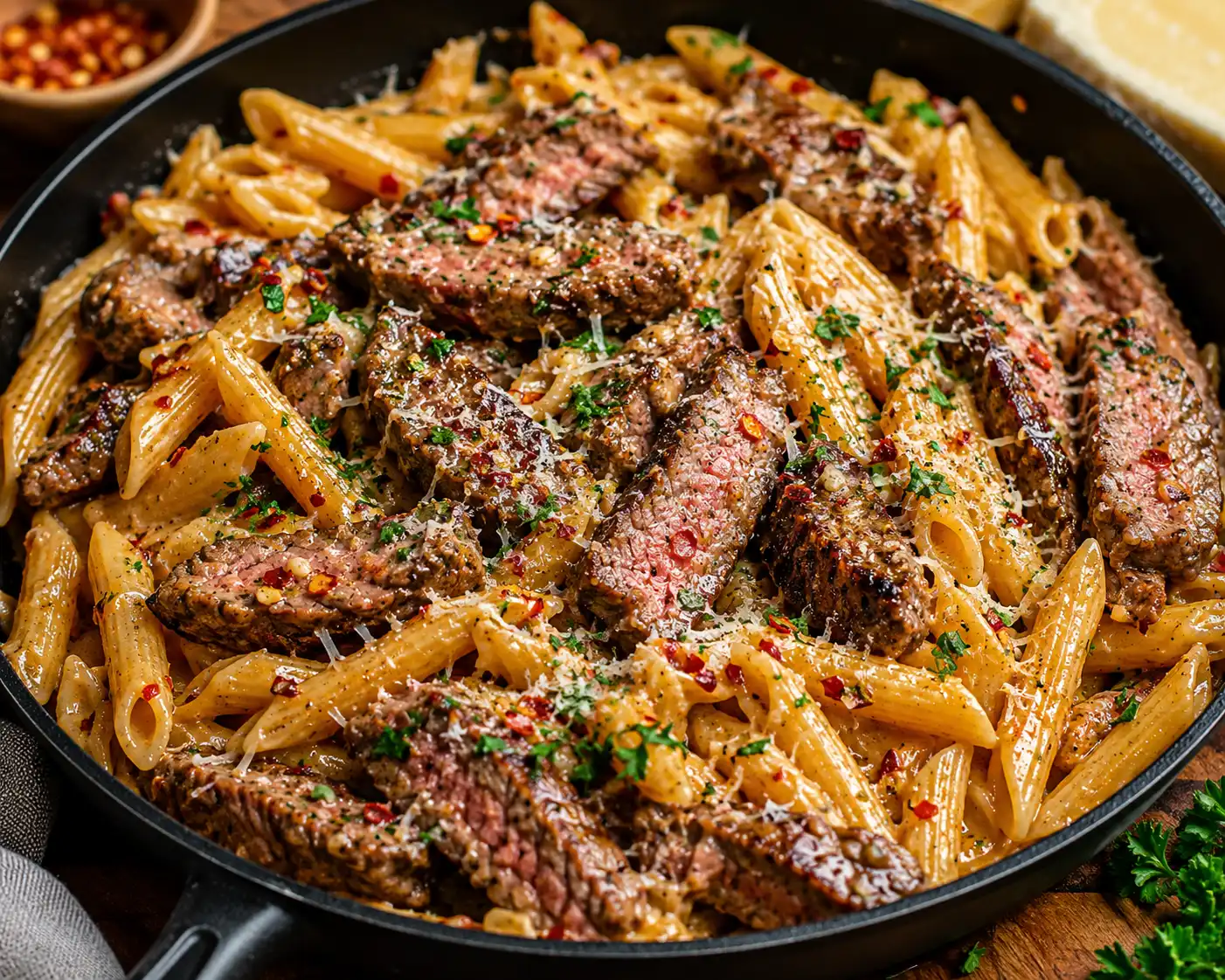
Welcome to the ultimate comfort-meets-adventure dish: One-Skillet Spicy Garlic Butter Parmesan Steak Pasta. This isn’t just another pasta recipe—it’s a symphony of bold, rich, and deeply savory flavors, all harmonized in a single, sizzling skillet. Imagine tender, seared strips of premium steak nestled in a luxuriously creamy, garlicky, buttery sauce kissed with sharp Parmesan, a gentle heat from crushed red pepper, and the aromatic depth of fresh herbs—all clinging perfectly to al dente pasta. Designed for weeknight practicality without sacrificing gourmet flair, this dish delivers restaurant-quality depth in under 30 minutes, with minimal cleanup and maximum impact. Whether you’re impressing guests, fueling a post-workout recovery meal, or simply treating yourself to something deeply satisfying, this one-pan wonder checks every box: hearty yet balanced, spicy but not overwhelming, indulgent yet grounded in quality ingredients.
The History
The One-Skillet Spicy Garlic Butter Parmesan Steak Pasta is a delicious embodiment of modern American fusion cooking—rooted in classic Italian technique, elevated by French-inspired pan sauces, and energized by bold, contemporary flavor profiles. While traditional Italian pastasciutta emphasizes simplicity—often just pasta, olive oil, garlic, and herbs—the rise of “steak pasta” dishes reflects the growing popularity of protein-forward, globally inspired weeknight meals. The concept of combining high-heat-seared beef with pasta gained traction in the early 2010s through food blogs and social media, where home cooks began experimenting beyond traditional bolognese or carbonara. The addition of garlic butter—a staple in American steakhouses—and freshly grated Parmigiano-Reggiano nods to both Midwestern comfort food traditions and Italian authenticity. Meanwhile, the “spicy” element traces its lineage to global pantry staples like Calabrian chiles and Turkish pul biber, adapted here for accessibility using crushed red pepper flakes. The one-skillet method itself echoes centuries-old culinary wisdom: minimizing heat loss, maximizing fond development, and honoring the principle that the best sauces are built from what’s already in the pan. This dish, therefore, is less a historical artifact and more a living evolution—a testament to how home cooks worldwide reinterpret tradition with creativity, convenience, and confidence.
Ingredients Breakdown
Every ingredient in this recipe plays a precise, intentional role—not just for taste, but for texture, aroma, mouthfeel, and chemical synergy:
- Flank or Skirt Steak (12–14 oz): Chosen for its intense beefy flavor, lean marbling, and ability to absorb marinade quickly. Thinly sliced *against the grain* after cooking ensures tenderness despite its naturally fibrous structure.
- Spaghetti or Linguine (8 oz, dried): Long, slender strands provide ideal surface area for sauce adhesion. Durum wheat semolina pasta offers superior starch release, crucial for emulsifying the butter-based sauce.
- Unsalted Butter (6 tbsp, cold & cubed): Cold butter added at the end creates a velvety, glossy finish via controlled emulsification—preventing greasiness while delivering richness and mouth-coating luxury.
- Extra-Virgin Olive Oil (2 tbsp): Used exclusively for initial searing—its moderate smoke point and fruity notes complement beef without overpowering. Not substituted with neutral oils to preserve aromatic complexity.
- Fresh Garlic (6 large cloves, finely minced): Minced—not pressed—to release allicin gradually during cooking, avoiding bitterness while building deep, sweet-savory umami. Raw garlic would burn; roasted garlic would lack punch.
- Shallots (1 large, finely diced): Adds subtle sweetness and layered onion depth without the harshness of yellow onions—critical for balancing heat and acidity.
- Dry White Wine (½ cup, e.g., Sauvignon Blanc or Pinot Grigio): Deglazes the pan, dissolving caramelized fond into the sauce while contributing bright acidity and fruity esters that cut through fat.
- Low-Sodium Beef Broth (¾ cup): Provides deep, savory backbone (umami) without excess salt. Homemade or high-quality store-bought preferred—bouillon cubes often introduce off-notes and cloud the sauce.
- Heavy Cream (⅓ cup): Adds lush body and stabilizes the emulsion. Light cream or half-and-half lacks sufficient fat content and may curdle; coconut milk or dairy-free alternatives require separate formulation.
- Freshly Grated Parmigiano-Reggiano (¾ cup, plus extra for garnish): Authentic Italian DOP-certified cheese offers nutty, crystalline complexity and natural enzymes that help thicken and enrich the sauce. Pre-grated versions contain anti-caking agents and lack volatile aromatic compounds.
- Crushed Red Pepper Flakes (¼–½ tsp, to taste): Toasted lightly in oil to bloom capsaicin and release floral, smoky top notes—not just heat. Adjustability ensures customization for all palates.
- Fresh Parsley (¼ cup, finely chopped): Added off-heat for vibrant color, clean herbal lift, and chlorophyll-driven freshness that contrasts the richness.
- Lemon Zest (from ½ lemon): A secret weapon—bright citrus oils enhance perception of salt and fat without adding acidity, making the dish taste “brighter” and more complex.
- Kosher Salt & Freshly Ground Black Pepper: Sea salt or Diamond Crystal kosher salt is used for even seasoning; freshly cracked Tellicherry black pepper adds floral, resinous warmth that complements the garlic and beef.
Note: Ingredient quality directly correlates with final result—especially the steak, cheese, butter, and wine. Investing in these elevates the dish from excellent to unforgettable.
Step-by-Step Recipe
- Prep & Marinate (5 minutes): Pat steak dry with paper towels. In a small bowl, combine 1 tbsp olive oil, 1 minced garlic clove, ½ tsp kosher salt, ¼ tsp black pepper, and ⅛ tsp red pepper flakes. Rub mixture evenly over steak. Let sit at room temperature for 10–15 minutes (no longer—flank absorbs marinade quickly).
- Cook Pasta (10 minutes): Bring 4 quarts well-salted water (2 tbsp salt) to a rolling boil. Add pasta and cook 1 minute shy of package’s al dente time (e.g., if 10 minutes, cook 9). Reserve 1 cup pasta water before draining. Do NOT rinse—starch is essential for sauce binding.
- Sear the Steak (4 minutes): Heat 1 tbsp olive oil in a heavy-bottomed 12-inch stainless steel or cast-iron skillet over medium-high heat until shimmering. Add steak in a single layer (work in batches if needed). Sear undisturbed for 1½–2 minutes per side until deeply browned and medium-rare internally (130°F). Transfer to a cutting board; rest 5 minutes, then slice thinly *against the grain*.
- Sauté Aromatics (3 minutes): Reduce heat to medium. Add remaining 1 tbsp olive oil. Add shallots and 3 minced garlic cloves; sauté 1 minute until fragrant and translucent. Stir in remaining red pepper flakes and toast 30 seconds until aromatic—but do not brown.
- Build the Sauce Base (4 minutes): Pour in white wine, scraping vigorously with a wooden spoon to lift all browned bits (fond). Simmer 2 minutes until reduced by half. Add beef broth and simmer 2 more minutes until slightly thickened and glossy.
- Emulsify with Butter & Cream (3 minutes): Reduce heat to low. Whisk in cold butter, one cube at a time, allowing each to melt and incorporate fully before adding the next. Stir in heavy cream and simmer gently 1 minute—do not boil. Sauce should coat the back of a spoon.
- Finish with Cheese & Pasta (2 minutes): Remove from heat. Whisk in ¾ cup grated Parmigiano-Reggiano until fully melted and smooth. Add drained pasta and sliced steak. Toss vigorously with tongs, adding reserved pasta water 2 tbsp at a time until sauce clings luxuriously to every strand. Sauce should glisten—not pool.
- Final Seasoning & Garnish (1 minute): Stir in lemon zest, remaining 2 minced garlic cloves (for raw brightness), and fresh parsley. Taste and adjust: add flaky sea salt for dimension, black pepper for warmth, or a splash of lemon juice if lacking brightness. Serve immediately in warmed bowls.
Tips
- Pasta Water Is Liquid Gold: Always reserve *before* draining—even if you think you won’t need it. Its starchy, saline-rich composition is irreplaceable for achieving silky, cohesive sauce texture.
- Butter Temperature Matters: Using cold, cubed butter—not melted or softened—ensures proper emulsification. Warm butter separates; cold butter melts slowly, releasing milk solids gradually for stability and sheen.
- Don’t Crowd the Pan: Overloading the skillet when searing steak causes steaming instead of browning. If your steak doesn’t fit comfortably in one layer, sear in two batches—and wipe the pan between if excessive residue builds.
- Garlic Timing Is Critical: Adding all garlic at once risks burning. Reserve 2 cloves for raw finish—they deliver pungent, zesty top notes that balance the mellowed, cooked garlic in the base.
- Rest the Steak—Then Slice Against the Grain: Resting allows juices to redistribute; slicing against the grain shortens tough muscle fibers, ensuring tenderness even in lean cuts like flank.
- Wine Choice Impacts Flavor: Avoid “cooking wine.” Use a dry, acidic white you’d drink—Sauvignon Blanc adds grassy zing; Pinot Grigio lends pear-like softness; unoaked Chardonnay contributes subtle vanilla nuance.
- Grate Your Own Cheese: Pre-shredded Parmesan contains cellulose and potato starch, which inhibit melting and create grittiness. A microplane yields fine, fluffy shreds that dissolve seamlessly.
- Control the Heat During Emulsification: Keep heat low when adding butter and cream. Boiling causes separation—gentle simmering preserves the delicate fat-in-water emulsion.
- Use a Heavy Skillet: Thin pans create hot spots, leading to uneven browning and scorched garlic. Stainless steel or enameled cast iron distributes heat evenly and retains fond beautifully.
- Taste, Then Taste Again: Season in layers: salt the steak, season the aromatics, adjust at the end. Final tasting reveals whether you need brightness (lemon), depth (more Parmesan), heat (extra flakes), or salt (flaky Maldon).
Variations and Customizations
This recipe is a versatile canvas—adaptable to dietary needs, seasonal ingredients, pantry constraints, and personal preferences:
- Protein Swaps: Substitute skirt steak with hanger steak (even more flavorful), flat iron steak (tender and affordable), or grass-fed ground beef (brown thoroughly, reduce broth by ¼ cup). For seafood lovers: sear 1 lb peeled, deveined shrimp (add in last 2 minutes of sauce stage). Vegetarian option: swap steak for 2 cups roasted cremini mushrooms + 1 cup cooked lentils; use vegetable broth and nutritional yeast instead of Parmesan.
- Pasta Alternatives: Use whole-wheat spaghetti for added fiber and nuttiness; chickpea or lentil pasta for higher protein and gluten-free compliance; rice noodles for Asian-inspired twist (swap wine for dry sherry, add ginger and soy); or zucchini noodles (add raw at the very end, no boiling required).
- Heat Level Adjustments: Mild: omit red pepper flakes; add 1 tsp smoked paprika for depth without spice. Medium: use ¼ tsp flakes. Hot: infuse oil with 1 deseeded Thai bird chili before searing; finish with pickled jalapeño ribbons. Extra-fiery: stir in ½ tsp gochujang or Calabrian chili paste with the cream.
- Cheese Variations: Replace Parmigiano with Pecorino Romano for saltier, sheep’s-milk tang; Asiago for nuttier, milder profile; or aged Gouda for caramelized sweetness. Vegan option: blend ½ cup raw cashews (soaked), 2 tbsp nutritional yeast, 1 tsp white miso, and 1 tbsp lemon juice.
- Herb & Citrus Twists: Swap parsley for basil (Caprese-style), cilantro (Mexican-inspired), or dill (Eastern European flair). Add orange zest instead of lemon for honeyed brightness; or lime zest with jalapeño for a vibrant, tropical lift.
- Umami Boosters: Stir in 1 tsp fish sauce (adds stealth savoriness), 1 tbsp tomato paste (sautéed with shallots), or 2 rehydrated porcini mushrooms (finely chopped, added with broth).
- Lighter Versions: Replace half the butter with olive oil; use half-and-half instead of heavy cream; increase vegetable ratio with sautéed spinach, cherry tomatoes, or asparagus tips added with pasta.
- Meal Prep Friendly: Cook steak and sauce separately; refrigerate up to 3 days. Reheat sauce gently with splash of broth, toss with freshly cooked pasta and warm steak slices.
Health Considerations and Nutritional Value
A single serving (⅙ of the full recipe) provides approximately 620 calories, with a balanced macronutrient profile: 38g protein, 42g carbohydrates (including 3g fiber), and 32g total fat (18g saturated). Key health considerations include:
- Protein Quality: Flank steak is a lean, complete protein source rich in iron (heme-iron, highly bioavailable), zinc, B12, and creatine—supporting muscle repair, immune function, and cognitive health.
- Healthy Fats: Butter and olive oil supply conjugated linoleic acid (CLA), vitamin K2, and monounsaturated fats linked to cardiovascular support. Opting for grass-fed beef increases omega-3s and antioxidants like vitamin E.
- Sodium Awareness: Total sodium averages ~780mg per serving—well within FDA daily limits (<2,300mg), especially when using low-sodium broth and controlling added salt. Those on sodium-restricted diets can further reduce by omitting added salt and using no-salt-added broth.
- Digestive Benefits: Garlic contains allicin (antimicrobial, anti-inflammatory), while Parmesan offers probiotic strains (e.g., Lactobacillus) when aged >12 months. Lemon zest contributes limonene, supporting liver detox pathways.
- Glycemic Considerations: Whole-grain or legume-based pasta lowers glycemic load. Pairing high-fiber pasta with protein and fat slows glucose absorption—ideal for metabolic health and sustained energy.
- Allergen Notes: Contains dairy (butter, cheese, cream), gluten (pasta), and potential sulfites (wine). Dairy-free version possible with cultured vegan butter, coconut cream, and nutritional yeast; gluten-free with certified GF pasta (rice, corn, or quinoa blends).
- Portion Mindfulness: While nutrient-dense, calorie density is moderate-to-high due to fats and cheese. For weight management, consider stretching servings to 8 portions or pairing with a large mixed green salad dressed in lemon vinaigrette.
This dish aligns well with Mediterranean, DASH, and flexitarian dietary patterns—prioritizing whole foods, unsaturated fats, lean protein, and antioxidant-rich aromatics. It’s not “low-calorie,” but it is intentionally nourishing—designed to satisfy physically and sensorially, reducing cravings for ultra-processed alternatives.
Ingredients
- 12–14 oz flank steak or skirt steak, trimmed and patted dry
- 8 oz dried spaghetti or linguine
- 3 tbsp extra-virgin olive oil, divided
- 6 large garlic cloves, minced (divided: 1 for marinade, 3 for sauté, 2 for finish)
- 1 large shallot, finely diced (about ½ cup)
- ½ tsp crushed red pepper flakes, plus more for garnish
- ½ cup dry white wine (e.g., Sauvignon Blanc)
- ¾ cup low-sodium beef broth
- ⅓ cup heavy cream (36–40% fat)
- 6 tbsp unsalted butter, cold and cubed
- ¾ cup freshly grated Parmigiano-Reggiano cheese, plus extra for serving
- Zest of ½ lemon
- ¼ cup fresh flat-leaf parsley, finely chopped
- 1½ tsp kosher salt, divided (¾ tsp for steak, ½ tsp for pasta water, ¼ tsp for sauce)
- 1 tsp freshly ground black pepper, divided
- Flaky sea salt (e.g., Maldon), for finishing
Directions
- In a small bowl, whisk together 1 tbsp olive oil, 1 minced garlic clove, ¾ tsp kosher salt, ½ tsp black pepper, and ⅛ tsp red pepper flakes. Rub evenly over both sides of the steak. Let sit at room temperature for 10–15 minutes.
- Bring 4 quarts water to a rolling boil. Add 2 tbsp kosher salt. Add pasta and cook 1 minute less than package directions for al dente. Reserve 1 cup pasta water, then drain pasta—do not rinse.
- Heat 1 tbsp olive oil in a 12-inch heavy-bottomed skillet over medium-high heat until shimmering. Add steak in single layer; sear 1½–2 minutes per side until deeply browned and medium-rare (130°F internal). Transfer to cutting board; rest 5 minutes. Slice thinly against the grain.
- Reduce heat to medium. Add remaining 1 tbsp olive oil. Add shallots and 3 minced garlic cloves; sauté 1 minute until soft. Stir in remaining red pepper flakes; toast 30 seconds until fragrant.
- Pour in wine, scraping pan vigorously to lift fond. Simmer 2 minutes until reduced by half. Add broth; simmer 2 more minutes until slightly thickened.
- Reduce heat to low. Whisk in cold butter, one cube at a time, until fully melted and glossy. Whisk in heavy cream; simmer gently 1 minute—do not boil.
- Remove from heat. Whisk in ¾ cup Parmigiano until smooth. Add drained pasta and sliced steak. Toss with tongs, adding reserved pasta water 2 tbsp at a time until sauce coats pasta luxuriously.
- Stir in lemon zest, remaining 2 minced garlic cloves, and parsley. Taste and adjust: add flaky salt for brightness, black pepper for warmth, or a squeeze of lemon juice if needed. Serve immediately, garnished with extra cheese, parsley, red pepper flakes, and flaky salt.
FAQ
- Can I make this ahead of time?
- Yes—with caveats. Cook steak, sauce, and pasta separately; store chilled up to 3 days. Reheat sauce gently with 1–2 tbsp broth to loosen, then combine with freshly cooked pasta and warmed steak slices. Avoid reheating fully assembled dish—it can become gummy or overly oily.
- What if I don’t have white wine?
- You can substitute with equal parts low-sodium chicken or vegetable broth + 1 tsp apple cider vinegar or lemon juice for acidity. Avoid cooking wines—they contain salt and preservatives that dull flavor.
- Why does my sauce break or look greasy?
- Most commonly caused by overheating during emulsification (boiling cream/butter), using warm or melted butter, or adding cheese too quickly. Solution: keep heat low, use cold butter, whisk constantly, and remove from heat before adding cheese.
- Can I use frozen steak?
- Not recommended. Thawed steak releases excess water, inhibiting proper sear and diluting fond. Always thaw steak overnight in the fridge and pat *extremely* dry before seasoning.
- Is there a dairy-free version?
- Absolutely. Replace butter with cultured vegan butter (e.g., Miyoko’s), heavy cream with full-fat coconut cream (chilled, solid part only), and Parmesan with a blend of ½ cup raw cashews (soaked), 2 tbsp nutritional yeast, 1 tsp white miso, 1 tbsp lemon juice, and ¼ tsp garlic powder—blended until smooth.
- Can I freeze this dish?
- We do not recommend freezing the finished dish—the cream and cheese emulsion degrades upon thawing, resulting in graininess and separation. However, cooked steak and sauce (without dairy or pasta) freeze well for up to 2 months.
- What’s the best way to reheat leftovers?
- Place in a skillet over low heat. Add 1–2 tbsp broth or water, stirring constantly until warmed through. Avoid microwaving uncovered—it dries out the pasta and causes cheese to clump.
- My garlic tastes bitter—what went wrong?
- Bitterness occurs when garlic burns. Ensure heat is medium (not medium-high) when sautéing, stir constantly, and add garlic *after* shallots soften. Also, mince—not press—garlic to control surface area and prevent scorching.
- Can I double this recipe?
- Yes, but use two skillets or a 14-inch Dutch oven. Doubling in a standard 12-inch pan causes overcrowding, steaming instead of searing, and inconsistent sauce reduction.
- What wine pairs best with this dish?
- A bold, high-acid red complements the richness: try a young Chianti Classico, Barbera d’Asti, or Cru Beaujolais. For white lovers, an oaked Viognier or richer Albariño bridges the butter and spice beautifully.
Summary
This One-Skillet Spicy Garlic Butter Parmesan Steak Pasta is a masterclass in weeknight elegance—delivering bold, restaurant-worthy flavor with minimal equipment and maximum efficiency. Every component—from the seared, rested steak to the emulsified garlic-butter sauce and hand-grated cheese—is chosen and executed to create harmony of heat, richness, acidity, and umami.
It’s deeply satisfying yet nutritionally thoughtful, endlessly customizable, and forgiving enough for beginners yet refined enough to impress seasoned food lovers—proving that extraordinary meals don’t require extraordinary effort, just extraordinary attention to detail.