
Introduction
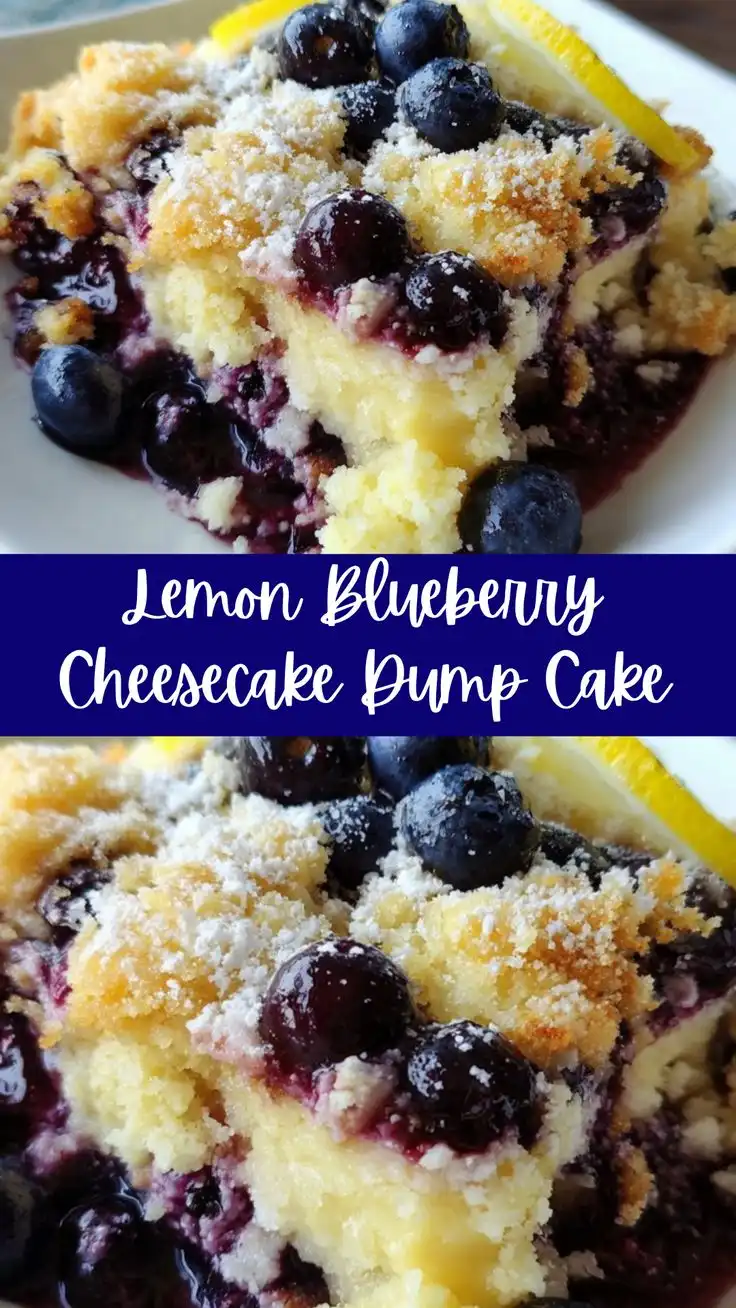
Welcome to the ultimate guide for Lemon Blueberry Cheesecake Dump Cake—a decadent, no-fuss, oven-baked dessert that marries the bright zing of fresh lemon with the sweet-tart burst of plump blueberries and the luxuriously creamy richness of cheesecake—all layered effortlessly in a single baking dish. Unlike traditional cheesecakes that demand water baths, precise cooling schedules, and finicky crusts, this “dump cake” version celebrates simplicity without sacrificing sophistication. It’s a crowd-pleasing hybrid: part dump cake (where dry ingredients are literally *dumped* over wet components), part cheesecake (thanks to a luscious, tangy cream cheese layer), and wholly irresistible. Whether you’re hosting a summer picnic, prepping for a holiday potluck, or simply craving something comforting yet vibrant, this dessert delivers big flavor with minimal hands-on time—and it looks as stunning as it tastes.
The History
The concept of “dump cake” traces its roots to mid-20th-century American home cooking—a product of post-war convenience culture, where busy homemakers sought desserts that required little technique but maximum impact. Early versions appeared in community cookbooks and Betty Crocker publications in the 1960s, often featuring canned fruit, boxed cake mix, and butter layered and baked with zero mixing. The term “dump” was literal: ingredients were dumped into a pan and baked. Over decades, the format evolved—incorporating gourmet twists like fresh berries, citrus zest, and even dairy-based layers. The Lemon Blueberry Cheesecake Dump Cake is a modern fusion born from the intersection of three beloved trends: the resurgence of nostalgic dump cakes, the artisanal appreciation for seasonal fruit (especially antioxidant-rich blueberries), and the enduring popularity of lemon-infused desserts (think lemon bars, lemon tarts, and lemon ricotta cakes). Cheesecake entered the equation in the early 2010s, as bakers began experimenting with cream cheese swirls and full-layer additions to elevate texture and depth. This particular iteration gained viral traction on food blogs and Pinterest around 2018–2019, praised for its stunning visual contrast (golden crumb topping, jewel-toned berry layer, ivory cheesecake ribbon), balanced acidity, and make-ahead versatility—solidifying its status as a contemporary classic.
Ingredients Breakdown
Every element in this recipe plays a deliberate role—not just for flavor, but for structure, moisture control, and textural harmony. Here’s why each ingredient matters:
- Cream Cheese (full-fat, brick-style): Provides the foundational richness, tang, and dense-yet-creamy mouthfeel of cheesecake. Must be softened to room temperature (65–70°F) for smooth blending—cold cream cheese causes lumps; overheated or melted cream cheese leads to curdling and separation during baking.
- Granulated Sugar (divided): Sweetens both the cheesecake layer and the cake topping. The portion used in the cream cheese mixture also stabilizes the emulsion and aids in browning. Fine granulated sugar dissolves more readily than coarse varieties.
- Large Eggs (room temperature): Act as binders and leavening agents. They provide structure to the cheesecake layer while contributing to lift and tenderness in the crumb topping. Cold eggs can cause the cream cheese mixture to seize or result in uneven batter incorporation.
- Fresh Lemon Juice & Zest: Juice delivers bright acidity that cuts through richness and prevents cloying sweetness; zest contributes volatile citrus oils for aromatic complexity and floral top notes. Bottled lemon juice lacks nuance and may introduce preservatives that affect texture.
- Vanilla Extract (pure, not imitation): Enhances overall flavor depth and rounds out sharp citrus notes. Imitation vanilla contains synthetic vanillin and lacks the subtle undertones essential for balance.
- Fresh or Frozen Blueberries (unsweetened, unthawed if frozen): Fresh berries hold shape and release controlled juiciness; frozen berries (used straight from the freezer) prevent premature bleeding and maintain integrity during baking. Avoid thawed or drained berries—they add excess moisture and dilute flavor. Wild blueberries offer more intense tartness and deeper color; cultivated varieties yield larger, milder bursts.
- Yellow or Vanilla Cake Mix (classic, not pudding or reduced-fat): Forms the tender, golden crumb topping. The dry mix provides starch, leavening (baking powder/soda), and fat (often palm oil or shortening) crucial for crisp edges and airy interior crumb. Pudding-added mixes contain extra thickeners that can create gumminess; reduced-fat versions lack sufficient fat for proper browning and texture.
- Unsalted Butter (melted and slightly cooled): Binds the cake mix into a cohesive, buttery streusel-like layer. Melted (not browned or hot) ensures even distribution without cooking the dry ingredients prematurely. Unsalted butter gives precise sodium control—especially important when pairing with tangy lemon and cream cheese.
- Sour Cream or Full-Fat Greek Yogurt (optional but highly recommended): Added to the cheesecake layer for enhanced tang, moisture retention, and silkier texture. It lowers pH slightly, which helps stabilize proteins and prevents cracking. Low-fat or nonfat versions risk graininess and drying.
- Pinch of Fine Sea Salt: A critical background enhancer—it doesn’t make the cake taste salty, but rather amplifies sweetness, balances acidity, and deepens all other flavors.
Step-by-Step Recipe
- Preheat & Prep: Position oven rack in the center position. Preheat oven to 350°F (175°C). Generously grease a 9×13-inch rectangular baking dish (glass or light-colored metal preferred—dark pans may over-brown edges). Line bottom with parchment paper, leaving 2-inch overhang on two opposite sides for easy removal and clean slicing.
- Prepare Cheesecake Layer: In a large bowl of a stand mixer fitted with the paddle attachment (or use a hand mixer), beat softened cream cheese on medium speed until completely smooth and glossy (~2 minutes). Scrape down bowl thoroughly. Add ¾ cup granulated sugar and beat on medium-high until light and fluffy (~1.5–2 minutes). Add eggs one at a time, beating well after each addition (about 30 seconds per egg) until fully incorporated and no streaks remain. Scrape bowl between additions. Beat in lemon juice, lemon zest, vanilla extract, sour cream (if using), and salt until just combined—do not overmix. Transfer mixture to a large measuring cup or bowl with a spout for easier pouring; set aside.
- Layer Blueberries: Gently spread fresh or frozen blueberries in an even, single layer across the bottom of the prepared pan. If using frozen berries, do not thaw—this prevents excess liquid pooling. Lightly press berries into the pan to ensure even coverage and avoid air pockets.
- Pour Cheesecake Mixture: Carefully pour the cheesecake batter evenly over the blueberries. Use a small offset spatula or back of a spoon to gently nudge batter into corners and cover all berries—avoid stirring or swirling; you want distinct layers. Tap pan firmly once on counter to release air bubbles.
- Prepare Cake Topping: In a medium bowl, combine dry yellow cake mix and melted, slightly cooled butter. Use a fork or pastry cutter to blend until mixture resembles coarse, damp sand with some pea-sized clumps. Do not overwork—this preserves flaky, tender crumb texture. For optional lemon enhancement, stir in 1 tsp additional lemon zest at this stage.
- Top & Distribute: Sprinkle the cake mix–butter mixture evenly over the cheesecake layer. Gently press down with fingertips or flat side of a spatula to create a light, uniform crust—do not compact tightly, or topping will become dense and hard.
- Bake with Precision: Place pan in preheated oven. Bake for 55–65 minutes, rotating pan halfway through for even browning. Cake is done when: (a) the edges are deeply golden and crisp, (b) the center appears puffed and set (no visible jiggle when gently shaken), and (c) a toothpick inserted 1 inch from edge comes out with moist crumbs (not wet batter), and one inserted in center comes out mostly clean with a few moist, sticky crumbs. Note: Underbaking yields a soupy center; overbaking cracks the cheesecake layer and dries the topping.
- Cool Completely (Non-Negotiable Step): Remove pan from oven and place on a wire rack. Cool at room temperature for 1 hour—this allows residual heat to finish setting the cheesecake layer gently. Then refrigerate, uncovered, for at least 4 hours—or preferably overnight (8–12 hours). Chilling firms the cheesecake, sets the berry jammy layer, and allows flavors to meld. Cutting before full chilling results in crumbling, smearing, and loss of defined layers.
- Remove & Slice: Using parchment overhang, lift cake carefully from pan onto a cutting board. Trim any overly dark or crispy edges for presentation (optional). Use a sharp, thin-bladed knife dipped in hot water and wiped dry between cuts for clean, layered slices. Serve chilled or at cool room temperature.
Tips
- Room Temperature Is Key: Let cream cheese, eggs, and even butter sit out for 60–90 minutes before starting. Cold ingredients cause separation, lumps, and uneven baking.
- Measure Flour-Based Ingredients by Weight (If Possible): Cake mix volume varies by brand and humidity. For ultra-consistency, weigh cake mix: 1 standard box = ~430g. Too much mix creates a thick, doughy topping; too little yields sparse coverage.
- Freeze Berries Strategically: If using frozen blueberries year-round, freeze them individually on a parchment-lined tray first, then store in airtight bags. This prevents clumping and ensures even distribution.
- Prevent Berry Bleeding: Toss frozen blueberries in 1 tsp cornstarch before layering—this absorbs excess surface moisture and thickens berry juices naturally during baking.
- Avoid Opening the Oven Early: Do not open the oven door during the first 40 minutes. Sudden temperature drops cause cheesecake layer collapse and cracking.
- Enhance Presentation: Before baking, sprinkle top with coarse turbinado sugar for sparkling crunch and caramelized edges—or add 2 tbsp toasted sliced almonds for nutty aroma and textural contrast.
- Make-Ahead Magic: Assemble up to 1 day ahead (without baking), cover tightly with plastic wrap, and refrigerate. Bake straight from fridge—add 5–8 minutes to total bake time.
- Storage Wisdom: Store leftovers covered in refrigerator for up to 5 days. Freeze unfrosted, fully cooled cake (wrapped in plastic + foil) for up to 3 months. Thaw overnight in fridge before serving.
- Revive Leftovers: Slightly stale topping? Warm individual slices at 325°F for 8–10 minutes—the heat rehydrates crumb and melts cheesecake layer into luxurious silkiness.
Variations and Customizations
This recipe is a canvas—adaptable for dietary needs, seasonal produce, and personal flair:
- Gluten-Free Version: Substitute certified gluten-free yellow cake mix (like King Arthur or Pamela’s). Ensure all other ingredients (vanilla, baking powder in mix) are GF-certified. Add ¼ tsp xanthan gum to dry mix if not already included for improved binding.
- Dairy-Free/Vegan Adaptation: Use vegan cream cheese (Kite Hill or Miyoko’s), flax eggs (2 tbsp ground flax + 6 tbsp water, rested 10 min), coconut oil instead of butter, and dairy-free cake mix. Replace sour cream with unsweetened coconut yogurt. Note: Texture will be softer; chill 12+ hours for firmest slice.
- Protein-Packed Upgrade: Stir 2 scoops unflavored or vanilla whey or collagen peptides into the cheesecake batter. Adds ~20g protein per serving without altering flavor—ideal for post-workout treats or breakfast-for-dessert energy.
- Seasonal Fruit Swaps: Try raspberries (toss with 1 tsp chia seeds to prevent excess seepage), blackberries, diced strawberries (pat dry), or mixed summer berries. Adjust lemon zest up to 2 tsp for milder fruits like peach or mango (use 1 cup finely diced, lightly sautéed to reduce water).
- Decadent Add-Ins: Fold ½ cup white chocolate chips or lemon curd swirls into cheesecake layer before pouring. Or layer ¼ cup toasted coconut or crushed graham crackers beneath blueberries for crunch contrast.
- Lemon Intensity Boost: Add 1 tbsp lemon verbena or lavender-infused simple syrup to cheesecake batter—or steep 1 strip lemon peel in warm cream cheese for 10 minutes before mixing (remove before beating).
- Mini-Mason Jar Individual Servings: Layer in 12-oz wide-mouth jars: 2 tbsp blueberries → 3 tbsp cheesecake batter → 2 tbsp cake mix/butter crumble. Bake at 350°F for 32–38 minutes. Perfect for gifts or portion control.
- Brunch Twist: Add ½ tsp cinnamon + ¼ tsp cardamom to cake topping; serve warm with a dollop of crème fraîche and fresh mint.
Health Considerations and Nutritional Value
While undeniably indulgent, mindful preparation can enhance nutritional profile without compromising joy:
- Nutrient Highlights: Blueberries deliver anthocyanins (potent antioxidants linked to cognitive health and reduced inflammation), vitamin C, fiber, and manganese. Lemon contributes vitamin C, flavonoids like hesperidin (supports vascular health), and citric acid (aids digestion and mineral absorption). Cream cheese offers calcium and vitamin A—though in modest amounts per serving.
- Calorie & Macronutrient Snapshot (per standard 2″x2″ slice, ~1/16 of recipe): Approx. 320–360 kcal | 5–6g protein | 42–48g carbohydrates (28–32g sugars) | 15–18g total fat (9–11g saturated). Values vary based on cake mix brand, butter quantity, and added toppings.
- Reducing Refined Sugar: Reduce granulated sugar in cheesecake layer by ¼ cup (to ½ cup) — the berries and cake mix provide ample sweetness. Or substitute ⅓ of granulated sugar with monk fruit–erythritol blend (1:1 ratio) for lower glycemic impact.
- Fat Quality Matters: Opt for grass-fed, organic cream cheese and butter when possible—higher in omega-3s, CLA (conjugated linoleic acid), and vitamin K2. Replace half the butter in topping with cold-pressed avocado oil for heart-healthy monounsaturated fats.
- Fiber Boost: Stir 2 tbsp ground flaxseed or psyllium husk into cake mix before adding butter—adds 3–4g fiber per slice and improves satiety.
- Glycemic Awareness: Despite natural sugars, the combination of fat, protein, and fiber slows glucose absorption. Still, those managing diabetes should pair with a protein-rich meal and monitor portion (1 slice max).
- Allergen Notes: Contains dairy, eggs, wheat/gluten (unless substituted), and potential soy (in many cake mixes and cream cheeses). Always verify labels for hidden allergens like whey or casein derivatives.
- Mindful Enjoyment Tip: Savor slowly—research shows eating dessert with presence increases satisfaction and reduces desire for second helpings. Serve on smaller plates and pair with herbal tea (chamomile or ginger) to aid digestion.
Ingredients
- 1 (8 oz) package full-fat brick cream cheese, softened to room temperature
- 1 ¼ cups granulated sugar, divided (¾ cup for cheesecake layer, ½ cup for topping)
- 3 large eggs, room temperature
- ¼ cup fresh lemon juice (about 2 medium lemons)
- 2 tbsp finely grated lemon zest (from 3–4 lemons)
- 2 tsp pure vanilla extract
- ¼ cup full-fat sour cream or plain Greek yogurt
- ¼ tsp fine sea salt
- 3 cups fresh blueberries (or 2¾ cups frozen, unsweetened, unthawed)
- 1 (15.25 oz) box classic yellow or vanilla cake mix (not pudding or reduced-fat)
- 1 cup (2 sticks) unsalted butter, melted and slightly cooled
- Optional: 1 tsp additional lemon zest for topping, 2 tbsp turbinado sugar, or ¼ cup toasted sliced almonds
Directions
- Preheat oven to 350°F (175°C). Grease a 9×13-inch baking dish and line bottom with parchment paper, leaving overhang on two sides.
- In a large bowl using a stand or hand mixer, beat cream cheese until smooth (~2 min). Add ¾ cup sugar; beat until fluffy (~1.5 min). Add eggs one at a time, beating well after each. Beat in lemon juice, zest, vanilla, sour cream, and salt until just combined. Transfer to spouted measuring cup; set aside.
- Spread blueberries evenly in prepared pan. Pour cheesecake mixture over berries; gently smooth top.
- In a medium bowl, combine cake mix and melted butter; stir with fork until crumbly. Sprinkle evenly over batter; gently press to adhere.
- Bake 55–65 minutes, until edges are golden and center is set (toothpick test as described). Rotate pan at 30 minutes.
- Cool on wire rack 1 hour. Refrigerate uncovered 4+ hours (ideally overnight).
- Using parchment overhang, lift cake from pan. Slice with hot, dry knife. Serve chilled.
FAQ
- Can I use a different cake mix?
- Yes—but stick with classic yellow, vanilla, or lemon cake mix for optimal flavor and texture. Chocolate or spice cake mixes overpower the lemon-blueberry profile. Gluten-free or keto cake mixes require separate testing and adjustments due to differing starches and binders.
- Why did my cheesecake layer crack?
- Most commonly caused by rapid temperature change (opening oven too soon), overmixing the batter, or cooling too quickly. Always cool gradually—1 hour room temp, then refrigerate. Adding sour cream and avoiding overbeating also prevent cracks.
- Can I make this in a springform pan?
- Not recommended. Springform pans leak buttery batter and blueberry juices, creating smoke and mess. Stick with solid-sided 9×13-inch pans. If you must use springform, double-wrap bottom and sides in heavy-duty foil—but expect minor seepage.
- Is there a way to make it less sweet?
- Absolutely. Reduce sugar in cheesecake layer to ½ cup and omit added sugar in topping. Rely on ripe blueberries’ natural sweetness—and increase lemon zest to 3 tbsp for brightness that balances perceived sweetness.
- Can I add a crust?
- You can—but it changes the “dump cake” ethos. Press 1½ cups graham cracker crumbs + 6 tbsp melted butter into pan bottom before layering blueberries. Reduce bake time by 5–8 minutes, as crust browns faster.
- My topping turned out greasy or soggy—what went wrong?
- Likely culprit: butter was too hot when mixed with cake mix (causing premature melting) or too much butter was used. Measure butter precisely (1 cup = 227g) and let cool to 110°F (warm to touch, not hot) before mixing.
- How do I fix a sunken center?
- A slight dip is normal—but severe sinking suggests underbaking or opening oven too early. Next time, insert toothpick near center: if wet batter clings, bake 5 more minutes. Also, resist the urge to remove cake from oven until fully puffed and set.
- Can I freeze individual slices?
- Yes! Wrap tightly in plastic wrap, then place in freezer bag. Freeze up to 3 months. Thaw in fridge overnight or microwave on defrost setting for 45 seconds before serving.
- What’s the best way to transport this to a party?
- Chill fully, then cut into squares and layer between parchment sheets in an airtight container. Keep chilled with ice packs until serving. For multi-hour trips, consider assembling and baking onsite if oven access is available.
- Can kids help make this?
- Perfect family project! Kids can measure dry ingredients, toss berries, sprinkle toppings, and press crumb layer. Supervise mixing cream cheese and handling hot pans. Great for teaching measuring, layering, and patience with chilling.
Summary
Lemon Blueberry Cheesecake Dump Cake is a brilliantly layered, effortlessly assembled dessert that delivers restaurant-worthy elegance with humble, pantry-friendly ingredients—combining the sunny brightness of lemon, the antioxidant-rich pop of blueberries, and the velvety luxury of cheesecake beneath a buttery, golden cake-mix crumble.
With make-ahead flexibility, endless customization options (gluten-free, dairy-free, protein-boosted), and smart tips for flawless texture and clean slicing, it’s as practical for weeknight treats as it is unforgettable at celebrations—proving that extraordinary flavor truly begins with thoughtful simplicity.