
Introduction
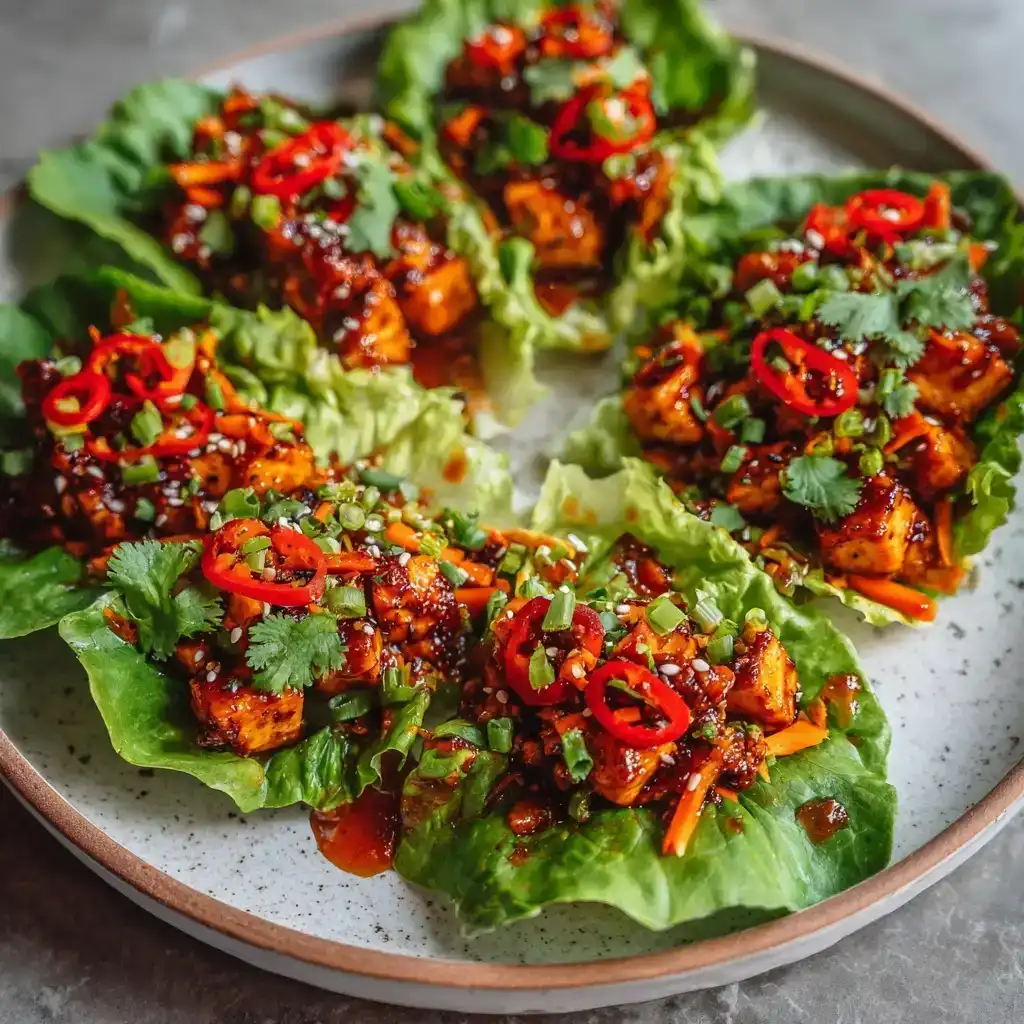
Experience the bold, vibrant, and deeply satisfying flavors of Korean Spicy Tofu Lettuce Wraps — a modern fusion dish that marries the umami-rich heat of Korean gochujang with the delicate creaminess of silken or soft tofu, all nestled in crisp, cool butter lettuce cups. This dish is more than just a meal; it’s a textural symphony — fiery yet balanced, spicy yet soothing, hearty yet refreshingly light. Designed for health-conscious food lovers, busy home cooks, and adventurous eaters alike, these wraps offer a plant-forward, protein-packed alternative to traditional Korean barbecue or fried tofu dishes — without compromising on authenticity or depth of flavor. Whether served as an elegant appetizer at a dinner party, a nourishing weeknight dinner, or a vibrant addition to your meal-prep rotation, Korean Spicy Tofu Lettuce Wraps embody the essence of *bap-sang* (Korean table culture): harmony, contrast, and mindful enjoyment.
The History
While lettuce wraps (*ssam*) have been a cornerstone of Korean culinary tradition for over a thousand years — dating back to the Three Kingdoms period (57 BCE–668 CE) — the concept evolved significantly during the Joseon Dynasty (1392–1897), when fermented condiments like *doenjang* (soybean paste) and *gochujang* (chili paste) became household staples. Historically, ssam was used to wrap grilled meats (especially *samgyeopsal*, or pork belly), raw garlic, green chili peppers, and kimchi, serving both functional and symbolic purposes: cooling the palate, aiding digestion, and balancing rich or fatty foods. The modern adaptation featuring tofu emerged in the late 20th and early 21st centuries, driven by rising global interest in plant-based eating, Korean food’s international boom (fueled by K-pop, K-dramas, and UNESCO’s 2013 designation of *kimjang* as Intangible Cultural Heritage), and innovative chefs reinterpreting tradition through sustainability and dietary inclusivity. Korean Spicy Tofu Lettuce Wraps reflect this evolution — honoring ancestral ssam culture while embracing contemporary values: vegan-friendly preparation (when using tamari or coconut aminos), low-glycemic impact, zero added sugar (in authentic preparations), and minimal environmental footprint compared to meat-centric versions.
Ingredients Breakdown
Every component in this recipe is intentionally selected for layered functionality — contributing flavor, texture, aroma, color, nutrition, or preservation. Below is a detailed analysis of each key ingredient:
- Tofu (Soft or Silken): Not merely a protein vehicle — its high water content (up to 90%) creates steam during gentle cooking, yielding an ultra-tender, almost custard-like consistency that absorbs marinade without disintegrating. Rich in calcium, iron, magnesium, and all nine essential amino acids, tofu also contains isoflavones linked to reduced inflammation and improved cardiovascular health.
- Gochujang: Korea’s beloved fermented red chili paste — made from glutinous rice, fermented soybeans, red chili powder, and salt — delivers complex sweetness, deep umami, tangy acidity, and slow-building heat. Its fermentation process generates beneficial probiotics (e.g., Lactobacillus strains) and increases bioavailability of antioxidants like capsaicin and lycopene.
- Gochugaru (Korean Chili Flakes): Distinct from generic cayenne, gochugaru is coarser, smokier, fruitier, and less abrasive. It provides vibrant crimson color, aromatic warmth, and nuanced heat without bitterness — essential for visual appeal and sensory balance.
- Doenjang (Fermented Soybean Paste): Often underutilized outside Korea, doenjang adds profound savoriness (a natural source of glutamic acid), earthy depth, and gut-friendly microbes. When combined with gochujang, it forms the foundational *jang* (fermented paste) duo that defines Korean savory identity.
- Fresh Aromatics (Garlic, Ginger, Green Onions, Scallions): Crushed garlic releases allicin (a potent antimicrobial compound); fresh ginger contributes zesty gingerol (anti-nausea, anti-inflammatory); scallions add quercetin and sulfur compounds supporting detoxification pathways.
- Sesame Oil & Toasted Sesame Seeds: Cold-pressed sesame oil contributes nutty fragrance and sesamin — a lignan shown to support liver enzyme function and lipid metabolism. Toasting seeds enhances Maillard-reaction aromatics and improves mineral absorption (calcium, zinc, magnesium).
- Lettuce (Butter, Boston, or Little Gem): Chosen not only for crunch but for high water content (95%), vitamin K density (critical for bone and vascular health), and folate levels. Their broad, pliable leaves form edible “bowls” that gently temper spice with cool, chlorophyll-rich freshness.
- Optional Garnishes (Pickled Radish, Kimchi, Cucumber Ribbons, Microgreens): These aren’t mere decoration — they introduce acidity (lactic acid from fermentation), enzymatic activity (from raw vegetables), phytonutrients (sulforaphane in radish sprouts), and microbiome diversity critical for immune modulation.
Step-by-Step Recipe
- Prep the Tofu (15 minutes + optional pressing): Gently drain silken or soft tofu from its package. For firmer texture (optional but recommended for better bite), place tofu between two clean kitchen towels or paper towels, then sandwich under a cutting board weighted with two heavy cans for 10–15 minutes. Avoid pressing extra-firm or firm tofu — it will become rubbery and resist sauce absorption.
- Prepare the Aromatic Base (5 minutes): Finely mince 4 cloves of garlic and 1 tbsp fresh ginger (peeled and grated on a microplane for maximum juice release). Thinly slice 4 green onions, separating white and green parts.
- Build the Sauce (3 minutes): In a small bowl, whisk together 3 tbsp gochujang, 1 tbsp doenjang, 1½ tbsp rice vinegar, 1 tbsp maple syrup (or brown sugar), 1 tsp toasted sesame oil, 1 tsp tamari or low-sodium soy sauce, ½ tsp gochugaru, and a pinch of black pepper. Adjust thickness with 1–2 tsp warm water if too viscous.
- Sauté Aromatics (2 minutes): Heat 1 tsp neutral oil (like grapeseed or avocado) in a nonstick or well-seasoned cast-iron skillet over medium-low heat. Add minced garlic, ginger, and white parts of scallions. Stir constantly for 60–90 seconds until fragrant — do not brown, or bitterness develops.
- Simmer Tofu in Sauce (6–8 minutes): Carefully cradle pressed or unpressed tofu into the pan. Gently break into large, irregular curds (≈1-inch pieces) using a silicone spatula. Pour sauce over tofu. Reduce heat to low. Simmer uncovered, stirring gently every 90 seconds with a folding motion — never vigorous stirring — to prevent crumbling. Cook until sauce thickens, coats tofu evenly, and edges begin to glisten (about 6 minutes). If sauce reduces too quickly, splash in 1 tsp water.
- Finish & Rest (2 minutes): Remove from heat. Stir in green scallion parts and ½ tsp toasted sesame oil. Let rest off-heat for 2 minutes — this allows residual heat to deepen flavor integration and lets tofu reabsorb any surface moisture.
- Assemble Wraps (5 minutes): Rinse and dry 12–16 large butter lettuce leaves. Pat completely dry — moisture prevents sauce adherence. Spoon ≈2 tbsp warm tofu mixture into each leaf. Top with pickled radish strips, quick-pickle cucumber ribbons (thinly sliced cucumber tossed with rice vinegar, salt, and sugar for 5 minutes), and a generous sprinkle of toasted sesame seeds and micro shiso or perilla leaves (if available).
Tips
- Texture Mastery: For silkier tofu, use refrigerated silken tofu (not shelf-stable aseptic packs) — it contains more natural coagulants and yields superior mouthfeel. To avoid graininess, never boil or sear tofu directly — gentle simmering in sauce preserves integrity.
- Heat Control: Gochujang’s spiciness varies wildly by brand and age. Always taste sauce before adding to tofu. If too fiery, balance with ½ tsp honey or pear purée (traditional Korean technique — pear enzymes also tenderize).
- Sauce Consistency Secret: For glossy, clingy sauce (not watery or gluey), let gochujang and doenjang bloom in warm liquid for 2 minutes before adding other ingredients — this hydrates starches and unlocks full umami potential.
- Lettuce Selection Wisdom: Butter lettuce is ideal — its cup-shaped leaves hold fillings securely, while its mild sweetness offsets spice. Avoid iceberg (too watery) or romaine (too rigid). For gluten-free service, verify lettuce isn’t pre-washed in shared equipment with wheat-containing products.
- Make-Ahead Efficiency: Sauce can be prepared up to 1 week ahead and refrigerated. Tofu filling keeps 3 days chilled (reheat gently with 1 tsp water to restore silkiness). Lettuce leaves should be washed, spun dry, wrapped in dry paper towels, and stored in an airtight container — they’ll stay crisp for 4–5 days.
- Restaurant-Quality Finish: Just before serving, mist lettuce cups lightly with yuzu or lemon juice — acidity brightens richness and prevents browning. Serve wraps on chilled stoneware or bamboo platters to maintain temperature contrast.
Variations and Customizations
This recipe is inherently adaptable — designed to honor regional Korean preferences, dietary needs, seasonal availability, and pantry flexibility. Explore these thoughtfully curated variations:
- Vegan Umami Boost: Add 1 tsp nutritional yeast + ¼ tsp white miso paste to sauce for deeper cheesiness and B12 enrichment. Replace sesame oil with black sesame oil for intensified mineral notes.
- Protein-Packed Upgrade: Fold in ½ cup cooked lentils or mashed edamame after simmering tofu — adds fiber, folate, and a subtle nutty undertone without overpowering.
- Low-Carb/Keto Adaptation: Swap maple syrup for 2 drops liquid stevia + ½ tsp erythritol; increase gochugaru slightly for perceived sweetness via capsaicin activation; serve in endive or romaine hearts instead of butter lettuce.
- Seafood Fusion (Haemul Style): Stir in ½ cup finely chopped blanched squid, shrimp, or imitation crab at the final minute — seafood’s natural sweetness harmonizes beautifully with gochujang’s funk.
- Winter Comfort Version: Add ¼ cup finely diced Korean pear and 1 tsp ground chestnut powder during simmering — evokes traditional *baechu-kimchi* pairing and adds creamy sweetness and prebiotic fiber.
- Smoky BBQ Twist: Replace 1 tbsp gochujang with Korean smoked gochujang (available from specialty importers) and finish with a whisper of smoked sea salt — mimics *gui*-style grilling without fire.
- Kid-Friendly Mild: Omit gochugaru, reduce gochujang to 1 tbsp, add 1 tbsp apple butter and ¼ tsp ground cinnamon — retains complexity while dialing down heat to approachable levels.
- Fermentation Forward: Incorporate 1 tbsp aged kimchi brine (not chopped kimchi) into sauce — amplifies tang and introduces diverse lactobacilli strains for enhanced gut benefits.
Health Considerations and Nutritional Value
A single serving (2 lettuce wraps, ≈180g filling) provides approximately:
- Calories: 195 kcal (low-energy density ideal for weight management)
- Protein: 12.4 g (complete plant protein with optimal amino acid profile)
- Fiber: 3.2 g (20% DV — supports satiety, blood sugar regulation, and microbiome diversity)
- Fat: 9.8 g (mostly heart-healthy monounsaturated fats from sesame oil and tofu)
- Sodium: 420 mg (moderate — significantly lower than takeout equivalents; easily reduced by using low-sodium doenjang and tamari)
- Vitamins & Minerals: 110% DV Vitamin K (from lettuce), 45% DV Iron (non-heme iron enhanced by vitamin C in scallions/gochugaru), 32% DV Calcium (tofu fortified with calcium sulfate), plus magnesium, zinc, and B vitamins.
Functional Health Highlights:
- Anti-Inflammatory Powerhouse: Capsaicin (gochugaru), gingerol (ginger), allicin (garlic), and isoflavones (tofu) synergistically inhibit NF-kB pathway activation — clinically associated with reduced chronic disease risk.
- Gut Microbiome Support: Fermented ingredients (gochujang, doenjang, optional kimchi brine) supply live cultures and prebiotic fibers that feed beneficial Bifidobacterium and Lactobacillus strains — linked to improved mood regulation via the gut-brain axis.
- Cardiovascular Protection: Isoflavones improve endothelial function; sesame lignans reduce LDL oxidation; potassium in lettuce counterbalances sodium effects.
- Dietary Inclusivity: Naturally gluten-free (with certified tamari), soy-based (ideal for dairy/egg allergies), and easily adapted for nut-free, nightshade-free (sub gochujang with plum paste + smoked paprika), or FODMAP-friendly (limit garlic/ginger, use garlic-infused oil and ginger tea reduction) diets.
Ingredients
- 1 (14 oz / 400g) block silken or soft tofu, drained (preferably refrigerated, not shelf-stable)
- 3 tbsp gochujang (Korean red chili paste — look for “fermented” on label)
- 1 tbsp doenjang (Korean fermented soybean paste)
- 1½ tbsp unseasoned rice vinegar
- 1 tbsp pure maple syrup or organic brown sugar
- 1 tsp toasted sesame oil (plus extra for finishing)
- 1 tsp tamari or low-sodium soy sauce (gluten-free if needed)
- ½ tsp Korean gochugaru (coarse chili flakes — not cayenne)
- ¼ tsp freshly ground black pepper
- 4 cloves garlic, finely minced
- 1 tbsp fresh ginger, peeled and microplaned
- 4 green onions, thinly sliced (whites and greens separated)
- 12–16 large butter lettuce leaves (or Boston or Little Gem), rinsed and thoroughly dried
- 2 tbsp toasted white sesame seeds
- ¼ cup quick-pickled daikon radish strips (store-bought or homemade)
- Optional garnishes: cucumber ribbons, micro shiso/perilla leaves, crushed roasted peanuts, nori flakes
Directions
- Drain tofu gently from packaging. For optimal texture, place between double layers of clean kitchen towels or paper towels. Top with a cutting board and weigh down with two 15-oz canned goods. Press 10–15 minutes. Discard expelled liquid.
- In a small bowl, whisk gochujang, doenjang, rice vinegar, maple syrup, 1 tsp toasted sesame oil, tamari, gochugaru, and black pepper until smooth. Set aside.
- Heat 1 tsp neutral oil in a 10-inch nonstick skillet over medium-low heat. Add minced garlic, grated ginger, and white parts of scallions. Sauté 60–90 seconds until fragrant but not browned.
- Carefully transfer pressed (or unpressed) tofu to skillet. Using a silicone spatula, gently break into 1-inch irregular curds. Pour sauce over tofu. Reduce heat to low.
- Simmer uncovered for 6–8 minutes, gently folding tofu every 90 seconds with spatula — do not stir aggressively. Sauce should thicken, coat tofu, and develop glossy sheen. If drying too fast, add 1 tsp warm water.
- Remove from heat. Stir in green scallion parts and remaining ½ tsp toasted sesame oil. Rest 2 minutes.
- Arrange dried lettuce leaves on serving platter. Spoon ≈2 tbsp warm tofu mixture into each leaf. Top with pickled radish, cucumber ribbons, sesame seeds, and optional garnishes.
- Serve immediately while tofu is warm and lettuce is crisp. Provide extra sauce on side for dipping.
FAQ
- Can I use firm or extra-firm tofu?
- Yes — but with adjustments. Press firmly for 25 minutes, then pan-sear cubes in 1 tsp oil until golden before adding sauce. Simmer 3–4 minutes only to prevent toughness. Texture will be chewier, less melt-in-mouth.
- Is gochujang gluten-free?
- Most traditional gochujang contains barley or wheat. Look for certified gluten-free labels (brands like Chung Jung One GF or Mother-in-Law’s) or substitute with gochujang-style chili paste made with rice flour only.
- How do I store leftovers?
- Refrigerate filling separately from lettuce in airtight container up to 3 days. Reheat gently in skillet with 1 tsp water. Store lettuce leaves wrapped in dry paper towels inside sealed container — lasts 4–5 days. Never assemble ahead — lettuce wilts rapidly.
- Can I make this oil-free?
- Absolutely. Sauté aromatics in 2 tbsp water or vegetable broth instead of oil. Use water to deglaze pan if sticking occurs. Flavor remains robust — you’ll gain additional broth-infused umami.
- What if I can’t find doenjang?
- Substitute ½ tbsp white miso + ½ tsp soy sauce for depth, but note: doenjang’s complex funk is irreplaceable. Seek Asian markets or online Korean grocers — it keeps indefinitely refrigerated.
- Why does my sauce taste bitter?
- Likely from overheated garlic or burnt gochujang. Always sauté aromatics on low heat and add sauce after reducing heat. Also, older gochujang (over 12 months unrefrigerated) oxidizes and turns acrid — refrigerate after opening.
- Are there traditional Korean herbs I should use?
- Yes! Fresh perilla (shiso) leaves — purple or green — are the most authentic garnish. They contain rosmarinic acid (anti-allergy) and pair uniquely with gochujang’s heat. Find at Korean markets or grow from seed.
- Can I freeze this dish?
- Filling freezes well for up to 2 months (thaw overnight in fridge, reheat gently). Do NOT freeze assembled wraps — lettuce becomes mushy and sauce separates. Freeze sauce separately for future use.
Summary
Korean Spicy Tofu Lettuce Wraps are a masterclass in balance — fiery gochujang and earthy doenjang harmonize with silky tofu and cooling lettuce, delivering bold flavor, vibrant nutrition, and cultural resonance in every bite. Rooted in ancient ssam tradition yet vibrantly modern, this dish celebrates fermentation, plant-powered protein, and mindful eating — proving that wellness and indulgence need never be mutually exclusive.