
Introduction
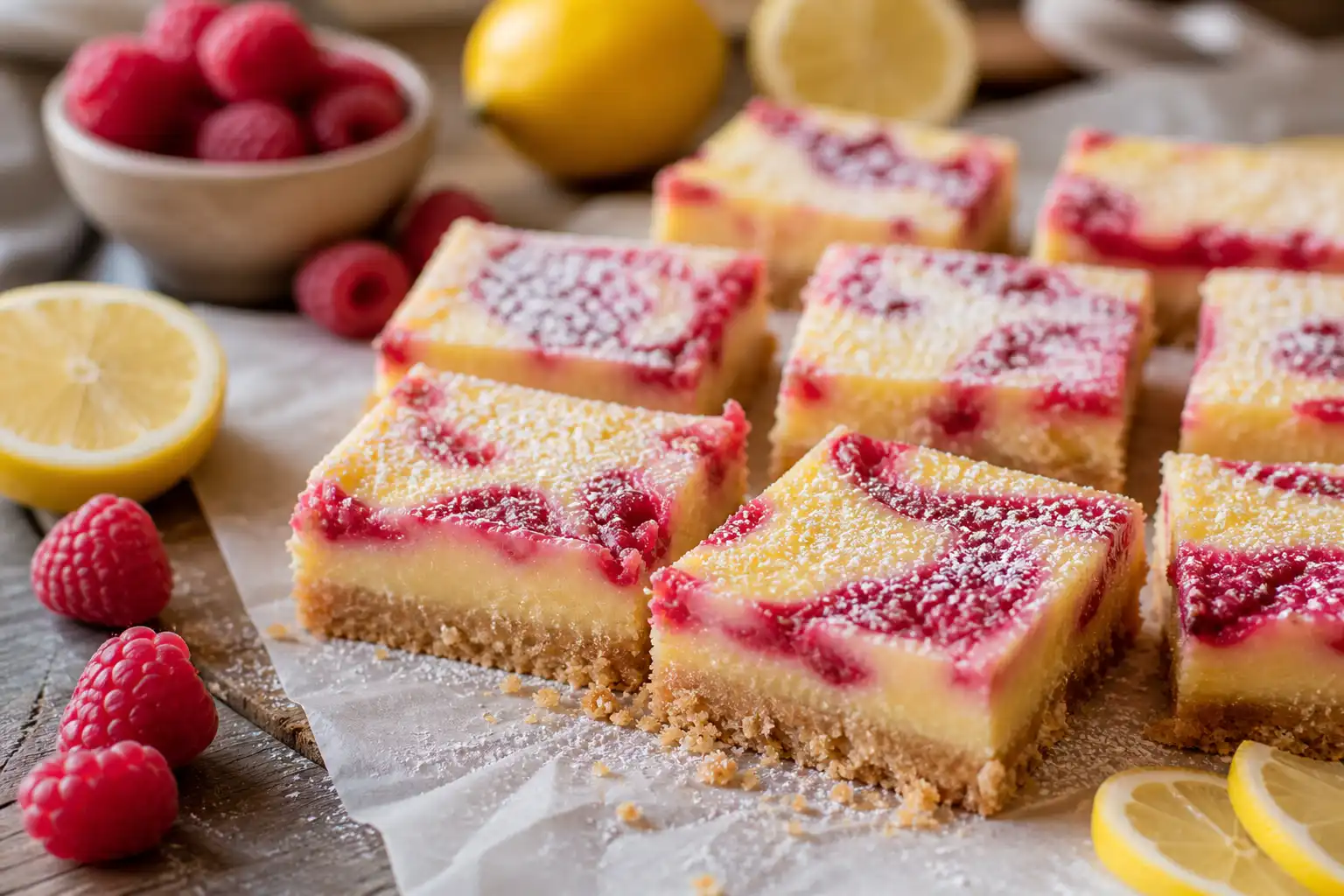
Imagine the perfect balance of tart and sweet—vibrant, jewel-toned raspberries bursting with summer’s essence, harmonized by the bright, zesty lift of fresh lemon. Now picture that dynamic duo captured in a buttery shortbread crust, crowned with a luxuriously smooth, velvety filling that sets to a delicate, sliceable perfection. Irresistible Raspberry Lemon Bars aren’t just dessert—they’re a sensory celebration. These bars deliver an unforgettable contrast: crisp, crumbly, golden-brown base; a luscious, glossy, fruit-forward custard layer that quivers just so; and a finish that lingers with floral raspberry depth and clean citrus acidity. Whether served at a sun-drenched garden party, a cozy holiday gathering, or as a well-deserved midweek treat, they evoke nostalgia while feeling utterly modern—elegant enough for special occasions, simple enough for weeknight joy. Their vibrant pink hue alone is an invitation; the first bite seals the promise: this is dessert that delights the eyes, nose, tongue, and heart—all at once.
The History
The lineage of lemon bars traces back to mid-20th-century American home baking, emerging alongside the postwar boom in accessible citrus and refined sugar. Early iterations—often called “lemon squares” or “lemon icebox bars”—appeared in community cookbooks and women’s magazines like Good Housekeeping and Ladies’ Home Journal in the 1940s and ’50s, capitalizing on the growing popularity of refrigerator-based desserts and the tangy appeal of lemons during wartime rationing (where their acidity helped enliven otherwise bland meals). The classic shortbread-custard structure was likely inspired by British lemon curd tarts and French tarte au citron, adapted for American ovens and pantry staples. Raspberry’s integration into the lemon bar tradition came later—gaining momentum in the 1980s and ’90s as artisanal berry farming expanded and food media emphasized seasonal, fruit-forward desserts. Chefs and home bakers began swirling fresh or frozen raspberries into lemon curd or layering them beneath the filling to create dramatic marbling and intensified flavor complexity. By the 2000s, “raspberry lemon bars” became a staple at farmers’ markets, boutique bakeries, and wedding dessert tables—symbolizing freshness, sophistication, and approachable luxury. Today, they represent a joyful fusion of heritage technique and contemporary taste preferences: a testament to how humble ingredients, when thoughtfully combined, evolve into timeless classics.
Ingredients Breakdown
Every extraordinary raspberry lemon bar begins not with shortcuts—but with intentionality behind each component. Let’s explore why each ingredient matters, how quality transforms the outcome, and what substitutions *actually* work (and which ones compromise integrity):
- Unsalted Butter (1 cup / 2 sticks, cold & cubed): The cornerstone of both crust and filling. Cold butter ensures flakiness and structure in the shortbread base; its high-fat content lends richness and mouthfeel to the custard. Unsalted allows precise control over seasoning. Avoid margarine or spreads—water content causes sogginess and poor browning.
- Powdered Sugar (1 ½ cups total – ¾ cup for crust, ¾ cup for filling): Not granulated! Powdered sugar dissolves instantly into cold butter for a tender, sandy crust—and prevents graininess in the filling. Its cornstarch content also aids in gentle thickening and silky texture. Sift before using to avoid lumps.
- All-Purpose Flour (2 ¼ cups total – 1 ½ cups for crust, ¾ cup for filling): Provides gluten structure for cohesion without toughness. For the crust, it binds the butter-sugar mixture; in the filling, it stabilizes the egg-lemon-raspberry emulsion. Avoid cake flour (too weak) or bread flour (too chewy). For gluten-free adaptation, use a 1:1 GF blend *with xanthan gum*.
- Fine Sea Salt (½ tsp): The quiet conductor—enhancing sweetness, balancing acidity, and deepening all fruit flavors. Never skip. Kosher salt can be substituted, but reduce by 25% (it’s coarser).
- Large Eggs (4, room temperature): Essential for richness, binding, and controlled coagulation. Room temperature eggs emulsify smoothly into the filling, preventing curdling and ensuring even setting. Cold eggs risk shocking the warm butter-lemon mixture.
- Fresh Lemon Juice (⅔ cup, ~4–5 medium lemons): Non-negotiable. Bottled juice lacks volatile aromatic compounds and has inconsistent acidity. Juice lemons *just before mixing* to preserve brightness. Strain to remove pulp/seeds—pulp can make filling gritty.
- Lemon Zest (2 tbsp, finely grated): Where the magic intensifies. The essential oils in the zest deliver intense, floral, aromatic lemon perfume that juice alone cannot replicate. Use a microplane; avoid the bitter white pith.
- Fresh Raspberries (1 ½ cups, gently rinsed & patted dry): The star of the show. Fresh berries offer superior texture, complex tart-sweet balance, and vibrant color. Frozen berries *can* be used (do not thaw—add straight from freezer), but expect slightly more liquid release and muted aroma. Avoid canned or syrup-packed.
- Optional Garnishes: A dusting of powdered sugar (for classic elegance), fresh whole raspberries + lemon twists (for visual drama), or a whisper of edible lavender buds (for sophisticated herbal nuance).
Step-by-Step Recipe
This meticulously tested method ensures foolproof results—golden crust, crack-free filling, and jewel-toned raspberry swirls every time. Patience and precision are your allies.
- Prep & Preheat: Position oven rack in center position. Line a 9×13-inch metal baking pan with parchment paper, leaving 2-inch overhang on two opposite sides for easy lifting. Lightly grease the parchment and pan sides. Preheat oven to 350°F (175°C). Chill 1 cup cubed butter in freezer for 10 minutes.
- Make the Shortbread Crust: In a food processor, pulse 1 ½ cups flour, ¾ cup powdered sugar, and ½ tsp salt until combined. Add chilled, cubed butter. Pulse 12–15 times in 1-second bursts until mixture resembles coarse, pea-sized crumbs with some smaller flakes. *Do not over-process.* Transfer to prepared pan. Press *evenly and firmly* into bottom using the back of a measuring cup or flat-bottomed glass—ensure no gaps or thin edges. Prick all over with a fork. Bake 18–20 minutes, until edges are pale golden and center looks set (not wet). Cool crust completely in pan on wire rack (≈45 mins). Do not skip cooling—it prevents filling from melting the base.
- Prepare Raspberry-Lemon Filling: While crust cools, gently mash 1 cup raspberries in a small bowl with a fork until mostly broken down (small seeds okay). Stir in remaining ½ cup whole raspberries—this creates beautiful textural contrast. In a large bowl, whisk eggs until frothy. Whisk in ¾ cup powdered sugar, then lemon juice and zest. Gradually whisk in ¾ cup flour and ¼ tsp salt until *just* combined—do not overmix (lumps will dissolve during baking). Gently fold in mashed & whole raspberries until evenly distributed but still marbled.
- Fill & Bake: Pour filling evenly over cooled crust. Tap pan sharply 3 times on counter to release air bubbles. Bake 32–38 minutes. Look for visual cues—not timer alone: edges should be set and lightly golden, center should jiggle *slightly* like firm gelatin (not slosh). A toothpick inserted 1 inch from edge should come out clean; center may have moist crumbs. *Underbaking yields runny bars; overbaking causes cracking and rubberiness.*
- Cool & Chill (The Critical Step): Cool bars completely in pan on wire rack (≈2 hours). Then, cover loosely with parchment and refrigerate *minimum 4 hours, ideally overnight*. This slow, cold set develops flavor depth, firms the texture, and makes clean slicing possible. Do not rush this step.
- Slice & Serve: Using parchment overhang, lift bars from pan onto cutting board. Peel off parchment. With a sharp, hot knife (dip in hot water, wipe dry between cuts), cut into 16 even 3×2-inch bars. Wipe knife after every 2 cuts for pristine edges.
Tips
- Butter Temperature is Paramount: Cold butter = flaky crust. Softened butter = greasy, dense base. If butter softens while handling, chill crust 15 minutes before baking.
- No Overmixing, Ever: Once flour hits wet ingredients in the filling, mix only until *just* combined. Overmixing develops gluten → tough, gummy bars.
- Acid Balance Matters: Taste your lemon juice! Some lemons are milder. If filling tastes flat after mixing, add ½ tsp more juice—then re-taste. Too much acid? A pinch more powdered sugar (¼ tsp at a time) restores harmony.
- Raspberry Prep Prevents Bleeding: Patting raspberries *completely dry* minimizes excess moisture that could cause soggy crust or watery filling. If using frozen, add directly from freezer—no thawing.
- Oven Thermometer Required: Most home ovens run hot or cold. An inexpensive oven thermometer ensures accurate 350°F baking—critical for even setting.
- Chill Knife, Not Just the Bars: For flawless slices, chill your knife in freezer for 5 minutes before cutting. Warm knives drag; cold knives glide.
- Room Temp Rescue: If bars seem too firm straight from fridge, let sit at room temp 10–15 minutes before serving—flavor and texture bloom beautifully.
Variations and Customizations
These bars are a canvas for creativity—respecting their core structure while inviting personal expression:
- Blackberry-Lime Bars: Swap raspberries for blackberries and lemon for key lime juice + zest. Add 1 tsp finely grated lime zest for extra zing.
- Raspberry-Lemon-Ginger Bars: Add 1 tbsp finely grated fresh ginger (strained) to filling + ½ tsp ground ginger to crust. Top with candied ginger pieces.
- White Chocolate-Raspberry Bars: Fold ½ cup finely chopped high-quality white chocolate into warm filling *after* removing from oven (stir until melted). Swirl gently.
- Herbal Elegance: Infuse ¼ cup lemon juice with 1 tsp fresh thyme or lavender buds (steep 15 mins, strain). Use infused juice in filling.
- Gluten-Free: Substitute 1:1 GF flour blend (like King Arthur or Bob’s Red Mill) in both crust and filling. Add ½ tsp xanthan gum to crust mixture if blend doesn’t contain it.
- Vegan Adaptation: Use vegan butter (Miyoko’s or Earth Balance), flax eggs (4 tbsp ground flax + 10 tbsp water, rested 10 mins), and agar-agar (1 tsp dissolved in 2 tbsp water, added with lemon juice) instead of eggs. Requires testing—texture differs.
- Miniature Version: Bake in lined muffin tins (fill ⅔ full). Reduce bake time to 18–22 mins. Yield: 24 mini bars.
- Decadent Drizzle: After chilling, melt ¼ cup white chocolate + 1 tsp coconut oil. Drizzle over bars with a piping bag or zip-top bag corner snip.
Health Considerations and Nutritional Value
While undeniably indulgent, these bars offer surprising nutritional nuances when enjoyed mindfully:
- Nutrient Density: Raspberries are powerhouse antioxidants—rich in vitamin C (32mg per ½ cup, ~35% DV), manganese (0.4mg, 20% DV), and dietary fiber (4g per ½ cup). Lemon juice contributes additional vitamin C and flavonoids like hesperidin, linked to anti-inflammatory benefits.
- Sugar Awareness: Total sugar per bar (approx. 12g) comes primarily from natural fruit sugars and added cane sugar. To reduce: decrease powdered sugar in filling by 2 tbsp (compensate with 1 extra tsp flour) and rely on ripe raspberries’ sweetness. Avoid artificial sweeteners—they disrupt texture and flavor balance.
- Fat Profile: Butter provides saturated fat, but also beneficial fat-soluble vitamins (A, D, E, K2) and butyrate—a gut-health supporting short-chain fatty acid. Using grass-fed butter increases omega-3s and CLA.
- Portion Control & Pairing: One bar (≈180 calories) fits within balanced eating patterns. Pair with Greek yogurt or a small handful of almonds for protein/fat to slow sugar absorption and enhance satiety.
- Notable Absences: Naturally free of nuts, soy, and dairy (if using vegan butter/eggs), making them adaptable for many common allergies—always verify labels on specialty ingredients.
- Mindful Indulgence: The presence of real fruit, minimal processing, and absence of artificial colors/flavors distinguishes these from ultra-processed desserts. Enjoy as part of a varied, whole-foods-based diet—not as daily fare, but as a joyful, nourishing celebration.
Ingredients
- 1 cup (2 sticks / 227g) unsalted butter, cold and cubed
- 1 ½ cups (180g) all-purpose flour, plus extra for dusting
- 1 ½ cups (180g) powdered sugar, sifted
- ½ teaspoon fine sea salt
- 4 large eggs, room temperature
- ⅔ cup (160ml) freshly squeezed lemon juice (from 4–5 medium lemons)
- 2 tablespoons finely grated lemon zest
- 1 ½ cups (180g) fresh raspberries, gently rinsed and patted *completely dry*
Directions
- Preheat oven to 350°F (175°C). Line a 9×13-inch metal baking pan with parchment paper, leaving 2-inch overhang on two opposite sides. Lightly grease parchment and pan sides.
- In a food processor, pulse 1 ½ cups flour, ¾ cup powdered sugar, and ½ tsp salt until combined. Add cold, cubed butter. Pulse 12–15 times in 1-second bursts until mixture resembles coarse crumbs with some pea-sized pieces. Transfer to prepared pan and press evenly and firmly into bottom. Prick all over with a fork. Bake 18–20 minutes until edges are pale golden and center is set. Cool completely on wire rack (≈45 minutes).
- While crust cools, gently mash 1 cup raspberries in a bowl. Stir in remaining ½ cup whole raspberries. In large bowl, whisk eggs until frothy. Whisk in ¾ cup powdered sugar, then lemon juice and zest. Gradually whisk in ¾ cup flour and ¼ tsp salt until *just* combined. Gently fold in raspberries until marbled.
- Pour filling over cooled crust. Tap pan sharply 3 times. Bake 32–38 minutes until edges are set and center jiggles slightly like firm gelatin. Cool completely in pan on wire rack (≈2 hours).
- Cover loosely with parchment and refrigerate minimum 4 hours, preferably overnight.
- Using parchment overhang, lift bars from pan. Peel off parchment. Cut into 16 bars with a sharp, hot, wiped knife. Serve chilled or at cool room temperature.
FAQ
- Can I use frozen raspberries?
- Yes! Use 1 ½ cups frozen (do not thaw). Add directly to filling—excess moisture helps create a softer, jammy layer. Expect slightly less vibrant color and subtle textural difference.
- Why did my bars crack?
- Overbaking is the #1 culprit. Remove when center still has a slight jiggle. Rapid temperature changes (hot pan to cold fridge) also cause stress cracks—cool fully at room temp first.
- Can I make these ahead?
- Absolutely. They keep beautifully refrigerated for up to 5 days (covered tightly) or frozen for up to 3 months (wrap bars individually in plastic, then place in airtight container). Thaw overnight in fridge.
- My crust is crumbly when I cut—what went wrong?
- Insufficient pressing before baking or underbaking the crust. Ensure you press *very firmly* and bake until edges are truly golden—not just set.
- Can I omit the powdered sugar in the crust?
- No. It’s essential for tenderness and sweetness. Granulated sugar won’t dissolve properly and will create a gritty, sandy texture.
- How do I prevent raspberry bleeding into the crust?
- Pat raspberries *bone-dry*, use chilled crust, and ensure crust is completely cool before adding filling. A light dusting of flour (1 tsp) over the cooled crust before pouring filling adds extra insurance.
- Are these bars suitable for Passover or other dietary restrictions?
- Not inherently—they contain flour and dairy. For Passover, use matzo cake meal + potato starch blend (test first). For dairy-free, use vegan butter and ensure powdered sugar is bone-char free.
Summary
Irresistible Raspberry Lemon Bars unite the sun-kissed tartness of fresh lemons with the floral, jammy depth of ripe raspberries in a buttery shortbread embrace—creating a dessert that’s equally stunning and soul-satisfying.
With meticulous attention to ingredient quality, temperature control, and patient chilling, these bars deliver professional bakery results at home: crisp yet tender, vibrantly fruity, perfectly balanced, and unforgettable in every bite.