
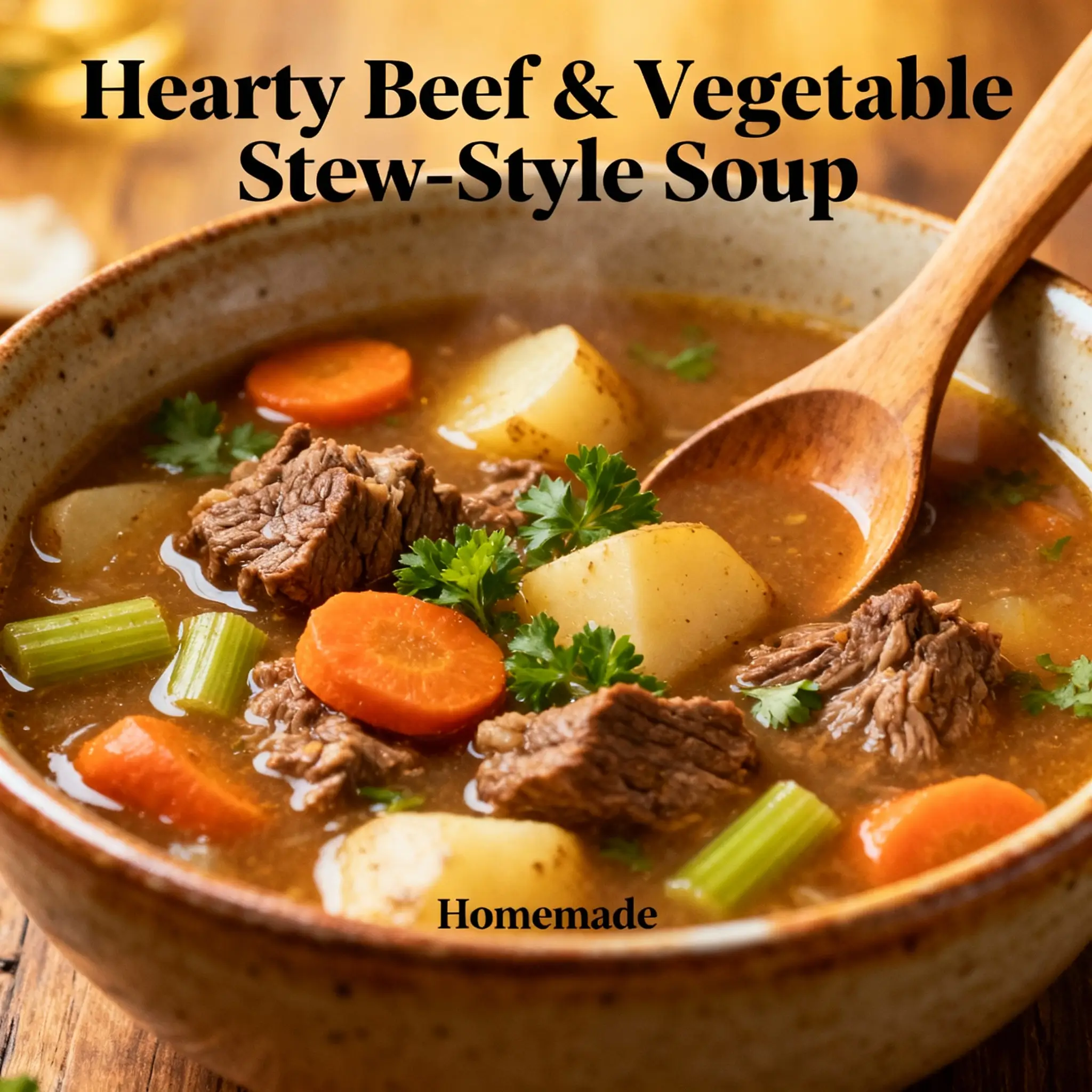
Hearty Beef & Vegetable Stew-Style Soup
A steaming bowl of Hearty Beef & Vegetable Stew-Style Soup is the ultimate comfort food—rich, deeply flavorful, and packed with tender chunks of beef, vibrant vegetables, and aromatic herbs. Whether you’re cozying up on a chilly evening or looking for a satisfying meal that nourishes both body and soul, this stew-style soup delivers in every way. With its rustic charm and home-cooked appeal, it’s no wonder this dish has graced dinner tables across generations. In this comprehensive guide, we’ll walk you through everything you need to know about making the perfect pot of beef and vegetable stew-soup, from its historical roots to cooking tips, nutritional insights, and creative variations.
The History
Stews have been a culinary staple for thousands of years, dating back to when early humans first discovered the art of slow-cooking tough cuts of meat and root vegetables in liquid over low heat. The concept of combining meat, vegetables, and broth into a hearty, filling meal likely originated out of necessity—using minimal ingredients to create maximum sustenance. Ancient civilizations such as the Greeks, Romans, and Celts all had versions of meat-and-vegetable stews, often cooked in large communal pots over open fires.
In medieval Europe, stews became especially popular due to their practicality. They required only one pot, could be made with inexpensive, tough cuts of meat (which softened beautifully with long cooking), and used seasonal produce. These dishes were known by many names: “potages,” “pottages,” and later, “soups” or “stews.” As people migrated across continents, they brought their stew-making traditions with them. In North America, European settlers adapted their recipes using local ingredients like potatoes, corn, and native squash.
The modern version of Hearty Beef & Vegetable Stew-Style Soup evolved during the 19th and 20th centuries, particularly with the advent of cast-iron Dutch ovens and, later, slow cookers. These tools made it easier than ever to achieve tender meat and rich flavor without constant supervision. Today, this soup remains a beloved classic—a symbol of warmth, tradition, and homemade goodness found in kitchens around the world.
Ingredients Breakdown
The magic of this stew-style soup lies in the harmony of its ingredients. Each component plays a vital role in building layers of flavor, texture, and nutrition. Here’s an in-depth look at what goes into a truly exceptional pot:
- Beef Chuck Roast: This well-marbled cut is ideal for slow cooking. As it simmers, the connective tissue breaks down, resulting in melt-in-your-mouth tenderness and deep beefy flavor.
- Olive Oil: Used for searing the beef, olive oil adds richness and helps develop a beautiful crust that enhances the overall taste.
- Yellow Onion: A foundational aromatic, onions add sweetness and complexity when sautéed.
- Garlic: Fresh garlic brings pungency and depth, elevating the entire aroma profile of the soup.
- Carrots: These provide natural sweetness, color, and a slight earthiness. They hold their shape well during cooking.
- Celery: Part of the “holy trinity” in many cuisines, celery contributes a subtle bitterness and herbal note that balances the sweetness of carrots and onions.
- Potatoes: Yukon Gold or russet potatoes add heartiness and help thicken the broth slightly as they break down.
- Tomato Paste: A small amount intensifies the umami and gives the broth a rich, reddish hue.
- All-Purpose Flour: Used as a thickening agent, flour helps create a velvety, cohesive broth after browning the beef.
- Beef Broth: The liquid base should be high-quality, preferably low-sodium so you can control the salt level. Homemade bone broth adds even more depth and nutrients.
- Diced Tomatoes (with juice): These add acidity, moisture, and a touch of brightness to counterbalance the richness of the beef.
- Dried Thyme and Bay Leaves: Classic herbs that infuse the soup with warm, woodsy notes. Thyme pairs exceptionally well with beef and root vegetables.
- Green Beans: Added toward the end, these contribute freshness, color, and a pleasant crunch.
- Kidney Beans (optional): For extra protein and fiber, canned kidney beans can be stirred in near the end of cooking.
- Salt and Black Pepper: Essential seasonings that enhance all other flavors.
- Fresh Parsley (for garnish): Adds a pop of color and a fresh, slightly peppery finish.
Step-by-Step Recipe
Follow these detailed steps to make a perfectly balanced, deeply flavorful Hearty Beef & Vegetable Stew-Style Soup:
- Prepare the Ingredients: Cut 2 pounds of beef chuck roast into 1-inch cubes. Peel and dice 1 large yellow onion. Mince 4 cloves of garlic. Peel and slice 3 carrots into half-moons. Dice 2 stalks of celery. Peel and cube 2 medium potatoes. Trim and cut 1 cup of green beans into 1-inch pieces. Drain and rinse 1 can (15 oz) of kidney beans if using.
- Sear the Beef: Pat the beef cubes dry with paper towels (this ensures a good sear). Season generously with salt and pepper. In a large Dutch oven or heavy-bottomed pot, heat 2 tablespoons of olive oil over medium-high heat. Working in batches to avoid crowding, sear the beef on all sides until deeply browned—about 3–4 minutes per batch. Transfer the browned beef to a plate and set aside.
- Sauté the Aromatics: In the same pot, reduce the heat to medium. Add the diced onion, carrot, and celery. Cook, stirring occasionally, for 6–8 minutes until softened and lightly golden. Stir in 3 minced garlic cloves and cook for 1 minute more until fragrant.
- Build the Flavor Base: Push the vegetables to the side and add 2 tablespoons of tomato paste to the center of the pot. Let it cook for 1–2 minutes, stirring constantly, to caramelize slightly and deepen its flavor. Then mix it into the vegetables.
- Thicken the Broth: Sprinkle 2 tablespoons of all-purpose flour over the vegetables and stir well to coat. Cook for 1–2 minutes to remove the raw flour taste.
- Deglaze and Simmer: Slowly pour in 6 cups of beef broth while stirring to prevent lumps. Scrape up any browned bits from the bottom of the pot—they’re full of flavor! Add the seared beef (and any accumulated juices), 1 cup of diced tomatoes with their juice, 1 teaspoon of dried thyme, and 2 bay leaves. Stir to combine.
- Slow Cook the Stew: Bring the mixture to a boil, then reduce the heat to low. Cover and simmer gently for 1.5 hours, stirring occasionally.
- Add Potatoes and Beans: After 1.5 hours, add the cubed potatoes, green beans, and kidney beans (if using). Continue to simmer, covered, for another 30–40 minutes, or until the potatoes are tender and the beef is fork-tender.
- Final Seasoning: Remove the bay leaves. Taste and adjust seasoning with additional salt and black pepper as needed. For a richer flavor, you can stir in 1 tablespoon of Worcestershire sauce or a splash of red wine vinegar.
- Serve: Ladle the hot soup into bowls. Garnish with freshly chopped parsley and serve with crusty bread or a side salad for a complete meal.
Tips
- Browning is Key: Don’t skip searing the beef. The Maillard reaction creates complex flavors that cannot be achieved by simply boiling the meat.
- Low and Slow: Simmer gently rather than boiling vigorously. High heat can make the beef tough and cause vegetables to disintegrate.
- Make Ahead Magic: This soup tastes even better the next day as the flavors continue to meld. Cool completely and refrigerate for up to 4 days or freeze for up to 3 months.
- Skim the Fat: After refrigerating, fat will solidify on top. Skim it off before reheating for a cleaner taste and lighter texture.
- Use Fresh Herbs When Possible: While dried thyme works well, fresh thyme sprigs (1 tablespoon chopped) added toward the end of cooking offer a brighter, more aromatic flavor.
- Customize Thickness: For a thicker stew, mash some of the potatoes against the side of the pot. For a thinner soup, add more broth or water.
- Don’t Overcook Vegetables: Add delicate vegetables like peas or zucchini in the last 10 minutes to preserve their texture and color.
- Acidity Balances Richness: A splash of balsamic vinegar, lemon juice, or apple cider vinegar at the end brightens the entire dish.
Variations and Customizations
This recipe is incredibly versatile. Feel free to adapt it based on dietary needs, seasonal ingredients, or personal preferences:
- Gluten-Free Version: Replace all-purpose flour with cornstarch, arrowroot powder, or gluten-free flour blend. Mix 1 tablespoon cornstarch with 2 tablespoons cold water and stir in during the last 10 minutes of cooking.
- Vegetarian/Vegan Option: Omit the beef and use mushrooms (like cremini or portobello) for umami depth. Substitute vegetable broth for beef broth and use lentils or chickpeas instead of kidney beans.
- Low-Carb/Keto Adaptation: Skip potatoes and add cauliflower florets, turnips, or radishes. Use a keto-friendly thickener like xanthan gum sparingly.
- Spicy Kick: Add a diced jalapeño with the aromatics or stir in a pinch of crushed red pepper flakes during simmering.
- Mediterranean Twist: Add olives, sun-dried tomatoes, and a sprinkle of oregano. Finish with feta cheese and fresh basil.
- Asian-Inspired Fusion: Swap beef broth for dashi or mushroom broth. Add ginger, soy sauce, star anise, and bok choy. Serve over rice noodles.
- Smoky Flavor: Add a small piece of smoked ham hock or a few drops of liquid smoke for a campfire-like depth.
- Instant Pot Method: Use the sauté function to brown beef and cook aromatics. Deglaze, then add remaining ingredients (except green beans and parsley). Pressure cook on High for 35 minutes, natural release for 15 minutes. Stir in green beans and cook on Saute for 5 minutes more.
- Slow Cooker Friendly: Sear beef and sauté vegetables first, then transfer everything to a slow cooker. Cook on Low for 7–8 hours or High for 4–5 hours.
Health Considerations and Nutritional Value
Hearty Beef & Vegetable Stew-Style Soup is not just delicious—it can also be part of a balanced, nutritious diet when prepared thoughtfully. Here’s a breakdown of its health benefits and considerations:
- High-Quality Protein: Beef provides complete protein, essential for muscle repair, immune function, and satiety. Choosing leaner cuts or trimming excess fat can reduce saturated fat content.
- Rich in Iron and B Vitamins: Beef is an excellent source of heme iron (easily absorbed) and B12, crucial for energy production and red blood cell formation.
- Fiber-Rich Vegetables: Carrots, potatoes, green beans, and onions contribute dietary fiber, promoting digestive health and helping regulate blood sugar.
- Lycopene from Tomatoes: Diced tomatoes provide lycopene, a powerful antioxidant linked to reduced risk of heart disease and certain cancers.
- Hydration and Volume: As a broth-based dish, this soup has high water content, aiding hydration and promoting fullness with fewer calories.
- Low in Added Sugar: When made with no-sugar-added tomatoes and no sweeteners, this soup is naturally low in sugar.
- Customizable for Dietary Needs: Easily adapted for gluten-free, dairy-free, or low-sodium diets. Using low-sodium broth allows you to control salt intake.
- Calorie Awareness: A typical serving (1.5 cups) contains approximately 280–350 calories, depending on fat content of beef and added oils. To lighten it, skim fat, use less oil, or increase non-starchy vegetables.
- Bone Broth Benefits: If using homemade bone broth, you gain collagen, gelatin, and minerals like calcium and magnesium, which support joint and gut health.
Ingredients
- 2 pounds beef chuck roast, cut into 1-inch cubes
- 2 tablespoons olive oil
- 1 large yellow onion, diced
- 4 cloves garlic, minced
- 3 carrots, sliced into half-moons
- 2 stalks celery, diced
- 2 medium potatoes, peeled and cubed
- 2 tablespoons tomato paste
- 2 tablespoons all-purpose flour
- 6 cups beef broth (low-sodium preferred)
- 1 (14.5 oz) can diced tomatoes, undrained
- 1 teaspoon dried thyme
- 2 bay leaves
- 1 cup green beans, cut into 1-inch pieces
- 1 (15 oz) can kidney beans, drained and rinsed (optional)
- Salt and freshly ground black pepper, to taste
- Fresh parsley, chopped (for garnish)
Directions
- Pat beef cubes dry and season with salt and pepper. In a large Dutch oven, heat olive oil over medium-high heat. Sear beef in batches until browned on all sides. Remove and set aside.
- In the same pot, add onion, carrot, and celery. Cook for 6–8 minutes until softened. Stir in garlic and cook 1 minute.
- Add tomato paste and cook 1–2 minutes, stirring. Sprinkle flour over vegetables and cook 1–2 minutes more.
- Gradually whisk in beef broth, scraping up browned bits. Add seared beef, diced tomatoes, thyme, and bay leaves. Bring to a boil.
- Reduce heat to low, cover, and simmer for 1.5 hours.
- Add potatoes, green beans, and kidney beans. Simmer another 30–40 minutes until vegetables are tender and beef is fork-tender.
- Remove bay leaves. Adjust seasoning with salt and pepper. Stir in optional Worcestershire sauce or vinegar for brightness.
- Ladle into bowls and garnish with fresh parsley. Serve hot with crusty bread or over mashed potatoes.
FAQ
Can I make this stew in a slow cooker?
Yes! After browning the beef and sautéing the vegetables, transfer everything to a slow cooker. Add broth, tomatoes, herbs, and simmer on Low for 7–8 hours or High for 4–5 hours. Add potatoes and green beans in the last 2 hours.
How do I store leftovers?
Cool completely and store in airtight containers in the refrigerator for up to 4 days. Freeze for up to 3 months. Reheat on the stove over medium heat, adding a splash of broth if needed.
Why did my beef turn out tough?
Tough beef usually results from undercooking or using the wrong cut. Chuck roast needs time to break down collagen. Ensure you simmer for at least 1.5–2 hours. Avoid boiling, which can toughen meat.
Can I use frozen vegetables?
Yes, but add them toward the end of cooking to prevent mushiness. Frozen green beans, peas, or mixed vegetables work well.
Is this soup freezer-friendly?
Absolutely. It freezes beautifully. Portion into containers, leaving space for expansion. Thaw overnight in the fridge before reheating.
What can I serve with this stew?
Crusty sourdough, garlic bread, cornbread, or a simple green salad pair perfectly. For a heartier meal, serve over rice, quinoa, or buttered egg noodles.
Can I use a different meat?
Yes. Try lamb, bison, or short ribs for deeper flavor. Chicken thighs can be used for a lighter version, though cooking time will be shorter.
How can I make it more filling?
Add barley, farro, or lentils. These grains absorb flavors and add fiber and protein, making the soup even more satisfying.
Summary
A rich, comforting blend of tender beef, garden-fresh vegetables, and savory herbs simmered into a soul-warming stew-style soup that satisfies with every spoonful.
Ideal for meal prep, family dinners, or freezing for busy days, this versatile recipe brings timeless flavor and nourishment to your table.