
Introduction
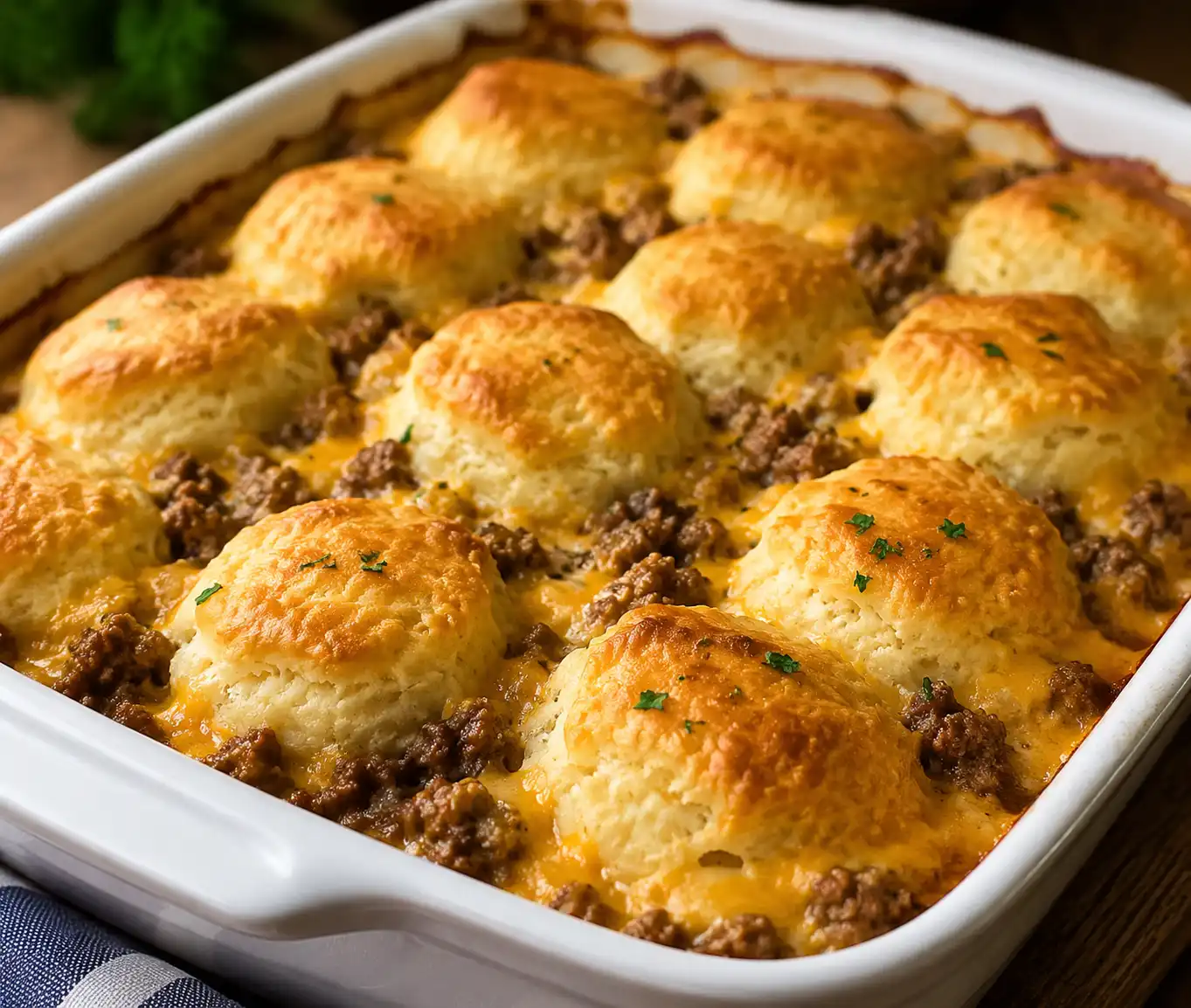
Ground Beef and Biscuit Bake is a beloved American comfort food classic—warm, hearty, savory-sweet, and deeply satisfying. This one-dish casserole combines seasoned browned ground beef, rich tomato-based gravy, tender vegetables, and a golden, flaky, buttery biscuit topping baked to perfection. It’s the kind of meal that fills the kitchen with nostalgic aromas, brings families together around the dinner table, and transforms simple pantry staples into something truly special. Whether served on a chilly winter evening, at a weekend potluck, or as a make-ahead freezer meal, this dish delivers maximum flavor with minimal fuss—and its versatility makes it endlessly adaptable to dietary preferences, seasonal produce, and cultural twists.
The History
Ground Beef and Biscuit Bake has its roots in early 20th-century American home cooking, emerging from the convergence of several culinary traditions. The widespread adoption of affordable ground beef following industrial meat processing innovations in the 1920s and ’30s made it a staple protein for budget-conscious households. Simultaneously, the rise of commercially produced baking powder (first patented in the 1850s but widely adopted by the 1910s) democratized biscuit-making—no longer requiring sourdough starters or precise lard ratios. By the 1940s and ’50s, community cookbooks, church fundraisers, and women’s magazines began featuring “beef and biscuit” or “meat-and-biscuit” casseroles—often labeled “Depression-Era Dinners,” “Wartime Suppers,” or “Saturday Night Specials.” These recipes reflected resourcefulness: stretching ground beef with onions, celery, and canned tomatoes; using leftover gravy or condensed soup as a binder; and crowning the dish with drop biscuits for ease and rustic charm. Over time, regional variations flourished—from Southern versions enriched with buttermilk biscuits and smoked paprika, to Midwestern renditions incorporating creamed corn and cheddar, to Pacific Northwest adaptations with wild mushrooms and rosemary. Today, Ground Beef and Biscuit Bake endures not just as a relic of frugal cooking—but as a canvas for creativity, tradition, and intergenerational storytelling.
Ingredients Breakdown
Understanding each ingredient’s role elevates both flavor and texture—here’s a detailed functional breakdown:
- Ground Beef (85/15 or 90/10 lean-to-fat ratio): Provides savory depth, umami richness, and structural integrity. The small amount of fat renders during browning, creating fond for flavor-building and keeping the filling moist.
- Yellow Onion & Garlic: Aromatics that form the foundational flavor base. Onions add sweetness when sautéed; garlic contributes pungent complexity that mellows with heat.
- Celery & Carrots (optional but highly recommended): Part of the classic mirepoix trio, they contribute earthy sweetness, subtle crunch, and nutritional fiber. Diced finely ensures even distribution and tenderness.
- All-Purpose Flour: Acts as a thickener for the gravy—creating a velvety, cohesive sauce that clings to the beef and supports the biscuit layer without pooling.
- Beef Broth (low-sodium preferred): Adds savory depth and liquid volume. Homemade stock yields superior gelatinous body; low-sodium store-bought allows precise salt control.
- Canned Diced Tomatoes (with juice) or Tomato Sauce: Imparts brightness, acidity, and subtle sweetness—balancing the richness of beef and fat. Fire-roasted varieties add smoky nuance.
- Worcestershire Sauce: A fermented condiment containing tamarind, molasses, anchovies, and vinegar—enhances savoriness (umami), adds tang, and deepens overall complexity.
- Dry Herbs (thyme, oregano, rosemary): Earthy, aromatic notes that complement beef without overpowering. Thyme is especially synergistic—its terpenes bind well with meat proteins.
- Bay Leaf (whole, removed before baking): Imparts subtle floral-woody fragrance during simmering; infuses slowly and shouldn’t be eaten.
- Salt & Black Pepper (freshly ground): Not just seasoning—they enhance natural flavors, improve protein solubility, and aid moisture retention.
- Butter (cold, cubed): Critical for biscuit tenderness and flakiness. Cold fat creates steam pockets during baking, yielding layers and lift.
- Buttermilk (or DIY substitute: 1 cup milk + 1 tbsp lemon juice/vinegar, rested 5 min): Adds acidity to activate baking soda (if used), tenderizes gluten, and contributes subtle tang and richness.
- Baking Powder & Baking Soda (double-acting leaveners): Provide reliable, consistent rise—especially important when biscuits bake directly atop a hot, moist filling.
- Heavy Cream or Whole Milk (for brushing): Promotes deep golden-brown color and glossy sheen via Maillard reaction and lactose caramelization.
- Grated Cheddar or Parmesan (optional garnish): Adds salty, nutty finish and visual appeal—melts beautifully into the biscuit crust’s surface.
Step-by-Step Recipe
- Preheat & Prep: Position oven rack in the center. Preheat oven to 425°F (220°C). Lightly grease a 9×13-inch (or similar 3-quart) baking dish with butter or nonstick spray. Gather all ingredients and equipment—large skillet, wooden spoon, whisk, mixing bowls, measuring cups/spoons, pastry cutter or fork, ice cream scoop (for uniform biscuits).
- Sauté Aromatics: In a large, heavy-bottomed skillet over medium heat, melt 1 tbsp butter. Add diced onion, celery, and carrots. Sauté 6–8 minutes until softened and translucent—but not browned. Stir in minced garlic and cook 1 minute more until fragrant.
- Brown the Beef: Increase heat to medium-high. Add ground beef, breaking it apart with a wooden spoon. Cook 6–8 minutes, stirring frequently, until no pink remains and edges begin to crisp slightly. Drain excess fat if desired (though retaining 1–2 tsp enhances flavor).
- Build the Gravy Base: Sprinkle flour evenly over the beef mixture. Stir constantly for 1–2 minutes to cook off raw flour taste and create a roux-like paste. Gradually whisk in beef broth, ½ cup at a time, ensuring no lumps form. Whisk in diced tomatoes (with juice), Worcestershire sauce, dried herbs, bay leaf, salt, and pepper.
- Simmer & Reduce: Bring mixture to a gentle simmer. Reduce heat to low and cook uncovered for 12–15 minutes, stirring occasionally, until thickened to a spoon-coating consistency—similar to hearty chili or stew. Remove bay leaf. Taste and adjust seasoning—add a pinch of sugar if acidity is too sharp, or splash of vinegar if flat.
- Transfer to Baking Dish: Pour hot beef mixture into the prepared baking dish. Smooth top with a spatula. Let rest 2–3 minutes while preparing biscuit dough—this prevents biscuits from sinking.
- Make Biscuit Dough: In a large bowl, whisk together 2 cups all-purpose flour, 1 tbsp baking powder, ½ tsp baking soda, 1 tsp sugar, 1 tsp salt. Cut in ½ cup cold, cubed unsalted butter using a pastry cutter or two forks until mixture resembles coarse crumbs with pea-sized butter pieces. Stir in ¾ cup cold buttermilk and 2 tbsp heavy cream just until a shaggy dough forms—do not overmix. If too dry, add 1 tsp buttermilk; if too wet, sprinkle 1 tsp flour.
- Portion & Top: Using a ¼-cup ice cream scoop or spoon, portion 8–10 even mounds of dough over the hot beef mixture. Gently press edges to seal gaps—avoid flattening; keep mounds rounded for optimal rise.
- Brush & Season: In a small bowl, whisk together 2 tbsp heavy cream and 1 tsp melted butter. Lightly brush tops of biscuits. Sprinkle with flaky sea salt, cracked black pepper, and optional grated cheddar or chopped fresh thyme.
- Bake to Golden Perfection: Place dish on a parchment-lined baking sheet (to catch potential bubbles/overflow). Bake 22–28 minutes—until biscuits are deeply golden brown, puffed, and sound hollow when tapped, and internal temperature of biscuits reaches 200–205°F (93–96°C). Rotate pan halfway through for even browning.
- Rest Before Serving: Let bake rest undisturbed for 10 minutes—this allows juices to reabsorb, biscuits to set, and temperatures to equalize. Cutting too soon releases steam and causes structural collapse.
Tips
- Use Cold Butter, Always: Warm butter melts too quickly, leading to dense, greasy biscuits instead of flaky layers. Chill butter for 15 minutes before cutting—or grate frozen butter directly into flour.
- Don’t Overwork the Dough: Stir only until combined. Overmixing develops gluten, resulting in tough, chewy biscuits. Lumps and streaks of butter are ideal.
- Let the Filling Cool Slightly: Pouring scalding-hot filling into the dish and immediately topping with dough can prematurely melt butter in the biscuits. A 2–3 minute rest makes all the difference.
- Measure Flour Correctly: Spoon flour into measuring cup and level with a knife—don’t scoop directly from the bag (which compacts flour and adds up to 25% extra). Too much flour = dry, crumbly biscuits.
- Adjust Biscuit Thickness for Desired Texture: For taller, cake-like biscuits: use a ⅓-cup scoop and leave space between mounds. For wider, crisp-edged “crust”: flatten mounds slightly and let them touch at edges.
- Boost Browning Naturally: Brush biscuits with an egg wash (1 egg + 1 tbsp water) for deeper color—or add ½ tsp honey to the cream wash for caramelized edges.
- Prevent Soggy Bottoms: Ensure your filling isn’t overly watery before topping. Simmer until thick enough to mound on a spoon—not run off. If unsure, drain excess liquid after simmering.
- Test Doneness Accurately: Insert an instant-read thermometer into the center of a biscuit—it should read 200–205°F. Visual cues alone (golden color) can be misleading.
- Rest Is Non-Negotiable: Skipping the 10-minute rest leads to runny filling, collapsed biscuits, and uneven serving. Set a timer—it’s part of the recipe.
- Reheat Smartly: To revive leftovers, cover loosely with foil and warm at 325°F (160°C) for 20–25 minutes. Avoid microwaving—the biscuits will turn rubbery and the filling will separate.
Variations and Customizations
This dish welcomes endless innovation—here are thoughtfully tested variations, categorized for inspiration:
Protein Swaps
- Turkey or Chicken: Use ground turkey thigh (85/15) or chicken thigh for richer flavor than breast. Add ½ tsp poultry seasoning and 1 tsp sage.
- Pork & Beef Blend: Combine ½ lb ground pork with ½ lb beef for enhanced juiciness and sweetness—great with fennel seed and apple cider vinegar.
- Plant-Based: Swap in high-protein lentil-walnut “beef” crumbles or certified vegan ground “sausage.” Boost umami with tamari, nutritional yeast, and smoked paprika.
Vegetable & Grain Enhancements
- Hidden Veggie Boost: Grate zucchini or spinach (squeezed dry) into the filling—adds moisture, nutrients, and subtle sweetness without altering flavor profile.
- Whole Grain Depth: Stir in ½ cup cooked brown rice, quinoa, or farro for heartier texture and fiber. Reduce broth by ¼ cup to compensate.
- Roasted Vegetable Medley: Fold in 1 cup roasted sweet potato, Brussels sprouts, or cauliflower florets for caramelized complexity.
Flavor Twists
- Southwest Style: Add 1 tbsp chili powder, 1 tsp cumin, ½ tsp chipotle powder, black beans, corn, and top with jalapeño-cheddar biscuits.
- Mediterranean: Replace tomatoes with sun-dried tomato paste, add kalamata olives, crumbled feta, oregano, lemon zest, and top with herb-parmesan biscuits.
- Umami Bomb: Stir in 1 tbsp miso paste + 1 tsp fish sauce into gravy; top with sesame-ginger biscuit dough.
- Breakfast Bake: Use breakfast sausage, add scrambled eggs to filling, and top with chive-buttermilk biscuits and crumbled bacon.
Biscuit Innovations
- Drop Biscuits: Classic method—quick, rustic, tender.
- Layered Biscuit Crust: Roll dough to ½-inch thickness, cut into rounds, and layer slightly overlapping for a laminated, pie-like top.
- Skillet-Baked Cornbread Biscuits: Replace half the flour with fine-ground cornmeal and add 1 tbsp honey for Southern sweetness.
- Gluten-Free: Use a 1:1 GF flour blend with xanthan gum; add 1 tsp psyllium husk for elasticity. Chill dough 20 minutes before scooping.
- Keto/Low-Carb: Make almond-flour cloud biscuits (almond flour, cream cheese, egg, baking powder) — lower rise but rich and tender.
Health Considerations and Nutritional Value
A standard serving (1/6 of a 9×13-inch bake made with 85/15 beef, full-fat dairy, and traditional biscuits) contains approximately:
- Calories: 520–580 kcal
- Protein: 32–36 g (excellent source—supports muscle maintenance and satiety)
- Total Fat: 28–32 g (of which 11–14 g saturated—moderate intake advised)
- Carbohydrates: 38–42 g (including 2–3 g dietary fiber from vegetables and whole grains if substituted)
- Sodium: 780–920 mg (varies significantly with broth, cheese, and added salt—can be reduced by 40% using no-salt-added tomatoes and low-sodium broth)
- Vitamins & Minerals: Rich in iron (heme iron from beef), zinc, B12, vitamin A (from carrots), vitamin C (from tomatoes), and potassium (from tomatoes and onions).
Health-Conscious Modifications:
- Lower Saturated Fat: Use 93/7 lean ground beef or plant-based crumbles; replace butter in biscuits with cold avocado oil or coconut oil (refined, for neutral taste).
- Higher Fiber: Add 1 cup finely chopped kale or spinach; use whole wheat pastry flour (50/50 blend) for biscuits; stir in 2 tbsp ground flaxseed or chia seeds.
- Reduced Sodium: Omit added salt; rely on herbs, citrus zest, nutritional yeast, and umami-rich ingredients (mushrooms, tomato paste, tamari) for flavor.
- Diabetes-Friendly: Focus on low-glycemic toppings—almond flour biscuits, cauliflower “biscuits,” or a sprinkle of crushed almonds and seeds instead of flour-based dough.
- Allergen Notes: Naturally nut-free and soy-free (if using soy-free Worcestershire); easily dairy-free with oat milk, vegan butter, and nutritional yeast instead of cheese.
Note: While comforting, this dish is best enjoyed as part of a balanced diet—including ample non-starchy vegetables on the side (e.g., roasted broccoli, green salad with vinaigrette) and mindful portion control. Its high protein and moderate fat content promote sustained energy and appetite regulation—making it more nutritionally strategic than many other casseroles.
Ingredients
For the Beef Filling:
- 2 tbsp unsalted butter
- 1 large yellow onion, finely diced (about 1 ½ cups)
- 2 medium carrots, peeled and finely diced (about 1 cup)
- 2 celery ribs, finely diced (about 1 cup)
- 4 cloves garlic, minced
- 2 lbs (900g) ground beef (85/15 recommended)
- ¼ cup all-purpose flour
- 2 cups low-sodium beef broth
- 1 (14.5 oz) can fire-roasted diced tomatoes, with juice
- 2 tbsp Worcestershire sauce
- 1 ½ tsp dried thyme
- 1 tsp dried oregano
- 2 large bay leaves
- 1 ½ tsp kosher salt (adjust to taste)
- 1 tsp freshly ground black pepper
For the Buttermilk Biscuit Topping:
- 2 cups all-purpose flour (spooned & leveled)
- 1 tbsp baking powder
- ½ tsp baking soda
- 1 tsp granulated sugar
- 1 tsp kosher salt
- ½ cup (1 stick) unsalted butter, very cold and cubed
- ¾ cup cold buttermilk
- 2 tbsp heavy cream or whole milk
For Finishing:
- 2 tbsp heavy cream or whole milk
- 1 tsp melted unsalted butter
- Fine sea salt and freshly cracked black pepper
- Optional: ¼ cup grated sharp cheddar or Parmesan, 1 tbsp fresh thyme leaves
Directions
- Preheat oven to 425°F (220°C). Lightly grease a 9×13-inch (3-quart) baking dish and set aside.
- In a large skillet over medium heat, melt 1 tablespoon butter. Add onion, carrots, and celery. Sauté 6–8 minutes until softened. Stir in garlic; cook 1 minute more.
- Increase heat to medium-high. Add ground beef. Cook, breaking apart with a spoon, until fully browned and no pink remains—6–8 minutes. Drain excess fat if desired (reserve 1–2 tsp for flavor).
- Sprinkle flour over beef mixture. Stir constantly for 1–2 minutes to coat and cook flour.
- Gradually whisk in beef broth, ½ cup at a time, until smooth. Whisk in tomatoes (with juice), Worcestershire, thyme, oregano, bay leaves, salt, and pepper.
- Bring to a gentle simmer. Reduce heat to low and cook uncovered 12–15 minutes, stirring occasionally, until thickened to a spoon-coating consistency. Discard bay leaves. Taste and adjust seasoning.
- Pour hot filling into prepared baking dish. Smooth top. Let rest 2–3 minutes.
- While filling rests, make biscuit dough: In a large bowl, whisk flour, baking powder, baking soda, sugar, and salt. Cut in cold butter with pastry cutter or fork until mixture resembles coarse crumbs with pea-sized pieces.
- Stir in cold buttermilk and 2 tbsp heavy cream just until a shaggy dough forms—do not overmix. Dough should hold together when pinched but remain slightly sticky.
- Using a ¼-cup ice cream scoop or spoon, portion 8–10 mounds onto hot filling. Gently press edges to seal gaps.
- In a small bowl, whisk 2 tbsp heavy cream and 1 tsp melted butter. Brush generously over biscuits. Sprinkle with flaky salt, pepper, and optional cheese/thyme.
- Place dish on a parchment-lined baking sheet. Bake 22–28 minutes, rotating halfway, until biscuits are deep golden brown and sound hollow when tapped.
- Let rest 10 minutes before serving. Serve warm, optionally with steamed green beans, garden salad, or tangy coleslaw.
FAQ
- Can I prepare this ahead of time?
- Yes! Assemble the filling up to 3 days ahead and refrigerate in an airtight container. Prepare biscuit dough, portion onto a parchment-lined tray, and freeze solid (2 hours). Transfer frozen biscuit mounds to a freezer bag. When ready, pour cold filling into dish, top with frozen biscuits (no thawing needed), and bake—add 5–7 minutes to total time. Alternatively, fully assemble (unbaked) and refrigerate up to 12 hours—let sit at room temperature 20 minutes before baking.
- Can I freeze the entire bake?
- Absolutely. Fully assembled (unbaked) bakes freeze exceptionally well for up to 3 months. Wrap tightly in plastic wrap, then foil. Thaw overnight in the refrigerator before baking—or bake from frozen: preheat oven to 375°F (190°C), cover with foil, bake 45 minutes, remove foil, increase heat to 425°F, and bake 20–25 more minutes until golden and bubbly.
- Why did my biscuits sink or become soggy?
- Most commonly due to: (1) Filling too hot when topping—let rest 2–3 minutes; (2) Excess liquid in filling—simmer until thick and spoon-coating; (3) Overmixing biscuit dough—stir only until combined; (4) Oven not fully preheated—use an oven thermometer for accuracy.
- Can I use canned soup instead of making gravy from scratch?
- You can—but with caveats. Replace broth/tomatoes/Worcestershire with 1 can (10.5 oz) condensed cream of mushroom or onion soup + ½ cup beef broth + 1 tbsp tomato paste + 1 tsp Worcestershire. Reduce salt in recipe by half, as soups are high in sodium. Flavor will be less nuanced but still comforting.
- What’s the best way to reheat leftovers?
- For best texture: Cover loosely with foil and bake at 325°F (160°C) for 20–25 minutes, until heated through (internal temp ≥165°F). For single servings: Microwave on 50% power in 60-second intervals, covered with damp paper towel—but expect softer biscuits. Never reheat uncovered in microwave—the top dries out instantly.
- Can I make this vegetarian?
- Yes! Substitute 2 cups cooked brown lentils or 16 oz plant-based ground “beef” (like Beyond or Impossible). Sauté with onions, carrots, celery, and garlic. Replace beef broth with rich vegetable broth. Boost umami with 1 tbsp soy sauce/tamari, 1 tsp miso, and ¼ cup dried porcini mushrooms (soaked & chopped). Proceed with same thickening and biscuit steps.
- My biscuits didn’t rise—what went wrong?
- Check your leaveners: Baking powder loses potency after 6–12 months. Test by adding ½ tsp to ¼ cup hot water—if it doesn’t bubble vigorously, replace it. Also ensure cold butter and cold buttermilk—warm ingredients deactivate leavening prematurely. And avoid opening the oven before 20 minutes—steam loss halts rise.
- Can I use self-rising flour for the biscuits?
- Yes—with adjustments: Omit baking powder, baking soda, and salt from the dry ingredients. Use 2 cups self-rising flour + ½ cup cold butter + ¾ cup buttermilk. Note: Self-rising flour varies by brand—some contain more salt or leavener, so taste filling separately before adding extra salt.
- Is there a gluten-free version that works well?
- Yes. Use a reputable 1:1 gluten-free all-purpose flour blend (with xanthan gum included). Add 1 tsp psyllium husk powder to the dry mix for elasticity. Chill dough 20 minutes before scooping. Expect slightly denser (but still delicious) biscuits—top with extra cheese or herbs for visual flair.
- What sides pair best with this dish?
- Balance richness with freshness and acidity: A crisp romaine or arugula salad with lemon vinaigrette, roasted asparagus with garlic and lemon zest, tangy German-style potato salad, or lightly steamed broccoli with toasted almonds. Avoid overly starchy sides unless reducing biscuit portion size.
Summary
Ground Beef and Biscuit Bake is a timeless, adaptable, and deeply comforting casserole that marries savory, slow-simmered beef gravy with tender, golden, flaky buttermilk biscuits—baked