
Introduction
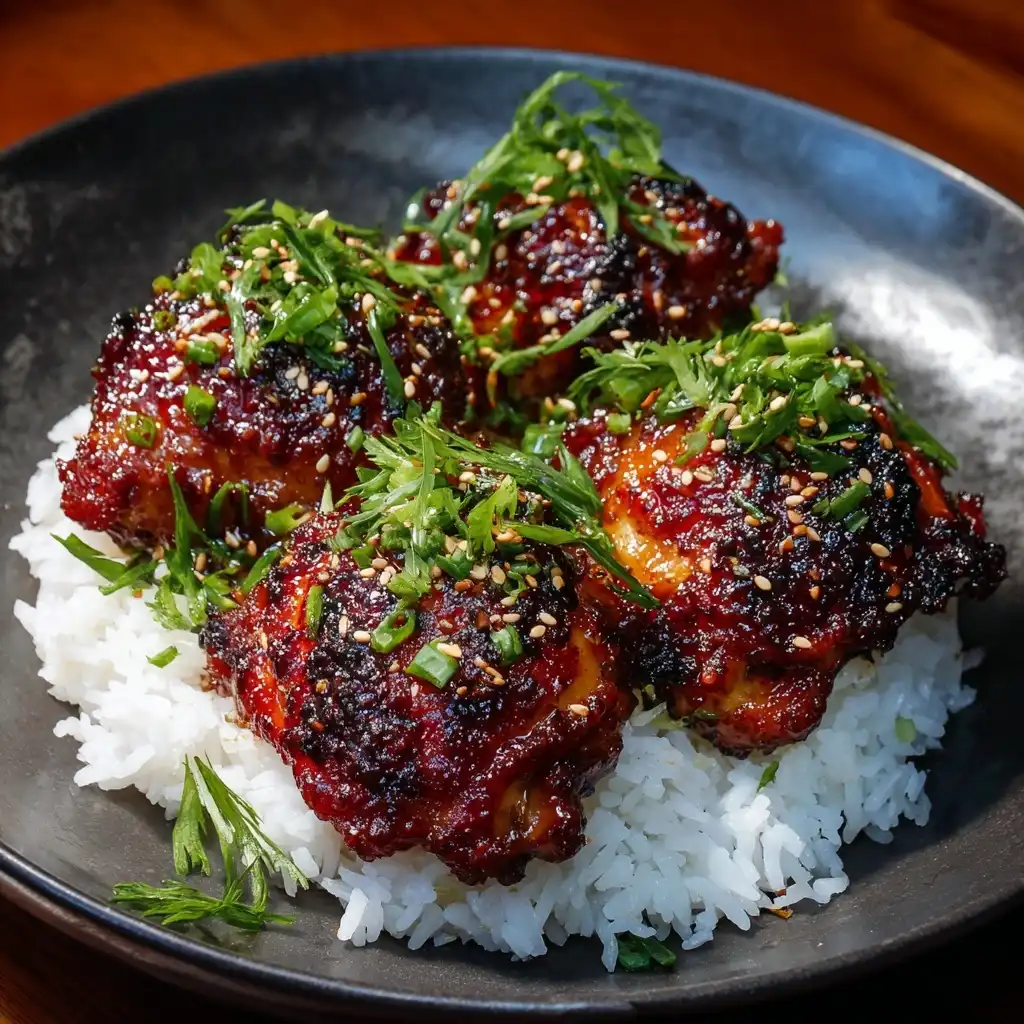
Gochujang Chicken Thighs is a bold, deeply flavorful Korean-inspired dish that masterfully balances sweet, spicy, umami, and savory notes in every tender, caramelized bite. Unlike many quick weeknight meals, this recipe delivers restaurant-quality depth without requiring advanced techniques—just thoughtful marination, proper searing, and gentle simmering to coax out the complex layers of gochujang’s fermented magic. Whether you’re new to Korean pantry staples or a seasoned fan of fiery condiments, this dish serves as both an accessible gateway and a satisfying staple—perfect for busy weeknights, impressive dinner parties, or meal-prep success. Its rich crimson glaze clings luxuriously to succulent bone-in or boneless chicken thighs, while aromatic undertones of garlic, ginger, sesame, and green onion elevate it far beyond ordinary saucy chicken.
The History
Gochujang—a cornerstone of Korean culinary identity—dates back to at least the Joseon Dynasty (1392–1897), evolving from earlier fermented chili pastes into the modern version standardized during the 20th century. Originally crafted by fermenting glutinous rice, fermented soybeans (meju), salt, and red chili powder (gochugaru) for months in onggi (traditional earthenware jars), gochujang was historically a symbol of resourcefulness, preservation, and regional pride—especially in provinces like Jeolla and Chungcheong, where climate and terroir favored optimal fermentation. While traditionally used in stews (jjigae), dipping sauces (chogochujang), and kimchi seasoning, its global rise began in the early 2000s with the Korean Wave (Hallyu), gaining traction in Western kitchens after chefs like Roy Choi (Kogi BBQ trucks) and food media spotlighted its versatility. Gochujang Chicken Thighs, though not a centuries-old “classic” per se, embodies a modern Korean-American fusion evolution: marrying the slow-cooked tenderness of braised thighs (a technique rooted in Korean home cooking’s emphasis on economical, collagen-rich cuts) with gochujang’s vibrant complexity—reflecting how immigrant ingenuity and cross-cultural exchange continually reinvent tradition.
Ingredients Breakdown
Every ingredient in this recipe plays a distinct, intentional role—not just for flavor, but for texture, chemistry, and balance:
- Gochujang (Korean chili paste): The irreplaceable heart—fermented for depth, moderately spicy (Scoville ~1,000–1,500), with natural sweetness from rice syrup and profound umami from aged soybean paste. Look for brands like Chung Jung One, Sunchang, or Pulmuone with minimal additives (avoid versions loaded with corn syrup or artificial colors).
- Chicken thighs (bone-in, skin-on preferred): Rich in collagen and intramuscular fat, they stay juicy even with longer cooking and develop unparalleled caramelization. Bone-in adds gelatinous richness to the sauce; boneless offers faster cook time but benefits from careful moisture control.
- Garlic & fresh ginger: Freshly grated (not powdered) provides bright, pungent volatility that mingles with gochujang’s funk—ginger also aids digestion and balances heat.
- Rice vinegar: Adds crucial acidity to cut through richness and brighten the sauce—never substitute with apple cider or white vinegar, which overwhelm with harshness.
- Brown sugar (or Korean rice syrup/mulyeot): Balances heat and enhances Maillard browning; dark brown sugar adds molasses depth, while rice syrup yields a silkier, more authentic sheen.
- Soy sauce (preferably low-sodium): Provides salt and amino acids for umami synergy with gochujang; tamari works for gluten-free needs.
- Sesame oil (toasted): Added at the end for aromatic lift—never cooked at high heat, as it burns easily and turns bitter.
- Green onions & toasted sesame seeds: Fresh, cooling contrast and textural crunch—essential finishing elements, not garnishes.
- Neutral high-smoke-point oil (like grapeseed or avocado): Ensures clean sear without burning during initial browning.
Optional but highly recommended enhancements: a splash of mirin for subtle sweetness and gloss, a pinch of gochugaru (Korean chili flakes) for extra heat and color, or a teaspoon of fish sauce for stealthy umami amplification.
Step-by-Step Recipe
- Prep & Pat Dry: Remove chicken thighs from fridge 20 minutes before cooking. Pat *extremely* dry with paper towels—especially skin—if using bone-in, skin-on. Moisture is the enemy of crisp sear.
- Make the Marinade/Sauce Base: In a bowl, whisk together ¼ cup gochujang, 3 tbsp brown sugar, 2 tbsp low-sodium soy sauce, 1 tbsp rice vinegar, 1 tbsp minced garlic (about 4 cloves), 1 tbsp grated fresh ginger, 1 tsp sesame oil, and 1 tbsp water or mirin. Set aside 2 tbsp for basting; reserve remainder for final glaze.
- Season & Sear: Lightly season thighs with salt (½ tsp for 1.5 lbs). Heat 1.5 tbsp neutral oil in a heavy-bottomed skillet (cast iron ideal) over medium-high heat until shimmering. Place thighs skin-side down—do NOT move for 6–7 minutes until deeply golden and releasing easily. Flip and sear second side 2–3 minutes. Transfer to a plate; pour off all but 1 tbsp rendered fat.
- Sauté Aromatics: Reduce heat to medium. Add reserved marinade (minus basting portion) and stir constantly 1 minute to bloom spices and cook off raw garlic/ginger edge. It will thicken slightly.
- Braise Gently: Return chicken to pan, nestling into sauce. Add ¼ cup water or chicken broth to prevent scorching. Bring to a gentle simmer, then reduce heat to low, cover, and braise 25–30 minutes (bone-in) or 18–22 minutes (boneless), until internal temp reaches 165°F and meat pulls easily from bone.
- Reduce & Glaze: Uncover, increase heat to medium. Simmer 5–7 minutes, spooning sauce over chicken frequently, until sauce thickens to a glossy, coat-the-back-of-a-spoon consistency. Baste with reserved 2 tbsp marinade in last 2 minutes.
- Rest & Finish: Let rest 5 minutes. Drizzle with remaining 1 tsp toasted sesame oil, scatter with sliced green onions and sesame seeds. Optional: broil 1–2 minutes for intensified char (watch closely!).
Tips
- Marinate Smart, Not Long: Marinating >2 hours can make chicken mushy due to gochujang’s enzymes and acidity—30 minutes is ideal for flavor infusion without texture compromise.
- Skin-Side Down is Non-Negotiable: For bone-in thighs, always start skin-down. Press gently with a spatula for full contact. That crackling, caramelized skin anchors the dish’s textural harmony.
- Control the Heat Like a Pro: Gochujang burns easily. Keep braising at a true low simmer—bubbles should barely break the surface. If sauce splutters or darkens too fast, remove from heat and stir in 1 tbsp warm water.
- Resist Overcrowding: Cook in batches if your pan isn’t large enough. Crowding = steaming = pale, soggy chicken and diluted sauce.
- Taste & Adjust Midway: After reducing the sauce, taste and fine-tune: need more heat? Add a pinch of gochugaru. Too sharp? A ½ tsp honey. Too thick? Splash of broth. Too salty? A drop of rice vinegar.
- Rest Before Slicing: Resting allows juices to redistribute—critical for juicy thighs. Slice against the grain for maximum tenderness.
- Save Every Drop: Spoon residual sauce from the pan over rice, noodles, or roasted vegetables—it’s liquid gold.
Variations and Customizations
This recipe is a canvas—adaptable across diets, preferences, and pantries:
- Vegetarian/Vegan: Swap chicken for extra-firm tofu (pressed & pan-seared), king oyster mushrooms (sliced thick, roasted until meaty), or seitan. Use tamari and maple syrup instead of honey/sugar.
- Low-Carb/Keto: Replace brown sugar with 1–2 tsp erythritol or monk fruit blend + ½ tsp xanthan gum to mimic thickness. Serve over cauliflower rice or zucchini noodles.
- Spice-Lover’s Upgrade: Add 1 tsp gochugaru to marinade, ½ tsp Sichuan peppercorns to aromatics, or finish with chili oil drizzle.
- Grill or Air Fryer Version: Marinate 30 min, then grill over medium coals (skin-side down first) or air fry at 375°F for 18–22 min, flipping halfway. Brush with sauce last 3 minutes.
- Meal-Prep Friendly: Braise fully, cool completely, and store sauce + chicken separately in airtight containers for up to 4 days. Reheat gently on stove with splash of water to revive gloss.
- One-Pan Sheet Bake: Arrange marinated thighs on parchment-lined sheet pan. Roast at 400°F for 35–40 min (bone-in) until crispy-edged, basting twice. Broil 2 min to caramelize.
- Deconstructed Bowl Style: Serve shredded chicken over black rice, kimchi slaw, quick-pickled cucumbers, nori strips, and a soft-boiled egg—drizzled with extra gochujang mayo (mix gochujang + mayo + lime juice).
- Global Twists: Add 1 tbsp Thai fish sauce + kaffir lime leaf for Southeast Asian flair; stir in 1 tsp Chinese five-spice for a Sino-Korean fusion; or fold in 2 tbsp gochujang-miso paste for deeper funk.
Health Considerations and Nutritional Value
A 5-oz serving (approx. 2 bone-in thighs with 2 tbsp sauce) provides roughly 380–420 calories, 32–36g protein, 22–26g fat (mostly unsaturated from sesame and chicken skin), and 18–22g carbs. Nutritionally, it shines in several key areas:
- Protein Powerhouse: Chicken thighs offer complete protein with higher levels of iron, zinc, and B vitamins (especially B6 and niacin) than breast—supporting immunity, metabolism, and energy production.
- Fermented Benefits: Authentic gochujang contains live cultures (Lactobacillus spp.) when unpasteurized—supporting gut microbiome diversity and digestive resilience. Check labels for “naturally fermented” and refrigerated sections.
- Antioxidant-Rich: Gochugaru (in gochujang) is packed with capsaicin (anti-inflammatory, metabolism-boosting) and carotenoids like capsanthin (potent antioxidant); ginger and garlic add allicin and gingerol—both linked to reduced oxidative stress.
- Smart Sodium Management: While soy and gochujang contain sodium, using low-sodium soy and balancing with fresh aromatics helps keep totals moderate (~750–900mg per serving)—well within FDA daily limits (<2,300mg).
- Considerations: Those monitoring blood sugar should note the added sugars—opt for rice syrup or reduce sweetener by 25% and add 1 tsp apple butter for body. Gluten-sensitive individuals must verify gochujang/tamari are certified GF (some contain wheat). For low-histamine diets, avoid prolonged marination and use fresh (not aged) gochujang.
Pairing tip: Serve with fiber-rich sides—steamed bok choy, kimchi (probiotic boost), or quinoa—to slow glucose absorption and enhance satiety.
Ingredients
- 1.5 lbs bone-in, skin-on chicken thighs (or boneless, skinless for quicker cook)
- ¼ cup authentic Korean gochujang (Chung Jung One or Sunchang recommended)
- 3 tbsp dark brown sugar (or 2 tbsp Korean rice syrup)
- 2 tbsp low-sodium soy sauce (or tamari for GF)
- 1 tbsp unseasoned rice vinegar
- 1 tbsp finely minced garlic (about 4 large cloves)
- 1 tbsp freshly grated ginger
- 1 tsp toasted sesame oil (plus extra for finishing)
- ¼ cup water or low-sodium chicken broth
- 1.5 tbsp neutral high-smoke-point oil (grapeseed, avocado, or peanut)
- Kosher salt (½ tsp, plus more to taste)
- 2 green onions, thinly sliced (for garnish)
- 1 tbsp toasted white sesame seeds (for garnish)
- Optional: 1 tsp gochugaru, 1 tsp mirin, pinch of fish sauce
Directions
- Bring chicken to room temperature 20 minutes before cooking. Pat *very* dry with paper towels—especially skin side.
- In a medium bowl, whisk together gochujang, brown sugar, soy sauce, rice vinegar, garlic, ginger, 1 tsp sesame oil, and 1 tbsp water until smooth. Set aside 2 tbsp for basting later.
- Season chicken thighs generously with salt on both sides.
- Heat neutral oil in a large heavy-bottomed skillet (cast iron preferred) over medium-high heat until shimmering (about 1 minute). Place chicken skin-side down in a single layer—do not overcrowd. Press gently with a spatula for 30 seconds to ensure full contact. Cook undisturbed 6–7 minutes until skin is deep golden brown and releases easily from pan.
- Flip chicken and sear second side 2–3 minutes until lightly browned. Transfer to a plate; pour off all but 1 tbsp of rendered fat.
- Reduce heat to medium. Add reserved gochujang mixture (excluding the 2 tbsp basting portion) to skillet. Stir constantly 1 minute to cook out raw edges and thicken slightly.
- Nestle chicken back into pan, skin-side up, submerging partially in sauce. Pour in remaining ¼ cup water or broth.
- Bring to a gentle simmer, then immediately reduce heat to low. Cover tightly and braise 25–30 minutes (bone-in) or 18–22 minutes (boneless), until chicken reaches 165°F internally and meat pulls easily from bone.
- Remove lid. Increase heat to medium. Simmer uncovered 5–7 minutes, spooning sauce over chicken every 60–90 seconds, until sauce reduces to a thick, glossy, clingy glaze.
- In last 2 minutes, brush chicken with reserved 2 tbsp marinade.
- Transfer chicken to a platter. Let rest 5 minutes. Drizzle with remaining 1 tsp toasted sesame oil. Garnish generously with green onions and sesame seeds.
- Serve immediately with steamed short-grain rice, blanched broccoli, or pickled radishes.
FAQ
- Can I use chicken breast instead?
- Yes—but with caveats. Breasts dry out faster. Pound to even ½-inch thickness, reduce braise time to 12–15 minutes, and skip the sear-to-crisp step. Better yet: use thighs—they’re forgiving, flavorful, and nutritionally superior.
- Is gochujang gluten-free?
- Traditional gochujang contains fermented soybeans and glutinous rice, but some brands add wheat. Always check labels for “gluten-free” certification. Sunchang GF and Mother-in-Law brands are reliable options.
- Why does my sauce taste bitter or burnt?
- Two likely causes: 1) Sauce boiled too hard during reduction—keep at a gentle simmer and stir constantly; 2) Sesame oil added too early—always stir it in *after* cooking, off-heat, for aroma only.
- Can I make this ahead for meal prep?
- Absolutely. Braise fully, cool completely, and store chicken and sauce separately in airtight containers for up to 4 days refrigerated or 3 months frozen. Reheat gently on stovetop with 1 tbsp water to restore gloss—never microwave uncovered (dries out chicken).
- What if I don’t have rice vinegar?
- Substitute with equal parts champagne vinegar or white wine vinegar. Avoid apple cider (too fruity) or distilled white (too harsh). If forced, dilute white vinegar with ½ tsp sugar and ½ tsp water per tbsp.
- How spicy is this dish?
- Moderate—gochujang is more about deep, complex heat than face-melting fire. On a scale of 1–10, it’s a 4–5. Boost heat with gochugaru, sambal oelek, or a dash of cayenne—but add incrementally and taste!
- Can I cook this in a slow cooker?
- Yes! Skip searing. Place thighs in slow cooker. Whisk sauce ingredients (use 2 tbsp water instead of ¼ cup) and pour over chicken. Cook on LOW 4–5 hours until tender. Strain liquid, reduce on stove 8–10 min, then glaze.
- Why use bone-in thighs?
- Bone-in thighs contain more collagen, which melts into the sauce during braising, creating a naturally velvety, luxurious texture—and the bone insulates meat, preventing overcooking. Skin adds richness and textural contrast.
- My sauce didn’t thicken—what went wrong?
- Gochujang varies by brand in starch content. If too thin, mix 1 tsp cornstarch with 1 tbsp cold water, stir into simmering sauce, and cook 1–2 minutes until clear and glossy. Or reduce longer—patience pays off.
- What sides pair best?
- Steamed Korean short-grain rice (slightly sticky), quick-pickled cucumbers (oi muchim), blanched spinach (sigeumchi namul), kimchi fried rice, or roasted shiitakes. Avoid heavy starches—let the sauce shine.
Summary
Gochujang Chicken Thighs is a harmonious, deeply satisfying Korean-American fusion dish that transforms humble chicken thighs into a glossy, umami-packed centerpiece through smart marination, precise searing, and gentle braising in a complex, fermented chili glaze. With adaptable variations, notable nutritional benefits from fermented ingredients and quality protein, and foolproof techniques refined for home cooks, it’s a versatile, crowd-pleasing recipe that delivers bold flavor, tender texture, and culinary authenticity—every single time.