
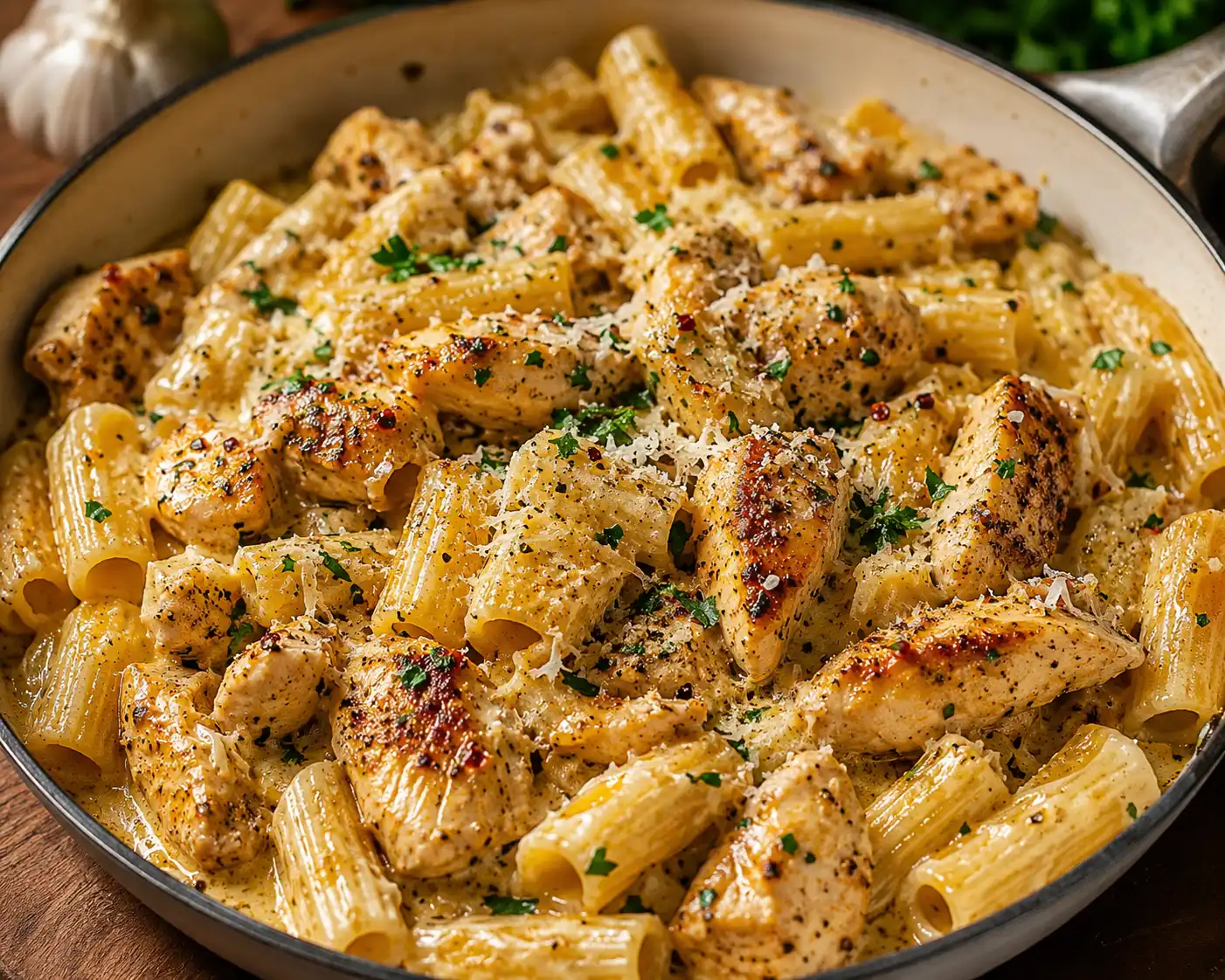
Introduction
Garlic butter chicken rigatoni is a decadent, restaurant-quality pasta dish that brings together tender pan-seared chicken, al dente rigatoni, and a luxuriously rich, aromatic garlic butter sauce infused with herbs and Parmesan. It’s the kind of comforting yet elegant meal that satisfies weeknight cravings while impressing guests at casual dinner parties. With its bold savory notes, creamy texture, and satisfying chew from the ridged tubular pasta, this dish strikes the perfect balance between rustic simplicity and refined flavor. Whether you’re a seasoned home cook or just discovering the joys of one-pan pasta mastery, garlic butter chicken rigatoni offers approachable techniques, minimal cleanup, and maximum flavor payoff—making it a standout addition to any modern kitchen repertoire.
The History
While there’s no single documented origin for “garlic butter chicken rigatoni” as a named dish, its roots trace back to the convergence of three culinary traditions: Italian pasta culture, French-inspired butter-based sauces (like beurre blanc and beurre noisette), and American comfort-food innovation. Rigatoni itself hails from southern Italy—particularly Calabria and Campania—where its thick walls and ridges were designed to cling to hearty meat ragùs and roasted vegetable sauces. Garlic butter, meanwhile, has long been a staple in both Mediterranean and European cooking, prized for its ability to elevate proteins and vegetables alike. In mid-20th century America, home cooks began adapting Italian-American classics—like spaghetti with meatballs—by incorporating grilled or sautéed chicken breast, reflecting shifting dietary preferences toward leaner proteins. The fusion gained momentum in the 1990s and early 2000s with the rise of food television and glossy recipe magazines, where chefs like Giada De Laurentiis and Rachael Ray popularized quick, skillet-based pasta dishes featuring bold, accessible flavors. Garlic butter chicken rigatoni emerged organically from this movement—blending technique, tradition, and pantry-friendly ingredients into a cohesive, crave-worthy weeknight essential. Today, it thrives across social media platforms like TikTok and Instagram, where its golden-brown chicken, glossy sauce, and photogenic rigatoni make it endlessly shareable—and endlessly adaptable.
Ingredients Breakdown
Understanding each ingredient’s role ensures consistent success and empowers thoughtful substitutions. Below is a detailed functional breakdown:
- Chicken breasts or thighs: Boneless, skinless chicken provides lean protein and a neutral canvas. Breasts yield a firmer, milder bite; thighs offer more moisture, richness, and forgiving cook times—ideal for beginners or meal-prep batches.
- Rigatoni pasta: Its wide, hollow tubes trap sauce beautifully, while exterior ridges grip creamy emulsions and herb flecks. Substitute with penne, ziti, or fusilli if unavailable—but avoid thin pastas like spaghetti, which won’t support the sauce’s weight.
- Unsalted butter: Crucial for depth, mouthfeel, and browning. Salted butter can be used, but control over sodium levels is lost. Clarified butter or ghee works for higher smoke points—though you’ll sacrifice some dairy sweetness.
- Fresh garlic: Raw, minced garlic delivers pungent heat; gently sautéed garlic mellows into nutty-sweet complexity. Avoid jarred minced garlic—it lacks vibrancy and often contains preservatives that dull flavor.
- Dry white wine (e.g., Pinot Grigio or Sauvignon Blanc): Adds acidity and brightness, cutting through richness while deglazing the pan to lift fond—the flavorful browned bits essential for umami depth. Substitute with low-sodium chicken broth + ½ tsp lemon juice if avoiding alcohol.
- Heavy cream or full-fat coconut milk (vegan option): Provides luxurious body and silkiness. Half-and-half or whole milk can work but yield a thinner, less stable sauce prone to splitting. Never use ultra-pasteurized cream—it resists proper emulsion.
- Grated Parmigiano-Reggiano: Aged Italian cheese adds salt, umami, and granular texture. Pre-grated versions contain anti-caking agents (e.g., cellulose) that inhibit melting and create graininess—always grate fresh.
- Fresh herbs (parsley, basil, or thyme): Added at the end for aromatic lift and color contrast. Dried herbs lack volatile oils—use only if fresh are unavailable, reducing quantity by ⅓.
- Red pepper flakes & black pepper: Provide gentle heat and earthy spice. Toasting red pepper flakes in butter before adding other aromatics unlocks deeper fruitiness.
- High-heat oil (avocado, grapeseed, or light olive oil): Ensures even searing without burning. Extra virgin olive oil’s low smoke point makes it unsuitable for initial chicken browning—reserve it for finishing drizzles.
Step-by-Step Recipe
- Prep & Season Chicken: Pat 1.5 lbs boneless, skinless chicken breasts or thighs *very* dry with paper towels—this ensures golden crust, not steam. Slice into 1-inch thick cutlets, then pound gently to ½-inch uniform thickness using a meat mallet or heavy skillet. Season generously with 1 tsp kosher salt, ½ tsp black pepper, and ¼ tsp garlic powder (optional, for layered flavor).
- Toast Pasta (Optional but Recommended): Heat 1 tbsp olive oil in a large Dutch oven or deep 12-inch skillet over medium heat. Add 12 oz rigatoni and toast, stirring constantly, for 2–3 minutes until lightly golden and fragrant. This step enhances nuttiness and improves sauce adhesion—skip only if short on time.
- Sear Chicken: Heat 2 tbsp high-heat oil in a separate large skillet over medium-high heat until shimmering. Add chicken in a single layer—do not crowd. Sear undisturbed for 4–5 minutes per side until deeply golden and internal temperature reaches 165°F. Transfer to a plate, tent loosely with foil, and rest for 5 minutes (juices will reabsorb).
- Sauté Aromatics: In the same chicken skillet (pour off excess fat, leaving ~1 tbsp), reduce heat to medium-low. Add 6 cloves finely minced garlic and ½ tsp red pepper flakes. Stir constantly for 45–60 seconds until fragrant and just beginning to turn pale gold—do not brown or burn.
- Build Sauce Base: Pour in ½ cup dry white wine, scraping vigorously with a wooden spoon to release all browned bits (fond). Simmer 2 minutes until reduced by half. Whisk in 1 cup heavy cream and ½ cup low-sodium chicken broth. Bring to a gentle simmer—not a boil—to prevent curdling.
- Combine & Simmer Pasta: Add toasted (or un-toasted) rigatoni directly to the sauce. Stir well, then cover and simmer on low heat for 12–14 minutes, stirring every 3–4 minutes to prevent sticking and ensure even absorption. Sauce should thicken to coat the pasta like velvet—not pool or dry out. Add splashes of reserved pasta water (¼ cup at a time) if too thick.
- Incorporate Chicken & Cheese: Thinly slice rested chicken against the grain. Gently fold into pasta along with 1 cup freshly grated Parmigiano-Reggiano and 2 tbsp cold unsalted butter, cut into cubes. Stir over low heat 1–2 minutes until cheese melts and butter emulsifies into glossy sheen.
- Finish & Serve: Remove from heat. Stir in ¼ cup chopped fresh flat-leaf parsley, zest of 1 lemon, and a final grind of black pepper. Taste and adjust salt—remember Parmesan is salty. Let rest 2 minutes before serving to allow sauce to settle.
Tips
- Dry chicken thoroughly—no exceptions: Moisture is the enemy of sear. Even a damp surface creates steam instead of Maillard reaction. Use triple-layered paper towels and press firmly.
- Don’t rush the garlic: Burnt garlic turns bitter instantly. Keep heat low, stir constantly, and remove from heat the *second* it smells sweet and nutty—not sharp or acrid.
- Reserve pasta water: Before draining (if not using no-drain method), save at least 1 cup starchy, salty water. Its starch acts as a binder and hydrator, rescuing split sauces and adjusting consistency effortlessly.
- Rest chicken before slicing: Cutting too soon releases juices onto the cutting board instead of back into the meat. Resting for 5 minutes retains tenderness and visual appeal.
- Add cheese off-heat: High heat causes Parmesan to seize and become stringy or greasy. Fold in at the end, using residual warmth to melt smoothly.
- Use cold butter at the finish: Cold butter cubes emulsify better than melted butter, creating a richer, more cohesive sauce with superior mouth-coating texture.
- Undercook pasta slightly if pre-boiling: If boiling separately (not recommended for this recipe), cook rigatoni 2 minutes shy of package time—it will finish cooking in the sauce.
- Layer seasonings: Salt the chicken, the pasta water (if boiling), and the sauce separately. Each layer builds dimension—don’t rely on one salting moment.
- Invest in a good thermometer: Visual cues for chicken doneness are unreliable. A digital instant-read thermometer prevents both food safety risks and dry, overcooked meat.
- Skillet size matters: Use a 12-inch or larger skillet with high sides. Crowding leads to steaming, not searing—and insufficient surface area prevents proper sauce reduction.
Variations and Customizations
This recipe is inherently versatile—designed to adapt to dietary needs, seasonal produce, pantry limitations, and personal taste. Here are thoughtfully tested variations:
Protein Swaps
- Shrimp: Swap chicken for 1 lb peeled, deveined shrimp. Sear 1–2 minutes per side until opaque and pink—add in final 2 minutes of pasta simmer to avoid rubberiness.
- Italian Sausage: Use mild or hot ground sausage. Brown thoroughly, breaking into crumbles. Drain excess fat, then proceed with aromatics. Adds fennel-forward depth and heartier texture.
- Chickpeas (Vegan): Replace chicken with 2 (15-oz) cans rinsed chickpeas. Sauté 5 minutes with garlic and spices before building sauce. Boost umami with 1 tbsp nutritional yeast + 1 tsp soy sauce.
Pasta Alternatives
- Gluten-Free Rigatoni: Use certified GF corn/rice blend pasta. Boil separately per package instructions (GF pasta often requires more water and precise timing) before combining.
- Zucchini Noodles (Low-Carb): Spiralize 3 medium zucchinis. Sauté separately 2–3 minutes until just tender, then fold in at the very end—overcooking makes them watery.
- Whole Wheat Rigatoni: Offers nuttier flavor and higher fiber. Toasting is especially beneficial here to counter potential bitterness.
Sauce Twists
- Lemon-Herb Brightness: Add zest and juice of 1 large lemon with parsley. Stir in 1 tsp capers and 2 tbsp chopped dill for Mediterranean flair.
- Roasted Red Pepper Cream: Blend ½ cup roasted red peppers (jarred, drained) into warm sauce before adding pasta. Garnish with crumbled feta.
- Truffle Elegance: Finish with 1 tsp white truffle oil and shavings of aged Parmigiano-Reggiano. Use sparingly—truffle oil is potent!
- Smoky Chipotle Depth: Whisk in 1 tsp chipotle purée (canned chipotles in adobo, finely blended) with the cream for subtle heat and smokiness.
Dietary Adaptations
- Dairy-Free: Replace butter with vegan butter (Miyoko’s or Forager), heavy cream with full-fat canned coconut milk (stirred well), and Parmesan with cashew-based “Parm” (blend 1 cup raw cashews + 3 tbsp nutritional yeast + 1 tsp lemon juice + ½ tsp salt).
- Low-Sodium: Omit added salt; rely on herbs, lemon, garlic, and a splash of tamari (gluten-free soy sauce) for savoriness. Use low-sodium broth and skip pre-salted cheeses.
- Keto-Friendly: Substitute rigatoni with spiralized kohlrabi or shirataki noodles (rinse thoroughly and dry-fry 3 minutes first). Increase healthy fats with extra butter and a dollop of mascarpone.
Health Considerations and Nutritional Value
A 1.5-serving portion (approx. 1.5 cups cooked) of classic garlic butter chicken rigatoni contains roughly:
- Calories: 720–850 kcal (varies with cheese/butter amounts)
- Protein: 42–48g (excellent source—supports muscle maintenance and satiety)
- Total Fat: 38–45g (primarily unsaturated from olive oil, butter, and Parmesan; includes ~22g saturated fat)
- Carbohydrates: 52–60g (mostly complex carbs from pasta; fiber ~3g unless using whole wheat or legume-based pasta)
- Sodium: 680–920mg (moderate to high—reduced significantly with low-sodium broth, no-salt-added tomatoes if added, and mindful cheese choices)
- Vitamins & Minerals: Rich in B12 (chicken), calcium & vitamin A (dairy), selenium (garlic), and antioxidants (fresh herbs, garlic).
Key Health Notes:
- Balancing Saturated Fat: While butter and cheese contribute saturated fat, recent research suggests moderate intake within a balanced diet isn’t inherently harmful for most people. To reduce saturated fat, use half butter/half olive oil, opt for part-skim ricotta swirl, or add white beans for creaminess + fiber.
- Gut Health & Garlic: Raw and cooked garlic contain allicin—a compound linked to antimicrobial activity, blood pressure regulation, and prebiotic support for beneficial gut bacteria. Maximize benefits by crushing garlic and letting it sit 10 minutes before cooking.
- Portion Mindfulness: This dish is calorie-dense due to fats and pasta. Pair with a large arugula salad dressed in lemon vinaigrette or roasted seasonal vegetables (asparagus, broccoli, cherry tomatoes) to increase volume, fiber, and micronutrients without excess calories.
- Food Safety Reminder: Chicken must reach 165°F internally. Use a reliable thermometer—not color or texture—as indicators. Refrigerate leftovers within 2 hours; consume within 3–4 days.
- Allergen Awareness: Contains dairy (butter, cheese), gluten (pasta), and potentially eggs (some dried pastas). Always verify labels for hidden allergens in broth, wine, or pre-grated cheese.
Ingredients
- 1.5 lbs boneless, skinless chicken breasts or thighs
- 12 oz rigatoni pasta (regular, whole wheat, or gluten-free)
- 3 tbsp high-heat oil (avocado, grapeseed, or light olive oil), divided
- 6 cloves garlic, finely minced (about 2 tbsp)
- ½ tsp red pepper flakes (adjust to taste)
- ½ cup dry white wine (e.g., Pinot Grigio, Sauvignon Blanc)
- 1 cup heavy cream (full-fat, not ultra-pasteurized)
- ½ cup low-sodium chicken broth
- 1 cup freshly grated Parmigiano-Reggiano cheese (plus extra for garnish)
- 2 tbsp unsalted butter, cold and cubed
- ¼ cup fresh flat-leaf parsley, finely chopped
- Zest and juice of 1 large lemon
- 1 tsp kosher salt (plus more to taste)
- 1 tsp freshly ground black pepper (plus more to taste)
- Optional: ¼ tsp garlic powder (for chicken seasoning)
Directions
- Pat chicken completely dry with paper towels. Slice into 1-inch cutlets, then gently pound to ½-inch thickness. Season both sides with salt, pepper, and optional garlic powder.
- In a large Dutch oven or deep skillet, heat 1 tbsp olive oil over medium heat. Add rigatoni and toast 2–3 minutes, stirring often, until lightly golden. Remove and set aside.
- Heat 2 tbsp high-heat oil in a large skillet over medium-high heat until shimmering. Add chicken in a single layer; sear 4–5 minutes per side until golden and internal temperature hits 165°F. Transfer to a plate, tent with foil, and rest 5 minutes.
- Reduce heat to medium-low in same skillet; pour off excess oil, leaving ~1 tbsp. Add garlic and red pepper flakes; stir 45–60 seconds until fragrant and pale gold.
- Pour in wine, scraping up all browned bits. Simmer 2 minutes until reduced by half.
- Whisk in heavy cream and chicken broth. Bring to gentle simmer (do not boil vigorously).
- Add toasted rigatoni. Cover and simmer on low 12–14 minutes, stirring every 3–4 minutes. Adjust with reserved pasta water if too thick.
- Slice rested chicken against the grain. Gently fold into pasta with grated Parmesan and cold butter cubes. Stir 1–2 minutes over low heat until glossy and cohesive.
- Remove from heat. Stir in parsley, lemon zest, lemon juice, and additional black pepper. Taste and adjust salt if needed.
- Let rest 2 minutes. Serve warm, garnished with extra Parmesan, parsley, and a lemon wedge.
FAQ
- Can I make this ahead of time?
- Yes—with caveats. Fully cooked pasta absorbs liquid over time, becoming dense. For best results, prepare sauce and chicken separately up to 3 days ahead; store chilled. Cook pasta fresh, then combine everything just before serving. Alternatively, undercook pasta by 1 minute, chill sauce/chicken, then finish together.
- Why does my sauce look broken or greasy?
- Common causes: overheating the cream (causes separation), adding cold cheese to hot sauce (causes clumping), or using pre-grated cheese (anti-caking agents inhibit melting). Fix: Remove from heat, whisk in 1–2 tbsp cold cream or pasta water, then slowly re-warm while whisking constantly.
- Can I freeze garlic butter chicken rigatoni?
- Freezing is possible but not ideal—cream-based sauces often grain or separate upon thawing/refreezing. Better to freeze components: cooked chicken (up to 4 months), sauce base (without cream/cheese—add those fresh), or plain cooked rigatoni (drizzle with olive oil before freezing to prevent sticking).
- What wine should I use if I don’t cook with alcohol?
- Use low-sodium chicken broth + 1 tsp apple cider vinegar or lemon juice to replicate acidity and depth. Avoid “cooking wines”—they’re loaded with salt and preservatives.
- My chicken turned out dry—what went wrong?
- Overcooking is the top culprit. Use a thermometer—165°F is the safe minimum, not “well done.” Also ensure chicken is uniformly pounded, rested after cooking, and sliced against the grain. Brining (30 minutes in 4 cups water + ¼ cup salt) adds insurance against dryness.
- Can I use frozen chicken?
- Yes—but thaw completely in the refrigerator overnight. Cooking from frozen leads to uneven searing, excess moisture, and longer cook times that risk drying the exterior before the interior reaches temp.
- Is there a way to make this lower in calories?
- Absolutely. Reduce butter to 1 tbsp (use 2 tbsp olive oil for searing), swap heavy cream for evaporated skim milk or silken tofu blended smooth, increase veggies (spinach, mushrooms, bell peppers), and serve smaller portions alongside a large salad.
- What’s the best way to reheat leftovers?
- Stovetop is superior: Place in a skillet with 1–2 tbsp broth or water. Warm over low heat, stirring gently, until heated through—adds moisture back in. Avoid microwaving uncovered, which dries it out. Cover with a damp paper towel if using microwave.
- Can I double this recipe?
- Yes—but use two skillets or a very large (7-qt) Dutch oven. Doubling in one pan causes crowding, uneven cooking, and poor sauce reduction. You may need to increase simmer time by 2–3 minutes to fully absorb liquid.
- Why do some recipes add flour or cornstarch?
- Flour (a “slurry”) or cornstarch thickens quickly but can mute flavor and create a gluey texture if overused. This recipe relies on natural starch from pasta water and emulsification from cold butter/cheese for cleaner, richer thickening—no stabilizers required.
Summary
Garlic butter chicken rigatoni is a masterclass in balanced comfort—featuring perfectly seared chicken, toothsome rigatoni, and a velvety, herb-flecked sauce built on the timeless synergy of garlic, butter, and Parmesan. Its brilliance lies in flexibility: equally at home on a Tuesday night or a Saturday dinner party, endlessly customizable for diets and pantries, and deeply satisfying without sacrificing elegance.
With smart prep, mindful technique, and respect for quality ingredients, this dish transforms humble staples into something extraordinary—proving that richness, depth, and soul-warming satisfaction needn’t come from complexity, but from intention, balance, and love.