
Introduction
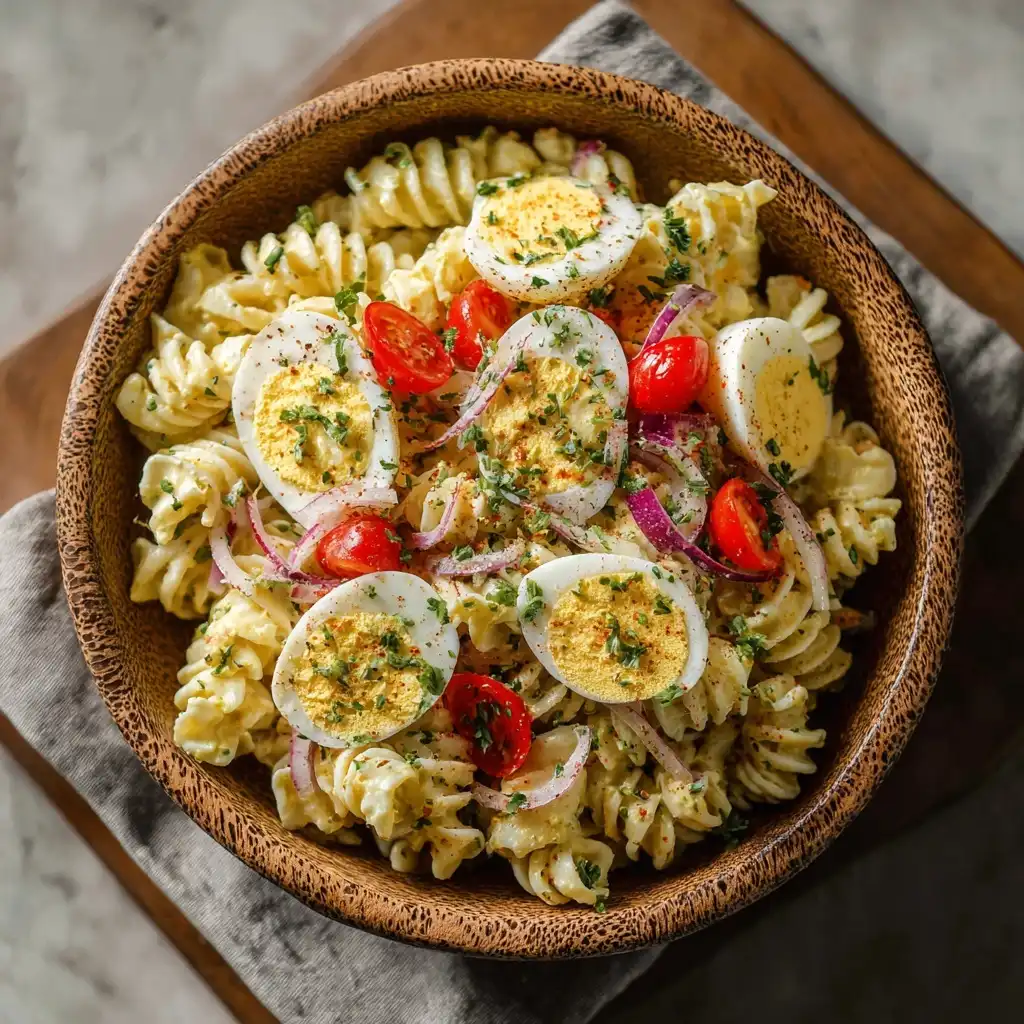
Deviled Egg Pasta Salad is a vibrant, crowd-pleasing fusion dish that marries the creamy, zesty essence of classic deviled eggs with the satisfying chew and versatility of cold pasta salad. Unlike traditional pasta salads that rely heavily on mayonnaise or vinaigrette alone, this recipe elevates the format by incorporating finely chopped hard-boiled eggs blended with tangy mustard, sharp vinegar, aromatic spices, and rich yolks—essentially transforming the iconic deviled egg filling into a luscious, protein-packed dressing that coats every noodle. It’s creamy without being heavy, bright without being acidic, and deeply flavorful without overwhelming simplicity. Whether served at summer picnics, potlucks, holiday buffets, or as a make-ahead lunch staple, Deviled Egg Pasta Salad delivers nostalgic comfort with modern texture contrast—crisp celery, tender pasta, soft egg ribbons, and occasional pops of briny capers or pickles. Its visual appeal—creamy ivory noodles flecked with golden yolk, flecks of paprika, and fresh herbs—makes it as photogenic as it is delicious. More than just a side dish, it’s a conversation starter, a clever culinary bridge between breakfast tradition and lunchtime innovation.
The History
While no single documented “invention” exists for Deviled Egg Pasta Salad, its origins can be traced through the parallel evolution of two American culinary mainstays: deviled eggs and pasta salad. Deviled eggs—boiled eggs halved, yolks mashed with seasonings like mustard, vinegar, paprika, and sometimes cayenne—date back to ancient Rome and Persia, but entered mainstream U.S. cuisine in the late 19th century, gaining explosive popularity during the mid-20th-century “deviled” food trend (a term derived from “deviling,” meaning spicing or enlivening). Meanwhile, pasta salad emerged in earnest after World War II, buoyed by the mass availability of affordable dried pasta, refrigeration, and convenience foods like bottled dressings and canned vegetables. Early versions appeared in women’s magazines and community cookbooks throughout the 1950s and ’60s—often featuring elbow macaroni, Miracle Whip, olives, and hard-boiled eggs as a garnish or light mix-in. The pivotal shift toward *integrating* deviled egg elements *into the dressing itself*, rather than merely topping the salad, likely began organically in home kitchens during the 1970s–80s, as cooks sought richer flavor depth and better binding agents than plain mayo. Regional adaptations followed: Southern versions leaned into stone-ground mustard and pickle relish; Midwestern iterations added dill and red onion; West Coast interpretations embraced avocado, lemon zest, and microgreens. Today, Deviled Egg Pasta Salad represents a broader culinary movement—reimagining heritage ingredients through contemporary techniques—and has seen renewed attention via food blogs, TikTok recipe hacks, and chef-driven delis rebranding retro dishes with artisanal twists (e.g., using duck eggs, house-made tarragon aioli, or heirloom pasta shapes).
Ingredients Breakdown
Every element in Deviled Egg Pasta Salad plays a purposeful role—not just in flavor, but in texture, balance, stability, and visual harmony. Below is an exhaustive analysis of each component:
- Pasta (12 oz / 340 g): Short, sturdy shapes with ridges or hollow centers—such as fusilli, rotini, cavatappi, orecchiette, or gemelli—are ideal. They trap the creamy deviled egg mixture and hold up well when chilled. Avoid delicate pastas like angel hair or overly porous varieties like regular spaghetti, which become mushy or slippery. Whole wheat or legume-based pastas (lentil, chickpea) add fiber and protein but require precise cooking to avoid graininess.
- Hard-Boiled Eggs (8 large): The cornerstone—both structural and functional. Six eggs are finely chopped for texture and visual interest; two are reserved for yolk-only mashing to build the dressing base. Farm-fresh eggs yield deeper yellow/orange yolks and richer flavor; older eggs peel more easily. Consistent boiling technique (steam-start, ice bath shock) ensures tender whites and centered, non-gray yolks.
- Mayonnaise (¾ cup / 180 g): Full-fat, real-egg mayonnaise (e.g., Duke’s, Hellmann’s, or homemade) provides emulsification, richness, and body. Light or “reduced-fat” versions contain stabilizers and excess water, leading to separation and a thin, artificial mouthfeel. Vegan mayo works but often lacks depth—supplement with 1 tsp Dijon and ½ tsp apple cider vinegar to compensate.
- Yellow or Dijon Mustard (3 tbsp): Adds acidity, heat, and complexity. Yellow mustard gives classic tang and brightness; Dijon contributes earthy nuance and smoother heat. A blend (2 tbsp yellow + 1 tbsp Dijon) offers optimal balance. Grainy mustard adds texture if used sparingly (1 tsp max).
- White Vinegar or Apple Cider Vinegar (1½ tbsp): Critical for cutting richness and brightening the entire dish. White vinegar delivers clean, sharp acidity; apple cider vinegar lends subtle fruitiness and mellower bite. Rice vinegar is too mild; balsamic is too sweet and dark. Always add vinegar *after* mixing yolks and mayo to prevent curdling.
- Granulated Sugar (1 tsp): A tiny but essential counterpoint to acid and mustard—rounds edges without tasting sweet. Omit only if serving alongside very sweet sides (e.g., watermelon salad).
- Onion (¼ cup finely minced): Red onion adds color and crisp bite; sweet onion (Vidalia, Walla Walla) offers mellow aroma; white onion delivers sharper punch. Soak minced red onion in cold water for 5 minutes, then drain, to tame harshness while preserving crunch.
- Celery (½ cup finely diced): Provides indispensable textural contrast and vegetal freshness. Use inner stalks (tenderest), dice uniformly (⅛-inch), and include pale green leaves for herbal notes. Avoid over-dicing—it should remain perceptible, not disappear.
- Red Bell Pepper (½ cup finely diced): Adds sweetness, color, and subtle crunch. Roast briefly (2–3 min under broiler) for depth, or use raw for maximum freshness. Remove all pith and seeds meticulously—bitterness ruins balance.
- Pickle Relish (¼ cup, sweet or dill): Sweet relish contributes moisture, sugar, and gentle spice; dill relish brings vinegar-forward brightness and dill oil essence. For refined versions, substitute 2 tbsp finely chopped cornichons + 1 tsp dill weed + ½ tsp minced shallot.
- Fresh Dill (2 tbsp chopped): Fresh is non-negotiable—dried dill tastes medicinal and dusty. Add just before chilling to preserve aroma. Tarragon or chives make elegant alternatives; parsley adds neutrality.
- Paprika (1½ tsp): Sweet Hungarian paprika is standard; smoked paprika (½ tsp) adds intrigue (use sparingly—can overwhelm). Dust *only* on surface pre-serving for visual pop—mixing in dulls color and adds bitterness.
- Salt (1¼ tsp fine sea salt, plus more to taste): Salt early in pasta water (2 tbsp per quart), then adjust post-dressing. Underseasoning is the #1 cause of blandness. Kosher salt preferred for even dissolution.
- Freshly Ground Black Pepper (¾ tsp): Coarsely ground for aromatic pepper notes; pre-ground loses volatility. White pepper is acceptable for pure ivory appearance (e.g., bridal showers).
- Optional Enhancements: 2 tbsp capers (rinsed), ¼ cup toasted pine nuts or slivered almonds, 2 sliced green onions (for garnish), 1 tsp lemon zest, ¼ tsp cayenne (for heat), 2 tbsp crumbled cooked bacon, or ¼ cup crumbled feta or goat cheese (add last to prevent melting).
Step-by-Step Recipe
- Prepare the Eggs (Start 30+ Minutes Ahead): Place 8 large eggs in a single layer in a saucepan. Cover with 1 inch of cool water. Add 1 tsp white vinegar (helps prevent cracking) and ½ tsp salt. Bring to a *full, rolling boil* over medium-high heat. Immediately remove from heat, cover, and let stand for 11 minutes for large eggs (10 min for medium, 12 min for extra-large). Meanwhile, fill a large bowl with ice water. Using a slotted spoon, transfer eggs to ice bath. Chill for *at least 15 minutes*—this stops cooking and eases peeling. Peel under cold running water, starting at the wider end where air pockets reside. Pat dry. Separate: finely chop 6 eggs; place remaining 2 yolks in a small bowl.
- Cook the Pasta Perfectly: Fill a large pot with 4–5 quarts water. Add 2 tbsp kosher salt. Bring to vigorous boil. Add 12 oz short pasta (e.g., fusilli). Stir immediately and occasionally. Cook 1 minute *less* than package’s “al dente” time (e.g., if box says 10 min, cook 9). Drain in a colander, *do not rinse* (rinsing removes starch needed for dressing adhesion). Spread hot pasta in a single layer on a large rimmed baking sheet. Drizzle with 1 tsp neutral oil (grapeseed, avocado) and gently toss to coat. Cool completely at room temperature (15–20 min)—refrigerating hot pasta causes condensation and sogginess.
- Build the Deviled Egg Dressing Base: In a medium bowl, mash the 2 reserved egg yolks with a fork until smooth and crumbly. Add ¾ cup mayonnaise, 3 tbsp mustard, 1½ tbsp vinegar, 1 tsp sugar, 1 tsp salt, and ¾ tsp black pepper. Whisk vigorously for 60 seconds until thick, glossy, and fully emulsified. Let sit 5 minutes—flavors meld and texture tightens.
- Combine All Components: In a very large mixing bowl (or clean pasta pot), combine cooled pasta, chopped eggs, ¼ cup minced red onion, ½ cup diced celery, ½ cup diced red bell pepper, ¼ cup pickle relish, and 2 tbsp chopped fresh dill. Pour deviled yolk dressing over top. Using a large silicone spatula or wooden spoon, fold *gently but thoroughly* from bottom up—avoid stirring, which breaks pasta and eggs. Fold for 90 seconds until evenly coated and no dry patches remain. Taste and adjust: more salt? More vinegar for brightness? More mustard for tang?
- Chill and Marinate (Non-Negotiable Step): Cover bowl tightly with plastic wrap (press wrap directly onto surface to prevent drying). Refrigerate *minimum 2 hours*, ideally 4–6 hours or overnight. This allows pasta to absorb dressing, flavors to harmonize, and textures to settle. Do *not* skip—un-chilled salad tastes disjointed and overly eggy.
- Final Seasoning & Presentation: Remove from fridge 15 minutes before serving. Gently fold once more to redistribute. Taste again—chilling dulls salt and acid, so you’ll likely need +¼ tsp salt and +½ tsp vinegar. Transfer to serving bowl. Sprinkle generously with 1½ tsp sweet paprika. Garnish with extra dill sprigs, sliced green onions, or a dusting of smoked paprika. Serve chilled, never cold straight from fridge (flavor muted below 45°F).
Tips
- Pasta Water Is Your Secret Weapon: Reserve ½ cup starchy pasta water *before draining*. If salad seems dry after chilling, whisk in 1–2 tbsp warm (not hot) reserved water—it re-emulsifies the dressing and adds silkiness without dilution.
- Chop Smart, Not Small: Over-chopping eggs creates a muddy, homogenous texture. Aim for ¼-inch pieces—visible, distinct, and pleasing to the eye. Use a serrated knife for clean cuts without smearing.
- Acid Timing Matters: Always add vinegar *after* the yolk-mayo-mustard base is emulsified. Adding acid too early destabilizes the emulsion, causing separation.
- Temperature Control Is Key: Never mix warm pasta with cold dressing—the heat melts mayo, causing greasiness. Likewise, never serve straight from the fridge—let it breathe 15 minutes to awaken aromatics.
- Layer Flavors, Not Just Ingredients: Bloom dried spices (e.g., ¼ tsp mustard powder, ⅛ tsp celery seed) in 1 tsp warm olive oil for 30 seconds, then cool and whisk into dressing for amplified depth.
- Prevent Browning & Oxidation: Toss chopped apples, pears, or avocado (if adding) in 1 tsp lemon juice first. For extended storage (>24 hrs), press plastic wrap flush to surface and add a thin layer of mayo on top before sealing—creates an oxygen barrier.
- Texture Preservation Hack: Add crunchy elements (celery, peppers, nuts) *after* chilling, then fold in—keeps them crisp for 48+ hours.
- Make-Ahead Mastery: Prepare components separately up to 2 days ahead: peeled eggs (store submerged in water), cooked/cooled pasta (tossed with oil), chopped veggies (in airtight container), and dressing (covered). Assemble day-of for peak freshness.
- Fix Common Issues: Too dry? Add 1 tbsp mayo + ½ tsp vinegar. Too wet? Fold in 2 tbsp crushed crackers or toasted breadcrumbs. Too eggy? Add 1 tbsp Dijon + ½ tsp vinegar + 1 tsp sugar. Too bland? ¼ tsp salt + 1 tsp lemon juice + pinch white pepper.
- Storage Wisdom: Store in glass container (plastic absorbs odors). Keeps 3–4 days refrigerated. Do not freeze—eggs and mayo separate irreversibly.
Variations and Customizations
Deviled Egg Pasta Salad is inherently adaptable—its structure welcomes global influences, dietary needs, seasonal produce, and pantry creativity. Here’s how to personalize it thoughtfully:
- Classic Southern Style: Swap yellow mustard for 2 tbsp stone-ground brown mustard; add ¼ cup finely chopped dill pickle chips + 1 tbsp pickle juice; use sweet relish; top with crispy fried shallots and a sprinkle of Old Bay seasoning.
- Mediterranean Twist: Replace mayo with ½ cup high-quality Greek yogurt + ¼ cup olive oil; use lemon juice instead of vinegar; add ¼ cup kalamata olives, 2 tbsp chopped sun-dried tomatoes (oil-packed, patted dry), 2 tbsp crumbled feta, and 1 tsp dried oregano.
- Smoky Southwest: Add 1 tsp chipotle powder + ½ tsp smoked paprika to dressing; include ½ cup roasted corn, ¼ cup black beans (rinsed), 2 tbsp chopped cilantro, and 1 finely minced jalapeño (seeds removed). Top with crushed tortilla chips.
- Light & Bright Lemon-Herb: Use ⅓ cup mayo + ⅓ cup plain Greek yogurt; replace vinegar with 2 tbsp fresh lemon juice + 1 tsp lemon zest; omit relish; add ¼ cup chopped fresh mint + 2 tbsp chopped basil + 2 tbsp chopped chives; garnish with lemon wedges.
- Vegan Version: Use 8 flax or tofu “eggs” (blended silken tofu + turmeric + black salt for eggy aroma); replace mayo with vegan aioli; use Dijon + apple cider vinegar; add ¼ cup nutritional yeast for umami; include chopped nori strips for oceanic depth.
- Gluten-Free Adaptation: Choose certified GF pasta (brown rice, quinoa, or lentil blends); ensure mustard and relish are GF-labeled; add 1 tbsp GF tamari for savory depth.
- Keto/Low-Carb Option: Substitute pasta with blanched, chilled spiralized zucchini (“zoodles”), shirataki noodles (thoroughly rinsed and pan-dried), or chopped cauliflower rice (steamed 3 min, cooled). Increase healthy fats: add ¼ cup sliced avocado + 2 tbsp hemp hearts + 1 tbsp toasted sesame oil in dressing.
- Breakfast-for-Dinner Spin: Add ½ cup crumbled cooked breakfast sausage or turkey bacon; stir in 2 tbsp maple syrup for balance; top with fried sage leaves and cracked black pepper.
- Gourmet Deli Style: Use hand-cut pappardelle or farfalle; incorporate ¼ cup chopped cornichons, 2 tbsp capers, and 1 tbsp chopped fresh tarragon; finish with truffle oil drizzle and shaved Parmigiano-Reggiano.
- Kid-Friendly Mild: Omit mustard entirely; use ¼ cup sour cream + ¼ cup mayo; add 2 tbsp honey + 1 tsp vanilla extract (sounds odd—tastes magical); swap red pepper for shredded carrots; top with rainbow sprinkles (yes, really—it’s a hit at school lunches).
Health Considerations and Nutritional Value
A 1-cup (approx. 220g) serving of classic Deviled Egg Pasta Salad contains roughly:
- Calories: 380–420 kcal
- Protein: 14–16 g (excellent source—eggs, pasta, and dairy contribute high-biological-value amino acids)
- Total Fat: 22–26 g (mostly unsaturated from mayo/oil; includes ~4 g saturated fat)
- Carbohydrates: 32–36 g (primarily complex from pasta; ~4 g natural sugars from relish/vinegar)
- Fiber: 2–3 g (boost to 5–7 g with whole-grain or legume pasta)
- Sodium: 580–680 mg (moderate—easily reduced by using low-sodium relish, less salt, and rinsing ingredients)
- Vitamins & Minerals: Rich in Vitamin B12 (from eggs), Selenium (eggs), Choline (critical for brain health—eggs are among top sources), Lutein/Zeaxanthin (eye health—egg yolks), and small amounts of Vitamin D, Iron, and Folate.
Dietary Notes & Modifications:
- Heart Health: Replace half the mayo with plain Greek yogurt or mashed avocado to reduce saturated fat and add potassium/fiber. Use olive oil–based mayo.
- Weight Management: Increase volume with non-starchy veggies—add 1 cup shredded cucumber, ½ cup cherry tomatoes, or 1 cup blanched green beans—to lower calories per bite without sacrificing satisfaction.
- Diabetes-Friendly: Opt for whole-grain or legume pasta (lower glycemic index), control portions (¾ cup max), and boost protein/fat to slow glucose absorption. Monitor relish sugar content.
- Cholesterol Concerns: While one large egg contains ~186 mg cholesterol, current science shows dietary cholesterol has minimal impact on blood cholesterol for most people. Those with familial hypercholesterolemia may substitute 1 whole egg + 3 egg whites per batch.
- Allergen Awareness: Naturally nut-free and soy-free (check labels on mayo/mustard). For egg allergy, see vegan variation above. Gluten-free versions require certified GF ingredients.
- Food Safety: Due to perishable eggs and mayo, keep refrigerated at ≤40°F. Discard if left at room temperature >2 hours (or >1 hour if >90°F). Never serve to immunocompromised individuals unless eggs are pasteurized.
Why It’s Nutritionally Smarter Than Many Salads: Unlike mayo-heavy potato or macaroni salads loaded with refined carbs and little protein, this version leverages eggs as both flavor vehicle *and* nutrient powerhouse. The inclusion of colorful vegetables boosts phytonutrient diversity, while the balanced macro profile promotes satiety and stable energy—making it a genuinely wholesome, not just convenient, choice.
Ingredients
- 12 oz (340 g) short, sturdy pasta (fusilli, rotini, or cavatappi)
- 8 large eggs
- ¾ cup (180 g) full-fat mayonnaise (Duke’s or Hellmann’s recommended)
- 3 tablespoons yellow mustard (or 2 tbsp yellow + 1 tbsp Dijon)
- 1½ tablespoons white vinegar or apple cider vinegar
- 1 teaspoon granulated sugar
- 1¼ teaspoons fine sea salt (plus more to taste)
- ¾ teaspoon freshly ground black pepper
- ¼ cup (40 g) finely minced red onion (soaked in cold water 5 min, drained)
- ½ cup (60 g) finely diced celery (inner stalks, including pale green leaves)
- ½ cup (75 g) finely diced red bell pepper (pith and seeds removed)
- ¼ cup (60 g) sweet or dill pickle relish (drained)
- 2 tablespoons (8 g) finely chopped fresh dill (plus more for garnish)
- 1½ teaspoons sweet Hungarian paprika (plus extra for garnish)
- Optional: 2 tablespoons capers (rinsed), ¼ cup toasted pine nuts, 2 sliced green onions
Directions
- Place 8 eggs in a saucepan, cover with 1 inch cool water + 1 tsp vinegar + ½ tsp salt. Bring to rolling boil, cover, remove from heat, and let stand 11 minutes. Transfer to ice water; chill 15+ minutes. Peel, dry, and separate: finely chop 6 eggs; reserve 2 yolks.
- Bring 4–5 quarts water to boil with 2 tbsp kosher salt. Add pasta; cook 1 minute less than package’s al dente time. Drain (do not rinse), toss with 1 tsp oil, and spread on baking sheet to cool completely (15–20 min).
- In a bowl, mash reserved yolks. Whisk in mayo, mustard, vinegar, sugar, 1 tsp salt, and pepper until smooth and glossy (60 sec). Rest 5 minutes.
- In large bowl, combine cooled pasta, chopped eggs, onion, celery, bell pepper, relish, and dill. Pour dressing over. Fold gently but thoroughly for 90 seconds until fully coated.
- Cover tightly with plastic wrap pressed to surface. Refrigerate minimum 2 hours, ideally 4–6 hours or overnight.
- Before serving, fold once more. Adjust seasoning with salt and vinegar if needed. Transfer to serving bowl. Sprinkle generously with paprika and fresh dill. Serve chilled.
FAQ
- Can I make this ahead of time?
- Absolutely—and it’s highly recommended! The salad improves significantly after 4–6 hours of chilling, allowing flavors to meld and pasta to absorb the dressing. Prepared components (peeled eggs, cooked pasta, dressing, chopped veggies) can be stored separately for up to 2 days; assemble day-of for best texture.
- Why does my salad get watery after a day?
- Two common causes: (1) Pasta was rinsed after cooking—starch helps bind dressing; (2) Vegetables like celery or peppers were added before chilling and released moisture. Solution: Skip rinsing, add crunchy veggies *after* chilling, or pat all diced veggies extremely dry before mixing.
- Can I use store-bought deviled egg mix?
- Not advised. Pre-made mixes contain excessive preservatives, gums, and artificial flavors that don’t integrate well with pasta’s starch or other fresh ingredients. They also lack the nuanced balance of acid, fat, and seasoning required for cohesion. Homemade takes 5 minutes and makes all the difference.
- What’s the best pasta shape to use?
- Choose short, textured shapes with nooks and crannies: fusilli, rotini, gemelli, or campanelle. These trap the creamy dressing and hold chopped ingredients securely. Avoid long noodles (spaghetti, linguine) or fragile shapes (orzo, acini di pepe) unless you’re aiming for a completely different texture profile.
- My dressing broke/separated—how do I fix it?
- Whisk 1 tsp Dijon mustard and 1 tsp vinegar into a clean bowl until frothy. Slowly drizzle in the broken dressing, whisking constantly (like making mayonnaise). It will re-emulsify within 30–60 seconds. Prevention: Ensure all ingredients are at room temperature before mixing.
- How do I prevent rubbery or gray yolks?
- Use eggs that are 7–10 days old (easier to peel), start in boiling water (not cold), time precisely (11 min for large), and chill immediately in ice water for ≥15 minutes. Overcooking or slow cooling causes sulfur compounds to form the gray-green ring.
- Can I freeze Deviled Egg Pasta Salad?
- No. Freezing causes the egg proteins to denature and become rubbery, and the mayonnaise emulsion to permanently break, resulting in a grainy, oily, unappetizing mess. It’s a fresh-chilled dish
Advertisment