
Introduction
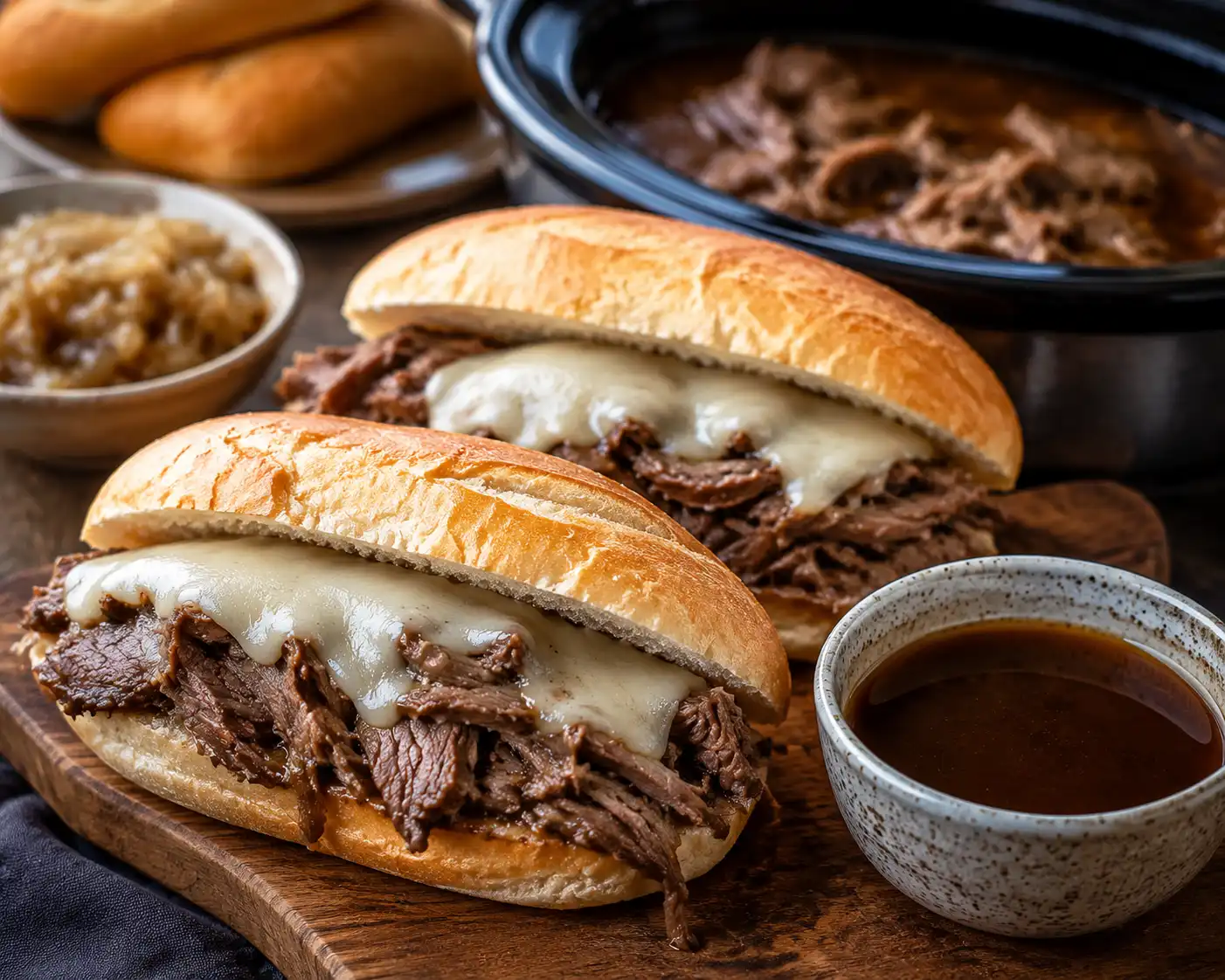
Imagine coming home after a long day to the rich, savory aroma of tender beef simmering in a deeply flavorful au jus—its steam curling up from a warm crockpot, mingling with the toasty scent of freshly warmed French rolls. That’s the magic of Crockpot French Dip Sandwiches: effortless, soul-satisfying comfort food that delivers restaurant-quality depth without the fuss. These aren’t just sandwiches—they’re slow-cooked symphonies of caramelized onions, herb-infused broth, and melt-in-your-mouth roast beef, all built for maximum craveability. Whether you’re feeding a busy family, hosting casual game-day guests, or meal prepping for stress-free lunches all week, this recipe is your new kitchen cornerstone. And yes—you *will* crave them all week long (and likely dream about the au jus).
The History
The French Dip sandwich boasts a storied, slightly contested origin rooted in early 20th-century Los Angeles. The most widely accepted tale credits Philippe Mathieu, owner of Philippe the Original—founded in 1908—who allegedly dipped a dropped French roll into his beef drippings to salvage a customer’s order. Another version involves Cole’s Pacific Electric Buffet (est. 1908), claiming their chef created it independently the same year. Regardless of its birthplace, the French Dip quickly became a West Coast icon—defined not by cheese or condiments, but by its signature element: the *au jus*, a rich, meat-based dipping sauce made from roasted beef juices, aromatics, and seasonings. While traditional versions involve oven-roasted or pan-seared beef, the slow cooker revolutionized the dish for home cooks—transforming tough, economical cuts like chuck roast into fork-tender masterpieces while infusing every molecule of liquid with deep, layered umami. Today’s crockpot adaptation honors that legacy while embracing modern convenience, making the French Dip more accessible, forgiving, and irresistibly consistent than ever before.
Ingredients Breakdown
Every exceptional French Dip starts with intention—not just quantity. Here’s why each component matters:
- Beef Chuck Roast (3–4 lbs): Marbled with intramuscular fat, chuck roast breaks down over low, slow heat into succulent, shreddable fibers. Its collagen converts to gelatin, lending body and silkiness to the au jus. Avoid lean cuts like sirloin—they’ll dry out.
- Yellow Onions (2 large, thinly sliced): Slowly caramelized in butter before adding to the crockpot, they provide natural sweetness, depth, and aromatic complexity. Don’t rush this step—the Maillard reaction unlocks layers of flavor no powdered onion can replicate.
- Garlic (6 cloves, minced): Adds pungent warmth that mellow beautifully during cooking. Fresh garlic offers volatile oils and enzymes crucial for balancing richness.
- Beef Broth (4 cups, low-sodium): Forms the base of the au jus. Low-sodium allows precise control over salt levels—especially important when using soy sauce or Worcestershire later. Opt for high-quality, collagen-rich bone broth for extra mouthfeel.
- Worcestershire Sauce (¼ cup): A fermented umami bomb containing tamarind, anchovies, molasses, and vinegar—adds tangy depth, subtle funk, and natural glutamates that amplify savoriness.
- Soy Sauce (3 tbsp, low-sodium): Contributes amino acids (especially glutamic acid) and a whisper of salty-sweet complexity. Tamari or coconut aminos work well for gluten-free needs.
- Dijon Mustard (2 tbsp): Not for sharpness—but for emulsifying power and subtle acidity that brightens the heavy broth and prevents cloying richness.
- Fresh Thyme (2 tbsp, chopped) & Rosemary (1 tbsp, finely minced): Earthy, piney, and floral notes cut through fat and add sophistication. Dried herbs lack volatile oils—fresh is non-negotiable here.
- Bay Leaves (3 whole): Lend subtle bitterness and aromatic backbone; remove before serving.
- Black Pepper (2 tsp, coarsely ground): Heat-activated peppercorns release bold, resinous notes that complement beef far better than pre-ground pepper.
- Red Wine (½ cup, dry—like Cabernet Sauvignon or Pinot Noir): Deglazes fond, adds tannic structure, and deepens color and aroma. Alcohol cooks off, leaving only complexity.
- Tomato Paste (2 tbsp): Concentrated umami and natural sugars aid browning and enrich color—acts as a “flavor glue” binding savory elements.
- Butter (2 tbsp): Used to sauté onions and garlic, adding dairy fat that rounds out sharp edges and contributes luxurious mouthfeel.
- French Rolls or Baguettes (1 loaf, sliced lengthwise): Choose artisanal, crusty rolls with tight crumb—not soft supermarket bread. They hold up to dipping without disintegrating, and their crisp exterior contrasts beautifully with tender beef.
- Provolone or Swiss Cheese (8–12 slices): Melts smoothly and offers mild nuttiness (Swiss) or gentle tang (provolone). Avoid pre-shredded cheese—it contains anti-caking agents that inhibit melting.
- Optional Garnishes: Pickled red onions, fresh parsley, horseradish cream, grainy mustard, or a sprinkle of flaky sea salt.
Step-by-Step Recipe
- Prep the Aromatics: In a large skillet over medium heat, melt butter. Add sliced onions and cook—stirring occasionally—for 15–20 minutes until deeply golden, soft, and jammy (not burnt). Add minced garlic and cook 1 minute more until fragrant. Remove from heat and set aside.
- Build the Flavor Base: In the same skillet (no need to wash), add tomato paste. Cook 2–3 minutes, stirring constantly, until it darkens slightly and smells sweet and roasted. Stir in red wine to deglaze, scraping up any browned bits. Simmer 2 minutes until reduced by half. Transfer mixture to your 6–7 quart slow cooker.
- Season & Layer the Beef: Pat chuck roast *very* dry with paper towels. Generously season all sides with black pepper (hold off on salt until later—broth and sauces will contribute enough sodium). Place roast directly on top of the tomato-onion-wine mixture in the slow cooker.
- Add Liquids & Herbs: Pour in beef broth, Worcestershire sauce, soy sauce, and Dijon mustard. Tuck in bay leaves, thyme, rosemary, and the reserved caramelized onions/garlic. Do not stir vigorously—keep the roast centered for even cooking.
- Slow Cook to Perfection: Cover and cook on LOW for 8–10 hours (or HIGH for 5–6 hours), until the beef is fork-tender and shreds effortlessly with two forks. Internal temperature should reach at least 200°F for optimal collagen breakdown.
- Shred & Rest: Carefully lift roast onto a cutting board or large bowl. Let rest 10 minutes. Use two forks to shred meat against the grain—this shortens muscle fibers for maximum tenderness. Skim excess fat from the surface of the au jus using a ladle or fat separator.
- Reduce & Refine the Au Jus (Crucial Step!): Strain au jus through a fine-mesh sieve into a saucepan, pressing solids to extract every drop. Discard solids (or reserve onions for garnish). Bring to a gentle simmer over medium-low heat and reduce by ⅓ (15–20 min) to concentrate flavor and thicken slightly. Taste and adjust: add a pinch of salt *only if needed*, a splash of apple cider vinegar for brightness, or a teaspoon of honey if too sharp.
- Assemble the Sandwiches: Preheat oven or toaster oven to 375°F. Arrange bottom halves of French rolls on a baking sheet. Divide shredded beef evenly among rolls. Top each generously with cheese. Bake 5–7 minutes until cheese is bubbly and lightly golden. Optional: broil 30 seconds for extra melt.
- Serve Immediately: Serve hot sandwiches alongside warm, reduced au jus in small ramekins or mugs. Encourage generous dipping—each dunk should coat the entire bite without oversaturating.
Tips
- Dry the Beef Thoroughly: Moisture is the enemy of searing—and even though we’re not browning the roast first, surface dryness helps develop richer flavors during slow cooking and prevents steaming.
- Caramelize Onions Slowly: Rushing leads to bitterness or uneven browning. Low-and-slow = sweet, complex, jammy onions. If short on time, roast them at 325°F for 45 minutes instead.
- Don’t Skip the Tomato Paste Sear: This “foundation step” builds Maillard-driven depth that simmers into the entire batch. It’s the secret behind the restaurant-worthy color and richness.
- Use a Fat Separator: Skimming fat *after* cooking—not before—preserves flavor compounds dissolved in the fat. A fat separator makes this quick and precise.
- Reduce the Au Jus: Skipping reduction yields thin, one-dimensional broth. Reduction intensifies flavor, improves viscosity for better cling, and balances saltiness naturally.
- Shred Against the Grain: Look for the direction of muscle fibers and pull perpendicular to them—this ensures tenderness in every bite.
- Toast the Rolls Briefly: Lightly toast cut sides under the broiler (30 seconds) before assembling—adds crunch, prevents sogginess, and enhances structural integrity.
- Keep Au Jus Warm, Not Boiling: Hold finished au jus in a thermos or slow cooker on WARM setting. Prolonged boiling dulls flavor and evaporates volatile aromatics.
- Make Ahead Friendly: Cook beef and au jus up to 3 days ahead. Store separately in airtight containers. Reheat au jus gently; shred beef just before serving to retain texture.
- Freeze Like a Pro: Freeze cooled shredded beef in portioned freezer bags (with ¼ cup au jus per bag) for up to 3 months. Thaw overnight in fridge—never microwave frozen au jus (it separates).
Variations and Customizations
This recipe is gloriously adaptable—whether accommodating diets, elevating occasion, or simply satisfying curiosity:
- Gravy-Lover’s Version: After reducing au jus, whisk in 1 tbsp cornstarch slurry (1 tbsp cornstarch + 2 tbsp cold water) and simmer 2 minutes until glossy and thickened—perfect for those who prefer a spoonable, clingy dip.
- Spicy Southwest Dip: Add 1–2 chipotle peppers in adobo (minced), 1 tsp smoked paprika, and ½ tsp ground cumin to the slow cooker. Top sandwiches with pickled jalapeños and crumbled cotija.
- Mushroom & Red Wine Upgrade: Sauté 8 oz sliced cremini mushrooms with onions until deeply browned. Add 1 additional tbsp tomato paste and ¼ cup extra red wine before deglazing.
- Herbaceous Mediterranean Twist: Swap thyme/rosemary for 2 tbsp fresh oregano and 1 tbsp lemon zest. Finish au jus with 1 tsp lemon juice and top sandwiches with kalamata olives and feta.
- Vegetarian “Beef” Option: Replace chuck roast with 2 lbs king oyster mushrooms (cut into thick “steak” strips) and 1 lb rehydrated soy curls. Use vegetable broth and add 1 tbsp miso paste + 1 tsp liquid smoke for umami depth.
- Gluten-Free Friendly: Ensure Worcestershire is GF-certified (Lea & Perrins GF version works), use tamari instead of soy sauce, and choose GF-certified rolls (like Canyon Bakehouse or Schar).
- Low-Carb/Keto Build: Skip the rolls entirely—serve shredded beef in lettuce cups (butter or romaine) or over roasted cauliflower “buns.” Boost fat with a pat of ghee stirred into warm au jus.
- Breakfast French Dip: Add 1 tsp ground fennel and ½ tsp crushed red pepper to au jus. Top toasted rolls with shredded beef, fried eggs, and melted provolone.
- Asian-Inspired Umami Bomb: Replace Worcestershire with 2 tbsp hoisin + 1 tbsp fish sauce. Add 1-inch ginger (grated) and 2 scallions (white parts only) to slow cooker. Garnish with cilantro and sesame seeds.
- Kid-Friendly Mild Version: Omit black pepper initially; add only ½ tsp. Skip Worcestershire (use extra broth + 1 tsp coconut aminos). Stir 1 tbsp creamy peanut butter into reduced au jus for subtle sweetness and body.
Health Considerations and Nutritional Value
A thoughtfully crafted Crockpot French Dip can be both deeply satisfying *and* nutritionally intelligent—when approached with balance and awareness:
- Protein Powerhouse: A 4-oz serving of shredded chuck roast provides ~28g high-quality complete protein, rich in iron (heme form, highly bioavailable), zinc, B12, and creatine—supporting muscle maintenance, immune function, and energy metabolism.
- Fat Profile Matters: Chuck roast contains monounsaturated and saturated fats. While saturated fat has been unfairly vilified, current research emphasizes *food matrix* and *overall dietary pattern*. When paired with fiber-rich vegetables (like caramelized onions) and mindful portions, it supports satiety and hormone health. Trimming visible fat post-cook reduces saturated fat by ~30% without sacrificing flavor.
- Sodium Savvy: Total sodium ranges from 750–1,100mg per serving depending on broth and sauce choices. Using low-sodium broth, reducing soy/Worcestershire by 25%, and finishing with flaky salt (instead of table salt) gives precise control. Those with hypertension may opt for no-added-salt broth and boost flavor with extra herbs, citrus zest, or nutritional yeast.
- Broth Benefits: Homemade-style slow-cooked au jus contains collagen-derived glycine and proline—supporting gut lining integrity, joint health, and skin elasticity. Bone broth versions amplify these benefits significantly.
- Carb Consciousness: One standard French roll contains ~30g net carbs. For lower-carb options, choose sprouted grain rolls (higher fiber, lower glycemic impact) or lettuce wraps. Adding roasted vegetables (carrots, parsnips) to the slow cooker boosts fiber and micronutrients without compromising authenticity.
- Digestive Friendliness: The long, gentle cooking process predigests tough connective tissue, making beef easier to break down—ideal for sensitive stomachs or aging digestive systems. Ginger or fennel seed added to the pot further aids digestion.
- Allergen Notes: Naturally gluten-free if using GF-certified sauces and rolls. Dairy-free if omitting cheese and butter (substitute olive oil for sautéing). Nut-free and soy-free options available with careful label reading (many Worcestershire brands contain soy or anchovies—check carefully).
- Portion Guidance: A balanced plate includes 1 sandwich + 1 cup steamed broccoli or roasted Brussels sprouts + ½ cup au jus for dipping. This delivers ~550–650 calories, 40g protein, 12g fiber, and diverse phytonutrients—far exceeding typical fast-food lunch nutrition.
Ingredients
- 3–4 lbs boneless beef chuck roast, well-marbled
- 2 large yellow onions, thinly sliced
- 6 cloves garlic, minced
- 4 cups low-sodium beef broth (preferably collagen-rich bone broth)
- ¼ cup Worcestershire sauce (gluten-free if needed)
- 3 tbsp low-sodium soy sauce or tamari
- 2 tbsp Dijon mustard
- 2 tbsp tomato paste
- ½ cup dry red wine (Cabernet Sauvignon, Merlot, or Pinot Noir)
- 2 tbsp unsalted butter
- 2 tbsp fresh thyme leaves, chopped
- 1 tbsp fresh rosemary, finely minced
- 3 large bay leaves
- 2 tsp coarsely ground black pepper
- 1 loaf artisan French bread or baguette (about 12–16 inches), sliced lengthwise
- 8–12 slices provolone or Swiss cheese
- Flaky sea salt (optional, for finishing)
Directions
- In a large skillet over medium heat, melt butter. Add sliced onions and cook, stirring occasionally, for 15–20 minutes until deeply golden brown and jammy. Add minced garlic and cook 1 minute more until fragrant. Transfer to a 6–7 quart slow cooker.
- In the same skillet, add tomato paste. Cook 2–3 minutes, stirring constantly, until darkened and aromatic. Pour in red wine, scraping up browned bits. Simmer 2 minutes until reduced by half. Add to slow cooker.
- Pat beef roast very dry with paper towels. Season generously on all sides with black pepper (no salt yet). Place roast directly on top of onion mixture in slow cooker.
- Pour in beef broth, Worcestershire sauce, soy sauce, and Dijon mustard. Tuck in bay leaves, thyme, rosemary, and the reserved onion-garlic mixture.
- Cover and cook on LOW for 8–10 hours (or HIGH for 5–6 hours), until beef is fork-tender and shreds easily.
- Remove roast to a cutting board; let rest 10 minutes. Shred meat using two forks against the grain.
- Strain au jus through a fine-mesh sieve into a saucepan, pressing solids. Discard solids. Skim excess fat from surface.
- Bring au jus to a gentle simmer over medium-low heat. Reduce by about one-third (15–20 minutes) until rich and slightly syrupy. Taste and adjust with minimal salt or a splash of vinegar if needed.
- Preheat oven to 375°F. Arrange bottom halves of French rolls on a baking sheet. Divide shredded beef evenly. Top each with cheese.
- Bake 5–7 minutes until cheese is melted and bubbly. Optional: broil 30 seconds for golden finish.
- Serve immediately with warm, reduced au jus for dipping. Garnish with fresh herbs or pickled onions if desired.
FAQ
- Can I use a different cut of beef?
- Chuck roast is ideal—but brisket flat, bottom round, or even tri-tip work well. Avoid lean cuts like eye of round (they’ll be dry) or heavily marbled ribeye (too rich and greasy). Always choose boneless, well-trimmed, and well-marbled for best results.
- Do I need to sear the beef first?
- Not required—but highly recommended for deeper flavor. If time allows, sear all sides in hot oil until deeply browned before placing in the slow cooker. This builds foundational Maillard notes that permeate the entire dish.
- My au jus is too salty—how do I fix it?
- Immediately dilute with ½–1 cup unsalted beef or vegetable broth. Add 1 tsp apple cider vinegar or lemon juice to balance perception of saltiness. Stir in 1 tbsp unsalted tomato paste or ½ grated apple (simmer 5 min, then strain) to absorb excess sodium.
- Can I make this in an Instant Pot?
- Absolutely! Use Sauté mode to caramelize onions and cook tomato paste. Add all ingredients (except cheese/bread). Pressure cook on High for 60–75 minutes, followed by a natural pressure release for 20 minutes. Shred, reduce au jus, and proceed as directed.
- How do I keep the rolls from getting soggy?
- Toast them! Lightly broil cut sides for 30–45 seconds before assembling. Also, serve au jus warm—not boiling—and encourage brief, controlled dips (1–2 seconds per side) rather than full submersion.
- Is the leftover au jus reusable?
- Yes! It freezes beautifully for up to 6 months. Use it as a braising liquid for lentils or root vegetables, a base for beef barley soup, a flavor booster in mashed potatoes, or even as a savory ice cube to enrich future sauces.
- Can I prepare this entirely the day before?
- Yes—cook beef and au jus, cool separately, and refrigerate overnight. Skim solidified fat from au jus before reheating. Reheat beef gently in au jus to keep it moist. Assemble and bake rolls fresh the next day.
- What if I don’t have red wine?
- Substitute with equal parts unsalted beef broth + 1 tsp red wine vinegar + ½ tsp sugar. Or use non-alcoholic red wine (ensure it’s low in added sugar). Avoid white wine—it lacks the tannic structure needed.
- Why does my beef taste bland?
- Most often due to under-seasoning (especially pepper), skipping the tomato paste step, insufficient reduction of au jus, or using low-quality broth. Also ensure your slow cooker reaches proper temperature—older units may run cool.
- Can I add vegetables to the slow cooker?
- You can—but with caution. Root vegetables (carrots, parsnips, celery) added in the last 2–3 hours will soften nicely and add sweetness. Avoid watery veggies like zucchini or tomatoes—they dilute flavor and make au jus cloudy.
Summary
Crockpot French Dip Sandwiches deliver restaurant-caliber richness with humble effort—slow-cooked chuck roast becomes impossibly tender, while a deeply layered au jus, built on caramelized onions, red wine, tomato paste, and umami-packed sauces, transforms simple bread and cheese into a crave-worthy weekly obsession. With make-ahead ease, endless customizations, and surprising nutritional merit, this isn’t just dinner—it’s a comforting ritual, perfected.
Whether you’re reviving a classic, feeding a crowd, or seeking soul-warming simplicity, this recipe proves that extraordinary flavor doesn’t demand extraordinary time—just thoughtful ingredients, patient heat, and the joyful certainty that yes, you’ll absolutely crave it all week long.