
Introduction
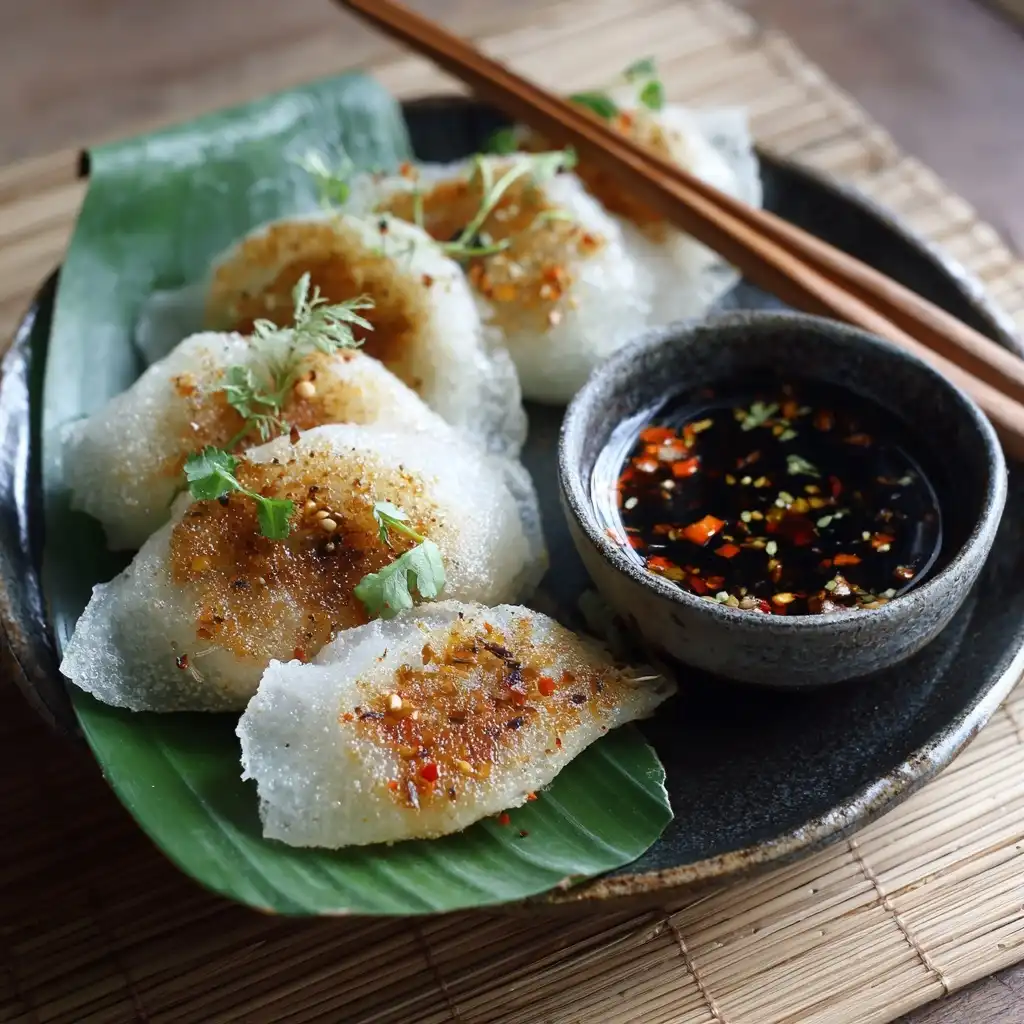
Crispy Rice Paper Dumplings are a delightful fusion of Vietnamese culinary tradition and modern textural innovation—transforming delicate, translucent rice paper wrappers into golden, shatteringly crisp parcels bursting with savory-sweet-umami fillings. Unlike traditional boiled or steamed dumplings, these are uniquely air-fried or shallow-fried to achieve an ethereal, lacy crunch while preserving the integrity of vibrant, fresh, and often herb-forward fillings. They bridge the gap between appetizer and snack, street food and elevated small plate, and have surged in popularity across Southeast Asian bistros, wellness cafes, and home kitchens alike—especially among those seeking gluten-free, low-carb, or plant-forward alternatives without sacrificing indulgence.
The History
The origins of Crispy Rice Paper Dumplings lie in the ingenious reinterpretation of bánh tráng—Vietnamese rice paper—which has been used for centuries in spring rolls (gỏi cuốn) and grilled rice paper snacks (bánh tráng nướng). While traditional dumpling cultures (Chinese jiaozi, Japanese gyoza, Korean mandu) rely on wheat-based wrappers, Vietnamese cooks historically prioritized rice-based sheets for their lightness, neutrality, and adaptability. The “crispy dumpling” iteration emerged organically in the late 1990s–early 2000s in Ho Chi Minh City’s street stalls and Saigonese home kitchens, where resourceful cooks began folding soaked rice paper into small pouches, stuffing them with minced shrimp, wood ear mushrooms, and scallions, then pan-frying until blistered and bronzed. This technique spread through culinary tourism, food blogs, and social media—particularly Instagram and TikTok—where the mesmerizing visual of rice paper puffing, curling, and crisping in real time captivated global audiences. By 2018, chefs in Portland, Melbourne, and Berlin were reimagining them with miso-glazed tofu, kimchi-infused pork, and even dessert versions using coconut cream and black sesame—solidifying their status as a globally adaptable canvas rooted in Vietnamese ingenuity.
Ingredients Breakdown
Understanding each component is essential—not only for flavor balance but for structural success. Rice paper’s behavior is highly moisture-sensitive; fillings must be dry, binders minimal, and seasonings precisely calibrated to avoid sogginess or breakage during crisping.
- Rice Paper (Bánh Tráng): Use round, thin, unseasoned, 8.5″–9″ diameter sheets made from 100% rice flour and water (no tapioca or wheat additives). Opt for brands like Three Ladies, Thuan Phat, or Pho Duy—they offer superior pliability and crisp potential. Avoid pre-cut or flavored varieties (e.g., sesame or chili), which burn easily or lack uniform texture.
- Protein Base: Finely minced or ground—never chunky—to ensure even heat distribution and prevent wrapper rupture. Traditional choices include shrimp (deveined, dried gently on paper towels), pork shoulder (15% fat for juiciness), chicken thigh (moisture-retentive), or extra-firm tofu (pressed >30 minutes, crumbled, and lightly pan-toasted to remove residual water).
- Aromatics & Vegetables: Minced shallots, garlic, ginger, and lemongrass (outer fibrous layer removed, inner tender core finely grated) form the aromatic foundation. Vegetables must be ultra-dry: shredded cabbage or Napa cabbage salted, squeezed, and patted dry; julienned wood ear or cloud ear mushrooms rehydrated, finely chopped, and sautéed until all moisture evaporates; carrots grated and blotted; mung bean sprouts omitted entirely (too watery) or replaced with roasted, crushed peanuts for crunch.
- Umami Enhancers: A small amount of fish sauce (nước mắm) adds depth—not saltiness—and should be added off-heat to preserve volatile aromatics. Optional additions: fermented shrimp paste (mam ruoc) for boldness, dried shrimp powder for concentrated oceanic notes, or white miso paste (½ tsp per ½ cup filling) for vegetarian umami.
- Binders (Used Sparingly): Overbinding = gummy texture and poor crispness. Preferred options: 1 tsp cooked potato starch slurry (1 tsp starch + 1 tsp cold water), ½ tsp toasted sesame oil (adds cohesion and aroma), or 1 tsp beaten egg white (not whole egg—yolk adds excess moisture). Never use cornstarch or flour—they create pastiness.
- Fresh Herbs & Finishes: Added *after* cooking: torn mint, cilantro, Thai basil, pickled daikon-carrot (đồ chua), lime wedges, and chili threads. These provide brightness, acidity, and contrast to the rich, crispy exterior.
Step-by-Step Recipe
- Prep the Rice Paper: Fill a wide, shallow dish (like a pie plate or cake pan) with room-temperature filtered water. Working one sheet at a time, submerge a rice paper sheet for exactly 8–12 seconds—just until pliable but still slightly stiff (it will soften further during folding). Lift gently, letting excess water drip off for 2 seconds. Place flat on a clean, dry, lint-free kitchen towel or silicone mat. Do NOT stack wet sheets—they’ll fuse. Repeat, keeping sheets covered with a barely damp cloth to prevent drying.
- Prepare the Filling: In a chilled bowl, combine protein, aromatics, vegetables, umami enhancers, and binder. Mix vigorously in one direction for 60 seconds using chopsticks or fingers—this develops subtle elasticity without overworking. Taste (cook a 1 tsp portion in a nonstick pan) and adjust: it should be fragrant, balanced (savory-slightly sweet-salty-tangy), and hold together when pinched—but not sticky. Chill for 20 minutes to firm and reduce surface moisture.
- Assemble the Dumplings: Place one softened rice paper on a dry work surface. Spoon 1 heaping teaspoon (≈12g) of filling onto the center. Gently lift opposite edges and pinch together at the top to form a crescent. Then, pleat the remaining edges toward the center, rotating as you go—like closing a purse—until fully sealed into a tight, compact bundle (≈1.5″ wide). Press seams firmly to adhere. Place seam-side down on a parchment-lined tray. Repeat, keeping assembled dumplings uncovered but in a single layer—do not refrigerate (condensation causes sogginess).
- Dry-Balance Before Cooking: Let assembled dumplings rest at cool room temperature (68–72°F) for 15 minutes. This allows surface moisture to evaporate and the rice paper to set its shape—critical for achieving maximum crispness and preventing steam pockets.
- Choose Your Crisping Method:
- Air Fryer (Recommended for Health & Consistency): Preheat air fryer to 375°F (190°C) for 5 minutes. Lightly brush or spray dumplings with neutral oil (avocado or refined coconut). Arrange in a single layer, leaving space between. Cook 8–10 minutes, flipping halfway, until deep golden, rigid, and audibly hollow when tapped.
- Shallow-Fry (For Ultimate Texture & Tradition): Heat ¼” of high-smoke-point oil (peanut or grapeseed) in a heavy-bottomed skillet over medium heat (325°F). Test with a rice paper scrap—it should bubble gently, not splatter violently. Carefully lower 4–5 dumplings, seam-side down first. Fry 2–3 minutes per side until deeply amber and crisp. Drain upright in a wire rack over paper towels—never on flat paper, which traps steam.
- Oven-Bake (For Batch Efficiency): Preheat oven to 400°F (200°C) with convection fan on. Line two baking sheets with parchment. Brush dumplings with oil, place on racks set over sheets. Bake 18–22 minutes, rotating pans and flipping dumplings at 10 minutes, until uniformly puffed and crunchy.
- Rest & Serve Immediately: Transfer cooked dumplings to a wire rack for 2 minutes—this prevents trapped steam from softening the base. Serve piping hot with dipping sauces and fresh garnishes. They lose crispness rapidly after 15 minutes, so cook in small batches.
Tips
- Water Temperature Matters: Warm water makes rice paper too fragile; cold water slows hydration, causing cracking. Room-temperature is non-negotiable.
- No Over-Soaking: Even 2 extra seconds underwater creates a gelatinous, tearing-prone sheet. Set a timer—and use a slotted spoon for quick removal.
- Chill Your Tools: Chill your mixing bowl, spatula, and even your hands (rinse in cold water, dry thoroughly) before handling filling. Cold filling stays drier and holds shape better.
- Size Uniformity = Even Cooking: Use a small cookie scoop (1 tbsp capacity) for consistent filling portions—variance leads to undercooked centers or burnt edges.
- Flip with Precision: Use thin, flexible silicone spatulas—not metal tongs—to flip without puncturing. For air frying, a pair of chopsticks offers optimal control.
- Sauce Separation: Serve dipping sauces in individual ramekins, not pooled on the plate—contact with liquid instantly softens the base.
- Re-Crisping Hack: Leftovers? Skip the microwave. Instead, reheat in a 375°F air fryer for 3–4 minutes—spritz lightly with oil first.
- Batch Strategy: Assemble all dumplings *before* heating oil or preheating appliances. The process moves fast—hesitation means soggy paper.
Variations and Customizations
The beauty of Crispy Rice Paper Dumplings lies in their extraordinary versatility—adaptable to dietary needs, seasonal produce, global pantry staples, and creative whims—without compromising the essential crispy-rice experience.
Protein Variations
- Vegan Umami Bomb: Replace meat with king oyster mushroom stems (finely grated and sautéed until dry), tempeh crumbles (marinated in tamari, maple, and smoked paprika), and toasted walnuts for richness.
- Seafood Medley: Combine chopped squid, scallops, and crab meat—pat *extremely* dry, add a touch of yuzu kosho for citrus heat.
- Charcuterie-Inspired: Finely diced cured duck breast, preserved lemon zest, and pistachios—finished with a drizzle of orange blossom honey.
Regional Twists
- Thai-Inspired: Lemongrass-ginger pork, kaffir lime leaf chiffonade, red curry paste (¼ tsp), and crushed roasted peanuts. Serve with sweet chili-lime dip.
- Korean Fusion: Kimchi (well-drained and chopped fine), gochujang-swirled filling, scallion ribbons, and toasted sesame seeds. Pair with soy-ginger dipping sauce.
- Mexican Mole: Ground ancho-chipotle mixture, toasted pepitas, crumbled queso fresco (added *after* frying), and epazote. Serve with avocado crema.
Dietary Adaptations
- Low-Sodium: Omit fish sauce; substitute with coconut aminos and dried seaweed powder. Use unsalted nuts and low-sodium broth if poaching proteins beforehand.
- Keto/Low-Carb: Keep rice paper (naturally low-carb: ~10g net carbs per 2 sheets); boost fats with avocado oil frying and add macadamia nut “filling” bits.
- Nut-Free: Replace peanut or cashew binders with sunflower seed butter (¼ tsp) or roasted pumpkin seeds.
Dessert Versions
- Black Sesame-Coconut: Sweetened coconut cream, toasted black sesame paste, a pinch of sea salt, and a drop of vanilla. Crisp as above; serve with mango coulis and toasted coconut flakes.
- Strawberry-Balsamic: Macerated strawberries (drained well), balsamic reduction, mascarpone (lightened with whipped cream), and fresh basil. Seal tightly—fry at lower temp (325°F) to avoid sugar burning.
Health Considerations and Nutritional Value
Crispy Rice Paper Dumplings offer notable nutritional advantages when prepared mindfully—especially compared to conventional fried dumplings with wheat wrappers and heavy batter coatings.
Nutritional Profile (Per Serving: 4 Dumplings, ≈160g)
- Calories: 180–220 kcal (air-fried: lower end; shallow-fried: upper end)
- Carbohydrates: 22–26g (primarily complex, low-glycemic rice starch; no added sugars in savory versions)
- Protein: 10–14g (varies by protein choice—shrimp and lean pork offer complete amino acid profiles)
- Fat: 5–9g (mostly unsaturated from cooking oils; zero trans fats)
- Fiber: 1.5–2.5g (from vegetables like cabbage, mushrooms, and carrots)
- Sodium: 320–480mg (controllable—reduce fish sauce by 25% and boost herbs/spices instead)
- Vitamins/Minerals: Rich in vitamin A (carrots), vitamin C (fresh herbs), B12 (seafood/pork), iron (mushrooms, meat), and zinc (shellfish, seeds).
Health Highlights
- Gluten-Free by Nature: Authentic rice paper contains no gluten—ideal for celiac and gluten-sensitive individuals (verify brand labels for cross-contamination warnings).
- No Refined Flour or Batter: Eliminates empty calories, blood sugar spikes, and common allergens associated with tempura or wonton wrappers.
- High in Antioxidants: Ginger, garlic, lemongrass, and herbs deliver potent anti-inflammatory and immune-supportive compounds.
- Low in Additives: Homemade versions avoid preservatives, MSG, and artificial colors found in many frozen dumplings.
Considerations for Sensitive Diets
- Low-FODMAP Option: Substitute garlic and onion with garlic-infused oil (FODMAP-safe) and green onion tops only; use firm tofu instead of beans or lentils.
- Low-Histamine Adaptation: Avoid fermented ingredients (fish sauce, shrimp paste, kimchi); use fresh herbs only (no dried), and consume within 2 hours of cooking.
- Kid-Friendly Modifications: Reduce chili, increase carrot and zucchini, add mild cheese like mozzarella (post-fry), and serve with yogurt-dill dip.
Ingredients
Makes 24 dumplings (6 servings)
- 24 round rice paper sheets (8.5″–9″, plain, 100% rice flour)
- 1 lb (450g) raw shrimp, peeled, deveined, finely minced (or ground pork shoulder, chicken thigh, or extra-firm tofu)
- 1 cup finely shredded Napa cabbage (≈120g), salted, squeezed dry
- ½ cup finely chopped wood ear mushrooms (rehydrated, sautéed until dry)
- ¼ cup finely grated carrot (≈40g), patted dry
- ¼ cup minced shallot (≈40g)
- 3 cloves garlic, finely grated
- 1 tbsp fresh ginger, finely grated
- 1 stalk lemongrass (tender inner core only), finely minced
- 2 tbsp fish sauce (or coconut aminos for GF/low-sodium)
- 1 tsp toasted sesame oil
- 1 tsp potato starch mixed with 1 tsp cold water
- ½ tsp freshly ground white pepper
- 2 tbsp neutral oil (avocado, grapeseed, or refined coconut) for frying/brushing
- For serving: Fresh mint, cilantro, Thai basil, lime wedges, chili threads, pickled daikon-carrot, and dipping sauces (see below)
Directions
- Prep Rice Paper: Fill a wide, shallow dish with room-temperature water. Working one sheet at a time, submerge for 10 seconds. Lift, let drip 2 seconds, lay flat on a dry kitchen towel. Cover loosely with a barely damp cloth. Repeat for all 24 sheets.
- Make Filling: In a chilled bowl, combine shrimp (or alternative protein), cabbage, mushrooms, carrot, shallot, garlic, ginger, and lemongrass. Add fish sauce, sesame oil, potato starch slurry, and white pepper. Mix vigorously in one direction for 60 seconds. Chill 20 minutes.
- Assemble: Place one softened rice paper on a dry surface. Add 1 level tablespoon filling to center. Fold into a tight, sealed bundle (crescent → purse shape). Press seams firmly. Place seam-side down on parchment-lined tray. Repeat.
- Dry-Rest: Let assembled dumplings sit uncovered at room temperature for 15 minutes.
- Crisp: Choose method:
- Air Fryer: Preheat 375°F. Lightly spray dumplings. Cook 9 minutes, flipping at 4:30, until deep golden and rigid.
- Shallow-Fry: Heat ¼” oil to 325°F. Fry 4–5 dumplings at a time, 2.5 min per side, until blistered and crisp. Drain on wire rack.
- Oven-Bake: Preheat 400°F convection. Brush dumplings, place on wire racks over parchment sheets. Bake 20 minutes, flipping at 10 min.
- Serve Immediately: Rest on wire rack 2 minutes. Garnish generously with herbs, lime, chili, and pickles. Offer dipping sauces on the side.
FAQ
- Can I make these ahead of time?
- You can assemble dumplings up to 2 hours ahead—keep uncovered at cool room temperature (NOT refrigerated). Fully cooked dumplings do not reheat well in bulk; best served fresh. Uncooked assembled dumplings can be frozen on parchment, then transferred to a bag for up to 1 month—fry from frozen, adding 1–2 minutes to cook time.
- Why did my rice paper tear while folding?
- Most commonly: over-soaking (waterlogged paper tears easily) or under-soaking (too stiff to stretch). Also check: warm hands or humid environment accelerate drying—work quickly and keep cloths only *slightly* damp.
- Can I bake them without oil?
- Air frying without oil is possible but yields less consistent crispness and increased risk of burning. A light mist (½ second spray) dramatically improves browning and texture. For strict oil-free diets, use parchment-lined oven baking at 425°F for 25 minutes—but expect lighter color and more delicate crunch.
- What’s the best dipping sauce?
- Classically: Nước Chấm (4 tbsp fish sauce, 3 tbsp lime juice, 2 tbsp palm sugar dissolved, ¼ cup water, 1 minced garlic clove, 1 bird’s eye chili). Vegan option: tamarind-date sauce (soaked tamarind pulp + blended dates + soy sauce + chili). Unexpected favorite: creamy miso-ginger with toasted sesame.
- My dumplings aren’t crispy enough—what went wrong?
- Top culprits: (1) Filling too wet—always squeeze vegetables and pat proteins dry; (2) Insufficient drying time before cooking—15 minutes is essential; (3) Oil too cool or overcrowded pan—causes steaming instead of crisping; (4) Using thick or flavored rice paper—only thin, plain sheets work reliably.
- Are rice paper dumplings safe for kids?
- Yes—with precautions: ensure fillings are finely minced (no choking hazards), avoid whole chilies or excessive spice, supervise eating due to hot, brittle texture, and cut larger dumplings in half for younger children. Always introduce new ingredients (e.g., shrimp, mushrooms) gradually for allergy awareness.
- Can I use spring roll wrappers instead?
- No. Spring roll wrappers (wheat-based, thicker, often egg-enriched) absorb oil differently and won’t achieve the same lacy, shattering crispness. They also brown unevenly and may become tough or chewy. Authentic texture requires true rice paper.
- How do I store leftovers?
- Store cooled, un-sauced dumplings in a single layer in an airtight container lined with paper towels—refrigerate up to 2 days. Re-crisp ONLY in air fryer or oven (not microwave). Discard if any softness or off-odor develops.
Summary
Crispy Rice Paper Dumplings are a masterclass in textural alchemy—transforming humble, translucent sheets of rice flour into golden, delicate, deeply flavorful parcels through precise hydration, intelligent filling formulation, and controlled heat application. Rooted in Vietnamese culinary ingenuity and endlessly customizable, they offer a gluten-free, nutrient-dense, and visually stunning canvas that satisfies cravings for crunch, umami, freshness, and authenticity—all in one irresistible bite.
Whether you’re exploring regional flavors, adapting for dietary needs, or simply chasing the perfect shatter-and-give of a well-crisped rice wrapper, this recipe delivers reliability, creativity, and joy—proving that the simplest ingredients, treated with respect and technique, yield the most extraordinary results.