
Introduction
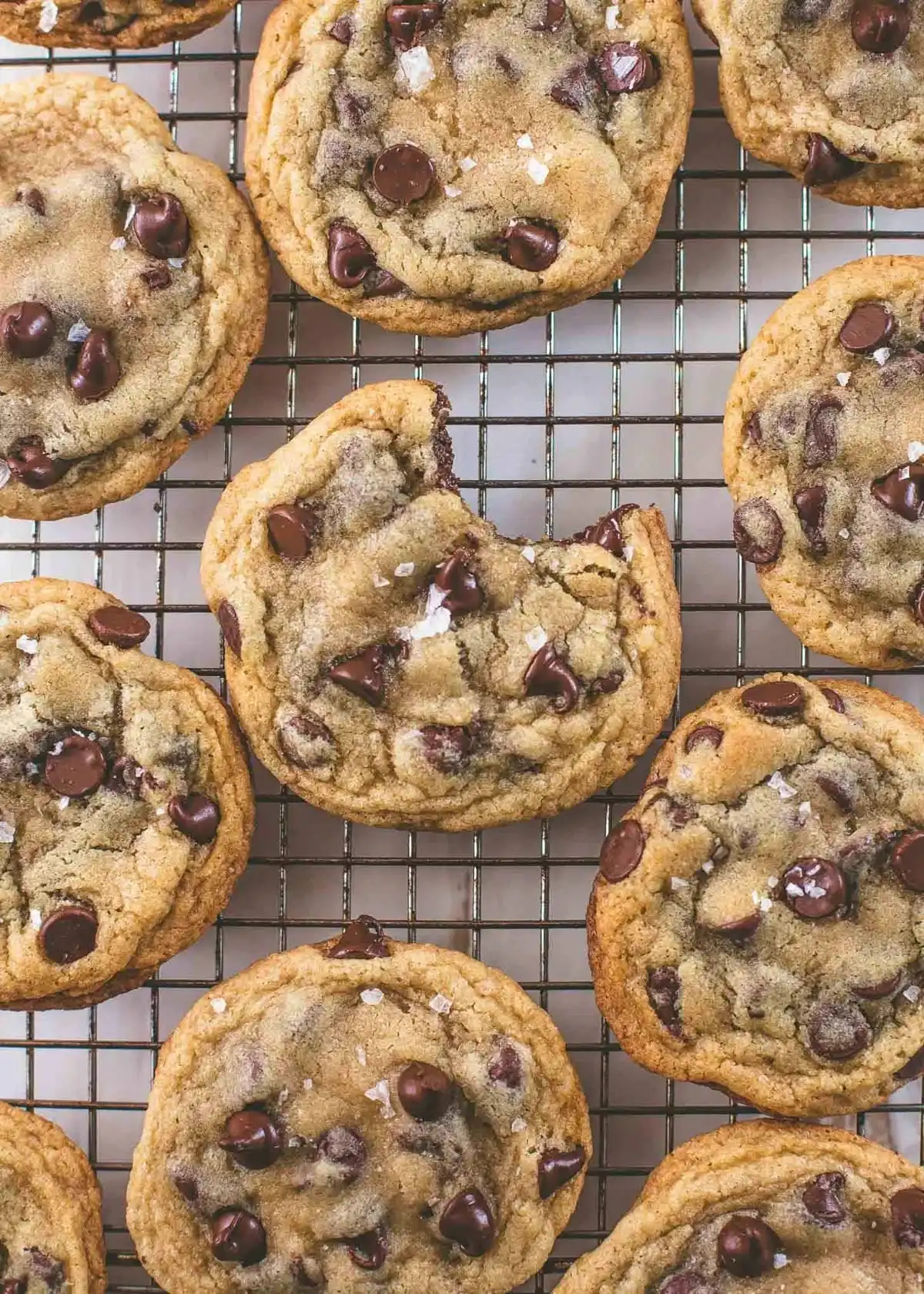
There’s a quiet magic in the perfect chocolate chip cookie—a golden-brown, slightly crinkled edge giving way to a tender, chewy center studded with glossy, melty pockets of chocolate. But what truly elevates the ordinary to the extraordinary? The elusive, coveted duality: crispy and chewy in one single bite. Not crunchy like a biscuit, nor cakey like a muffin top—this is a masterclass in textural harmony. Crispy and chewy chocolate chip cookies represent the pinnacle of home baking: nostalgic yet refined, simple in appearance but deeply intentional in execution. They’re the cookies that disappear from the plate before the coffee cools, the ones that earn second helpings, the kind that spark spontaneous smiles and prompt “What’s your secret?” questions at every potluck and holiday gathering. This guide isn’t just another recipe—it’s a comprehensive, science-informed exploration into achieving that ideal balance, honoring tradition while empowering you with precision, flexibility, and confidence.
The History
The origin story of the chocolate chip cookie is as beloved and debated as its texture. Widely credited to Ruth Wakefield, who ran the Toll House Inn in Whitman, Massachusetts, the cookie was born in the early 1930s—not from a grand culinary experiment, but from pragmatic ingenuity. Facing a shortage of baker’s chocolate for her popular Butter Drop Do cookies, Wakefield chopped up a Nestlé semi-sweet chocolate bar, expecting it to melt evenly into the dough. Instead, the morsels held their shape, creating distinct, gooey pockets. Her 1938 cookbook, Toll House Tried and True Recipes, featured the now-iconic “Toll House Chocolate Crunch Cookie,” and Nestlé soon began packaging pre-chopped “chocolate morsels” alongside a printed version of her recipe on the wrapper—a brilliant, symbiotic marketing move that cemented both the cookie and the brand in American culinary history.
Yet long before Wakefield, European bakers had been incorporating chocolate into cookies and cakes since the 18th century, and immigrant communities across the U.S. were adapting recipes with local ingredients and techniques. What made the Toll House version revolutionary wasn’t just the inclusion of chocolate chunks—it was the specific interplay of butter, brown sugar, eggs, and flour that yielded a uniquely balanced structure: crisp enough to hold its shape when baked, yet moist and supple within. Over decades, bakers tinkered—reducing baking time for chewiness, increasing butter or adding corn syrup for crispness, chilling dough to control spread. The modern “crispy and chewy” ideal emerged not from a single eureka moment, but from generations of careful observation, cross-cultural exchange, and the humble, persistent pursuit of that perfect bite.
Ingredients Breakdown
Every ingredient in a crispy-chewy chocolate chip cookie plays a precise structural, chemical, and flavor role—not merely a supporting actor, but a co-director of texture. Here’s why each matters, down to the molecular level:
Unsalted Butter (1 cup / 2 sticks / 227g)
Butter is the backbone of texture. Its water content (≈15–16%) turns to steam during baking, creating lift and air pockets that contribute to crisp edges. Its milk solids caramelize at high heat, lending nutty depth and golden color—and crucially, they promote browning and crisping. Using unsalted butter ensures full control over sodium levels, which affects gluten development and flavor perception. For optimal crisp-chew balance, butter is typically used at cool room temperature (65–68°F)—soft enough to cream smoothly, firm enough to trap air without melting prematurely.
Brown Sugar (¾ cup packed light brown / 150g)
Brown sugar is the secret weapon for chewiness. Its molasses content adds moisture, acidity (which weakens gluten), and hygroscopic properties—meaning it attracts and holds onto water even after baking. Light brown sugar offers a delicate caramel note and moderate moisture; dark brown delivers deeper molasses intensity and slightly more chew. The “packed” measurement is non-negotiable—loosely spooned sugar yields inconsistent hydration and flatter, drier cookies.
Granulated Sugar (½ cup / 100g)
Granulated sugar contributes to spread, crispness, and caramelization. It dissolves more readily than brown sugar, encouraging thin, lacy edges. Its neutral sweetness balances molasses’ intensity and enhances browning via the Maillard reaction. Too much granulated sugar leads to excessive spread and brittleness; too little sacrifices structural integrity and golden crunch.
Eggs (1 large + 1 large yolk)
The whole egg provides structure, moisture, and emulsification—but the extra yolk is the chewiness catalyst. Egg yolks are rich in lecithin (a natural emulsifier) and fat, which tenderize gluten networks and retain moisture. They also add richness, density, and a subtle custard-like quality to the crumb. Using cold eggs straight from the fridge helps maintain proper dough temperature during mixing, delaying premature butter melt.
Pure Vanilla Extract (2 tsp)
Vanilla doesn’t affect texture directly—but its aromatic complexity elevates the entire sensory experience, making the contrast between crisp edge and chewy center more perceptible and satisfying. Always use pure extract (not imitation); alcohol carries volatile flavor compounds that bloom in heat.
All-Purpose Flour (2¼ cups / 280g, spooned & leveled)
Flour provides the gluten framework. All-purpose (10–12% protein) strikes the ideal middle ground: enough gluten for structure and chew, but not so much that cookies become tough or cakey. Spooning and leveling—not scooping—is critical. Scooping packs flour, leading to dry, dense, overly chewy (or even crumbly) results. Weighing is strongly recommended for consistency.
Baking Soda (1 tsp)
This is the primary leavener—and the key to controlled spread and crisp edges. Baking soda reacts instantly with acidic components (molasses in brown sugar, yogurt if added, even traces in brown butter) to produce carbon dioxide. This gas expands during the initial oven burst, creating air pockets that dry out and crisp as baking continues. Too little = dense, under-spread cookies; too much = bitter, soapy taste and excessive lift with poor structure.
Sea Salt (1 tsp fine sea salt + ½ tsp flaky Maldon for finishing)
Salt is the silent conductor. Fine sea salt integrates fully, enhancing sweetness and balancing bitterness in chocolate. Flaky finishing salt applied immediately post-bake provides bursts of salinity that cut through richness and heighten the contrast between sweet, salty, crisp, and chewy. Never omit—salt transforms flat sweetness into multidimensional flavor.
Chocolate (2 cups / 340g total: 1½ cups semi-sweet chips + ½ cup chopped dark chocolate, 60–70%)
Chocolate choice profoundly impacts mouthfeel and visual appeal. Chips hold shape reliably, delivering consistent melt pools. Chopped high-percentage dark chocolate introduces irregular shards—some melt completely, others retain slight structure, adding textural intrigue. The cocoa butter content influences how fluid the chocolate becomes; higher-fat chocolates yield glossier, more luxurious puddles. Avoid “baking chips” with stabilizers—they resist melting and create waxy textures.
Step-by-Step Recipe
Follow this method precisely—not as rigid dogma, but as a proven sequence designed to manipulate temperature, hydration, and chemistry for optimal dual-texture development.
Step 1: Brown the Butter (10–12 minutes)
Place 1 cup unsalted butter in a light-colored saucepan over medium-low heat. Stir constantly with a heatproof spatula. Butter will foam, then crackle as water evaporates. Continue stirring until foam subsides, milk solids turn golden-brown and smell nutty and caramel-like (≈350°F), and liquid turns pale amber. Immediately pour into a heatproof bowl, including all browned bits—do not scrape the pan dry. Let cool uncovered at room temperature for 30–40 minutes, until just warm to the touch (≈85–90°F). This step deepens flavor, reduces water content (promoting crispness), and concentrates dairy solids for richer browning.
Step 2: Cream Sugars & Cooled Brown Butter (3–4 minutes)
In a stand mixer fitted with paddle attachment, combine cooled brown butter, ¾ cup packed light brown sugar, and ½ cup granulated sugar. Beat on medium speed until light, fluffy, and noticeably paler—about 3–4 minutes. Scrape bowl thoroughly. This incorporates air, which expands in the oven to create lift and airy crisp edges. Under-creaming yields dense cookies; over-creaming can cause excessive spread.
Step 3: Add Eggs & Vanilla (2 minutes)
Add 1 large cold egg, 1 large cold egg yolk, and 2 tsp pure vanilla. Beat on medium-low for 1 minute, until fully incorporated and smooth. Increase speed to medium for 1 more minute—just until mixture is homogenous and slightly glossy. Avoid overmixing, which develops gluten unnecessarily.
Step 4: Whisk Dry Ingredients (1 minute)
In a separate bowl, whisk together 2¼ cups (280g) spooned & leveled all-purpose flour, 1 tsp baking soda, and 1 tsp fine sea salt until no streaks remain. Whisking aerates flour and evenly distributes leavener and salt—critical for uniform texture.
Step 5: Combine Wet & Dry (Just until mixed)
Reduce mixer speed to low. Gradually add dry ingredients to wet mixture in three additions, mixing only until *just* combined after each—no more than 15–20 seconds per addition. A few faint flour streaks are acceptable; overmixing activates gluten, resulting in tough, chewy-only (not crispy) cookies.
Step 6: Fold in Chocolate (Gentle & thorough)
Using a flexible silicone spatula, gently fold in 1½ cups semi-sweet chocolate chips and ½ cup chopped 60–70% dark chocolate until evenly distributed. No mixer—folding preserves delicate air bubbles and prevents chocolate smearing.
Step 7: Chill Dough (Non-negotiable: 24–72 hours)
Portion dough into 3-tablespoon balls (≈65g each) using a spring-loaded scoop. Place on parchment-lined baking sheet, cover tightly with plastic wrap, and refrigerate for minimum 24 hours, ideally 48–72 hours. This is the single most impactful step for crispy-chewy success: chilling solidifies butter, slows spread, allows flour to fully hydrate (improving tenderness), and concentrates flavors. It also enables longer baking times at lower temperatures for deeper browning without burning.
Step 8: Preheat & Prep (Critical timing)
At least 45 minutes before baking, remove dough balls from fridge. Preheat oven to 325°F (163°C) with rack positioned in center. Line two heavy-duty baking sheets with parchment paper (no greasing). Lower temperature + longer bake = gradual, even cooking: edges crisp and set before centers over-dry.
Step 9: Bake with Precision (14–17 minutes)
Place 4–6 chilled dough balls per sheet, spaced 3 inches apart (they spread significantly). Bake for 14 minutes—then rotate pans front-to-back and top-to-bottom. Continue baking 2–3 minutes more, until edges are deeply golden brown and set, centers look soft and slightly puffed but *not* shiny or wet, and cookies appear “set” around the perimeter but still yielding in the middle. Total bake time: 14–17 minutes. Remove from oven—they’ll continue to cook on the hot sheet.
Step 10: Finish & Cool (The final texture shift)
Immediately upon removal, sprinkle each cookie with a pinch of flaky sea salt (e.g., Maldon). Let cookies rest on baking sheet for exactly 10 minutes—this allows residual heat to finish setting the centers while edges crisp further. Then, carefully transfer to wire racks to cool completely (≈30 minutes). Cooling time is essential: rushing this traps steam, yielding soggy bottoms instead of crisp ones.
Tips
- Butter Temperature is Everything: If your brown butter re-solidifies into hard chunks before mixing, gently re-warm in microwave in 5-second bursts until just melted and warm—not hot. Too-warm butter causes immediate spread and greasy cookies.
- Weigh Your Ingredients: Volume measurements for flour vary wildly (up to ±25g per cup). A kitchen scale eliminates guesswork and guarantees reproducible texture.
- Chill Dough in Portions: Scoop before chilling. Trying to scoop cold, firm dough leads to fractured cookies and uneven baking.
- Don’t Skip the 10-Minute Rest: This isn’t passive waiting—it’s active structural setting. Cutting it short sacrifices crisp edges.
- Use Heavy-Duty Baking Sheets: Thin sheets warp and conduct heat too quickly, causing burnt bottoms and pale tops. Invest in AirBake or commercial-grade half-sheet pans.
- Rotate Pans Mid-Bake: Home ovens have hot spots. Rotating ensures even browning and consistent texture across all cookies.
- Underbake Slightly: Cookies should look *almost* done at 14 minutes—their centers will be soft and pale. They firm up dramatically during the 10-minute rest.
- Freeze for Freshness: Portioned, unchilled dough balls freeze beautifully for up to 3 months. Bake straight from frozen—add 1–2 minutes to bake time.
- Room-Temp Eggs Are NOT Required Here: Cold eggs help keep dough cool, preventing premature butter melt during mixing and chilling.
- Line Every Sheet: Parchment prevents sticking, promotes even heating, and makes cleanup effortless. Never bake directly on bare metal or silicone mats (they insulate too much, inhibiting crispness).
Variations and Customizations
Once you’ve mastered the foundational crispy-chewy technique, endless creative expression awaits—all while preserving that treasured textural duality.
Flavor Infusions
- Espresso-Enhanced: Add 1 tbsp instant espresso powder to dry ingredients for deep, roasted notes that complement chocolate without bitterness.
- Orange-Cardamom: Zest 1 large orange into sugars before creaming; add 1 tsp ground cardamom to dry ingredients. Bright, floral, and warming.
- Smoked Sea Salt & Dark Chocolate: Use 72%+ dark chocolate and finish with flaky smoked sea salt for campfire complexity.
- Maple-Brown Butter: Replace 2 tbsp of granulated sugar with pure maple syrup (reduce other liquids by 1 tsp) and increase brown butter by 1 tbsp for autumnal richness.
Texture Twists
- Oatmeal-Crispy Chewy: Replace ½ cup flour with ½ cup old-fashioned rolled oats (not instant). Adds heartiness and subtle crunch without sacrificing chew.
- Nutty Depth: Fold in 1 cup toasted walnuts or pecans (cooled completely) with chocolate. Adds buttery crunch that contrasts beautifully with chewy centers.
- Double-Chocolate: Add ¼ cup unsweetened cocoa powder to dry ingredients and swap ¼ cup chocolate chips for white chocolate chips for sweet-salty-creamy layers.
- Stout-Infused: Reduce 2 tbsp brown butter and replace with 2 tbsp reduced, room-temp stout beer (simmered until thickened) for malty, coffee-like nuance.
Dietary Adaptations (with texture preservation)
- Gluten-Free: Substitute 1:1 gluten-free all-purpose blend (like King Arthur Measure for Measure or Bob’s Red Mill) + ½ tsp xanthan gum. Chill dough 48+ hours for best structure.
- Lower-Sugar: Replace ¼ cup granulated sugar with 2 tbsp granulated monk fruit/erythritol blend. Maintain brown sugar for chew—its moisture is irreplaceable.
- Vegan (Crispy-Chewy Achievable): Use vegan butter (Miyoko’s or Country Crock Plant Butter), flax egg (1 tbsp ground flax + 2.5 tbsp water per egg), and vegan chocolate. Chill 72 hours; bake at 325°F for 16–18 minutes.
- Whole Grain: Substitute ⅓ cup flour with white whole wheat flour. Adds nuttiness and fiber without compromising chew—just ensure extra chilling time.
Health Considerations and Nutritional Value
A single crispy-chewy chocolate chip cookie (approx. 65g, based on this recipe) contains roughly:
- Calories: 280–310 kcal
- Total Fat: 15–17g (9–10g saturated)
- Carbohydrates: 34–37g (24–26g sugars)
- Protein: 3–4g
- Fiber: 1g
- Sodium: 220–250mg
While undeniably indulgent, this cookie offers more nuance than typical sweets. The brown butter contributes conjugated linoleic acid (CLA), studied for potential anti-inflammatory effects. Dark chocolate (especially >70%) provides flavonoids linked to cardiovascular support and antioxidant activity. The extended chilling time slightly lowers glycemic impact by allowing enzymatic activity to modify starch structure. That said, moderation remains key—these are treats, not functional foods.
For mindful enjoyment:
- Portion Control: Stick to one 3-tablespoon cookie. The richness satisfies more efficiently than smaller, sweeter versions.
- Pair Wisely: Serve with unsweetened herbal tea, black coffee, or a small square of extra-dark chocolate to enhance satiety.
- Balance Your Day: Enjoy as part of a varied diet rich in vegetables, lean proteins, and whole grains—not as a nutritional substitute.
- Avoid “Health-Washed” Substitutions: Coconut sugar, almond flour, or date paste often backfire—altering moisture, structure, and browning, ultimately compromising the crispy-chewy balance you seek.
Remember: Joy and nourishment coexist. Savoring a perfectly textured, thoughtfully made cookie mindfully contributes to emotional well-being—a vital component of holistic health.
Ingredients
- 1 cup (227g / 2 sticks) unsalted butter
- ¾ cup (150g) packed light brown sugar
- ½ cup (100g) granulated sugar
- 1 large cold egg
- 1 large cold egg yolk
- 2 tsp pure vanilla extract
- 2¼ cups (280g) all-purpose flour, spooned & leveled
- 1 tsp baking soda
- 1 tsp fine sea salt
- 1½ cups (255g) semi-sweet chocolate chips
- ½ cup (85g) chopped dark chocolate (60–70% cacao)
- Flaky sea salt (e.g., Maldon), for finishing
Directions
- Brown the butter: Melt butter in a light-colored saucepan over medium-low heat, stirring constantly, until golden-brown, nutty, and fragrant (10–12 min). Pour into a heatproof bowl, including all browned bits. Cool uncovered to 85–90°F (30–32°C), ~30–40 min.
- Cream sugars & butter: In a stand mixer with paddle, beat cooled brown butter, brown sugar, and granulated sugar on medium 3–4 min until light, fluffy, and pale.
- Add eggs & vanilla: Beat in cold egg, yolk, and vanilla on medium-low 1 min, then medium 1 min more—until smooth and glossy.
- Whisk dry ingredients: In separate bowl, whisk flour, baking soda, and fine sea salt until fully combined.
- Combine: On low speed, add dry ingredients to wet in three parts, mixing just until no dry streaks remain (15–20 sec per addition).
- Fold in chocolate: Gently fold in chips and chopped chocolate with silicone spatula until evenly distributed.
- Chill: Scoop 3-tbsp portions onto parchment-lined sheet. Cover tightly; refrigerate 24–72 hours.
- Preheat: 45 min before baking, remove dough. Preheat oven to 325°F (163°C) with center rack.
- Bake: Place 4–6 dough balls per parchment-lined sheet, 3″ apart. Bake 14 min, rotate pans, bake 2–3 min more until edges are deep golden and set, centers soft but not shiny.
- Finish: Immediately sprinkle with flaky salt. Rest on sheet 10 min exactly. Transfer to wire racks to cool completely (30 min).
FAQ
Why do my cookies spread too much?
Likely culprits: butter too warm during mixing/chilling, insufficient chilling time (<24 hours), using melted (not browned & cooled) butter, or measuring flour incorrectly (scooping packs too much). Ensure butter is cool to touch (85–90°F) before creaming and chill dough minimum 24 hours.
Can I make these without browning the butter?
Yes—but you’ll sacrifice depth of flavor and some crispness. Substitute with 1 cup cool, softened (65–68°F) unsalted butter. Cream longer (4–5 min) to maximize air incorporation. Expect slightly less complex flavor and marginally softer edges.
My cookies are too cakey—how do I fix that?
Cakey texture usually stems from too much flour (scooped, not spooned), overmixing after adding flour, using cake flour (too low protein), or adding an extra egg white. Double-check measurements, mix dry into wet *just* until combined, and stick to all-purpose flour.
Why do I need both brown and granulated sugar?
Brown sugar provides moisture and chew; granulated sugar promotes spread and crisp edges. Omitting either disrupts the balance—only brown sugar yields dense, overly chewy cookies; only granulated yields thin, brittle, overly sweet ones.
Can I use dark chocolate chips instead of semi-sweet?
Absolutely—and recommended! High-quality 60–70% dark chocolate chips provide superior melt, richer flavor, and better fat stability than standard semi-sweet. Avoid chips with palm oil or wax coatings.
How do I store these cookies to maintain crisp-chew texture?
Cool completely, then store in an airtight container at room temperature for up to 5 days. Place a slice of plain white bread in the container—the cookies will absorb excess moisture from the bread, keeping centers chewy while edges stay crisp. Replace bread slice every 2 days.
Can I double the batch?
Yes—with caveats. Double all ingredients *except* baking soda (use 1¾ tsp, not 2 tsp—leaveners don’t scale linearly). Mix in two separate batches to ensure even creaming and folding. Chill dough portions separately.
My oven runs hot/cold—how do I adjust?
Invest in an independent oven thermometer. If your oven reads 325°F but actual temp is 340°F, set dial to 310°F. Err on the side of lower temp + longer time for even browning and texture control.
Can I use a hand mixer?
Yes—but creaming will take longer (5–6 min vs. 3–4 min) and requires vigilant scraping. Ensure butter is properly cooled; hand mixers generate more friction heat. Chill dough extra-long (48–72 hrs) to compensate.
What’s the best chocolate brand for this recipe?
Look for high-cocoa-butter, low-additive options: Guittard Semi-Sweet Premium Baking Chips, Valrhona Callebaut 66% Dark Chocolate, or Ghirardelli Bittersweet Chocolate Chips. Avoid “melting wafers” or candy bars with vegetable oils—they won’t melt properly or taste as rich.
Summary
These Crispy and Chewy Chocolate Chip Cookies achieve textural perfection