
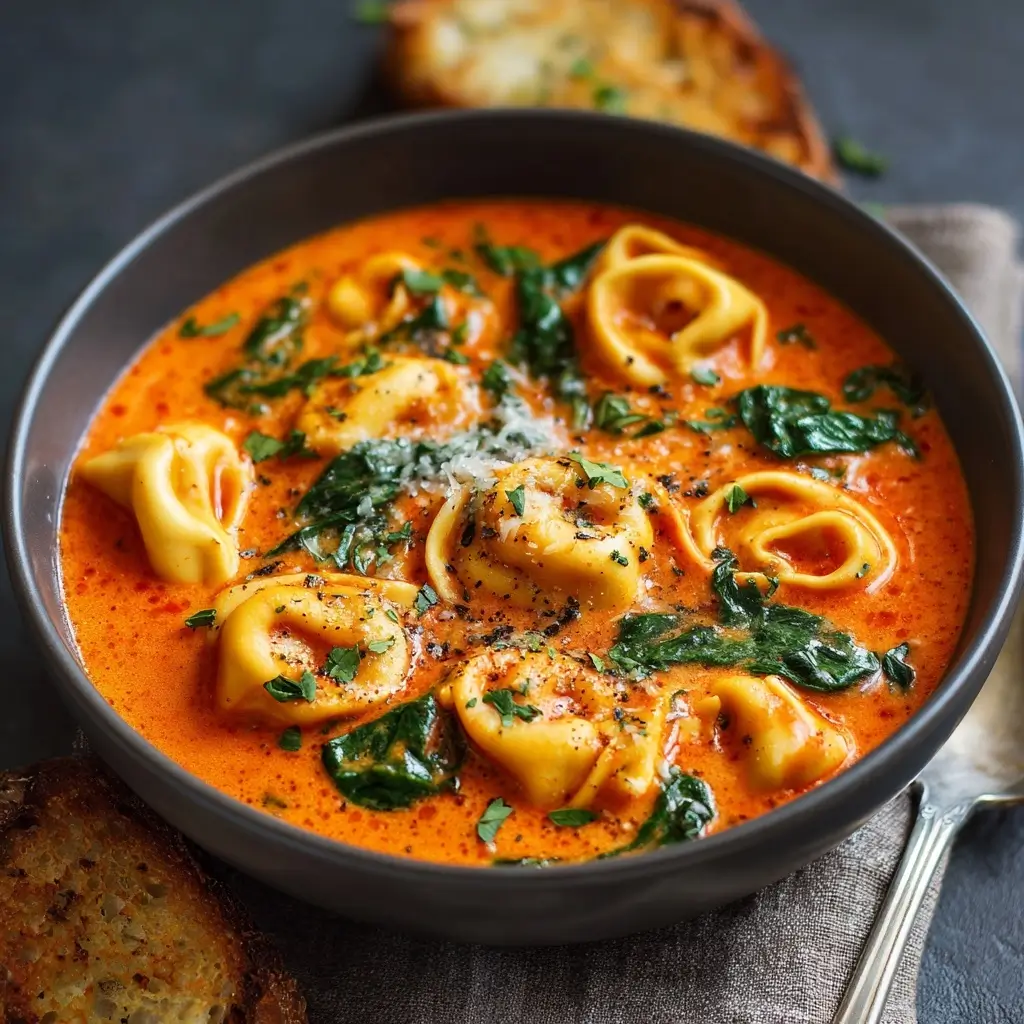
Creamy Tomato Tortellini Soup
Creamy Tomato Tortellini Soup is a comforting, hearty, and flavorful dish that combines the rich tanginess of tomatoes with the creamy texture of cheese-filled tortellini. Perfect for chilly evenings, cozy weeknight dinners, or as a crowd-pleaser at gatherings, this soup blends simplicity with indulgence. With its vibrant red hue, velvety consistency, and tender pasta pockets, it’s no wonder this recipe has become a favorite in American kitchens and beyond. Whether you’re a busy parent looking for a quick family meal or a food enthusiast eager to explore comforting Italian-American fusion cuisine, this soup delivers both satisfaction and ease.
The History
The origins of Creamy Tomato Tortellini Soup can be traced back to the culinary traditions of Italy, where tomato-based soups and stuffed pastas have been staples for centuries. Tortellini, a ring-shaped pasta traditionally from the Emilia-Romagna region, was historically served in broths during festive occasions like Christmas. Over time, Italian immigrants brought their pasta expertise to the United States, where home cooks began experimenting by combining elements of Italian heritage with American pantry staples. The addition of cream to tomato-based soups likely emerged in mid-20th century American cooking, influenced by the popularity of creamy casseroles and comfort foods. As convenience foods rose in prominence, pre-made tortellini became widely available in supermarkets, making dishes like Creamy Tomato Tortellini Soup accessible to everyday cooks. Today, this soup stands as a beloved example of modern fusion cuisine—honoring Italian roots while embracing American innovation and efficiency.
Ingredients Breakdown
The beauty of Creamy Tomato Tortellini Soup lies in its balanced blend of fresh, canned, and frozen ingredients, each contributing to the soup’s rich flavor and satisfying texture:
- Tomatoes: Typically, canned crushed tomatoes or tomato puree form the base, offering concentrated flavor and consistent texture. Fresh tomatoes can be used in season for a brighter taste.
- Broth: Vegetable or chicken broth enhances depth without overpowering the tomato essence. Low-sodium options allow for better control over salt content.
- Tortellini: Cheese, meat, or spinach-filled refrigerated tortellini cook quickly and add heartiness. Dried tortellini works too but may require longer cooking.
- Cream: Heavy cream or half-and-half gives the soup its signature silkiness. For a lighter version, whole milk or evaporated milk can substitute.
- Aromatics: Onion, garlic, and sometimes celery or carrots build the foundational flavor profile through sautéing.
- Olive Oil or Butter: Used to sauté vegetables, adding richness and helping release aromatic compounds.
- Herbs and Seasonings: Basil, oregano, thyme, bay leaves, salt, and black pepper enhance complexity. Red pepper flakes add subtle heat.
- Parmesan Cheese: Often stirred in at the end for umami and a salty tang, or used as a garnish.
- Optional Add-ins: Fresh spinach, kale, roasted red peppers, or diced tomatoes boost nutrition and color.
Step-by-Step Recipe
- Prepare Ingredients: Dice one medium onion, mince 3–4 garlic cloves, and measure out all other ingredients for efficiency.
- Sauté Aromatics: In a large pot or Dutch oven, heat 2 tablespoons of olive oil over medium heat. Add the onions and cook until translucent (about 5 minutes). Stir in the garlic and cook for an additional 30 seconds until fragrant.
- Add Vegetables (Optional): If using carrots or celery, add them with the onions and cook until softened.
- Incorporate Tomatoes: Pour in two 28-ounce cans of crushed tomatoes. Stir well, scraping any browned bits from the bottom of the pot to incorporate flavor.
- Season the Base: Add 1 teaspoon dried basil, ½ teaspoon dried oregano, ¼ teaspoon red pepper flakes (optional), one bay leaf, salt, and black pepper to taste. Mix thoroughly.
- Pour in Broth: Add 4 cups of chicken or vegetable broth. Bring the mixture to a gentle boil, then reduce heat and simmer uncovered for 20–25 minutes to develop flavor and thicken slightly.
- Add Tortellini: Stir in 16–20 ounces of refrigerated cheese tortellini (or your preferred variety). Simmer for 7–9 minutes, or according to package instructions, until tortellini are tender and floating.
- Stir in Cream: Reduce heat to low. Slowly pour in 1 cup of heavy cream or half-and-half, stirring constantly to prevent curdling. Heat gently without boiling.
- Adjust Seasoning: Taste and adjust salt, pepper, and herbs as needed. Remove the bay leaf before serving.
- Add Greens (Optional): If including spinach or kale, stir in 2–3 cups and cook just until wilted (about 2–3 minutes).
- Incorporate Parmesan: Stir in ½ cup freshly grated Parmesan cheese until melted and smooth.
- Serve: Ladle into bowls and garnish with extra Parmesan, fresh basil, cracked black pepper, and a drizzle of olive oil if desired.
Tips
- Don’t Boil After Adding Cream: To prevent separation, keep the soup below a simmer once cream is added.
- Use Refrigerated Tortellini: It cooks faster and has a softer, more delicate texture than dried versions.
- Boost Flavor with Tomato Paste: For deeper richness, add 1–2 tablespoons of tomato paste when sautéing onions.
- Fresh Herbs at the End: Stir in chopped fresh basil or parsley just before serving for a bright finish.
- Prevent Pasta Absorption: If planning leftovers, consider cooking tortellini separately and adding it to individual servings to avoid mushiness.
- Brown the Bottom: Letting the tomato mixture cook slightly undisturbed helps caramelize natural sugars, enhancing depth of flavor.
- Acidity Balance: If the soup tastes too acidic, a pinch of sugar or a splash of balsamic vinegar can balance the tartness.
Variations and Customizations
Creamy Tomato Tortellini Soup is highly adaptable to different tastes, dietary needs, and ingredient availability:
- Protein-Packed Version: Add cooked Italian sausage, grilled chicken, or turkey meatballs for a heartier meal.
- Vegan Option: Use plant-based tortellini, omit cheese, substitute coconut cream or cashew cream for dairy, and use vegetable broth.
- Gluten-Free: Choose gluten-free tortellini made from rice or corn flour to accommodate sensitivities.
- Vegetable-Rich: Incorporate diced zucchini, bell peppers, mushrooms, or fire-roasted tomatoes for added nutrients and texture.
- Spicy Kick: Increase red pepper flakes or add a dash of hot sauce like Sriracha or Calabrian chili paste.
- Herb Swaps: Try marjoram, rosemary, or tarragon for a unique twist on traditional Italian herbs.
- Smoky Flavor: Add smoked paprika or a small amount of liquid smoke for a campfire-inspired note.
- Different Pasta: While tortellini is classic, ravioli, mini tortelloni, or even gnocchi can work beautifully.
Health Considerations and Nutritional Value
While Creamy Tomato Tortellini Soup is undeniably comforting, mindful preparation can make it a balanced part of a healthy diet:
- Calories: One serving (about 1.5 cups) ranges from 300–450 calories depending on ingredients, especially cream and cheese content.
- Fat Content: Heavy cream and cheese tortellini contribute saturated fat. Opt for lower-fat dairy or moderate portions to manage intake.
- Carbohydrates: Primarily from pasta and tomatoes. Using whole grain or legume-based tortellini increases fiber and protein.
- Protein: Cheese-filled tortellini provides about 8–12g per serving. Adding lean meat or beans boosts this further.
- Vitamins and Antioxidants: Tomatoes are rich in lycopene, vitamin C, and potassium—especially beneficial when cooked with a fat source like olive oil, which enhances nutrient absorption.
- Sodium: Canned tomatoes and broth can be high in sodium. Choose low-sodium versions and season to taste.
- Digestive Health: Including leafy greens and fiber-rich pasta supports gut health.
- Balancing the Bowl: Serve with a side salad or whole grain bread to create a well-rounded meal.
For those managing cholesterol, diabetes, or weight, portion control and ingredient swaps (like skim milk instead of cream) can help maintain enjoyment without compromising health goals.
Ingredients
- 2 tablespoons olive oil
- 1 medium yellow onion, finely diced
- 3–4 garlic cloves, minced
- 2 (28-ounce) cans crushed tomatoes (preferably fire-roasted for depth)
- 4 cups low-sodium chicken or vegetable broth
- 1 teaspoon dried basil
- ½ teaspoon dried oregano
- ¼ teaspoon red pepper flakes (optional)
- 1 bay leaf
- Salt and freshly ground black pepper, to taste
- 16–20 ounces refrigerated cheese tortellini (or spinach, meat, etc.)
- 1 cup heavy cream or half-and-half
- ½ cup freshly grated Parmesan cheese, plus extra for garnish
- 2 cups fresh baby spinach or chopped kale (optional)
- Chopped fresh basil or parsley, for garnish
Directions
- In a large stockpot or Dutch oven, heat olive oil over medium heat. Add diced onion and sauté until soft and translucent, about 5–6 minutes.
- Add minced garlic and cook for 30 seconds, stirring constantly to prevent burning.
- Pour in the crushed tomatoes, stirring to combine. Cook for 2–3 minutes to deepen flavor.
- Add chicken or vegetable broth, dried basil, oregano, red pepper flakes, bay leaf, salt, and pepper. Stir well.
- Bring the soup to a boil, then reduce heat and let it simmer uncovered for 20–25 minutes, allowing flavors to meld and the soup to reduce slightly.
- Stir in the tortellini and cook according to package directions—usually 7–9 minutes—until tender.
- Reduce heat to low. Gradually stir in the heavy cream, ensuring the soup does not boil after this point to prevent curdling.
- Stir in the grated Parmesan cheese until fully melted and incorporated.
- If using spinach or kale, add now and stir until wilted, about 2–3 minutes.
- Taste and adjust seasoning—add more salt, pepper, or herbs as desired. Remove the bay leaf.
- Ladle into bowls and serve hot, garnished with extra Parmesan, fresh herbs, and a crack of black pepper.
FAQ
Can I freeze Creamy Tomato Tortellini Soup?
It’s not recommended to freeze this soup due to the dairy content, which can separate upon thawing and reheating. However, you can freeze the tomato base without cream and tortellini, then add fresh components when reheating.
How long does it last in the fridge?
Stored in an airtight container, the soup will keep for 3–4 days. Reheat gently on the stove over low heat to preserve texture.
Can I make it in a slow cooker?
Yes! Sauté onions and garlic first, then transfer to a slow cooker with tomatoes, broth, and seasonings. Cook on low for 6 hours or high for 3–4. Add tortellini in the last 30–45 minutes and stir in cream and cheese before serving.
What kind of tortellini should I use?
Refrigerated cheese tortellini is ideal for texture and flavor. However, frozen or dried varieties work—just adjust cooking times accordingly.
Is this soup gluten-free?
Only if you use certified gluten-free tortellini and ensure all other ingredients (like broth) are GF-labeled.
Can I make it dairy-free?
Absolutely. Substitute coconut cream or cashew cream for heavy cream, use dairy-free tortellini, and skip the Parmesan or use a vegan alternative.
Why did my soup curdle?
Adding cream to a boiling soup or heating it too quickly can cause curdling. Always reduce heat before adding dairy and warm it gradually.
Can I use fresh tomatoes?
Yes, though you’ll need about 2 pounds of ripe tomatoes, peeled and crushed. Simmer longer to reduce excess liquid and concentrate flavor.
Summary
Creamy Tomato Tortellini Soup blends rich tomato flavor with tender cheese-filled pasta in a velvety broth, creating a satisfying and easy-to-make meal perfect for any season. Hearty, customizable, and deeply comforting, it’s a modern classic that brings warmth to every spoonful.